
تخطيط القوى العاملة: دليل عملي لفرق الموارد البشرية في عام 2026



يساعد تخطيط القوى العاملة الفعال المؤسسات على توقع الأفراد والمهارات التي ستحتاجها لتلبية متطلبات الأعمال المستقبلية. وبالنسبة لفرق الموارد البشرية، يعني هذا النظر إلى ما أبعد من الوظائف الشاغرة الفورية لفهم طاقة القوى العاملة، وفجوات المهارات الناشئة، ومتطلبات المواهب على المدى الطويل.
في هذا الدليل، نستكشف ماهية تخطيط القوى العاملة، وسبب أهميته، والفرق بين تخطيط القوى العاملة الاستراتيجي والتشغيلي، وكيفية بناء خطة فعالة للقوى العاملة.
المحتويات
- تخطيط القوى العاملة
- لماذا يُعد تخطيط القوى العاملة مهمًا لفريق الموارد البشرية؟
- الفرق بين تخطيط القوى العاملة الاستراتيجي والتشغيلي
- كيفية بناء خطوة بخطوة خطة للقوى العاملة؟
- مستقبل تخطيط القوى العاملة
أولاً، دعونا نعرّف تخطيط القوى العاملة ودوره في الإدارة الفعالة للمواهب.
1. ما هي تخطيط القوى العاملة؟
تخطيط القوى العاملة هو عملية تقييم القوة العاملة الحالية لديك, التنبؤ المواهب المستقبلية ومتطلبات المهارات، و تحديد كيفية سد الثغرات بين الاثنين. وهو يساعد المؤسسات على تحديد الأفراد والقدرات والإجراءات المتعلقة بالقوى العاملة اللازمة لتحقيق الأهداف التجارية الحالية والمستقبلية.
حدد قدرات القوى العاملة من خلال تقييماتنا النفسية. التوظيف مجاناً
الآن، لماذا تخطيط القوى العاملة مهم لفرق الموارد البشرية؟ لدينا الإجابات أدناه!

2. لماذا يعتبر تخطيط القوى العاملة أمرًا مهمًا لفرق الموارد البشرية؟
وفقاً ل أوراكل نيتسويت, ، يتطلب تخطيط القوى العاملة قرار استراتيجي-صنع, تحليلات البيانات, و الأدوات التنبؤية. فهي تساعد على ضمان أن المرشحون المناسبون يتم تعيينهم في المناصب المناسبة في الوقت المناسب.
أهمية تخطيط القوى العاملة
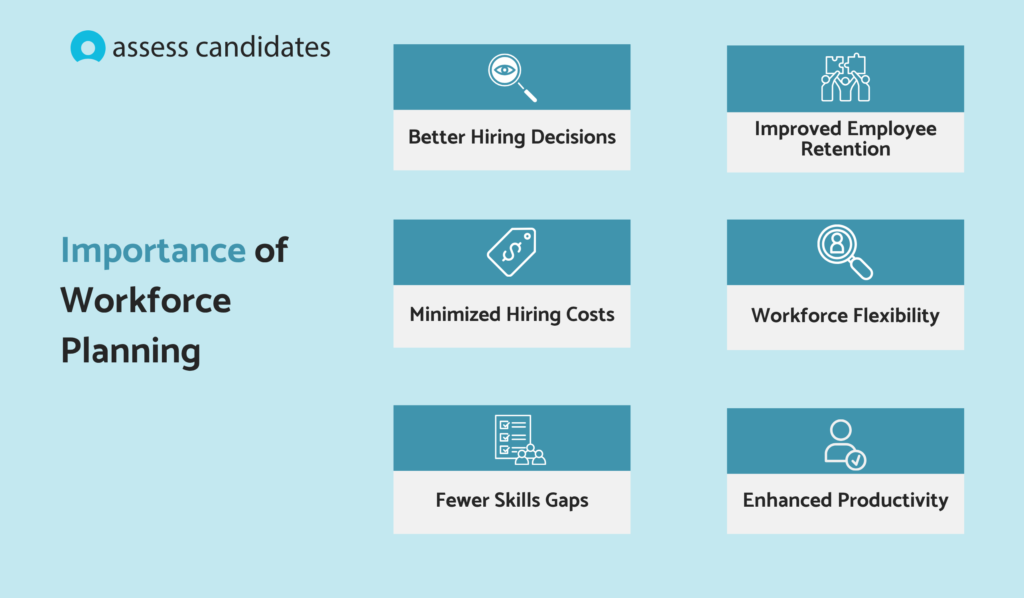
- قرارات توظيف أفضل
يساعد تخطيط القوى العاملة فرق الموارد البشرية على التمييز بين طلب التوظيف الفوري والحاجة الفعلية إلى القوى العاملة. ومن خلال النظر في عبء العمل, القدرات الحالية, أولويات العمل, و النمو المتوقع, يمكن للموارد البشرية اتخاذ قرار أكثر استنارة بشأن ما إذا كانت ستوظف، أو تعيد نشر، أو تؤتمت، أو تطور الموظفين الحاليين.
- تقليل تكاليف التوظيف
قد يكون التوظيف غير المخطط له مكلفاً للغاية, لهذا السبب التخطيط لقوتك العاملة سيمنحك مزيدًا من الوقت للاستعداد. عند التوظيف دون تخطيط مسبق، قد تواجه مقابلات متسرعة، ورسوم وكالات التوظيف، وساعات عمل إضافية، واحتمال تكرار عملية التوظيف في حال فشل التعيين. ويمكن أن يساعد التخطيط للقوى العاملة في ذلك تحديد احتياجاتك المستقبلية من الموظفين في وقت مبكر, بناء خطوط المواهب, ، ثم اختر التكلفة-فعالة أساليب التوظيف.
- تقليص الفجوات في المهارات
حتى مع توفر عدد كافٍ من الموظفين، لا يزال من المحتمل أن تعاني الشركة من نقص في القوى العاملة الماهرة لشغل بعض الوظائف. وسيُساعدك تخطيط القوى العاملة على تحديد هذه الثغرات قبل أن تؤثر على الأداء. وبذلك، سيكون لدى فريق الموارد البشرية لديك حلول قد تشمل التوظيف, تنقل المرشحين إلى منصب جديد،, تدريب، أو إعادة التدريب.
- تحسين الاحتفاظ بالموظفين
قد تزداد احتمالية ترك الموظفين للعمل عندما تصبح أعباء العمل غير محتملة أو عندما تظل الفرق تعاني من نقص في الموظفين لفترات طويلة. ومن خلال تخطيط القوى العاملة، يمكن لفرق الموارد البشرية تحديد الضغوط التي تدفع موظفيك إلى ترك العمل. ستتمكن من التخطيط لـ التوظيف الكافي, a مسار وظيفي أكثر وضوحًا, و فرص تنمية أفضل.
- مرونة القوى العاملة
بغض النظر عن قطاع العمل، يمكن أن تتغير احتياجات الشركات في أي وقت. قد تشهد مؤسستك نمواً تجارياً سريعاً، أو انخفاضاً في الطلب، أو إدخال تقنية جديدة. وللبقاء في صدارة السوق التنافسية، يمكن لتخطيط القوى العاملة أن يساعدك في الاستعداد لـ الموظفون الدائمون, عمال مؤقتون, أو مقاولون.
- المرونة المؤسسية
الشركات التي لديها رؤية واضحة في قوتهم العاملة يمكنهم الاستجابة بشكل أسرع للفرص والمخاطر الجديدة. ويمكن لفرق التوظيف بعد ذلك تحديد أي يمكن إعادة نشر الموظفين, والتي المهارات التي تحتاج إلى تطوير, وأين التوظيف من خارج المؤسسة أمر مهم.
والآن، دعونا نقارن التخطيط الاستراتيجي والتشغيلي للقوى العاملة والقرارات المختلفة التي يدعمها كل نهج.
3. الاختلافات بين التخطيط الاستراتيجي والتخطيط التشغيلي للقوى العاملة
وفقاً ل AZTech, ، التخطيط الاستراتيجي للقوى العاملة يركز على تحديد التوجه العام لشركتك و الأهداف طويلة الأجل. أما التخطيط التشغيلي يركز على تحويل تلك الأهداف إلى مهام يومية قابلة للتنفيذ.
ما هي الاختلافات الرئيسية بين التخطيط الاستراتيجي والتخطيط التشغيلي للقوى العاملة؟
استقطب أفضل المرشحين لديك من خلال منصة التقييم الخاصة بنا قبل التوظيف. اعرف المزيد
دعنا ننظر إلى فوائد المهارات-خطط القوى العاملة القائمة على الكفاءات في التوظيف.
التحول نحو تخطيط القوى العاملة القائم على المهارات
إحدى التحولات الكبرى في تخطيط القوى العاملة هي الانتقال من التفكير القائم على الأدوار إلى المهارات-التفكير القائم على الأسس. أصحاب العمل هم التركيز بشكل أقل على المسميات الوظيفية المزيد عن ما هي المهارات التي يمتلكها الناس بالفعل التي يحتاجها العمل.
وفقاً ل ديلويت, الشركات التي تشدد على ثقافة قائمة على المهارات هي 63% أكثر احتمالاً لتحقيق نتائج إيجابية في العديد من مقاييس الأعمال والقوى العاملة.
أهم 5 فوائد لتخطيط القوى العاملة القائم على المهارات
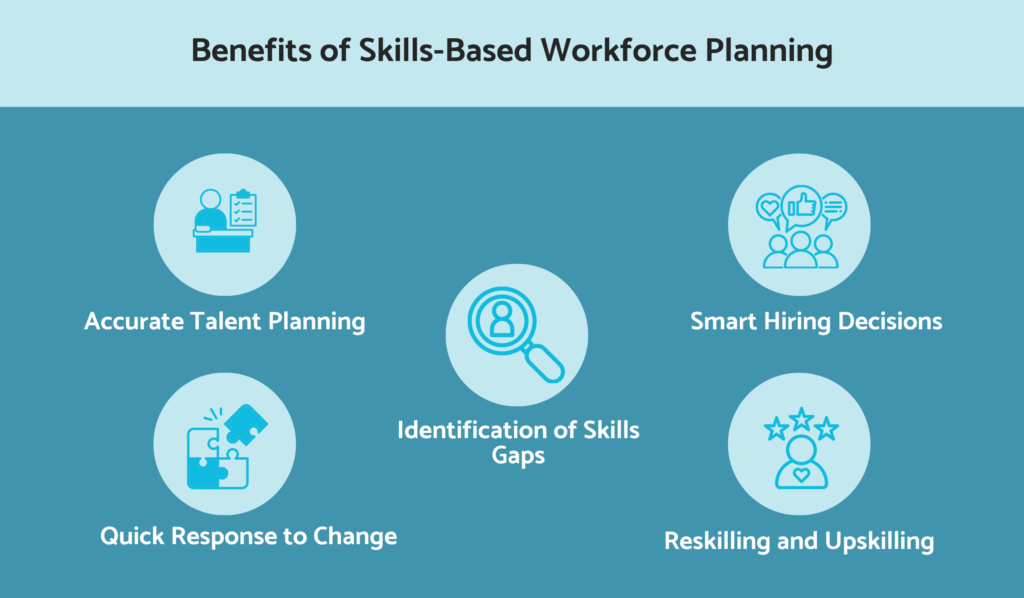
1. التخطيط الدقيق للمواهب
القائم على المهارات التخطيط يزود فرق الموارد البشرية بـ نظرة واضحة على المهارات المتاحة عبر المؤسسة، مما يوضح المهارات التي قد تكون مفقودة في المستقبل. هذا يسهل عليك قارن قدرة القوى العاملة الحالية لديك مع المتطلبات القادمة.
الاستجابة السريعة للتغيير
احتياجات العمل ديناميكية ويمكن أن تتغير في أي وقت مع تكنولوجيا جديدة, توقعات العملاء, ظروف السوق, و لوائح الصناعة. من خلال خطة قوة عمل قائمة على المهارات، يمكنك تعرف على هذه التغيرات مبكراً وتعديل القوى العاملة عندما تتغير الأولويات مرة أخرى.
3. تحديد فجوات المهارات
قد يُظهر تخطيط القوى العاملة القائم على عدد الموظفين أن القسم بحاجة إلى المزيد من الموظفين دون الكشف عن القدرات المحددة المفقودة. المهارات-التخطيط القائم على يوفر مزيداً من التفاصيل لمسؤولي التوظيف وأفرق فرق الموارد البشرية من خلال الكشف عما إذا كانت الفجوة الحقيقية تكمن في تحليل البيانات, إدارة المشاريع, خدمة العملاء, القيادة, أو حقل آخر.
4. قرارات توظيف ذكية
عندما يفهم فريق الموارد البشرية لديك المهارات المطلوبة لشغل وظيفة ما، تصبح عملية التوظيف أكثر تركيزاً. يمكن فرق التوظيف تقييم المرشحين من أجل المهارات ذات الصلة، بدلاً من الاعتماد فقط على المسميات الوظيفية, المؤهلات, أو سنوات من الخبرة. وهذا يحسن جودة القائمة المختصرة ويساعد المؤسسة على التوظيف بما تحتاجه عملك حقاً.
5. إعادة المهارات وتطويرها
يُظهر لك نهج تخطيط القوى العاملة القائم على المهارات بدقة المكان الذي توجد فيه حاجة للتطوير في عملية التوظيف لديك. بهذه الطريقة، يمكنك تركيز ميزانيات التعلم على فجوات حقيقية في المهارات بدلاً من تقديم تدريب عام ليس له ارتباط واضح بأولويات العمل. يمكن لموظفيك الحاليين أيضاً تلقي المزيد فرص التطوير ذات الصلة من خلال إعادة تأهيل المهارات الارتقاء بها.
ابدأ عملية التوظيف الخاصة بك بتقييماتنا الرائدة. التوظيف مجاناً
التالي، تابع خطوة-بواسطة-خطوات إرشادات البناء خطة القوى العاملة!
4. كيف تبدأ خطوة بخطوة في بناء خطة القوى العاملة
وفقاً ل مستنقع, تعتبر خطة القوى العاملة الاستراتيجية أساساً لأي استراتيجية تجارية ناجحة. فهي توفر لك واضح و البيانات-نهج مدفوع نحو تحديد الأولويات و تطوير ما يهم أكثر.
أفضل 6 استراتيجيات لبناء خطة القوى العاملة
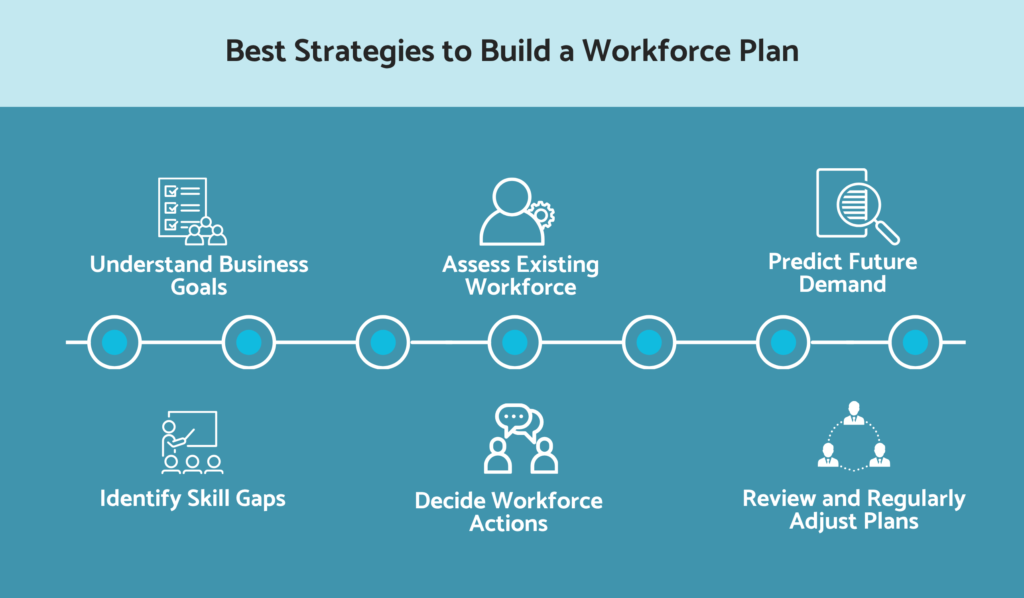
- فهم أهداف العمل
نترح أن تبدأ بأولويات مؤسستك قصيرة وطويلة الأجل. اسأل نفسك عما إذا كنت التوسع, إعادة هيكلة, دخول أسواق جديدة, إطلاق منتجات جديدة, أو تحسين الكفاءة. يجب أن تدعم خطة القوى العاملة لديك دائماً الهدف الذي تسعى إليه عملك.
- تقييم القوى العاملة الحالية
راجع قوة العمل الحالية لديك من خلال النظر إلى عدد الأفراد, معدل الدوران, المهارات, الأداء, و أدوار حيوية في شركتك. القيام بذلك يتيح لك بشكل أفضل فهم موظفيك, فإن المهارات, و المخاطر التي تواجهها.
- التنبؤ بالطلب المستقبلي
نوصي بتقدير ما ستلزم مؤسستك في المستقبل من خلال النظر في النمو المتوقع, تآكل, تقاعد, الأتمتة, و متطلبات المشروع. يجب أن تتذكر أنك تحاول الإجابة عن سؤالين مهمين: كم عدد الأشخاص الذين ستلتاجها الشركة؟, و ما هي المهارات التي يجب أن تكون لديهم?
- تحديد فجوات المهارات
قارن قوتك العاملة الحالية باحتياجاتك المستقبلية. سيوضح لك هذا أين الفجوات في المهارات كذبة، سواء كانوا في سعة, المهارات الفنية, القيادة, أو تغطية الأدوار. هذه الفجوات هي السبب الرئيسي لأهمية تخطيط القوى العاملة. لذلك، من المهم لمؤسستك أن تحديد فجوات المهارات قبل أن تصبح مشاكل بارزة.
- اتخاذ قرارات بشأن القوى العاملة
بمجرد تحديد الفجوات، قَرِّر كيف ستعالجها المنظمة. وبناءً على المتطلبات، قد يتضمن ذلك التوظيف، أو إعادة التوزيع،, الارتقاء بالمهارات أو إعادة توجيه المهارات. حدد مواعيد نهائية لكل إجراء وحدد المعالم الرئيسية لكي تنتقل خططكم من مجرد وثائق إلى مرحلة التنفيذ.
- مراجعة الخطط وتعديلها بانتظام
لا ينبغي معاملة تخطيط القوى العاملة كعمل لمرة واحدة في مؤسستك. وذلـك لأن الشركات تتطور دائماً, لذا يجب أن تتطور الخطة معهم. راجع خطة القوى العاملة لديك بانتظام لذا يمكنك التكيف مع المخاطر الجديدة، أو الأولويات المحدثة، أو توفر المواهب المتغير.
التقييمات تساعد المنظمات قياس قدرات المرشحين مقابل متطلبات مهارات القوى العاملة المحددة.
تقييم المرشحين يساعد مسؤولي التوظيف في تقييم المرشحين وتحديد فجوات المهارات، مما يحسن التخطيط للقوى العاملة. ومن خلال أدوات التقييم النفسي لدينا،, اختبارات المهارات السلوكية, و استبيانات الشخصية, ، يمكننا اختبر مرشحيك بدقة بناءً على مهاراتهم.
استكشف التقييمات التي أنشأها العلماء القانونيون لتوظيف المرشحين المهرة. عرض المخططات
إذن، ماذا سيكون كيف يبدو المستقبل لفرق الموارد البشرية في تخطيط القوى العاملة في عام 2026؟
5. مستقبل تخطيط القوى العاملة
من المرجح أن يكون مستقبل تخطيط القوى العاملة أكثر البيانات-مدفوعة, أكثر مرونة, ، وأكثر تركيزاً على المهارات-التوظيف المستند إلى. مع استمرار المزيد من الشركات والقطاعات في الاعتماد على التحليلات والذكاء الاصطناعي, ، ستكون فرق الموارد البشرية لديها رؤية أفضل لاتجاهات القوى العاملة, الفجوات في المهارات, و مسارات المواهب الداخلية.
ما ize هو مستقبل تخطيط القوى العاملة؟ -> ما هو مستقبل تخطيط القوى العاملة؟
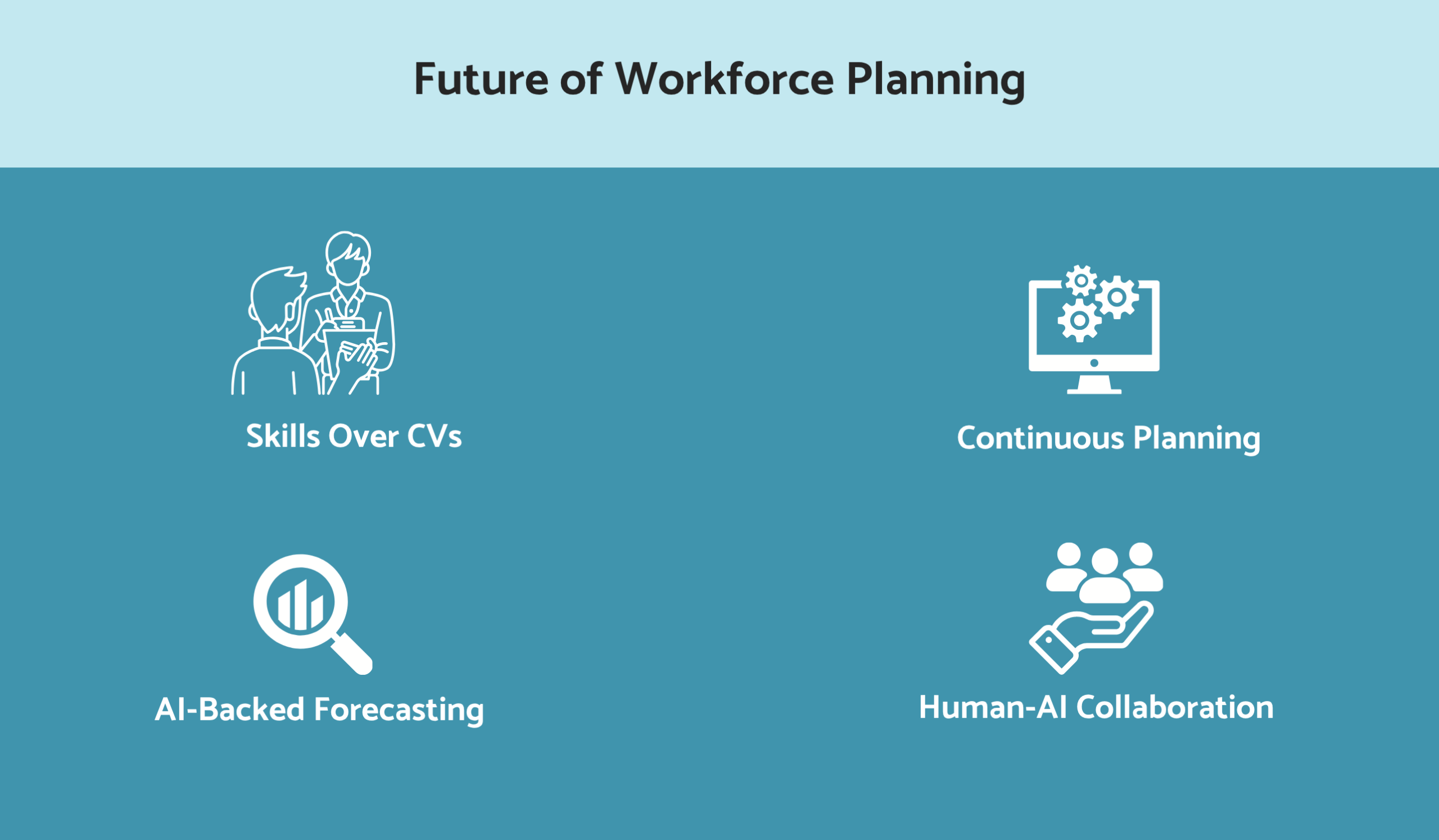
1. المهارات قبل السير الذاتية
تخطيط القوى العاملة يزداد التحول من المسميات الوظيفية الثابتة نحو المهارات تحتاج إليها المنظمة فعلياً. وهذا يمنح فرق الموارد البشرية رؤية أكثر تفصيلاً لقدرات القوى العاملة، ويمكن أن يكشف عن خيارات تتجاوز التوظيف الخارجي، بما في ذلك إعادة نشر الموظفين، وتطوير مهاراتهم، وإكسابهم مهارات جديدة.
التنبؤ المدعوم بالذكاء الاصطناعي
الذكاء الاصطناعي وتحليلات القوى العاملة يمكن أن يساعدا فرق الموارد البشرية في تحديد أنماط في معدل الدوران, توفر المهارات, عبء العمل, و الطلب المستقبلي. تكون قيمتها أقوى عندما تحسن الأدلة المتاحة لصانعي القرار بدلاً من استبدال التقدير المهني. لا تزال فرق الموارد البشرية بحاجة إلى تفسير التنبؤات في سياق استراتيجية العمل، ومخاطر القوى العاملة، والأولويات التنظيمية.
التخطيط المستمر
سيصبح تخطيط القوى العاملة نشاطاً منتظماً لا تمريناً سنويزان، نظراً لأن ظروف العمل, التكنولوجيا, و مهارات الموظف يمكن أن تتغير بسرعة. ستحتاج الشركات إلى مراجعة بيانات القوى العاملة بشكل متكرر وتحديث خططهم عندما تتغير الأولوية. يمكن أن يساعد هذا المؤسسات على الاستجابة مبكراً للمخاطر والفرص الجديدة.
تعاون الإنسان والذكاء الاصطناعي
ستصبح تخطيط القوى العاملة بشكل متزايد ركز على التعاون بين الموظفين وأنظمة الذكاء الاصطناعي. ويرجع ذلك إلى أتمتة المهام الروتينية، مما يتيح للموظفين تخصيص المزيد من الوقت لـ الحكم, الإبداع, المشكلة-الحل, إدارة العلاقات, و القيادة. ستحتاج الشركات إلى وضع استراتيجيات للأدوات التكنولوجية وكذلك مهارات بشرية من الضروري استخدامها بفعالية.
وظِّف المرشحين المناسبين من خلال منصة أدوات التقييم الخاصة بنا. اعرف المزيد
الخاتمة: الوجبات الجاهزة الرئيسية
يُربط تخطيط القوى العاملة الفعّال بين استراتيجية العمل والأشخاص والمهارات اللازمة لتنفيذها. ومن خلال تقييم القدرات الحالية، والتنبؤ بالطلب المستقبلي، وتحديد فجوات المهارات، واختيار إجراءات القوى العاملة المناسبة، يمكن فرق الموارد البشرية اتخاذ قرارات أكثر وعياً بشأن التوظيف والتطوير وإعادة نشر الكفاءات.
هل تريد معرفة المزيد عن تخطيط القوى العاملة وكيفية العثور على المرشحين الأنسب ذوي المهارات المناسبة لمؤسستك؟ تابع القراءة للاطلاع على الأسئلة الشائعة لدينا، وأدخل بريدك الإلكتروني للبدء اليوم.
الأسئلة المتداولة
هل يمكن للشركات الصغيرة استخدام تخطيط القوى العاملة؟
A شركة صغيرة يمكن استخدام تخطيط القوى العاملة من خلال مراجعة أدوارها الحالية،, تحديد المهارات الحرجة, التنبؤ بالطلب المستقبلي, وإنشاء خطة بسيطة للتوظيف والتدريب،, أو خلافة. يمكن تعديل تخطيط القوى العاملة ليناسب حجم المؤسسة ومستوى تطورها بمرور الوقت.
كم مرة يجب مراجعة خطة القوى العاملة؟
يجب مراجعة خطة القوى العاملة باستمرار وعدم التعامل معها كعملية تُجرى مرة واحدة. ومن الممكن مراجعتها فصلي أو مرتين في السنة. أفضل جدول يعتمد على حجم المنظمة، الصناعة، مخاطر القوى العاملة،, و معدل التغيير.
ما هي المعلومات التي أحتاجها لبدء التخطيط للقوى العاملة؟
للządء في تخطيط القوى العاملة لديك، قد تحتاج إلى معلومات حول إجمالي عدد الموظفين الحالي في الشركة، مهارات الموظفين، الوظائف الشاغرة، معدلات دوران العمل، التغيب، مخاطر التقاعد، تكاليف الرواتب، الأداء،, و الطلب التجاري المستقبلي.
ما هي أكبر الأخطاء التي ترتكبها الشركات في تخطيط القوى العاملة؟
إحدى الأخطاء الشائعة التي ترتكبها الشركات هي التعامل مع تخطيط القوى العاملة كعملية سنوية لحساب عدد الموظفين. وتشمل الأخطاء الرئيسية الأخرى الاعتماد على بيانات موظفين قديمة، الفشل في إشراك قادة الأعمال، وافتراض أن كل فجوة تتطلب توظيفاً،, و وضع خطة دون تحديد مسؤوليات واضحة.
هل يمكن تخطيط القوى العاملة أن يقلل من دوران الموظفين؟
تخطيط القوى العاملة يمكن أن تساعد الحد من دوران العمل الذي يمكن تفاديه من خلال تحديد المشكلات التي غالباً ما تتسبب في مغادرة موظفيك. إن معالجة هذه المخاطر من خلال تخطيط القوى العاملة يمكن أن تدعم بقاءً أقوى وقرارات أكثر استدامة بشأن القوى العاملة


 English
  Arabic