
Workforce Planning: Practical Guide for HR Teams in 2026



Effective workforce planning helps organizations anticipate the people and skills they will need to meet future business demands. For HR teams, this means looking beyond immediate vacancies to understand workforce capacity, emerging skills gaps, and longer-term talent requirements.
In this guide, we explore what workforce planning is, why it matters, the difference between strategic and operational workforce planning, and how to build an effective workforce plan.
Contents
- What is workforce planning?
- Why is workforce planning important for HR teams?
- Differences between strategic and operational workforce planning
- How to build a workforce plan step-by-step?
- The future of workforce planning
First, let’s define workforce planning and its role in effective talent management.
1. What is workforce planning?
Workforce planning is the process of assessing your current workforce, forecasting future talent and skills requirements, and identifying how to close the gaps between the two. It helps organizations determine the people, capabilities, and workforce actions required to meet current and future business goals.
Identify workforce capabilities with our psychometric assessments. HIRE FOR FREE
Now, why is workforce planning significant for HR teams? We have the answers below!

2. Why is workforce planning important for HR teams?
According to Oracle NetSuite, workforce planning requires strategic decision–making, data analytics, and predictive tools. They help ensure that the right candidates are placed in the right roles at the right time.
Importance of workforce planning
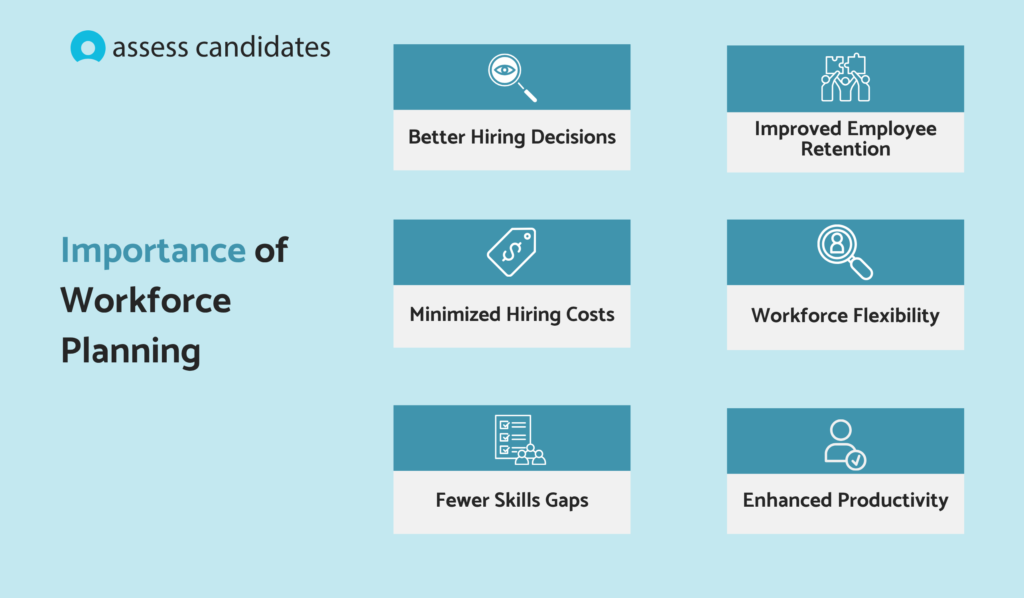
- Better Hiring Decisions
Workforce planning helps HR teams distinguish between an immediate hiring request and a genuine workforce requirement. By considering workload, existing capabilities, business priorities, and expected growth, HR can make a more informed decision about whether to recruit, redeploy, automate, or develop existing employees.
- Minimized Hiring Costs
Unplanned recruitment can be quite expensive, which is why planning your workforce will give you more time to prepare. When recruiting unprepared, you may face rushed interviews, agency fees, overtime, and possible repeated hires if the employment is unsuccessful. Workforce planning can help identify your future recruitment needs early, build talent pipelines, and choose cost–effective hiring methods.
- Fewer Skills Gaps
Even with enough employees, there is still a possibility that the company lacks a skilled workforce for some roles. Workforce planning will help you identify these gaps before they affect performance. With this, your HR team will have solutions that may include hiring, moving candidates into a new role, training, or reskilling.
- Improved Employee Retention
Employees may be more likely to leave when workloads become unsustainable or teams remain understaffed for extended periods. With workforce planning, HR teams can identify the pressures driving your employees away. You will be able to plan for adequate staffing, a clearer career path, and better development opportunities.
- Workforce Flexibility
Regardless of the industry, business needs can change at any time. Your organization may experience rapid business growth, a decline in demand, or the introduction of new technology. To stay ahead in the competitive market, workforce planning can help you prepare for permanent employees, temporary workers, or contractors.
- Organizational Agility
Companies with strong visibility into their workforce skills can respond more quickly to new opportunities and risks. Recruiting teams can then determine which employees can be redeployed, which skills need to be developed, and where external recruitment is important.
Next, let’s compare strategic and operational workforce planning and the different decisions each approach supports.
3. Differences between strategic and operational workforce planning
According to AZTech, strategic workforce planning focuses on defining your company’s overall direction and long-term goals. Whereas operational planning focuses on turning those goals into actionable daily tasks.
What are the key differences between strategic and operational workforce planning?
Recruit your top candidates with our pre-employment assessment platform. LEARN MORE
Let us look at the benefits of skills–based workforce plans in recruitment.
What is the shift to skills-based workforce planning?
One major shift in workforce planning is the transition from role-based thinking to skills–based thinking. Employers are focusing less on job titles and more on what skills people actually possess that the business needs.
According to Deloitte, companies that emphasize a skills-first culture are 63% more likely to achieve positive results in multiple business and workforce metrics.
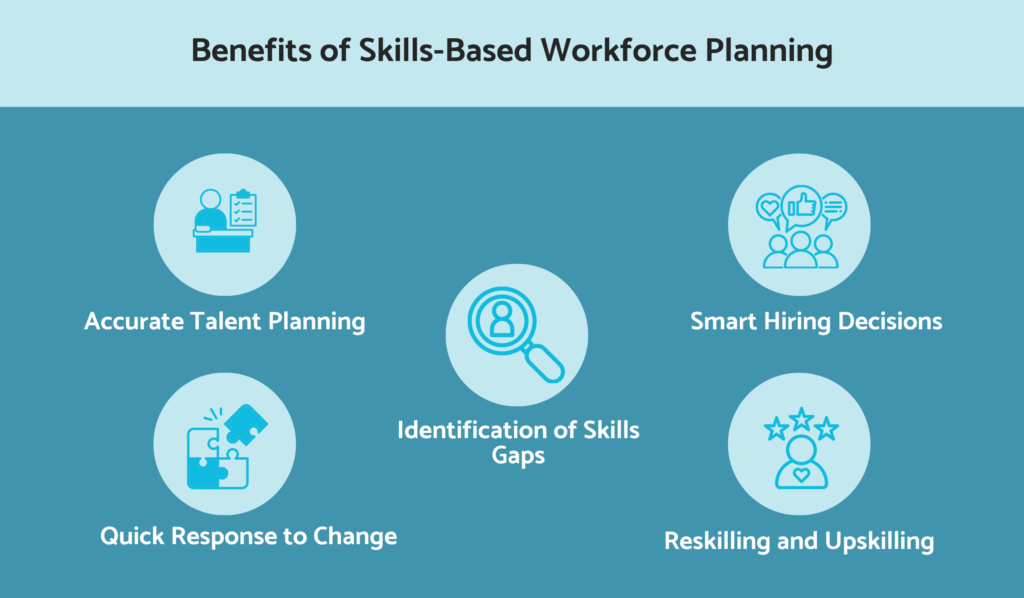
5 Top benefits of skills-based workforce planning
1. Accurate Talent Planning
Skills-based planning provides HR teams with a clear view of the available skills across the organization, showing which skills may be missing in the future. This makes it easier for you to compare your current workforce capacity with upcoming requirements.
2. Quick Response to Change
Business needs are dynamic and can change at any time with new technology, customer expectations, market conditions, and industry regulations. With a skills-based workforce plan, you can identify these changes earlier and adjust the workforce when priorities shift again.
3. Identification of Skills Gaps
Headcount-based workforce planning may show that a department needs more employees without revealing which specific capabilities are missing. Skills–based planning provides more detail to recruiters and HR teams by revealing whether the real gap is in data analysis, project management, customer service, leadership, or another field.
4. Smart Hiring Decisions
When your HR team understands the skills required for a role, recruitment becomes more focused. Hiring teams can evaluate candidates for relevant skills, instead of relying only on job titles, qualifications, or years of experience. This improves the quality of shortlisting and helps the organization hire for what your business actually needs.
5. Reskilling and Upskilling
A skills-based workforce planning approach shows you exactly where development is needed in your recruitment process. This way, you can focus learning budgets on genuine skills gaps instead of offering broad training with no clear connection to business priorities. Your existing staff can also receive more relevant development opportunities through reskilling and upskilling.
Start your hiring process with our top assessments. HIRE FOR FREE
Up next, check out the step–by–step guidelines for building a workforce plan!
4. How to build a workforce plan step-by-step
According to Marsh, a strategic workforce plan is the foundation of a good business strategy. It provides you with a clear and data–driven approach towards prioritizing and developing what matters most.
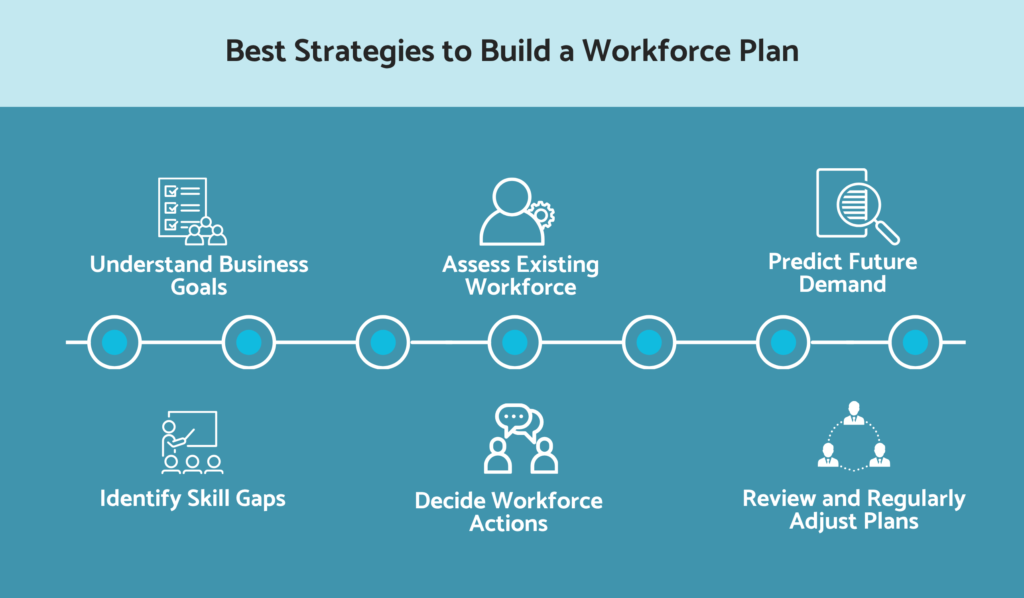
6 Best strategies to build a workforce plan
- Understand Business Goals
We suggest that you begin with your organization’s short- and long-term priorities. Ask yourself if you are expanding, restructuring, entering new markets, launching new products, or improving efficiency. Your workforce plan should always support the goal that your business is aiming for.
- Assess Existing Workforce
Review your current workforce by looking at headcount, turnover, skills, performance, and vital roles in your company. Doing this enables you to better understand your employees, their skills, and the risks that you face.
- Predict Future Demand
We recommend estimating what your organization will need in the future by considering your expected growth, attrition, retirement, automation, and project demands. You should remember that you are trying to answer two significant questions: how many people will the company need, and what skills they should have?
- Identify Skill Gaps
Compare your current workforce with your future needs. This will show you where the skill gaps lie, whether they are in capacity, technical skills, leadership, or role coverage. These gaps are the main reason workforce planning matters. Therefore, it is important for your organization to identify the skill gaps before they become prominent issues.
- Decide Workforce Actions
Once you have identified the gaps, decide how the organization will address them. Depending on the requirement, this could involve recruitment, redeployment, upskilling, or reskilling. Set deadlines for each action and define the milestones so your plans can move from document to execution.
- Review and Regularly Adjust Plans
Workforce planning should not be treated as a one-time exercise in your organization. This is because businesses are always evolving, so the plan should evolve with them. Review your workforce plan regularly so you can adjust for new risks, updated priorities, or shifting talent availability.
Assessments help organizations measure candidate capabilities against identified workforce skill requirements.
Assess Candidates helps recruiters evaluate candidates and identify skills gaps, which improves workforce planning. With our psychometric assessment tools, behavioral skills tests, and personality questionnaires, we can accurately test your candidates for the skills they have.
Explore assessments created by Chartered Scientists to recruit skilled candidates. VIEW PLANS
So, what will the future look like for HR teams in workforce planning in 2026?
5. The future of workforce planning
The future of workforce planning is likely to be more data–driven, more agile, and more focused on skills–based recruitment. As more companies and industries continue to rely on analytics and AI, HR teams will have better visibility into workforce trends, skill gaps, and internal talent pipelines.
What is the future of workforce planning?
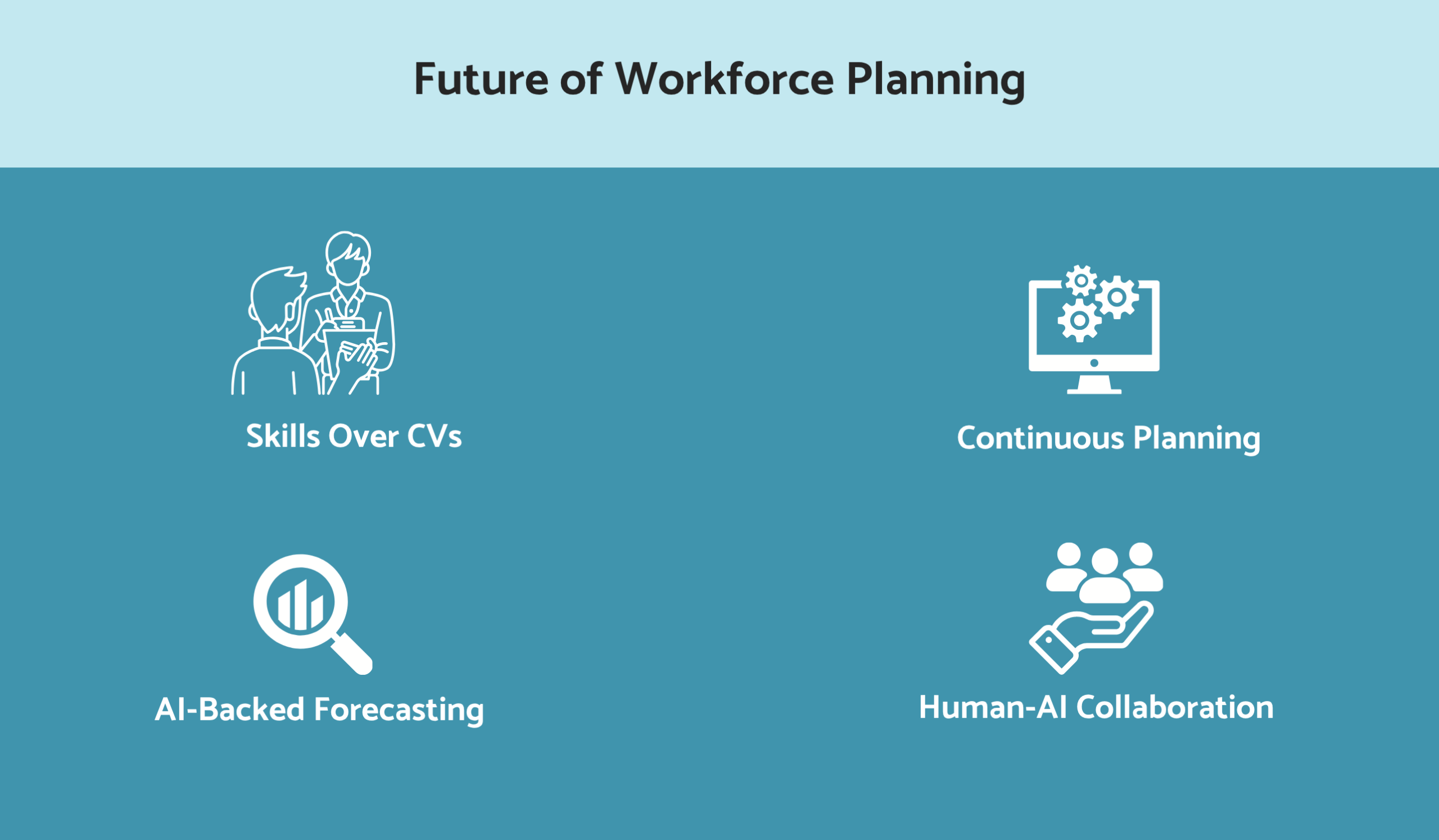
1. Skills Over CVs
Workforce planning is increasingly shifting from fixed job titles towards the skills an organization actually needs. This gives HR teams a more detailed view of workforce capability and can reveal options beyond external recruitment, including redeployment, upskilling, and reskilling.
2. AI-Backed Forecasting
AI and workforce analytics can help HR teams identify patterns in turnover, skills availability, workload, and future demand. Their value is strongest when they improve the evidence available to decision-makers rather than replacing professional judgment. HR teams still need to interpret forecasts in the context of business strategy, workforce risk, and organizational priorities.
3. Continuous Planning
Workforce planning will become a regular activity rather than an annual exercise, as business conditions, technology, and employee skills can change quickly. Companies will need to review workforce data more frequently and update their plans when priorities change. This can help organizations respond early on to new risks and opportunities.
4. Human and AI Collaboration
Workforce planning will increasingly focus on the collaboration between employees and AI systems. This is because routine tasks will be automated, allowing employees to dedicate more time to judgment, creativity, problem–solving, relationship management, and leadership. Companies will need to strategize for the technological tools as well as the human skills necessary to utilize them effectively.
Hire the right candidates with our assessment tool platform. LEARN MORE
Conclusion: Key Takeaway
Effective workforce planning connects business strategy with the people and skills required to deliver it. By assessing current capabilities, forecasting future demand, identifying skills gaps, and selecting the right workforce actions, HR teams can make more informed decisions about recruitment, development, and redeployment.
Want to know more about workforce planning and how to find the best-fit candidates with the right skills for your organization? Keep reading to see our frequently asked questions, and enter your email to get started today.
Frequently Asked Questions
Can small businesses use workforce planning?
A small business can use workforce planning by reviewing its current roles, identifying critical skills, predicting future demand, and creating a simple plan for hiring, training, or succession. Workforce planning can be adjusted to suit an organization’s size and level of development over time.
How often should a workforce plan be reviewed?
A workforce plan should be reviewed constantly and not be treated as a one-time exercise. It is possible to review it quarterly or twice a year. The best schedule depends on your organization’s size, industry, workforce risks, and rate of change.
What information do I need to begin workforce planning?
To begin your workforce planning, you may need information about your company’s current headcount, employee skills, open vacancies, turnover rates, absenteeism, retirement risk, salary costs, performance, and future business demand.
What are the biggest mistakes companies make in workforce planning?
One of the common mistakes companies make is treating workforce planning as a yearly headcount exercise. Other key mistakes include relying on outdated employee data, failing to involve business leaders, assuming every gap requires recruitment, and creating a plan without assigning clear responsibilities.
Can workforce planning reduce employee turnover?
Workforce planning can help reduce avoidable turnover by identifying the problems that often cause your employees to leave. Addressing these risks through workforce planning can support stronger retention and more sustainable workforce decisions


 English
  Arabic