
How to Look Out for Important Behavioral Skills When Recruiting for Your Workplace



Behavioral skills are among the most sought-after soft skills employers look for in candidates during recruitment, as they help assess whether applicants are culturally fit for the organization.
These days, employers looking to recruit talent for their organizations are wondering which behavioral skills are most important for candidates to have and how to test them.
In this guide, we will explore…
Contents
- What are behavioral skills?
- Top must-have behavioral skills in the workplace
- Psychometric assessments to assess behavioral skills
- Benefits of behavioral skills in the workplace
- Best strategies to implement behavioral assessments in hiring
- Roles that require behavioral skills in the workplace
- Client success stories of behavioral skills in the workplace
- Future of behavioral assessments in organizations
- Why do companies prefer using Assess Candidates’ behavioral skills?
Want to know about behavioral skills and how to assess candidates who possess these skills? Keep reading!
1. What are behavioral skills?
Behavioral skills are interpersonal and social abilities that candidates are required to possess when applying for a role in your organization. The skills are how the candidates will interact with the other staff members, how the candidates manage themselves, and navigate situations.
According to Indeed, Behavioral skills are abilities candidates have and use to influence how they interact with others and how they react in certain situations.
Start your recruitment process with our behavioral skills assessments. HIRE FOR FREE
Now, let us look at the behavioral skills in the workplace.
What are behavioral skills in the workplace?
Behavioral skills in the workplace refer to the personal attributes and interpersonal competencies that determine how well your candidates will perform their jobs and interact with colleagues in the company.
Knowing what these behavioral skills are, you must be wondering why they are so important for hiring.
Continue reading as we explore why.
Why are behavioral skills important in recruitment?
Behavioral skills are necessary for recruitment because they allow you to study your candidates’ personalities, their daily interactions, and the challenges they face. Behavioral assessments determine how candidates respond to feedback and criticism, and how they resolve disagreements with co-workers.
According to Darwinbox, Candidates with good behavioral skills often contribute positively to the company’s success, teamwork, and dynamics.
Having been introduced to the general idea of what behavioral skills entail, check out the examples of these skills.

2. Top must-have behavioral skills in the workplace
According to Hoshi, possessing the right behavioral skills is crucial in recruitment for both you and candidates, as they can contribute to organizational success and career advancement, respectively.
Here are some examples of behavioral skills that most employers look for in their candidates during recruitment.
Top 8 Behavioral Skills in the Workplace
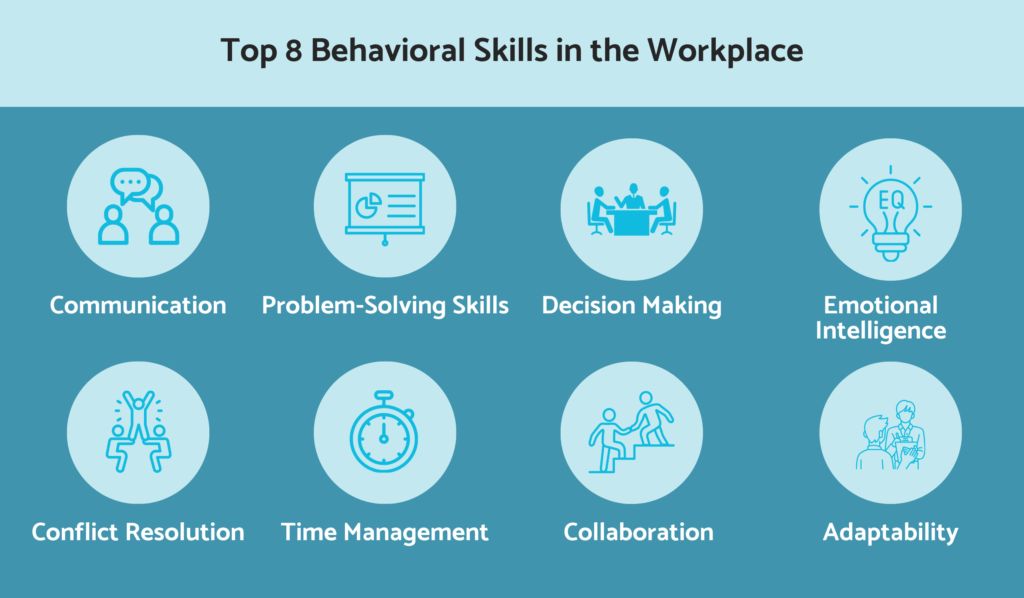
- Communication: Communication goes beyond just speaking, but also actively listening and writing. Candidates are expected to be good communicators in the workforce, as they will interact with other staff members who may require them to present and share ideas or information.
- Problem–Solving Skills: This behavioral skill is important for your company because candidates will often be faced with identifying problems, brainstorming solutions, and executing them strategically. Candidates with these skills are highly sought after in the workforce, as they can proactively solve workplace issues.
- Decision Making: Candidates with the ability to make data-driven decisions are highly desired across various careers, including leadership roles. A candidate with decision-making skills will use their ability to make decisions that positively impact your company, taking responsibility for their actions and their consequences.
- Emotional Intelligence: Candidates with this behavioral skill in the workplace demonstrate they can manage their emotions and understand, recognize, and influence others. These candidates can also build strong interpersonal relationships with their colleagues at work.
- Conflict Resolution: Candidates with this skill can find amicable solutions to disputes among co-workers at the company. Conflict resolution helps in encouraging collaboration between colleagues.
- Time Management: Possessing the skill of time management is key to performing effectively and efficiently at setting realistic goals in the workplace. This is why candidates are often assessed to gauge their behavioral skills.
- Collaboration: This is one of the most treasured behavioral skills that many employers seek in candidates, as applicants with this skill can interact with other staff members. This relationship built among the staff shows that the candidates are culturally fit and will boost the organization’s productivity.
- Adaptability: It is important that you look out for candidates who uphold adaptability and flexibility in the workplace, as it reflects their ability to adjust to new situations, roles, and challenges.
So now we know what to look for, what behavioral skills assessments can we use to help identify these in candidates?
3. Psychometric assessments to assess behavioral skills
Many employers have turned to pre–employment psychometric assessments to evaluate candidates who may possess the behavioral skills that set them apart from other applicants.
According to a LinkedIn 2023 report, about 92% of employers consider soft skills as more important than hard skills during recruitment.
These behavioral assessments help you understand your candidates’ soft skills and those who are culturally fit to be employed in your organization.
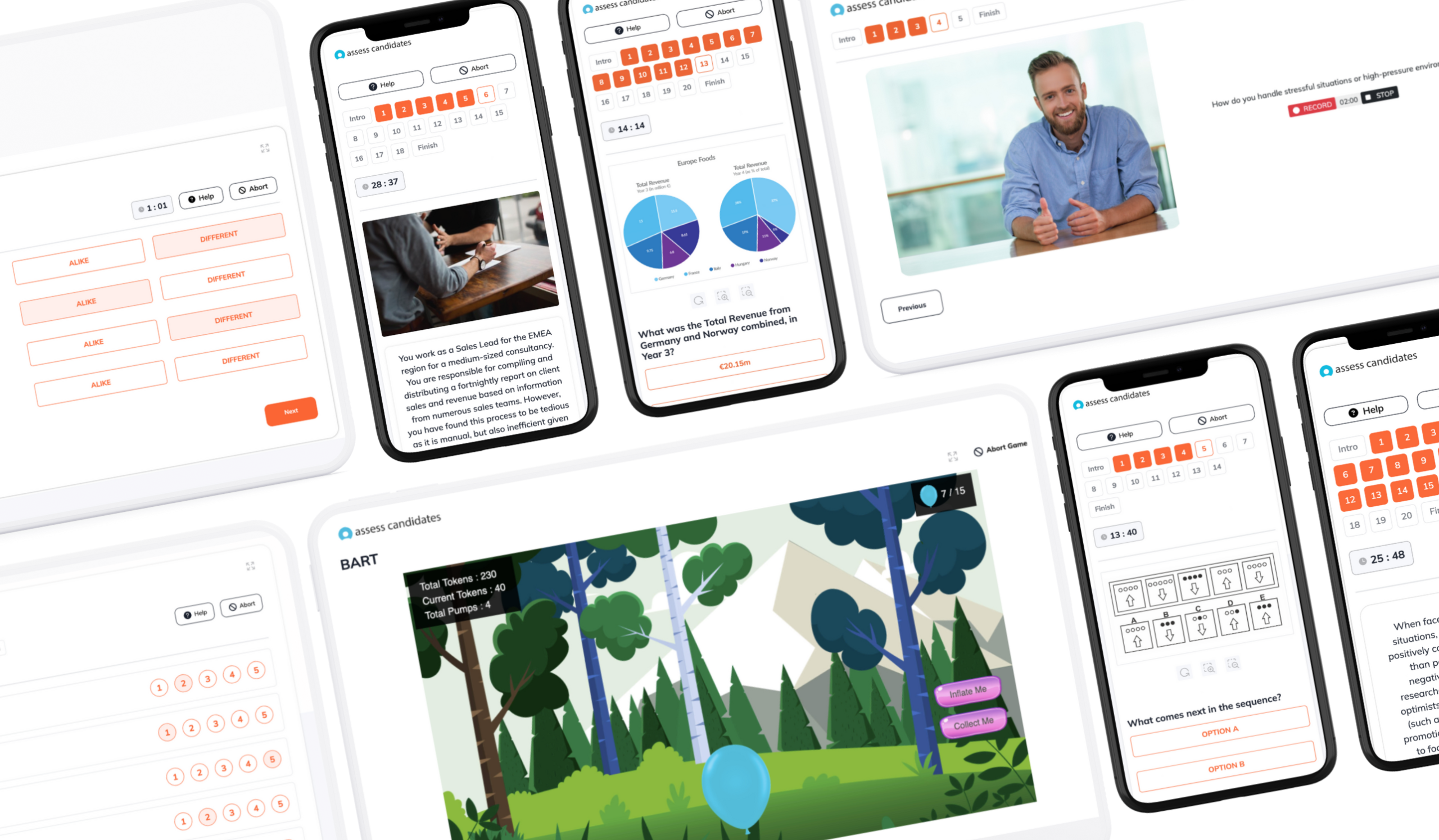
1. Situational Judgment Tests
Situational judgment tests assess candidates’ reactions in a workplace when certain scenarios arise. The test presents a workplace scenario, and the available options range from extreme to reasonable responses, depending on which your candidates select for the illustrated situation.
2. Workstyle Personality Questionnaire
Personality tests help you to categorize and measure your candidates’ personality traits, behaviors, preferences, and tendencies. These tests provide you with an insight into how someone thinks, feels, interacts with others, and approaches tasks.
3. Gamified Assessments
You can also use game-based assessments to evaluate your candidates’ behavioral skills during the recruitment process by specifically designing engaging gamified tasks that measure the required skills. The candidates will be asked to participate in interactive game-based assessments to ensure they are qualified to proceed in your selection process.
4. Video Interview
Video interviews can be used to assess your candidates’ behaviors during recruitment as you will be allowed to examine their reactions, behaviors, habits, and nuances when you ask them certain questions, to determine their actions and reactions.
Curating behavioral skills tests made easy for you and your candidates. HIRE FOR FREE
There are many benefits of your candidates having positive behavioral skills in the workplace. Let us take a look at some of them!
4. Benefits of behavioral skills in the workplace
According to Vantage Circle, it is impossible to ignore the fact that human behaviors play an important role in your company’s productivity, efficiency, and success. There are many benefits to behavioral skills within the workplace. These include…
Top 6 Benefits of positive behavioral skills in the workplace
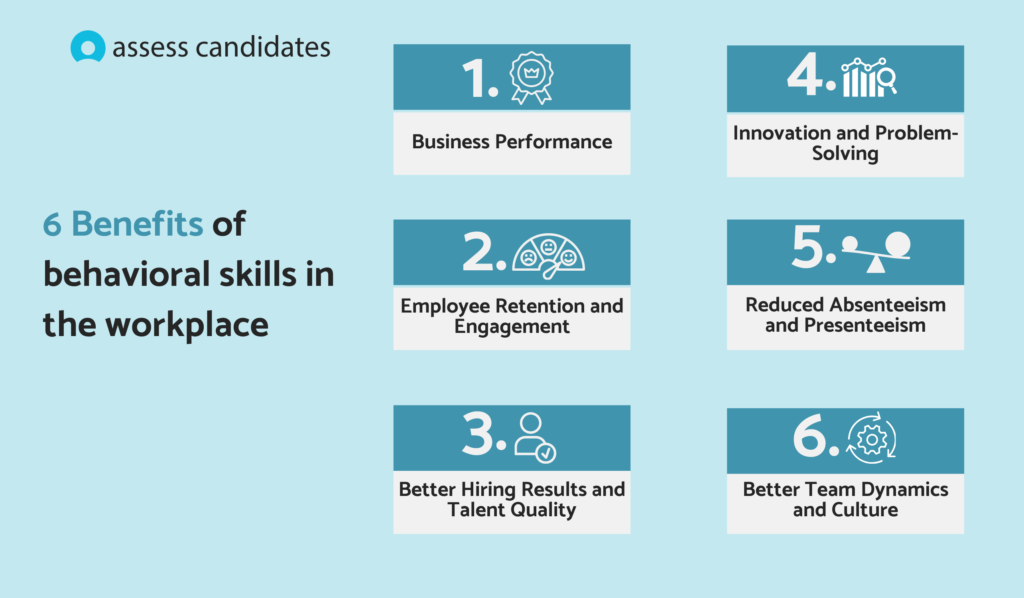
1. Business Performance
Behavioral skills often directly impact critical business performance, such as task performance, engaging in appropriate and ethical work habits, and the use of interpersonal skills like teamwork and leadership.
2. Employee Retention and Engagement
Candidates with behavioral skills training often demonstrate higher job satisfaction and loyalty to their employers and organizations. These candidates are likely to stay with the company, reducing recruitment and onboarding costs and improving the company’s brand image.
3. Better Hiring Results and Talent Quality
Using behavioral skills assessments will improve the quality of your hiring decisions, as skills-based hiring that includes behavioral assessments helps widen the talent pool and provides a strong predictor of job success when used alongside existing qualification checks.
4. Innovation and Problem-Solving
Behavioral competencies such as creativity, critical thinking, and collaboration drive innovation in companies, and many employers have chosen problem–solving as one of the core skills that candidates are expected to possess during the recruitment stages.
5. Reduced Absenteeism and Presenteeism
Companies with strong behavioral skills cultures see measurable reductions in lost productivity, as engaged candidates are likely to be 21% more productive than the disengaged candidates.
6. Better Team Dynamics and Culture
A candidate possessing positive behavioral skills can become a foundation for effective teamwork and a positive workplace culture.
Explore reliable assessments designed by Chartered Scientists to hire the right candidates. VIEW PLANS
Wondering how to implement behavioral assessments in your recruitment process? Keep on reading!
5. Best strategies to implement behavioral assessments in hiring
According to a Leadership IQ study, about 46% of new hires fail within their first two years. This recruitment disaster consumes a lot of resources from companies, as you would have to spend more on recruiting candidates that fit with your expectations.
Key strategies to implement behavioral assessments in your recruitment
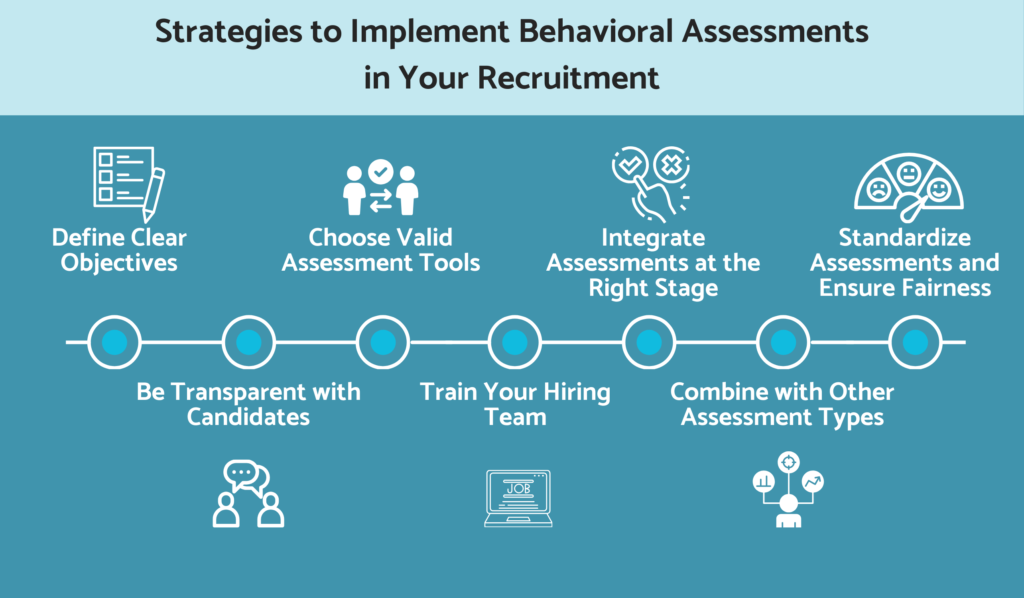
- Define Clear Objectives
Before you select or design your assessment process, we recommend establishing which behavioral skills you are measuring and why. This is important because you need to conduct an analysis to determine which behaviors are critical for success in the roles you are recruiting for.
- Choose Valid Assessment Tools
You are responsible for ensuring that behavioral assessment tests and methods are properly validated for the positions that you are recruiting for; therefore, you should test the candidate experience yourself before issuing it out to candidates, partner with reputable assessment providers, and request validation documentation.
- Integrate Assessments at the Right Stage
Timing is important when including a behavioral skills assessment. Hence, we suggest considering the early stage, as it is the right time to request that your candidates take the behavioral assessments to filter out the qualified from the rest of the applicants for the role.
- Standardize Assessments and Ensure Fairness
You should ensure that your assessment tests and methods are impartial and consistent for all candidates, without ignoring or being biased towards any race, sex, gender, or age. Ensure that the tests are accessible and that accommodations are in place for those who might find it challenging to participate.
- Be Transparent with Candidates
Being transparent with candidates will build trust and the candidate experience. We recommend that you inform your candidates early about the assessments to be used, when they will be administered, and how the results will be used.
- Train Your Hiring Team
Inform your hiring managers and ensure that they understand how to interpret and apply the assessment results effectively. To achieve this, you should provide comprehensive training on assessment interpretation, legal compliance, and create interpretation guides specific to your roles.
- Combine with Other Assessment Types
Combining behavioral skills assessments with other assessment methods and tests is another way to fully determine whether candidates are eligible to take on the role you are recruiting for in your organization. Incorporate the behavioral skills assessment, along with other assessment tests, when designing your assessment process.
Are you thinking about what roles require behavioral skills in the workplace? Keep reading further!
6. Roles that require behavioral skills in the workplace
Many industries and roles prioritize the inclusion of behavioral skills in their recruitment processes. We will take a look at some of these roles, but first, check out the job sectors that use behavioral skills assessments in their recruitment.
Sectors that require behavioral skills in the workplace
- Technology
Technology companies like Meta, Atlassian, and Google prioritize candidates with behavioral skills such as communication, collaboration, adaptability, and problem–solving. Despite evaluating them with technical tests, they also include behavioral interviews and assessments.
- Healthcare
Healthcare employers such as Medtronic, ChenMed, and GE Healthcare are increasingly valuing behavioral skills such as empathy, communication, teamwork, and adaptability. They have since been incorporating behavioral assessments into their recruitment processes to source candidates with these soft skills.
- Hospitality
Positive behavioral skills help candidates better handle interactions, resolve conflicts, and build long-term relationships with the clients and customers. Employers in the hospitality sector include Marriott, Hilton, and Hyatt.
- Retail
Portraying behavioral skills in the retail sector is inherent, as the sector requires daily and constant interaction with customers, colleagues, and managers. Employers such as Walmart, Starbucks, and Tesco include behavioral skills tests in their assessment process.
- Marketing
Marketing organizations such as Procter & Gamble (P&G), L’Oréal, and Unilever search for candidates who can quickly and decisively act on trends and data insights. These candidates are expected to have behavioral skills such as collaboration, project management, and creativity.
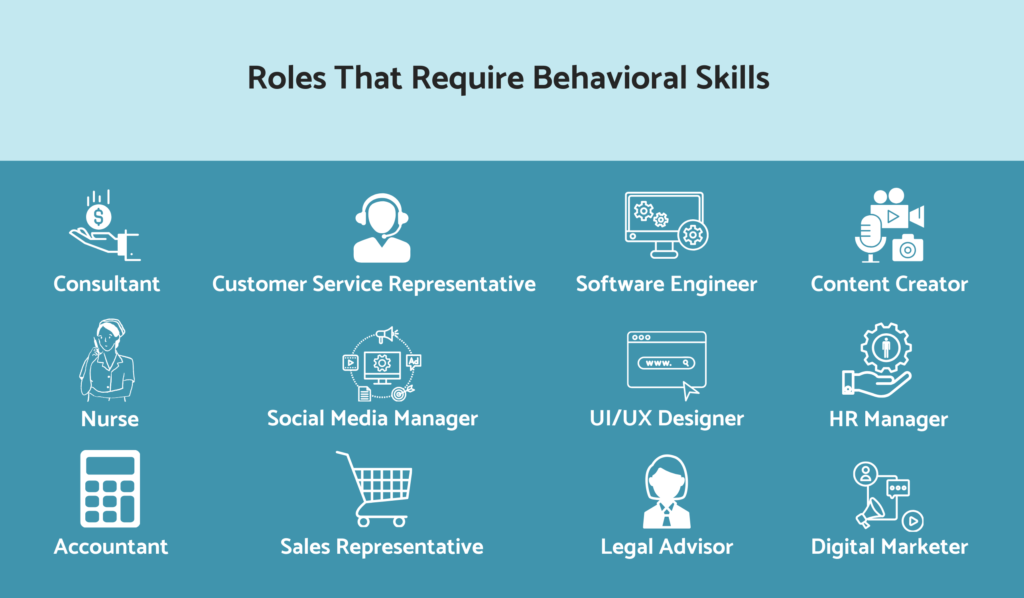
Roles That Require Behavioral Skills
- Social Media Manager
- UI/UX Designer
- Sales Representative
- Customer Service Representative
- HR Manager
- Nurse
- Content Creator
- Legal Advisor
- Software Engineer
- Accountant
- Digital Marketer
- Consultant
Are you thinking about how to include behavioral skills assessment in your pre-employment psychometric assessment process? You can contact us for a detailed examination of your hiring needs to ensure you hire the right candidates who will drive productivity and be culturally fit in your organization.
Various companies across the world understand why behavioral skills are important in the workplace, and the following companies across different sectors have chosen to include behavioral skills tests in their assessment process.
Employers that prioritize behavioral skills
- Unilever
- Meta
- Marriott
- Hilton
- ChenMed
- L’Oréal
- Nestlé
- Walmart
- Tesco
- Atlassian
Explore more behavioral assessments curated by experts to recruit the perfect hire. VIEW PLANS
7. Client success stories of behavioral skills in the workplace
Several companies have attested to having success stories in their workplace due to prioritizing behavioral skills in their candidates during the recruitment process. This has reduced anticipated expenses, loss of new hires, and promoted a positive work culture.
1. IBM
Challenge:
IBM’s global workforce experienced several challenges slowing down its productivity, such as communication gaps, cultural misunderstandings, and leadership challenges in managing diverse and distributed teams.
Solution:
The company invested in behavioral skills training, focusing on emotional intelligence, active listening, and coaching-based leadership to promote unity among the staff across all boards.
Results:
- Increased collaboration in global and virtual teams
- Higher leadership effectiveness ratings
- Better employee-manager relationship
2. Deloitte
Challenge:
Deloitte was experiencing rapid growth, and its diverse teams made it difficult for the company to promote inclusion, psychological safety, and consistent collaboration.
Solution:
The company decided to implement behavioral skills programs highlighting inclusive leadership behaviors, feedback conversations, adaptability, and relationship–building.
Results:
- Enhanced employee engagement and inclusion scores
- Stronger team collaboration and trust among the staff
- Improved retention, particularly among diverse groups.
This is where Assess Candidates comes in. We help you design your assessment process to ensure it includes behavioral skills assessment of your candidates.
Let us take a look at the future of recruitment with behavioral skills being prioritized.
8. Future of behavioral assessments in organizations
According to EleapSoftware, the future of behavioral assessments is tied to technological advancement and centered on data-driven, personalized recruitment methods.
What will the future of recruitment look like with behavioral skills assessments?
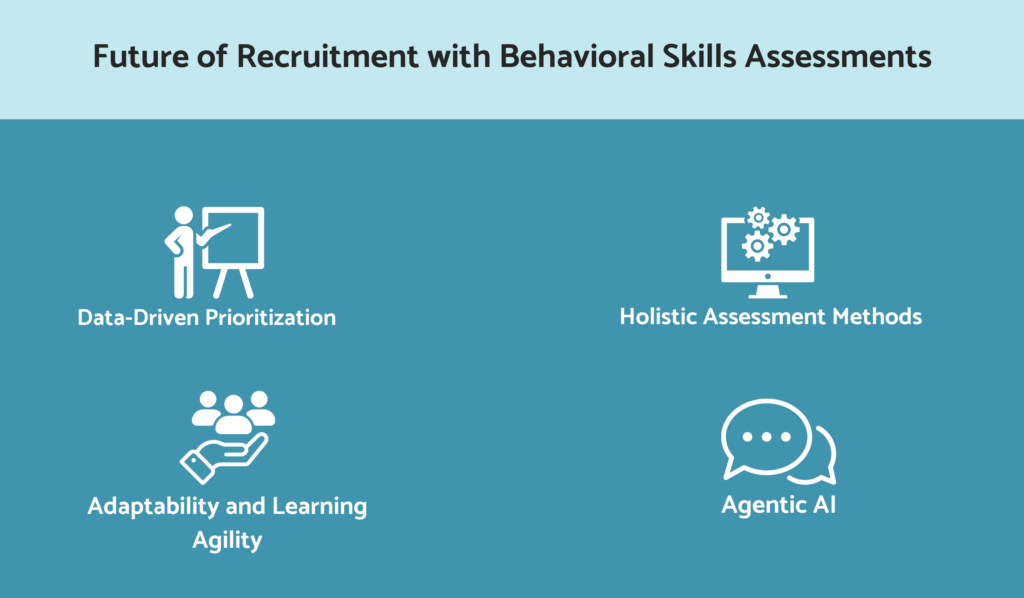
- Data-Driven Prioritization
In 2025, soft skills were among the most popular assessments conducted by employers, as they assess candidates’ personality traits, motivation, and critical thinking before offering them a position at the company. This focus on data-driven prioritization of soft skills will benefit employers, as it ensures candidates are appropriately screened and selected not only for their qualifications but also for their acceptable behavioral skills.
- Holistic Assessment Methods
Employers are adopting best practices that could yield data-driven hiring results by including a multi-assessment hiring approach. These assessments include, but are not limited to, situational judgment tests, personality questionnaires, and video interviews to gauge candidates’ behavioral skills. The combination of these traditional and skills-based tests will aid you in understanding the
- Adaptability and Learning Agility
With the rapid growth of technology, candidates are eager to learn new skills, making employers prioritize candidates who demonstrate strong learning agility and adaptability. These will foster a relationship between you and the candidates, as productivity and harmony in the workplace will increase.
- Agentic AI
With the evolution of technology comes the emergence of agentic AI, which now autonomously posts job openings, sources candidates, and schedules interviews. Agentic AI mitigates bias in recruitment and selects only qualified candidates, streamlining the hiring process.
So, why choose us for your hiring needs?
9. Why do companies prefer using Assess Candidates’ behavioral skills?
Companies are choosing Assess Candidates for their recruitment because of its focus on soft skills, as well as hard skills. The platform allows you to customize your assessment process without overlooking candidates’ behavioral skills to ensure they align with your organization’s culture fit.
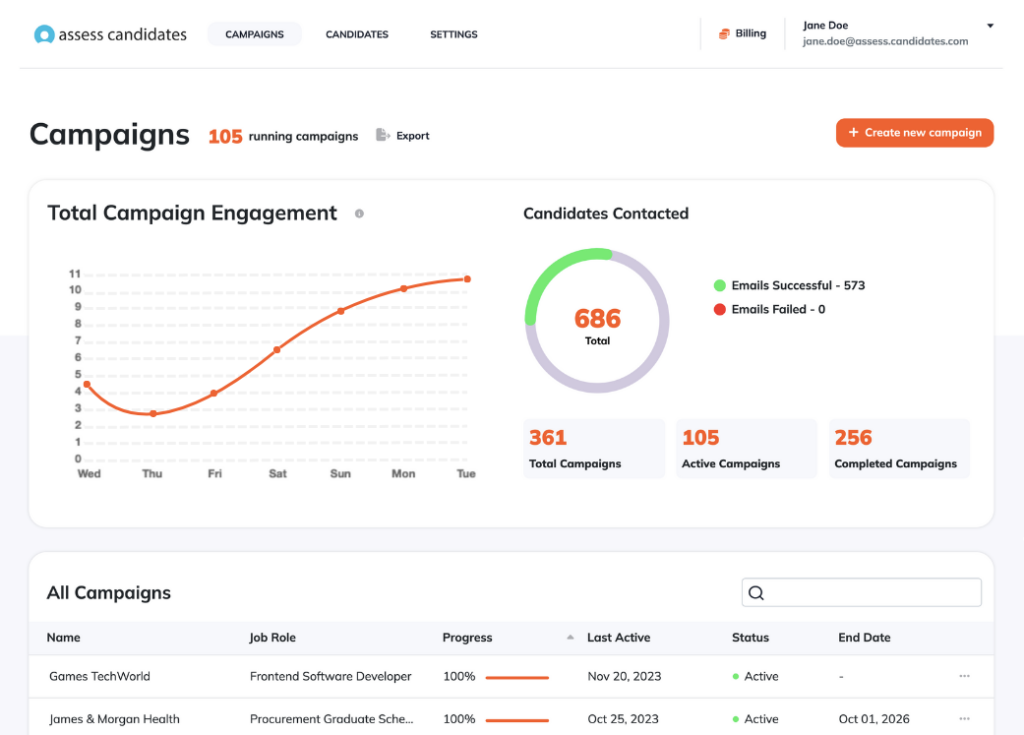
Why companies prefer Assess Candidates’ behavioral skills in recruitment
- Scientific Validation: Each of the platform’s assessments undergoes rigorous validation to measure both the role-specific competencies and practical skills.
- Diverse Assessment Library: Assess Candidates offers a range of pre-employment psychometric assessment tests that evaluate your candidates’ skills and competencies before providing you with hiring decisions according to the results of the candidates tested.
- Fairness and Accessibility: Our platform reduces bias and offers every candidate an equal opportunity to pass regardless of their background.
- Objective and Data–Driven Results: The platform also provides you with concrete, comparable data that removes subjective guesswork from hiring decisions and promotes a merit-based selection process.
- Real–World Behavioral Assessments: Assess Candidates provides real-world behavioral skills assessments, such as situational judgment tests and personality questionnaires, that evaluate candidates in realistic work situations.
Hire the right candidates with our behavioral skills assessment platform. LEARN MORE
Want to know more about using behavioral skills in your recruitment process? Keep scrolling to explore our frequently asked questions, and enter your email to get started today.
Frequently Asked Questions
How are behavioral skills different from technical skills?
Technical skills are mostly role-specific and may be outdated as tools and techniques change. However, behavioral skills such as communication, adaptability, collaboration, and more are transferable and are relevant across all roles, careers, and levels.
Are behavioral skills assessments fair and unbiased?
Behavioral skills assessments tend to have no room for bias and unfairness when you design your assessment process correctly. We recommend training your recruiters and participating in the hiring process to ensure it is diverse and inclusive for all candidates.
How do behavioral skills improve retention?
When you hire candidates whose behavioral skills align with the role’s requirements and whose team dynamics can be easily adapted, your employees will have higher engagement, performance, and productivity. This supports employee retention, as employees choose to remain and grow with your organization, based on their experience.
Can technology help improve behavioral skills?
Technology plays an important role in improving workplace skills, including behavioral skills. Online courses and training modules can teach candidates how to access their soft skills and hone them to perfection.
How will AI and automation impact behavioral skills?
As artificial intelligence continues to advance, employers will likely seek candidates who can manage and work with AI systems. As AI and automation handle more technical duties, candidates will be expected to offer human insight in managing the tasks.


 English
  Arabic