
What Motivates Qualified Candidates in Recruitment: A Practical Guide to Attracting and Retaining Top Talent



As a recruiter, your role goes beyond just finding candidates and filling open roles. It also demands understanding what truly motivates people to join and stay with your organization. You must identify these motivators and use them to engage top-qualified candidates to your organization over your competitors.
According to Jobvite, 81% of recruiters say attracting top talent has become more difficult in the last year. 33% see it as very challenging.
If you are looking for answers to questions such as the following:
- Why is candidate motivation a key factor in recruitment?
- What are the top motivations driving candidates’ decisions today?
- How do assessment tools improve candidate experience?
Then this guide is for you!
Here, we will uncover the main factors that inspire candidates to apply, accept offers, and stay at organizations. We will also explore how the recent rise of remote work has rewritten candidate priorities and how recruitment assessments can help you elevate the candidate experience and your employer brand.
Join us in this journey to learn how Assess Candidates can help you consistently attract, inspire, and retain motivated, top-tier talent. We’ve got you covered!
Contents
- What is candidate motivation in recruitment?
- Why does candidate motivation matter for employers?
- Key factors influencing qualified candidates’ motivation?
- How is remote work reshaping the priorities of top candidates?
- Strategies to expand your talent pool and attract diverse candidates
- How can recruitment assessments improve the candidate experience?
- Emerging trends for candidate motivation and engagement in recruitment
- Motivating top candidates with tailored assessments: Client success story
- Why do top companies prefer Assess Candidates for smarter hiring?
So, now let’s begin our discussion by defining candidate motivation.
1. What is candidate motivation in recruitment?
Candidate motivation is the internal drive that influences individuals to apply for a role, stay engaged throughout the hiring process, and perform well in the role long-term. This encompasses the reasons behind a candidate’s interest in a specific job, career path, or organization.
Candidate motivation directly affects their efforts to achieve, learn, receive recognition, or have a purpose on the job. Motivated candidates are more likely to invest effort, demonstrate curiosity, and commit to achieving long-term success within the organization.
Understanding what fuels this motivation helps recruiters tailor their approach, ensuring better candidate engagement and stronger hiring outcomes.
Hire top talent with us with our standardized psychometric tests that engage candidates. HIRE FOR FREE
So, why is maintaining candidate motivation so crucial in hiring? Let’s find out below.

2. Why does candidate motivation matter for employers?
Employers recognize the importance of candidate motivation in hiring. It not only helps them hire culturally-fit candidates, but also helps them avoid mis-hires.
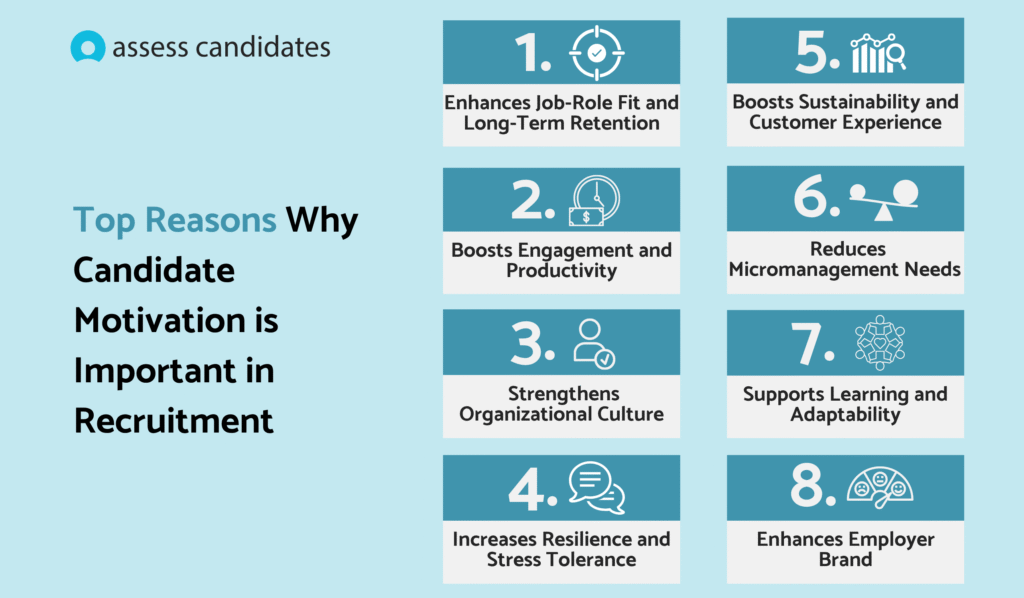
Top reasons why focusing on candidate motivation during recruitment is important
1. Enhances Job-Role Fit
Understanding what drives a candidate helps recruiters match individuals to roles that align with both their skills and aspirations. This reduces the risk of mis-hires, improves employee engagement and satisfaction in the long term, and overal work productivity.
2. Improves Long-Term Retention
When employees find genuine fulfilment and satisfaction in their work, they are less likely to leave for small pay raises or titles elsewhere. Thus, motivation-fit hiring reduces costly turnover and, therefore, the wastage of company resources due to re-hiring. This allows companies to focus more on productivity and also upskilling and reskilling existing staff.
3. Boosts Engagement and Productivity
Motivated hires show greater enthusiasm, initiative, and commitment. They go beyond minimum requirements and contribute to performance excellence. This helps boost innovation and long-term success in the company.
4. Strengthens Organizational Culture
Motivation-fit candidates are more likely to resonate with company values, ethics, and mission. This promotes a cohesive and purpose-driven workplace. Thus, candidate motivation serves as a crucial ingredient to foster a collaborative and positive work environment.
5. Increases Resilience and Stress Tolerance
When employees are internally driven, they are better-equiped to handle tight deadlines, regulatory changes, and pressure. This is vital in fast-paced work environments, such as in customer-facing roles, where patience, emotional intelligence, and communication skills are key to success.
6. Improves Customer Experience
Motivated employees who genuinely care about problem-solving and client success build stronger relationships, driving loyalty and trust. This helps improve the employer brand and stand out in the market.
7. Predicts Sustainable Performance
Technical skills may bring short-term output, but motivation sustains high performance over the years. This is especially crucial today when frequent upskilling and reskilling are a key hiring trend for a sustainable business. Additionally, persistent motivation also helps drive candidates’ efforts even during repetitive or complex financial processes.
8. Reduces Micromanagement Needs
Self-motivated employees need less supervision. They proactively seek improvement, stay organized, and manage tasks independently. This allows employers to focus more on strategic operations and decision-making. At the same time, this promotes employee trust, satisfaction, and thus, long-term retention.
9. Supports Learning and Adaptability
Motivated candidates are more open to training and digital transformation. This is typically essential as AI and fintech tools reshape key roles in the organizations. Sustainable candidate motivation thus helps boost the company’s ability to innovate and compete in the job market.
10. Enhances Employer Brand
When organizations attract and retain motivated, fulfilled employees, they create a reputation for being a “great place to grow,”. This helps attract top diverse talent organically, thus giving the company’s reputation, especially amongst Gen Z, a significant boost.
So, which key factors boost candidate motivation? Let’s discuss in the following section.
3. Key factors influencing qualified candidates’ motivation
As a talent seeker, you understand that the journey to securing top-tier candidates isn’t just about posting job listings. It is about understanding what truly motivates your potential candidates.
Did you know that, as per LinkedIn, the best candidates are off the market in as little as 10 days?
Top motivators for qualified candidates during recruitment:
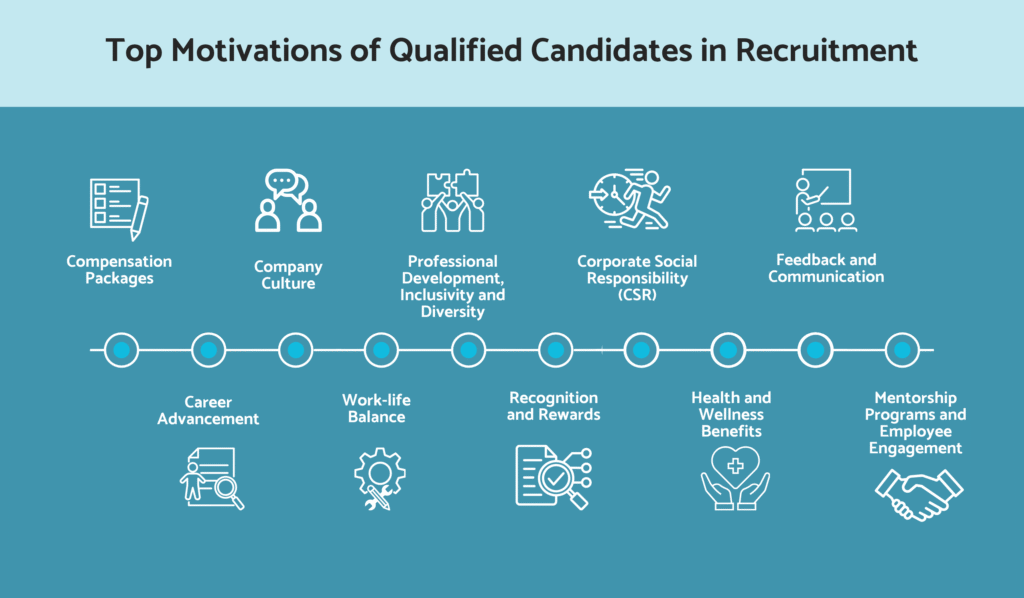
- Compensation Packages: Some say it is not all about the money. Nevertheless, competitive salaries and benefits are essential because they demonstrate the organization’s commitment to recognizing and rewarding top talent. For instance, companies like Google offer attractive compensation packages, ensuring top candidates feel valued and motivated.
As per LinkedIn, 75% of recruiters have noticed an increase in salary negotiations from their candidates.
- Career Advancement: Providing opportunities for career growth is key to attracting and retaining top talent. When candidates see clear paths for advancement, as exemplified by IBM’s career development programs, they are more motivated to join and contribute to the organization’s success.
- Company Culture: A positive workplace culture increasingly matters because it fosters job satisfaction and motivates top talent to perform at their best. Airbnb’s commitment to diversity and belonging is a prime example of a culture that attracts and retains exceptional employees.
As per Cubiks, 84% of recruiters have reported that culture fit has become a key factor when hiring.
- Work-Life Balance: Especially in the post-pandemic job market, maintaining a work-life balance is crucial for top talent’s motivation and productivity. This demonstrates that the company values employee well-being, as seen with Microsoft’s flexible work arrangements.
- Professional Development: Top candidates desire ongoing skill enhancement. When organizations like Amazon invest in training and development, it sends a message that they are committed to fostering growth and innovation.
- Recognition and Rewards: Acknowledging achievements is vital for retaining top talent, boosting morale, and keeping candidates engaged. Salesforce’s innovative recognition programs are a prime example of how this motivates top performers to apply for jobs.
- Inclusivity and Diversity: Top talent is often drawn to organizations that value diversity and inclusivity. For example, Apple’s diverse workforce fosters innovation and fresh perspectives, making it a top choice for potential candidates.
As per Glassdoor, 76% of candidates search for diversity and inclusion when evaluating a company.
- Health and Wellness Benefits: These benefits help top talent maintain a healthy work-life balance, reducing stress and improving overall job satisfaction. Companies like Nike provide comprehensive wellness benefits to keep their top talent motivated and healthy. This leaves great reviews and word of mouth for potential candidates outside of their organization.
- Corporate Social Responsibility (CSR): Top talent seeks purpose and meaning in their work. Engaging in CSR activities, like Patagonia’s commitment to sustainability. This demonstrates a commitment to making a positive impact, motivating candidates who share these values.
- Mentorship Programs: Mentorship programs facilitate the growth of top talent, offering guidance and opportunities for leadership within the organization. LinkedIn’s mentorship programs inspire early career growth and motivate engaged, qualified candidates searching for an employer that will look after them.
- Feedback and Communication: Transparent communication and feedback channels are key for top talent to feel heard and engaged in their roles. Companies like Slack prioritize transparent communication, fostering an environment of trust and companionship.
As per Career Arc, 83% of candidates expect a clear timeline of the hiring process.
- Employee Engagement: High engagement levels drive top talent to perform at their best, leading to improved overall company performance. Salesforce is known for its efforts to engage employees, resulting in motivated and high-performing individuals. This serves as great proof for potential candidates in Salesforce’s future recruitment campaigns.
Hire great, motivated talent with our video interview tool. LEARN MORE
4. How is remote work reshaping the priorities of top candidates?
In today’s dynamic job market, the remote work revolution is reshaping the way top candidates evaluate job opportunities. The rise of remote work is no longer a mere trend; it is a defining feature of modern employment. As a result, candidates’ motivations have evolved to meet the demands of this new work environment.
Here’s how remote work is impacting the motivations of top candidates before and post-pandemic.
Key changes to qualified candidates’ motivation in recruitment due to remote work
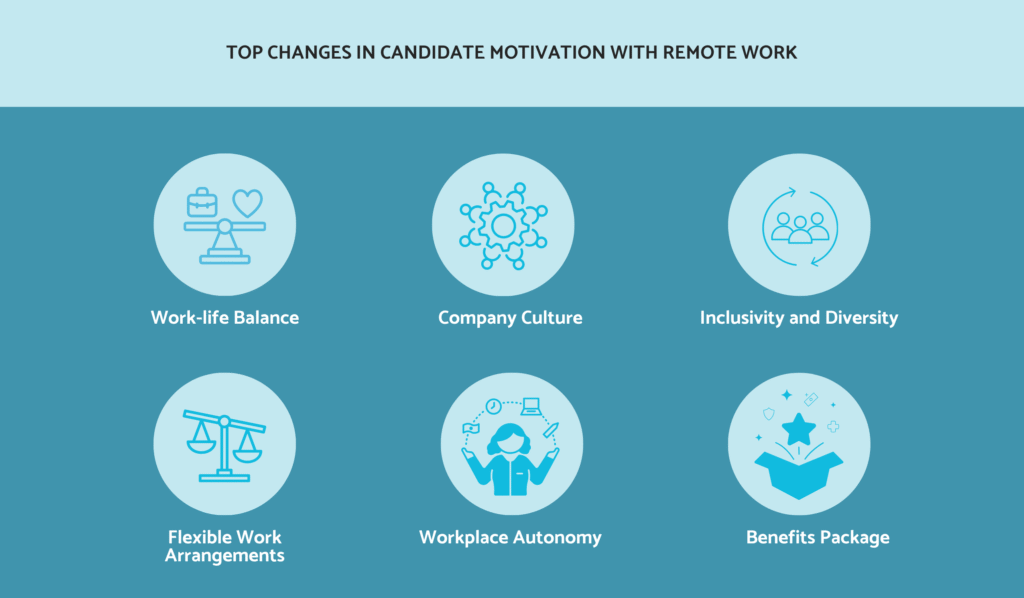
Work-Life Balance
Before: Candidates considered work-life balance, but it was not always a top priority.
Post-Pandemic: With remote work becoming widespread. Candidates now highly prioritize achieving a harmonious work-life balance.
Company Culture
Before: Company culture was important, but might not have been a deal-breaker for most candidates.
Post-Pandemic: Remote work has amplified the importance of a strong and cohesive company culture. Candidates seek organizations that uphold values they can connect with, even in a virtual setting.
Inclusivity and Diversity
Before: Diversity and inclusivity were valued, but may not have been as central to job decisions.
Post-Pandemic: Remote work has broadened the talent pool and reinforced the importance of diversity and inclusivity, making these factors more critical for candidates.
As per Deloitte, 72% of employees would leave or consider leaving their company for a more inclusive one.
Flexible Work Arrangements
Before: Flexibility was appreciated, but candidates may not have prioritized it as much as they do now.
Post-Pandemic: Remote work offers the freedom to choose the most comfortable and productive setting, making this flexibility a top priority.
As per LinkedIn, 54% of recruiters have seen candidates turn down an interview or job offer due to a lack of flexibility and remote work options in the workplace.
Workplace Autonomy
Before: Autonomy was valued, but candidates might not have specifically sought it out.
Post-Pandemic: Remote work highlights the value of autonomy in the workplace. Candidates seek employers who trust them to manage tasks and projects independently.
Benefits Package
Before: Benefits were important, but candidates may not have emphasized wellness benefits to the same extent.
Post-Pandemic: The benefits package has evolved to cater to remote workers, providing health and wellness benefits that are increasingly vital as candidates seek employers who support their well-being, even from a distance.
In this context, remote work has magnified the importance of these motivators, guiding the choices of top candidates. Attracting and retaining the best talent in this evolving landscape means adapting to these changes and offering a remote work experience that aligns with their shifting motivations.
Attract and retain motivated remote talent with assessments designed for modern hiring. VIEW PLANS
5. Strategies to expand your talent pool and attract diverse candidates
Attracting diverse talent is not only a moral imperative but also a strategic advantage. To broaden your candidate pool and enhance diversity, several effective practices come into play.
As per LinkedIn, as many as 38% of recruiters claim that finding diverse candidates to interview is their biggest barrier to improvement.
Top 7 strategies to attract diverse talent
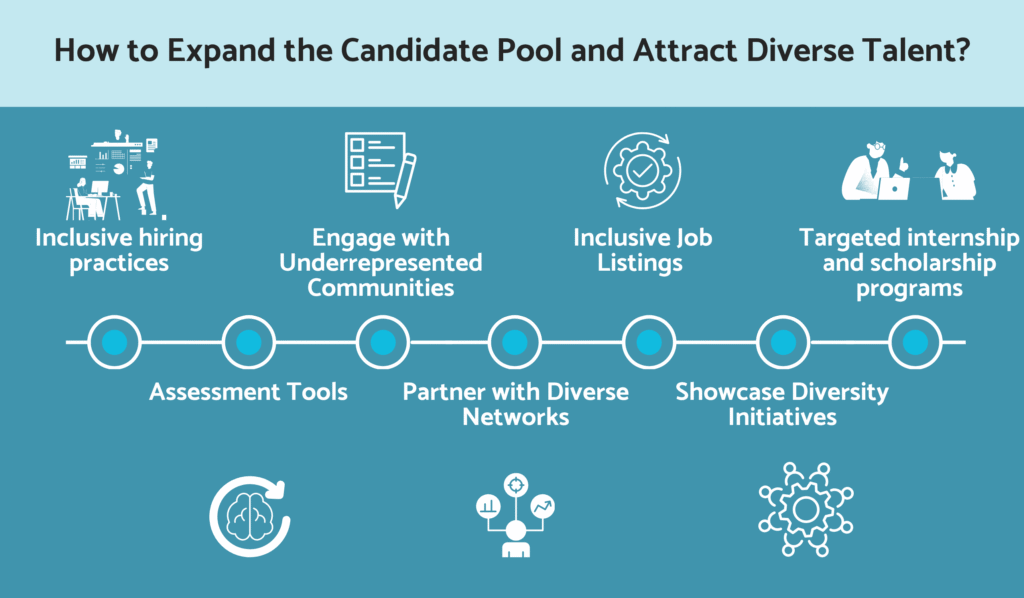
- Inclusive Hiring Practices: Implement inclusive hiring practices that mitigate bias. Incorporate diversity and inclusion training for your hiring teams, making them aware of potential biases and their impact on candidate selection.
For example, unconscious bias training programs such as Harvard’s Implicit Association Test (IAT) can help hiring teams identify and mitigate hidden preferences during recruitment.
- Assessment Tools: Leverage assessment tools in your recruitment process. These tools offer objective evaluations, reducing the potential for bias in candidate selection. For example, structured interviews and skills assessments can help identify top talent based on merit.
For example, platforms like Assess Candidates use data-driven, game-based assessments to measure candidate potential without overreliance on resumes.
- Engage with Underrepresented Communities: Actively engage with underrepresented communities by attending career fairs, webinars, or industry events focusing on diversity. Participate in mentorship programs and build relationships with organizations that promote diversity in your industry.
For example, initiatives like NASSCOM’s Women Wizards Rule Tech (W2RT) program provide mentorship and exposure opportunities for women in the technology and finance sectors.
- Partner with Diverse Networks: Collaborate with diverse networks and organizations. Partnering with professional groups, nonprofits, or associations that support diversity can help you access a more diverse talent pool.
For example, partnerships with groups like Women in Banking & Finance (WIBF) or National Minority Supplier Development Council (NMSDC) can expand outreach to diverse professionals.
- Inclusive Job Listings: Craft inclusive job listings by using gender-neutral language and avoiding jargon that may alienate potential candidates. Ensure that your job descriptions appeal to a broad range of candidates.
For example, using tools like Textio helps identify and replace biased or exclusive language in job descriptions, improving the inclusivity of postings.
- Showcase Diversity Initiatives: Highlight your organization’s diversity initiatives in your employer branding. Share success stories, employee testimonials, and the concrete steps you’ve taken to foster an inclusive culture. This transparency can attract candidates who value diversity.
For example, publishing annual Diversity, Equity & Inclusion (DEI) Reports like those from HSBC or JP Morgan Chase demonstrates accountability and commitment to inclusion.
- Targeted Internship and Scholarship Programs: Develop internship and scholarship opportunities specifically designed for candidates from underrepresented backgrounds. This not only provides early career exposure and skill development but also builds a future talent pipeline for diverse hiring.
For example, programs like Goldman Sachs’ Launch with GS and HDFC Bank’s Parivartan Scholarship actively support diverse talent by funding education and early career training.
By implementing these strategies, you can effectively expand your candidate pool and attract a diverse array of top talent, making your organization more innovative, resilient, and competitive.
Ensure top candidate experience with our cutting-edge technology solutions! HIRE FOR FREE
But how do hiring tests improve candidate experience? The section below will discuss this in detail.
6. How can recruitment assessments improve the candidate experience?
Understanding how to expand your candidate pipeline and motivate top talent through the recruitment process is essential. However, it is equally important to leverage hiring assessments effectively as a powerful tool to enhance the overall candidate experience.
Pre-employment assessments not only streamline the hiring process but also significantly impact candidate motivation.
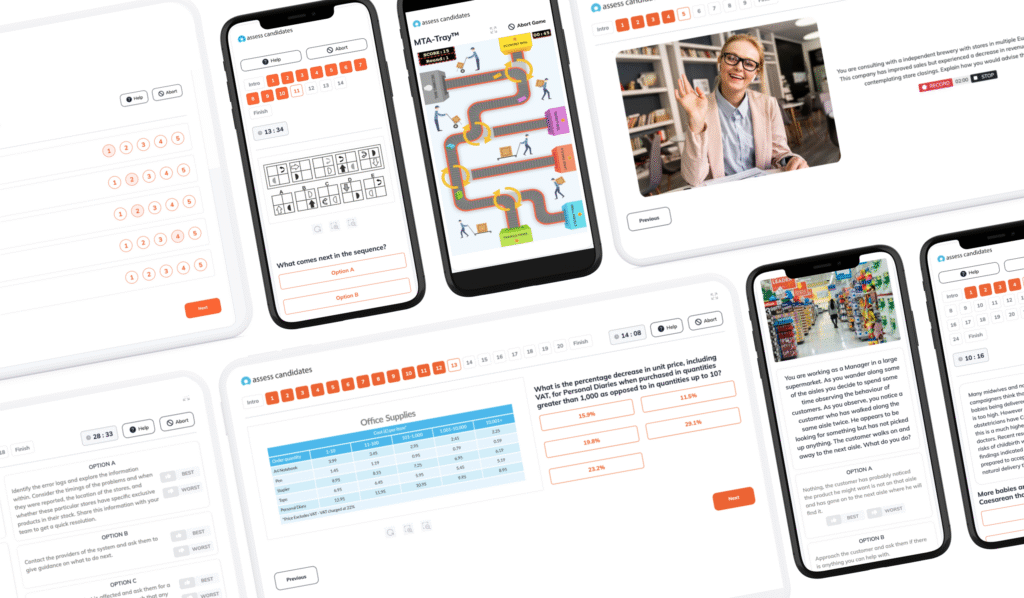
Nearly 4 in 5 candidates (78%) say the overall candidate experience they receive is an indicator of how a company values its people.
Here’s how various assessment methods contribute to an improved candidate experience and attract top talent.
How do hiring assessments impact the candidate experience?
1. Objective Evaluation
Pre-employment assessment tools like psychometric tests offer a transparent and equitable evaluation of candidates’ skills and competencies. For example, gamified assessments provide an engaging and unbiased way to assess a candidate’s abilities. This objectivity fosters trust and motivates top candidates who appreciate fairness.
2. Skill Focus
Top candidates are drawn to roles that challenge and utilize their skills. Smart video interviews, where candidates showcase their problem-solving abilities and communication skills, provide a direct and interactive platform for them to demonstrate their expertise.
3. Streamlined Selection Process
Engaging automated assessment tests simplify and speed up the selection process, saving candidates valuable time and reducing frustration. This efficiency and convenience are highly valued by top candidates, enhancing their overall experience and motivation.
4. Constructive Feedback
Some assessments offer valuable feedback to candidates, outlining their strengths and areas for development. This feedback-driven approach, often seen in situational judgment tests and psychometric testing, not only aids candidates in their growth but also boosts the company’s image as future-oriented.
Talent is 4x more likely to consider your company for a future opportunity when you offer them constructive feedback.
5. Personalization
Gamified assessments, which adapt based on a candidate’s skill level, offer a personalized experience. This tailored approach acknowledges the candidate’s unique abilities, making them feel valued and motivated to excel.
6. Candidate-Centric Approach
Assessment methods that prioritize the candidate’s experience create a positive perception of the organization. Gamified assessments, in particular, are designed to be engaging and enjoyable, providing candidates with a memorable experience and motivating them.
Organisations that invest in gamification make 90% of hires more productive.
7. Job Fit Enhancement
Various assessments, such as video interviews, evaluate a candidate’s alignment with the role and organizational culture. When candidates perceive a strong job fit, they become highly motivated to perform at their best.
In summary, assessments like game-based tests, video interviews, and engaging psychometric tests when thoughtfully implemented, foster a candidate-centric experience. They help motivate and attract top talent.
An exceptional assessment experience not only wins the best candidates but also sets the stage for their long-term success within your organization.
Hire with confidence while ensuring top candidates have the best experience with our testing platform. LEARN MORE
7. Emerging trends for candidate motivation and engagement in recruitment
Modern recruitment will see substantial changes as future generations, such as Gen Z, enter the workforce. To motivate top candidates effectively in the distant future, recruiters must anticipate these transformative hiring trends.
Top recruitment trends affecting candidate motivation
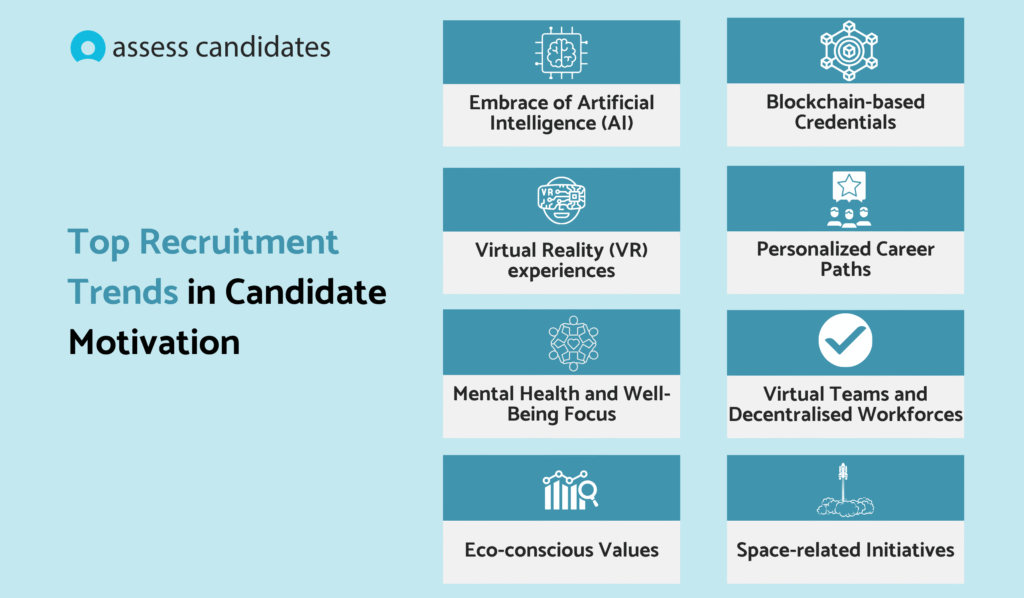
- Embrace of Artificial Intelligence (AI): Advanced AI-driven tools will not only streamline the hiring process but also provide personalized job recommendations. This enhances the motivation of candidates who feel their unique preferences and strengths are acknowledged.
- Virtual Reality (VR) Experiences: VR will revolutionize the interview process. Candidates can virtually explore the workplace culture and environment, immersing themselves in a potential role, amplifying their motivation to join.
- Mental Health and Well-Being Focus: Future candidates will prioritize employers who genuinely care about their mental health and overall well-being. Companies with robust well-being programs and mental health support will attract and motivate top talent.
- Eco-Conscious Values: An eco-conscious workforce will seek employers with strong environmental ethics. Companies committed to sustainability and green practices will resonate with candidates who seek purpose beyond profit.
- Blockchain-Based Credentials: Blockchain technology will revolutionize credential verification. Candidates can securely and transparently share their qualifications, boosting their motivation by knowing their achievements are acknowledged and secure.
- Personalized Career Paths: Recruitment will be personalized with career roadmaps tailored to each candidate. Organizations offering clear paths to professional growth and development will motivate top talent looking for long-term commitment.
- Virtual Teams and Decentralised Workforces: Distributed teams and virtual collaboration will become the norm. Companies that offer opportunities for innovative virtual teamwork will engage motivated candidates looking for flexibility and global collaboration.
- Mars and Beyond: As space exploration advances, candidates may aspire to work in space-related roles. Employers associated with space endeavors will captivate individuals motivated by extraordinary opportunities.
Understanding these future dynamics and trends is vital for recruiters seeking to attract and retain top talent. Adapting to these evolving motivations will be key to success in the competitive recruitment landscape of the distant future.
8. Motivating Top Candidates with Tailored Assessments: Client Success story
Client Problem Statement
A leading private bank faced difficulty attracting and retaining top-tier candidates despite offering competitive pay and benefits. Many high-potential applicants dropped out midway through the hiring process, citing disengagement and lack of clarity about career growth. Recruiters noticed that standardized assessments and rigid interview structures often failed to capture candidates’ true potential or motivation.
As a result, the bank struggled with low offer acceptance rates, longer hiring cycles, and new hires who lacked enthusiasm or long-term commitment. Over time, this reduced the overall energy, innovation, and cultural fit within the organization.
Assess Candidates’ Proposal
To address these challenges, the bank partnered with Assess Candidates to create a more motivating, personalized, and engagement-driven recruitment experience. Instead of relying solely on one-size-fits-all testing, the goal was to identify what truly drives candidates. Their intrinsic motivators, work values and aspirations, and alignment with the organization’s goals were kept as the priority.
How to attract and retain top talent?
- Motivation Profiling Assessments: Custom motivation mapping tools were introduced to uncover what energizes each candidate, whether it is achievement, recognition, learning, or stability.
- Personalized Communication During Recruitment: Recruiters tailored their messaging to highlight aspects of the role that matched the candidate’s core drivers, enhancing emotional connection and clarity.
- Purpose-Aligned Job Previews: Interactive virtual job previews allowed candidates to visualize how their motivations align with daily work realities, building transparency and reducing mismatched expectations.
- Strength-Based Interviewing: Interviewers were trained to identify areas where candidates felt most energized and capable, boosting confidence during assessment.
- Recognition and Feedback Loops: Timely, personalized feedback was given to candidates post-interview, recognizing effort and potential contribution even before final selection.
- Realistic Career Growth Narratives: Recruiters presented tangible, motivation-aligned growth paths such as mentorship, leadership tracks, or lateral development opportunities to reinforce long-term commitment.
Result
After implementing this motivation-focused hiring strategy, the bank saw a significant improvement in offer acceptance rates and a reduction in early attrition. New hires demonstrated higher engagement scores and quicker integration within teams. Recruiters reported smoother interactions, shorter hiring cycles, and improved alignment between candidate expectations and role realities.
Most importantly, motivated hires performed better in their first-year reviews compared to previous cohorts. The bank concluded that recognizing and nurturing candidate motivation not only improved hiring outcomes but also strengthened its employer brand as a place where individual purpose meets organizational growth.
So, why choose us?
9. Why do top companies prefer Assess Candidates for smarter hiring?
At Assess Candidates, we don’t just support smarter hiring; we help you shape a strong, lasting impression on your talent pool from the very first interaction. Our tailored pre-employment assessment solutions are built to reflect your company’s values, strategic goals, and employee experience standards, ensuring every assessment touchpoint enhances your reputation as a forward-thinking employer.
Below is a preview of the campaign reporting dashboard available on the Assess Candidates platform.
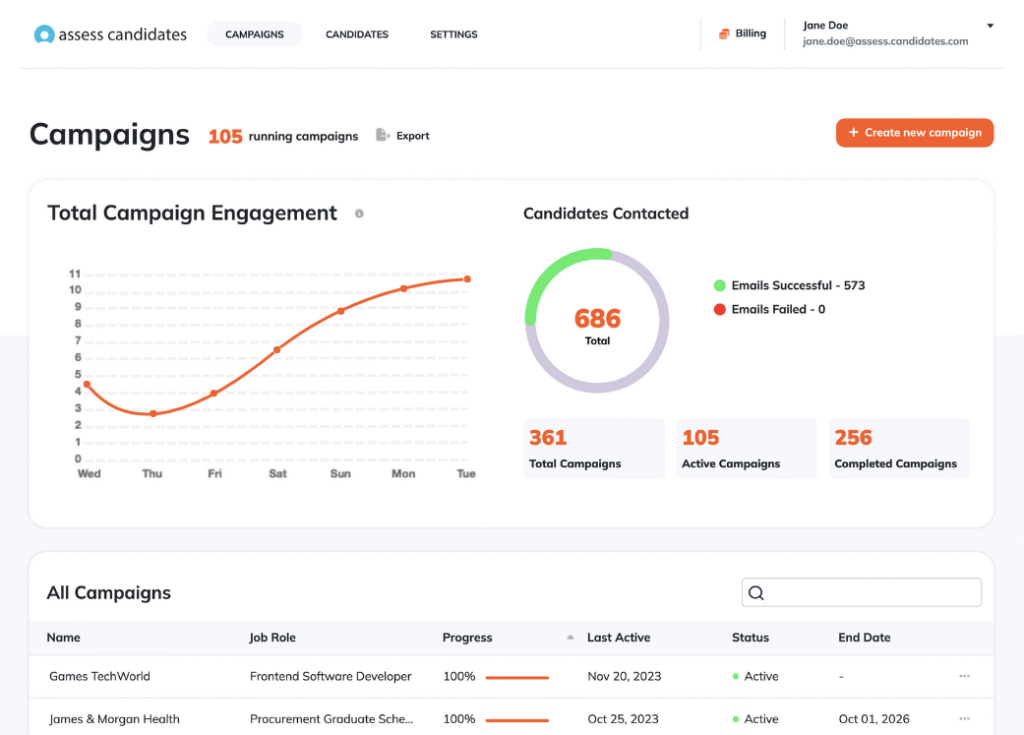
The top 4 reasons why you should use Assess Candidates for hiring
- Scientifically Developed and Expertly Crafted: The strongest assessment process offers positive and engaging candidate experience with cognitive, behavioral, or role-specific skill testing. Doing this signals transparency, objectivity, and a commitment to fair hiring. Assess Candidates’ pre-employment assessments are built by Chartered Scientists, Psychologists, and Psychometricians with backgrounds at leading firms like SHL and IBM Kenexa. Each assessment is rigorously validated to accurately measure real-world capabilities and job-relevant competencies, helping you define precise requirements in your job descriptions that attract the right talent.
- Insightful Data to Shape Role Requirements: Our intuitive platform generates clear, detailed reports on skills and competencies, making it easier to identify must-have abilities for each position. These insights allow you to set specific, evidence-based criteria in your job descriptions, ensuring they reflect the true demands of the role and reduce irrelevant applications.
- Engaging Branded Candidate Experience: Job descriptions aren’t just lists of duties, they are an extension of your employer brand. By integrating Assess Candidates’ mobile-optimized, interactive assessments into your recruitment process (and mentioning them in your job ads), you demonstrate your organization’s commitment to professional growth, fairness, and innovation. This encourages top candidates to apply and submit higher-quality, tailored resumes.
- Built for Accessibility and Inclusion: The Inclusive assessment process caters to a broader, more diverse pool of candidates. Our assessments are fully accessibility-compliant, offering features like extended time, zoom functionality, screen reader compatibility, and WCAG-compliant design. By embedding this commitment to accessibility into your job descriptions, you show applicants that your organization values equal opportunity and supports every individual’s success.
Assess Candidates is a leading provider of pre-employment assessment solutions that empowers organizations to create an effective recruitment process. With our scientifically validated assessments and customizable integration, you can take the next step toward smarter, more efficient recruitment today.
Not sure if pre-employment assessments are right for your hiring process? Get in touch with us for a free-of-charge analysis of your recruitment needs.
Interested in learning more about effective candidate assessment? Continue reading for frequently asked questions, and sign up with your email to get started.
Frequently Asked Questions
What are the key factors influencing qualified candidates’ motivation?
The key factors that influence candidate motivation include competitive compensation packages, opportunities for career advancement, fostering a positive company culture, maintaining a work-life balance, and providing professional development. Additionally, inclusivity, recognition, and work engagement also motivate top candidates to excel in their roles.
What are the challenges associated with attracting diverse talent, and how can recruiters address them?
Attracting diverse talent can be challenging due to biases and a lack of inclusivity in hiring processes. Recruiters can address these challenges by implementing inclusive hiring practices, leveraging assessment tools that reduce bias, and engaging with underrepresented communities. Partnering with diverse networks, organizing internship and scholarship programs, and crafting inclusive job listings also help attract diverse talent globally..
How is remote work reshaping the priorities of top candidates?
Remote work has reshaped candidate motivations by elevating the importance of work-life balance and emphasizing a strong company culture even in virtual settings. Highlighting the significance of inclusivity and diversity, workplace autonomy and flexibility are also key priorities amongst top candidates, especially Gen Z.
How can recruitment assessment improve the experience of your candidates?
Pre-employment assessments enhance the candidate experience by providing objective evaluations, focusing on candidates’ skills, and streamlining the selection process. Offering constructive feedback and delivering a personalized and engaging experience also boosts the candidate’s trust in the company.
What are the future trends for candidate motivation in recruitment?
Future trends affecting candidate motivation in recruitment include the embrace of artificial intelligence, virtual reality experiences, and a strong focus on mental health and well-being. Eco-conscious values, blockchain-based credentials, personalized career paths, virtual teams, and space-related opportunities are also key in shaping the hiring trends for candidate motivation in recruitment.


 English
  Arabic