
Overcoming Candidate Anxiety in Recruitment: Effective Strategies for 2026



For many job seekers, the recruitment process can be stressful and often leads to candidate anxiety.
A JDP survey found that 93% of candidates have experienced job interview anxiety at some stage in their career. Among them, 41% worry most about struggling to answer tricky questions, while 20% are concerned about appearing nervous.
In this guide, we’ll explore the causes of candidate anxiety, the role of modern assessments, and the practical strategies you can implement to ensure every applicant performs their best regardless of stress and nerves.
Contents
- What is candidate anxiety in recruitment?
- How anxiety affects the candidate experience in hiring
- Stages of candidate anxiety during recruitment
- How candidates can overcome anxiety before a job interview
- What are the benefits of overcoming candidate anxiety?
- What are key interview strategies to calm candidates?
- Psychometric assessments that reduce candidate anxiety
- Why do companies choose Assess Candidates for recruiting?
- How will reducing candidate anxiety shape your company’s future?
Without further ado, let us find out more about overcoming candidate anxiety!
1. What is candidate anxiety in recruitment?
Candidate anxiety in recruitment is the stress, nervousness, or fear candidates experience during hiring activities such as applications, assessments, interviews, and waiting for hiring decisions.
Interview stress is particularly common, and many candidates admit it has cost them job offers and opportunities. Recruiters have responded by focusing on how to recognize and reduce interview nerves.
By understanding what causes candidate anxiety and supporting applicants more effectively through every step of the recruitment journey, employers can create fairer, stress-free hiring experiences. This reflects positively on their employer brand and reputation and ensures more accurate hiring results unskewed by anxiety.
According to research by Therapyroute, the COVID-19 pandemic led to an increase in anxiety disorders worldwide in 2020.
Wondering how interviewers might be able to spot a nervous candidate during a recruitment process?
How do interviewers know when a candidate is nervous during an interview?
Nervousness is natural in high-stakes situations, but research shows anxious candidates are often rated less favorably, undermining fairness. Interviewers need to detect signs of stress so they can understand cues, respond appropriately, and help candidates feel more confident.
Here are the ways in which interviewers can recognize candidate anxiety
- Physical Signs
Nervous candidates often show their anxiety through physical behaviors, such as sweating, shaking hands, fidgeting with objects such as pens, jewelry, or clothing, tapping their feet, shifting constantly in their seat, struggling with dry mouth, or rapid/uneven breathing.
- Verbal Signs
Candidate anxiety can also be detected in the way candidates speak if they talk too quickly, ramble, or give very short or rushed answers that do not reflect their experience levels. Many rely heavily on filler words like “um,” “uh,” or “you know”, or their voice may tremble or crack, making them appear less confident.
- Cognitive and Behavioral Signs
Interview nerves can affect memory and behavior, as candidates may forget important details, go completely blank on simple questions, or rely on overly rehearsed answers that sound unnatural. Nervous laughter, inappropriate smiling, avoiding eye contact, or looking down repeatedly are also signs that they are struggling with nerves.
- Overall Demeanor
An interviewer can often perceive anxiety in a candidate’s overall presence through the way they sit too stiffly, appear overly formal, hesitate before answering, second-guess themselves, or hold back from asking questions. In many cases, these behaviors prevent them from fully engaging in the conversation.
Hire with our psychometric tests that offer fair, consistent insights to help minimize candidate anxiety. HIRE FOR FREE
With a detailed explanation of candidate anxiety covered, let’s take a look at the broader candidate experience in hiring.

2. How anxiety affects the candidate experience in hiring
The candidate experience is a job seeker’s overall perception of the recruitment process, shaped by every interaction from job discovery to onboarding, and how they are treated at each stage.
Positive recruitment experiences do more than improve perception. They help employers attract stronger candidates and encourage them to stay engaged throughout the hiring process. A negative experience however, risks heightening candidate anxiety, damaging reputation, and causing employers to miss out on top talent.
That’s why it is critical for employers and recruiters to ensure fairness, consistency, and empathy for every candidate at every stage of the hiring journey.
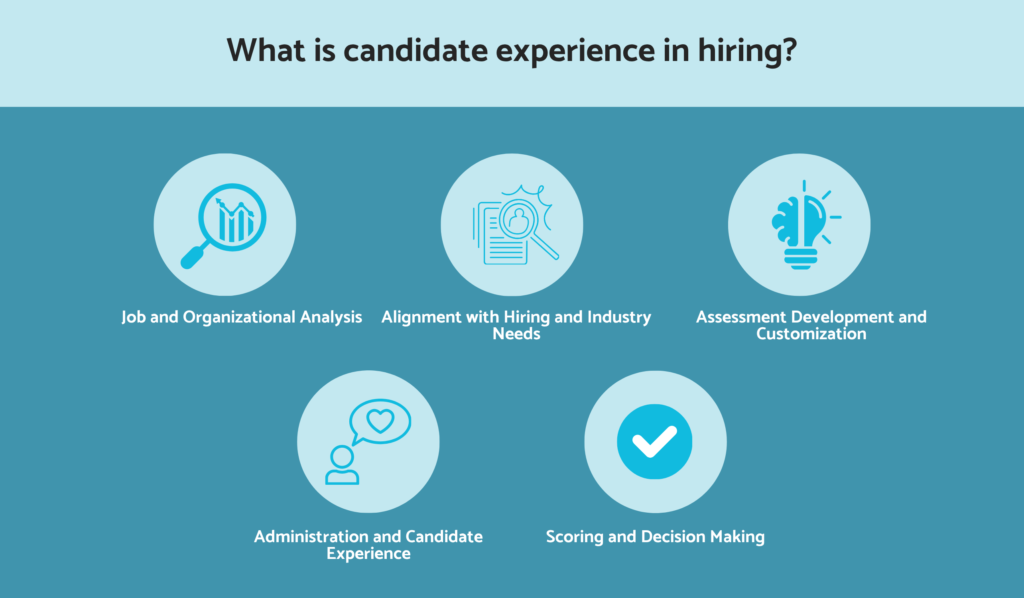
5 key phases of the candidate experiences and how anxiety appears
1 . Job Discovery and Application
The candidate experience and anxiety begin the moment someone discovers a job opportunity. At this stage, the clarity of the job description and the inclusivity of the language used make a strong first impression. Candidates also pay close attention to how easy or difficult the application process is, which can influence anxiety levels. If it feels smooth and user-friendly, they are more likely to feel motivated, while overly long or confusing forms can quickly discourage them.
2 . Communication and Engagement
Once applicants apply, communication becomes the next critical stage, and without it, they fear that they are not selected. They want timely updates, clear expectations, and instructions about what comes next. Personalized messages or thoughtful engagement show respect for their time and effort. Silence, generic responses, or long waiting periods can create frustration and anxiety.
3 . Interview and Assessment
The interview process is where candidates face their anxiety and form their deepest impressions of the company. Professional, well-prepared interviewers and fair pre-employment psychometric assessments signal respect and seriousness. In contrast, rushed, disorganized, or overly stressful interviews can make candidates feel undervalued and lead them to question whether the company truly cares about its people.
4 . Feedback and Transparency
Job seekers place a high value on feedback and transparency and no feedback will heighten their anxiety. Even if they are not selected, constructive feedback helps them improve for the future and shows that the company values their effort. Transparency about timelines and decisions fosters trust and prevents the uncertainty and stress that arise from being left in the dark.
5 . Offer and Onboarding
The offer and onboarding stage is the final step in the candidate journey. A transparent, timely, and fair offer process reassures candidates that they’ve made the right decision. During onboarding, they are introduced to the team and company culture. At this stage, candidates often worry about fitting in and meeting expectations, so creating a welcoming environment is essential to build confidence and lay the foundation for long-term engagement.
Use our talent assessment psychometric platform to ensure a positive candidate experience. LEARN MORE
These candidates’ experiences are often shaped by the stages of recruitment, during which candidates have shared their experiences of interview anxiety. Check out these stages below.
3. Stages of candidate anxiety during recruitment
Anxiety is a natural part of the recruitment process, and many candidates feel its effects at different stages of their journey. While a certain level of nervousness is normal, heightened anxiety can interfere with performance and prevent candidates from showing their true potential.
Understanding where anxiety appears in the recruitment journey allows employers to design a process that measures capability rather than confidence alone.
Here are the main stages in which candidates experience anxiety in recruitment:
- Before and During Assessment Tests
For many candidates, anxiety starts as soon as they are invited to take an assessment test. Concerns about time pressure, unfamiliar question formats, or underperforming compared to other applicants can heighten nerves. Candidates may also fear that one poor test result could eliminate them entirely, which adds extra pressure.
- Before the Interview (Anticipatory Anxiety)
Candidate anxiety often begins well before the interview itself, as many candidates find themselves overthinking about how they will perform and whether they will meet expectations. They question if they are genuinely qualified for the role, and this worry can become so intense that it affects their rest and alters their performance during an interview.
- During the Interview
When the interview begins, anxiety often manifests as physical symptoms like sweating, shaky hands, dry mouth, or a racing heartbeat. Mentally, candidates may have blocks that hinder their ability to recall experiences or articulate skills. Their speech might be rushed, stumble, or go blank, while behaviors like avoiding eye contact, fidgeting, or nervous laughter highlight their discomfort.
- After the Interview
Even once the interview is over, anxiety does not always disappear. Many candidates replay the conversation in their minds, worrying about whether they said the right things or made mistakes. The uncertainty of waiting for feedback or a decision only adds to the stress, leaving them in a state of unease long after the interaction ends.
- Assessment Centers
During assessment centers, candidates are not only being evaluated individually but also compared directly against peers. Anxiety here often stems from fear of underperforming in a competitive environment, difficulty standing out in group exercises, or worrying about how assessors perceive their every move.
Candidate anxiety often occurs in both physical and virtual job interviews; however, it appears more in physical spaces. This has led to rising questions on how to overcome candidate anxiety in recruitment.
Hire top talent with our psychometric tests to prevent candidate anxiety from affecting your recruitment. HIRE FOR FREE
Overcoming anxiety before a job interview can significantly boost a candidate’s performance in the recruitment process. Many job seekers have searched for ways to overcome this anxiety before their interviews.
Check out the various ways in which recruiters suggest how candidates can get rid of pre–interview anxiety.
4. How candidates can overcome anxiety before a job interview
Interview nerves are one of the biggest challenges that nearly all candidates face when applying for a role in a company. Many recruiters have realized that job seekers often research ways to overcome this anxiety before they begin their interview.
Below, we have highlighted helpful tips recruiters and employers can offer to candidates who are looking to overcome their anxiety before a job interview.
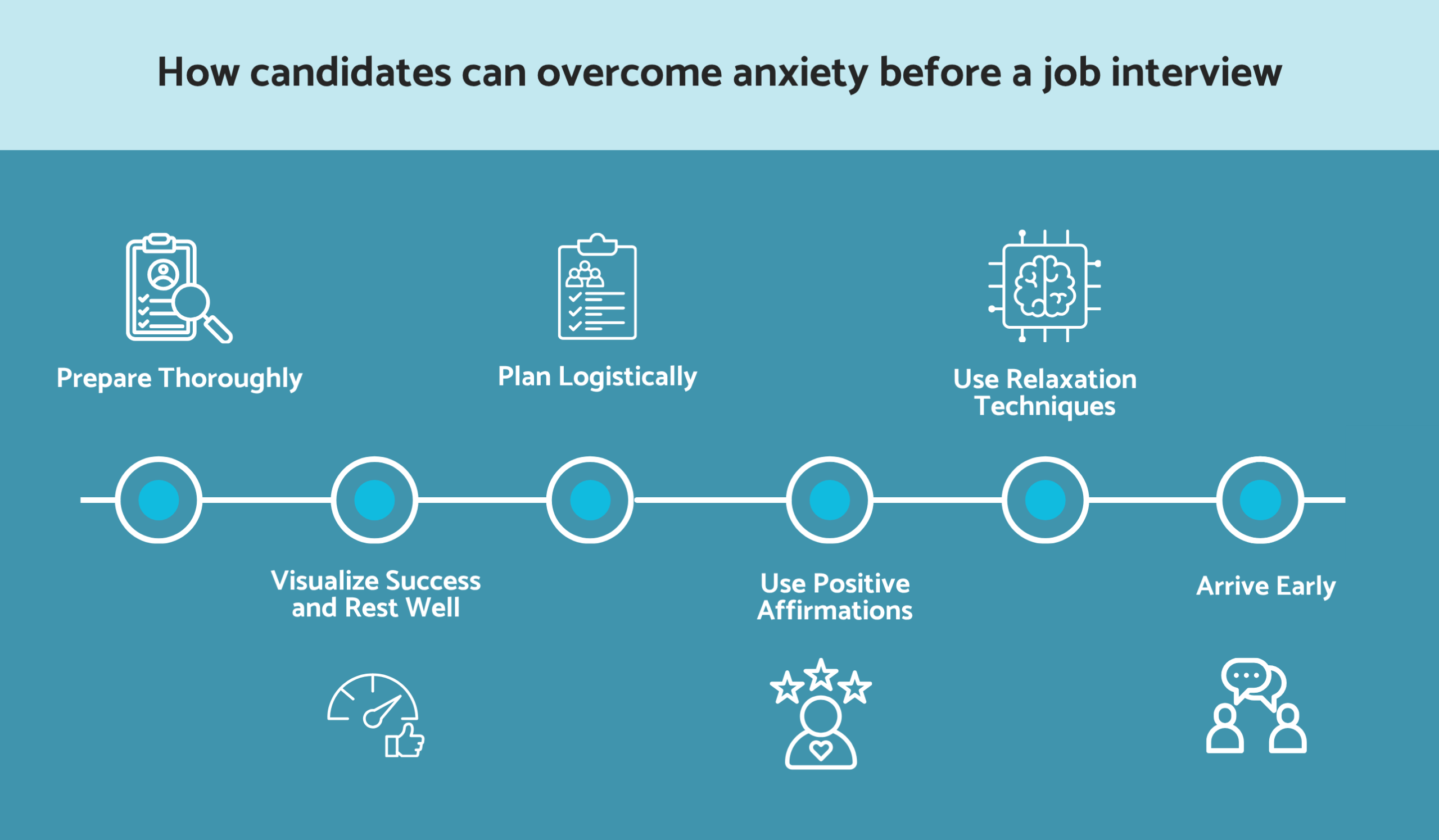
Top 6 recommended strategies to help overcome candidate anxiety before a job interview:
1. Prepare Thoroughly
Confidence comes from preparation, so researching the company, reviewing the job description, and reflecting on how achievements align with the role will help boost confidence. Encourage candidates to practice answering common interview questions with a video interview tool, a friend, a mentor, or even in front of a mirror. Encourage them to record practice responses to review their tone, pacing, and body language.
2. Plan Logistically
Avoiding last-minute stress by preparing outfits, documents, and the route to the interview location (or setting up technology for a virtual interview) the day before. Feeling in control of the logistics lowers anxiety.
3. Use Relaxation Techniques
Job seekers can take time to calm their body and mind before the interview with simple techniques like deep breathing, meditation, or even light exercise. It also helps candidates remember that interviews are a two-way evaluation process, enabling them to see if the company is the right fit for them. Treating it as a two-way conversation will ease the pressure and help the applicants show up more confidently.
4. Visualize Success and Rest Well
Before the interview, candidates are advised to get a good night’s sleep and take a few moments to visualize themselves walking in confidently, answering questions with ease, and leaving on a high note. Rest and positive visualization work together to calm nerves, sharpen focus, and help job seekers perform at their best.
5. Use Positive Affirmations
Recruiters often tell candidates to remind themselves of their skills, strengths, and accomplishments, as it can help counter self-doubt and boost their confidence.
6. Arrive Early
Provide enough time to arrive at the location or join the call without rushing. Candidates can use those extra minutes to breathe, gather their thoughts, and adjust to the environment.
Following these steps will reward candidates with a prepared mind when they start the recruitment process. To discover better ways to assess candidates while reducing their anxiety, reach out to us for a free evaluation of your recruitment needs.
Overcoming pre-interview stress can significantly influence candidates’ perceptions of the rest of the recruitment process. To that, check out the benefits of overcoming candidate anxiety.
5. What are the benefits of overcoming candidate anxiety?
Getting rid of interview nerves can boost a candidate’s performance in the workplace, as well as their interactions with colleagues. Overcoming candidate anxiety isn’t just about passing an interview; it is also about improving one’s mental and emotional approach to professional challenges.
Here are 8 top benefits of taking steps to work on overcoming candidate anxiety:
1. Improved Performance
When anxiety is reduced, candidates can think more clearly, process questions effectively, and provide well-thought-out answers. This can lead to a stronger performance during the interview.
2. Boosted Confidence
Managing anxiety helps candidates feel more confident in their abilities, making them more likely to highlight their strengths and present themselves positively.
3. Better Communication
Anxiety often causes speech issues like stumbling over words or not articulating thoughts clearly. By overcoming this, candidates can communicate more fluently, making their ideas more convincing and impactful.
4. Increased Authenticity
Candidates are more likely to be themselves and express genuine interest in the job, rather than focusing on how they’re being perceived, leading to a more authentic interaction.
5. Stronger Body Language
Reduced anxiety helps candidates maintain more relaxed, open, and positive body language, which can leave a better impression on the interviewer.
6. Reduced Stress Post-Interview
Managing anxiety allows candidates to feel more in control during and after the interview, reducing stress and helping them remain positive, regardless of the outcome.
7. Opens Opportunities
When candidates overcome anxiety, they are more likely to take risks and apply to roles that might have felt intimidating initially, thus increasing their job prospects.
8. Long-Term Career Growth
Candidates who manage anxiety build resilience over time, which can translate into better performance in future job searches, networking events, and even within their workplace roles.
Improve your candidate experience with our pre-employment assessments for excellent hiring. LEARN MORE
Recruiters, employers, and interviewers often recognize nervousness in candidates during the recruitment process and have developed strategies to help them feel comfortable, ensuring a smooth process.
What are the negative impacts of candidate anxiety in recruitment?
Recruitment processes are high-stakes situations, and the pressure to perform often heightens candidate stress, making it harder for them to present their true capabilities. When left unaddressed, this anxiety not only affects the individual but also undermines the fairness, accuracy, and overall effectiveness of the hiring process.
Understanding the negative impacts of candidate anxiety is essential for recruiters who want to make confident, unbiased decisions and provide a positive experience for applicants.
We have highlighted 6 negative impacts of candidate anxiety that job seekers face in recruitment:
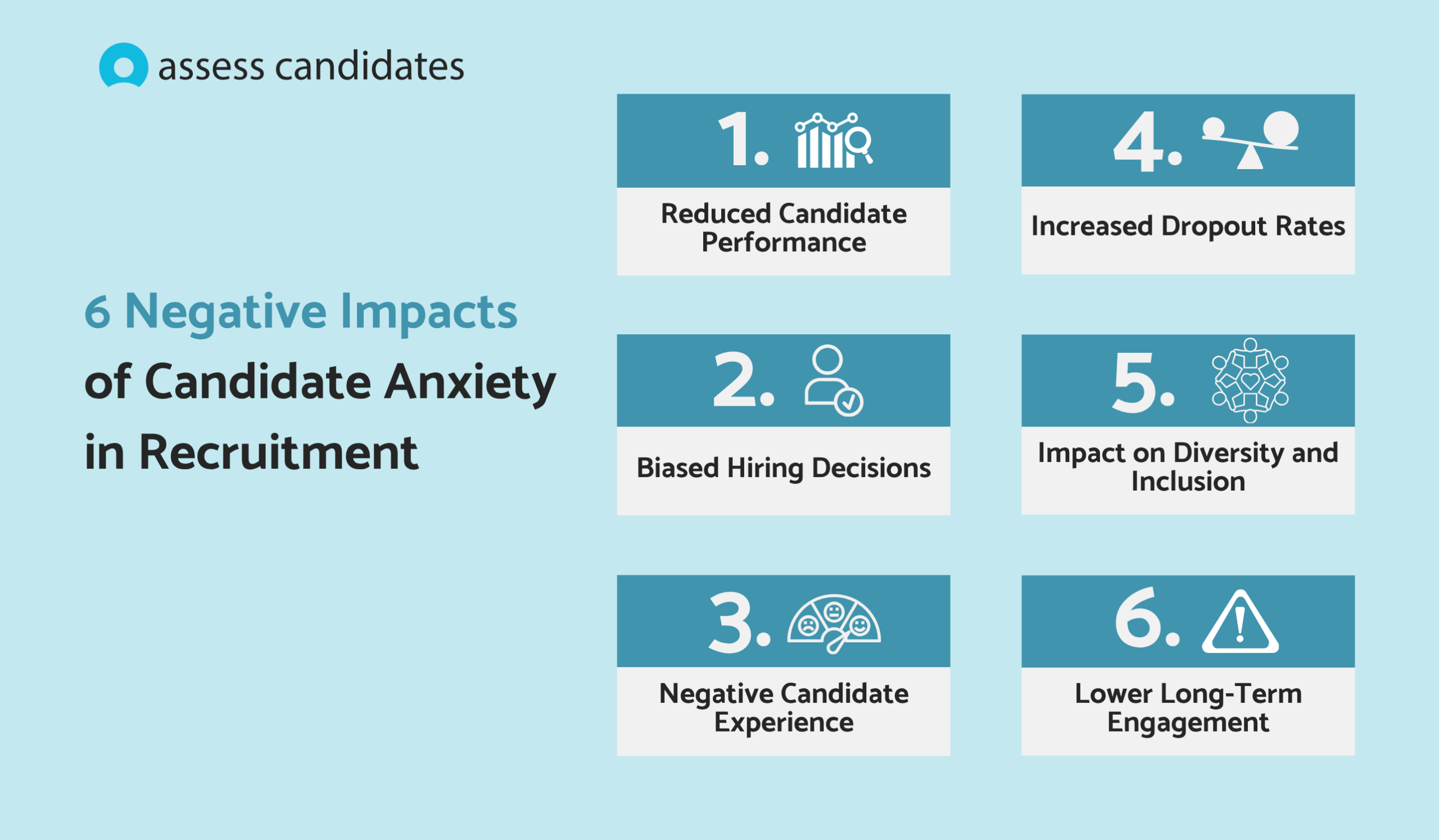
- Reduced Candidate Performance
Anxiety can prevent candidates from presenting their actual abilities. Nervousness often leads to forgotten details, rushed or unclear responses, and difficulty showcasing skills. As a result, competent candidates may appear less competent than they really are.
- Biased Hiring Decisions
When recruiters unconsciously judge anxious behavior as a lack of confidence or competence, strong candidates may be unfairly overlooked. This bias reduces the likelihood of hiring the best-fit talent and can lower the overall quality of hires.
- Negative Candidate Experience
Candidates who feel anxious and unsupported often associate that interview stress with the company itself. This creates a poor candidate experience, which can harm the employer brand and reduce the likelihood of applicants reapplying or recommending the company to others.
- Increased Dropout Rates
If the recruitment process feels intimidating or overwhelming, anxious candidates may withdraw before completing it. This leads to higher candidate dropout rates and a smaller, less diverse talent pool for employers to choose from.
- Impact on Diversity and Inclusion
Anxiety may disproportionately affect candidates from underrepresented or marginalized groups, who often face additional barriers in recruitment. If not addressed, this can unintentionally limit workplace diversity and reinforce inequities in hiring.
- Lower Long-Term Engagement
Even when anxious candidates are hired, starting the relationship with a stressful experience can reduce their initial sense of belonging. This may affect early performance, confidence, and long-term engagement with the company.
Below, we have drafted key strategies in which interviewers can help alleviate a candidate’s anxiety in recruitment.
6. What are the key interview strategies to calm candidates?
According to HireVue, approximately 30% of interviewers were found to have made a decision about an applicant within the start of the interview meeting.
To calm candidates during interviews and ensure they perform their best, recruiters are advised to consider these strategies.
7 Best Strategies to Calm Candidate Anxiety During an Interview
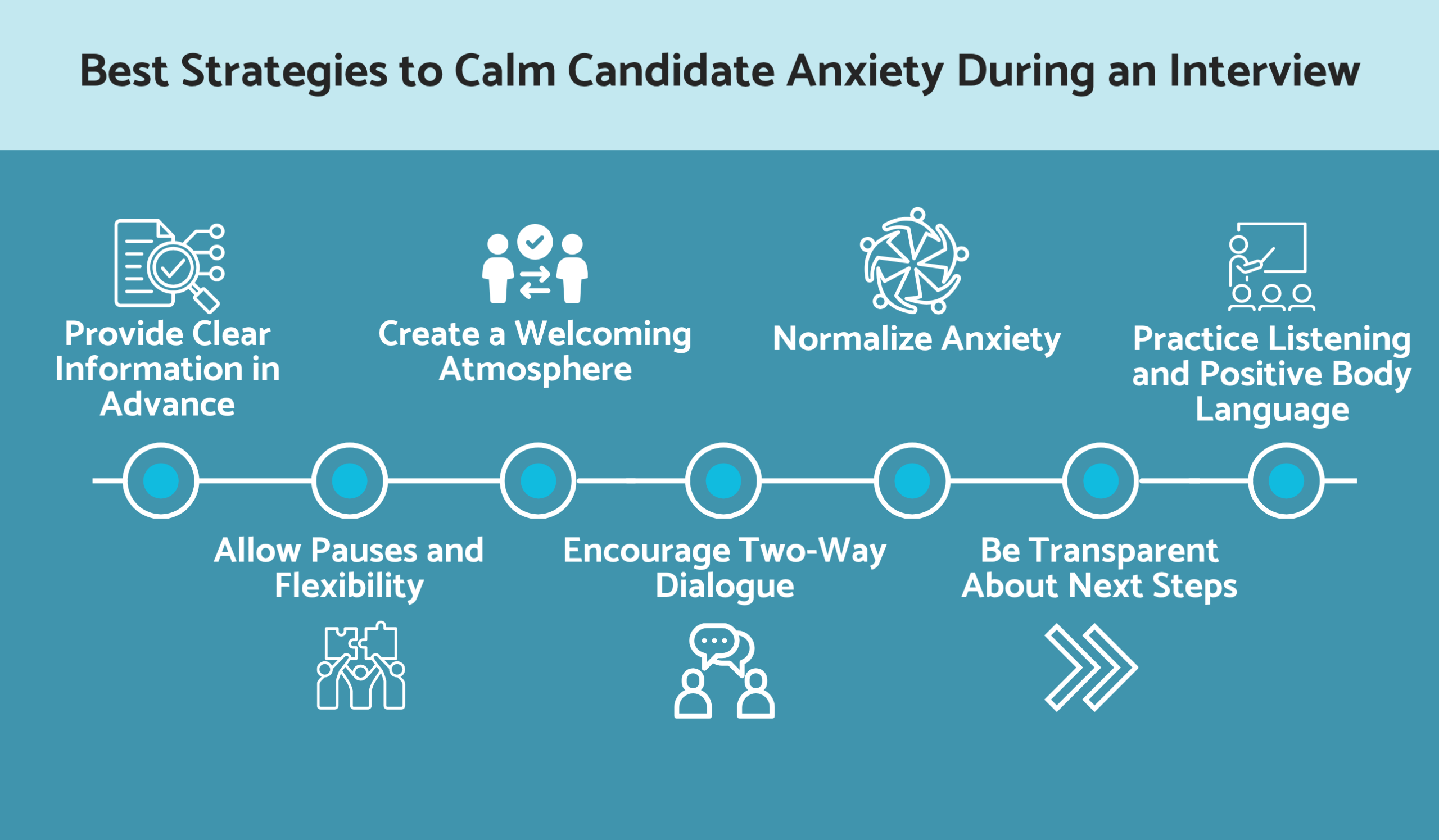
1. Provide Clear Information in Advance
Share details about the interview format, the names and roles of interviewers, and any preparation required. Knowing what to expect reduces uncertainty and helps candidates feel more prepared.
2. Create a Welcoming Atmosphere
Start the conversation with a friendly greeting or small talk to break the ice. Simple gestures like offering water or checking that they are comfortable can go a long way toward easing nerves.
3. Normalize Anxiety
Acknowledge that interviews can be stressful and reassure candidates that some anxiety is entirely normal. This helps them feel seen and less pressured to appear “perfect.”
4. Practice Listening and Positive Body Language
Maintain eye contact, nod, and smile to signal attentiveness and encouragement. Positive nonverbal cues help candidates feel respected and at ease.
5. Allow Pauses and Flexibility
Give candidates time to think before answering, and don’t rush them. If they stumble, gently encourage them to continue rather than moving on too quickly.
6. Encourage Two-Way Dialogue
Frame the interview as a conversation rather than an interrogation. Encourage candidates to ask questions and treat it as an opportunity for mutual evaluation.
7. Be Transparent About Next Steps
Explain the timeline for decisions and when they can expect feedback. This clarity helps reduce post-interview anxiety and prevents uncertainty from lingering.
Some interviewers have taken the next step in earning candidate trust and building their confidence during recruitment by ensuring that all candidates take part in bias-free pre-employment psychometric assessment tests, all answered within the comfort of the candidate’s environment.
If you’re an employer looking for better ways to assess candidates while easing their anxiety, contact us for a free evaluation of your recruitment needs.
Organizations that combine structured interviews with standardized psychometric assessments often create a more consistent and less stressful experience for candidates.
7. Psychometric assessments that reduce candidate anxiety
Pre-employment psychometric assessments help ease candidate anxiety by creating a fairer and more transparent hiring experience. Because the tests are standardized and applied consistently, applicants gain a clearer sense of control and know they are being evaluated objectively.
When candidates understand the process and what is expected of them, they approach it with greater confidence, reduced stress, and a better ability to highlight their real strengths. This leads to a more positive overall experience, even for individuals who may have felt nervous at the start.
There are three standard psychometric assessment tests often offered to candidates during the hiring process, and they are:
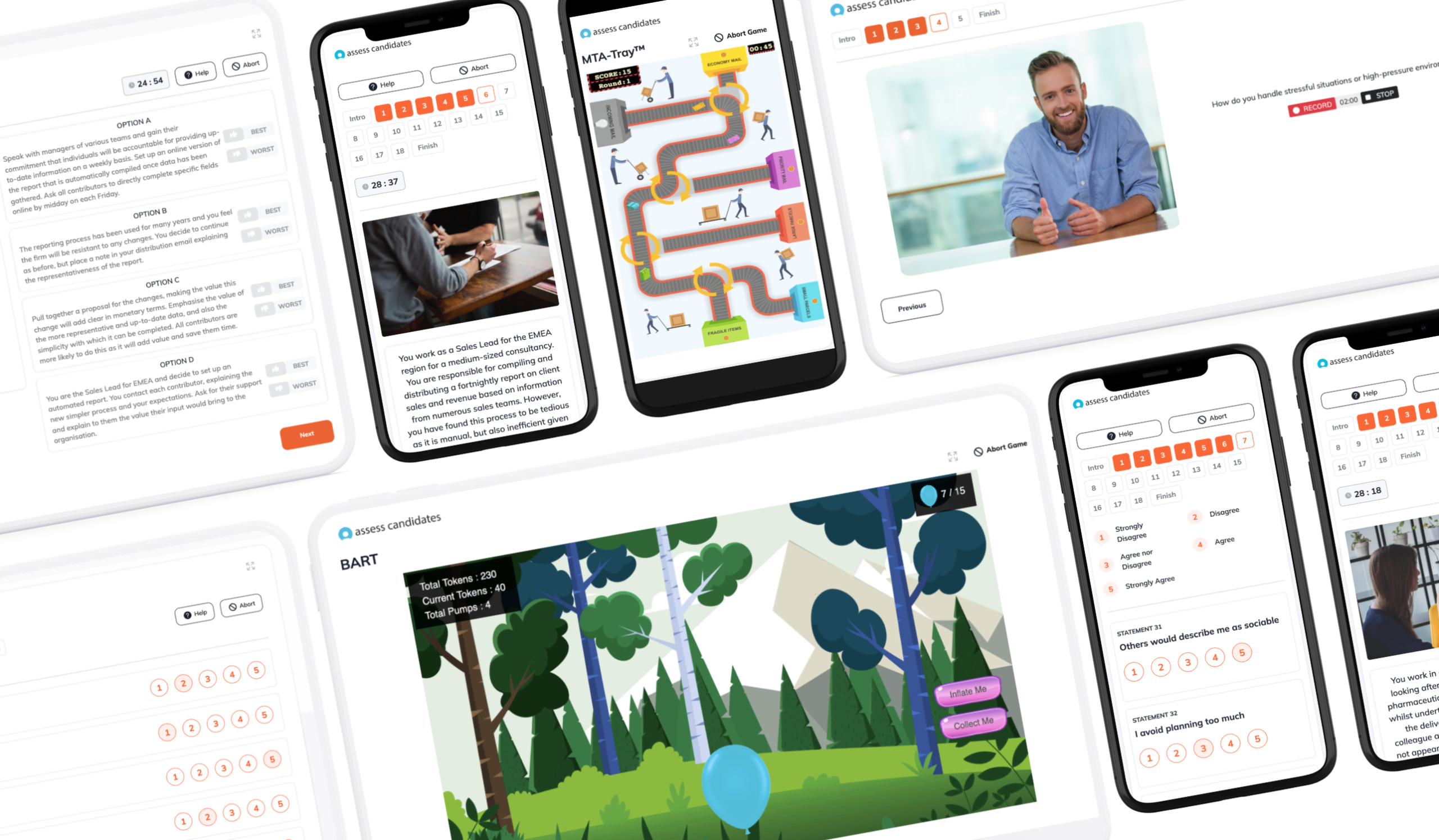
Without further ado, check out the possible pre-employment assessment tests that are offered to candidates during the application process.
1. Psychometric Assessment Test
Psychometric assessment tests are tools that measure an individual’s intellectual abilities, personality characteristics, and potential job performance, such as cognitive abilities, aptitude, and work-related behaviors.
Psychometric assessment tests help alleviate candidate anxiety by providing a fair, transparent, and objective way to showcase abilities, reducing uncertainty and bias in recruitment.
Below are the psychometric assessment tests often offered to candidates:
- Numerical Reasoning Test
Numerical reasoning test evaluates an individual’s ability to interpret, analyze, and manipulate numerical data. It assesses how well a person can solve mathematical problems using basic arithmetic, percentages, ratios, and data interpretation skills.
- Verbal Reasoning Test
Verbal reasoning test assesses an individual’s ability to understand, interpret, and analyze written text. It evaluates how well a person can draw logical conclusions, evaluate arguments, and understand complex written material.
- Logical Reasoning Test
Logical reasoning test measures a person’s ability to reason logically, identify patterns, and make deductions based on given information. These logical reasoning tests evaluate the individual’s capacity for structured thought and problem-solving, often involving sequences or relationships.
- Situational Judgment Test
Situational judgment test is designed to assess how individuals approach hypothetical, job-related situations. This test evaluates decision-making, problem-solving, and interpersonal skills. The candidate is presented with a scenario, and they must choose or rank the most appropriate response or action.
- Critical Reasoning Test
Critical reasoning test measures a person’s ability to analyze information, think logically, and make sound judgments. Instead of testing learned knowledge or subject-specific skills, it evaluates how well someone can interpret arguments, identify assumptions, recognize flaws in reasoning, and draw valid conclusions from given information.
- Abstract Reasoning Test
Abstract reasoning test is used to evaluate an individual’s ability to think logically, solve novel problems, and analyze complex patterns without relying on prior knowledge or specific experience. It assesses one’s ability to think “outside the box” and recognize underlying structures or patterns in abstract sequences or shapes.
- Diagrammatic Reasoning Test
Diagrammatic reasoning test measures a person’s ability to understand and analyze patterns or relationships in visual data. This test involves working with abstract diagrams, symbols, or shapes to identify trends, rules, or sequences. It’s similar to logical reasoning but focuses more on visual data and relationships.
Some providers for psychometric tests are Assess Candidates and SHL.
2. Game-Based Assessments
Game-based assessments help reduce candidate anxiety by creating an engaging, interactive, and less intimidating environment that allows candidates to showcase their abilities more naturally. It also effectively assesses skills such as problem–solving, decision–making, cognitive ability, and personality traits in scenarios that resemble real-world challenges relevant to the job they are applying for.
Providers of game-based assessments are Assess Candidates and HireVue.
Here are some of our popular game-based assessments that recruiters are likely to set for candidates during the recruitment process:
3. Video Interviews
Video interviews are remote interviews conducted via video, including both live and pre-recorded sessions. They reduce candidate anxiety by allowing interviews in familiar settings, lowering travel stress and unfamiliarity, and offering flexible scheduling for pre-recorded options. This comfort fosters genuine interactions, enabling candidates to showcase their skills and personality.
Companies that provide video interviews are Assess Candidates and HireVue.
Having understood the importance of having pre-employment assessment tests and their roles during recruitment, you should also be informed of the negative impact of candidate anxiety in recruitment.
Curating psychometric tests made easy for you and your candidates. HIRE FOR FREE
This is where Assess Candidates becomes essential, helping top companies make smarter hiring decisions and strengthen their recruitment process.
8. Why do companies choose Assess Candidates for recruiting?
Companies today understand that candidate anxiety can negatively affect performance, fairness, and overall hiring outcomes. To address this challenge, many organizations choose Assess Candidates because it not only improves decision–making but also creates a more supportive and transparent recruitment process.
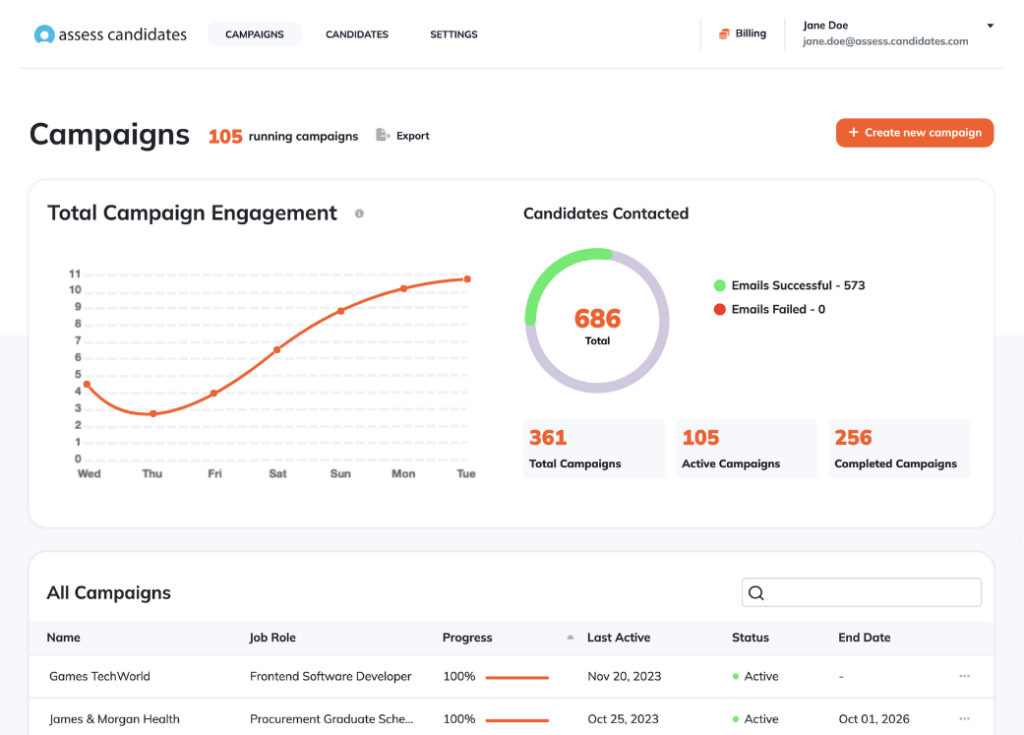
Here are the 5 key reasons companies prefer this approach:
- Standardized Assessments
Assess Candidates provides consistent and objective testing that ensures all applicants are evaluated fairly. This reduces uncertainty for candidates and minimizes anxiety about biased or subjective judgments.
- Transparency in the Process
By clearly outlining what the assessments involve and how candidates will be evaluated, Assess Candidates helps applicants feel prepared. This clarity reduces the fear of the unknown, which is one of the most significant sources of interview anxiety.
- Confidence Through Objectivity
Candidates gain confidence knowing that their abilities are measured based on merit rather than impression or interviewer bias. This allows them to focus on demonstrating their real skills rather than worrying about external perceptions.
- Better Candidate Experience
When candidates feel supported and respected during the hiring process, their anxiety levels drop. Assess Candidates contributes to a positive candidate experience, even for those who might usually find interviews stressful.
- Improved Hiring Accuracy
By reducing the impact of anxiety on candidate performance, companies gain a clearer view of each applicant’s true potential. This leads to more accurate hiring decisions and stronger long-term talent fit.
Discover more reliable assessments designed by Chartered Scientists to help you recruit the right candidates. VIEW PLANS
With our advanced platform, you can confidently attract and hire the right candidates after helping them overcome their anxiety. Explore our top hiring assessments and start making informed hiring decisions today!
Have you ever wondered how employers’ efforts to reduce anxiety help the company’s future? Let us take a look at the possible future!
9. How will reducing candidate anxiety shape your company’s future?
Organizations that actively reduce interview stress often achieve more accurate candidate evaluations and stronger hiring outcomes.
Instead of being held back by nerves, employers can help applicants feel confident in demonstrating their relevant skills, experiences, and potential. This shift can improve both candidate experience and selection accuracy across the recruitment process.
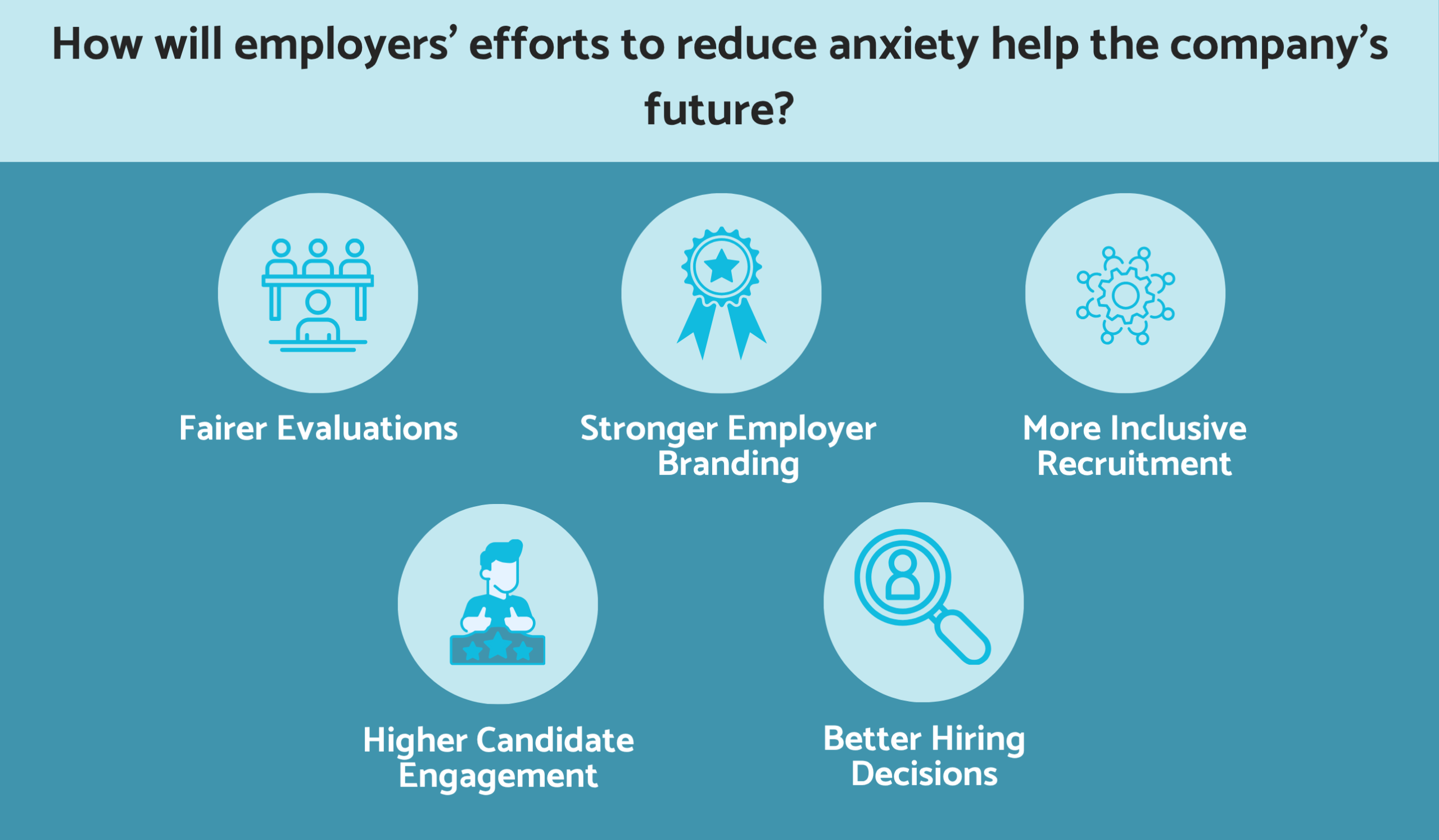
Here are possible outcomes of what the workforce will become with the employers’ efforts at reducing candidate anxiety during recruitment:
1. Fairer Evaluations
With reduced anxiety, candidates would present themselves more accurately, leading to assessments that reflect genuine ability rather than nervousness. Recruiters would have a clearer, more reliable view of who is truly the best fit.
2. Stronger Employer Branding
Companies that create stress-free hiring processes would gain a reputation for fairness and care. This would attract more top talent and encourage candidates to reapply or recommend the organization to others, boosting the employer brand.
3. More Inclusive Recruitment
Minimizing interview stress helps level the playing field, especially for individuals from underrepresented backgrounds who may face additional pressures. This would strengthen diversity and inclusion efforts in hiring.
4. Higher Candidate Engagement
When candidates feel valued and respected during recruitment, they are more likely to join with enthusiasm and remain engaged long term. The positive experience would set the tone for more substantial employee commitment.
5. Better Hiring Decisions
Without stress clouding performance, recruiters can make more evidence-based hiring decisions. This reduces the risk of overlooking talented individuals who might otherwise have been dismissed due to visible nervousness.
Conclusion: Key Takeaway
Candidate anxiety can affect hiring outcomes, candidate experience, and employer branding. By combining transparent communication, structured interviews, and standardized assessments, employers can reduce stress, improve fairness, and gain a more accurate picture of candidate potential.
Interested in learning more about the impact that overcoming candidate anxiety in recruitment has on the workforce? Continue scrolling to learn more about the frequently asked questions, and sign up with your email to get started.
After exploring this page, you may still have questions about reducing candidate anxiety during recruitment. Below, we’ve compiled answers to some of the most common questions.
Frequently Asked Questions
Why do candidates experience anxiety during recruitment?
Candidates often feel anxious due to the uncertainty in the hiring process and the fear of being judged. Factors such as unclear expectations, a lack of feedback, or a perceived power imbalance between the recruiter and the applicant also contribute to this stress.
How does candidate anxiety affect performance in interviews?
Anxiety during interviews can lead to mental blocks, rushed or unclear answers, and difficulty expressing key skills or experiences. This means competent candidates might underperform, making it harder for recruiters to see their true potential.
What role does feedback play in reducing candidate anxiety?
Timely and constructive feedback reduces uncertainty and helps candidates learn from the experience. Even when they are not selected, respectful feedback can turn a stressful process into a positive growth opportunity.
Does reducing candidate anxiety benefit employers as well?
Lower anxiety means candidates can showcase their true potential, leading to more accurate hiring decisions. It also improves the employer brand, boosts candidate engagement, and strengthens diversity and inclusion efforts.
Are psychometric tests helpful in reducing candidate anxiety?
Psychometric tests are consistent and objective, which reassures candidates that they are being evaluated fairly. By knowing what to expect, candidates feel less nervous and more focused on demonstrating their actual abilities.


 English
  Arabic