
How to effectively measure leadership potential in hiring



Identifying true leadership potential is one of the hardest challenges organizations face. Being a top-performing employee doesn’t always guarantee that they will be a good leader, especially in complex, people-focused roles.
Relying solely on instincts or manager opinions to make leadership hiring decisions runs the risk of promoting someone who isn’t prepared for the responsibilities of leadership.
Only 12% of companies feel confident in their leadership pipeline, meaning the vast majority lack clearly identified, ready-to-step leaders for critical roles. This is a core reason why measuring leadership potential during hiring or promotions is so important.
If you’ve ever wondered, “How do we know who will actually become a great leader? ”, you’re not alone.
This guide will help you recognize and assess leadership potential early on during recruitment using clear frameworks, behavioural signals, and data-driven tools. By the end, you’ll understand how to build a stronger, more future-ready leadership pipeline with confidence.
Contents
- What is leadership potential, and how does it differ from leadership performance?
- What traits and behaviors indicate high leadership potential?
- How to assess leadership potential using data, observation, and structured assessments
- The role of soft skills and emotional intelligence in predicting leadership success
- How to identify leadership potential in early-careers talent
- How to create a structured and fair leadership assessment process
- How does Assess Candidates use AI insights to measure leadership potential?
1. What is leadership potential, and how does it differ from leadership performance?
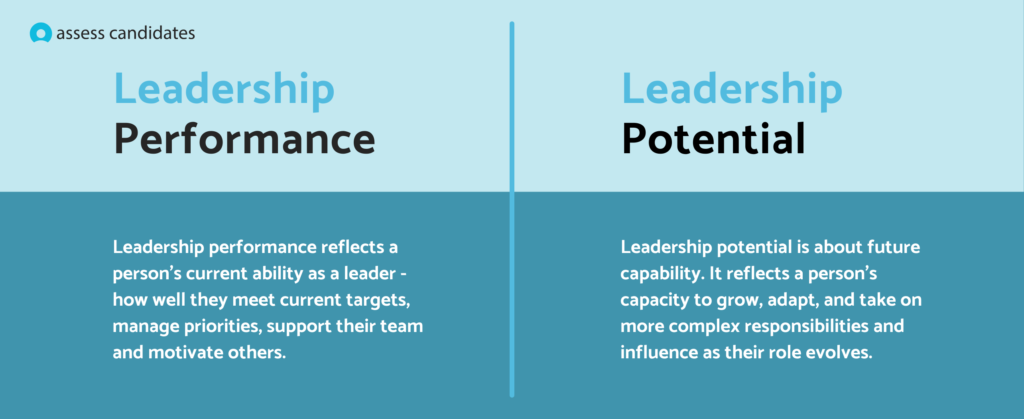
Many organizations still confuse leadership performance with leadership potential, but they are not the same thing. Someone who performs well today isn’t always the right person to lead effectively tomorrow.
Leadership performance reflects current ability. Leadership potential, on the other hand, is about future capability, what someone could do in the future. It reflects a person’s capacity to grow, adapt and take on more complex responsibilities and influence as their role evolves.
Some employees may not hold formal leadership titles yet, but they already have the mindset of a future leader – they show traits of self–awareness, strategic thinking, learning agility, and a willingness to take ownership. Investing in such individuals early helps nurture a leadership pipeline that grows sustainably with the organization.
To identify these individuals, hiring managers must look beyond job titles and past achievements and instead focus on how candidates think, learn, and behave in challenging leadership situations.
Discover how reliable pre-employment assessments can help you identify leadership potential early on. HIRE FOR FREE

2. What traits and behaviors indicate high leadership potential?
True leadership potential often shows up in small, everyday actions that people take: how they solve problems, work with others, approach feedback, and learn from mistakes.
High-potential leaders tend to be dependable, adaptable to change, emotionally aware, and genuinely open to growth. These behaviors signal how well someone performs today and how they might handle greater responsibility in the future.
Traits and behaviors often seen in high-potential leaders
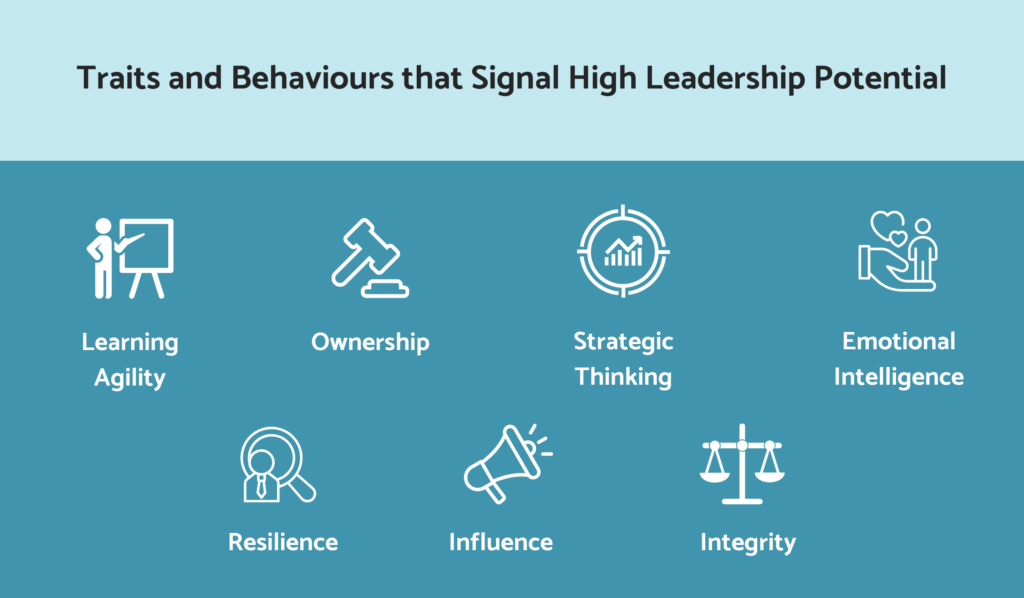
High-potential individuals often demonstrate a consistent pattern of the following behaviors:
- Learning Agility
They quickly grasp new concepts, actively seek feedback, and adapt to changes.
- Ownership
They take the initiative without waiting for instructions and follow through on commitments.
- Strategic Thinking
They understand why something needs to be done and not just what. They have the perspective to connect day-to-day actions with the bigger picture.
- Emotional Intelligence
They communicate thoughtfully while regulating their own emotions and respond consciously to others.
- Resilience
They stay steady during pressure and recover quickly from setbacks without losing motivation.
- Influence
They motivate others, even without formal authority or leadership titles.
- Integrity
They make decisions rooted in values and long-term impact, not convenience.
Together these qualities reveal who is likely to successfully lead teams and handle bigger responsibilities over time.
Research shows that over 70% of effective leadership is driven by behavior and emotional intelligence rather than technical skill, highlighting why observing day-to-day actions is one of the best ways to identify future leaders.
Leadership red Flags to look out for
While positive traits like empathy and integrity help identify leadership potential, leadership failure often stems from warning signs that are overlooked or ignored. Common red flags include:
- Authoritarianism
Employees who suppress criticism, discourage debate, or label disagreements as disloyalty risk sliding into tyranny.
- Ethical Flexibility
Rationalizing unethical actions in pursuit of “larger goals” compromises moral legitimacy and long-term success.
- Lack of Accountability
Avoiding responsibility, blaming others, or refusing to acknowledge mistakes signals a lack of responsibility and courage.
- Manipulative Communication
Misinformation or emotional manipulation instead of honest, reasoned discourse is a danger sign.
True leadership is not merely the presence of admirable traits but the absence of dangerous tendencies that damage trust, work culture, and team performance.
Measure the right traits and behaviors for your role with our flexible, end-to-end assessments. Learn More
Understanding the key traits and behaviors alone is not enough. To make confident, fair decisions, you need structured and objective ways to assess leadership potential. Let’s take a look at how we can assess this below.
3. How to assess leadership potential using data, observation, and structured assessments
Often, relying solely on intuition or gut instinct leads to bias and missed talent. A more effective, fairer approach combines data-driven tools with real-world behavioral observation to create a complete picture of a candidate’s leadership potential.
When multiple signals are used together, patterns start to emerge to signal how they think, behave, and grow over time.
Effective assessment methods to measure leadership potential
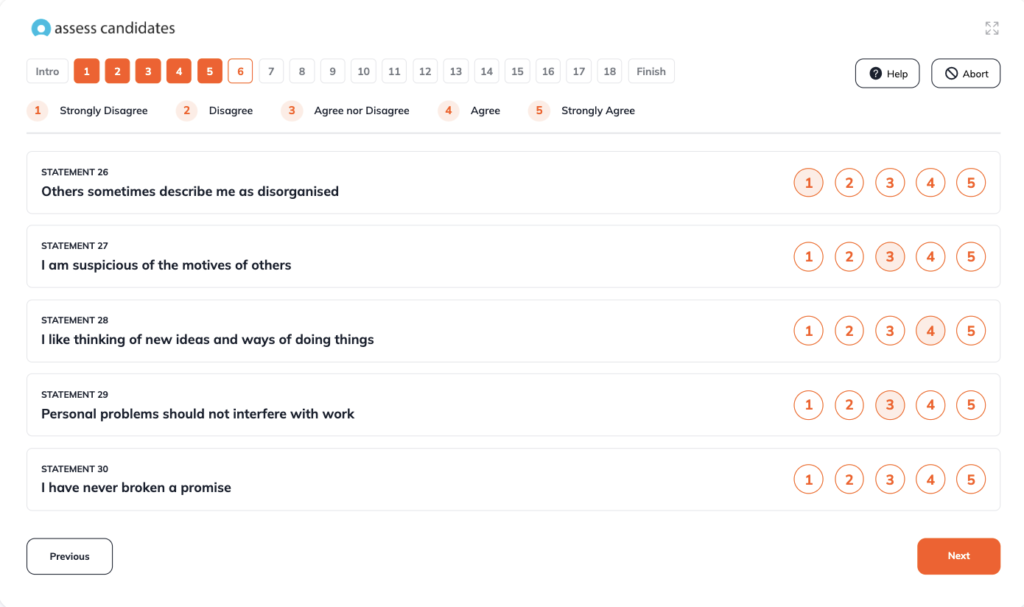
These tests help measure cognitive ability, decision-making style, and personality traits linked to leadership personality like adaptability, problem-solving, emotional awareness, and learning agility.
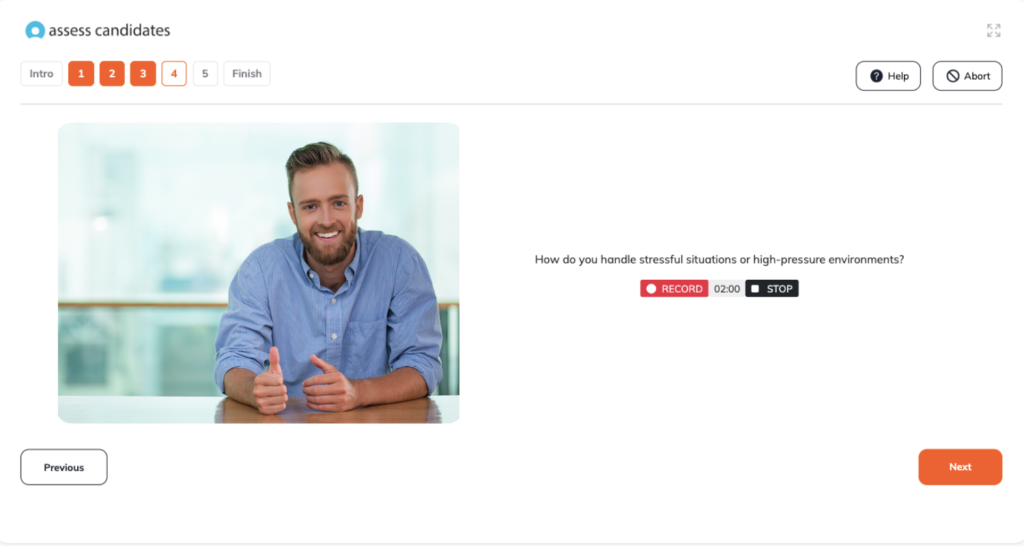
Structured, behaviour-based questions focus on real experiences rather than hypotheticals.
For example: “Tell me about a time you led without authority.”
These responses reveal how candidates have handled influence, conflict, and accountability in practice.
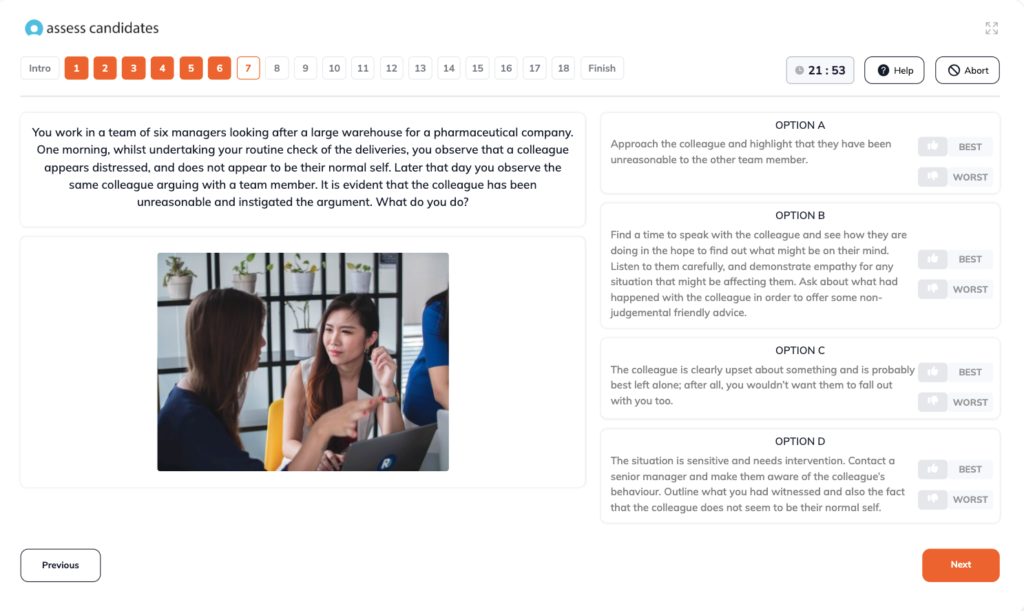
These assessments place candidates in realistic business scenarios where they must analyze information, make key decisions, support teams, and manage competing priorities as if they were in a real leadership role.
- Performance Indicators
These assess consistency, initiative, learning speed, and how individuals respond to stretch assignments to highlight future leadership capability.
- 360-Degree Feedback
Input from peers, managers, and direct reports provides a well-rounded view of how someone shows up in day-to-day interactions.
Organizations that use scientifically validated assessment tools are about 4.5 times more likely to identify high-potential employees than those relying on unstructured methods.
Using multiple data inputs and assessments helps to reduce bias, improves hiring accuracy, and ensures that decisions are fair and aligned with long-term leadership needs.
Of all these indicators, soft skills consistently reveal the strongest clues about who can lead effectively. In the next section, we’ll see how soft skills and emotional intelligence play an important role in predicting leadership success.
4. The role of soft skills and emotional intelligence in predicting leadership success
Technical skills may open the door into a leadership role, but soft skills determine whether someone can lead. Leaders don’t just manage tasks, they guide people through change, uncertainty, and growth. That is why emotional intelligence (EQ) is particularly important.
What is emotional intelligence (EQ)?
Emotional intelligence is the ability to understand and manage your own emotions, while also recognizing and responding appropriately to the emotions of others. In the workplace, it shows up in how people handle pressure, communicate during conflict, build relationships, and make thoughtful decisions. Thus, it is a critical skill for effective leadership.
What are the key components of emotional intelligence?
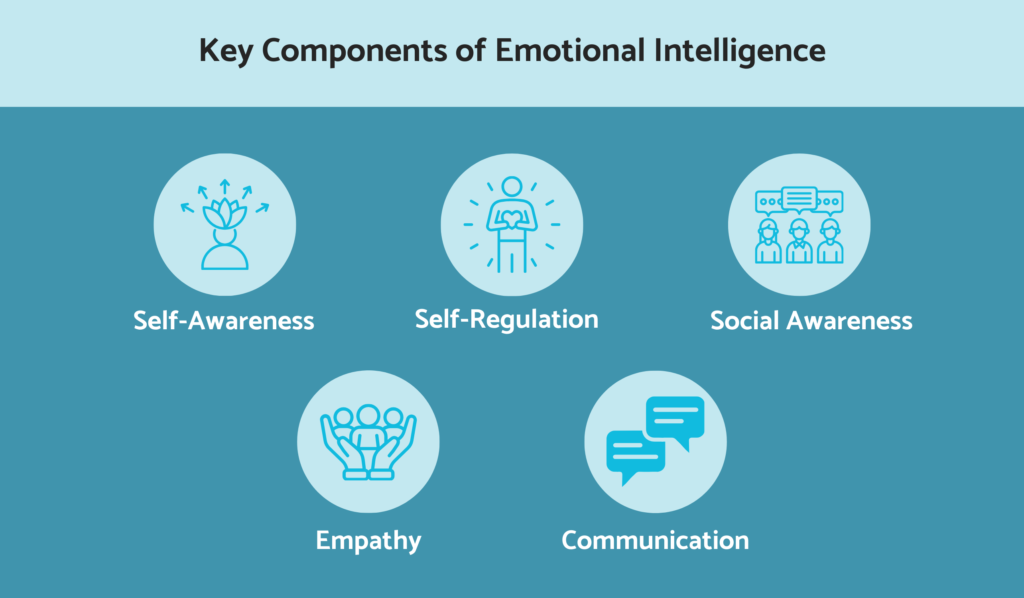
- Self-Awareness: Understanding personal strengths, triggers, and blind spots.
- Empathy: Considering others’ feelings and perspectives before acting.
- Self-Regulation: Managing stress, conflict, and pressure calmly.
- Social Awareness: Reading team dynamics and morale.
- Communication: Expressing ideas clearly and listening actively.
Leaders with strong EQ reduce friction, build trust, and inspire teams more effectively than those who rely on authority alone. They communicate with clarity, navigate conflict with maturity, and create environments where people feel safe to share ideas and take risks.
Studies show that emotional intelligence accounts for nearly 90% of the difference between high-performing and average leaders. In other words, the ability to understand and manage emotions is one of the most powerful predictors of long-term leadership success.
Spotting these qualities early can help organizations nurture future leaders long before they step into formal leadership roles.
Our expert recruitment team and assessment platform can help you identify and develop future leaders. HIRE FOR FREE
5. How to identify leadership potential in early-career talent
Leadership potential often appears long before someone is given a formal title. Even in the early stages of their career, some employees naturally step up during challenges, communicate with confidence, and show curiosity about how things work. These small, everyday behaviors are often the first signs of future readiness and leadership, making early identification essential for building a strong, sustainable talent pipeline.
But what exactly sets high-potential early-career individuals apart? Let’s take a closer look at the qualities these emerging leaders consistently demonstrate.
Early-career employees with high leadership potential often demonstrate:
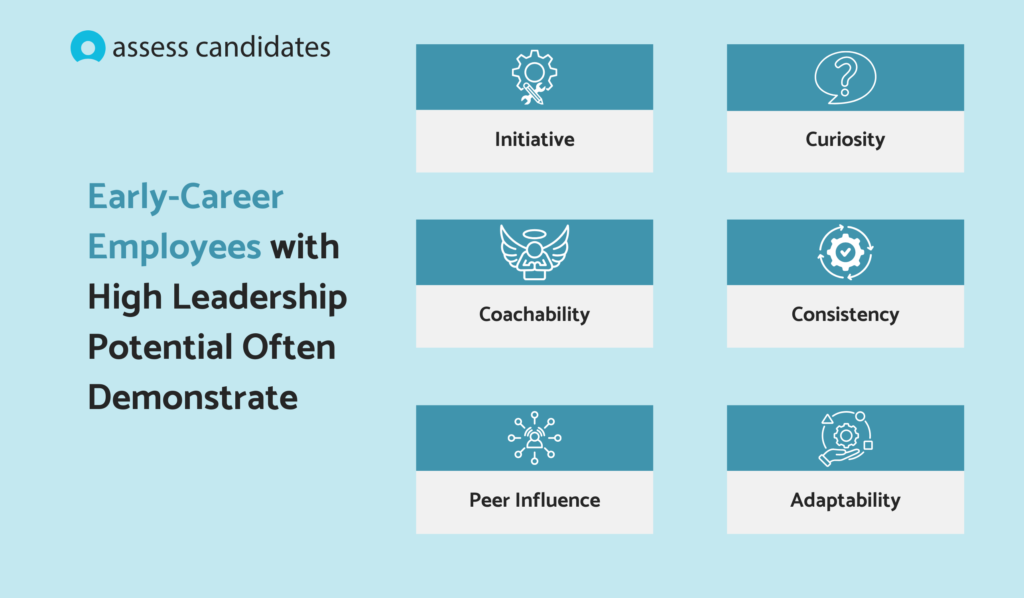
- Initiative: Volunteering for tasks, contributing ideas, or solving problems proactively.
- Coachability: Being open to feedback and applying it quickly.
- Peer Influence: Others naturally look to them for guidance or collaboration.
- Curiosity: Asking questions, exploring new topics, and wanting to understand the bigger picture.
- Consistency: Delivering reliable work even under pressure.
- Adaptability: Handling change smoothly and adjusting priorities with ease.
Recognizing these behaviors in early-career talent helps organizations invest in the right people before leadership gaps emerge. By nurturing initiative, consistency, and adaptability, you can ensure a steady pipeline of capable, future-ready leaders.
But early identification is only the first step. It must be followed by a structured and fair evaluation process. Let’s explore that in our next section!
6. How to create a structured and fair leadership assessment process
A fair leadership assessment process ensures that every employee, regardless of background, communication style, or personality, has equal access to leadership opportunities. Creating such a system requires clarity, consistency, and multiple checks to reduce individual bias.
Steps to Ensure a Fair, Bias-Free Leadership Assessment Framework
How structured assessment reduces bias: Real examples
Below are a few examples that show how bias can appear in candidate assessments and how the right tools, scorecards, and multi-step assessments can help you make more accurate, equitable decisions.
Case Example 1: Bias-Free Assessment
A soft-spoken candidate performs exceptionally in a leadership simulation, demonstrating strong analysis and team coordination. Without structured methods, they might be overlooked in favor of a more outspoken peer. With scorecards and competency frameworks, their real strengths become visible, and they score highest.
Case Example 2: Multiple Evaluators
A manager wants to fast-track a candidate they’ve personally mentored because they’re impressed with their work. However, when wider feedback and objective assessments are considered, it becomes clear that the candidate still needs to build stronger empathy and improve how they handle team conflict. The panel agrees that additional development is needed first for a fairer and more balanced outcome.
Case Example 3: Using Data and Behavior
A candidate may come across as average in an interview, yet show strong cognitive ability, excellent feedback from peers, and outstanding performance in a leadership case task. The combined data reveals long-term potential that a single interview would have missed.
Over 70% of Fortune 500 companies rely on psychometric assessments, like personality or situational judgement tests, to help determine leadership potential and development paths.
A systematic assessment approach builds trust, improves accuracy and ensures fairness across teams.
When organizations adopt a structured and transparent process, leadership decisions become fairer, more consistent, and easier to defend. This is where Assess Candidates comes in.
Boost the quality of your hires with Assess Candidates’ pre-employment and interview assessment tools. View Plans
7. How does Assess Candidates use AI insights to measure leadership potential?
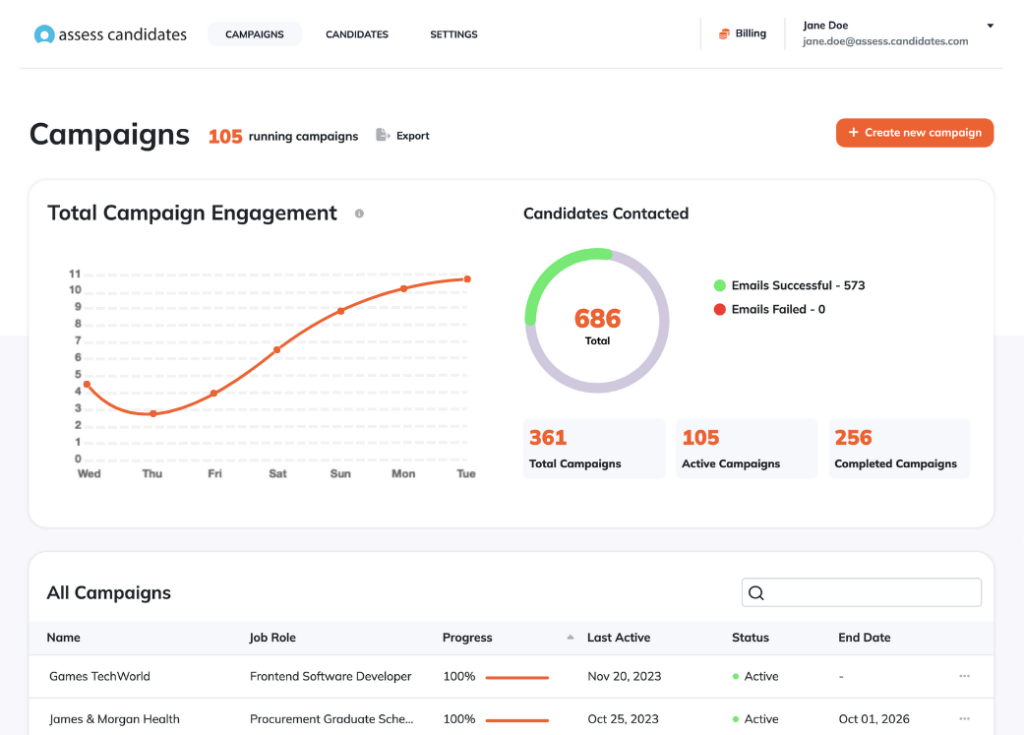
Assess Candidates offers a structured, AI-powered way to evaluate leadership potential with clarity and fairness. Instead of relying purely on human judgement, the platform uses data to highlight behaviors, thinking styles, and skill patterns linked to leadership success.
What are the benefits of using Assess Candidates platform?
- We offer role-specific leadership assessments that evaluate strategic thinking, problem-solving and decision-making.
- Our AI-based behavior analysis helps understand how candidates communicate and respond to real scenarios.
- We use personality and cognitive metrics to identify long-term potential.
- You will receive leadership-fit reports that highlight strengths, blind spots, and development areas.
- Bias-reduced evaluation using standardized scoring and automated insights.
- Team-match insights to understand how each candidate aligns with your leadership culture.
These tools help organizations confidently identify emerging leaders, design personalized development plans, and make long-term talent decisions based on evidence, not gut feeling.
Take advantage of our reliable, science-backed candidate assessment platform. LEARN MORE
When you combine structured frameworks with unbiased, data-driven insights, leadership decisions become clearer, fairer, and more impactful.
Want to learn more about effective candidate leadership potential assessment? Explore the FAQs below and subscribe with your email to get started.
Frequently Asked Questions
Can leadership potential be developed, or are people born with it?
Leadership potential isn’t fixed. While some traits come naturally, most leadership skills, such as communication, decision-making, resilience and emotional intelligence can be developed over time with the right guidance, experience, and learning opportunities.
How early in someone’s career can you identify leadership potential?
Leadership potential can be assessed early on, even in entry-level roles. Behaviors like taking the initiative, being curious, learning quickly, and influencing peers often show up long before someone formally manages people or projects.
What is the most reliable way to measure leadership potential?
The most accurate method is using a combination of tools: behavioral assessments, cognitive ability tests, structured interviews, 360 feedback, and real-world simulations. Relying on only one method (like a manager’s opinion) increases bias and reduces accuracy.
Is strong leadership performance the same as strong leadership potential?
High performers do very well in their current roles, but leadership brings new challenges such as dealing with ambiguity, complexity, and people. Strong leadership potential is about being ready for the future and having the ability to learn quickly, think strategically, and handle emotions.
How can AI tools help with leadership assessment without adding bias?
AI reduces inconsistency by applying the same criteria to every candidate. Tools like Assess Candidates analyse behavior, communication patterns, cognitive traits and cultural indicators objectively, helping organizations make fair, evidence-based decisions.


 English
  Arabic