
How to Improve Employee Well-Being and Build a Healthier Workplace



Have your employees been mentioning overwhelming stress or burnout? Maybe you have noticed them struggling to maintain interest, leading to low engagement and a dip in creative output? These questions are becoming increasingly evident across modern workplaces.
There was a time when physical fitness wasn’t even a concern, and comfort, luxury, and leisure signalled success. In many ancient societies, the elite often prided themselves on their wealth rather than their stamina. Then came a cultural shift, with brands like Nike and Puma transforming fitness into a global movement.
We are now seeing a similar transformation with mental health, particularly in the workplace. Today, organizations support employees beyond physical well-being; mental and emotional wellness are now seen as key drivers of productivity, creativity, and overall success.
Just as small drops make an ocean, the collective well-being of individual employees drives the strength, productivity, and creativity of the entire organization. This article explores how you can promote well-being at work, combining physical, mental, and emotional health to create happier employees and healthier organizations.
At the end of the day, neglecting well-being is a risk to organizational performance. In one study, companies ranking high for employee well-being delivered 20% higher returns than the benchmark.
When employees feel valued, supported, and balanced, they perform better, collaborate more openly, and bring their best selves to work. Promoting well-being goes far beyond a “nice-to-have”. You are committing to a long-term investment in building happier, resilient teams, and stronger results.
Contents
- How Has the Idea of Well-Being at Work Evolved?
- Why Employee Well-Being Matters
- Practical Strategies to Improve Employee Well-Being
- Creating a Culture That Cares: Lead with Empathy
1. How has the idea of well-being at work evolved?
The way we think about well-being at work has drastically changed over time. In ancient societies comfort and hierarchy mattered more than physical or mental health. The industrial age shifted the focus to output and efficiency. Today, the modern workplace values human-centric growth, recognizing that people thrive when they are supported, happy, and healthy.
Well-being at work now goes beyond physical health. It includes mental, emotional, and social balance. It is about feeling safe, respected, and motivated, not drained or anxious. When employees feel good about their work environment, their productivity, energy, and morale naturally rise.
A brief history of employee well-being at work
- Ancient and pre-industrial eras: Work was often segmented by class, social status, and physical labor and for the elite, comfort and prestige were the markers of success rather than stamina or wellness. Wellness was not discussed in the same way as today.
- Industrial age and early 20th century: The focus shifted strongly to production, output, standardized work hours, assembly lines, and mechanization. Worker health was often secondary to the “machine of production”. Although the idea of worker welfare existed (e.g., early safety laws, sick leave), it was basic and holistic well-being (mental, emotional, and social) was not a priority.
- Late 20th century and the 21st century: Advances in psychology, ergonomics, human resources, and organizational transformed how companies viewed workplace well-being. The modern era recognizes that employees are not simply parts in a machine: their physical, mental, emotional, and social health all matter for sustainable performance.
Why this shift matters
The shift toward a broader concept of well-being at work has been driven by several forces:
- Increased awareness of mental health, stress, and burnout: For example, the World Health Organization (WHO) estimates that depression and anxiety result in an estimated 12 billion working days lost globally each year, at a cost of about US $1 trillion in lost productivity.
- A growing understanding that poor working environments are real health risks: Excessive workloads, low job control, job insecurity, and lack of support negatively impact both mental and physical health.
- Clear evidence that well-being drives performance: Healthier, more engaged employees deliver better outcomes. Organizations that prioritize well-being have higher productivity and better financial performance.
Employees who adopt healthy lifestyle habits (regular exercise, balanced nutrition, sufficient sleep) are around 25% more productive than those with poor health habits.
What is workplace well-being?

In today’s context, employee well-being means much more than “don’t get injured” or “take a break”. It encompasses:
- Physical health:
Safe environments, ergonomic design, opportunities for movement, good nutrition, and rest.
- Mental health:
Psychological safety, stress-awareness, support for anxiety, depression, and resilience.
- Emotional health:
Feeling valued and respected, and having meaningful work, purpose, and autonomy.
- Social health:
Belonging, positive relationships, and a sense of community at work. Embracing diversity and inclusion builds trust and strengthens connections among employees.
Building a healthier, more resilient workplace starts today with better hiring. HIRE FOR FREE
When an organization creates an environment where employees feel safe, respected, connected, and motivated, rather than overwhelmed and overworked, the ripple effects are immediate: higher engagement, lower absenteeism, better retention, and stronger performance.
This naturally leads us to a more profound question: why does employee well-being matter so much in the first place?

2. Why Employee Well-Being Matters
When an organization places the well-being of its people at the core, it’s not just doing the “right” thing; it is a strategic business decision. Happy, healthy employees are more engaged, creative, resilient and loyal. Below is an expanded exploration of this topic, backed by data and practical insight.
What are the reasons why employee well-being matters?

1. Boosts Productivity, Engagement & Performance
- Research shows that employees who rate their health and well-being as “thriving” are significantly more engaged, perform at higher levels, and make fewer mistakes.
- For example, according to the MetLife Employee Benefit Trends Study, employees who are healthy across the multiple areas of well-being are far more likely to be productive, loyal, and successful compared to those who are not.
2. Reduces Absenteeism, Presenteeism & Turnover
- Offering well-designed health and well-being benefits correlates with lower reported absenteeism. One survey found:
- 48% of people believe health and well-being benefits help reduce working hours.
- 47% believe they help reduce absenteeism.
- Supportive companies have reduced turnover. For instance, a global study found that employees with access to mental-health benefits were 42% less likely to leave than those without. Replacing employees is costly, so lower turnover not only saves on hiring and training costs but also keeps organizational knowledge, culture and momentum intact.
3. Strengthens Creativity, Resilience & Adaptability
- Wellness isn’t just the absence of illness but also mental and emotional resilience. Employees who feel supported are more likely to bounce back from setbacks, embrace change, and contribute new ideas. Engaged employees with high well-being are 45% more likely to adapt to change.
4. Helps Attract & Retain Talent
- Today’s workforce, especially the younger generations, value more than salary. They look for a positive work culture, purpose, flexibility and well-being. A survey found 93% of organizations offer health and well-being benefits, yet only 57% of employees feel their employer actively supports their health/well-being.
- You should see this as an opportunity. Organizations that genuinely support well-being send a strong message to current and potential employees. Happier, healthier employees lead to stronger brand reputation, easier recruitment, and more stable staffing.
5. Strengthens Financial & Organizational Health
- When employees are healthier (physically, mentally, and emotionally), the organizational costs go down: fewer sick days, fewer performance drops, and fewer issues with morale or conflict.
- Well-being programs are an investment, not just a cost. Studies show real return on investment: lower healthcare spend, improved productivity, and higher engagement. Simply put, taking care of your people means taking care of your business.
6. The “Holistic” Well-Being Model
- Physical health alone isn’t enough. The most effective well-being strategies cover multiple dimensions: physical, mental, emotional, social, and financial.
- For example, MetLife’s study found that when employees are healthy in all 4 aspects (mental, physical, social, and financial), they are:
- 89% more likely to be loyal
- 90% more likely to be successful
- 26% less likely to burn out.
- You should treat well-being as layered, inclusive, and embedded into the culture, not limited to gym discounts or fruit bowls.
7. The Leadership and Culture Link
- Well-being doesn’t happen by accident. It is shaped by culture, leadership, environment, and policy. When leadership supports and models well-being, when the work environment is psychologically safe, and when employees are respected and connected, then you see how closely well-being and employee performance are linked.
- Organizations that promote emotional and social well-being as part of their wellness strategy are more likely to feel the positive effects of increased retention and boosted engagement.
Employees who feel safe, valued, and supported are more engaged, more innovative, more loyal, and more productive. At the same time, your organization reaps the benefits of less turnover, fewer performance issues, a stronger culture, and better financial outcomes. In essence, taking care of your people is taking care of your business.
Ensure stronger, healthier teams from the start using our data-driven pre-employment assessments. Learn More
Promoting employee well-being is driven by intentional practices and everyday behaviours within the workplace. Let’s take a look at how you can help build a better work culture that values mental, physical, and emotional well-being.
3. Practical strategies to improve employee well-being
To promote well-being at work, you may not have to implement big changes. Small, consistent actions can easily build a workplace where employees feel valued, supported, and motivated in their roles. Having worked with countless organizations, here are some practical strategies that we suggest to make this happen.
1. Create a positive work culture
A healthy organization is shaped by its people and how they feel at work. A positive work culture builds trust, openness and respect, while a work-life balance ensures that employees can sustain their best selves both inside and outside the workplace. Together, this forms the foundation of long-term well–being, engagement, and success.
How you can actively build a positive workplace culture:

- Foster Psychological Safety:
Encourage a workplace where employees feel safe to express ideas, share feedback, or admit mistakes without fear of criticism. When people know their voices matter, creativity and innovation thrive. This safety net helps teams collaborate more deeply and tackle challenges together, rather than hide from them.
- Promote Open Communication and Recognition:
Transparent communication builds trust at every level. Regular check-ins, open forums, and honest conversations help employees feel heard and respected. Recognizing small wins and appreciating effort, not just outcomes, reinforces motivation. When appreciation becomes part of the culture, employees are more likely to stay engaged and loyal.
- Model Healthy Work-Life Habits:
Leaders set the tone for the entire organization. When they prioritize balance, by setting realistic deadlines, taking time off, and avoiding late-night work expectations, it permits employees to do the same. Balanced leaders demonstrate that well-being and success go hand in hand, not in conflict.
- Offer Flexibility and Support Systems:
True balance requires flexibility. Allow hybrid work options, flexible hours and manageable workloads that respect personal boundaries. Encourage employees to take breaks and disconnect after work. Providing mental health resources or access to counseling can also make employees feel supported both professionally and personally.
- Cultivate Empathy and Connection:
Strong social bonds are the heart of a positive culture. Encourage team interactions, peer support, and inclusive activities that help employees connect beyond work roles. When empathy becomes a norm, when people check in, listen, and support each other, it strengthens belonging and resilience across the organization.
A workplace that combines trust, empathy, and flexibility naturally protects against burnout and instinctively builds stronger, more motivated teams.
According to a Harvard Business Review study, employees who feel they have a good work-life balance are 21% more productive and 33% more likely to stay with their organization. Yet, burnout remains widespread. In fact, the World Health Organization has classified it as an occupational phenomenon resulting from chronic workplace stress.
Discover simple, evidence-based strategies to strengthen employee well-being at every level. HIRE FOR FREE
Beyond creating a positive culture, you must also actively support the mental and emotional health of your workforce.
2. Make Mental Health a Priority
Mental health is a key element of promoting well-being at your company. When employees feel emotionally supported, they think more clearly, communicate better, and handle pressure with greater resilience. A peaceful mind performs at its best. In contrast, poor mental health and morale can negatively impact performance.
Leaders should listen actively, show empathy and respond with understanding rather than judgment. When mental health becomes a shared responsibility instead of a personal struggle, workplaces transform into spaces of trust and belonging.
How you can actively promote mental health:
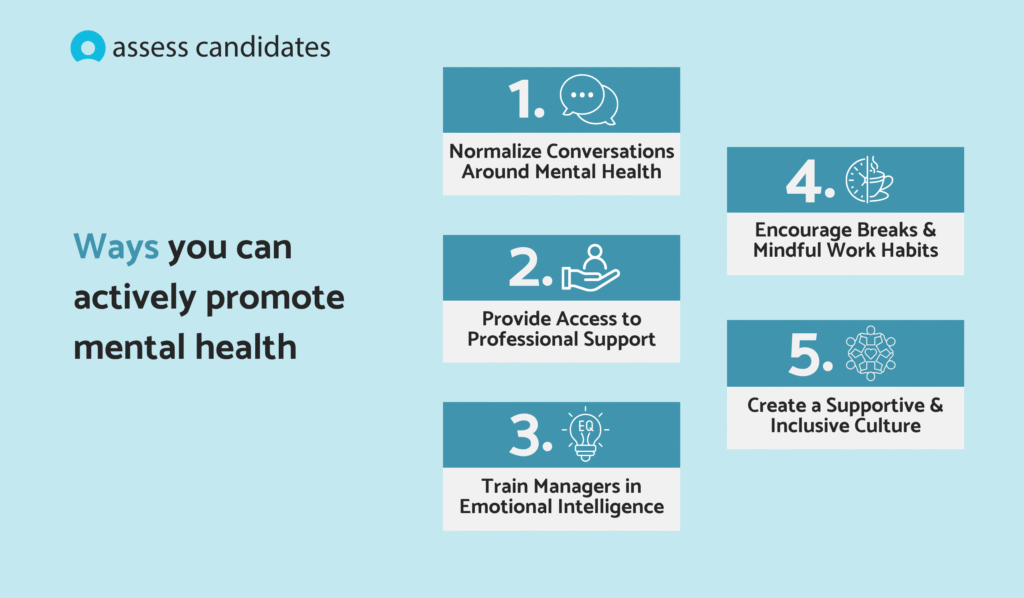
1. Normalize Conversations Around Mental Health:
Encourage open discussions through team check-ins, awareness sessions, or “mental health moments”. When leaders talk about their own experiences, it helps remove stigma and encourages others to speak up.
2. Provide Access to Professional Support:
Offer confidential counseling, employee assistance programs (EAPs), or access to mental health professionals. Knowing help is available encourages employees to seek it early.
3. Train Managers in Emotional Intelligence:
Equip managers with the skills to recognize signs of stress, burnout, or disengagement. Empathetic leadership ensures timely support and creates a psychologically safe environment for all.
4. Encourage Breaks and Mindful Work Habits:
Promote practices like short mental breaks, walking meetings, or mindfulness sessions during the day. Even small pauses can reduce stress and improve focus over time.
5. Create a Supportive and Inclusive Culture:
Build policies that respect individual needs, from flexible schedules to mental health days and ensure no one feels penalized for prioritizing well-being. Inclusion and understanding strengthen collective resilience.
Promoting mental health helps build a culture where people feel safe to talk about how they are doing. Simple gestures like checking in on team members, encouraging breaks or normalizing conversations about stress can make a powerful difference.
Organizations with wellness programs have seen a 28% reduction in sick days.
Now that we’ve explored how to make mental health a priority in the workplace, the next step is to understand how to design a truly healthy workplace that supports employees holistically.
3. Design Healthy Workspaces
Natural light, fresh air, and ergonomic furniture can make a noticeable difference in mood and energy. Clutter–free, thoughtfully arranged spaces help reduce stress and promote clarity of thought.
Even small touches, indoor plants, quiet zones, or collaborative corners can turn the workplace into an environment that inspires rather than exhausts.
How you can design healthier workspaces:
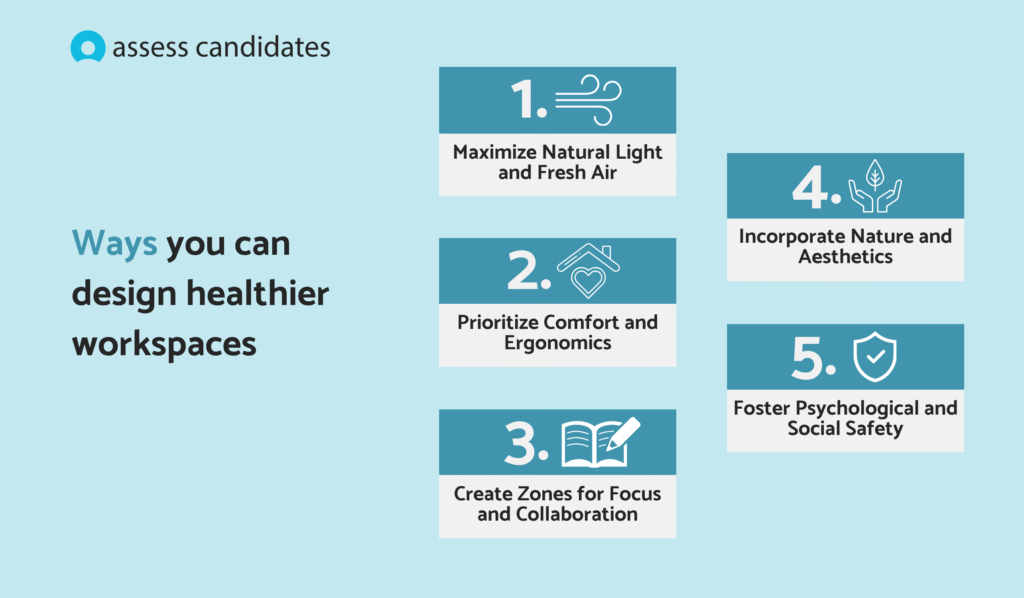
1. Maximize Natural Light and Fresh Air:
Ensure that workspaces have access to sunlight and good ventilation. Exposure to natural light boosts energy levels, improves sleep patterns and enhances overall mood.
2. Prioritize Comfort and Ergonomics:
Provide ergonomic chairs, adjustable desks, and proper screen setups to support posture and prevent fatigue. Physical comfort directly impacts concentration and long-term health.
3. Create Zones for Focus and Collaboration:
Designate quiet areas for deep work and open spaces for teamwork. This balance helps employees choose environments that match their tasks and energy levels.
4. Incorporate Nature and Aesthetics:
Add greenery, artwork, or calming colors that make the space feel alive and welcoming. Even small design elements can improve creativity and reduce stress.
5. Foster Psychological and Social Safety:
Design is emotional too. Encourage inclusive spaces where everyone feels safe, respected, and free to express themselves. A supportive atmosphere turns the office into a place of belonging, not pressure.
Access to mental health benefits increases employee engagement by 41% according to some recent surveys.
Next, let’s see how you can promote physical wellness at work.
4. Promote Physical Wellness
Physical wellness is the foundation of overall well-being. When employees feel physically healthy, they bring more energy, focus and positivity to their work. A healthy body supports a healthy mind, creating a workforce that’s vibrant, active, and ready to perform at its best.
Encouraging small, consistent habits like taking walking breaks, stretching between meetings, or staying hydrated can make a big difference over time. Organizations can nurture this by offering wellness programs, fitness challenges, or simply by creating a culture that values movement over long, sedentary hours.
Nutrition, too, plays a quiet but crucial role. Providing healthy food options and discouraging skipped meals sends a strong signal of care. When employees feel physically supported, their motivation, confidence, and productivity naturally rise.
How your organization can promote physical wellness at work:
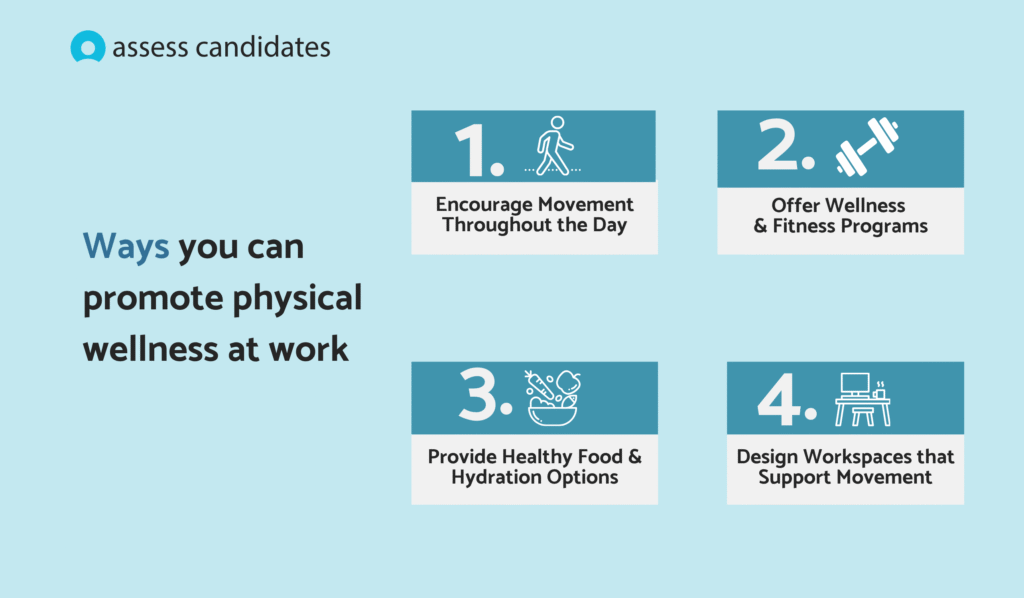
1. Encourage Movement Throughout the Day:
Motivate employees to stand, stretch, or take short walks between meetings. Simple habits like walking breaks or standing desks help reduce fatigue and keep energy levels steady.
2. Offer Wellness and Fitness Programs:
Introduce group workouts, yoga sessions, or wellness challenges that make staying active engaging and social. Even virtual fitness programs can bring teams together around healthy goals.
3. Provide Healthy Food and Hydration Options:
Stock common areas with nutritious snacks, water stations, or healthy meal options in cafeterias. Supporting mindful eating helps employees maintain energy and focus throughout the day.
4. Design Workspaces that Support Movement:
Incorporate open areas, standing workstations, or stair-accessible layouts to encourage natural movement. A workspace that invites motion keeps both body and mind alert.
Encouraging these small, consistent habits can make a big difference over time. You should create a culture that values movement over long, sedentary hours. Physical wellness is about both activity and recovery. We recommend creating a culture that values movement, enjoys regular breaks, and gives reasonable workloads so employees can recharge fully and sustainably.
Boost your team’s well-being from the start with Assess Candidates’ science-backed hiring assessment tools. View Plans
5. Strengthen Social Connections
Human connection is at the heart of every thriving workplace. Strong social bonds create a sense of belonging, trust, and shared purpose, all of which directly fuel motivation and morale.
Leaders play a vital role in creating this sense of community by promoting inclusivity, empathy, and collaboration over competition. When people feel they can rely on one another, stress levels drop, engagement rises, and teams become more resilient.
A connected workplace is a harmonious workplace, where relationships form the foundation for collective success.
How you can strengthen social connections:
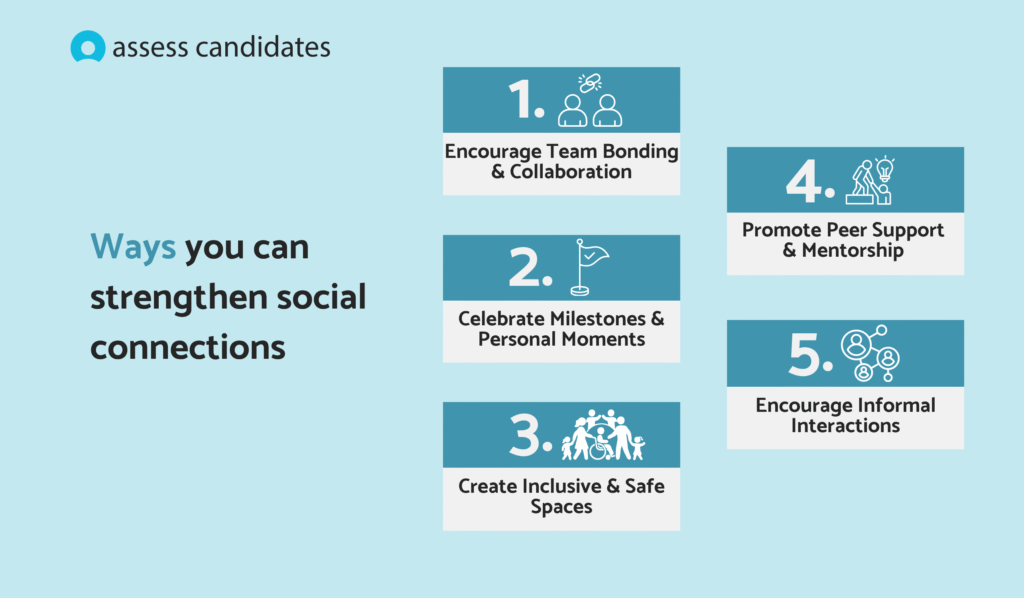
1. Encourage Team Bonding and Collaboration:
Organize team-building activities, brainstorming sessions, or informal gatherings that help colleagues connect beyond their roles. Collaboration builds trust and a sense of shared achievement.
2. Celebrate Milestones and Personal Moments:
Acknowledge birthdays, work anniversaries, and project wins. Small celebrations show that the organization values people, not just performance.
3. Create Inclusive and Safe Spaces:
Foster a culture where every voice is heard and respected. Encourage diversity in teams and make sure everyone feels welcome to participate fully and authentically.
4. Promote Peer Support and Mentorship:
Establish buddy systems or mentorship programs to help employees learn, grow, and feel supported. Guidance from peers and seniors strengthens confidence and connection.
5. Encourage Informal Interactions:
Design shared spaces, like breakout areas or virtual coffee sessions, where employees can relax and chat casually. Informal conversations often spark creativity and build camaraderie.
Encouraging teamwork, informal interactions and peer support helps employees feel like they are part of something larger than themselves. Simple gestures like celebrating milestones, sharing meals, or organizing team activities go a long way in building genuine connections.
But at the heart of all these strategies to promote well-being lies the most powerful ingredient that shapes how people feel, work, and grow within an organization: empathetic leadership.
4. Creating a Culture That Cares: Lead with Empathy
Empathy is at the heart of a caring and resilient workplace. When leaders genuinely try to understand and respond to what their people feel and need, they build trust that no policy or perk can match.
Leading with empathy means listening before judging, offering support when someone is struggling, and recognizing that every employee has a life outside of work. It is about being human first and a manager second.
Small gestures like asking how someone is doing, providing flexibility during tough times, or simply acknowledging effort can make employees feel valued and seen. Over time, this shapes a culture where care isn’t a buzzword but an everyday lived experience.
An empathetic leader sets the tone for the entire organization. When compassion guides decision-making, well-being naturally becomes part of how the company operates and everyone grows stronger together.
Bringing it back to “small drops make an ocean”
Each employee’s physical, mental, emotional and social health might feel like an individual drop. But together, these drops create the ocean that carries the whole organization. A supported, energized workforce equals a stronger culture, higher productivity, and better outcomes. Conversely, when many drops are “unhealthy” (stress, disengagement, physical strain), the negative current can harm the whole organization.
The impact of the different areas of well-being
Take advantage of our reliable, science-backed candidate assessment platform. LEARN MORE
Conclusion: Key Takeaway
When organizations invest in every drop, physical, mental, emotional and social, they create happier employees and increase company success through loyal motivation and drive.
Well-being at work isn’t built overnight; it grows through consistent care, empathy and intention. Each action, no matter how small – a kind word, a mindful policy, a culture that values balance – becomes a drop contributing to a larger wave of positive change.
When organizations invest in their people’s physical, mental, emotional and social health, they create more than just productive teams and nurture a thriving community. In such workplaces, success isn’t measured only by outcomes but by the strength, happiness, and fulfillment of those who make them possible.
Because in the end, well-being isn’t a strategy, it is a way of working.
Interested in learning more about improving well-being at work? Continue reading for frequently asked questions.
Frequently Asked Questions
What does employee well-being mean?
Employee well-being goes beyond just physical health; it includes mental and social aspects too. It is about creating an environment where people feel safe, supported and motivated to do their best work. When employees thrive personally, the organization benefits collectively.
Why is promoting well-being important for organizations?
Focusing on employee well-being results in increased engagement, productivity, and loyalty. A strong focus on well-being reduces stress, absenteeism, and turnover. Ultimately, it builds a happier, more resilient workforce that drives long-term success.
How can managers support employee well-being?
Managers play a key role in shaping a positive experience at work. They can support well-being by communicating openly, recognizing achievements, and encouraging a healthy work-life balance. Even small gestures of empathy and appreciation make a big difference.
What role does workplace culture play in well-being?
A healthy culture sets the tone for how people interact and grow. When organizations promote trust, respect and inclusion, employees feel valued and confident to express themselves. This sense of belonging fuels creativity and collaboration across teams.
What are simple ways to improve well-being at work?
Start with small but meaningful steps, encourage regular breaks, flexible schedules, and open conversations about mental health. Celebrate diversity, create social connection opportunities, and recognize good work often. Together, these habits make workplaces more human and supportive.


 English
  Arabic