
المقابلات المنظمة مقابل المقابلات غير المنظمة: دليل عملي لأصحاب العمل


المقابلات تظل واحدة من أهم المراحل في عملية التوظيف لأنها تؤثر بشكل مباشر على من يتم توظيفه. لاتخاذ قرارات توظيف أفضل، يحتاج أصحاب العمل إلى شكل مقابلة يناسب أهدافهم، ومتطلبات الدور، ومستوى مخاطر التوظيف. النهجان الأكثر شيوعًا هما المقابلات المنظمة والمقابلات غير المنظمة.
في حين تم تقدير المقابلات غير المنظمة لمرونتها وتدفقها الحواري لفترة طويلة، يفضل أخصائيو التوظيف بشكل متزايد المقابلات المنظمة لأنها تدعم موثوقية وعدالة، قرارات التوظيف القائمة على الأدلة.
يشرح هذا الدليل ما هي المقابلات المنظمة وغير المنظمة، وكيف تختلف، ومتى يكون كل نهج مناسبًا، ولماذا يفضل العديد من أصحاب العمل الآن المقابلات المنظمة.
المحتويات
- ما هي المقابلة المنظمة؟
- ما هو المقابلة غير المنظمة؟
- الاختلافات الرئيسية بين المقابلات المنظمة وغير المنظمة
- ما هي إيجابيات وسلبيات المقابلات المنظمة؟
- ما هي إيجابيات وسلبيات المقابلات غير المنظمة؟
- لماذا يتجه أرباب العمل نحو المقابلات المنظمة؟
- متى يجب على أصحاب العمل استخدام المقابلات المنظمة؟
- متى قد يكون المقابلة غير المهيكلة مناسبة؟
- كيفية تطبيق المقابلات المنظمة بفعالية؟
- لماذا تفضل الشركات الكبرى تقييم المرشحين من خلال المقابلات المصورة؟
لنبدأ بالأساسيات: ما الذي يجعل المقابلة منظمة؟
ما هي المقابلة المنظمة؟
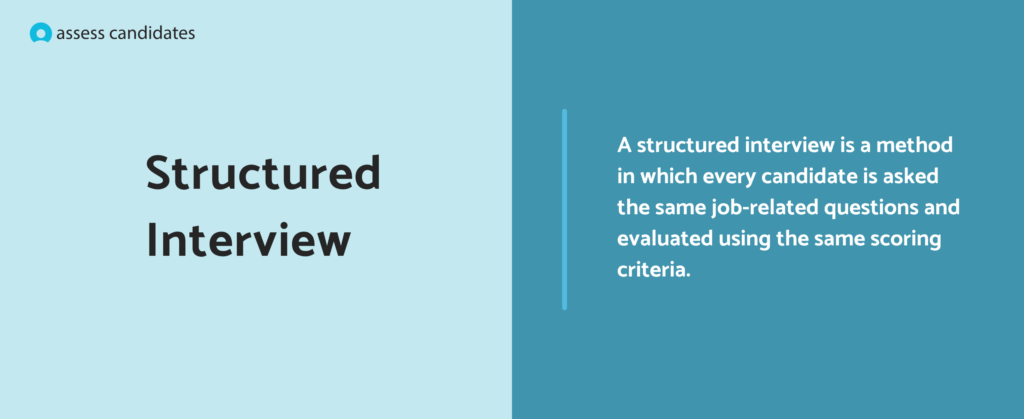
A مقابلة منظمة هو أسلوب يتم فيه سؤال كل مرشح أسئلة متعلقة بالعمل نفسه وتم تقييمه باستخدام نفس معايير التسجيل. هذا يقلل الذاتية ويساعد أصحاب العمل على اتخاذ قرارات أكثر اتساقًا واستنادًا إلى الأدلة.
اكتشف التوظيف القائم على البيانات الذي أصبح سهلاً من خلال تقييمات ما قبل التوظيف. التوظيف مجاناً
ما هي السمات الرئيسية للمقابلات المنظمة؟
مقابلات منظمة مصممة ليتم تطبيقها باستمرار، لذلك فهي تتمتع ببعض الخصائص الخاصة بها. ابحث عن ميزات التقييم المنظمة هذه أدناه:
1. أسئلة محددة مسبقًا
مقابلات منظمة استغل الأسئلة التي تم إعدادها مسبقًا مقابلة. تتماشى هذه الأسئلة بشكل مباشر مع المهارات, الكفاءات, والسلوكيات المطلوبة للدور. يُطرح على كل مرشح نفس المجموعة من الأسئلة ويكمل اختبارات القياس النفسي.
2. معايير تسجيل متسقة:
ردود المجيبين في مقابلات منظمة يتم تقييمها باستخدام مقاييس تقييم موحدة. يقوم المقابلون بتقييم المرشحين بناءً على مؤشرات أداء واضحة لضمان تقييم موضوعي لجميع المرشحين.
3. نفس العملية لجميع المرشحين:
في المقابلة المنظمة، يمر كل مرشح بنفس العملية الأساسية ويتم تقييمه بشكل متساوٍ وفقًا لنفس معايير التقييم. هذا يحسن الاتساق و يجعل المقارنة أكثر عدلاً.
ما هي أمثلة على تنسيقات المقابلات المنظمة؟
أمثلة شائعة لتنسيقات المقابلات المنظمة وتشمل المقابلة السلوكية، التي تقيّم كيف تعامل المرشحون مع مواقف محددة في الماضي، والمقابلة القائمة على الكفاءة، التي تركز على مهارات مثل التواصل والقيادة والعمل الجماعي. نوع آخر هو المقابلة الجماعية، التي يقوم فيها العديد من المحاورين بتقييم المرشحين باستخدام معايير تسجيل.
تظهر إرشادات التوظيف في القطاع العام والمهني باستمرار أن المقابلات الأكثر تنظيماً تحقق صلاحية أعلى، واتساقاً أكبر في التقييم، وتأثيراً سلبياً أقل من الأساليب الأقل تنظيماً.
في القسم التالي، دعنا نتعرف على صيغة مقابلة غير منظمة.

2. ما هو المقابلة غير المهيكلة؟
مقابلة غير منظمة لا يتبع مجموعة ثابتة من أسئلة محددة مسبقاً أو معايير تقييم موحدة. يعتمد المقابلون غالبًا على الأسئلة المفتوحة الأسئلة للتعرف أكثر على خلفية المرشح و الشخصية, مما يمنح المقابلة طابعًا طبيعيًا وحواريًا.
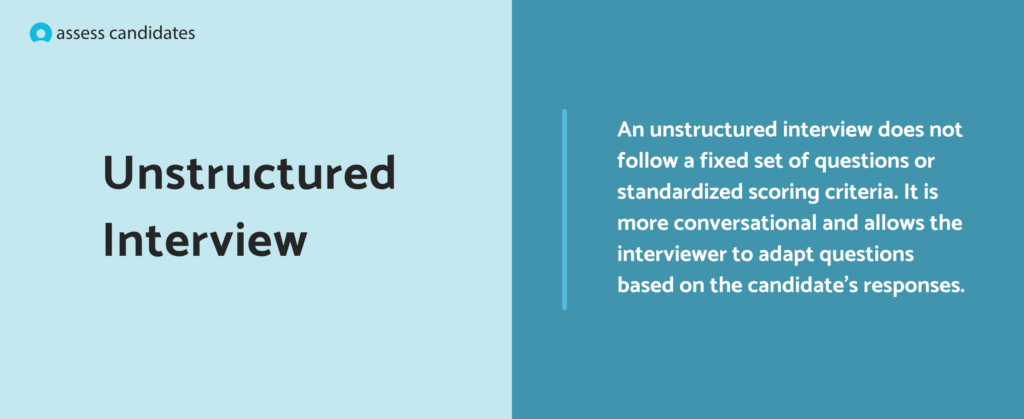
أن مقابلة غير رسمية لا يتبع مجموعة ثابتة من الأسئلة أو معايير درجات موحدة. بل هو أكثر حوارية ويسمح للمحاور بتكييف الأسئلة بناءً على ردود المرشح.
إذن، ما هو الميزات الشائعة للمقابلات غير المنظمة تميز؟ اكتشف أدناه.
الخصائص الرئيسية للمقابلات غير المنظمة:
مقابلات غير منظمة حتى العناصر المحددة التي تميزها عن نسختها المنظمة. تتمثل خصائص المقابلات غير المنظمة فيما يلي:
- أسئلة مرنة وغير مقيدةفي المقابلات غير المنظمة، لا يخطط القائمون بالتوظيف للأسئلة مسبقًا وقد تتغير بشكل كبير بناءً على المرشحين. غالبًا ما يطرح القائمون بالمقابلات أسئلة متابعة بناءً على الردود بدلاً من إطار محدد مسبقًا.
- محادثة يقودها المحاور: مقابلات غير منظمة السماح للمجند بالتحكم في سير المقابلة. يعتمد اتجاه المقابلة وتركيزها بشكل كبير على حكم المقابل واهتماماته وتصوراته الشخصية، ويمكن أن تختلف هذه القيم على نطاق واسع.
- نقص معايير موحدة للتقييم: في المقابلات غير المهيكلة، يقوم المحاورون بتقييم المرشحين بناءً على ردودهم والانطباعات العامة بدلاً من مقاييس النقاط، مما يجعل المقارنات بين المرشحين أكثر صعوبة.
كما تعلمت أعلاه،, مقابلات غير منظمة مرنة وتعاونية. ومع ذلك، إليك بعض أساليب استجواب المقابلات الشائعة.
ما هي أساليب الاستجواب الشائعة في المقابلات غير المحددة؟
مقابلات غير منظمة استخدم أساليب أسئلة مختلفة حسب تقدير القائم بالمقابلة. يمكن أن تكون هذه الأسئلة في المقابلات غير المنظمة بالصيغ التالية:
أكثر أنماط الأسئلة شيوعًا في المقابلات غير المنظمة
- مقابلات غير رسمية أو استكشافية: يبدأ المحاور بأسئلة استقصائية لاستنباط ما لدى المرشح الخبرات و المهارات. سيوجّه رد المرشح المحاور في تحديد الأسئلة المتابعة التي يجب طرحها.
- محادثات مبكرة لفهم خلفية المرشح: يبدأ المحاور المقابلة بطرح أسئلة تتعمق في خلفية المرشح؛ تاريخه التعليمي، خبرته العملية، وغيرها من المعلومات ذات الصلة.
- مناقشات حول التوافق الثقافي أو الشخصي: مقابلات غير منظمة يمكن أن تتخذ شكل مناقشات تكشف عن الصفات الثقافية أو الشخصية للمرشحين للمحاور. يطرح المحاورون على المرشحين أسئلة تتعمق في هذه المجالات من حياتهم.
- أسئلة حول المهارات والكفاءات: مقابلات غير منظمة تُستخدم هذه الأدوار العليا أو أدوار علاقات العملاء للسماح للمرشحين بالتعبير عن المهارات والكفاءات التي سيساهمون بها في المنظمة في الدور الذي يتقدمون له.
على الرغم من أن صيغة مقابلة غير منظمة يساعد في بناء علاقة مع المحاور، المقابلات غير المنظمة هي مؤشرات أضعف لأداء الوظيفة ويمكن أن تكون متحيزة. لهذا السبب يستخدم العديد من أصحاب العمل الآن المقابلات غير المنظمة لاستكمال طرق تقييم أكثر تنظيمًا.
اعثر على المواهب العالمية المناسبة بشكل أسرع من خلال تقييماتنا الآلية عبر الإنترنت. اعرف المزيد
يقارن القسم التالي بين كلا التنسيقين مباشرة.
3. الفروق الرئيسية بين المقابلات المنظمة وغير المنظمة
المقابلات المنظمة والمقابلات غير المنظمة تهدف إلى تقييم المرشحين، لكنهم يقومون بذلك بطرق مختلفة جدًا. فهم هذه الاختلافات يساعد أصحاب العمل على اختيار النهج الذي يدعم بشكل أفضل عادلة وتوظيف فعال.
المقابلات المنظمة تعطي الأولوية للاتساق،, الإنصاف, واتخاذ القرارات القائمة على الأدلة، في حين تميل المقابلات غير المهيكلة إلى المزيد من المرونة والمحادثة.
اكتشف اختبارات القياس النفسي المدعومة من خبرائنا لدعم استراتيجية التوظيف العالمية الخاصة بك للتوظيف. التوظيف مجاناً
في القسم التالي، دعنا نلقي نظرة على إيجابيات وسلبيات المقابلات المهيكلة.
4. ما هي إيجابيات وسلبيات المقابلات المنظمة؟
مزايا المقابلات المهيكلة
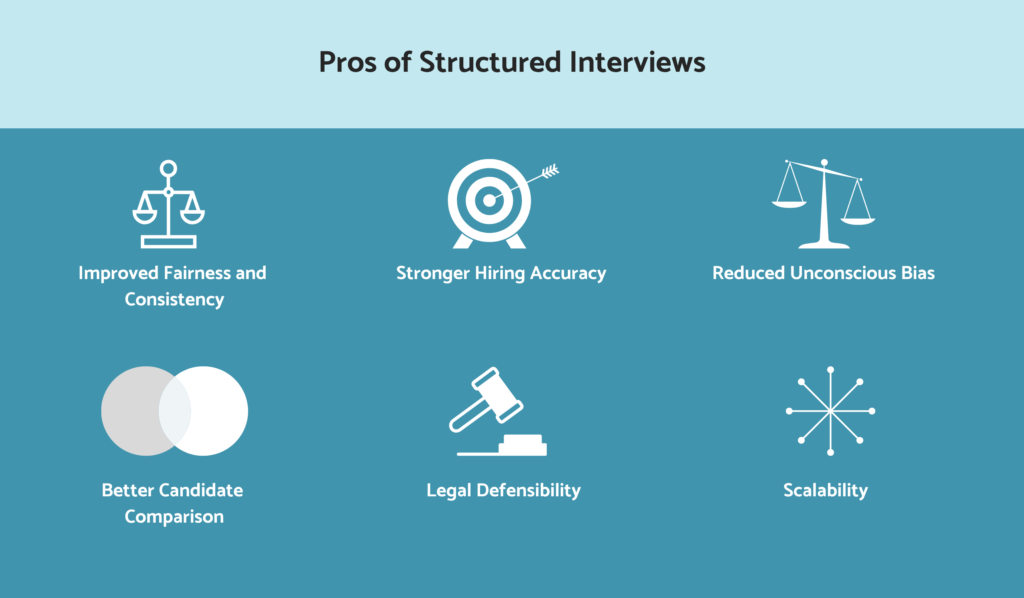
1. تحسين العدالة والاتساق:
في المقابلة المنظمة، يقوم المقابلون بتقييم جميع المرشحين بنفس المعايير ورقة التسجيل. وبهذه الطريقة، يتم تقليل المعاملة غير المتكافئة و التحيز.
2. دقة توظيف أقوى:
المقابلات المنظمة هي مؤشرات أكثر موثوقية للوظيفة الأداء لأنهم يركزون على الكفاءات المتعلقة بالوظيفة.
3. تقليل التحيز اللاواعي:
تستخدم المقابلات المنظمة أسئلة موحدة، مما يحد من تأثير التفضيلات الشخصية للمقابلين والانطباعات الأولى.
٤. مقارنة أفضل للمرشحين:
يمكن للمقابلة المنظمة أن تسهل على مسؤولي التوظيف مقارنة المرشحين بموضوعية باستخدام بيانات قابلة للقياس ودرجات تستند إلى تقييم معياري أو نسبة مئوية.
5. قابلية الدفاع القانوني
المقابلات المنظمة أسهل في الدفاع عنها في نزاعات التوظيف لأنها تستخدم معايير تقييم موثقة ومتعلقة بالوظيفة.
6. قابلية التوسع
تنجح المقابلات المنظمة بشكل جيد مع التطبيقات ذات الحجم الكبير وتجعل من السهل تكرار عملية التوظيف وإعادة إجرائها حسب الحاجة.
مساوئ المقابلات المهيكلة
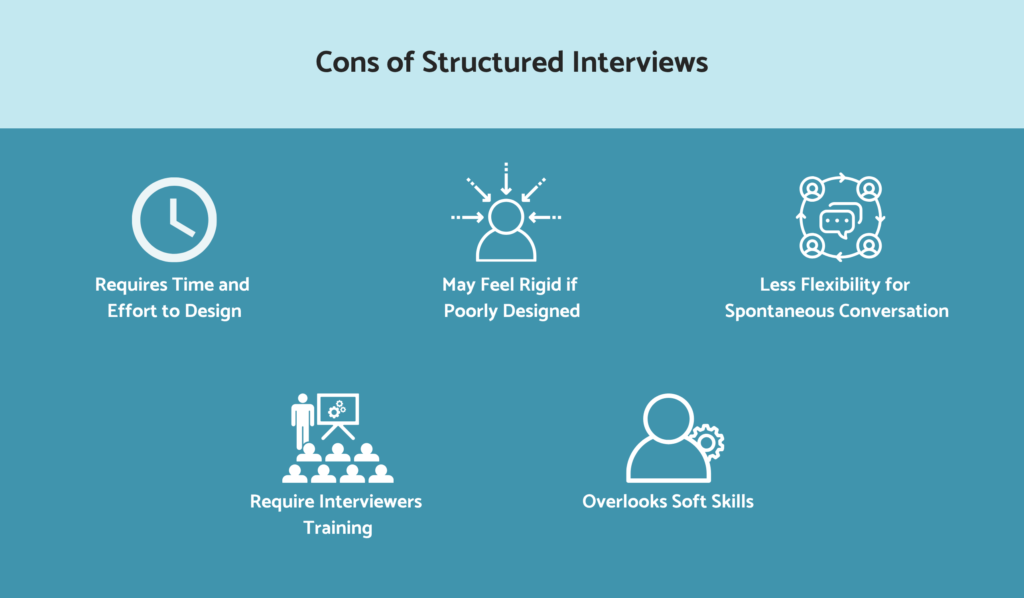
يتطلب الأمر وقتًا وجهدًا للتصميم المسبق:
مقابلات منظمة عادة ما تتطلب جهدًا ووقتًا كبيرين لتجميعها لأنها تستخدم اختبارات وأنظمة تقييم موحدة، والتي تتطلب حسابًا وتخطيطًا دقيقين لضمان الموثوقية والصلاحية.
2. قد يبدو صلباً إذا كانت الأسئلة مصممة بشكل سيئ:
A مقابلة منظمة قد تحد من إظهار مهارات المرشحين وكفاءاتهم، لا سيما عندما تكون مراحل المقابلة سيئة التصميم أو غير مرتبة بشكل سليم.
3. مرونة أقل للمحادثات العفوية:
مقابلات منظمة نادرًا ما تتاح للمحاورين أو للمحاوَرين فرصة لبدء مناقشات غير مخططة لم يصمم المقابلة لتقييمها أو الاستفسار عنها.
4. يتطلب تدريب المقابلين:
في مقابلات منظمة, يجب تدريب المحاورين على تطبيق معايير التقييم باستمرار وتوليد نتائج توظيف بناءً عليها.
5. تميل إلى تجاهل المهارات الشخصية:
تميل المقابلات المنظمة إلى تفويت الفروق الدقيقة بين الأشخاص، والإبداع، أو المساهمة الثقافية إذا لم يتم تصميم المقابلة بشكل صحيح.
بهذا، أنت تعرف ماذا مقابلات منظمة المساهمة في عملية المقابلة من حيث القدرة على التنبؤ والموثوقية والصلاحية.
اكتشف اختبارات القياس النفسي المدعومة من خبرائنا لدعم استراتيجية التوظيف العالمية الخاصة بك للتوظيف. اعرف المزيد
والآن، دعنا ننتقل لمناقشة مزايا وعيوب المقابلات غير المهيكلة في القسم التالي.
5. ما هي إيجابيات وسلبيات المقابلات غير المهيكلة؟
مزايا المقابلات غير المنظمة
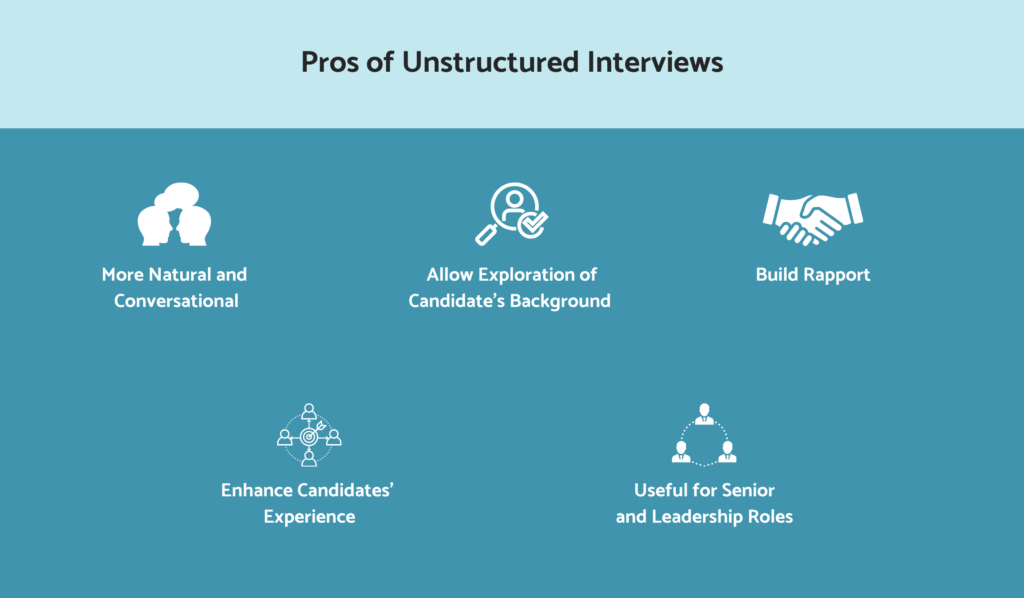
1. أكثر طبيعية وحوارية
مقابلات غير منظمة إنها حوارية لأن الأسئلة ليست ثابتة، ويمكن للمحاورين الاستجابة في الوقت الفعلي لإجابات المرشح. يمكن لهذا التدفق الحواري أن يشجع المرشحين على مشاركة رؤى قد لا تظهر في تنسيق مقابلة جامد.
2. يسمح باستكشاف أعمق لخلفية المرشح
مقابلات غير منظمة يسمح للمحاورين بالاطلاع على الخبرات الشخصية للمرشح ودوافعه ومسيرته المهنية. يمكن للمحاورين أيضًا طرح أسئلة متابعة بناءً على هذه الإجابات لفهم أعمق للمرشحين.
٣. يمكن أن تساعد في بناء علاقة جيدة بين المحاورين والمرشح
مقابلات غير منظمة المساعدة في تقليل قلق المرشحين من خلال خلق بيئة أقل رسمية. يمكن أن يكون هذا بناء العلاقة مفيدًا بشكل خاص في مراحل المقابلة اللاحقة أو الأدوار التي يكون فيها بناء العلاقات مطلبًا أساسيًا.
٤. يعزز تجربة المرشح:
غالباً ما يدرك المرشحون مقابلات غير منظمة مما يقلل من رهبة الموقف. وهذا يؤدي إلى استجابات أكثر صدقًا.
5. مفيد للأدوار العليا أو القائمة على العلاقات:
المقابلات غير المهيكلة فعالة بشكل خاص للأدوار القيادية أو التي تتطلب التعامل مع العملاء أو الأدوار الاستراتيجية. يمكن لهذا الشكل من المقابلات أن يكشف عن الديناميكيات الشخصية التي قد تفوتها المقابلات المهيكلة.
سلبيات المقابلات غير المنظمة
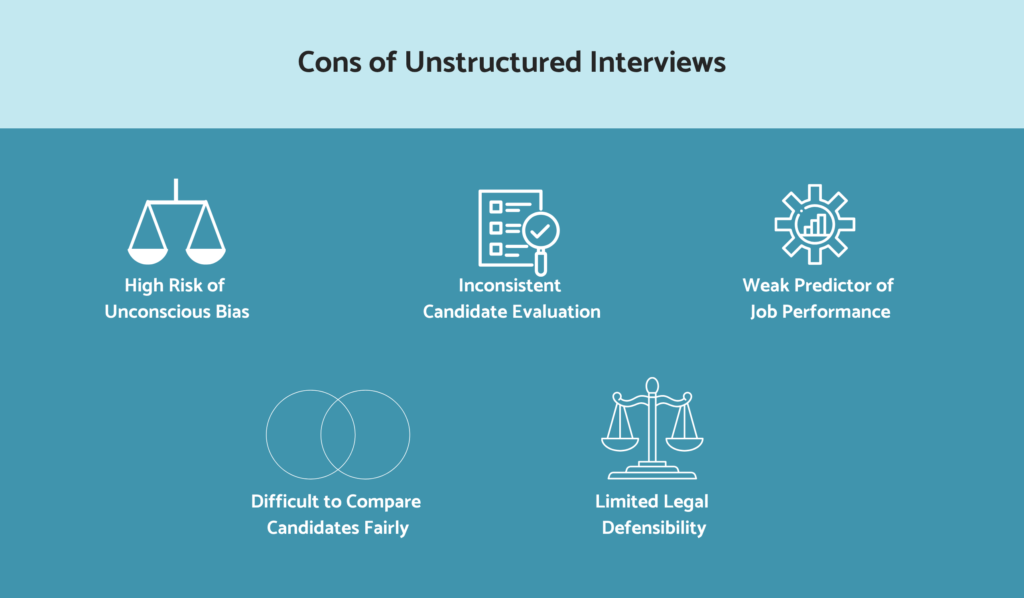
1. خطر الانحياز اللاواعي المرتفع
تعتمد المقابلات غير المنظمة بشكل كبير على الحكم الشخصي والانطباعات الأولى، مما يزيد من تأثير اللاوعي التحيز. قد يفضل المقابلون عن غير قصد المرشحين الذين لديهم خلفيات مماثلة بدلاً من أولئك الأنسب للوظيفة.
2. تقييم غير متسق للمرشحين
قد تفتقر المقابلات غير المنظمة إلى الاتساق لأن الأسئلة وسير المقابلة يختلفان من مرشح لآخر. يقوم المقابلون بتقييم المرشحين بناءً على ما تمت مناقشته بدلاً من المعايير المتعلقة بالوظيفة.
3. مؤشر ضعيف لأداء الوظيفة
المقابلات غير المنظمة أقل فعالية في التنبؤ بمدى أداء المرشح في الوظيفة. قد يركز المقابلون على الشخصية أو الثقة بدلاً من المهارات والسلوكيات التي تدفع الأداء فعليًا.
4. صعوبة مقارنة المرشحين بشكل عادل
في المقابلات غير المنظمة، يطرح المحاورون على المرشحين أسئلة مختلفة ويقيمون بشكل غير رسمي، مما يجعل المقارنات صعبة. غالبًا ما تستند قرارات التوظيف إلى الانطباعات العامة بدلاً من الأدلة الموضوعية.
5. قابلية دفاع قانوني محدودة
توفر المقابلات غير المنظمة الحد الأدنى من التوثيق وتفتقر إلى معايير تقييم واضحة. في حالة نزاع توظيف, ، قد يكون من الصعب على أرباب العمل تبرير قرارات الاختيار، خاصة إذا تم التعامل مع المرشحين بشكل مختلف أثناء عملية المقابلة.
في القسم التالي، سنشرح لماذا يستخدم أصحاب العمل المقابلات المنظمة؟.
٦. لماذا يتجه أصحاب العمل نحو المقابلات المنظمة؟
يعتمد أصحاب العمل بشكل متزايد على المقابلات المنظمة لأنها تدعم الاتساق والعدالة والتوثيق واتخاذ قرارات توظيف أقوى.
5 فوائد يحصل عليها أصحاب العمل من المقابلات المنظمة
كما ناقشنا سابقًا، يتحول المزيد من أصحاب العمل والموظفين إلى المقابلات المنظمة في عمليات التوظيف الخاصة بهم. هذا التحول هو نتيجة للفوائد التي يقدمها هذا النهج المقابلي؛ إليك 5 منهم.
1. العدالة والمساءلة والتوظيف المستند إلى البيانات:
يمكن لأصحاب العمل اتخاذ قرارات التوظيف بناءً على البيانات التي تم جمعها أثناء عملية المقابلة. وتجعل هذه البيانات أيضًا من السهل مقارنة أداء المرشحين بدقة.
2. توازن تطبيق مبادئ التنوع والإنصاف والشمول:
يمكن لأصحاب العمل تشغيل عمليات توظيف تقلل من التحيز وتعزز الشمول من خلال ضمان تكافؤ الفرص للمرشحين بغض النظر عن خلفياتهم.
3. الهدف والأدلة المتعلقة بالوظيفة للتوظيف:
تدعم المقابلات المنظمة هدف التركيز على الأدلة الموضوعية والمتعلقة بالوظيفة بدلاً من الانطباعات الذاتية عند توظيف المرشحين.
٤. توافق seamless مع تقنيات التوظيف الحديثة في الذكاء الاصطناعي:
تتكامل المقابلات المنظمة بشكل أكثر فعالية مع تقنيات التوظيف الحديثة مثل أنظمة تتبع المتقدمين (ATS) و أدوات التقييم المدعومة بالذكاء الاصطناعي.
5. سجلات قابلة للتتبع وتوثيق سهل:
يمكن لأصحاب العمل جمع بيانات دقيقة، مما يوفر وثائق واضحة تعتبر حاسمة في الصناعات المنظمة وأسواق العمل التنافسية.
عزِّز قرارات التوظيف الخاصة بك من خلال منصتنا للتقييم المثبتة والقائمة على العلم. اعرف المزيد
دعنا ننتقل لمناقشة متى يجب على أرباب العمل استخدام المقابلات المنظمة في عملية المقابلة.
7. متى يجب على أصحاب العمل استخدام المقابلات المنظمة؟
مقابلات منظمة هي الأفضل عندما تكون العدالة والاتساق ومقارنة المرشحين الدقيقة مهمة.
حالات يجب على أصحاب العمل استخدام المقابلات المنظمة فيها
هناك مواقف يكون فيها النهج الأفضل للمقابلة لمؤسستك هو طريقة المقابلة المنظمة. لقد قمنا بإدراج بعض هذه السيناريوهات لك أدناه:
- التوظيف بكميات كبيرة مثل الوظائف المبكرة والوظائف في منتصف المسار المهني.
- الأدوار ذات الكفاءات المحددة بوضوح و المهارات.
- المنظمات المبكرة التي تعطي الأولوية للإنصاف،, التنوع, ، الإنصاف، والشمول.
- الصناعات المنظمة أو عالية المخاطر.
- بيئات التوظيف القائمة على البيانات.
بشكل عام، تُستخدم المقابلات المنظمة على أفضل وجه عندما يحتاج أصحاب العمل إلى قرارات توظيف موثوقة وقابلة للدفاع عنها، خاصة عندما يكون الاتساق جودة التوظيف يجب ألا يتم المساس به.
٨. متى قد يكون المقابلة غير المنظمة مناسبة؟
للمقابلات غير المنظمة مكان في عملية التوظيف عند استخدامها بشكل مناسب. يمكن للمرونة أن تكون قيمة لاستكشاف المجالات التي يصعب التقاطها بالأسئلة الموحدة وحدها.
5 مواقف تكون فيها المقابلات غير المنظمة مناسبة
المقابلات غير المنظمة مناسبة في المواقف التالية:
- المراحل النهائية لعملية التوظيف بعد الفحص المنظم.
- مناصب القيادة العليا، على سبيل المثال، المناصب التنفيذية أو الاستراتيجية للغاية.
- محادثات توافق القيم.
- الأدوار القائمة على العلاقات، على سبيل المثال، خدمة العملاء والتسويق.
- إشراك المرشح وبناء الألفة.
ولكن، لاتخاذ أفضل قرارات التوظيف، يجب عليك الجمع بين المقابلة غير المنظمة والمقابلات المنظمة أو غيرها من المقاييس الموضوعية التقييم طرق لتعظيم فوائد كلاهما.
إذن, كيف يجب إجراء المقابلات المنظمة? اكتشف أدناه.
٩. كيفية تنفيذ المقابلات الهيكلية بفعالية
لتطبيق المقابلات المنظمة بنجاح، تحتاج إلى تصميم معايير تقييم واضحة بعناية وتدريب المحاورين لضمان الاتساق. عند القيام بها بشكل جيد، تعمل المقابلات المنظمة على تحسين دقة التوظيف مع السماح بتفاعل هادف مع المرشحين.
7 نصائح لتطبيق المقابلات المنظمة بفعالية
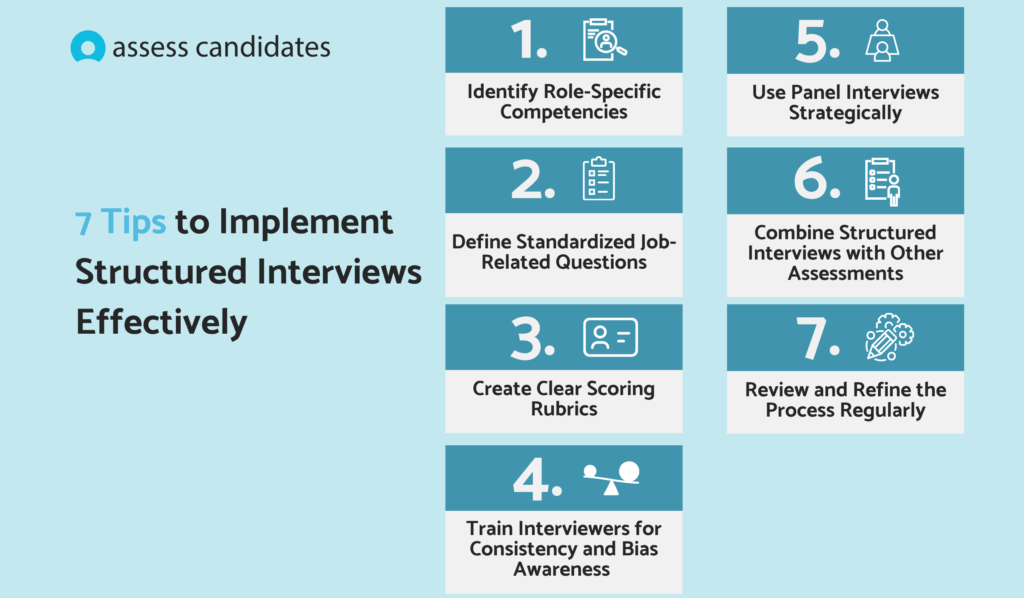
1. تحديد الكفاءات الخاصة بالدور:
لتنفيذ المقابلات المنظمة، ابدأ بتحديد المهارات, ، السلوكيات، والمعرفة المطلوبة للنجاح في الدور. يجب أن تستند هذه الكفاءات إلى تحليل الوظيفة، وتوقعات الأداء، واحتياجات العمل بدلاً من الافتراضات.
2. صمم أسئلة موحدة تتعلق بالوظيفة:
قم بتطوير أسئلة مقابلة تقيّم كل كفاءة بشكل مباشر. استخدم الأسئلة السلوكية والموقفية لأنها فعالة في دفع المرشحين لإظهار كيفية تعاملهم أو سيتعاملون مع سيناريوهات العمل الحقيقية.
3. إنشاء معايير تقييم واضحة:
قم بإنشاء مقاييس تصنيف مع مؤشرات أداء محددة لكل سؤال. ستساعدك معايير التقييم الواضحة على تقييم الاستجابات باستمرار وتقليل الأحكام الذاتية.
٤. تدريب المحاورين على الاتساق والوعي بالتحيزات:
يجب تدريب المقابلين على كيفية طرح الأسئلة كما هي مكتوبة، وتطبيق معايير التقييم بدقة، والتعرف على التحيزات اللاواعية التحيز. الاتساق بين المحاورين أمر بالغ الأهمية للحصول على نتائج موثوقة.
٥. استخدم المقابلات الجماعية بشكل استراتيجي:
يمكن إحضار عدة محاورين، وتعيين كفاءات محددة لهم لتقييمها بشكل فردي. تساعد المقابلات الجماعية في موازنة وجهات النظر وتعزيز دقة التقييم عند دمجها مع نظام تسجيل مشترك.
٦. ادمج المقابلات المنظمة مع تقييمات أخرى:
المقابلات المنظمة تكون أكثر فعالية عند استخدامها جنبًا إلى جنب مع أدوات اختيار أخرى مثل اختبارات المهارات, ، عينات عمل، أو محاكاة الوظائف. وهذا يوفر رؤية أشمل لقدرات المرشح.
٧. مراجعة العملية وتحسينها بانتظام:
تأكد من جمع الملاحظات من المقابلين والمرشحين، وتحليل نتائج التوظيف، وتعديل الأسئلة أو معايير التقييم مع تطور الأدوار. سيساعد التحسين المستمر في الحفاظ على عملية المقابلة ذات صلة وفعالة.
عندما تُصمم المقابلات الهيكلية بعناية وتُستخدم باستمرار، فإنها تساعد أصحاب العمل على تحقيق توازن أفضل بين العدالة والدقة والحكم البشري.
بالنسبة لأصحاب العمل، التحدي ليس في الاختيار بين الهيكلية والحكم البشري. بل هو بناء عملية تستخدم كليهما بفعالية.
هنا يأتي دور تقييم المرشحين.
10. لماذا تفضل الشركات الكبرى تقييم المرشحين عبر المقابلات المرئية؟
تقييم المرشحين يدعم أصحاب العمل بـ مقابلات الفيديو المسجلة مسبقاً و أدوات التقييم مصمم لجعل التوظيف المنظم أكثر اتساقًا وقابلية للتوسع.
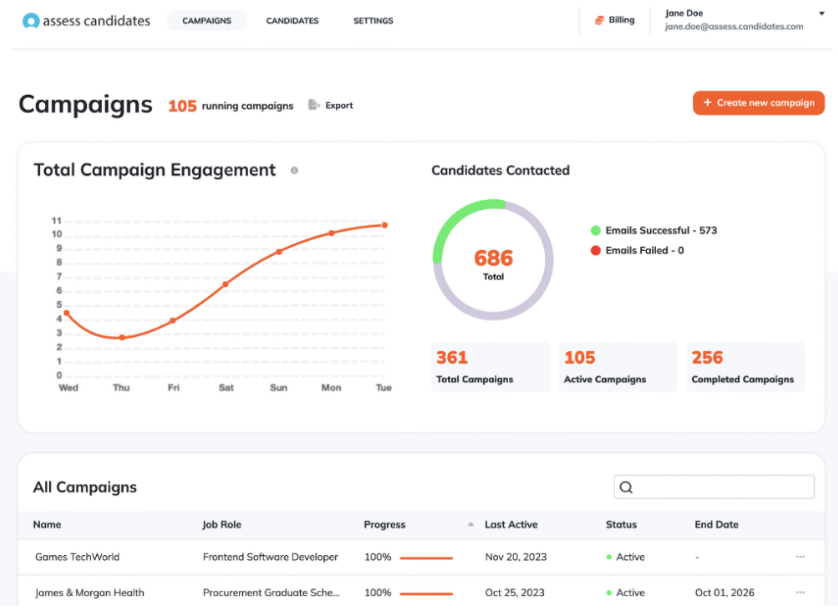
إليك مثال على لوحة معلومات تقارير الحملة التي ستصادفها على تقييم النظام الأساسي للمرشحين.
فيما يلي 7 أسباب تجعل أصحاب العمل يفضلون منصة التوظيف عبر الفيديو الخاصة بـ "تقييم المرشحين":
- دقة مدعومة علمياًتم تطويره بواسطة علماء معتمدين وعلماء نفس مهنيين، نحن نضمن أن كل تقييم يستند إلى بحث مثبت. المزيد من التنبؤات الموثوقة بأداء الوظيفة تمنح أصحاب العمل الثقة في اختيار المرشحين المناسبين لتحقيق النجاح على المدى الطويل.
- الحد من التحيز: تم تصميم تقييم المرشحين لإنشاء عملية توظيف أكثر عدالة من خلال التقليل من التحيز اللاواعي. مع وجود معايير موحدة مقابلة بالفيديو هيكلية وتسجيل موضوعي، يمكن لأصحاب العمل مقارنة المرشحين على أساس قدراتهم بدلاً من الانطباعات الذاتية، مما يؤدي إلى قرارات توظيف أكثر إنصافًا.
- التوظيف الشامل: تضمن ميزات إمكانية الوصول، مثل تعديلات التكبير/التصغير، وخيارات الوقت الإضافي، والتوافق مع قارئ الشاشة، أن يتمكن المرشحون ذوو الاحتياجات المختلفة من المشاركة بشكل عادل. هذا الالتزام الشمولية تمكين أصحاب العمل من الاستفادة من مجموعة أوسع وأكثر تنوعًا من المواهب.
- الرؤى المستندة إلى البياناتتوفر المنصة تقارير ولوحات معلومات مفصلة تمكّن مسؤولي التوظيف من تصفية المرشحين وترتيبهم وتحديد قوائم مختصرة بناءً على أدائهم. الرؤى تسهيل تحديد أفضل المواهب بسرعة، مع الحفاظ على الشفافية في عملية اتخاذ القرار.
- التقييمات المرنة: تقييم المرشحين يقدم مجموعة واسعة من تنسيقات المقابلات المرئية لقياس الكفاءات، ومهارات التواصل،, الملاءمة الثقافية, نقاط القوة، والمعرفة التقنية. تتيح هذه المرونة مع التنسيق الآلي لأصحاب العمل تخصيص نهجهم تجاه الدور والقطاع المحدد التي يوظفون من أجلها.
- موثوق به عالميًا: تعتمد المؤسسات في مختلف الصناعات، من التمويل والرعاية الصحية إلى البيع بالتجزئة والتعليم، على تقييم المرشحين لتحقيق نتائج متسقة. ويبرز استخدامه العالمي مصداقيته كأداة توظيف موثوقة للشركات من جميع الأحجام.
ختامًا، عند استخدامها بشكل جيد، توفر المقابلات المنظمة بديلاً أكثر موثوقية لأصحاب العمل مقارنة بالمقابلات غير المنظمة عندما تكون العدالة والاتساق مهمين.
هل ترغب في معرفة المزيد عن إجراءات التوظيف الفعالة؟ استكشف الأسئلة الشائعة أدناه واشترك ببريدك الإلكتروني لتبدأ.
الأسئلة المتداولة
ما الفرق بين المقابلات المنظمة وغير المنظمة؟
مقابلات منظمة استخدم معايير موحدة،, أسئلة متعلقة بالوظيفة وتقييم متسق لجميع المرشحين، مما يتيح تقييمًا عادلاً وموضوعيًا. مقابلات غير منظمة مرنة ومحادثية، مع أسئلة و التقييمات مصممة وفقًا لحكم المقابل الشخصي وانطباعاته.
لماذا تعتبر المقابلات المنظمة أكثر فعالية؟
مقابلات منظمة أكثر فعالية لأنها تقلل تحيز, ضمان تقييم متسق، والتركيز على الكفاءات المتعلقة بالوظيفة، والتنبؤ بشكل أفضل بالأداء الوظيفي من خلال أسئلة موحدة وطرق تسجيل موضوعية.
ما هي العيوب الرئيسية للمقابلات غير المنظمة؟
إن أوجه القصور الرئيسية في مقابلات غير منظمة تتضمن مخاطر أعلى للتحيز اللاواعي، وعدم اتساق في تقييم المرشحين، وضعف في المقارنة بين المرشحين، وقدرة تنبؤية محدودة بأداء الوظيفة، ومحدودية قابلية الدفاع القانوني بسبب عدم وجود أسئلة موحدة ومعايير تقييم.
متى يجب على أصحاب العمل استخدام المقابلات غير المنظمة؟
يجب على أصحاب العمل استخدام مقابلات غير منظمة في مراحل التوظيف اللاحقة، للأدوار العليا أو القيادية، وللمناقشات التي تركز على القيم والعلاقات. يجب استخدام هذا النوع من المقابلات كعامل مكمل للمقابلات المنظمة، وليس كأسلوب التوظيف الأساسي.
ما هي أفضل ممارسة: المقابلات المنظمة أم غير المنظمة؟
أفضل مقابلة الممارسة هي نهج هجين: يجب عليك استخدام مقابلات منظمة لتقييم الكفاءات بطريقة عادلة وموضوعية التقييم ومقابلات غير منظمة لإضافة عمق من خلال مناقشات الثقافة والقيم والقيادة، مما يضمن الدقة والبصيرة البشرية في قرارات التوظيف.


 English
  Arabic