
أفضل 15 سؤالًا في المقابلات الشخصية حول المهارات اللطيفة والإجابات عليها


Soft skills interview questions help employers explore how candidates approach العمل الجماعي, القدرة على التكيف, المساءلة, و حل المشكلات. Qualifications and experience remain important, but structured interviews can provide additional evidence about the behaviors required for a role.
يتضمن هذا الدليل ما يلي: 15 interview questions, examples of strong answers, potential concerns to explore, and practical ways to evaluate soft skills consistently.
المحتويات
- How to assess soft skills in interviews
- What are the types of soft skill interview questions?
- Common interview mistakes to avoid when assessing soft skills
- Why do top companies use Assess Candidates for assessing soft skills during interviews?
So, what are the best ways إلى use interview questions لـ تقييم المهارات الشخصية?
1. كيف يتم تقييم القدرة على التوافق الثقافي في المقابلات؟
Asking the right interview questions is crucial for assessing soft skills. Organizations need a structured interview format to assess candidates’ interpersonal skills, actual behaviors, and decision-making abilities.
فيما يلي بعض من best ways to use أسئلة المقابلة fairly to assess soft skills:
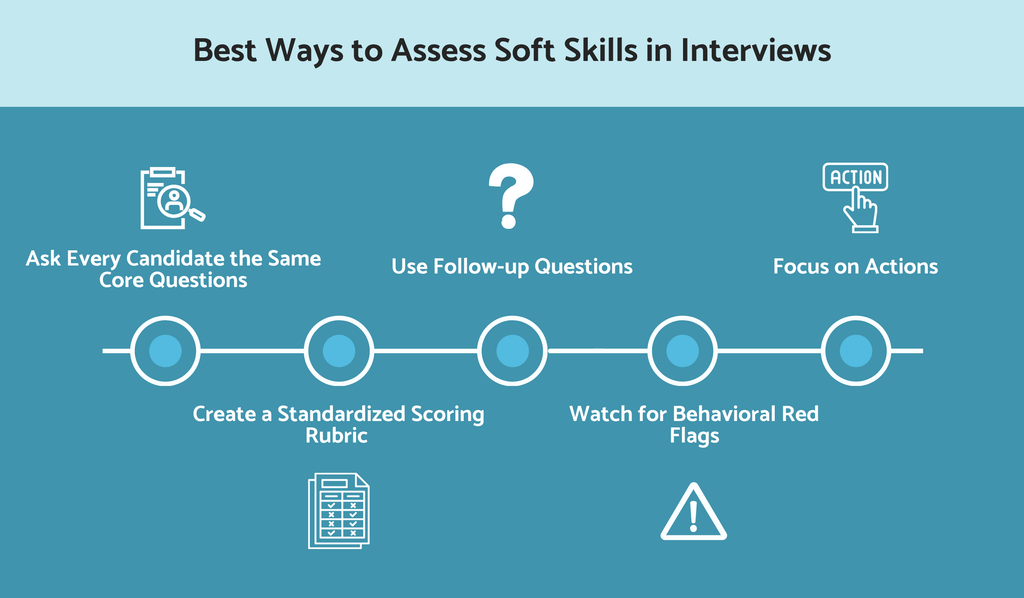
- Ask Every Candidate the Same Core Questions
One of the most effective ways to assess soft skills is to follow a مقابلة منظمة. This helps you evaluate candidates باستمرار و make fair comparisons. Ask the same core questions for each role and level and evaluate their responses against the predefined criteria.
- Use Follow-up Questions
Ask candidates some أسئلة متابعة after their initial response, such as “What would you do differently next time?” “Why did you choose this approach?” These follow-up questions will help you understand the candidate’s مهارات اتخاذ القرار و قدرات حل المشكلات while revealing how well they reflect on past experiences.
- Focus on Actions
Focus on a candidate’s actions and not just outcomes, as a successful outcome does not always mean a candidate handled the situation effectively. Analyze how they approached the challenge, communicated with others, handled الخلافات, و responded to setbacks, to التقييم فإن المهارات الشخصية without penalizing them for circumstances beyond their control.
- Watch for Behavioral concerns
Pay attention to the candidate’s behaviors like blaming others, dismissing feedback, avoiding responsibilities, and refusing to consider alternative perspectives. Ask أسئلة متابعة, request specific examples, and compare responses against candidates to assess these behaviors إلى حد ما.
- Create a Standardized Scoring Rubric
إنشاء clear evaluation criteria for each soft skill and define what strong, average, and weak responses look like. A consistent scoring rubric makes the assessments more objective and helps interviewers قارن بين المرشحين باستخدام فإن نفس الشيء المعايير.
What could a standardized scoring rubric look like?
Below is an example scoring rubric that employers should adapt these anchors to each competency and role.
Evaluate soft skills with our wide range of pre-employment assessments. التوظيف مجاناً
This brings us to the most important topic: what are the types of soft skill questions you can ask in المقابلات?

2. What are the types of soft skill interview questions?
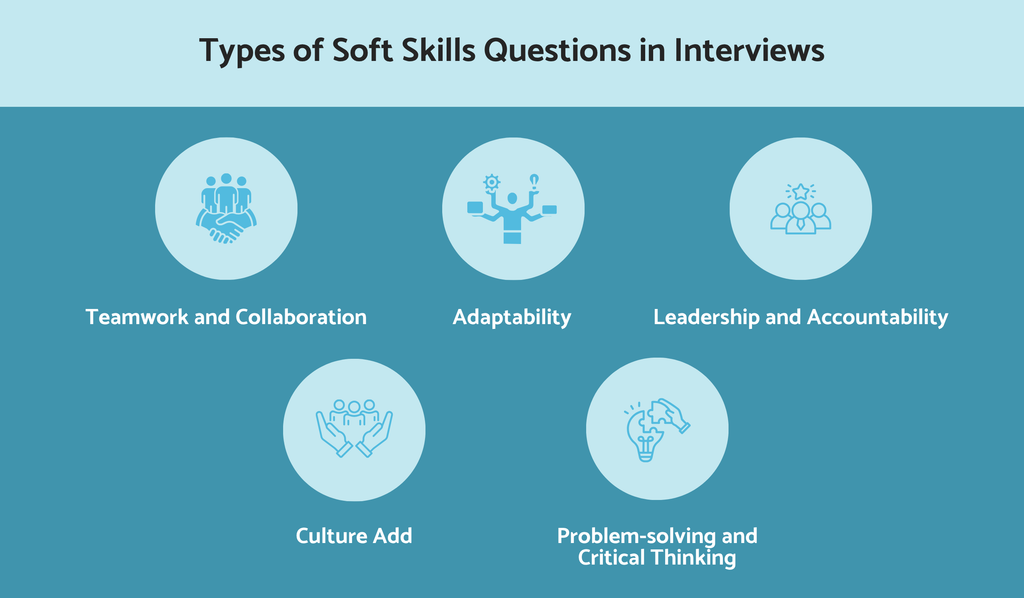
ما يلي 15 soft skills interview questions cover five areas: teamwork, adaptability, leadership and accountability, culture contribution, and problem-solving. Use the examples to guide follow-up questions and evaluate responses against job-relevant criteria rather than treating individual answers as definitive proof of ability.
Top 5 types of soft skill questions to ask in an interview include:
1. العمل الجماعي والتعاون
العمل الجماعي والتعاون الأسئلة help evaluate how candidates will work with others towards achieving shared goals. These questions assess a candidate’s شخصي المهارات, الصراع الإدارة, و مشتركة المسؤولية.
Question: How did you handle working with someone difficult in your previous workplace?
إجابة قوية: The candidate explains how they remained professional, listened to the other person’s perspective, found ways to collaborate despite the differences, and addressed disagreements constructively.
المخاوف المحتملة: The candidate blames the colleague entirely, avoids resolving the conflict, refuses to compromise, and struggles to remain professional. These behaviors could impact team productivity, undermine collaboration, and create ongoing workplace tension.
Question: Tell me about a time you worked with someone whose approach was different from yours. How did you collaborate?
إجابة قوية: The candidate respects different working styles, focuses on shared goals, and finds common ground.
المخاوف المحتملة: The candidate insists that their approach was the only accurate one, criticizes the other person unnecessarily, and refuses to compromise. This may create friction, slow اتخاذ القرار, and make collaboration difficult.
Question: Tell me about a time your team disagreed on how to complete a project. How did you help reach a decision?
إجابة قوية: The candidate listens to different viewpoints, compares the options against the team’s goals, and helps the group reach a practical decision.
المخاوف المحتملة: The candidate dominates discussions, prioritizes personal preferences over the team’s objectives, and avoids disagreements altogether. This further discourages participation, limits creative thinking, and leads to weaker team decisions.
2. Adaptability
القدرة على التكيف الأسئلة show how candidates respond to changing priorities, unexpected challenges, and unfamiliar tasks. They help measure soft skills including سرعة التعلم, المرونة, الانفتاح على التغيير, و المرونة.
Question: Tell me about a time you were given an unfamiliar task. How did you approach it, and what did you learn from the experience?
إجابة قوية: The candidate explains how they approached the unfamiliar task with an open mind, identified what they needed to learn, sought guidance, and adapted to the situation.
المخاوف المحتملة: The candidate resists the unfamiliar responsibilities, depends entirely on others for guidance, finds it difficult to adapt to the situation, and struggles to explain what they learned. These behaviors may lead to slower learning, an increased dependence on managers, and may make it harder for the team to respond to new challenges.
Question: Tell me about a time your priorities changed unexpectedly just before a deadline. How did you manage the situation?
إجابة قوية: The candidate communicates the changes to the relevant stakeholders, reassesses priorities, and develops a realistic plan to meet the most important deadlines.
المخاوف المحتملة: The candidate ignores new priorities, refuses to adjust, or makes unrealistic commitments they can’t fulfill. This can disrupt workflows and slow implementation.
Question: Tell me about a workplace change and how you adapted to it.
إجابة قوية: The candidate explains how they responded to the change, adjusted their approach, and identified practical ways to manage new expectations.
المخاوف المحتملة: The candidate resists change, dwells on the previous ways of working, and struggles to handle new responsibilities. This slows transitions and makes it challenging for the team to adapt to new business needs.
3. Leadership and Accountability
القيادة and accountability questions explore how candidates take responsibility, influence decisions, and respond when things go wrong. The relevant behaviors depend on the role.
Candidates without formal leadership experience may still demonstrate accountability through projects, teamwork, volunteering, or other practical examples.
Question: Describe a time when something went wrong at work and how you handled it.
إجابة قوية: The candidate clearly explains their responsibilities, acknowledges their contribution, and describes the steps they take to solve the problem.
المخاوف المحتملة: The candidate shifts blame, struggles to take responsibility, and fails to explain how they responded to the setback. These behaviors could lead to poor handling of workplace challenges and reduced team trust.
Question: Describe a time you had to make an unpopular decision that benefited the team or organization
إجابة قوية: المرشح properly explains the reasoning behind the decision, communicates transparently, and accepts responsibility for the outcome.
المخاوف المحتملة: The candidate ignores stakeholder concerns, makes decisions purely to maintain popularity, and uses authority without explaining the rationale. These behaviors may leave managers with little time to intervene, increasing the likelihood of project failures and missed deadlines.
Question: Tell me about a mistake you made at work that affected other people. How did you handle the consequences?
إجابة قوية: The candidate genuinely acknowledges the mistake, communicates it clearly to the team, takes corrective action, and explains what they changed to avoid a recurrence.
المخاوف المحتملة: The candidate conceals the mistake, blames others, and fails to identify the lessons learned. This further damages team relationships and creates unnecessary resistance.
4. Culture Add
إضافة الثقافة أسئلة المقابلة help assess a candidate’s الاحترام لـ وجهات نظر متنوعة, الشمولية, shared values, و المرونة towards different working styles. Strong candidates often demonstrate a willingness to learn from others and support an inclusive environment.
Question: What three things matter the most to you in a job, and how do they influence you to work with others?
إجابة قوية: The candidate identifies the workplace priorities, such as personal growth, التعاون, autonomy, or integrity, and reveals how these values shape their behavior.
المخاوف المحتملة: The candidate struggles to explain their priorities or showcase expectations that conflict with the role’s core responsibilities. This may further lead to dissatisfaction, differences between the organization and the candidate, and disagreements.
Question: Tell me about a time you worked with people whose values or working styles differed from yours. How did you build a productive working relationship?
إجابة قوية: The candidate explains how they respected different perspectives, adapted their communication, and identified their shared goals.
المخاوف المحتملة: The candidate dismisses different viewpoints and suggests that everyone should work the same way. These behaviors often contribute to workplace friction, exclusion, and reduced collaboration.
Question: What experience, skill, or approach would you bring to this team that could help it work more effectively?
إجابة قوية: The candidate identifies a relevant contribution and explains how it could benefit the team.
المخاوف المحتملة: The candidate struggles to connect their proposed contribution to the role. Ask a follow-up question before drawing conclusions.
Assess soft skills with structured interviews and standardized assessments. اعرف المزيد
5. Problem-solving and Critical Thinking
حل المشكلات و التفكير النقدي الأسئلة help assess soft skills including اتخاذ القرار, التفكير المنطقي, resourcefulness, و التفكير التحليلي. They reveal how candidates analyze challenges, evaluate options, and make informed decisions.
Question: Describe a situation where your first solution didn’t work. How did you respond?
إجابة قوية: The candidate considers alternatives, analyzes exactly what went wrong, and adjusts their approach based on evidence.
المخاوف المحتملة: The candidate repeatedly uses the same ineffective method and blames others for the failure. These behaviors may lead to الوقت and resource waste while allowing recurring problems to persist.
Question: Tell me about a time you had to make an important decision without having all the information you needed.
إجابة قوية: The candidate evaluates possible risks, identifies what is known, and explains the reasoning behind their decision.
المخاوف المحتملة: The candidate makes assumptions without considering consequences and is unable to justify their actions. This may lead to costly mistakes and risks being overlooked.
Question: Tell me about a time you had two urgent tasks with the same deadline, but you had time to complete only one first. How did you decide what to prioritize?
إجابة قوية: The candidate explains how they evaluated business impact, urgency, dependencies, and stakeholder expectations before setting their priorities.
المخاوف المحتملة: The candidate chose solely based on personal preferences and failed to communicate with affected stakeholders. This may lead to missing critical deadlines, delaying important tasks, and creating bottlenecks for other teams.
Utilize our video interview tool for effective soft skill-based hiring. اعرف المزيد
Next up, let’s look at cأخطاء المقابلات الشائعة يمكنك تجنب عندما تقييم المهارات الشخصية.
3. Common interview mistakes to avoid when assessing soft skills
Assessing a candidate’s المهارات الشخصية can help you understand whether their behaviors and decision-making abilities align with the workplace. However, relying solely on first impressions, using inconsistent evaluation criteria, or accepting rehearsed answers without probing deeper can lead to التحيز و التعيينات الخاطئة.
فيما يلي بعض من الأخطاء الشائعة في المقابلات made while assessing soft skills:
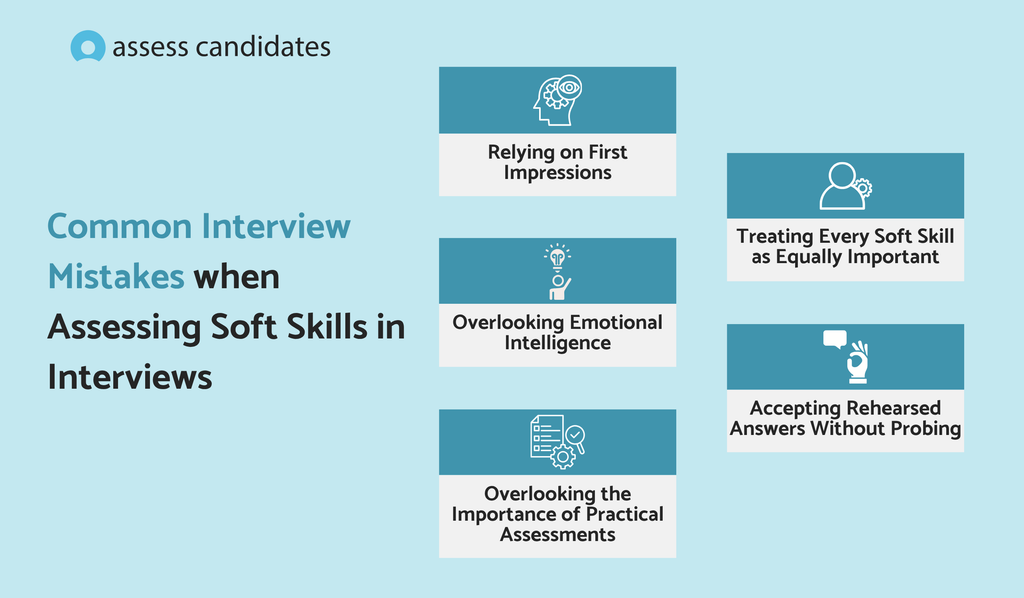
- Relying on First Impressions
One of the most common mistakes made when assessing soft skills in an interview is اعتماد on first impressions. Judging candidates solely on how confident they appear, or on their communication style and personality rather than their القدرات الفعلية, can lead to التحيز اللاواعي. يمكن أن يؤدي ذلك إلى التعيينات الخاطئة.
الحل: Evaluate candidates using job-related evidence and observable behaviors.
- Overlooking Emotional Intelligence
Interviewers may miss relevant evidence about how candidates recognize interpersonal challenges and respond constructively under pressure. Ask for specific examples and evaluate the actions described against job-related criteria rather than making broad judgments about personality or emotional intelligence.
الحل: Ask candidates how they handled emotionally challenging situations and evaluate their self-awareness, empathy, and emotional regulation.
- Overlooking the Importance of Practical Assessments
Structured interviews can be complemented by عمليات المحاكاة ذات الصلة بالوظيفة, role-play exercises, or situational judgment assessments. These methods provide different forms of evidence and should be selected according to the competencies required for the role.
الحل: Combine structured interviews with practical assessments like تمارين لعب الأدوار, workplace simulations, أو اختبارات تقدير الموقف.
- Accepting Rehearsed Answers Without Probing
Candidates may give polished answers about القيادة, العمل الجماعي, أو حل النزاعات without demonstrating how they applied these skills in practice.
الحل: Ask candidates to explain their specific actions, the reasoning behind their decisions, and how they responded when their initial approach did not work.
- Treating Every Soft Skill as Equally Important
Assessing every soft skill with the same weight can distract you from the abilities that matter most for a particular role. For instance, conflict resolution may be essential for a team leader, while adaptability may be essential for a freelancer.
الحل: Identify the soft skills required for the role and prioritize questions and practical exercises that reveal those specific abilities.
Strengthen your soft skill assessment with our interview tool. اعرف المزيد
4. Why do top companies use Assess Candidates for assessing soft skills during interviews?
تقييم المرشحين العرض تقييمات ما قبل التوظيف that can complement structured soft skills المقابلات. When appropriately selected for the role, these assessments provide additional information about relevant abilities and workplace competencies, helping hiring teams make decisions using more than interview impressions alone.
فيما يلي مثال على لوحة متابعة تقارير الحملات الانتخابية, الذي يساعد الموظفين المختصين بالتوظيف على إدارة نتائج المرشحين ومراجعتها في مكان واحد.
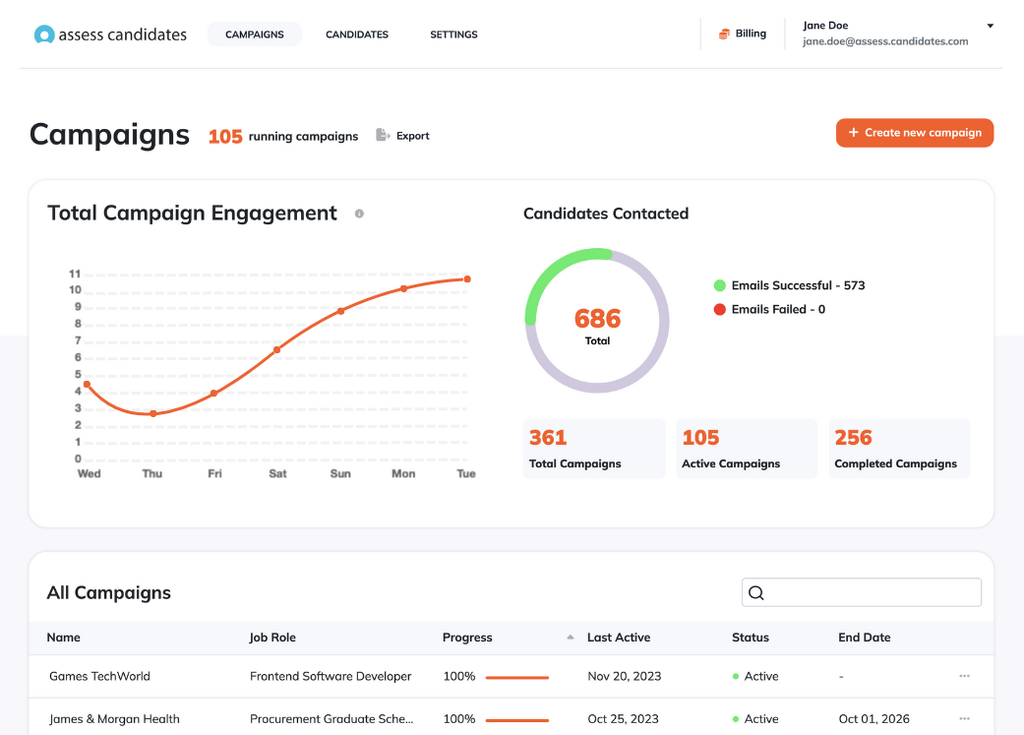
- تقييمات مصممة علميًا: تقييم تقييمات ما قبل التوظيف للمرشحين are developed by expert psychologists and psychometricians to evaluate relevant skills and workplace behaviors, complementing interview responses with structured insights.
- البيانات كمرشد في عملية التوظيف: Our intuitive platform provides recruiters with تقارير موضوعية to identify candidates’ strengths and potential skill gaps against role requirements.
- فحص أسرع وأكثر اتساقًا: تقييمات ما قبل التوظيف help recruiters compare candidates against consistent criteria and shortlist applicants for further evaluation.
- Assess Candidates provides science-based tools that help recruiters evaluate سلوكيات مكان العمل, apply consistent assessment criteria, و reduce reliance on subjective impressions. By combining assessment results with structured interviews, hiring teams can build a more comprehensive understanding of candidates’ soft skills and make better-informed recruitment decisions.
- استكشف مجموعتنا الكاملة من التقييمات لإيجاد الحلول الملائمة لاحتياجات التوظيف الخاصة بك.
- Not sure which assessments fit your hiring strategy? اتصل بنا لـ تحليل مجاني متطلبات دورك.
شارك Assess Candidates لاستخدام مجموعة من التقييمات الخاصة بالدور الوظيفي في عملية التوظيف لديك. عرض المخططات
الخاتمة: الوجبات الجاهزة الرئيسية
Soft skills interviews are most effective when employers assess candidates’ actual behaviors rather than relying on first impressions or self-reported answers. Structured questions, consistent scoring, and targeted follow-ups help hiring teams evaluate teamwork, adaptability, leadership, and problem-solving fairly.
هل أنت مهتم بمعرفة المزيد عن التقييم الفعال للمرشحين؟ تابع القراءة للاطلاع على الأسئلة المتداولة، وقم بالتسجيل باستخدام بريدك الإلكتروني للبدء.
الأسئلة المتداولة
How to assess soft skills during interviews without creating bias?
You can assess soft skills without creating bias by using structured interviews, نماذج التقييم المحددة مسبقاً, و job-related behavioral indicators. Moreover, keep the core evaluation criteria the same for every candidate applying for the same role.
How to assess soft skills when candidates give rehearsed answers?
You can evaluate soft skills when candidates give rehearsed answers by asking أسئلة متابعة. For instance, ask, “What would you do differently now?” “How did your colleagues respond?” These answers can help you evaluate a candidate’s soft skills more comprehensively.
What to do if a candidate has limited work experience?
When assessing soft skills during interviews, if a candidate has limited work experience, ask them about الخبرة ذات الصلة in academic projects, volunteering, internships, or extracurricular activities. Focus on their actions, reasoning, و الاستعداد إلى learn, and you will be able to evaluate soft skills properly.
How many soft skill questions should be asked in interviews?
You can ask around 3 to 4 soft skills questions في one-hour hiring interview. Prioritize assessing soft skills, including العمل الجماعي, إضافة ثقافة, حل المشكلات, و القدرة على التكيف. Leave enough time to ask follow-up questions to assess soft skills more comprehensively.
How to distinguish genuine soft skills from confident communication?
Structured soft skills interview questions, supported by job-relevant scoring criteria and التقييمات العملية where appropriate, can help employers evaluate the evidence behind a candidate’s responses.


 English
 Arabic