
مهارات الذكاء الاصطناعي التي يجب البحث عنها في المرشحين في عام 2026



الذكاء الاصطناعي مدمج الآن في عمليات الأعمال، بدءاً من الأتمتة والتحليلات إلى اتخاذ القرار وتجربة العملاء. ومع تسارع وتبني هذا التوجه، تقوم المؤسسات الآن بالتوظيف من أجل قدرة الذكاء الاصطناعي, ، وليس كمهارة متخصصة، بل كمتطلب أساسي عبر الأدوار المختلفة.
هل كنت تعلم؟ إلغاء الوظائف التي تتطلب مهارات الذكاء الاصطناعي في نمو أسرع بـ 3.5 مرة أكثر من كل الوظائف، ومقابل كل إعلان وظيفة لتخصص الذكاء الاصطناعي في عام 2012، أصبح هناك 7 إعلانات اليوم.
بالنسبة لموظفي التوظيف، لا تقتصر التحديات على مجرد العثور على مواهب تتمتع بمهارات في مجال الذكاء الاصطناعي، بل تتعدى ذلك لتحديد المهارات التي تحقق قيمة حقيقية في الأدوار التقنية وغير التقنية على حد سواء.
في هذا الدليل، نوضح أهم مهارات الذكاء الاصطناعي التي يجب البحث عنها في المرشحين، وكيفية تقييمها، وكيفية بناء قوة وظيفية جاهزة للمستقبل قادرة على العمل بفعالية جنباً إلى جنب مع الذكاء الاصطناعي.
المحتويات
- مهارات الذكاء الاصطناعي
- أهم مهارات الذكاء الاصطناعي التي يجب البحث عنها في المرشحين في عام 2026
- ما هي فوائد توظيف مرشحين مهاراتهم في الذكاء الاصطناعي؟
- كيف تقييم مهارات الذكاء الاصطناعي في التوظيف؟
- كيف تدرب المؤسسات قوتها العاملة على مهارات الذكاء الاصطناعي؟
- ما هي الأدوار والصناعات التي تستفيد من القوى العاملة الماهرة في مجال الذكاء الاصطناعي؟
- ما هي أهمية مهارات الذكاء الاصطناعي للقوى العاملة المستقبلية؟
- مهارات الذكاء الاصطناعي: قصة نجاح
1. ما هي مهارات الذكاء الاصطناعي؟
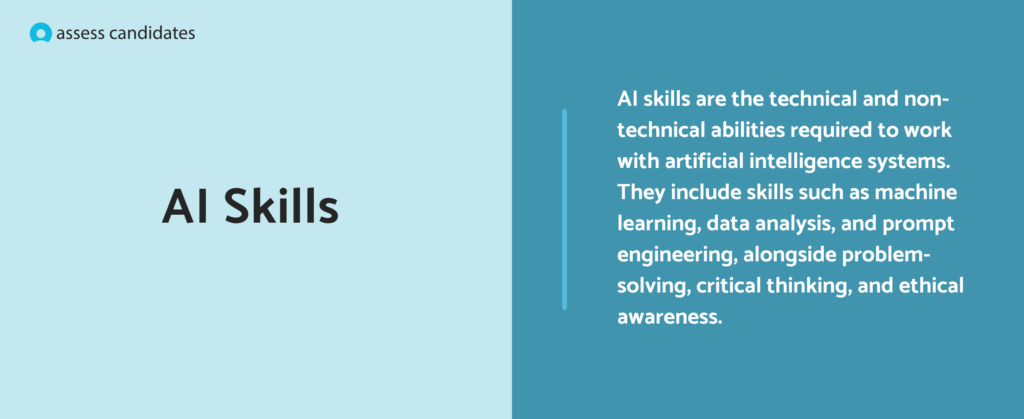
مهارات الذكاء الاصطناعي هي القدرات التقنية وغير التقنية مطلوب للعمل مع الذكاء الاصطناعي الأنظمة. وهي تشمل مهارات مثل التعلم الآلي، وتحليل البيانات، وهندسة الأوامر، إلى جانب حل المشكلات, التفكير النقدي, والوعي الأخلاقي.
قِمْ مهارات الذكاء الاصطناعي لدى مرشحيك باستخدام استراتيجية توظيف منظمة وموثوقة. التوظيف مجاناً
بعد ذلك، ننظر إلى أهم مهارات الذكاء الاصطناعي في عام 2026.

٢. أبرز مهارات الذكاء الاصطناعي التي يجب البحث عنها في المرشحين بحلول عام ٢٠٢٦
أكثر مهارات الذكاء الاصطناعي قيمة تجمع بين الخبرة الفنية مع القدرة على تطبيق الذكاء الاصطناعي في سياق الأعمال الواقعية، يجب على مسؤولي التوظيف التركيز على القدرات التي تترجم إلى نتائج قابلة للقياس، وليس فقط المعرفة النظرية.
فيما يلي أفضل المهارات المتعلقة بالذكاء الاصطناعي للتعلم في عام 2026 من أجل الحصول على وظيفة في مجال الذكاء الاصطناعي:
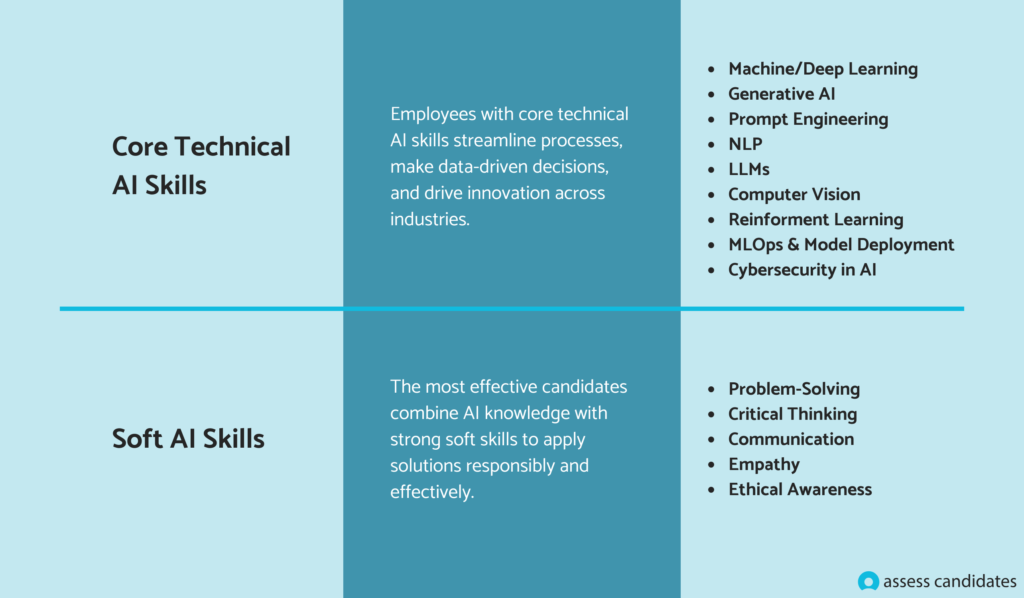
المهارات التقنية الأساسية للذكاء الاصطناعي
الموظفون الذين يتمتعون بمهارات تقنية في مجال الذكاء الاصطناعي تبسيط العمليات، وجعل القرارات المستندة إلى البيانات, ، وقُد الابتكار عبر مختلف القطاعات. المنظمات التي تستفيد من هذه القدرات تعزز الكفاءة، وتُقوي التنافسية، وتحقق نمواً مستداماً.
إليك أهم 9 مهارات تقنية أساسية في مجال الذكاء الاصطناعي:
1. التعلم الآلي والتعلم العميق
التعلّم الآلي و التعلم العميق تشكل أساس الذكاء الاصطناعي. يجب على المرشحين فهم طرق التعلم الأساسية وأن تكون لديهم القدرة على بناء النماذج وتدريبها وتحسينها باستخدام أدوات مثل بايثون أو بايتورش أو تينسرفلو.
المرشحون الأقوياء تجاوز استخدام النماذج المدربة مسبقاً. فهي تطبق الذكاء الاصطناعي على مشاكل الأعمال الحقيقية مثل التنبؤ، واكتشاف الاحتيال، والأتمتة.
الذكاء الاصطناعي التوليدي
الذكاء الاصطناعي التوليدي يتيح إنشاء محتوى مثل النصوص، والصصور، والرموز البرمجية، والفيديو. تستخدمه المؤسسات لتحسين الإنتاجية، وأتمتة سير العمل، ودفع عجلة الابتكار. المرشحون القادرون على تطبيق الذكاء الاصطناعي التوليدي بفعالية يقدمون نتائج أسرع و افتح فرص تجارية جديدة.
أكثر من 80% من المنظمات من المتوقع استخدام الذكاء الاصطناعي التوليدي بحلول عام 2026.
هندسة التوجيهات
هندسة الأوامر يركز على تصميم مدخلات فعالة لأدوات الذكاء الاصطناعي، مثل ChatGPT، لإنتاج مخرجات دقيقة وذات صلة تتماشى مع أهداف العمل.
مع تبني الشركات نماذج اللغات الكبيرة, هذه المهارة بالغة الأهمية لتحسين الاتساق، وتقليل الأخطاء، وتعظيم أداء الذكاء الاصطناعي في مهام مثل الكتابة،, الترميز, تحليل البيانات, ، خدمة العملاء، والأعمال الإبداعية.
معالجة اللغات الطبيعية (NLP)
البرمجة اللغوية العصبية يمكن الذكاء الاصطناعي من فهم اللغة البشرية وتوليدها.
يُستخدَم في روبوتات الدردشة, ، وتتمة أتمتة المستندات، و تحليل البيانات. المرشحون الذين لديهم مهارات معالجة اللغة الطبيعية تحسين التواصل، والكفاءة، وتوليد الرؤى عبر الفرق.
٥. نماذج اللغات الكبيرة (LLMs)
نماذج اللغة الكبيرة (LLMs), مثل جي بي تي (GPT) وللاما (LLaMA)، تدعم مهاماً مثل التلخيص، والترجمة، والذكاء الاصطناعي المحادثي.
المرشحون القادرون على ضبط وتطبيق نماذج اللغات الكبيرة بما يتناسب مع احتياجات الأعمال يحسنون إدارة المعرفة، وتدفقات عمل المحتوى، وتجربة المستخدم.
٦. الرؤية الحاسوبية
الرؤية الحاسوبية يمكن الذكاء الاصطناعي من معالجة وتحليل مرئي البيانات, ، وتنفيذ مهام مثل كشف الكائنات، والتعرف على الوجه، وتحليل الفيديو.
يُستخدم في مجالات مثل مراقبة الجودة، والأمن، والرعاية الصحية. يطبقه المرشحون الأقوياء لأتمتة العمليات وتحسين الدقة.
التعلم التعزيزي
التعلم المعزز يُدَرِّب أنظمة الذكاء الاصطناعي على اتخاذ القرارات من خلال التخطيط التجريبي والخطأ، والمكافآت والعقوبات.
ويُستخدم هذا المجال بشكل شائع في علم الروبوتات واللوجستيات والأنظمة ذاتية التشغيل. ويقوم المتخصصون في هذا المجال بتطوير حلول قابلة للتكيف تتحسن من تلقاء نفسها بمرور الوقت.
8. عمليات تعلم الآلة ونشر النماذج
إم إل أوبس يجمع التعلُّم الآلي و DevOps الممارسات التي تضمن أن تكون نماذج الذكاء الاصطناعي قابلة للتوسع وموثوقة، وأن يتم صيانتها في بيئة الإنتاج.
يقوم المرشحون الذين يتمتعون بهذه المهارة بإدارة عمليات نشر أنظمة الذكاء الاصطناعي ومراقبتها وتحسينها باستمرار.
9. الأمن السيبراني في مجال الذكاء الاصطناعي
الأمن السيبراني القائم على الذكاء الاصطناعي يحمي النماذج والبيانات من التهديدات مثل تلويث البيانات، أو سرقة النماذج، أو الهجمات العدائية.
تقدر المؤسسات المرشحين القادرين على تأمين أنظمة الذكاء الاصطناعي، وحماية الأنظمة، ومنع الاضطرابات المكلفة.
المهارات الذكية للذكاء الاصطناعي
الخبرة التقنية وحدها لا تكفي. المرشحون الأكثر كفاءة هم أولئك الذين يجمعون بين المعرفة في مجال الذكاء الاصطناعي والمهارات الشخصية القوية، مما يتيح لهم تطبيق الحلول بشكل مسؤول وفعال.
فيما يلي أهم 5 مهارات ناعمة في مجال الذكاء الاصطناعي:
1. حل المشكلات
حل المشكلات و تحليلي التفكير السح لمرشحين بتحديد التحديات، وتحليل البيانات، وتطوير حلول عملية مدعومة بالذكاء الاصطناعي.
يتمكن المرشحون المتميزون من تحويل التحديات التجارية المعقدة إلى حلول عملية تعتمد على الذكاء الاصطناعي، مما يؤدي إلى تحسين النتائج والكفاءة.
التفكير النقدي
التفكير النقدي يساعد المرشحين على تقييم مخرجات الذكاء الاصطناعي، وتحديد التحيز، وتحديد متى تكون هناك حاجة إلى الحكم البشري أو الإشراف.
3. التواصل
التواصل الواضح يضمن فهم رؤى الذكاء الاصطناعي وتقسيمها إلى مصطلحات بسيطة وقابلة للتنفيذ عبر الفرق التقنية وغير التقنية، مما يدفع نحو التوافق ويسهل اتخاذ القرارات المستنيرة.
4. التعاطف
التعاطف و الذكاء العاطفي مساعدة المرشحين في تصميم حلول الذكاء الاصطناعي التي تركز على المستخدم وشاملة،, يمكن الوصول إليها, ، ومتوافقة مع احتياجات الواقع العملي.
الوعي الأخلاقي
مرشحون يتمتعون بوعي أخلاقي تأكد من يتم استخدام الذكاء الاصطناعي بشكل مسؤول, ، مع addressing risks such as bias, privacy, and compliance. Otherwise ethical gaps can trigger (معالجة المخاطر مثل التحيز، والخصوصية، والامتثال. وإلا فإن الثغرات الأخلاقية يمكن أن تثير) قضايا قانونية, والضرر بالسمعة، و ردود الفعل العكسية للجمهور
قم بتحسين طريقة تقييمك لمهارات الذكاء الاصطناعي من خلال تقييمات منظمة ومستندة إلى العلم قبل التوظيف. اعرف المزيد
تابع القراءة بينما نستكشف المفتاح فوائد توظيف موظفين يمتلكون مهارات الذكاء الاصطناعي.
3. ما هي فوائد توظيف المرشحين المَهَرة في الذكاء الاصطناعي؟
توظيف المرشحين الذين يتمتعون بمهارات قوية في الذكاء الاصطناعي يحسن الكفاءة، ويزيد من قوة اتخاذ القرار، ويدعم الابتكار في جميع أنحاء المؤسسة.
أهم فوائد القوى العاملة الماهرة في مجال الذكاء الاصطناعي
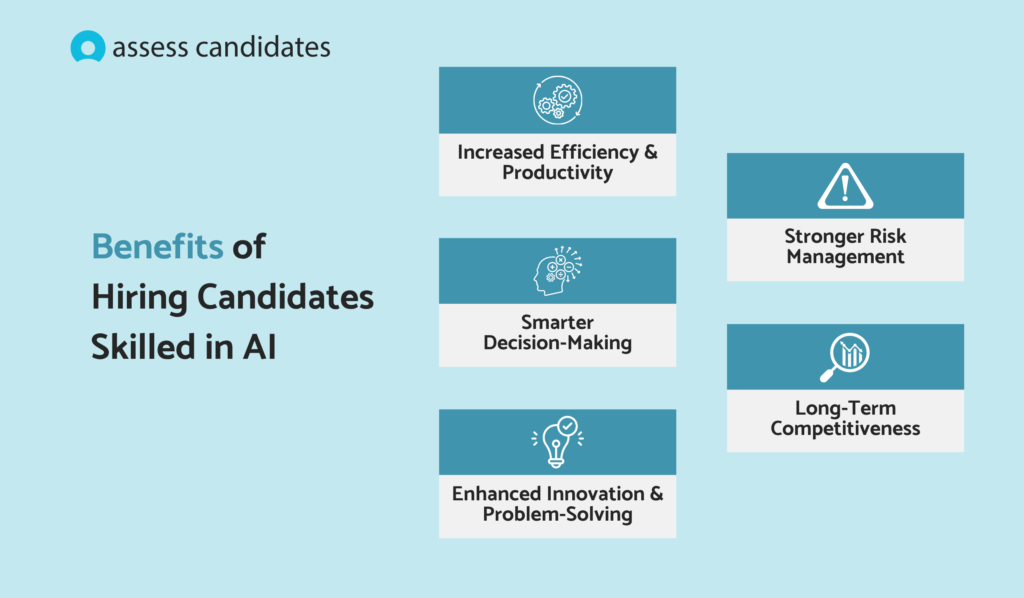
زيادة الكفاءة والإنتاجية
الموظفون المهرة في مجال الذكاء الاصطناعي يقومون بالأتمتة مهام متكررة, الانسيابية سير العمل, و تصغير الأخطاء. وهي تُمكّن المؤسسات من توسيع نطاق العمليات بفعالية مع إتاحة المجال للفرق للتركيز على الاستراتيجية, الإبداع, و تفاعل العملاء. ونتيجة لذلك، تقدم الشركات إنجاز أسرع, يقطع التشغيلية التكاليف, و تعزيز الأداء العام.
اتخاذ قرار أكثر ذكاءً
الموظفون المهارون في الذكاء الاصطناعي يحللون هائل, مجموعات بيانات معقدة و الكشف عن الاتجاهات التي تتجاهلها الطرق التقليدية. وهي تولد في الوقت الفعلي،, الرؤى المستندة إلى البيانات التي تمكن القادة من اجعلها أسرع, الأدلة-على أساس القرارات. خبراتهم مباشرة يحسن الربحية, العميل الرضا, و تنافسية تحديد المواقع.
ابتكار وتحسين في حل المشكلات
الموظفون الذين لديهم خبرة في مجال الذكاء الاصطناعي التصميم جديد المنتجات, الخدمات, و الأعمال الموديلات. هم يطبقون التعلُّم الآلي, طبيعي اللغة جارٍ المعالجة, و تنبؤي التحليلات لمواجهة التحديات بطرق لا تستطيعها الطرق التقليدية. مهاراتهم تغذي الابتكار وتُرسخ مكانة المؤسسة كقائد صناعي يتطلع للمستقبل.
إدارة مخاطر وامتثال أقوى
يحمي خبراء الذكاء الاصطناعي المؤسسات من خلال كشف الاحتيال, المراقبة الامتثال, و تنبؤ الإمكانات المخاطر. إنهم يطبقون الذكاء الاصطناعي بشكل مسؤول., الحد من التحيز الخوارزمي و حماية خصوصية البيانات. عملهم يبني الثقة مع العملاء والجهات التنظيمية وأصحاب المصلحة.
التنافسية طويلة الأمد
الموظفون المهارون في مجال الذكاء الاصطناعي يحافظون على المؤسسات التكيف و جاهز للمستقبل. هم يظلون في الصدارة سريع تكنولوجي تغيير, دمج الأدوات الناشئة, ، والمساعدة الشركات تبقى المرونة ضد سوق تعطيلات. تضمن خبرتهم القوى العاملة يستمر في يتطور مع تطورات الذكاء الاصطناعي.
ما هي التحديات التي تواجهها المؤسسات عند بناء قوة عمل جاهزة للذكاء الاصطناعي؟
بناء قوة عمل مهاراتها مدعومة بالذكاء الاصطناعي ليس بالأمر السهل. تواجه المؤسسات عدة تحديات عند تطوير قدرات الذكاء الاصطناعي والحفاظ عليها.
التحديات والاعتبارات الرئيسية لتطوير قوة وظيفية تتبنى مهارات الذكاء الاصطناعي هي:
- تقادم تقني سريع
تتقدم تقنيات الذكاء الاصطناعي بوتيرة غير مسبوق الوتيرة, ، مما يؤدي إلى تقادم المهارات بسرعة. يجب على المؤسسات باستمرار تحديث برامج التدريب إلى دمج ابتكاراعات مثل النماذج اللغوية الكبيرة الجديدة, الناشئة الذكاء الاصطناعي أطر العمل, و مُحدَّث اللوائح. دون التحديثات المنتظمة، يخاطر الموظفون بإتقان تقنيات لم تعد ذات صلة.
تبنى أطر التعلم الرشيقة مع فصلي المنهج الدراسي التحديثات والتعاون مع مجموعات أبحاث الذكاء الاصطناعي لضمان بقاء التدريب مواكباً للعصر واستشرافياً.
- نقص المدربين المؤهلين
تعاني العديد من المنظمات في العثور على مدربين يجمعون بين خبرة عميقة في الذكاء الاصطناعي مع قوي التدريس المهارات. يمكن أن يؤدي هذا النقص إلى تدريب سطحي أو يصعب تطبيقه في سيناريوهات حقيقية.
تطوير رواد الذكاء الاصطناعي الداخليين من خلال برامج تدريب المدربين و المكمل مع التدريب الذي يقوده الموردون من منصات سحابية مثل أيه دبليو إس أو مايكروسوفت.
- مقاومة الموظفين والخوف
غالبًا ما يخشى العمال أن تحل الذكاء الاصطناعي محل وظائفهم، مما يخلق مقاومة إلى التعلّم. يرى البعض أن مهارات الذكاء الاصطناعي لا تهم أدوارهم، بينما يشعر آخرون بالإرهاق بسببها التعقيد التقني.
تقديم الذكاء الاصطناعي كـ أداة تعاونية الذي يعزز الأدوار الحالية بدلاً من استبدالها. قم بتقديم حلول الذكاء الاصطناعي منخفضة البرمجة للموظفين غير التقنيين لبناء الثقة والمشاركة.
- تكلفات تدريب عالية ومتطلبات موارد ضخمة
تدريب ذكاء اصطناعي عالي الجودة يتطلب استثماراً في المنصات, الأدوات, و الوقت بعيد من العمل. بالنسبة للشركات الصغيرة والمتوسطة، يمكن أن تكون هذه التكاليف باهظة.
الرافعة المالية قابلة للتطوير, التكلفة-فعالة الحلول مثل وحدات التعلم المصغر، والموارد مفتوحة المصدر، ومنح تطوير المهارات الممولة من الحكومة أو القطاع الصناعي.
- قياس العائد على الاستثمار والفعالية
قياس أثر تدريب الذكاء الاصطناعي على الأعمال النتائج هو التحدي. غالبًا ما تفشل المقاييس التقليدية مثل معدلات إتمام الدورات التدريبية في رصد التطبيق الفعلي للمهارات.
تتبع الاثنين نوعي و الكمية المؤشرات, مثل زيادة الإنتاجية، ومخرجات الابتكار، ومعدلات الاحتفاظ بالموظفين بين الموظفين الذين تم تطوير مهاراتهم. وهذا لا يوضح كيف تحسن التدريب الكفاءة والابتكار فحسب، بل يثبت أيضاً دوره في التعزيز الولاء و تقليل تكاليف التوظيف, ، مما يمنح القادة رؤية واضحة العائد على الاستثمار وقيمة الأعمال على المدى الطويل.
لنلق نظرة على الطرق التي تقيمข้อมูล بها المؤسسات مهارات الذكاء الاصطناعي في التوظيف.
4. كيف تقيّم مهارات الذكاء الاصطناعي في التوظيف؟
أكبر خطر في التوظيف هو المبالغة في تقدير قدرات الذكاء الاصطناعي بناءً على السير الذاتية وحدها. بدون التقييم المهيكل, ، من الصعب التمييز بين المعرفة النظرية والمهارة العملية.
أفضل 5 استراتيجيات لتقييم مهارات الذكاء الاصطناعي في التوظيف
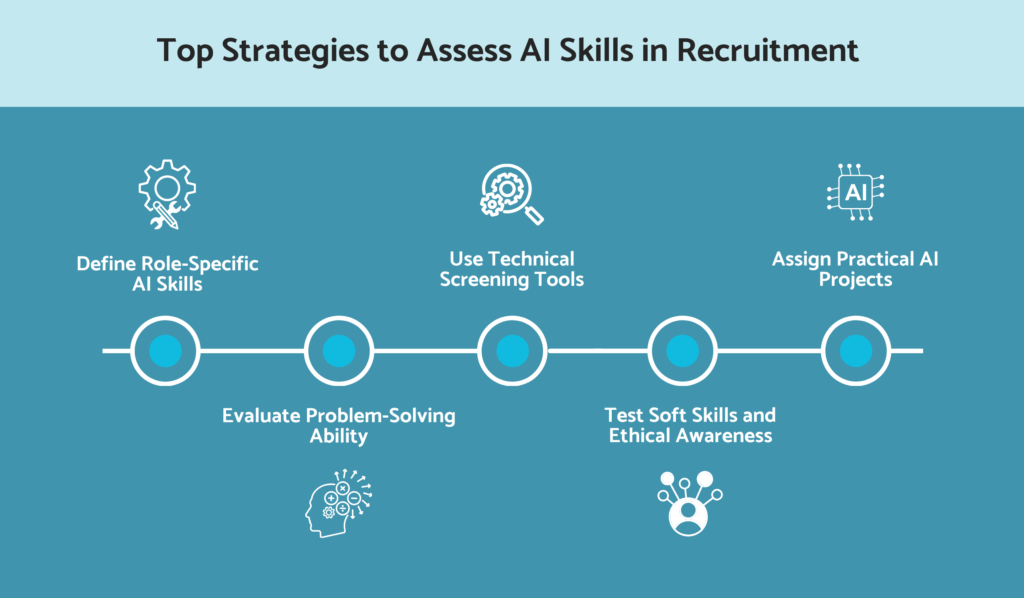
1. تحديد مهارات الذكاء الاصطناعي الخاصة بالدور
ابدأ برسم خريطة مهارات الذكاء الاصطناعي الرئيسية يتطلب المنصب. على سبيل المثال، ا عالم بيانات قد يتطلب الدور معرفة عميقة بـ خاضع للإشراف و غير خاضع للإشراف التعلّم, ، في حين أن البرمجة اللغوية العصبية مهندس قد تحتاج إلى خبرة في مجال النماذج القائمة على المحولات و النص المعالجة المسبقة التقنيات.
كلما كان تعريفك لـ التقنية و ناعم المهارات كلما زادت الحاجة، أصبح التصميم أسهل التقييمات ذات الصلة هذا الفلتر الخاص بـ صحيح الموهبة.
2. استخدام أدوات الفرز الفني
دمج منصات التقييم قبل التوظيف مثل تقييم المرشحين, ، أو HackerRank، أو Codility، أو CodeSignal لتقييم كفاءة المرشحين في البرمجة في اللغات ذات الصلة بالذكاء الاصطناعي مثل بايثون أو R أو جافا. تجاوز النماذج العامة الترميز التحديات، وتشمل مهام خاصة بالذكاء الاصطناعي مثل تنفيذ الانحدار الموديلات, الضبط المعلمات الفائقة, أو العمل مع PyTorch و تنسورفلو. وهذا يضمن قياس المهارات التي تتطابق بشكل مباشر مع متطلبات المشاريع العملية.
3. تكليف الطلاب بمشاريع عملية في مجال الذكاء الاصطناعي
الواجبات العملية تُعد إحدى أكثر الطرق موثوقيةً لمراقبة كيفية أداء المرشحين في بيئة شبه واقعية. قم بتزويدهم بـ مجموعة البيانات وطلب منهم إكمال سير العمل الكامل, البيانات التنظيف, ميزة الهندسة, الطراز التدريب, التقييم, و النشر.
ابحث عن الدقة, الكفاءة, قابلية التفسير, و القدرة إلى وثيقة العمل حتى يتمكن الآخرون من فهم و البناء عليه.
4. تقييم القدرة على حل المشكلات
غالبًا ما يواجه المتخصصون في مجال الذكاء الاصطناعي تحديات غامضة دون حلول واضحة. اعرض على المرشحين الأعمال سيناريوهات, ، مثل تقليل فقدان العملاء، أو تحسين سلاسل الإمداد، أو اكتشاف الاحتيال، واطلب منهم تحديد حل مدعوم بالذكاء الاصطناعي.
الاستخدام لوحة بيضاء أو جلسات مباشرة لحل المشكلات لملاحظة كيف يراقبون مشكلات الكسر في الخطوات, برر الخاصة بهم الاختيارات, و المقبض قيود مثل البيانات المحدودة أو قواعد الامتثال الصارمة.
5. اختبار المهارات الشخصية والوعي الأخلاقي
تنجح مشاريع الذكاء الاصطناعي عندما الخبرة الفنية مُتَوازِنٌ مَعَ التواصل القوي و الأخلاقيات الحكم. في المقابلات, اطلب من المرشحين شرح مفاهيم الذكاء الاصطناعي المعقدة بـ بسيطة اللغة لـ غير-التقنية أصحاب المصلحة.
اطرح معضلات أخلاقية, مثل التعامل مع التحيز في تنبؤي الموديلات أو ضمان الامتثال لـ اللائحة العامة لحماية البيانات, ، وقيم كيف التوازن الابتكار مع الإنصاف, الخصوصية, و الشفافية.
والآن، دعنا نتعمق في دور المنظمات في تنمية المهارات في مجال الذكاء الاصطناعي.
٥. كيف تقوم المنظمات بتدريب قوتها العاملة على مهارات الذكاء الاصطناعي؟
تلعب المنظمات دورًا رئيسياً في بناء قوى عاملة متميزة في مجال الذكاء الاصطناعي من خلالสร้าง بيئات تعلم منظمة ومواءمة التدريب مع احتياجات العمل.
تشمل بعض الطرق التي يدفع بها أصحاب العمل نحو قوة عاملة تتمتع بمهارات الذكاء الاصطناعي ما يلي::
رفع مهارات القوى العاملة وإعادة تأهيلها
تطور المنظّمات قدراتها في مجال الذكاء الاصطناعي من خلال استهداف برامج تدريب رفع المهارات وإعادة تأهيلها.
يشمل ذلك ورش عمل داخلية للمهارات الأساسية مثل بايثون و التعلُّم الآلي, ، إلى جانب الشهادات المتقدمة في مجالات مثل التعلم العميق و البرمجة اللغوية العصبية.
يساعد الوصول إلى أدوات الذكاء الاصطناعي، وبيئات الاختبار، والمشاريع الواقعية الموظفين على تطبيق المعرفة في الممارسة العملية.
إسقرار ثقافة التعلم المستمر
يتطلب تطوير مهارات الذكاء الاصطناعي التعلم المستمر.
تدعم المنظمات هذا من خلال الترحيب بالموظفين الجدد، والإرشاد، ومبادرات تبادل المعرفة، مع تحفيز تطوير المهارات من خلال التطور الوظيفي والتقدير.
التعاون مع المنظومات البيئية الخارجية
الشراكات مع الجامعات، ومقدمي التدريب، ومنصات التكنولوجيا لمساعدة المؤسسات على مواكبة العصر.
تعزز التدريب الداخلي، وتعاونات الموردين، والمساهمات مفتوحة المصدر كل من مسارات المواهب والخبرة الداخلية.
مواءمة مهارات الذكاء الاصطناعي مع أهداف العمل
يكون تدريب الذكاء الاصطناعي أكثر فاعلية عندما يرتبط ارتباطًا وثيقًا باحتياجات العمل والاستراتيجية التنظيمية.
المنظمات التعلم المخصص حسب الدور واستخدام تخطيط القوى العاملة لتوقع متطلبات المهارات المستقبلية، مما يضمن أن قدرات الذكاء الاصطناعي تقدم قيمة عملية.
قياس الأثر وتطوير الأدوات
تتعقب المنظمات وتقيس كلاً من تنمية المهارات و النتائج التجارية, مثل تحسين الإنتاجية أو مكاسب الابتكار.
تضمن الملاحظات المنتظمة وتحديثات المنهج الدراسي بقاء التدريب مواكباً للمستجدات مع تطور تقنيات ومنهجيات الذكاء الاصطناعي.
قم بتحسين عملية توظيف مواهب الذكاء الاصطناعي لديك من خلال منصة تقييم مصممة بعناية. التوظيف مجاناً
دعونا الآن نلقي نظرة على الأدوار و الصناعات أن فائدة إلى حد كبير من أن قوى عاملة متميزة في مجال الذكاء الاصطناعي.
٦. ما هي الأدوار والقطاعات التي تستفيد من القوى العاملة الماهرة في مجال الذكاء الاصطناعي؟
تخلق مهارات الذكاء الاصطناعي قيمة عبر مختلف القطاعات من خلال تحسين الكفاءة، وصنع القرار، والابتكار. أما المنظمات التي تطبق الذكاء الاصطناعي بفعالية فتكتسب تشغيلي قابل للقياس و ميزات تنافسية.
أفضل 5 صناعات تستفيد من القوى العاملة الماهرة في مجال الذكاء الاصطناعي
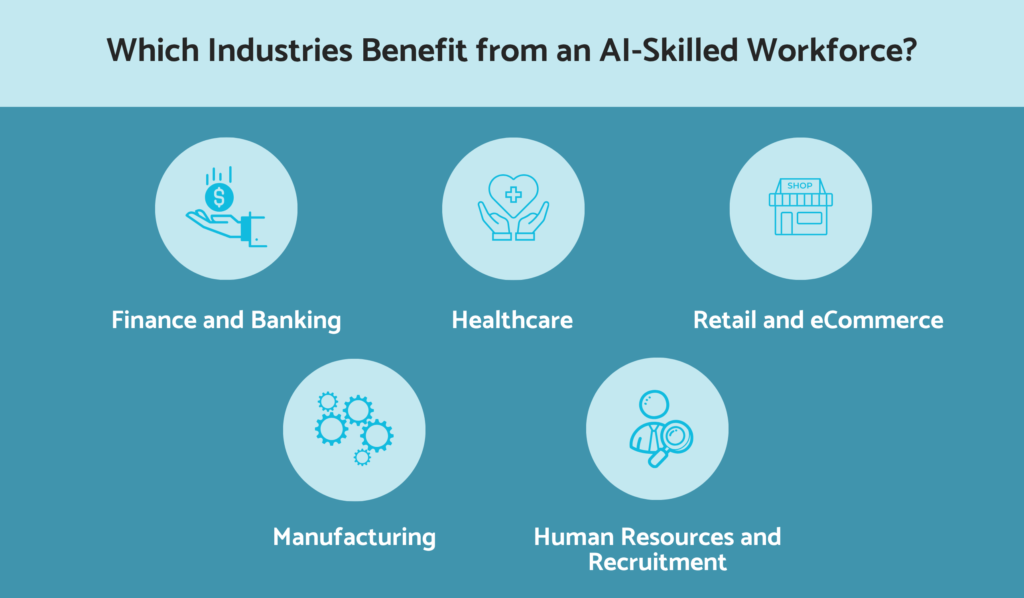
- الشؤون المالية والمصرفية
الموظفون المهارون في مجال الذكاء الاصطناعي يعززون اكتشاف الاحتيال، ويضمنون الامتثال، ويحسنون تحليل مخاطر الائتمان، مما يتيح اتخاذ قرارات أسرع وأكثر دقة. كما أنهم يبتكرون خدمات مالية مخصصة، مثل المستشارين الآليين ودعم العملاء الذكي.
بدون مهارات الذكاء الاصطناعيتقوم فرق مكافحة الاحتيال بفحص المعاملات المشبوهة يدويًا، مما يستغرق ساعات ويؤدي إلى الإبلاغ عن العديد من الإنذارات الكاذبة.
بمهارات الذكاء الاصطناعييقوم المحللون نشر خوارزميات كشف الشذوذ للإبلاغ عن الاحتيال على الفور، مما يوفر ملايين الخسائر مع ضمان مرور المعاملات المشروعة بسلاسة.
- الرعاية الصحية
يدعم الذكاء الاصطناعي تشخيصاً طبياً أسرع، وأتمتة سير العمل، والرعاية التنبؤية، مما يُمكّن من تحسين الكفاءة ونتائج المرضى على حد سواء.
بدون مهارات الذكاء الاصطناعييقوم أخصائيو الأشعة بمراجعة مئات الصور يومياً يدوياً، مما يعرضهم لخطر الإرهاق و تشخيصات متأخرة.
بمهارات الذكاء الاصطناعيتستخدم الفرق التعرف على الصور المدعوم بالذكاء الاصطناعي لتسليط الضوء على الحالات الشاذة على الفور، مما يقلل الأخطاء وييح علاجاً أسرع.
- البيع بالتجزئة والتجارة الإلكترونية
يقدم الموظفون ذوو الخبرة في مجال الذكاء الاصطناعي تجارب تسوق مخصصة للغاية، ويبسطون إدارة سلسلة التوريد، ويتنبأون بطلب المستهلكين بدقة، مما يؤدي إلى تحسين تجربة العملاء وتقليل الهدر.
بدون مهارات الذكاء الاصطناعيتعتمد متاجر التجزئة على تقارير المبيعات التاريخية، وغالباً ما تبالغ في تخزين المنتجات بطيئة الحركة.
بمهارات الذكاء الاصطناعي: يستخدم المحللون نماذج التعلم الآلي للتنبؤ بالطلب، مما يضمن توازن مستويات المخزون وزيادة مستوى الرضا.
- التصنيع
يعزز الذكاء الاصطناعي الإنتاج من خلال الصيانة التنبؤية ومراقبة الجودة الآلية، مما يقلل من فترات التعطل والتكاليف.
بدون مهارات الذكاء الاصطناعيتواجه المصانع أعطالاً غير متوقعة في الآلات، مما يؤدي إلى توقف الإنتاج وتضخم تكاليف الصيانة.
بمهارات الذكاء الاصطناعي: يستخدم المهندسون أنظمة المراقبة المدعومة بالذكاء الاصطناعي للتنبؤ بالأعطال مسبقًا، مما يمنع التوقف عن العمل ويحقق وفورات في التكاليف.
- الموارد البشرية والتوظيف
مدربة باستخدام الذكاء الاصطناعي الموارد البشرية تعمل الفرق على تبسيط عملية التوظيف، وتحسين مطابقة المرشحين، ودعم تخطيط القوى العاملة والاحتفاظ بها.
بدون مهارات الذكاء الاصطناعي: يقوم مسؤولو التوظيف بفحص آلاف السير الذاتية يدويًّا، وغالبًا ما يتجاهلون المرشحين المؤهلين.
بمهارات الذكاء الاصطناعي: تعمل أدوات الفرز المدعومة بالذكاء الاصطناعي على تحديد أفضل المرشحين بسرعة، مما يتيح لمسؤولي التوظيف التركيز على المقابلات وتجربة المرشحين.
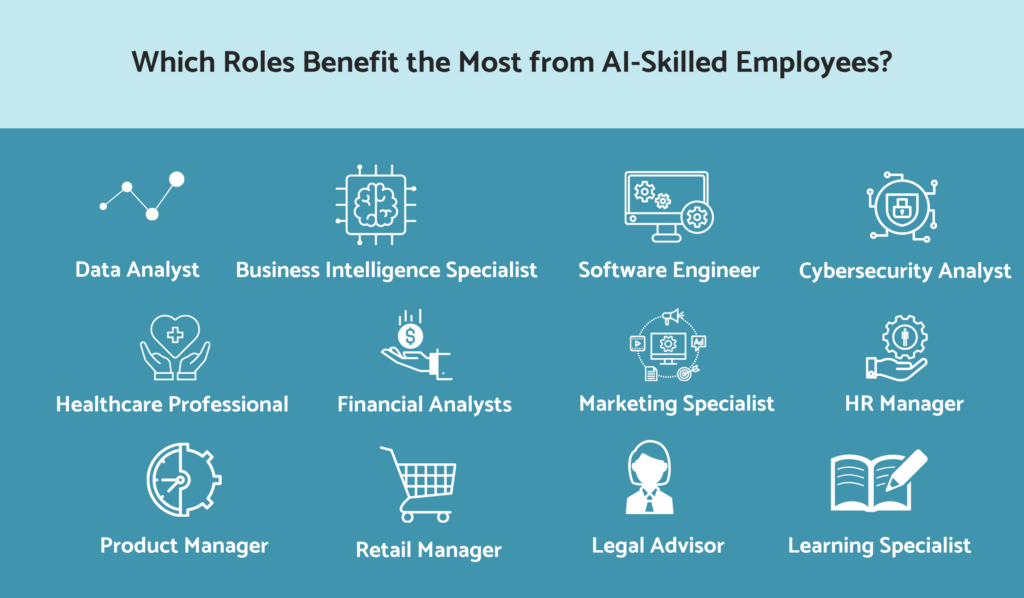
الadالأدوار الرئيسية التي تستفيد من الموظفين المهرة في مجال الذكاء الاصطناعي
تزداد قيمة المهارات المتعلقة بالذكاء الاصطناعي بشكل متزايد في الوظائف الفنية وغير الفنية على حد سواء، بما في ذلك:
- محلل بيانات
- أخصائي ذكاء الأعمال
- مهندس برمجيات
- محلل الأمن السيبراني
- أخصائي رعاية صحية
- محلل مالي
- أخصائي تسويق
- مدير الموارد البشرية
- مدير خدمة العملاء
- مدير المنتج
- مدير العمليات
- مهندس تصنيع
- مدير التجزئة
- مستشار قانوني أو مسؤول الامتثال
- أخصائي تعليمي
دعنا نتعمق في أهمية مهارات الذكاء الاصطناعي للقوى العاملة في المستقبل.
7. ما هي أهمية مهارات الذكاء الاصطناعي بالنسبة للقوى العاملة في المستقبل؟
إن قيمة مهارات الذكاء الاصطناعي للقوى العاملة المستقبلية ينبع من حقيقة أن الذكاء الاصطناعي لم يعد تقنية متخصصة، بل أصبح محركاً أساسياً لـ الإنتاجية, التنافسية, و الابتكار في جميع القطاعات تقريبًا.
5 أسباب رئيسية تجعل مهارات الذكاء الاصطناعي ضرورية للقوى العاملة المستقبلية
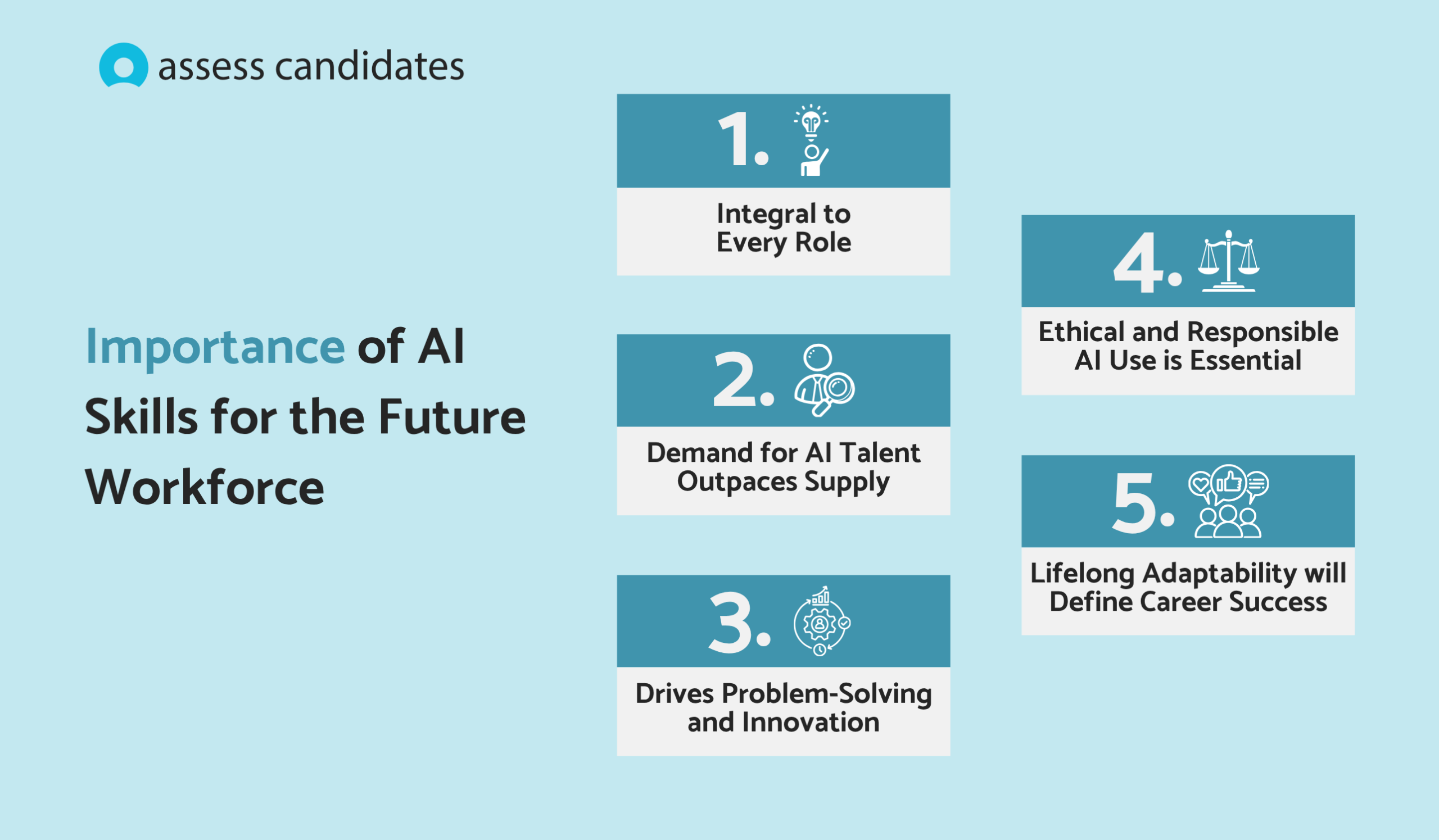
- الذكاء الاصطناعي جزء لا يتجزأ من كل وظيفة
من التسويق و التمويل إلى الرعاية الصحية والقطاع الصناعي، الأدوات المدعومة بالذكاء الاصطناعي الانسيابية المهام, الكشف عن الرؤى, و تمكين أسرع القرار-صنع. حتى الوظائف غير التقنية تتطلب الآن فهمًا أساسيًّا للذكاء الاصطناعي من أجل التعاون بفعالية مع هذه الأنظمة.
- الطلب على الكفاءات الماهرة في مجال الذكاء الاصطناعي يفوق العرض
تواجه المؤسسات صعوبة في العثور على مرشحين قادرين على تطوير حلول الذكاء الاصطناعي وإدارتها وتحسينها. المهنيون ذوو الخبرة في التعلُّم الآلي, طبيعي اللغة جارٍ المعالجة, فوري الهندسة, و الذكاء الاصطناعي الأخلاقيات الحصول على ميزة كبيرة في سوق العمل الحالي.
- الطلاقة في الذكاء الاصطناعي تقود حل المشكلات والابتكار
تُمكّن مهارات الذكاء الاصطناعي المهنيين من أتمتة العمل المتكرر, تحليل معقد مجموعات البيانات, و إنشاء مبتكرة الحلول. وهذا يعزز الكفاءة ويوفر الوقت للتفكير الاستراتيجي والإبداعي.
- الاستخدام الأخلاقي والمسؤول للذكاء الاصطناعي أمر ضروري
مع تزايد اعتماد الذكاء الاصطناعي، تزداد مخاطر التحيز, معلومات مضللة, و الخصوصية ترتفع الانتهاكات أيضاً. يضمن المحترفون ذوو الوعي الأخلاقي القوي والتفكير النقدي الذكاء الاصطناعي هو تطبق بمسؤولية و يم امتثال مع اللوائح.
- القدرة على التكيف مدى الحياة ستحدد نجاحك المهني
يتطور الذكاء الاصطناعي بسرعة، والأدوات التي تعتبر متطورة اليوم يمكن أن تصبح قديمة في غضون أشهر. العمال الذين يستمرون في تعلّم و التكيف إلى جديد تظل قدرات الذكاء الاصطناعي ذات صلة, بينما يخاطر أولئك الذين يقاومون التغيير بالتخلف عن الركب.
قم بتحسين تقييم مهارات الذكاء الاصطناعي من خلال تقييماتنا الموثوقة علمياً قبل التوظيف. تعلم المزيد.
8. مهارات الذكاء الاصطناعي: قصة نجاح
بيان مشكلة العميل:
تخيل شركة متوسطة الحجم تسعى إلى اعتماد حلول الذكاء الاصطناعي في جميع عملياتها، لكنها تواجه صعوبات في تطوير فإن المهارات الداخلية اللازمة. ورغم أن الشركة وظفت موظفين يتمتعون بالكفاءة الفنية، إلا أن المديرين لاحظوا الثغرات في الذكاء الاصطناعي المعرفة, محدود القدرة إلى تطبيق الذكاء الاصطناعي الأدوات بشكل فعال، و التناقضات في المشروع التنفيذ. وفي ظل عدم وجود فهم واضح لقدرات الموظفين في مجال الذكاء الاصطناعي واحتياجاتهم التدريبية، واجهت الإدارة صعوبة في توزيع المهام المتعلقة بالذكاء الاصطناعي أو توسيع نطاق المبادرات بشكل فعال.
ولمواجهة هذه التحديات، سعت الشركة إلى إيجاد حل لتقييم المرشحين من أجل مهارات الذكاء الاصطناعي في التوظيف, التعرف على الثغرات, و الارتقاء بالمهارات الموظفون من الناحية الاستراتيجية, ، بهدف تحسين الإنتاجية, الابتكار, و بشكل عام الذكاء الاصطناعي التبني.
تقييم مقترحات المرشحين:
في تقييم المرشحين, ، وقد أوصينا بإجراء تقييم شامل لـ مهارات الذكاء الاصطناعي باستخدام إطار عمل يقيّم كلا الأمرين الكفاءة التقنية و عملي التطبيق. يتيح هذا النهج للؤسسة قياس معرفة الموظفين بالتعلم الآلي، ومعالجة اللغات الطبيعية، وأدوات الذكاء الاصطناعي، مع تقييم قدر أيضاً على تطبيق هذه المهارات على تحديات الأعمال الحقيقية.
من خلال دمج تقييمات سرعة التعلم و المشكلة-الحل القدرات, ، ستتمكن الشركة من معرفة أي الموظفين يمكنهم التكيف بسرعة مع تقنيات الذكاء الاصطناعي الناشئة. ويتيح هذا الفهم الشامل للقيادة أن تعيين المشاريع من الناحية الاستراتيجية, التصميم مخصّصة التدريب البرامج, و البناء الفرق قادر على ذلك من الاستفادة من الذكاء الاصطناعي بفعالية.
النتيجة:
من خلال اعتماد نهج منظم نهج تقييم مهارات الذكاء الاصطناعي, ، ستعمل الشركة على إعداد قوة عاملة مؤهلة لتنفيذ حلول الذكاء الاصطناعي بكفاءة وابتكار. علاوة على ذلك، سيتلقى الموظفون توجيهات واضحة بشأن تنمية المهارات، مما يعزز ثقتهم بأنفسهم وكفاءتهم الفنية.
ستتمكن المؤسسات من تخصيص الموارد بشكل أكثر فعالية، وتقليل العقبات التي تعترض سير المشاريع، وتعزيز النتائج التي يحققها الذكاء الاصطناعي. وبشكل عام، ستعمل هذه الاستراتيجية على تعزيز الموهبة الإدارة, تسريع الذكاء الاصطناعي التبني, و الحاضنة a الثقافة من مستمر التعلّم, ، مما يضع المنظمة في وضع يتيح لها تحقيق تأثير قابل للقياس على الأعمال.
تعاون معنا لتعزيز عملية توظيف المواهب في مجال الذكاء الاصطناعي باستخدام الاختبارات النفسية المنظمة. عرض المخططات
لست متأكداً مما إذا كانت تقييمات ما قبل التوظيف مناسبة لعملية التوظيف لديك؟ تواصل معنا لـ مجاناً تحليل احتياجات التوظيف الخاصة بك.
الوجبات الجاهزة الرئيسية
مهارات الذكاء الاصطناعي أصبحت هذه المهارات أساسية في الوظائف الفنية وغير الفنية على حد سواء. وتتمتع المؤسسات التي توظف الموظفين وتطور هذه القدرات بميزة واضحة في مجالات الكفاءة والابتكار والنمو على المدى الطويل.
النهج الأكثر فعالية هو الجمع بين تعريفات واضحة للمهارات مع أساليب التقييم المنظمة لضمان أن تكون قرارات التوظيف متسقة، وموضوعية، ومتماشية مع احتياجات العمل.
هل أنت مهتم بمعرفة المزيد عن التقييم الفعال للمرشحين؟ تابع القراءة للاطلاع على الأسئلة المتداولة، وقم بالتسجيل باستخدام بريدك الإلكتروني للبدء.
الأسئلة المتداولة
لماذا ينبغي على المؤسسات إعطاء الأولوية لتوظيف الأشخاص ذوي المهارات في مجال الذكاء الاصطناعي؟
إن توظيف المرشحين ذوي الخبرة في مجال الذكاء الاصطناعي يمكّن المؤسسات من الاستفادة من التقنيات الناشئة, تبسيط العمليات،, و اتخذ قرارات أذكى مدعومة بالبيانات. مع تسارع وتيرة اعتماد الذكاء الاصطناعي، فإن تأمين الكوادر البشرية المتمكنة في مجال الذكاء الاصطناعي يضمن الاستدامة على المدى الطويل التنافسية وقود التحول الرقمي, ضمان القوى العاملة تحافظ على ريادتها من متطلبات القطاع المتغيرة.
ما هي الأدوار التي تتطلب مهارات الذكاء الاصطناعي؟
مهارات الذكاء الاصطناعي تعتبر حيوية لوظائف مثل علماء البيانات, الذكاء الاصطناعي مهندسون, محللو الأعمال، و مدراء المنتجات. حتى الأدوار غير التقنية تستفيد من الإلمام بالذكاء الاصطناعي، مما يمكن الموظفين من العمل بفعالية مع أدوات الذكاء الاصطناعي, تحليل البيانات الإحصائية, و المساهمة إلى استراتيجيات مستندة إلى البيانات.
كيف يمكن لمسؤولي التوظيف معالجة فجوة مهارات الذكاء الاصطناعي؟
يمكن لموظفي التوظيف أغلق الـ فجوة مهارات الذكاء الاصطناعي من خلال استهداف المرشحين بـ مرونة عالية في التعلم و فضول, حتى لو لم تكن لديهم خبرة مباشرة في الذكاء الاصطناعي. التعاون مع فرق التعلم والتدريب إن تقديم تدريب مستهدف في مجال الذكاء الاصطناعي يضمن تكيف الموظفين الجدد سريعا مع التطورات التقنية وتلبية احتياجات العمل المتطورة.
هل تقتصر مهارات الذكاء الاصطناعي على الأدوار التقنية؟
لا، وفي حين يحتاج المطورون وعلماء البيانات إلى خبرة تقنية عميقة، فإن الأدوار في التسويق, الموارد البشرية, التمويل, و العمليات أيضاً الاستفادة من الثقافة الاصطناعية. يمكن للمهنيين الذين يفهمون قدرات الذكاء الاصطناعي التعاون بسلاسة مع الفرق التقنية واستخدام أدوات الذكاء الاصطناعي لتحسين سير العمل، اتخاذ القرار،, و الکفاءة الإجماليّة.
كيف يمكن للتقييمات السيكومترية دعم عمليات التوظيف لمهارات الذكاء الاصطناعي؟
التقييمات السيكومترية التقييم القدرات المعرفية، أساليب حل المشكلات،, و القدرة على التكيف, السمات الأساسية للنجاح في البيئات المدعومة بالذكاء الاصطناعي. ومن خلال توفير الهدف, رؤى مدعومة بالبيانات،, تساعد هذه الاختبارات مسؤولي التوظيف في تحديد المرشحين الذين يتمتعون بإمكانات تعلم عالية واستعداد للعمل مع الذكاء الاصطناعي،, الحد من مخاطر التوظيف و تعزيز ملاءمة المواهب على المدى الطويل.


 English
  Arabic