
كيفية تقييم المهارات الشخصية أثناء التوظيف



يتطلب توظيف أفضل المواهب أكثر من مجرد التحقق من القدرة التقنية. المهارات الشخصية تشكل كيف يواجه المرشحون التواصل, تعاون, التكيف, ، حل المشكلات، والنمو في الدور بمرور الوقت. هذه المهارات مهمة بشكل خاص في الأدوار التي يؤثر فيها العمل الجماعي، والتفاعل مع العملاء، وإمكانات القيادة، وإدارة التغيير على الأداء.
هل تعلم؟ وفقًا لبحث LinkedIn العالمي عن اتجاهات المواهب،, 92% يعتبر متخصصو المواهب المهارات غير الفنية بنفس أهمية المهارات الفنية أو أكثر أهمية عند توظيف المرشحين.
يغطي هذا الدليل ما هي المهارات الناعمة، ولماذا تتنبأ بالنجاح على المدى الطويل، وكيفية قياسها بدقة على نطاق واسع، والأخطاء الأكثر شيوعًا التي يجب تجنبها أثناء التقييم.
المحتويات
- ما هي المهارات الشخصية؟
- لماذا تنبئ المهارات الشخصية بالنجاح على المدى الطويل؟
- لماذا يصعب تزييف المهارات الشخصية عند تقييمها بشكل صحيح؟
- ما هي أفضل الطرق لقياس المهارات الناعمة على نطاق واسع؟
- ما هي الأخطاء الشائعة عند تقييم المهارات الناعمة؟
- المهارات الشخصية: قصة نجاح عميل
- لماذا تستخدم الشركات الكبرى "تقييم المرشحين" لتقييم المهارات الشخصية
والآن بعد أن قمنا بتلخيص ما تتناوله هذه المقالة، دعونا نستكشف ما المهارات الشخصية هي.
ما هي المهارات الشخصية؟
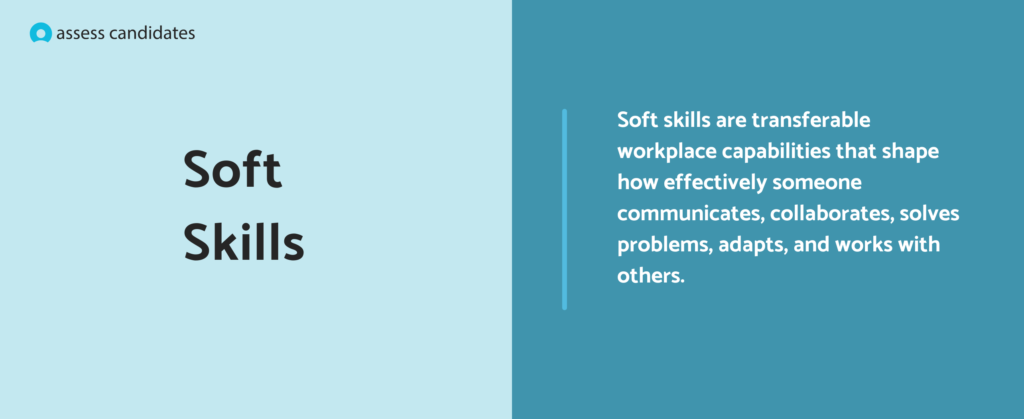
المهارات الشخصية هي قدرات قابلة للنقل في مكان العمل تشكل مدى فعاليتك في التواصل والتعاون وحل المشكلات والتكيف والعمل مع الآخرين.
بعض الأمثلة على المهارات الناعمة في مكان العمل تشمل الاستماع النشط, الإبداع, التواصل, و الاستراتيجية التفكير.
قيّم المهارات الشخصية من خلال مجموعتنا الواسعة من اختبارات التقييم قبل التوظيف. التوظيف مجاناً
أهم المهارات اللينة في مكان العمل
يمكن تجميع المهارات الناعمة في عدة فئات بناءً على ما تفعله يوميًا في مكان العمل. فيما يلي 5 أنواع رئيسية المهارات الشخصية في مكان العمل:
1. مهارات الاتصال
التواصل هي من أهم المهارات الشخصية في بيئة العمل. التواصل القوي ضروري لنجاح المؤسسة، حيث يسمح للموظفين بـ شارك الخاصة بهم أفكار واضحة و العمل بسلاسة مع الآخرين.
أمثلة التواصل الفعال، حل النزاعات، تقديم وتلقي الملاحظات، التواصل اللفظي الواضح، والتواصل الشبكي.
2 . العمل الجماعي والتعاون
العمل الجماعي والتعاون ضرورية لبناء الإنتاجية في مؤسستك. هذه المهارة تساعد الموظفين اعمل بفعالية و بشكل طبيعي مع زملاء العمل عبر الأدوار والأقسام.
أمثلة التعاون، والموثوقية، والاحترام، وبناء الثقة.
3 . مهارات حل المشكلات
مهارات حل المشكلات تتضمن القدرة على استخدام المعرفة والحقائق والبيانات لحل مشكلات مكان العمل بفعالية. تساعد هذه المهارات الموظفين استجب إلى مكان العمل التحديات و اتخاذ قرارات عملية.
أمثلة تضمين التفكير النقدي، والتفكير التحليلي، وإدارة المخاطر، والابتكار والإبداع، و اتخاذ القرار.
4 . مهارات القيادة
قوي مهارات القيادة حساب وضع توقعات واضحة, تعظيم مكان العمل الإنتاجية, و الإعداد a إيجابية العمل البيئة للجميع. هذه المهارة مفيدة حتى للأدوار غير الإدارية.
أمثلة يشمل ذلك أخذ المبادرة، تحفيز الآخرين، بناء الثقة، المساءلة، ودعم أداء الفريق.
5. القدرة على التكيف والمرونة
القدرة على التكيف والمرونة تتعلق بقدرة الموظف على التكيف إلى بيئة عمل دائمة التغير و ضبط إلى مختلفة التحديات و المواقف.
أمثلة تضمين الانفتاح، والتعامل مع المهام المفاجئة، والصبر، والتفكير النقدي، والاستباقية.
الآن بعد أن فهمنا ما هي المهارات الناعمة، دعنا نستكشف لماذا هي النجاح على المدى الطويل.

2. لماذا تبشر المهارات الناعمة بالنجاح على المدى الطويل؟
المهارات الشخصية يمكن أن تدعم النجاح طويل الأجل لأنها تؤثر على مدى جودة تعلم الموظفين وتكيفهم وبناء العلاقات والاستجابة للملاحظات والمساهمة في الأدوار والبيئات المختلفة.
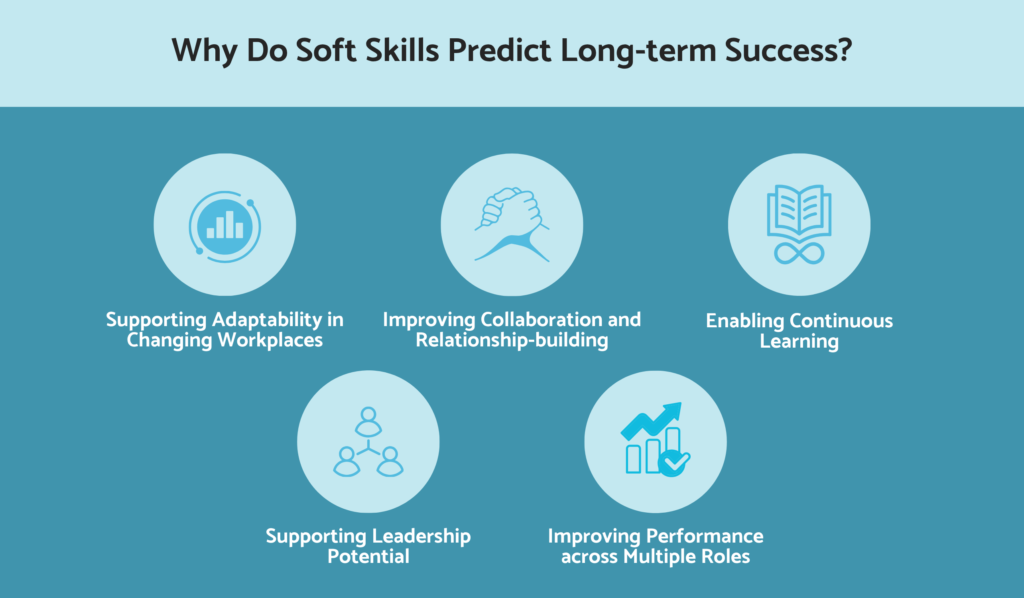
- دعم القدرة على التكيف في بيئات العمل المتغيرة
المهارات الشخصية تلعب دورًا حيويًا في مساعدة الموظفين التكيف إلى بيئة العمل المتطورة. ؛ وبالتالي، يمكن للموظفين الذين يتمتعون بمهارات ناعمة قوية تعلم الأدوات والأنظمة الجديدة بشكل أسرع، والاستجابة بشكل استباقي للملاحظات، والحفاظ على الاتساق والفعالية أثناء عدم اليقين، والتكيف مع الأولويات المتغيرة.
- تحسين التعاون وبناء العلاقات
يعتمد النجاح طويل الأمد في مكان العمل بشكل كبير على مدى فعالية عمل الموظفين مع أخرى أعضاء الفريق. المهارات الشخصية مساعدة الموظفين على التواصل بفعالية ووضوح، والتعاون بسلاسة عبر الفرق، وحل النزاعات وإدارتها بشكل بناء، وبناء الثقة مع المديرين والعملاء.
- تمكين التعلم المستمر
المهارات الشخصية التأثير على كيفية نمو الموظفين بما يتجاوز خبراتهم الحالية. الفضول، والانفتاح على التغذية الراجعة، والمرونة، والوعي الذاتي كلها تساعد الأشخاص على الاستمرار في التطور مع تغير توقعات الأدوار.
- دعم إمكانات القيادة
القيادة الإمكانات مرتبط بقوة بمهارات التعامل مع الآخرين. حتى في الأدوار غير الإدارية، الموظفون الذين يظهرون الذكاء العاطفي, القدرة على التكيف, الإبداع, و الصوت اتخاذ القرار غالباً ما يبرزون كقادة مستقبليين. هذه المهارات تساعد أيضًا في التنبؤ بما إذا كان شخص ما يمكنه فرق الإرشاد في نهاية المطاف و إدارة المسؤوليات.
- تحسين الأداء عبر أدوار متعددة
بما أن المهارات الناعمة قابلة للتحويل عبر أدوار وصناعات ومراحل مهنية متعددة، فهي مفيدة في تحسين الأداء عبر متعدد الأدوار. المهارات الشخصية مثل التواصل, حل المشكلات, المرونة, العمل الجماعي, و إمكانات القيادة ذات صلة في كل سياق مهني تقريبًا.
استكشف منصتنا لتقييم المواهب لتوظيف أفضل المرشحين بأفضل المهارات الناعمة. اعرف المزيد
السؤال التالي هو لماذا تهم هذه المهارات بمرور الوقت.
3. لماذا يصعب تزييف المهارات الناعمة عند تقييمها بشكل صحيح؟
المهارات الشخصية أصعب في التزييف عندما يتم تقييمها من خلال السلوك, تفاعل في الوقت الفعلي, و أدلة ثابتة عبر مراحل متعددة من عملية التوظيف.
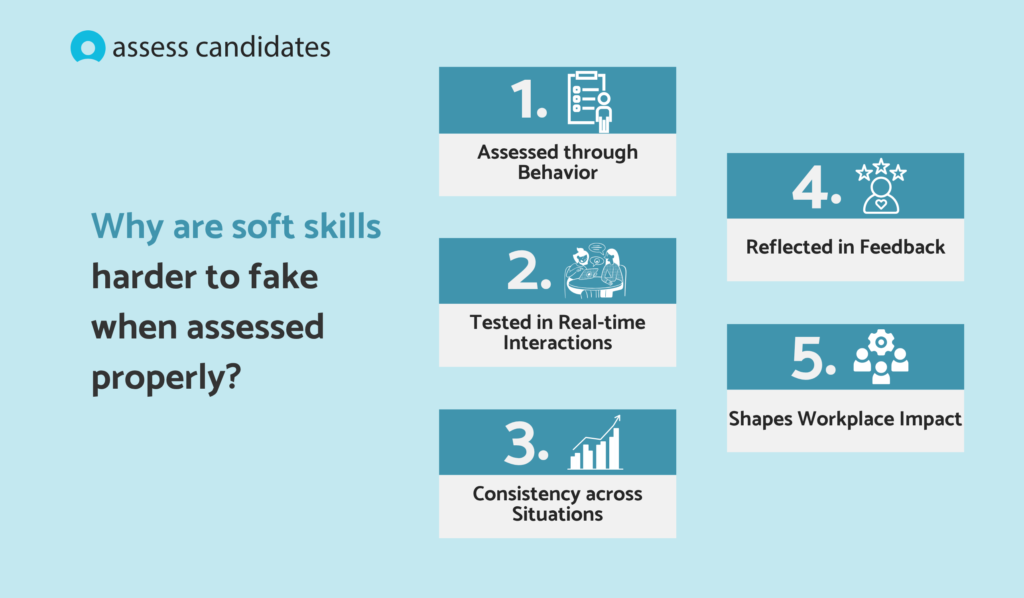
1. تم تقييمه من خلال السلوك
يتم تحليل المهارات الناعمة من خلال سلوك المرشح بدلاً من الادعاءات غير الموثوقة في السيرة الذاتية. تنعكس هذه المهارات من خلال أفعال قابلة للملاحظة خلال المقابلات, المجموعة المناقشات, ، وتفاعلات مكان العمل. وبالتالي، فإن المهارات الناعمة يصعب تزييفها مقارنة بالمهارات الصعبة.
2 . تم اختباره في تفاعلات حقيقية
يتم أيضًا اختبار المهارات الشخصية خلال التفاعلات في الوقت الفعلي, بما في ذلك المحادثات،, مناقشات الفريق, العروض التقديمية, ، واجتماعات حل المشكلات. ومن ثم، تجعل هذه المواقف العفوية من الصعب تزييف المهارات الشخصية.
3. الاتساق عبر المواقف
المهارات الشخصية تظهر باستمرار عبر مواقف متعددة في مكان العمل. وبالتالي، إذا ادعى المرشح امتلاك مهارات شخصية مثل الذكاء العاطفي, التواصل, و العمل الجماعي, ، يحتاجون إلى عرضها خلال المقابلات، وتمارين العمل الجماعي، والمناقشات الجماعية، وجلسات التغذية الراجعة.
4 . انعكاس في الملاحظات
المهارات الناعمة أيضاً منعكس من خلال الملاحظات جلسات. نظرًا لأن المهارات الشخصية تؤثر على كيفية تفاعل الأفراد مع زملائهم ومديريهم وعملائهم، فإنها غالبًا ما تنعكس في ملاحظات الزملاء والمراجع وتقييمات الأداء. هذا يجعل من الصعب المبالغة في المهارات الشخصية أو تزييفها.
5 . تأثير الأشكال في مكان العمل
المهارات الناعمة تحدد كيف يساهم الأفراد بفعالية إلى الفريق الأداء و الثقافة التنظيمية. نظرًا لأن هذه الصفات تؤثر على بيئات العمل اليومية، فمن الصعب تزييفها وتصبح مرئية بعد فترة وجيزة من التوظيف.
والآن، لننظر إلى أفضل الطرق لقياس المهارات الشخصية بدقة.
4. ما هي أفضل الطرق لقياس المهارات الناعمة على نطاق واسع؟
تقييم المهارات الشخصية الدقيق يتضمن موحدة, مرئي, و قابلة للمقارنة الأساليب. وتأتي أفضل النتائج من الجمع بين تقييمات متعددة الأساليب التي تقيس باستمرار التواصل والعمل الجماعي والقدرة على التكيف والإمكانيات القيادية واتخاذ القرار.
فيما يلي بعض أفضل الطرق لقياس المهارات الشخصية بدقة:
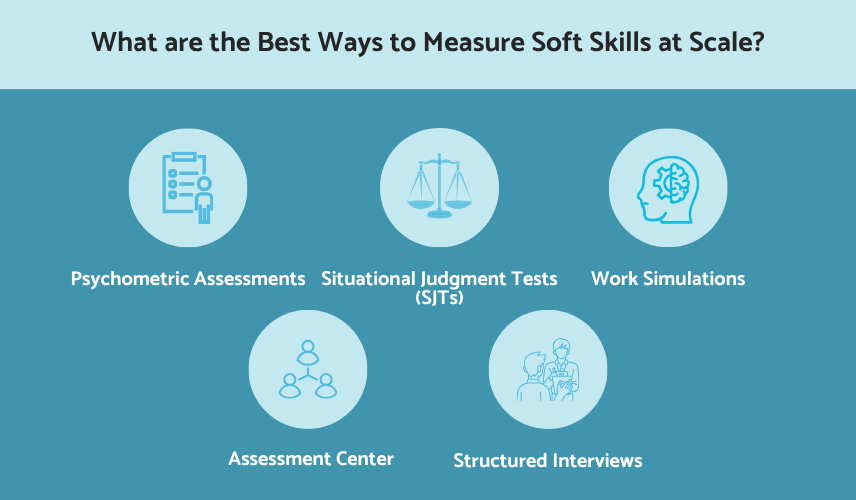
- التقييمات السيكومترية
واحدة من أكثر الطرق فعالية لتقييم المهارات الناعمة هي من خلال التقييمات النفسية, ، حيث أنها تقيس الميول السلوكية ذات الصلة بمكان العمل، بما في ذلك الأداء. على نطاق واسع، ستساعدك قارن المرشحين بموضوعية, التنبؤ بالملاءمة طويلة الأمد في مكان العمل, و تحديد نقاط القوة و مجالات للتطوير.
- اختبارات الحكم على المواقف (SJTs)
اختبارات الحكم على المواقف (SJTs) تقديم سيناريوهات واقعية مكان العمل للمرشحين وطلب منهم اختيار أو ترتيب الاستجابات الأكثر عملية. يقيسون كيف أن الأفراد على الأرجح إلى تصرف في البيئات الحقيقية.
على نطاق واسع، سيساعدونك أيضًا تقليل التحيز في المقابلات و تقييم اتخاذ القرار و الحكم على الآخرين.
- محاكاة العمل
منذ محاكاة العمل تطابق مسؤوليات مكان العمل عن كثب، فهي أدق المتنبئات من الأداء الوظيفي. إنها تساعد القياس اتخاذ القرار, تحديد الأولويات, القدرة على التكيف, و حل المشكلات.
تساعد المحاكاة العملية أيضًا في تقليل الاعتماد على الإبلاغ الذاتي.
- مركز التقييم
مراكز التقييم محاكاة مهام العمل الواقعية من خلال المناقشات الجماعية، ودراسات الحالة، وتمارين العرض التقديمي، وتمارين لعب الأدوار. وهي قوية بشكل خاص في تقييم التأثير, القيادة السلوك, و المشكلة-الحل النهج.
- مقابلات منظمة
مقابلات منظمة استخدم نفس الأسئلة القائمة على الكفاءة ومعايير التسجيل لكل مرشح. هذا يحسن الإنصاف ويجعل تقييم المهارات الناعمة أكثر اتساقًا.
احصل على رؤى أعمق حول المهارات الشخصية للمرشحين باستخدام أدوات التقييم المدعومة بالعلوم. التوظيف مجاناً
حتى مع وجود طرق تقييم، قد لا تزال ترتكبالأخطاء الشائعة عند تقييم المهارات الشخصية.
5. ما هي الأخطاء الشائعة التي ترتكب عند تقييم المهارات الناعمة؟
بدون استخدام طريقة تقييم منظمة, ، قد يصبح قياس المهارات الناعمة ذاتيًا أو غير متناسق أو مضللًا. يساعد تجنب هذه الأخطاء الشائعة في تحسين دقة التوظيف و العلامة التجارية لصاحب العمل.
فيما يلي 5 أخطاء شائعة عند تقييم المهارات اللينة:
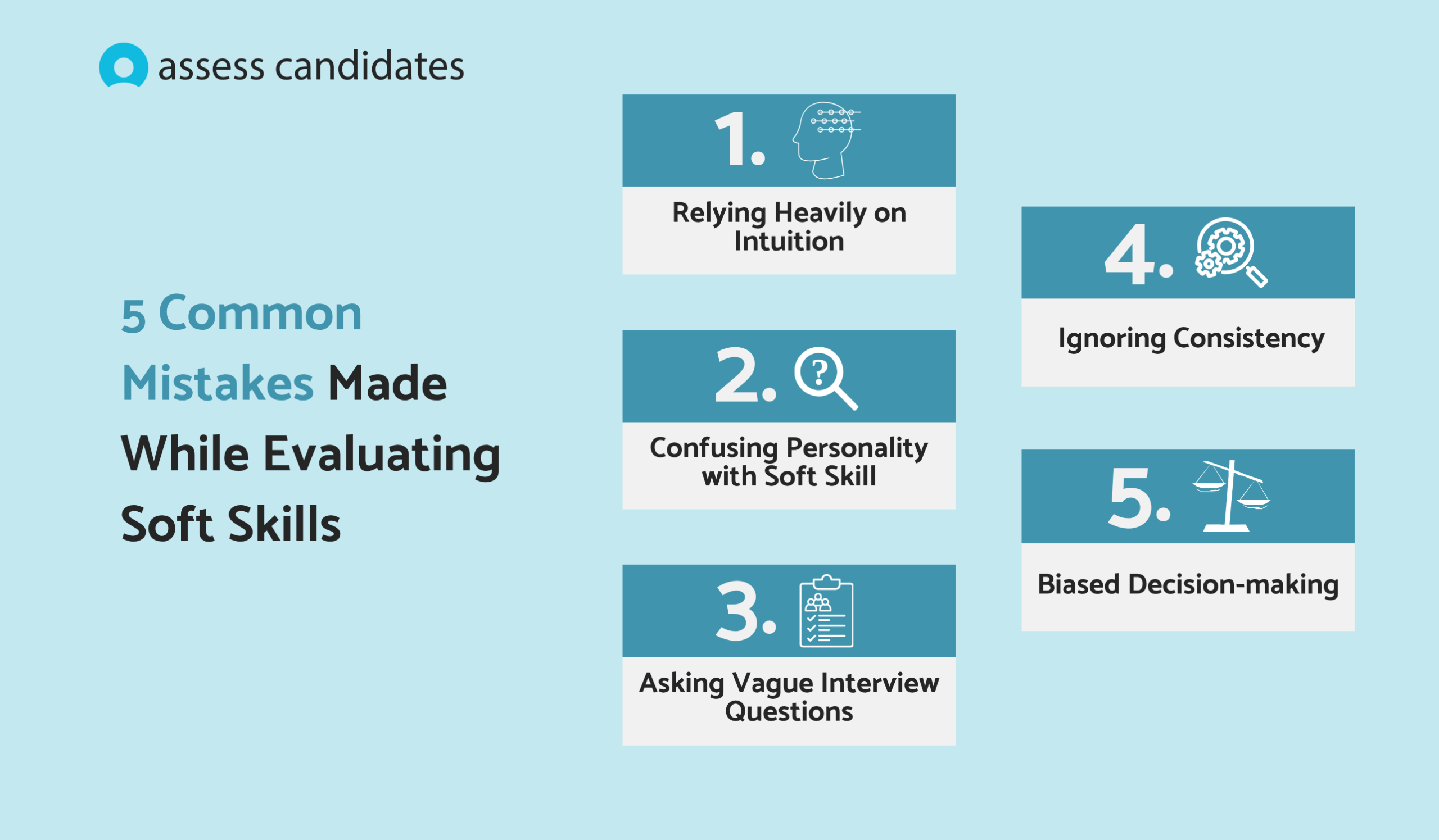
1. الاعتماد بشكل كبير على الحدس
من الأخطاء الشائعة عند تقييم المهارات الشخصية أثناء عملية التوظيف الاعتماد الزائد على الحدس أو القناة الهضمية الشعور. افتراض أن المرشح متواصل جيد لمجرد أنه يبدو واثقًا يؤدي إلى التعيينات الخاطئة.
الحل: استخدم إطار تقييم منظم مع أطر كفاءة محددة مسبقًا.
2. الخلط بين الشخصية والمهارات الشخصية
خطأ شائع آخر يتم ارتكابه أثناء عملية التوظيف هو شخصية مربكة مع المهارات الشخصية. بينما المهارات الشخصية هي قدرات قابلة للتعلم في مكان العمل، تعكس الشخصية ميولاً طبيعية. لذلك، قد تخلط كثيرًا بين حزم المرشح وانفتاحه وبين كونه جيدًا مهارات التواصل. غالبًا ما يؤدي هذا إلى التعيينات الخاطئة.
حل: تقديم تقييمات منظمة مثل اختبارات تقدير الموقف لقياس الاستجابات لسيناريوهات العمل الواقعية.
3 . طرح أسئلة مقابلة غامضة
طلب غير منظم و غامضة مقابلة الأسئلة, مثل “هل أنت لاعب فريق؟” غالبا ما ينتج رؤى غير موثوقة. نظراً لأن المرشحين غالباً ما يقدمون إجابات محفوظة أو مقبولة على نطاق واسع، فإنها لا تعكس السلوك الفعلي.
حل: استبدل الأسئلة العامة بـ أسئلة المقابلة السلوكية المنظمة.
٤. تجاهل الاتساق
فإن المهارات الناعمة تتجلى من خلال الأنماط, ، قد يتم التوظيف بناءً على مقابلة واحدة بدلاً من الاعتماد على أدلة متسقة عبر التمارين والمراجع والتقييمات. غالبًا ما يؤدي هذا إلى التعيينات الخاطئة.
الحل: اجمع الأدلة من نقاط تقييم متعددة بدلاً من الاعتماد على تفاعل واحد.
5. اتخاذ قرارات متحيزة
بما أن تقييم المهارات الشخصية يتضمن تفسير السلوك, ، تصبح خصوصا معرضة للخطر إلى التحيز. بدون معيار تقييم منظم، قد توظف مرشحين تشعر بالألفة معهم بدلاً من أولئك الذين يظهرون أقوى الكفاءات.
الحل: تقليل التحيز من خلال استخدام مقاييس تقييم منظمة، وأسئلة موحدة، ومقيّمين متعددين أثناء عملية التقييم.
اكشف عن مجموعتنا الواسعة من التقييمات الموحدة لتعزيز توظيفك القائم على المهارات. اعرف المزيد
6. المهارات الناعمة: قصة نجاح العميل
بيان مشكلة العميل
تخيل توسعًا سريعًا مؤسسة دعم العملاء تواجه صعوبة في توظيف مشرفي فرق يمكنهم التواصل بوضوح مع الوكلاء، والتعامل مع التصعيدات بهدوء، والتنسيق بفعالية عبر المناوبات. نتيجة لذلك، تبدأ شكاوى العملاء التي لم يتم حلها في الازدياد، وتصبح سوء الفهم بين الفرق أكثر تكرارًا، وتبدأ معنويات فرق الدعم في الانخفاض.
تحتاج المنظمة الآن إلى طريقة أكثر موثوقية لقياس ما إذا كان المرشح يمكنه إدارة المحادثات الصعبة، ودعم تعاون الفريق تحت الضغط، وإظهار حكم سليم عند حل مشكلات الخدمة في مواقف العالم الحقيقي.
تقييم مقترحات المرشحين
في تقييم المرشحين, ، لتوظيف مشرفي دعم العملاء المناسبين، نوصي بدمج اختبارات تقدير الموقف, محاكاة الاتصال القائم على الأدوار, و تقييمات سلوكية منظمة في مرحلة مبكرة من التوظيف.
علاوة على ذلك، عندما يتم دمجه مع المقابلات القائمة على الكفاءة و تمارين التقييم المدفوعة بالسيناريو, ، يمكن للمؤسسة اكتساب رؤى أعمق حول قدرة المرشح على الاستجابة بشكل بناء لتصعيدات العملاء، وتوجيه أعضاء الفريق خلال التحديات، والحفاظ على تنسيق واضح عبر وظائف الدعم خلال فترات الضغط العالي.
النتيجة
من خلال اعتماد التقييمات التي تقيس بالتحديد المهارات الشخصية، يمكن للمنظمة تحديد المرشحين الذين يظهرون بثقة التواصل القوي, التنظيم العاطفي, و سلوكيات القيادة التعاونية.
النتيجة هي فريق دعم أكثر اتساقًا واستجابة.
شارك مع Assess Candidates لتضمين مجموعة من اختبارات المهارات الخاصة بالوظيفة في عملية التوظيف الخاصة بك. عرض المخططات
يعمل تقييم المهارات الشخصية بشكل أفضل عندما يقوم أصحاب العمل بقياس السلوك باستمرار بدلاً من الاعتماد على الثقة أو الكاريزما أو الانطباعات التي يتم الحصول عليها أثناء المقابلات.
7. لماذا تستخدم الشركات الرائدة "تقييم المرشحين" لتقييم المهارات الشخصية
في تقييم المرشحين, ، نقدم مجموعة واسعة من تقييمات ما قبل التوظيف وإنشاء حملات توظيف مخصصة لاحتياجات التوظيف الفريدة لكل مؤسسة.
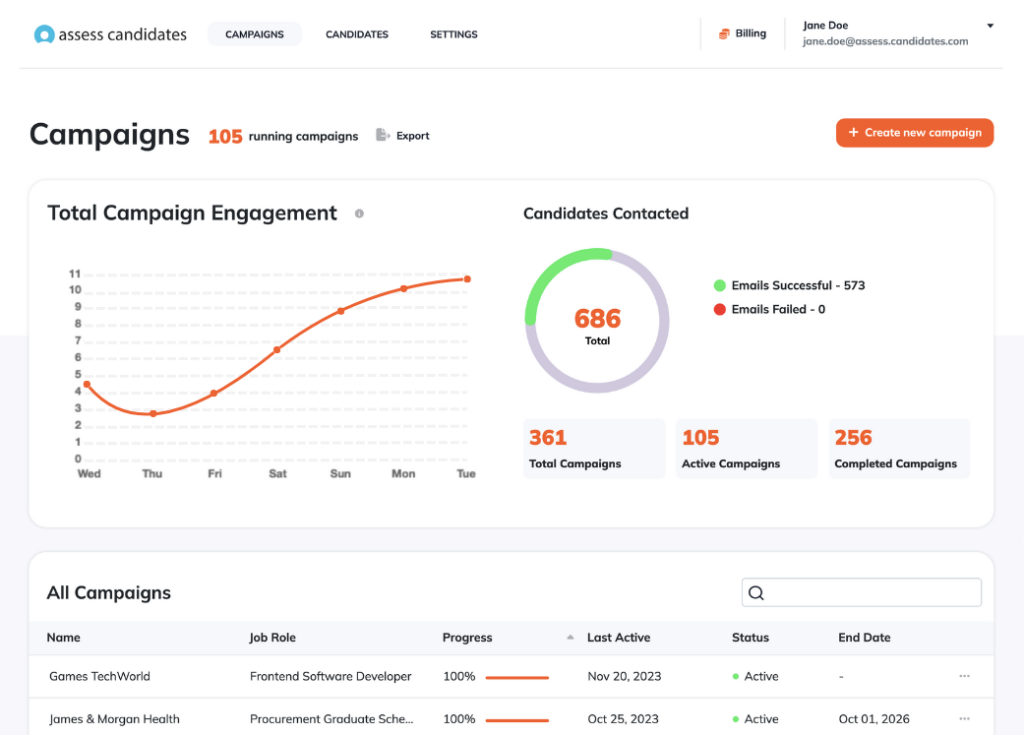
فيما يلي مثال على لوحة متابعة تقارير الحملات الانتخابية متاح على تقييم المرشحين.
إليكم 4 أسباب تجعل أصحاب العمل يستخدمون تقييم المرشحين لتقييم المهارات الناعمة:
- مصممة علمياً من قبل خبراء نفسيين خبراء: تقييم المرشحين’ تقييم المهارات الشخصية إنها مطورة بواسطة علماء نفس متخصصين وخبراء قياس نفسي لديهم سجل حافل في تصميم أدوات التقييم السلوكي لقادة التقييم العالميين مثل SHL و IBM Kenexa.
يخضع كل تقييم لـ التحقق العلمي الدقيق لقياس الكفاءات ذات الصلة بالدور مثل التواصل, التعاون, اتخاذ القرار, القدرة على التكيف, و إمكانات القيادة في سيناريوهات أماكن العمل الواقعية.
- التقارير المتقدمة: منصتنا البديهية يقدم تقارير واضحة ومتعمقة تسلط الضوء على نقاط القوة السلوكية لدى المرشحين، ومجالات التطوير، والأداء عبر الكفاءات الرئيسية للمهارات الناعمة. يمكن لأصحاب العمل مقارنة أساليب اتخاذ القرار لدى المرشحين، وأنماط التعاون، وفعالية التواصل بسرعة باستخدام رؤى موضوعية ومنظمة.
مع تكامل سلس لنظام تتبع المتقدمين (ATS)، التقييم تصبح سير العمل أسرع, ، وأكثر اتساقًا، وأسهل في الإدارة عبر عمليات التوظيف واسعة النطاق مع الحفاظ على العدالة والشفافية في تقييم المهارات الشخصية.
- تجربة المرشح الإيجابية: تم تصميم تقييمات المهارات الشخصية لدينا لتكون جذاب وعملي ويمكن الوصول إليه عبر الأجهزة, مما يسمح للمرشحين بإظهار كيفية استجابتهم لمواقف العمل الواقعية بدلاً من الاعتماد على أسئلة التقرير الذاتي المجردة.
علامة تجارية مخصصة تساعد الخيارات أيضًا المؤسسات على الحفاظ على تجربة تقييم احترافية ومتسقة طوال رحلة التوظيف.
- دعم إمكانية الوصول إلى المرشحين: نحن ندعم التوظيف الشامل من خلال توفير ميزات إمكانية الوصول ما يمكّن المرشحين من إظهار مهاراتهم الشخصية إلى حد ما وبثقة. تشمل هذه الخيارات أوقاتًا إضافية، والتوافق مع قارئات الشاشة، وإعدادات بصرية قابلة للتعديل، ووظيفة التكبير. تتماشى جميع التقييمات مع معايير إمكانية الوصول WCAG, ، مع ضمان تجربة عادلة لجميع المتقدمين.
توفر Assess Candidates أدوات موثوقة قائمة على العلم تساعد المؤسسات على تقييم المهارات الشخصية بدقة واتخاذ قرارات توظيف أذكى وأسرع وأكثر اتساقًا. استكشف مجموعتنا الكاملة من التقييمات إلى تحديد المرشحين بالقدرات السلوكية المطلوبة للنجاح عبر أدوارك.
لست متأكدًا من تقييمات المهارات الشخصية التي تناسب احتياجات التوظيف لديك؟ اتصل بنا لـ تحليل مجاني متطلبات دورك.
الخاتمة: الوجبات الجاهزة الرئيسية
المهارات الشخصية هل القدرات الوظيفية القابلة للتحويل مثل التواصل, التعاون, حل المشكلات, القيادة, و القدرة على التكيف. عندما يتم تقييمهم من خلال طرق منظمة وذات صلة بالأدوار، فإنهم يساعدون أصحاب العمل في تحديد المرشحين الذين يمكنهم العمل بشكل جيد مع الآخرين، والاستجابة للتغيير، والنمو بمرور الوقت.
الأسئلة المتداولة
كيفية تقييم المهارات الشخصية بموضوعية أثناء التوظيف؟
المهارات الشخصية يمكن أن يكون تم تقييمه بموضوعية خلال التوظيف من خلال الجمع مقابلات منظمة, اختبارات تقدير الموقف, و محاكاة الوظائف. هذه الأدوات تساعد في ملاحظة كيفية استجابة المرشحين لسيناريوهات العمل الواقعية، مما يؤدي إلى عادلة قرارات التوظيف.
كيف تتغير احتياجات المهارات الشخصية عبر مراحل حياتك المهنية المختلفة؟
تحتاج المهارات الناعمة إلى التطور اعتمادًا على تقدم الموظف في حياته المهنية. تتطلب الأدوار للمبتدئين بشكل أساسي مهارات ناعمة، بما في ذلك التواصل, القدرة على التكيف, و العمل الجماعي. موظفين في المستوى المتوسط الزوم أقوى تعاون, حل المشكلات, و مهارات القيادة. في مناصب عليا،, ولكن، التفكير الاستراتيجي،, صنع القرار, التوجيه، و الذكاء العاطفي تصبح أكثر أهمية.
هل يمكن تطوير المهارات الناعمة بعد التوظيف؟
نعم, يمكنك الدعم تطوير المهارات الشخصية بعد التوظيف من خلال هيكلي تدريب، توجيه،, و برامج التطوير المعتمدة على التعليقات. نظرًا لأن المهارات الشخصية هي في الأساس قدرات قابلة للتعلم في مكان العمل، فيمكن تعزيزها بالتوجيه الصحيح والتجربة وفرص التطوير.
كيف تؤثر المهارات الشخصية على أداء الفريق؟
المهارات الشخصية تؤثر بشكل كبير على أداء الفرق لأنها تشكل مباشرة كيف تواصل، حل النزاعات, و التعاون في مشاريع جماعية. مع مرور الوقت، تعمل هذه المهارات على تحسين الإنتاجية وتقليل سوء الفهم والمساهمة في بيئة فريق أكثر استقرارًا وتعاونًا.
ما هي المهارات الشخصية الأكثر قيمة عبر الأدوار؟
المهارات الشخصية, بما في ذلك التواصل, العمل الجماعي والتعاون, حل المشكلات, و القدرة على التكيف, تُعد بعض هذه المهارات الأكثر قيمة عبر مختلف الأدوار. الموظفون الذين يظهرون هذه المهارات الناعمة يتكيفون بسلاسة مع المسؤوليات الجديدة، ويتعاونون بفعالية مع أصحاب المصلحة، ويحافظون على الإنتاجية تحت الضغط.
كيف تدعم المهارات الشخصية الإمكانيات القيادية لدى الموظفين؟
المهارات الشخصية, بما في ذلك الذكاء العاطفي, المساءلة, صنع القرار, و تعاون, غالباً ما تعكس إمكانات القيادة لدى الموظفين. الموظفون الذين يظهرون هذه المهارات ويدعمون أداء الفريق في المراحل المبكرة هم أكثر عرضة للنجاح في الأدوار الإشرافية.


 English
  Arabic