
أهم 10 مقاييس توظيف يجب على كل شركة تتبعها في عام 2026



مقاييس التوظيف تساعدك على اتخاذ القرارات الموضوعية, تقليل ممارسات هدَّارة, ، وتوحيد جميع الأطراف المعنية بالتوظيف حول أهداف واضحة، بغض النظر عن ظروف السوق أو حجم التوظيف.
التوظيف المستند إلى البيانات وصلت إلى نقطة حرجة، لكن العديد من المنظمات لا تزال تتعثر في سؤال أساسي: ما الذي يثبت بالفعل أن التوظيف فعال؟ المفتاح هو تتبع مجموعة مركزة من المقاييس التي تكشف عن الاختناقات وتربط أداء التوظيف بنتائج الأعمال.
فرق التوظيف الرائعة لا تتتبع كل شيء وينتهي بها الأمر في عدم فهم أي شيء. تركز على حفنة من المقاييس التي تعتبر حاسمة لمؤسستها وصناعتها. الأكثر أهمية هي جودة التوظيف, وقت الإنتاجية, كفاءة التكلفة, و تجربة المرشح.
وفقًا لدراسة AIHR Digital لتحليلات الموارد البشرية لعام 2025، يمكن للمؤسسات التي تتتبع فعالية المصدر خفض تكلفة التوظيف بنسبة تصل إلى 30% من خلال تحسين مزيج قنوات التوظيف لديهم.
في هذا الدليل، نشرح المقاييس التي يجب مراقبتها، وكيفية حسابها، ومتى يتم استخدامها. بحلول النهاية، ستعرف بالضبط ما هي المقاييس التي تعزز نتائج التوظيف لديك وتحسن تجربة المرشح.
المحتويات
- ما هي مقاييس التوظيف؟
- كيف تختار مقاييس التوظيف المناسبة لمؤسستك؟
- ما هي أهم مقاييس التوظيف التي يجب تتبعها في عام 2026؟
- كيفية جمع البيانات وتحليلها وتصوير بيانات التوظيف
- كيف يعيد الذكاء الاصطناعي تشكيل مقاييس التوظيف في عام 2026
- أدوات ومنصات تدعم مقاييس التوظيف
ما هي مقاييس التوظيف؟
مقاييس التوظيف هي مؤشرات قابلة للقياس تظهر كيف فعليًا عملية التوظيف الخاصة بك يقوم بأدائها. فهي تساعدك على تحديد ما ينجح، وأين يتوقف المرشحون، وكيف ترتبط نتائج التوظيف بالتكلفة والسرعة والجودة. الأمثلة الشائعة تشمل وقت التوظيف، تكلفة التوظيف, جودة التوظيف, و تجربة المرشح.
يمكنك تحديد متطلبات التوظيف المستقبلية بناءً على الاتجاهات التاريخية من خلال مقارنة مقاييسك بـ معايير الصناعة. على سبيل المثال، بدلًا من الحديث عن حاجتك لمزيد من مسؤولي التوظيف، أظهر الزيادة المئوية في الوقت المستغرق للتوظيف، خاصة إذا أدى ذلك إلى خسارة أفضل المرشحون للمنافسين.
تتبع الكثير من المقاييس يمكن أن يبطئ عملية اتخاذ القرار. ستحصل عادةً على نتائج أفضل من خلال إعطاء الأولوية لمجموعة صغيرة من مؤشرات الأداء الرئيسية المرتبطة بأهداف العمل.
حسّن مقاييس التوظيف لديك باستخدام أدوات تقييم مصممة لاتخاذ قرارات توظيف أسرع وأفضل. التوظيف مجاناً

2. كيف تختار مقاييس التوظيف المناسبة لمؤسستك؟
لاختيار مقاييس التوظيف المناسبة، ابدأ بتحديد النتيجة التجارية التي تقوم بالتوظيف من أجلها، ثم اختر المقاييس التي تعكس التقدم نحو تلك النتيجة. تمنحك الخطوات التالية مخططًا اتبع عند اختيار مقاييس التوظيف لشركتك.
مواءمة المقاييس مع الأهداف التجارية
كموظف في قسم الموارد البشرية، فإن ممارسات التوظيف لديكم والبيانات التي تستخدمونها لـ اتخاذ القرار يجب أن تدعم هدف الشركة. بالنسبة للشركات سريعة النمو، ينصب التركيز على توظيف أسرع مما على التكلفة. ومع ذلك، بالنسبة لشركة راسخة تسعى للتحسين من أجل الكفاءة، ينصب التركيز على التكلفة لكل توظيف و جودة التوظيف.
مطابقة المقاييس لمراحل التوظيف
عملية التوظيف لديك تتم على مراحل، وكل مرحلة تتطلب مقاييس مختلفة. الأولى تأتي مباشرة بعد تقديم الطلبات. تركيزك يكون على الوعي والجذب. ستساعدك هذه المقاييس في تحديد ما إذا كنت تصل إلى الأشخاص المناسبين وما إذا كان المتقدمون مهتمين بمنظمتك.
المرحلة التالية هي خلال مقابلاتك المختلفة. ستقوم بقياس نسب مقدمي الطلبات إلى المقابلات، والمقابلات إلى العروض، والتسرب من المرحلة لـ تقييم الكفاءة من مقابلتك. ستتمكن من تحديد ما إذا كنت تستخدم تقييمات صحيحة و التقييمات.
تركيزك ينصب أولاً على معدلات قبول عروضك، والوقت من العرض إلى القبول، ومعدلات نجاح التفاوض. بعد ذلك، يجب عليك أيضًا النظر في جودة توظيفك،, معدل الاحتفاظ بالموظفين الجدد, ، والوقت اللازم للإنتاجية. هذا يجيب على السؤال النهائي حول ما إذا كنت قد اتخذت القرارات الصحيحة أثناء التوظيف.
أظهرت أبحاث CareerPlug لعام 2025 التي حللت أكثر من 10 ملايين طلب توظيف أن 66% من المتقدمين للوظائف عروض مقبولة بسبب تجربة مرشح إيجابية ، بينما 36% رفضت العروض بعد تجارب مقابلة سلبية.
مراجعة إمكانيات بياناتك الحالية
كن صريحاً بشأن نهجك الحالي للمقاييس والبيانات. استخدم هذا الإطار الذي يكسر قدرة البيانات إلى أربعة مستويات.
- مستوى 1 هو إعداد تقارير أساسية، حيث يمكنك استخدام البيانات يدويًا في جداول البيانات.
- المستوى الثاني يتضمن بعض لوحات المعلومات الآلية لتوليد التقارير تلقائيًا.
- المستوى 3 يستخدم البيانات التاريخية للتنبؤ بالنتائج المستقبلية.
- المستوى 4 تتضمن أنظمتك التعرف على أنماط البيانات والتوصية بإجراءات مفيدة.
الأدوات المتوفرة لك تساهم أيضًا في مقدار ما يمكنك القيام به.
إضافة أو إزالة مقياس
أضف مقياسًا عندما تتخذ قرارات بشأن معلومات غير كافية. إذا وجدت نفسك تجادل باستمرار بأن عملية المقابلات لديك طويلة جدًا ولكن لا يملك أحد بيانات لدعم ذلك، فابدأ بتتبع مدة مرحلة المقابلات.
إذا كنت قد راقبت مقياسًا لـ 6 أشهر ولم يتم إجراء أي تغييرات بناءً على البيانات، قم بإزالتها. لأن المقاييس المهمة سابقًا لا يعني أنها ستبقى كذلك. عندما تكون أعمالك تتغير الأهداف, ، اضبط مقاييسك وفقًا لذلك.
هل ترغب في معرفة أهم مقاييس التوظيف لتتبعها في عام 2026استمر في القراءة للحصول على التفاصيل الكاملة.
3. أهم مقاييس التوظيف التي يجب تتبعها في عام 2026
أظهرت الأبحاث أن العديد من مسؤولي التوظيف يعتبرون المقاييس والبيانات ضرورية لعملهم استراتيجية التوظيف. ومع ذلك، لا تزال العديد من المنظمات تكافح لتحديد المقاييس التي تهم أهداف التوظيف الخاصة بها.
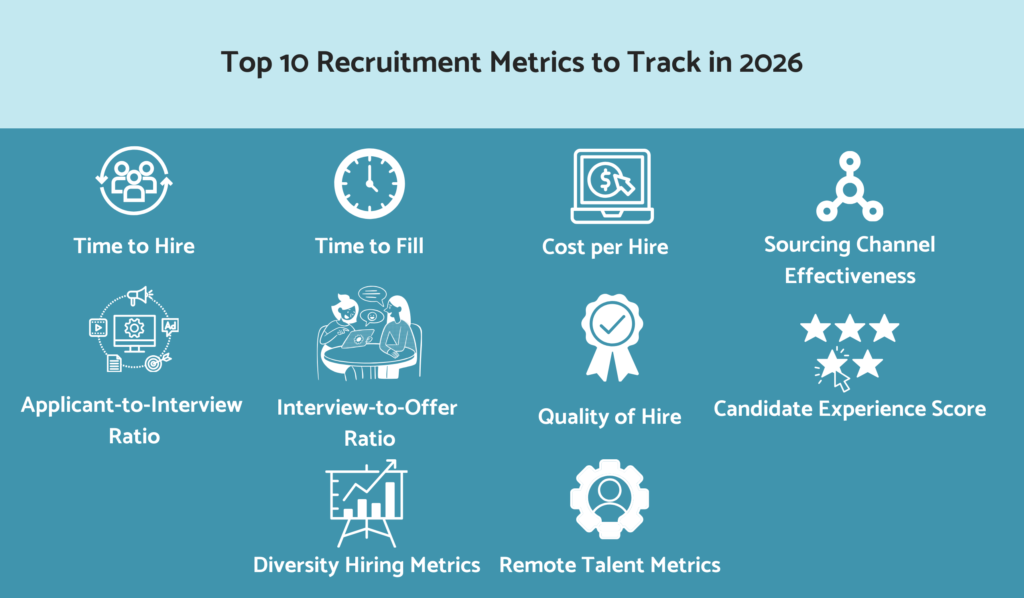
في هذا القسم، سنتناول أهم المقاييس التي يجب على كل شركة مراقبتها في عام 2026. تشمل هذه المقاييس العشرة:
- حان وقت التوظيف
- حان وقت التعبئة
- تكلفة التوظيف
- فعالية قنوات التوريد
- نسبة المرشحين إلى المقابلات
- نسبة المقابلات إلى عرض العمل
- جودة التوظيف
- نقاط تجربة المرشح
- مقاييس التنوع في التوظيف
- مقاييس المواهب عن بعد
اقرأوا معنا أدناه ونستكشف ما تتضمنه كل من هذه المقاييس.
1 . حان وقت التوظيف
حان وقت التوظيف يقيس عدد الأيام بين الأولى معلومات الاتصال بالمرشح وقبول العرض. يركز هذا المقياس بشكل خاص على تقدم المرشح خلال عملية التوظيف الخاصة بك.
تبدأ معظم الشركات في العد عندما يتقدم شخص ما أو عندما يتصل به مسؤول توظيف، ويتوقفون عن العد عندما يوقع المرشح خطاب عرض.يجب أن يكون لكل منصب نقطة بداية ونهاية محددة ومتسقة عبر الأدوار لضمان قابلية مقارنة النتائج.
وفقًا لأبحاث Glassdoor، فإن المتوسط عملية المقابلة في الولايات المتحدة تأخذ 23.8 يوماً. يجوز للمرشحين قبول عروض تنافسية, استقبل عروض مضادة, ، أو حتى تفقد الاهتمام مع كل أسبوع إضافي يظل فيه منصبك شاغراً.
لحساب وقت التوظيف، الصيغة هي:
وقت التوظيف = تاريخ قبول العرض - تاريخ الاتصال الأول
معايير الصناعة لوقت التوظيف
متوسط المملكة المتحدة وقت التوظيف هو 38 يومًا, ، بمتوسط حان الوقت لشغل منصب في 42 يومًا. غالباً ما تختلف المعايير المرجعية المذكورة حسب البلد والدور.
- علامات حمراء في وقت التوظيف لديك يجب الانتباه إليها
- وقت التوظيف يتزايد شهريًا دون مبرر.
- فرق هائل بين المناصب المتشابهة (مهندس واحد تم توظيفه في 4 أسابيع، وآخر في 12)
- فترات أطول بين جولات المقابلات (المرشحون ينتظرون خلال أسبوعين بين المقابلات
- بطء اتخاذ القرار (أكثر من خمسة أيام عملبعد المقابلات النهائية
المقياس التالي الذي ننظر إليه هو وقت الملء.
2 . وقت التعبئة
وقت التعبئة ووقت التوظيف هما مقياسان مختلفان قد يتم الخلط بينهما أحيانًا.
وقت الملء يشمل عملية التوظيف بأكملها في مؤسستك. تبدأ عندما يتم الموافقة على ميزانية مدير التوظيف أو عند إصدار طلب وظيفي. تنتهي عندما يقبل المرشح العرض. على الرغم من أنها تمتد أحيانًا خلال فترة الإشعار الخاصة بهم حتى يبدأوا العمل.
الوقت المناسب للتوظيف يركز على تجربة المرشح. لكن الموافقات، وفجوات الجدولة، وبطء اتخاذ القرارات يمكن أن تسبب تأخيرًا في وقت التعيين.
أين توجد بعض التأخيرات في وقت الملء؟
وقت ملء الشواغر يتأخر عادة في أماكن لا يتوقعها مسؤولو التوظيف أبداً.
الاختناقات الشائعة تشمل:
- استكمال دورة الموافقة على طلبات الشراء بين مختلف أصحاب المصلحة بينما يكون شخص ما في إجازة بشكل دائم
- أوصاف الوظائف عالقة في مراجعة قانونية للتحقق من الامتثال
- مدبرو التوظيف المسافرون لأسابيع وغير متاحين للمقابلات
- ميزانية تأخرت الموافقات لأن قسم المالية يغلق دفاتر الربع السنوي.
- عروض تتطلب موافقة تنفيذية تستغرق 5-7 أيام عمل
المقياس التالي لمناقشته هو تكلفة التوظيف.
3. تكلفة التوظيف
وفقًا لتقرير SHRM لعام 2022 حول معايير تقييم استقطاب المواهب، يبلغ متوسط تكلفة التوظيف الواحد في الولايات المتحدة حوالي 4,700 دولار. ومع ذلك، فإن هذا المبلغ يختلف حسب مستوى الوظيفة. حيث تصل تكلفة الوظائف المبتدئة إلى 3,000 دولار، في حين أن تكلفة الوظائف التنفيذية قد تتجاوز في بعض الأحيان 50,000 دولار.
معظم الشركات بشكل كبير التقليل من تكلفة التوظيف الحقيقية لديهم لأنهم يعدون النفقات الواضحة فقط.
التكاليف الواضحة تشمل:
- رسوم إعلان وظيفة وإعلان على لوحات الوظائف
- رواتب لتوظيف الموظفين
- نفقات ورسوم شركات التوظيف الخارجية
- تقييمات ما قبل التوظيف والتحقق من الخلفية
- مكافآت إحالة الموظفين
- المصروفات المتعلقة بفعاليات التوظيف ومعارض الوظائف
في عام 2023، أنفقت شركات التكنولوجيا حوالي $5,000-$10,000 لكل عملية تأجير, بينما شهدت المنظمات الصحية تكاليف توظيف تصل إلى $12,000 لتأمين كبار المهنيين في المجالات ذات الطلب المرتفع.
التكاليف الخفية التي يجب تضمينها أيضاً:
- وقت مديري التوظيف المستغرق في إجراء المقابلات ومراجعة السير الذاتية
- وقت اللوحة للمقابلات مع العديد من أعضاء الفريق
- تنسيق العمل الإداري والجدولي
- اشتراكات التكنولوجيا
- دعم الانتقال والتوطين
- نفقات النقل الداخلي والتنقل
- الوقت المستغرق في التفاوض على العروض
4. فعالية قناة التوريد
الهدف هو رؤية المصادر التي تقدم المرشحين والمصادر التي تقدم مرشحين أكفاء والذين احصل على وظيفة ولديهم النجاح على المدى الطويل. تسمح معظم أنظمة تتبع المتقدمين (ATS) بوضع علامات على مصادر المرشحين؛ بالفعل، لينكد إن، إحالات الموظفين، موقع التوظيف، توظيف الجامعات، وما إلى ذلك.
ولكن، تتوقف العديد من الشركات عند هذا الحد وتتوقف فقط عند فحص مقاييس الحجم. استقبال 500 طلب من Indeed لا يعني شيئًا إذا لم ينجح أي منها في تجاوز الفحص الأولي. تتبع معدلات التحويل حسب المصدر في كل مرحلة.
5. نسبة المتقدمين إلى المقابلين
يوضح هذا المقياس أداء فحصك الأولي في قمع المبيعات.
ربما تكون عملية الفحص الخاصة بك متساهلة للغاية إذا كنت مقابلة المتقدمين 80%. هذا يعني أنك تهدر مقابلة تضيع الموارد على مرشحين كان ينبغي استبعادهم. ربما تكون عملية الفرز التي تقوم بها صارمة للغاية أو أنك تطبق معايير توظيف غير واقعية إذا كنت تجري مقابلات مع 2% من المرشحين فقط.
تختلف الأدوار بنسب صحية مختلفة:
كلما كان الدور أكثر تخصصًا وكان مصدرك أكثر استهدافًا، زادت هذه النسبة.
6 . نسبة المقابلة إلى العرض
توضح هذه النسبة المئوية للمرشحين الذين يكملون عملية المقابلة الخاصة بك ويتلقون عروضًا.
إذا تلقى 80% من المرشحين الذين تمت مقابلتهم عروض عمل، فربما يكون التصفية الأولية هي التي تقوم بالجزء الأكبر من المهمة، أو ربما لا تضيف مرحلة المقابلة ما يكفي من المعلومات المفيدة. أما إذا تلقى 5% فقط عروض عمل، فربما تكون مقابلة نطاق واسع جدًا أو تطبيق معايير غير متسقة.
النطاق الصحي هو بين 20-40%. لتحقيق ذلك، فإن مجموعة المرشحين يجب أن يكون هناك مزيج جيد من المرشحين الممتازين والمرشحين الاحتياطيين.
تنظر الشركات أيضًا في التباين بين مديري التوظيف. هذا يعني أنه إذا كان هناك اختلاف كبير في نسبة المرشحين الذين يتلقون عروضًا بين مديرين، فهم بذلك ليسوا متسقين مع التقييمات. قد يكون لديهم معايير مختلفة، وتفسيرات مختلفة للمتطلبات، أو فعالية مختلفة في المقابلات.
وجدت دراسة لـ NACE أن حوالي 48 من كل 100 مرشح تمت المقابلة وتلقيت عرضًا.
تطبق بعض الشركات بطاقات تسجيل المقابلات التي تجبر المحاورين على تقييم كفاءات محددة بدلاً من مجرد تقديم توصيات بالموافقة أو الرفض. وتصبح البيانات من بطاقات التسجيل هذه تنبؤية بمرور الوقت. يمكنك تحديد أي الشخصية ستجعل المرشحين أكثر نجاحًا في الدور.
استخدم منصة المقابلات الفيديو المنظمة لدينا لتوحيد عملية تقييم المرشحين. اعرف المزيد
٧. جودة التوظيف
هذا هو المقياس الأهم بلا منازع، ومع ذلك فهو ليس عادةً تم القياس بفعالية.
جودة التوظيف من الصعب قياسه لأن “الجودة” تعني أشياء مختلفة لأدوار مختلفة. بالنسبة لمناصب المبيعات، فإنها تتمثل في تحقيق حصتك السنوية. ولكن بالنسبة للمهندسين، فإنها تعني الحصول على درجة عالية في مقياس مختلف.
تحتاج إلى تعريفات جودة خاصة بالأدوار. لا تفرض تعريفًا واحدًا للجودة ينطبق على مؤسستك بأكملها لأنه لن ينجح.
عادةً ما تتضمن أطر عمل جودة التوظيف الفعالة ما يلي:
8. درجة تجربة المرشح
كل شخص يتقدم بطلب إلى شركتك يشكل انطباعًا. يصبح البعض عملاء بينما يشارك آخرون تجاربهم مع الأصدقاء. لديك أيضًا من ينشرون على وسائل التواصل الاجتماعي. معاملة المرشحين بشكل سيئ في هذا سوق العمل سألحق بك بسرعة.
يمكنك تقييم تجربة المرشح في الأوقات التالية في عملية التوظيف الخاصة بك:
- بعد التطبيق الأولي
- بعد الفحص الأول أو التقييم
- بعد المقابلة
- بعد إرسال العرض
- بعد الرفض في أي مرحلة
يمكنك استخدام استبيانات بسيطة. يحصل المرشحون على تقييم تجربتهم على مقياس والإجابة على سؤال واحد أو أكثر أسئلة مفتوحة.
فقير تجربة المرشح يدمر علامتك التجارية كصاحب عمل، مما يجعل كل شيء أكثر صعوبة.
تواجه الشركات ذات التقييمات السيئة على جلاس دور بخصوص عملية التوظيف صعوبة في جذب المرشحين ذوي الجودة. يشتكي المتقدمون من مقابلات شبحية، ومحاورين غير محترمين، وجولات لا نهاية لها، ونقص في التواصل، وعروض متدنية. هذه السمعة ستعيقك من جذب المتقدمين الجيدين.
حسّن عملية التوظيف الخاصة بك من خلال منصة المقابلات المرئية سهلة الاستخدام والتي تركز على المرشحين. اعرف المزيد
9. مقاييس التوظيف المتنوع
أولاً، لا ينبغي تتبع مقاييس التنوع بشكل مستقل. من الضروري النظر في مقاييس الجودة الأخرى جنبًا إلى جنب.
تعتبر المقاييس المتعلقة بالتوظيف المتنوع مهمة ويجب التعامل معها بحذر. لضمان عملية توظيف عادلة و تجنب التمثيل الشكلي, حاول أن تحدد أين مرشحون متنوعون تراجع كبير في عملية التوظيف لديك. عندما يتم توظيف 10% فقط من المتقدمات، احرص على معرفة السبب.
يجب أن تكون لجنة المقابلة الخاصة بك أيضاً متنوعة. يحسّن التجربة للمجموعات الممثلة تمثيلاً ناقصًا. ووفقًا للبحوث، فإنهم يتخذون قرارات أقل تحيزًا أيضًا.
أظهرت دراسة أجرتها شركة «جارتنر» أن القوى العاملة المتنوعة تُحسّن أداء الموظفين بنسبة 121٪ وتزيد من رغبتهم في البقاء في العمل مقارنةً بالمؤسسات غير المتنوعة.
إذا تنوع تحسن ولكن جودة التوظيف تنخفض، فإنها غالبًا ما تشير إلى مشكلة في العملية، مثل معايير تقييم غير متسقة أو التحيز في اتخاذ القرارات. أفضل نهج هو تقييم المرشحين من جميع الخلفيات بناءً على الجدارة.
هذا يعني:
- مصادر من قنوات متنوعة
- الكتابة الشاملة التوصيف الوظيفي
- باستخدام المقابلات المنظمة لـ تقليل التحيز
- التدريب على وعي المحاورين بالتحيز
- إنشاء شاملة تجارب التأهيل
10. مقاييس المواهب عن بعد
أصبحت الاستعانة بمصادر خارجية عن بعد ممارسة معيارية، ولكن قياس نجاح الموظفين عن بعد يتطلب أساليب مختلفة إلى حد ما.
بالنسبة لـ جهاز التحكم عن بُعد توظيف، تتبع:
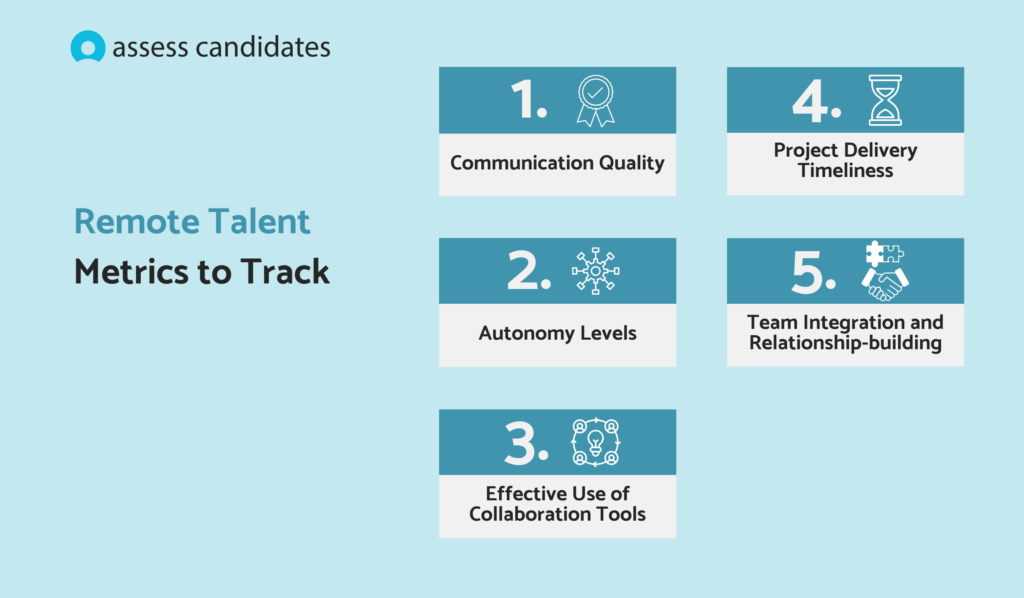
الخوف مع التوظيف عن بعد هو أن يكونوا أقل إنتاجية أو تفاعلًا. المقاييس الجيدة تؤكد ذلك أو تدحضه. معظم الشركات التي كانت حريصة على هذا اكتشفت أن الموظفين الذين يتم توظيفهم عن بعدوينجح بشكل جيد أو حتى أفضل مما يزيد على الموظفين في الموقع عندما يتم توظيفهم وإدارتهم بشكل جيد.
تتبع الجاهزية عن بعد
ليس بوسع الجميع العمل عن بعد. يحتاج بعض الأشخاص إلى النظام والإرشاد الشخصي والتفاعل، وكل هذه الأمور ليست متأصلة في العمل عن بعد.
يمكنك البحث تحديداً عن:
- خبرة سابقة في العمل عن بعد
- انضباط
- ممتاز مهارات التعامل مع الآخرين
- الارتياح للغموض
- موقف حل المشكلات
- إعداد مكتب منزلي
تستخدم شركات أخرى محاكاة العمل أو المشاريع التجريبية لقياس جاهزية المتقدم عن بعد قبل إرسال عروض العمل. هذا يقلل من احتمالية توظيف مرشح يتمتع بمهارات جيدة في مقابلات بالفيديو لكنهم غير مستعدين لواقع العمل عن بعد.
تُظهر بيانات FlexJobs لعام 2024 أن الغالبية العظمى من الباحثين عن عمل تقييم العمل عن بعد كعامل حاسم عند تقييم قوائم الوظائف.
الامتثال عبر الحدود
التوظيف عبر الولايات أو دوليًا يجعل مقاييسك معقدة بسبب الامتثال.
يجب عليك تتبع:
- من أي مواقع تقومون بالتوظيف؟
- تكاليف الامتثال حسب الموقع
- حان وقت التحقق من تصريح العمل في مختلف الولايات القضائية
- وقت المراجعة القانونية لخطابات العروض في مواقع جديدة
- مدة إعداد الضرائب وكشوف الرواتب
الآن بعد أن عرفت مقاييس التوظيف المختلفة والمقاييس الحاسمة لنجاح عملية التوظيف لديك، يبرز السؤال التالي: كيف تحصل بالفعل على هذه البيانات، وتفهمها، وتجعلها قابلة للتنفيذ؟
في هذا القسم، سنناقش كيفية استخدام مقاييسك بفعالية لاتخاذ القرارات.
٤. كيفية جمع وتحليل وتصور بيانات التوظيف
لا تحدث بيانات التوظيف الموثوقة عن طريق الصدفة. تحتاج إلى أنظمة واضحة، وتحديد ملكية البيانات، وتحديثات منتظمة للمراحل.
بناء خط أنابيب بيانات
أول شيء يجب القيام به هو تحديد مصدر بياناتك. إنه نظام تتبع المتقدمين الخاص بك في معظم الشركات. يجب أن تمر جميع التعيينات من خلاله، ويجب متابعة جميع المراحل فيه، ويجب على مسؤولي التوظيف لديك تحديثه باستمرار.
لكن بيانات ATS لا تكفي بحد ذاتها. أنت بحاجة أيضًا إلى:
- بيانات نظام معلومات الموارد البشرية لأداء الموظفين والاحتفاظ بهم والتركيبة السكانية
- بيانات التقويم لجدولة المقابلات وإنتاجية المجند
- خطاب عرض ومعلومات التعويض
- ردود استبيان المرشحين
- تتبع مصدر الإسناد
يجب أن يتصل كل هذا. ستسحب خط أنابيب البيانات الخاص بك البيانات من أنظمة مختلفة وتمركزها في أداة ذكاء الأعمال، حيث يمكنك تحليلها.
الجزء التقني لا يقل أهمية عن المكون الثقافي. بدون اتساق في إدخال المعلومات من قبل مجندي التوظيف، سيكون لديك خط أنابيب "قمامة تدخل، قمامة تخرج".
دمج أدوات تتبع المتقدمين، وأنظمة معلومات الموارد البشرية، وأدوات التوظيف
تستخدم معظم الشركات تطبيقات مختلفة لا تتواصل مع بعضها بشكل أصلي. أدوات التزويد الخاصة بك، ونظام معلومات الموارد البشرية،, منصة مقابلات الفيديو, وأنظمة التقييم تقيس جوانب مختلفة من عملية التوظيف ولا تشارك المعلومات تلقائيًا بالضرورة.
لديك عدة خيارات لتوصيل أدواتك المختلفة:
ماذا يجب أن يكون على لوحة تحكم التوظيف الخاصة بك؟
لوحات المعلومات الفعالة بسيطة وقابلة للتنفيذ. تجيب على الأسئلة المحددة الضرورية لأهداف التوظيف:
- كم هو عدد المناصب المفتوحة لدينا حاليًا؟
- منذ متى وهم مفتوحون؟
- هل نحن على المسار الصحيح لتحقيق أهداف التوظيف؟
- أين الاختناقات؟
- ما هي جهات التوظيف أو مديري التوظيف الذين يحتاجون إلى الدعم؟
- كيف يقارن هذا الشهر بالشهر الماضي؟
يجب أن تختار نظرة عامة من صفحة واحدة يمكنك التحقق منها في 30 ثانية، وأن تتعمق في التفاصيل التي قد تكون إشكالية.
استخدم مؤشرات مرئية مثل ألوان الحالة (أحمر/أصفر/أخضر)، أسهم اتجاه توضح التحسن أو التراجع، ورسوم بيانية بسيطة. تجنب الجداول المزدحمة.
قم بتحديث لوحات المعلومات يوميًا أو في الوقت الفعلي إن أمكن. التحديثات الأسبوعية مناسبة للمقاييس الأقل حساسية للوقت.
اجعل لوحات المعلومات في متناول الجميع. يجب أن يتمكن كل من يحتاجها من عرضها دون قيود. أدوات ذكاء الأعمال المستندة إلى السحابة مثل Tableau أو Looker أو Power BI تجعل هذا الأمر سهلاً.
٥. كيف يعيد الذكاء الاصطناعي تشكيل مقاييس التوظيف في عام ٢٠٢٦
يغير الذكاء الاصطناعي بشكل أساسي ما هو ممكن في اكتساب المواهب وما هي المقاييس الأكثر أهمية.
أفادت SHRM أن استخدام الذكاء الاصطناعي في مهام الموارد البشرية ارتفع إلى 43% في عام 2025, ، ارتفاعًا من 26% في عام 2024.
هذه بعض الطرق لقد غيّر الذكاء الاصطناعي طريقة قياس مقاييس التوظيف:
بينما تستطيع استخدم الذكاء الاصطناعي لتحسين مقاييس التوظيف لديك, ، هذا يعني أيضًا أنه أصبح لديك الآن مقاييس جديدة لقياسها، مثل:
- دقة الفحص بالذكاء الاصطناعي (مدى تكرار اتفاق البشر مع قرارات الذكاء الاصطناعي)
- معدل الإيجابية الخاطئة (المرشحون المتقدمون بالذكاء الاصطناعي الذين كان يجب رفضهم)
- معدل النتائج السلبية الخاطئة (مرشحون ممتازون رفضهم الذكاء الاصطناعي)
- التكافؤ الديموغرافي (هل يقوم فحص الذكاء الاصطناعي بمعاملة جميع المجموعات بإنصاف؟)
اكتشف كيف يمكن لتقييماتنا المدعومة بالذكاء الاصطناعي أن ترتقي باستراتيجية أتمتة التوظيف لديك. اعرف المزيد
6. الأدوات والمنصات التي تدعم مقاييس التوظيف
ستعمل الأدوات المناسبة على تحسين قياس وتحسين مقاييس التوظيف بشكل كبير. تكمن الحيلة في معرفة ما تجيده كل فئة من الأدوات، وأين تتعارض، وكيف يمكن دمجها في نظام متكامل.
لا تحتاج إلى كل الأدوات المتاحة، بل المزيج المناسب بناءً على حجم شركتك، وعدد التعيينات، ونضج البيانات. هناك شركات تعمل بشكل جيد فقط مع نظام تتبع المتقدمين (ATS) جيد وبعض عمليات التكامل. تحتاج شركات أخرى إلى أنظمة تحليل متقدمة، وتطبيقات ذكاء المقابلات، و الفحص المدعوم بالذكاء الاصطناعي.
1 . أنظمة تتبع المتقدمين
نظام تتبع المتقدمين لديك هو الأساس الذي يحتاجه كل فريق توظيف حديث.
تشمل منصات تتبع المتقدمين الرائدة في عام 2026 ما يلي:
2 . منصات تحليل البيانات
غالبًا ما يكون إبلاغ نظام تتبع المتقدمين (ATS) محدودًا للتحليل المتقدم. تمنحك منصات التحليلات المخصصة المزيد من الميزات.
خياراتك تشمل:
3. أدوات الذكاء والمقابلة والفرز والتقييم
على الرغم من أن أدوات تقييم المقابلات تساعدك في تقييم المرشحين، فإن منصات الأتمتة تتيح لك إدارة العدد الكبير من الطلبات والمراجعات الأولية التي قد تربك فرق التوظيف لديك.
يمكن توسيع نطاق هذه التطبيقات لفحص وتقييم وترتيب المتقدمين للوظائف بالذكاء الاصطناعي، والتي يمكن أن تستغرق وقتًا أطول بكثير من الوقت بين تقديم الطلب والتفاعل البشري الأول.
ختاماً، يُمثل تتبع مقاييس التوظيف الصحيحة في عام 2026 تحويل بيانات التوظيف إلى قرارات أسرع، وتكاليف أقل، وجودة توظيف أفضل.
استخدم تقييماتنا لما قبل التوظيف المدعومة علمياً لتحسين مقاييس التوظيف لديك. عرض المخططات
احصل على رؤى قائمة على البيانات حول مقاييس التوظيف واستراتيجيات التقييم تصل إلى بريدك الإلكتروني. تصفح الأسئلة الشائعة لدينا واشترك أدناه.
الأسئلة المتداولة
ما هي أهم مقاييس التوظيف في عام 2026؟
المقاييس الخمسة الأساسية هي وقت التوظيف, التكلفة لكل توظيف, جودة التوظيف, معدل قبول العرض, و فعالية المصدر.
بشكل دوري
راجع المقاييس الرئيسية مع فريقك أسبوعيًا. الغوص العميق الشهري مع مديري التوظيف لتحديد الاتجاهات. يجب أن تتضمن المراجعات ربع السنوية القيادة من أجل مواءمة المقاييس مع أهداف العمل. المراجعات السنوية مفيدة للمساعدة في إعادة تقييم المقاييس التي لا تزال ذات صلة مع تطور شركتك.
ما هي المعايير الخمسة لتوظيف؟
تحديدتحديد مصادر المرشحين)، تصفية (فحص الطلبات، التركيز (مقابلة أفضل المرشحين، المتابعة (الحفاظ على التواصل مع المرشح)، والإنهاء (تقديم العروض وإغلاق الصفقة). هذا الإطار يساعد مسؤولي التوظيف في نقل المرشحين بشكل منهجي عبر كل مرحلة من مراحل عملية التوظيف بينما توفر لهم تجربة إيجابية.
أركان التوظيف الأربعة هي:
الركائز الأربعة للتوظيف هي: السرعة (الوقت اللازم للتوظيف والملء)، التكلفة (تكلفة التعيين وكفاءة الميزانية، الجودةأداء واستبقاء الموظفين المعينين، والخبرة (مرشح ورضا مديري التوظيف).
ما هي مبادئ التوظيف الثلاثة؟
استقطاب وتوظيف الأشخاصجذب وتقييم المواهب المناسبة), عملية (منظمة سير عمل التوظيف & مراحل)، والأداء (القياس والتحسين المستمر. تُستخدم هذه العناصر الثلاثة بالاقتران مع بعضها البعض. المبدآن الرئيسيان للعثور على أشخاص رائعين وتحسين كليهما هما العمليات القوية وتتبع الأداء.


 English
  Arabic