
How to hire and onboard an intern | The 2026 Smart Hiring Guide for HR Professionals



Hiring an intern sounds simple until you actually try to do it. Many companies struggle with the same problems, such as too many applications but too few truly suitable candidates, poorly defined role expectations, rushed onboarding, and interns who feel lost in the first week. Worse, a poorly structured internship ends up wasting company resources instead of adding value, leaving both the company and the candidates frustrated.
If you’ve ever thought, “I want to hire an intern, but I don’t know where to start,” you’re not alone.
Internships are supposed to be a bridge, helping candidates gain real experience while helping companies discover future talent. But without the right approach, that bridge is shaky and inefficient.
This guide is designed to solve that problem. We break down what an internship truly is, how to structure it legally and ethically, how to attract great candidates, and how to onboard them so they contribute meaningfully from day one.
Let’s build an internship experience that works for you and for them.
Contents
1. What exactly is an internship?
2. How do paid vs. unpaid internships differ?
3. Why do internships matter?
4. What skills and traits should you look for when selecting interns?
5. How can you attract high-quality interns?
6. What does an effective intern onboarding program look like?
7. Should you convert interns into full-time employees?
8. How does Assess Candidates help in hiring?
Whether you’re building your first internship program or improving an existing one, this article gives you a clear, step-by-step path to hiring interns confidently and effectively.
1. What exactly is an internship?
An internship is a short-term, learning-oriented role designed to give candidates or early professionals hands-on exposure to a field. Unlike other entry-level jobs, internships prioritize skill-building, mentorship, and exploration over productivity.
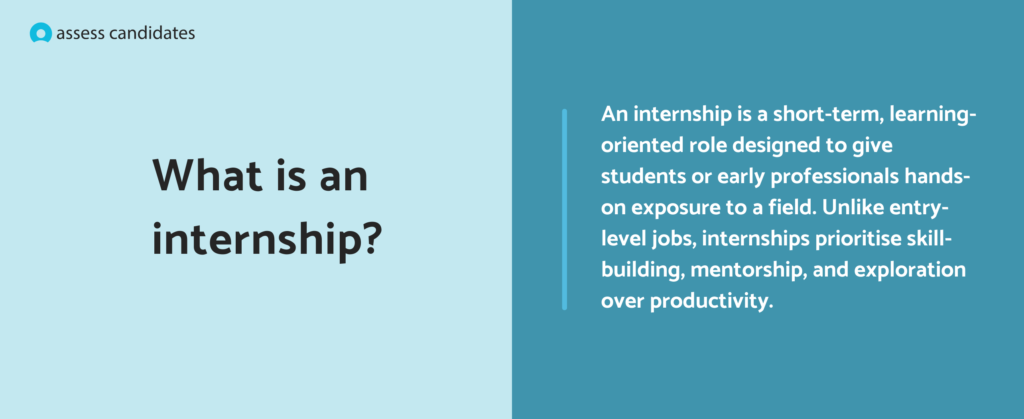
Internships are primarily educational, aimed at providing practical exposure and skill development. Interns may support projects or work on guided assignments as part of this learning process. For you, internships help identify potential talent, provide limited project support, and build your employer brand.
A comparison with apprenticeships and entry-level jobs clarifies the distinctive nature of internships. The table summarizes key differences.
Difference between internship, apprenticeship, and entry-level jobs:
In essence, an internship sits between academic learning and full-time employment, offering structured training, real–world tasks and guided support. It prepares individuals for future career choices without the pressure of full performance-driven roles.
Now that we have learned what an internship is, let’s look at the difference between paid and unpaid internships.
Discover data-driven hiring made simple with our pre-employment assessments. HIRE FOR FREE

2. How do paid vs. unpaid internships differ?
Before you bring an intern into your organization, it’s important to understand the distinction between paid and unpaid internships. Many companies assume both formats are interchangeable, but in reality, they serve different purposes and are governed by different expectations. Choosing the wrong approach can lead to legal issues, unfair workloads, or an experience that feels exploitative for the intern.
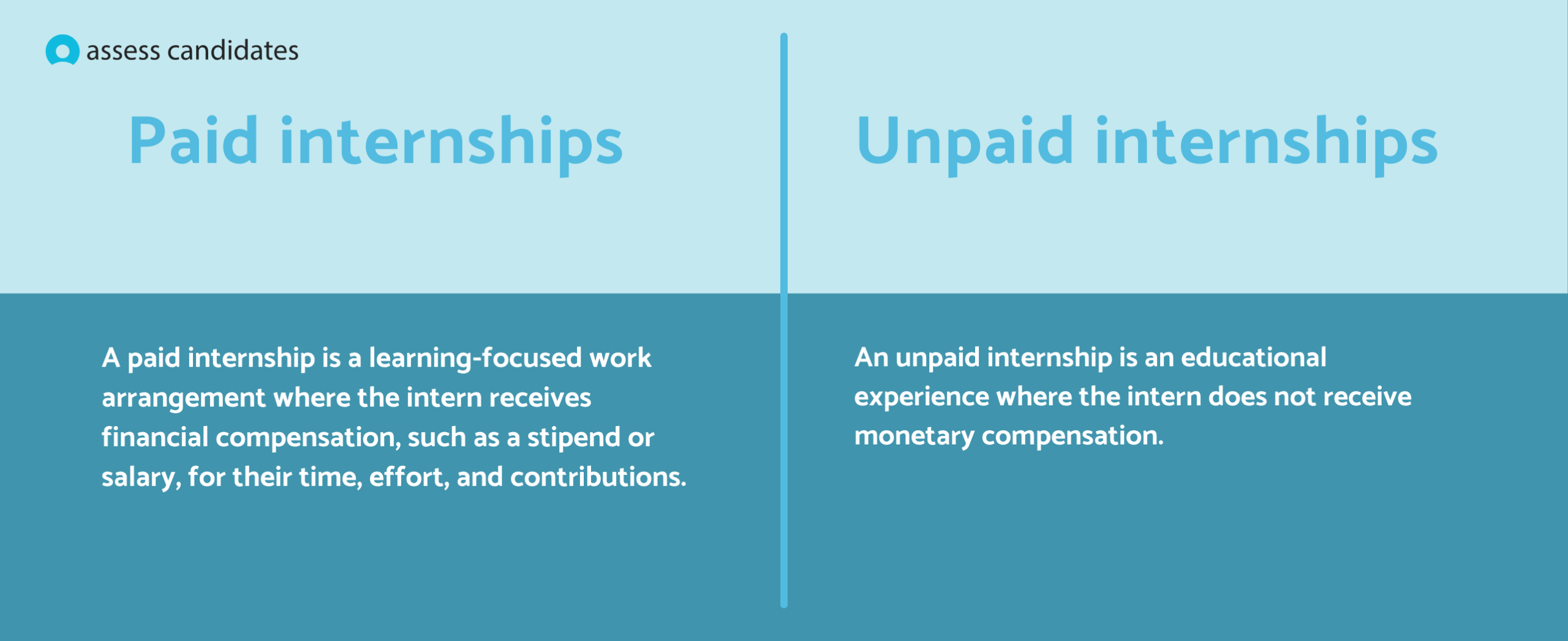
A paid internship is a learning-focused work arrangement where the intern receives financial compensation, such as a stipend or salary, for their time, effort, and contributions. An unpaid internship is an educational experience where the intern does not receive monetary compensation. Let’s take a look at the detailed differences between paid and unpaid internships!
How paid and unpaid internships differ?
Paid internships compensate interns for meaningful contributions and are widely legal and inclusive. Unpaid internships are only appropriate when the experience is primarily educational, does not replace real work, and mirrors academic training.
Companies that hire interns full-time see up to 50% higher retention rates compared to externally hired graduates.
With these differences in mind, it becomes easier to understand the real purpose of internships beyond legal labels. This brings us to an important question: why do internships matter in the first place?
3. Why do internships matter?
Internships are more than a temporary role; they’re often a student’s first real step into the professional world. For companies, they offer a low-risk way to discover emerging talent. For candidates, they provide clarity, confidence, and hands-on learning that no classroom can fully replicate. When structured well, internships become a powerful bridge between education and employment, benefiting both sides in meaningful ways.
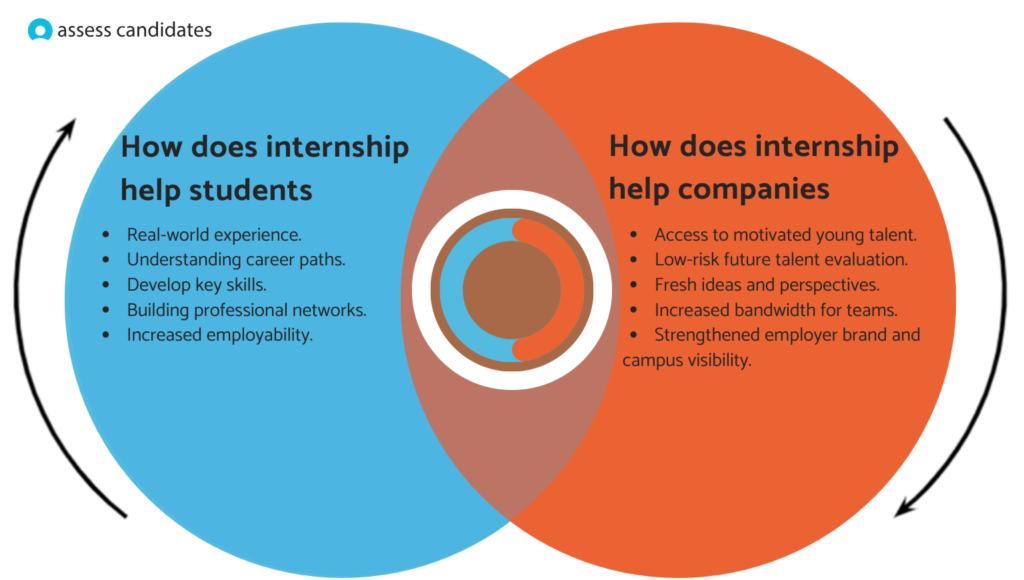
How does internship help students:
- Real-world experience beyond the classroom exposes students to actual work environments, helping them apply theoretical knowledge to practical tasks.
- Understanding career paths before making long-term decisions, by shadowing professionals and engaging in projects. This helps them in making long-term career choices.
- Skill development such as communication, teamwork, tools, software through hands-on assignments and collaborative work.
- Building professional networks early by interacting with colleagues, mentors, and industry contacts helping their future career growth.
- Increased employability, many companies hire from their intern pool, using data from performance during internships.
How does internships help companies?
- Access to motivated young talent, allowing companies to leverage their fresh energy and skills.
- A low-risk way to evaluate future full-time employees by assessing interns’ performance, work ethic, and cultural fit before offering a full-time role.
- Fresh ideas and perspectives as interns often provide innovative solutions and new viewpoints that challenge existing approaches.
- Increased bandwidth for teams as interns help manage routine tasks and support projects, freeing regular staff for higher-priority work.
- Strengthened employer brand and campus visibility by offering structured internships
The ROI of hiring interns is stronger than ever. Intern-to-employee conversions reduce cost per hire by up to 40% because companies save on sourcing, onboarding, and training. Interns who convert to full-time roles ramp up 30% faster, since they already understand tools, workflows, and culture, making them significantly more efficient in their first six months compared to external hires.
Internships are a win-win, but only when structured well. To build a program that truly works, companies must start by choosing the right people. That begins with understanding what skills and traits actually make an intern successful.
Strengthen your recruitment strategy with skill assessments that deliver quality hires. LEARN MORE
4. What skills and traits should you look for when selecting interns?
Choosing the right intern isn’t about finding someone with years of experience; it’s about identifying curiosity, potential, and the ability to learn quickly. Since interns are at the beginning of their careers, companies must prioritize foundational skills, attitude, and cultural alignment over technical perfection. A thoughtful selection process helps ensure the internship is productive, smooth, and beneficial for both the intern and the organization.
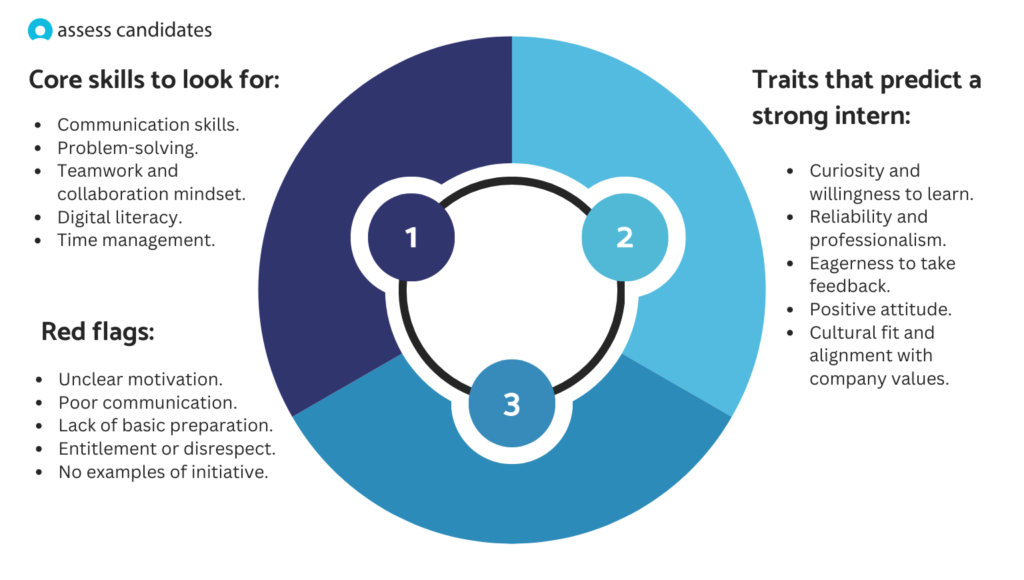
Because interns are learners, focus on potential, not perfection.
Core skills to look for:
- Communication skills: Evaluate their ability to convey ideas clearly and listen actively, which ensures effective collaboration and reduces misunderstandings.
- Problem-solving: Observe how they approach challenges, identify solutions, and adapt to obstacles, indicating analytical thinking and resilience.
- Teamwork and collaboration mindset: Look for willingness to support peers and contribute to group goals, fostering a productive team environment.
- Digital literacy: Assess proficiency with essential tools and platforms, along with research abilities, to ensure smooth adaptation to workplace technology.
- Time management: Check their capacity to prioritise tasks and meet deadlines, demonstrating efficiency and accountability.
Traits that predict a strong intern:
- Curiosity and willingness to learn: Seek interns who ask questions and explore beyond instructions, showing engagement and growth potential.
- Reliability and professionalism: Consistent punctuality, meeting commitments, and professional conduct reflect dependability.
- Eagerness to take feedback: Candidates who accept guidance and apply it demonstrate adaptability and continuous improvement.
- Positive attitude: Enthusiasm and a constructive mindset contribute to team morale and productive interactions.
- Cultural fit and alignment with company values: Interns whose behaviors and motivations align with your organizational values are more likely to integrate and thrive.
Red flags to look for in candidates:
- Unclear motivation: Lack of specific goals or interest signals low engagement.
- Poor communication: Difficulty expressing ideas or understanding instructions can hinder collaboration.
- Lack of basic preparation: Minimal knowledge of the role or company shows insufficient initiative and interest.
- Entitlement or disrespect: Self-centered behavior or disregard for norms can disrupt team dynamics.
- No examples of initiative: Candidates unable to cite prior proactive efforts may struggle to take responsibility or contribute meaningfully.
Identifying the right intern is only half the challenge; you also need a strong strategy to reach, attract, and evaluate them fairly. A well-designed hiring process helps you stand out to top candidates and ensures you choose interns with genuine potential.
Make hiring smarter and simpler! Try our science-backed pre-employment assessments today. HIRE FOR FREE
5. How can you attract high-quality interns?
Finding great intern candidates requires more than posting a generic job listing. Today’s candidates look for meaningful learning opportunities, supportive work cultures and clarity about what they’ll gain from the experience. At the same time, companies need a reliable way to assess skills and potential without overwhelming candidates with long processes.
A thoughtful approach to attraction and evaluation helps you reach the right talent, stand out as an employer of choice, and select interns who will genuinely thrive in your organization.
Ways to attract high-quality interns:
- Write a clear, exciting internship job description highlighting learning opportunities and responsibilities to generate interest and set expectations from the start.
- Offer stipends, flexible work options, and certificates as it increases program attractiveness and signals organizational value for interns’ time.
- Use university portals, job boards, LinkedIn, social media, or referrals to reach a wide and relevant audience.
- Showcase your culture, employee stories, events, and growth pathways by sharing employee stories, events, and career growth pathways demonstrating a supportive environment that encourages engagement.
- Promote mentorship programs and real project exposure as interns value authentic experiences and guidance that allow them to learn and contribute meaningfully.
Methods to assess interns effectively:
A structured assessment builds fairness and identifies candidates with potential for growth.
1. Resume or portfolio screening:
- Review academic consistency, projects, previous internships, and extracurricular activities to gauge preparation, initiative, and relevant skills.
2. Short behavioral interview
Ask questions like:
- “Tell me about a time you learned something quickly.”
- “How do you organize your work as a student?”
These questions reveal adaptability, problem-solving ability, and time management.
3. Simple, role-relevant task
- Marketing interns: prepare a short content draft
- Data interns: analyze a basic dataset
- HR interns: write job descriptions or plan a hiring pipeline.
This helps assess relevant skills, creativity, and understanding of role requirements.
4. Evaluate motivation
Ask why the intern chose the field, the company, and what they aim to learn. This clarifies alignment with organizational goals and eagerness to contribute.
5. Use a scorecard
Rate candidates on communication, effort, problem-solving, attitude, and cultural fit. Structured scoring makes comparisons objective and highlights overall suitability for the internship program.
Assessment quality dramatically impacts hiring accuracy. Organizations using structured assessments, like skill tests, behavioral tasks, and scorecards are 3 times more likely to select interns who become high-performing full-time employees. In contrast, unstructured interviews alone lead to up to 70% inconsistent hiring outcomes, especially for early-career roles with limited past experience.
Finding strong intern candidates takes more than a simple job post; it requires clear communication, meaningful opportunities, and visible growth paths. By combining a fair, structured assessment process, like resume reviews, behavioral interviews, practical tasks, and scorecards, you can identify interns with true potential and motivation.
A strong hiring process is just the beginning; what truly shapes an intern’s success is how you integrate them into your organization from day one. That’s where thoughtful onboarding becomes essential.
6. What does an effective intern onboarding program look like?
A well-designed onboarding program helps interns feel welcomed, supported, and confident in their role. Since internships are short, the first few days play an outsized role in setting expectations, building relationships, and giving interns the tools they need to contribute quickly. Effective onboarding blends orientation, training, mentorship, and consistent check–ins to create a structured, high–trust environment where interns can learn and deliver their best work.
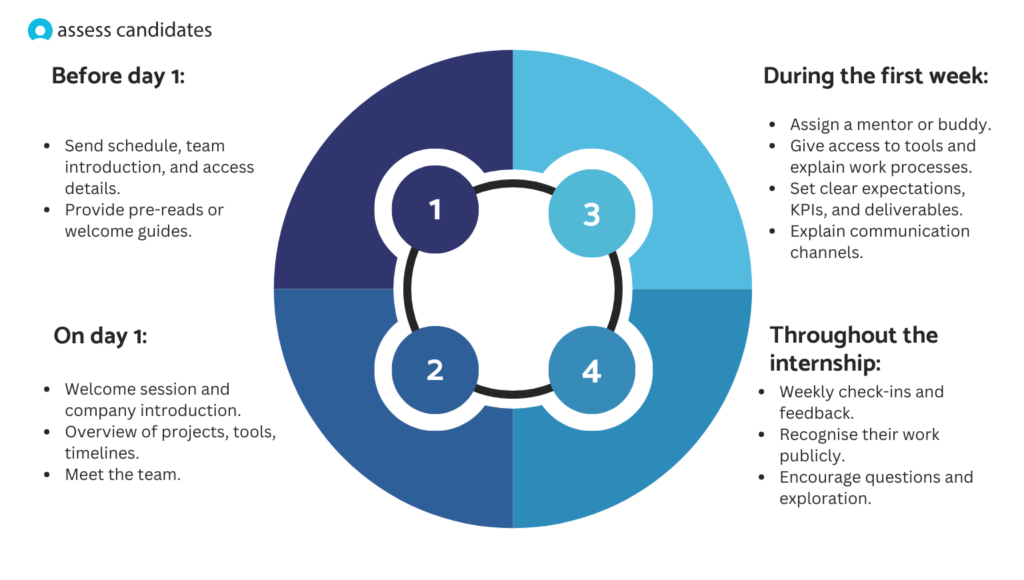
Following are snippets of effective onboarding steps:
Before day 1:
Before the intern joins, the organization should complete basic onboarding formalities. This includes sharing the schedule, introducing the team, providing access credentials, and circulating brief pre-reads or a welcome guide. Early clarity reduces anxiety and helps interns start productively.
On day 1:
Day one should focus on orientation and integration. A welcome session introducing the organization’s vision and culture should be followed by an overview of projects, tools, and timelines. Meeting the team early helps build comfort and a sense of belonging.
During the first week:
The first week should emphasize guidance and clarity. Assigning a mentor or buddy, explaining work processes, and granting tool access are essential. Clear expectations regarding roles, KPIs, deliverables, and communication channels must be set.
Throughout the internship:
Throughout the internship, regular engagement should be maintained through weekly check-ins and feedback. Good performance should be recognized publicly, and interns should be encouraged to ask questions and explore ideas, promoting learning and motivation.
A structured onboarding ensures interns contribute meaningfully and feel valued.
Onboarding plays a critical role in intern success. Companies with structured onboarding programs report up to 58% higher intern performance within the first month. Clear guidance, mentorship, and defined expectations drastically reduce confusion, helping interns contribute faster and with greater confidence.
A structured onboarding ensures interns contribute meaningfully and feel valued. Once an intern has completed their program, the next question becomes just as important; should they move into a full-time role?
7. Should you convert interns into full-time employees?
Deciding whether to hire an intern permanently requires more than looking at their performance alone. Companies must weigh cultural fit, long-term potential, business needs, and the intern’s own career goals. This section explores the key factors that help companies make fair, strategic decisions about offering permanent positions to interns.
Factors to consider while converting interns into full-time employees:
- Performance: Check if the intern delivers quality work, takes initiative, and learns quickly. This shows readiness for a full-time role.
- Cultural Fit: Ensure the intern aligns with team values and work style. This promotes smooth integration.
- Learning Agility: Observe how well the intern accepts feedback and adapts. High adaptability indicates growth potential.
- Business Need: Confirm there is a relevant open position. Alignment ensures impact and resource optimisation.
- Future Growth Potential: Look for early signs of leadership and ownership. Retaining such talent strengthens the talent pipeline.
A thoughtful conversion process not only strengthens your talent pipeline but also increases retention, because interns who transition into full-time roles already understand your systems, values, and expectations.
When should you convert an intern into a full-time employee?
A thoughtful conversion process benefits both the company and the intern. It allows the organization to retain someone who already understands their culture and systems while giving the intern a clear path forward and a sense of belonging. When handled well, conversion feels like a natural next step, strengthening long–term engagement and loyalty.
To make every stage of this journey, from hiring to onboarding to conversion, more efficient and insight-driven, companies are increasingly turning to smart assessment tools.
Boost your hiring quality with Assess Candidates’ reliable pre-employment solutions. VIEW PLANS
8. How does Assess Candidates help in hiring?
Assess Candidates provides companies with a structured, data-driven approach to find the right interns and set them up for success. Instead of relying on guesswork or gut feeling, the platform helps you evaluate skills, potential, and cultural fit through measurable insights.
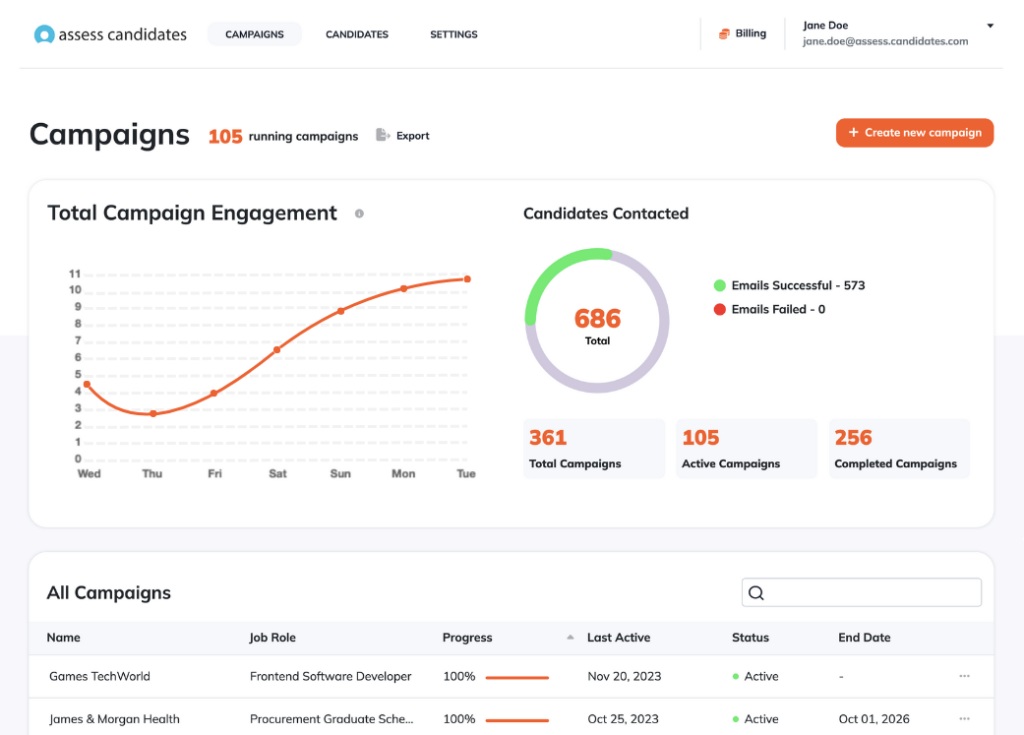
How Assess Candidates supports the hiring process:
- Role-specific assessments that evaluate communication, analytical thinking, creativity, and teamwork.
- Custom tasks that simulate real internship responsibilities, giving you clarity on how an intern will perform.
- Objective, scientifically validated assessments reduce bias, ensuring a fair and consistent hiring process for all intern applicants.
- Automated scoring to speed up shortlisting, saving you time and a hiring headache.
How it helps with onboarding:
- Personalized skill reports so mentors know how to train the intern from day one.
- Strengths and development areas clearly outlined to create a tailored onboarding plan.
- Team-fit insights to match interns with the right mentor or project.
- Progress-tracking tools to monitor growth during the internship.
Assess Candidates essentially helps companies run smarter, fairer, faster internship programs, ensuring both the intern and the organization benefit.
Want to learn more about effective intern assessment and onboarding? Explore the FAQs below and subscribe with your email to get started.
Frequently Asked Questions
How long should a typical internship last?
Most internships run for 8-12 weeks, but this can vary by industry. Some companies offer 6-month internships for deeper training, while other firms offer short 2-4 week internships are common for school or introductory exposure programs.
What should an intern’s workload look like?
Interns should have meaningful, guided tasks that allow them to learn while contributing. Workload should gradually increase as interns gain confidence and not overwhelm them from day one.
How much should companies pay interns?
Stipends vary by region, but the general rule is pay fairly. If the intern contributes real work or productivity, compensation is both ethical and legally expected in many countries.
Should interns be trained before they begin working?
Yes. A short training or orientation helps interns understand tools, expectations and workflows. This boosts confidence and reduces onboarding time during the internship.
Are remote internships effective?
Yes, remote internships can be effective if structured well. Clear communication, scheduled check-ins, digital tools and strong mentorship are essential for success in remote or hybrid internship programs.


 English
  Arabic