
How to Hire and Assess Remote Workers Effectively in 2026



Since the COVID-19 pandemic, remote work has become a standard part of how many organizations operate. Employers realized that not every role requires employees to be physically present to perform their tasks effectively.
This shift has also changed how companies recruit, allowing them to reach diverse candidates across the globe and strengthen their employer brand. For many teams, remote work has opened the door to greater flexibility, productivity, and global talent access.
Have you wondered whether there will be another shift away from remote work? Or whether remote work is still essential in today’s gig economy? We have the answers to these questions and more:
- How did remote work become so widespread?
- What different types of remote work exist?
- What skills do remote workers need?
- Which sectors are best suited for remote or hybrid work?
In this guide, we will take a look at the impact of remote work, its benefits, challenges, and the tools that help you assess and hire the right candidates for your remote roles.
Contents
- What is remote work?
- What are the skills to look for in remote workers?
- Differences between on-site and remote jobs
- What are the benefits of remote work?
- What are the challenges of remote work, and how to address them?
- Best practices for implementing remote work
- Tools to assess and hire remote candidates effectively
- What roles are well-suited for remote work?
- Company examples of successfully hiring remote workers
- Why do employers choose Assess Candidates for remote recruitment?
- The future of remote work and recruitment
Are you ready to learn more about this? Keep reading!
1. What is remote work?
Remote work is a setup where employees perform their assigned duties and responsibilities from their location outside a traditional central office, often from home or coworking spaces.
Remote workers are permitted to work from anywhere so long as they have a reliable internet connection, can deliver their tasks just as they would on-site, can communicate effectively, and are available when called upon during agreed work hours.
Employers often monitor remote workers on digital platforms that support collaboration, teamwork, and diversecommunication between all levels of the organization to ensure a harmonious flow of information across all departments.
Are you wondering about why remote working has become so popular for both employers and employees? We will explain why further below.
How did remote work become so widespread?
Although remote work existed decades before COVID-19, the pandemic dramatically accelerated its adoption among employers and employees.
Before 2020, only around 6.5% of workers primarily worked from home (Burea of Labor Statistics, 2024), and remote opportunities made up roughly 4% of U.S. jobs (StrongDM).
Once employers realized that many tasks could be done effectively without workers being in the office, remote work surged. According to the American Community Survey (ACS), by 2021, 3x as many people were working remotely, marking a major shift in how organizations operate and build teams.
Now you know the reason behind its sudden widespread use, let’s now check out the different types of remote work below.
What different types of remote work exist today?
There are only 3 types of remote work which employers offer. These often depend on the role’s functionality and the expected performance level from employees.
The top 3 types of remote work:
- Full–Time Remote Work: Employees work full-time from a location of their choice, either at home or at coworking spaces within the employer’s country or abroad.
- Hybrid Work: Employers require their workers to alternate between the office and their preferred location. Employees could be asked to come into the office bi-weekly or at any time set by the company.
- Remote–Friendly: Employers are open to remote work for certain circumstances; however, workers are expected to be in the office most of the time.
Build a stronger remote team with our virtual psychometric assessments that are accessible anywhere. HIRE FOR FREE
Knowing the different types of remote work you can offer your employees and present to candidates during recruitment is key for attraction and engagement. Let us now take a look at the key skills you need to look out for when recruiting for remote roles.

2. What are the skills to look for in remote workers?
When hiring candidates to work remotely, it is important to look for certain skills, which are key to success. This will ensure the candidate’s capabilities to work in the remote role as well as their cultural fit and alignment with the company’s mission and values.
What skills do remote workers need?
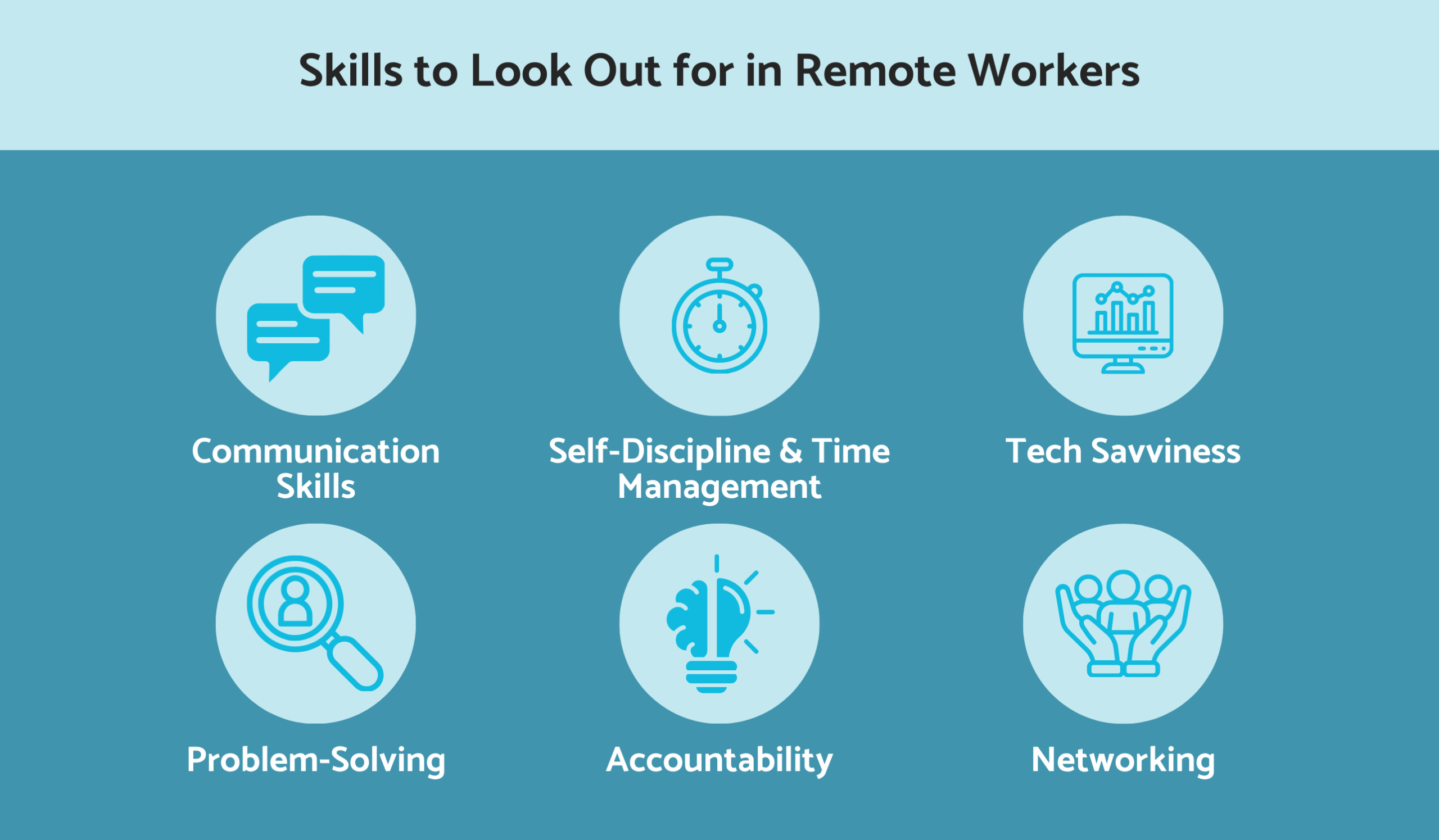
1. Communication Skills
Remote work heavily depends on digital communication through platforms like email, chat, and video conversations between you and candidates. Hence, we recommend that you look for candidates who are good at communicating via email and reports and are comfortable with video conferences.
2. Self-Discipline and Time Management
Remote workers do not report to work in person, therefore, you must look for candidates who can manage their time efficiently, avoid distractions, set goals, and stay productive.
3. Tech Savviness
From our experience working with remote teams, remote work depends heavily on technology, so familiarity with digital collaborative and communication tools like Jira, Slack, Google Workspace, and Zoom is a must-have when recruiting candidates. These candidates must be adaptable and willing to learn new tools.
4. Problem-Solving
Remote workers are expected to be self-sufficient in doing their jobs remotely. We recommend recruiting candidates who are skilled at proactive problem-solving, as a central office is unavailable. As a recruiter, look out for employees who are creative at overcoming obstacles.
5. Accountability
Remote workers should be able to take ownership and accountability for their tasks without an office team around them. They must own their actions and results. When recruiting, be open to considering reliable candidates who can meet deadlines and assume responsibilities.
6. Networking
It is important to build relationships with colleagues, though workers may not see them in person as they would on an on-site job. We recommend selecting candidates who are keen to build relationships with their colleagues and are good at networking.
Before deciding to implement remote work, let’s explore the key differences between on-site and remote jobs.
3. Differences between on-site and remote jobs
According to LinkedIn, a company’s decision between offering on-site, hybrid, or remote work depends on many factors.
As an employer, you have to consider the nature of your work, assess whether you can manage your staff remotely, and weigh the benefits of going completely remote rather than having all employees in a central office location.
The differences between remote and on-site work:
Use our talent assessment platform to guarantee a positive candidate experience for remote candidates. LEARN MORE
In a digital age where everything is becoming remote, keep reading to learn about the benefits of remote work.
4. What are the benefits of remote work?
According to McKinsey, about 87% of people take remote work opportunities when they are offered, and 54% of employers have experienced candidates refusing a job because no remote or flexible work options were offered.
6 benefits of implementing remote work:
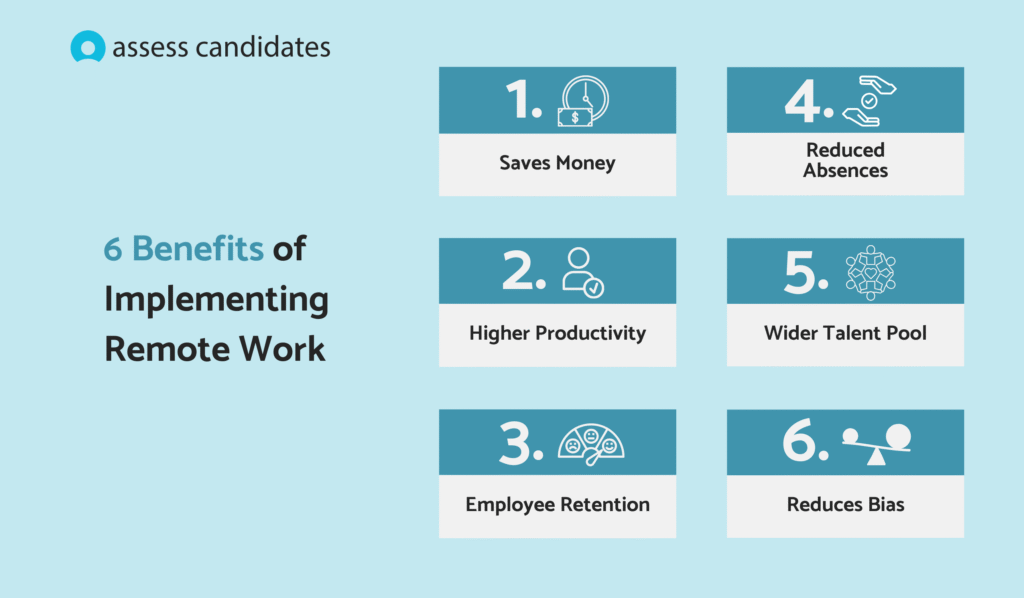
1. Saves Money
Offering your candidates remote work opportunities will save on office space, electricity, supplies, and other costs. You can use the proceeds to reinvest in the business, thereby generating gains for your company.
2. Higher Productivity
According to a University of Chicago study, employers have found that remote workers are, on average, 7% more productive when working from home because they have fewer distractions than their office-based counterparts.
3. Employee Retention
Remote jobs often experience higher employee retention because workers can save money by not commuting to work daily, which is a huge deal for many whose offices are far from home.
4. Reduced Absences
With remote work, there will be fewer excuses and absences from employees, as it eliminates several situations that require them to be away from the office. Employees can take care of themselves on sick days without fear of spreading illness to colleagues.
5. Wider Talent Pool
According to various studies, many candidates are averse to jobs that do not offer remote work opportunities. This, in turn, reduces your talent pool. By offering remote work options to your employees, you can expand your talent pool and hire candidates from diverse backgrounds.
6. Reduces Bias
Implementing remote work for your employees will undoubtedly reduce the bias that they may face during the recruitment process or in the office, further improving the candidate experience and the employer brand. This will help you rank among the most diverse and welcoming companies in your industry.
After learning about the benefits of remote work, we also need to explore the flip side: the limitations and problems with remote work.
5. What are the challenges of remote work, and how to address them?
According to FlexJobs, about 52% of workers believe that working from home makes them feel vulnerable, forces them to work longer hours, offers little to no room for collaboration, and often creates opportunities for distractions.
6 potential challenges of remote work
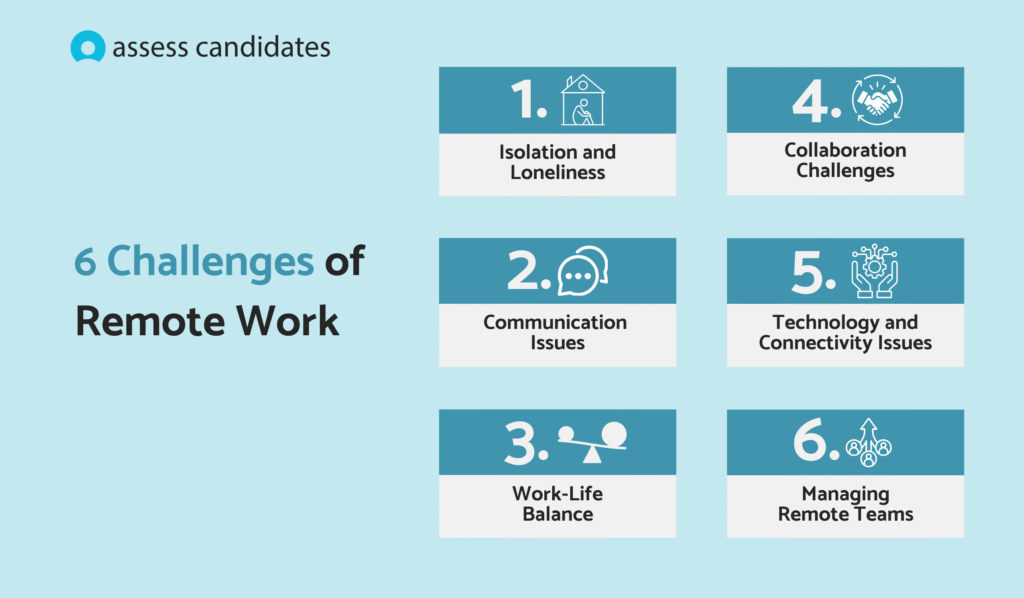
1. Isolation and Loneliness
Remote workers can sometimes miss the bond that social interactions foster in an office environment, leading to isolation, loneliness, or disconnection from virtual team members.
Solution: You can schedule regular virtual hangouts where all team members participate in team-bonding activities, make time for casual conversations, and encourage remote workers to reach out to one another to build a sense of belonging.
2. Communication Issues
Remote work relies mainly on digital communication tools like email, Slack, and video conferencing platforms, which can lead to miscommunication and misunderstandings, leaving team members feeling disconnected from one another.
Solution: Introduce regular check-ins, clear communication guidelines, and use video calls to discuss more personal and complex topics that can help solve the issue at hand.
3. Work-Life Balance
Many have researched how to find the perfect balance between work and home, as without the separation of “work” and “home”, employees can easily slip into work during their personal time, which can cause burnout, stress, and a lack of personal time.
Solution: Encourage employees to always set clear boundaries between their work and personal time by creating a dedicated workspace or setting defined work hours. You can also encourage them to take breaks and respect their time off.
4. Collaboration Challenges
Though tools like Google Docs, Slack, and Trello can help remote workers collaborate, they can still find it difficult to have real-time brainstorming sessions or quick problem-solving discussions, which can affect teams’ efficiency.
Solution: Use collaborative tools for real-time collaboration and schedule regular virtual meetings for brainstorming or team collaboration.
5. Technology and Connectivity Issues
As remote jobs rely heavily on technology, workers may sometimes find themselves dealing with technology or connectivity issues, which can delay their tasks or provide low-quality submissions.
Solution: To mitigate this, ensure employees have the necessary tools, software, and access to IT support whenever they encounter issues beyond their skill set. You can also provide training on troubleshooting common technical problems.
6. Managing Remote Teams
Keeping employees motivated, tracking productivity, and overseeing daily tasks can be especially difficult for managers working with remote teams, leaving them feeling out of touch with their team and making it harder to provide support or feedback.
Solution: Provide expectations and goals for the team and focus on results rather than hours worked. Introduce regular check-ins and one-to-ones to support remote employees.
Improve your hiring process with our candidate-friendly and impartial video recruitment platform. HIRE FOR FREE
Let’s now explore practical strategies and tips to implement remote work in your organization.
6. Best practices for implementing remote work
According to Upwork, about 36.2 million Americans will be working from home. To implement remote work in your organization, there are several key steps to follow to ensure you retain the right employees and your company thrives in the industry.
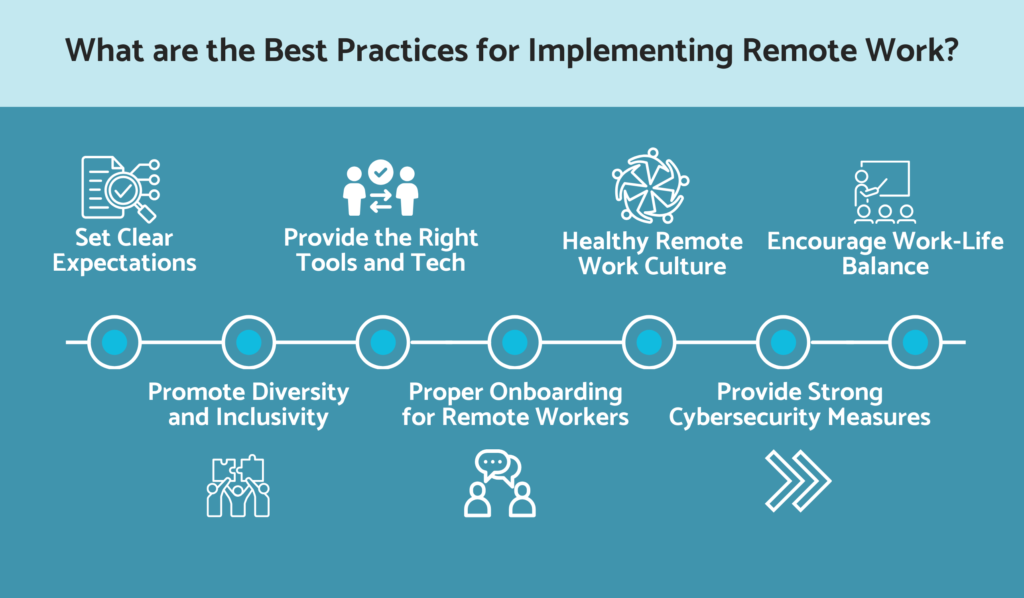
7 best practices to implement remote work
1. Set Clear Expectations
Clearly defining roles, responsibilities, and performance expectations for every employee in your organization will inform them of their duties and deliverables from the start. You can use platforms like Asana, Jira, and Slack to assign tasks and track the employees’ progress.
2. Provide the Right Tools and Tech
Equipping your team with the right tools and technology for communication, collaboration, and project management will ensure a smooth transition to remote work for your employees, as it will remove communication barriers, foster solidarity, and enable networking.
3. Healthy Remote Work Culture
Creating time for an informal virtual hangout with employees will help in building trust, inclusion, and transparency among them. You can provide online games and ensure everyone participates to foster a sense of bonding among employees.
4. Encourage Work-Life Balance
Suggest and implement policies that cater to your employees’ mental health days and encourage regular physical activities, because without enforcing these things, remote workers are prone to experiencing burnout.
5. Promote Diversity and Inclusivity
Providing inclusive hiring practices, being aware of time zones, cultural differences, and different work styles, and ensuring that everyone is included in discussions reduces bias and promotes diversity and inclusion in your organization.
6. Proper Onboarding for Remote Workers
Enforce a clear, structured onboarding process for all new remote workers to ensure they feel welcome, as they may not be able to acclimate to the workplace in person. You can use digital tools to provide remote training and onboarding materials.
7. Provide Strong Cybersecurity Measures
Investing in secure, cloud-based collaboration tools and training your employees on cybersecurity guidelines is necessary to avoid becoming victims of a phishing attack that could jeopardize your company’s data.
Enhance your remote recruitment with our flexible pre-employment assessments built for virtual hiring. LEARN MORE
If you’re an employer looking for better ways to hire candidates for remote job opportunities, contact us for a free evaluation of your hiring needs.
Up next, we take a look at the virtual tools and assessments used to assess and hire remote workers and encourage effective remote working. Keep reading!
7. Tools to assess and hire remote candidates effectively
For remote work and recruitment to succeed, it requires software applications, digital platforms, and a stable internet connection.
Remote hiring tools enable employers to assess and hire employees effectively from anywhere in the world.
What features should a remote hiring tool have?
There are several remote hiring tools used by employers worldwide; however, these tools are not just used because of their brands, but also for the functions and features they offer remote work employers.
Before deciding which remote hiring tools to integrate into your organization for better selection of candidates, check out the features most hiring tools must offer to ensure seamless operations for your remote workers.
- Communication
Communication tools, whether audio or visual, are essential for remote recruitment, as they connect you with remote workers regardless of their location across the globe. Communication can flow from top to bottom or bottom to top within an organization to ensure the flow of information across all teams.
- File Management
Your remote hiring tools must also include a file management feature, as this will enable you to store and save important candidate data. This is also good for sharing and collaborating with other team members within your organization for final decision making.
- Time Management
Time management is an effective feature for any remote hiring tool, as it helps you and candidates schedule times that are most convenient for you to have interviews and meetings, while taking time zones into account.
With an idea of the features your remote hiring tools must have, keep scrolling to see what remote-working tools are available for your company.
The top remote recruitment tools that many employers use
1. Job Posting and Sourcing Tools
Remote hiring platforms such as LinkedIn, Indeed, and AngelList offer employers the opportunity to hire and retain the right candidates from a wider pool of talent worldwide, matching your job description with applicants and selecting those who meet the requirements.
2. Applicant Tracking Systems
Applicant tracking Systems like Greenhouse, Lever, and Workable help employers manage job applications, track applicants, and streamline the recruitment workflow, making the process easier for you.
3. Video Interviewing Tools
With AI-powered video interview platforms like Assess Candidates, HireVue, and SHL, these platforms are among the most widely used in remote recruiting, as they enable virtual one-way interviews that ensure a positive candidate experience by eliminating scheduling or travelling for an interview.
4. Skills Testing and Assessments
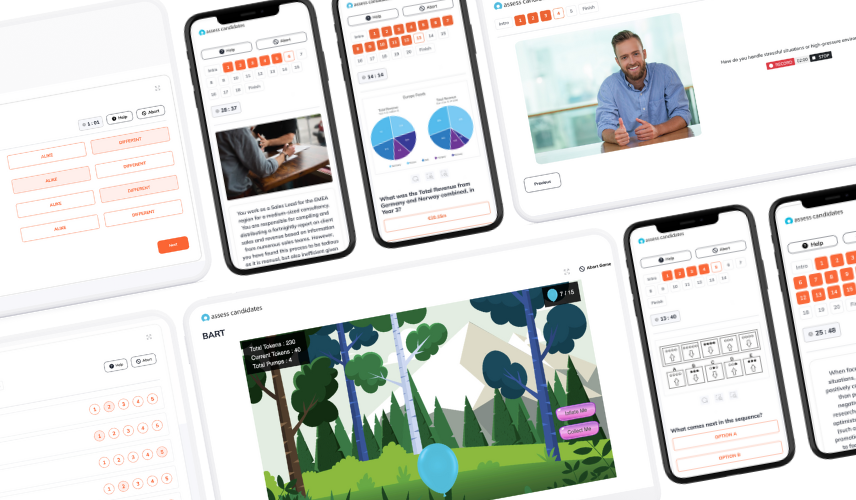
Pre-employment psychometric assessment tests have always been used by employers looking to recruit remote workers because they are virtual and can be administered to candidates anytime and anywhere, a feature that most praise for its flexibility, consideration, and convenience.
These assessments are used to assess a candidate’s cognitive skills, work behaviors, and personality traits. Companies such as Assess Candidates offer online psychometric tests and game-based assessments to assess candidates for remote roles.
5. Collaboration and Project Management Tools
Remote workers often require communication and collaboration, and tools like Slack, Asana, and Monday.com provide your employees with the opportunity to perform these actions and maximize the productivity of the company.
6. Onboarding Tools
After passing the recruitment process, you will need tools like BambooHR, WorkBright and Trainual to onboard the new remote workers so they can have a seamless transition into your company’s workplace culture.
To understand how remote work tools will help your company, we have highlighted a few reasons below. Keep reading!
How do remote work tools help employers?
As more organizations become increasingly adoptive of remote work, the need to find the best remote work tools also heightens, leaving many curious and in constant search for the top remote work tools and what functions these tools offer.
Take a look at how remote work tools can help you:
- Communication and Collaboration: Remote work tools enable the chance for quick questions, team meetings, and informal conversations between colleagues, building a community and fostering a close-knit relationship among all employees.
- Reduces Cost: You will discover that many expenses will be cut as bills on office spaces, utilities, and other unavoidable fees will significantly drop as you move to remote work.
- Supervision: Remote workers will be allowed to prove themselves as they will be entrusted with tasks with very little supervision, in expectation that they can meet their goals without constant checking in from you.
- Data and Analytics: Remote work tools help gather data and provide insights into how teams work, including meeting patterns, communication flows, and productivity metrics.
Prepared to introduce remote work opportunities to your applicants? Check out the roles that remote workers excel in.
8. What roles are well-suited for remote work?
Since the COVID-19 pandemic, many employers have discovered that their employees can work remotely, thus creating many jobs in various sectors across the globe. The emergence of remote work has also created jobs for diverse, talented candidates, widening the talent pool for employers to choose from.
Check out some of the sectors that employ remote workers:
Sectors that Hire Candidates for Remote Work
- Technology and IT
Many tech companies, such as Google, Meta, and GitHub, hire remote workers with substantial technical expertise to resolve internal issues and keep their servers running without errors that could damage their brand image.
- Marketing and Sales
Companies like HubSpot, Shopify, and Buffer recruit remote workers, offering roles in digital marketing and sales.
- Customer Support
Since most customer support roles involve discussing enquiries with clients, employers like Apple, Alorica, and Zendesk offer this role remotely, as long as employees have the tools needed to converse with clients from their preferred location.
- Healthcare
Employers like UnitedHealth Group, CVS Health, and Amwell are pioneers in hiring candidates who would work from home in roles such as nursing, therapy, and medical transcription.
- Finance and Accounting
Financial companies like PwC, Stripe and Xero hire remote workers who are skilled at drawing analytical conclusions and providing financial services to their clients worldwide. These companies often hire accountants, consultants, and financial analysts as remote workers.
- Legal
Companies like Upwork, FlexJobs and LegalZoom often hire talented remote workers who can protect and enforce their laws.
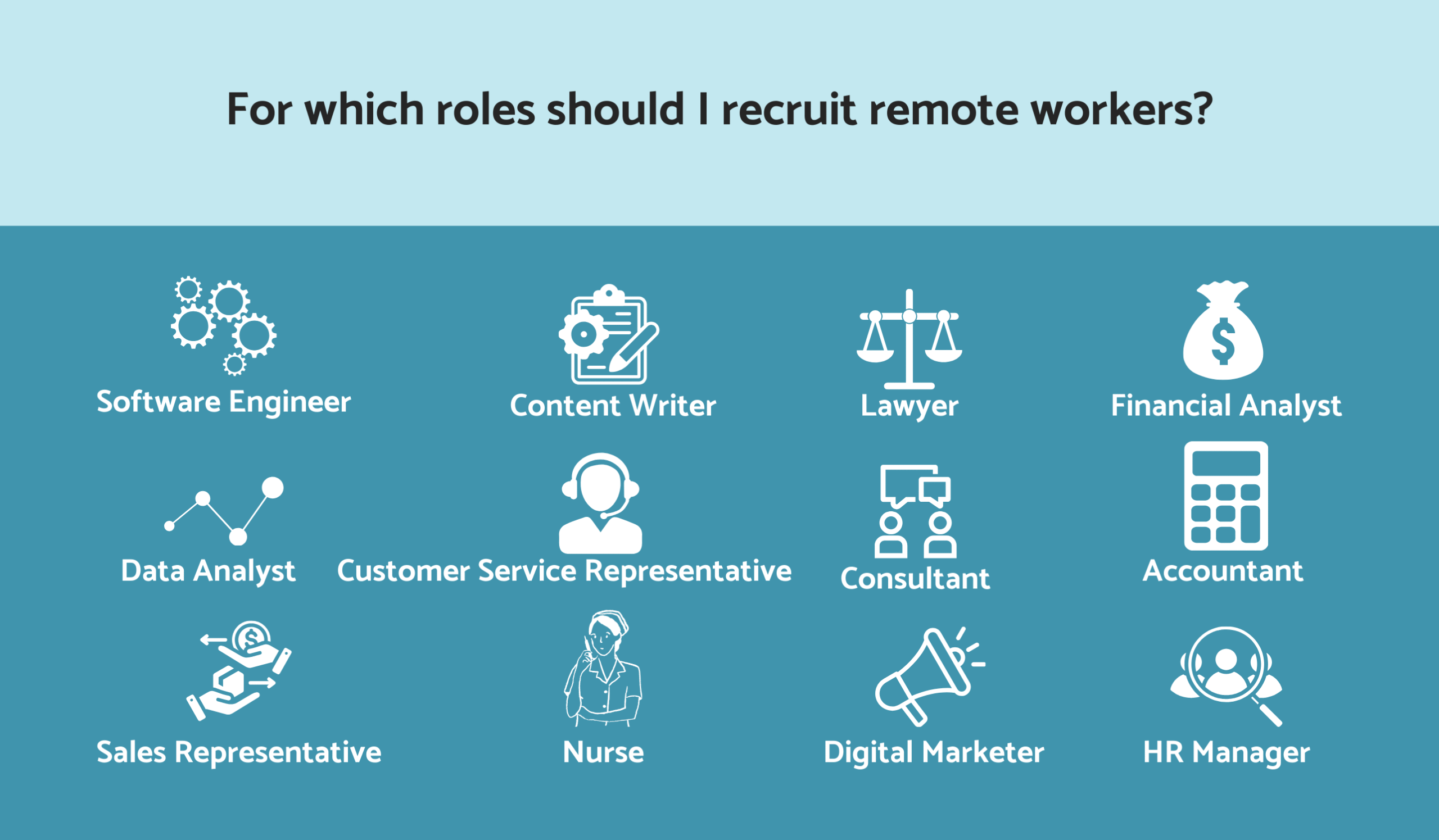
Roles that Recruit Remote Workers
- Consultant
- Customer Service Representative
- Accountant
- Financial Analyst
- Data Analyst
- Lawyer
- Nurse
- Digital Marketer
- Sales Representative
- HR Manager
- Software Engineer
- Content Writer
Are you unsure of how to customize your pre-employment psychometric assessments ahead of the recruitment for remote workers? You can reach out to us for a detailed evaluation of your recruitment needs to ensure you hire and retain only the best candidates who fit your company culture and can deliver on their tasks while working remotely.
Employers are looking to turn fully remote as the benefits continue to outweigh traditional office arrangements. Many employers have already begun offering their staff remote and hybrid work options. Check them out!
Remote-First Employers
- UnitedHealth Group
- Upwork
- GitHub
- Apple
- HubSpot
- Shopify
- Meta
- PwC
Explore more authentic assessments created by Chartered Scientists to assist you in recruiting the right remote workers. VIEW PLANS
9. Company examples of successfully hiring remote workers
Various employers across the globe have given testimonies about following a remote-first policy and the efficiency and productivity they have recorded since onboarding workers from different locations.
Below are real–world examples of organizations sharing their success stories about recruiting remote workers.
1. Automattic (WordPress)
Challenge:
Automattic, the parent company of WordPress, had faced challenges concerning scaling its global team while maintaining its culture. With over a thousand employees spread across all continents, the company was faced with the challenge of ensuring remote collaboration and onboarding.
Solution:
Automattic embraced a fully remote, distributed workforce model, using tools like Slack, Zoom, and internal chat systems to connect its teams. They implemented a structured onboarding process and established clear expectations for remote communication, making sure that team members across various time zones could collaborate effectively without any issues.
Results:
- Expanded their team to over 1,200 employees without opening a single office.
- Increased employee satisfaction scores to 85%, with high marks for work-life balance and flexibility.
- Maintained fast product development and innovation cycles, introducing major features to millions of users.
2. GitLab
Challenge:
GitLab, a DevOps platform, urgently needed to increase its engineering, product, and support teams while keeping its reputation as a high-performance, remote-first company. One of the main challenges was recruiting top-tier talent across various skill sets in an increasingly competitive market.
Solution:
GitLab built a remote-first culture by offering flexible work hours, unlimited vacation, and an open-source model for their internal tools. They used data-driven recruitment strategies, sourcing candidates from specialized remote job boards and using asynchronous communication to streamline the hiring process.
Results:
- Grew to over 1,400 employees worldwide, with 100% of employees working remotely.
- Increased revenue by 60% year-over-year, contributing to a more efficient global workforce.
- Achieved a 95% employee retention rate, with most new hires staying at the company for over 3 years.
This is where Assess Candidates comes in, helping you regulate and enhance your recruitment processes with a variety of solutions designed to help you recruit the best candidates.
10. Why do employers choose Assess Candidates for remote recruitment?
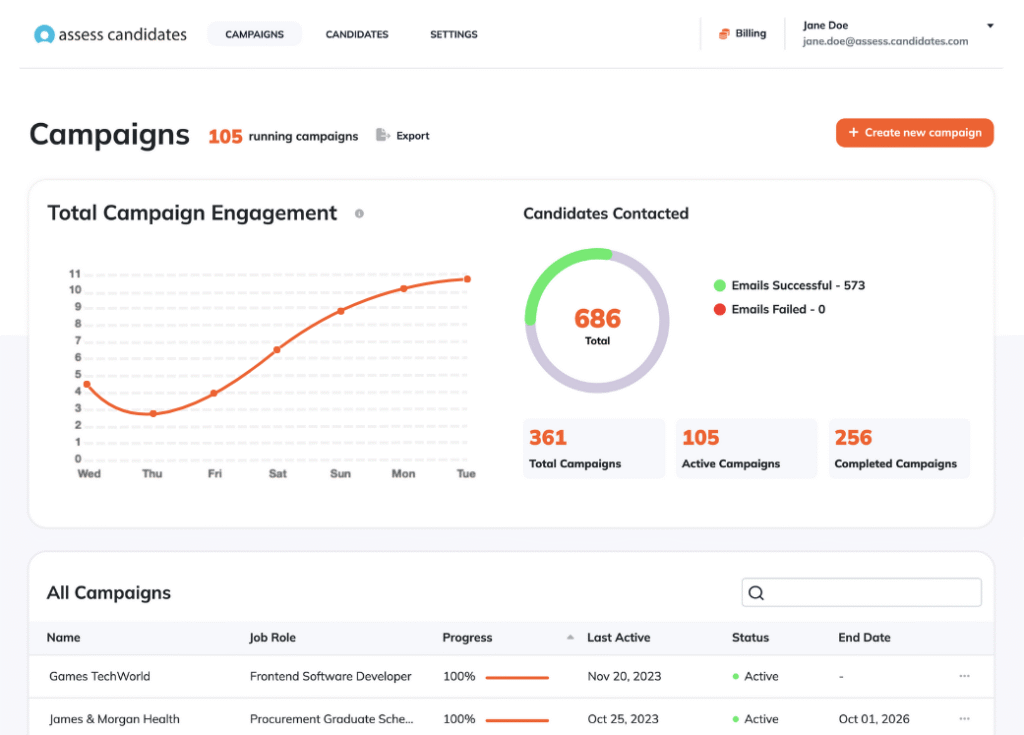
Many organizations and employers use Assess Candidates in their recruitment process because it enables them to make accurate, data-driven decisions, selecting only candidates who are culturally fit and possess the right skills.
Why companies prefer using Assess Candidates for remote workers recruitment
- Objectively Evaluate Skills: Employers use our psychometric assessment tests to measure a candidate’s job skills rather than relying on interviews and resumes.
- To Ensure Cultural and Remote Fit: When recruiting for remote roles, soft skills such as communication, self-management, and collaboration are important. Employers look to Assess Candidates’ assessments in identifying candidates who work independently and stay productive without direct supervision.
- Reduce Bias in Hiring: Since traditional interviews can be limiting and subjective, employers choose Assess Candidates to standardize assessments, creating a fair recruitment process for all remote work applicants evaluated on the same merit and performance.
- Predict Job Performance: Employers rely on Assess Candidates’ pre-employment tests because they calculate and provide insight into a candidate’s future job performance.
- Saves Time and Improves Hiring Efficiency: Automated test platforms can rank candidates by performance, reducing the time spent on interviews and reducing stress on human interviewers.
- To Enhance Employer Brand: Using fair, transparent, and engaging assessments informs others in the industry that the company values competence and equal opportunity. This attracts top talent who appreciate a merit-based hiring process.
Use our pre-employment assessment platform to ensure top remote talent. LEARN MORE
With our platform, you can attract and retain top talent with confidence through a pre-employment psychometric assessment. Discover our top hiring assessments and start making informed hiring decisions today!
Finally, let us take a look at what the future of recruitment could look like as more companies hire remote workers.
11. The future of remote work and recruitment
According to 4 Corner Resources, most workers are willing to make salary secondary so long as the job is remote or location-friendly, as 70% of millennials (the current largest generation in the workforce) prefer that.
What will the future of remote work recruitment look like?
- Widespread Remote-First Companies
Remote-first companies, like GitLab and Automattic, will continue to increase in number and influence. The success of remote-first companies is reshaping how the world thinks about workplace flexibility and talent acquisition. Recruitment will become global as there will be a wider pool of talent.
- Focus on Employee Experience and Well-being
With remote work becoming common, companies will have to place greater emphasis on employees’ well-being, especially when their remote workers are spread across the globe. Doing this will ensure that employers recruit candidates who are self-motivated, adaptable, and have strong emotional intelligence.
- Asynchronous Communication and Productivity Tools
Remote work will rely on tools that encourage asynchronous communication, as remote teams will no longer be limited to real-time collaboration but will also work across time zones and schedules, and employers will hire candidates who can thrive in asynchronous environments.
- Hybrid Work and Remote Flexibility
Though remote work will continue to thrive, hybrid work, which is a mix of in-office and remote work, will likely become the leading model for many industries, especially as employees request more flexibility in where and how they work.
- Continuous Learning and Skill Development
The future of remote work will see more upskilling and reskilling among candidates and employers, as employers look for candidates who demonstrate a talent for self-learning.
- Remote Work Regulations and Compliance
As remote teams become more global, there will be a larger focus on legal and tax compliance, particularly in recruiting employees across different regions with different labor laws. Organizations will have to invest in more tools and services that help ensure they comply with local labor laws, tax requirements, and remote work regulations.
Want to know more about recruiting employees for remote work? Keep scrolling to explore our frequently asked questions, and enter your email to get started today.
Now that you have seen everything there is to know about remote work and its recruitment, take a look at the frequently asked questions in case we missed any other details you might want to know.
Frequently Asked Questions
How can employers maintain a strong culture when employees are remote or working in hybrid models?
You can establish a clear communication of values, introduce regular team-building exercises and always recognize each team’s achievements, as well as provide constructive feedback to keep employees engaged and aligned with the company’s mission.
How can employers fairly measure remote employees’ productivity?
Shift your focus to outcomes by measuring success based on task completion, projects, and results, instead of tracking hours worked. Set goals and have frequent check-ins in place to ensure that all employees are on board with the company’s culture fit and goals.
How can companies ensure they are hiring diverse remote teams?
To ensure that you are hiring a diverse team in your company, attempt to broaden the recruitment channels by posting job ads on several platforms, implement blind hiring practices and use pre-employment psychometric assessments to guarantee that all candidates are examined fairly.
How do you ensure data security with remote employees?
Make sure that all remote workers have company-issued devices with up-to-date security software and VPN access, and educate them on safe data practices, including how to recognize phishing attempts and the importance of strong passwords.
What are some ways to help remote employees maintain a healthy work-life balance?
You can support work-life balance by providing flexible working hours, allowing employees to plan their day in a way that works best for them. Encouraging employees to set clear boundaries around working hours and avoid expectations of being available around the clock helps maintain balance.


 English
  Arabic