
كل ما تحتاج لمعرفته حول قياس المهارات الصلبة أثناء التوظيف



يعتمد توظيف المواهب المناسبة جزئيًا على قدرة المرشحين على أداء العمل الفني الذي يتطلبه الدور. المهارات الصلبة مهمة لأنها تشكل كيفية مساهمة الموظفين، ومدى سرعتهم في أن يصبحوا منتجين، ومدى الثقة التي يمكن لفرق التوظيف تقييم استعدادهم للوظيفة بها.
هل تعلم؟ أفادت منظمة NACE في تقريرها لعام 2025 أن 64.81% من أرباب العمل كانوا يستخدمون بالفعل ممارسات التوظيف القائمة على المهارات في تعيين الموظفين الجدد في المستويات المبتدئة، بينما أفاد 70.1% منهم باستخدامها في استطلاع عام 2026.
اقرأ أدناه بينما نشرح ما هي المهارات الصلبة، وكيف تتطور، ومتى تكون أكثر أهمية في التوظيف، وكيفية تقييمها بدقة، وما هي الأخطاء التي يجب أن تتجنبها فرق التوظيف.
المحتويات
- ما هي المهارات الصعبة؟
- كيف تتطور المهارات الصلبة مع مرور الوقت؟
- متى تكون المهارات الصلبة الأكثر أهمية في التوظيف؟
- كيفية تقييم المهارات التقنية بدقة؟
- أخطاء شائعة عند تقييم المهارات الفنية
- المهارات الصل
- لماذا تستخدم الشركات الكبرى "تقييم المرشحين" لتقييم المهارات الصلبة
أولاً، دعنا نستكشف ما المهارات الصعبة هي.
1. ما هي المهارات الصعبة؟
المهارات الصعبة هي محددة, قابل للتعليم, و قدرات قابلة للقياس التي تمكن الشخص من أداء الجوانب الفنية للدور. يتم تطويرها عادة من خلال التعليم أو التدريب أو الشهادات أو الخبرة العملية.
قم بقياس المهارات العملية من خلال مجموعتنا الواسعة من اختبارات التقييم قبل التوظيف. التوظيف مجاناً
أهم المهارات الصلبة في مكان العمل
يمكن تصنيف المهارات الصلبة في عدة فئات بناءً على نوع العمل الذي تدعمه في مكان العمل. يلي ذلك 7 أنواع رئيسية من المهارات الصلبة في مكان العمل:
1. المهارات التقنية وتكنولوجيا المعلومات
تقنية ومعلوماتية المهارات تتضمن استخدام التكنولوجيا والأنظمة والبرامج لأداء مهام محددة. تؤثر بشكل مباشر على الإنتاجية و الناتج التقني.
أمثلة البرمجة، مايكروسوفت إكسل، الحوسبة السحابية، الأمن السيبراني، نشر ووردبريس، واختبار البرمجيات.
2. مهارات التحليل البياني
تحليل البيانات المهارات مساعدة الموظفين على تفسير المعلومات وتحديد الأنماط ودعم اتخاذ قرارات أفضل.
أمثلة تشمل تحليل البيانات, ، تصور البيانات، تحليل SWOT، أبحاث السوق، التنبؤ، والتحليل الإحصائي.
3. المهارات المحاسبية
محاسبة المهارات تتضمن إدارة الأموال والميزانيات والسجلات المالية. وهي حاسمة في التمويل, العمليات, و القيادة الأدوار.
أمثلة تشمل المحاسبة، والنمذجة المالية، والميزانية، والتدقيق، وكشوف المرتبات، والامتثال الضريبي.
4. مهارات التسويق والمبيعات
التسويق و المبيعات المهارات التركيز على الترويج للمنتجات، وتوليد الطلب، وزيادة الإيرادات. وهي تؤثر بشكل مباشر على النمو و سوق الوصول.
أمثلة تضمين تحليلات جوجل، تحسين محركات البحث، التسويق الرقمي، أدوات إدارة علاقات العملاء، التسويق عبر وسائل التواصل الاجتماعي، وتوليد العملاء المحتملين.
5. المهارات الهندسية
الهندسة المهارات تتعلق ببناء أو صيانة أو تشغيل الأنظمة والمعدات المادية. غالباً ما تتطلب الشهادات أو رسمي التدريب.
أمثلة التحليل الميكانيكي، الأعمال الكهربائية، تصميم كاد، عمليات التصنيع، وصيانة المعدات.
6. مهارات اللغة والتواصل
اللغة و التواصل المهارات تتضمن الكفاءة في لغات محددة أو أنظمة اتصالات رسمية. تدعم هذه المهارات الدقة, الامتثال, و عالمي العمليات.
أمثلة تشمل الطلاقة اللغوية الأجنبية، الكتابة التقنية، كتابة المنح، كتابة الإعلانات، الوثائق القانونية، والنسخ الطبي.
7. مهارات إدارة المشاريع والعمليات
مهارات إدارة المشاريع والعمليات التركيز على التخطيط والتنفيذ وإدارة العمل بكفاءة. هذه المهارات تساعد الفرق التوصيل على الوقت و في نطاق.
أمثلة يشمل الجدولة، وإدارة المخاطر، وتحسين العمليات، وإدارة سلسلة التوريد، وأدوات مثل جيرا ومايكروسوفت بروجيكت.
هل تعلم؟ تظهر الدراسات أن المهارات التقنية غالبًا ما تكون مرشح خط الأساس المستخدمة في فحص مقدمي الطلبات, مع عدم قيام أصحاب العمل عادةً بترقية المرشحين الذين يفتقرون إلى المهارات التقنية الأساسية.
الآن بعد أن فهمنا ما هي المهارات الصلبة، دعنا نستكشف كيف يمكنك تطوير وتعزيز هذه المهارات بنشاط عبر قوتك العاملة.

2. كيف تتطور المهارات الصلبة بمرور الوقت؟
المهارات الصلبة تنمو من خلال التعليم, منظم التدريب, خبرة في موقع العمل, الشهادات, و التعلُّم المستمر. غالبا ما تبدأ بالتعليم في الفصول الدراسية أو الدورات عبر الإنترنت وتتعمق مع تطبيق الأفراد لها في مواقف العمل الحقيقية.
هل تعلم؟ المهارات الصلبة قابلة للقياس ويمكن تقييمها من خلال الاختبارات أو الشهادات أو مهام الأداء في مراحل مختلفة من المسار المهني.
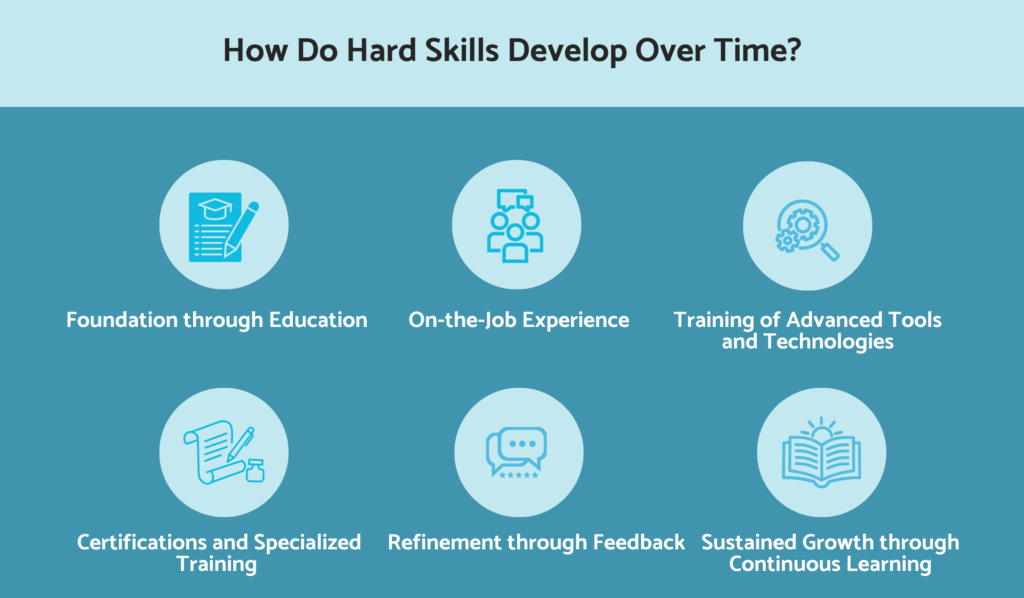
- الأساس من خلال التعليم
تبدأ معظم المهارات الصلبة بـ التعلم الرسمي, مثل مواضيع المدرسة والجامعة، والدرجات المهنية، والكتابة التقنية، وبرامج الشهادات.
مثال.1:
- قد يتعلم أخصائي التسويق أساسيات تحسين محركات البحث (SEO) من خلال دورة تدريبية، ثم يتقن استخدام أدوات التحليل بعد اكتساب خبرة عملية في إدارة الحملات.
- قد يدرس مهندس البرمجيات علوم الكمبيوتر، ثم يتبنى باستمرار أطر عمل برمجية جديدة في العمل.
- الخبرة العملية
تتحسن المهارات الفنية عندما تدعم نمو المرشح من خلال مهام حقيقية و التشغيلية التعرض. فالخبرة المكتسبة من خلال العمل تُحوّل المعرفة إلى كفاءة مهنية.
المثال 2: سيتعلم الموظف الذي يمتلك معرفة أساسية ببرنامج Excel تدريجيًا كيفية إنشاء لوحات المعلومات والأتمتة وإعداد التقارير من خلال الاستخدام اليومي في مكان العمل.
- التدريب على الأدوات والتقنيات المتقدمة
مع تطور القطاعات، يمكنك مساعدة المرشحين على تعزيز مهاراتهم الفنية من خلال تزويدهم بـ أدوات جديدة, المنصات, و التقنية المقاربات ذات صلة بأدوارهم.
مثال. 3: في الهندسة فمع التدريب المناسب، قد يتطور مستوى مهارات الموظف بسرعة من الحسابات الأساسية إلى برامج المحاكاة ونمذجة الأنظمة واتخاذ القرارات الفنية على مستوى المشاريع.
- الشهادات والتدريب المتخصص
شجع موظفيك على الحصول على الشهادات, حضور ورش عمل, و المشاركة في الارتقاء بالمهارات البرامج. وسيساعد ذلك في تعميق خبراتهم وتطوير مهاراتهم الفنية بمرور الوقت.
- التحسين من خلال التعليقات
آليات التغذية الراجعة المنظمة سيساعدك ذلك على ضمان استمرار تحسن المهارات الفنية للموظف بمرور الوقت. تقييمات الأداء, التدريب, و سير عمل تحسين كما سيساعد الموظفين على تحسين مدى فعالية تطبيقهم للمعرفة في مواقف العمل الفعلية.
- نمو مستدام من خلال التعلم المستمر
نظرًا لأن المهارات الفنية لا تظل ثابتة، فأنت بحاجة إلى الحفاظ على تحديث معارف فرقك من خلال دعم النمو المستمر بما يتماشى مع التقنيات الناشئة, تتطور الوظيفة المسؤوليات, و الأهداف التنظيمية طويلة الأجل. وسيساعد ذلك في تعزيز بناء ماهرة, القوى العاملة الجاهزة للمستقبل بمرور الوقت.
اكتشف منصة تقييم المواهب الخاصة بنا لتوظيف أفضل المرشحين الذين يتمتعون بالمهارات المطلوبة للوظيفة. اعرف المزيد
والسؤال التالي هو عندما تكون المهارات الصلبة هي الأكثر أهمية في التوظيف.
3. متى تكون المهارات الفنية هي الأهم في عملية التوظيف؟
تُعد المهارات الفنية هي الأهم عندما يحتاج أصحاب العمل إلى دليل على أن المرشح قادر على أداء المهام الخاصة بالوظيفة بدقة وسرعة، وبأقل وقت ممكن للتأقلم.
تُعد هذه المهارات الأكثر أهمية عند التوظيف في الحالات التالية:
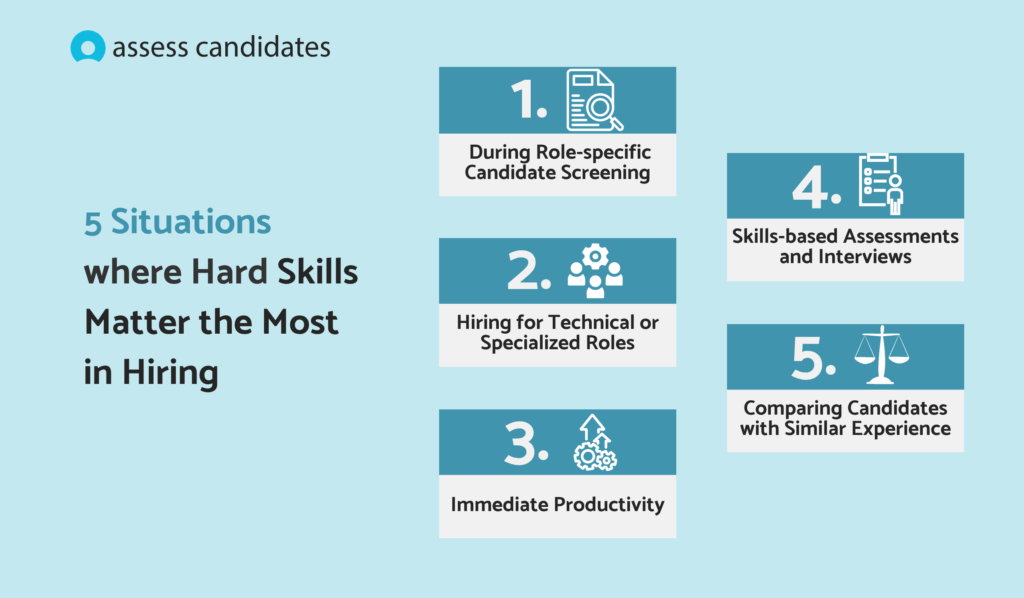
1. أثناء عملية فرز المرشحين وفقًا للوظيفة
المهارات الصلبة هي الأكثر أهمية خلال مرحلة الفرز الأولي, ، حيث يتم تقييم المرشحين بناءً على ما إذا كانوا يستوفون الحد الأدنى من المتطلبات التقنية. على سبيل المثال، يتم في هذه المرحلة قياس براعة المرشح في البرامج، وخبرته في المجال، والشهادات، والمهارات التقنية.
2. عند التوظيف لأدوار فنية أو متخصصة
المهارات التقنية ضرورية أيضًا في الأدوار التي تتطلب التدريب المتخصص و قابلة للقياس التقنية القدرة, مثل الهندسة, التسويق الرقمي أدوات, التمويل و المحاسبة, و تحليل البيانات.
3. الإنتاجية الفورية
المهارات التقنية مهمة أيضاً في المؤسسات التي تتطلب من موظفيها نتائج سريعة. عادة ما تنشأ مثل هذه الظواهر عندما تكون جداول المشاريع ضيقة، أو تعاني الفرق من نقص في الموظفين، أو تكون الأدوار مواجهة للعملاء.
٤. أثناء التقييمات والمقابلات القائمة على المهارات
المهارات التقنية ضرورية أيضًا عند تقييم المرشحين من خلال التقييمات مثل الاختبارات الفنية, دراسات الحالة, محاكاة العمل, و التحقق من الشهادات. تساعد هذه التقييمات أيضًا في تأكيد ما إذا كان بإمكان المرشحين تطبيق معارفهم في سيناريوهات عملية.
5. مقارنة المرشحين ذوي الخبرة المماثلة
المهارات الصلبة عادة ما تصبح عاملاً حاسماً عندما عدة مرشحين لديك مؤهلات قابلة للمقارنة, تعليمية الخلفية, و سنوات من الخبرة. في هذه الحالات، يمكنك التمييز بين أصحاب الأداء المتميز الباقين بقياس إتقان الأدوات أو المنصات أو المنهجيات.
والآن، لننظر إلى أفضل الطرق لتقييم المهارات المهنية بدقة.
٤. كيف يتم تقييم المهارات الصلبة بدقة؟
أكثر طرق تقييم المهارات الصلبة دقة هي منظم, ذي صلة بالدور, و بناءً على أدلة مباشرة من الأداء. أفضل النتائج تأتي من دمج تقييمات متعددة مقاربات تقيس كلاً من المعرفة والتطبيق العملي.
فيما يلي بعض أفضل الطرق لتقييم المهارات الصلبة بدقة:
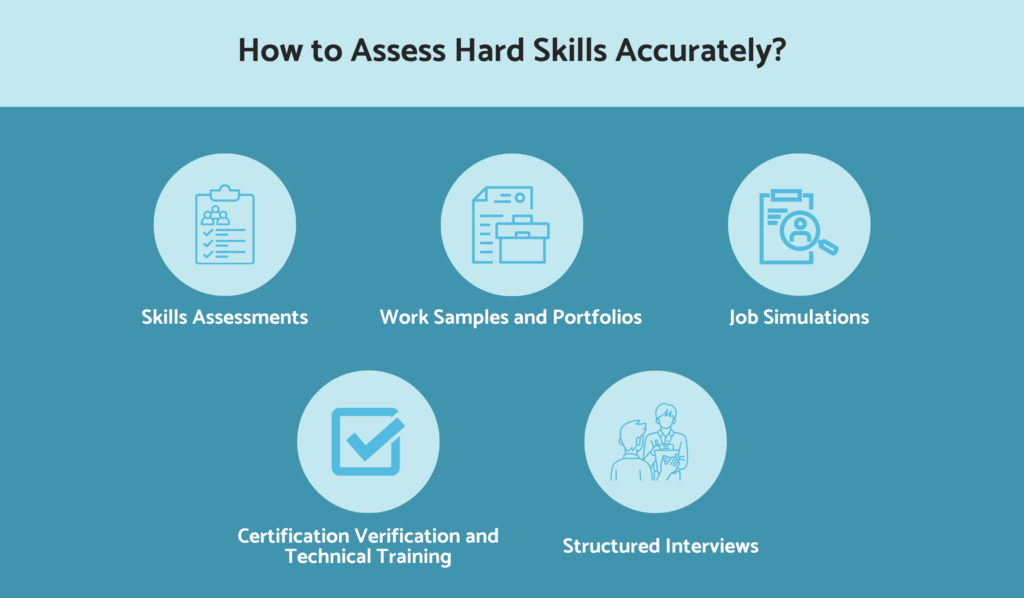
- تقييمات المهارات
من أكثر الطرق فعالية لتقييم المهارات الصلبة هي من خلال اختبارات المهارات الخاصة بالدور أن مرآة العمل الحقيقي. قد تشمل هذه تمارين الترميز للمطورين، مهام جداول البيانات لـ المحللون, ، وتطبيقات مكتوبة لأدوار المحتوى، وتمارين نمذجة مالية لـ التمويل الأدوار.
- نماذج العمل والحافظات
المراجعة عينات العمل و ملفات شخصية هي طريقة فعالة أخرى لقياس المهارات الصلبة لدى المرشحين. وذلك لأنها توفر دليلاً مباشراً على قدرات مقدم الطلب التقنية و القدرة التنفيذية.
من خلال هذا، يمكنك تقييم دقة المرشح، وتعقيد العمل الذي تم التعامل معه، والقدرة على حل المشكلات، وإتقان الأدوات، واتساق المخرجات.
- محاكاة الوظائف
منذ محاكاة الوظائف تطابق مسؤوليات مكان العمل عن كثب، فهي أدق المتنبئات من الأداء الوظيفي. وتشمل هذه تحليل تقرير عينة، وتصحيح الأخطاء البرمجية، وتحرير وثيقة، وتفسير بيانات العملاء.
ستساعدك هذه الاختبارات على قياس كل من القدرة التقنية و القرار-صنع في ظل ظروف واقعية.
- التحقق من الشهادات والتدريب الفني
التحقق من الشهادات هي طريقة أخرى فعالة لتقييم المهارات الصعبة للمرشحين، حيث أنها تساعد تأكيد التعرض إلى الأطر التعليمية الموحدة و متخصصة المعرفة المناطق. ومع ذلك، فإن الشهادات تكون أكثر فعالية عندما تقترن بالاختبارات العملية.
- مقابلات منظمة
إجراء مقابلات منظمة كما تساعد في قياس المهارات الصلبة لدى المرشحين أثناء التوظيف. يجب أن تتضمن هذه المقابلات قائمة على المهام و السيناريو-على أساس الأسئلة متوافق مع مسؤوليات الوظيفة. هذا يحسّن ثبات التقييم عبر المرشحين.
احصل على رؤى أعمق حول المهارات الصلبة للمرشحين باستخدام أدوات التقييم لدينا المدعومة علمياً. التوظيف مجاناً
حتى مع الأدوات المناسبة، قد ينتهي بك الأمر إلى صنع بعض الأخطاء الشائعة عند تقييم المهارات التقنية.
5. أخطاء شائعة عند تقييم المهارات الصلبة
لا يمكن الاعتماد على تقييم المهارات الصلبة عند اعتماد فرق التوظيف على مؤشرات غير مباشرة، أو أساليب تقييم غير متسقة، أو شهادات بدون دليل على التطبيق.
فيما يلي 5 أخطاء شائعة الأخطاء التي تحدث عند تقييم المهارات الصلبة:
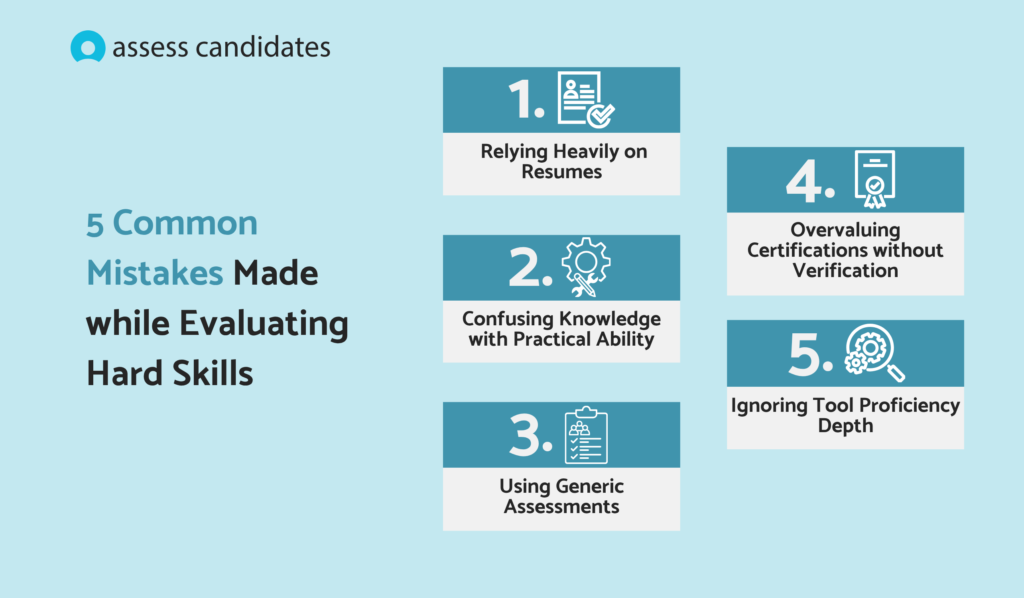
1. الاعتماد بشكل كبير على السير الذاتية
من الأخطاء الشائعة عند تقييم المهارات الصلبة أثناء عملية التوظيف الاعتماد الزائد على المرشح استئناف. الافتراض بأن الشهادات أو المهارات التقنية أو الأدوات المدرجة تعكس كفاءة حقيقية يمكن أن يؤدي إلى التعيينات الخاطئة.
الحل: تأكيد ادعاءات المهارات من خلال اختبارات قائمة على المهام أو محاكاة للحصول على نتائج أفضل.
2. الخلط بين المعرفة والقدرة العملية
خطأ شائع آخر يتم ارتكابه أثناء عملية التوظيف هو معرفة مربكة مع القدرة العملية. هذا لأن المرشحين قد يفهمون المفاهيم نظريًا لكنهم يواجهون صعوبة في تطبيقها في سيناريوهات العمل الواقعية.
حل: دمج التقييمات ذات الصلة بالوظيفة تطبيق هذا الإجراء.
3. استخدام التقييمات العامة
التقييمات العامة غالباً ما تفشل في عكس المسؤوليات التقنية الفعلية للدور. وبالتالي، فإن الاعتماد المفرط على التقييمات العامة قد يؤدي إلى توظيف مرشحين يؤدون بشكل جيد في الاختبارات المجردة ولكنهم يكافحون مع متطلبات العمل العملية.
الحل: دمج تقييمات تتطابق عن كثب مع الأدوات والمخرجات وسير العمل المطلوبة في الدور الوظيفي.
4. المبالغة في تقدير قيمة الشهادات دون التحقق منها
على الرغم من أن الشهادات يمكن أن تثبت روح المبادرة والخبرة، إلا أنها لا تضمن دائمًا الكفاءة العملية. المبالغة في تقدير الشهادات بدون أي تحقق وقد يؤدي اعتبارها الدليل الوحيد على الكفاءة إلى المبالغة في تقدير القدرات الفنية للمرشح.
الحل: استخدم الشهادات كدليل داعم بدلاً من اعتبارها المؤشر النهائي على الجاهزية الوظيفية.
5. تجاهل مستوى إتقان استخدام الأدوات
خطأ شائع آخر يتم ارتكابه أثناء تقييم المهارات التقنية في عملية التوظيف هو تجاهل مدى الإتقان في استخدام الأدوات. في حين أن غالبية المرشحين قد يكون لديهم خبرة في أدوات الصناعة، فإن مستوى كفاءتهم قد يختلف اختلافًا كبيرًا.
وبالتالي، فإن عدم تقييم مدى إتقان الاستخدام قد يؤدي إلى تقدير خاطئ لمدى سرعة قدرة المرشح على أداء المهام الخاصة بالوظيفة.
الحل: تقييم مدى إلمام المرشحين باستخدام الأدوات في الممارسة العملية. اطلب من المرشحين إكمال تمارين قصيرة تعتمد على استخدام الأدوات أو وصف مشاريع استخدموا فيها ميزات محددة.
اكتشف مجموعتنا الواسعة من الاختبارات المعيارية لتعزيز عملية التوظيف القائمة على المهارات. اعرف المزيد
6. المهارات الصعبة: قصة نجاح العميل
بيان مشكلة العميل
افترض أن شركة لوجستية آخذة في النمو تواجه الشركة صعوبة في توظيف منسقي عمليات يتمتعون بالمهارات التقنية العملية اللازمة لإدارة أنظمة تتبع الشحنات، والحفاظ على دقة الوثائق، وتحديث لوحات معلومات الجدولة بكفاءة. ونتيجة لذلك، سيصبح من الصعب مراقبة أوقات التسليم، وستزداد أخطاء التقارير، وستبدأ فجوات التواصل في التأثير على التنسيق بين الفرق.
تحتاج المنظمة الآن إلى طريقة أكثر موثوقية لتقييم مدى قدرة المرشح على استخدام أدوات جداول البيانات، وإدارة وثائق سير العمل، ودعم عملية التتبع التشغيلي في مواقف واقعية.
تقييم مقترحات المرشحين
في تقييم المرشحين, ، لتعيين منسق العمليات المناسب، نوصي بإدراج تقييمات المهارات الخاصة بالوظيفة, مهام المحاكاة الوظيفية ,،و تقييمات مبكرة قائمة على الأدوات في مرحلة التوظيف.
علاوة على ذلك، عندما يتم دمجه مع مقابلات فنية منظمة و نموذج التعليقات, ، يمكن للمنظمة الحصول على رؤية أعمق حول قدرة المرشح على تطبيق معرفته في المواقف العملية، والحفاظ على الالتزام بالمواعيد تحت الضغط، ودعم التنسيق السلس بين فرق اللوجستيات.
النتيجة
من خلال اعتماد التقييمات التي تقيس المهارات الصعبة على وجه التحديد ، يمكن لشركة الخدمات اللوجستية تحديد المرشحين الذين يظهرون بثقة استعداد تقني قوي, الدقة في الوثائق, و الإلمام مع أساسي التنسيق الأدوات.
سيؤدي هذا إلى المزيد تتبع موثوق للشحنات, تحسين دقة التقارير, و تحسين التواصل عبر فرق العمليات.
الشراكة مع Assess Candidates لدمج مجموعة من اختبارات المهارات الصعبة في عملية التوظيف الخاصة بك. عرض المخططات
تكمن قيمة تعيين المهارات الفنية في قياس القدرة الحقيقية، وليس فقط الكفاءة المستنتجة من السيرة الذاتية.
٧. لماذا تستخدم الشركات الكبرى "تقييم المرشحين" لتقييم المهارات الصعبة
في تقييم المرشحين, ، نقدم مجموعة واسعة من تقييمات ما قبل التوظيف وإنشاء حملات توظيف مخصصة لاحتياجات التوظيف الفريدة لكل مؤسسة.
فيما يلي مثال على لوحة متابعة تقارير الحملات الانتخابية متاح على تقييم المرشحين.
هنا 4 أسباب لاستخدام "تقييم المرشحين" لتقييم المهارات الصلبة بدقة:
- مصممة علمياً من قبل خبراء نفسيين خبراء: تقييم المرشحين’ تقييم المهارات التقنية تم تطويرها بواسطة علماء نفس واختصاصيي قياس نفسيين ذوي خبرة وسجل حافل في بناء أدوات التقييم للقادة العالميين في مجال التقييم مثل SHL و IBM Kenexa.
يخضع كل تقييم لـ التحقق العلمي الدقيق لقياس القدرات التقنية المتعلقة بالدور، وكفاءة استخدام الأدوات، ودقة المهام في سيناريوهات العمل الواقعية. هذا النهج القائم على الأدلة تساعد المؤسسات على تحديد المرشحين بثقة الذين يمكنهم تطبيق معرفتهم التقنية بفعالية والمساهمة منذ اليوم الأول.
- التقارير المتقدمة: منصتنا البديهية تقدم تقارير واضحة ومتعمقة تسلط الضوء على نقاط القوة التقنية لدى المرشحين، والفجوات في المهارات، والأداء عبر مهام محددة متعلقة بالوظيفة. يمكن لأصحاب العمل مقارنة مستويات الكفاءة بسرعة، وتحديد المرشحين الجاهزين للوظيفة، وتحديد قائمة مختصرة للمتقدمين باستخدام معايير موضوعية., الرؤى المستندة إلى البيانات. مع تكامل سلس لنظام تتبع المتقدمين، تقييم تصبح سير العمل أسرع, ، وأكثر اتساقًا، وأسهل في الإدارة عبر عملية التوظيف.
- تجربة المرشح الإيجابية: تم تصميم تقييمات المهارات الصلبة لدينا لتكون عملي وجذاب ويمكن الوصول إليه عبر الأجهزة, مما يسمح للمرشحين بإظهار قدراتهم التقنية في بيئات عمل منظمة وواقعية. تساعد التعليمات الواضحة والتمارين المتوافقة مع الوظيفة المرشحين على التركيز على تطبيق معارفهم دون تعقيد غير ضروري. علامة تجارية مخصصة تساعد الخيارات أيضًا المؤسسات على الحفاظ على تجربة تقييم احترافية ومتسقة طوال رحلة التوظيف.
- دعم إمكانية الوصول إلى المرشحين: نحن ندعم التوظيف الشامل من خلال توفير ميزات إمكانية الوصول التي تمكن المرشحين من إظهار مهاراتهم الفنية إلى حد ما و بثقة. وتشمل هذه خيارات الوقت الممتد، والتوافق مع قارئ الشاشة، والإعدادات المرئية القابلة للتعديل، ووظيفة التكبير/التصغير. تتوافق جميع التقييمات مع معايير إمكانية الوصول WCAG، مما يضمن تجربة عادلة لجميع المتقدمين.
توفر Assess Candidates أدوات موثوقة قائمة على العلم تساعد المؤسسات على تقييم المهارات الصعبة بدقة واتخاذ قرارات توظيف أذكى وأسرع وأكثر اتساقًا. استكشف مجموعتنا الكاملة من التقييمات إلى تحديد المرشحين بالقدرات التقنية المطلوبة للنجاح في أدواركم.
لست متأكدًا من أي تقييمات للمهارات الصلبة تتوافق بشكل أفضل مع احتياجات التوظيف الخاصة بك؟ اتصل بنا لـ تحليل مجاني متطلبات دورك.
الخاتمة: الوجبات الجاهزة الرئيسية
المهارات الصلبة هي قابلة للقياس, قدرات خاصة بالدور مما يساعد أصحاب العمل على تقييم ما إذا كان شخص ما يستطيع القيام بالعمل المطلوب. عندما تقوم فرق التوظيف بتقييمهم من خلال طرق منظمة وذات صلة بالوظيفة، فإنهم تحسين دقة التوظيف و تقليل مخاطر التعيينات الخاطئة المكلفة.
الأسئلة المتداولة
ما الفرق بين المهارات الصلبة والمهارات الناعمة؟
المهارات الصعبة هي قدرات تقنية قابلة للقياس يحتاجها المرشحون لأدائها مهام وظيفية محددة, مثل إكسل،, برمجة, أو كتابة التقارير. المهارات الشخصية, من ناحية أخرى، هل السمات الشخصية مثل التواصل أو العمل الجماعي التي تحدد كيف يعملون مع الآخرين، ويديرون الوقت، ويحلون المشكلات.
ما مدى تكرار إعادة تقييم المهارات الصلبة؟
المهارات الصلبة يجب أن تكون يُعاد تقييمها بانتظام مع تغير الأدوات ومتطلبات الوظائف بسرعة. تساعد إعادة التقييمات المنتظمة في ضمان بقاء المرشحين فعال، دقيق،, و محاذاة مع متطلبات العمل الحالية.
نعم، يمكن تدريب المهارات الصلبة أثناء العمل
نعم. يمكن تدريب المهارات الصلبة أثناء العمل من خلال التعلم المنظم، والتوجيه، وورش العمل, و خبرة في مشاريع حقيقية. يساعد هذا الموظفين على أن يصبحوا أكثر إنتاجية مع التكيف مع سير عمل الشركة.
هل الشهادات دليل على المهارات الصلبة؟
لا يوجد, الشهادات دونها ليست دليلاً على المهارات الشاقة أو الكفاءة العملية للمرشح. تشير الشهادات إلى التعلم المنظم ولكن يجب اقترانها باختبارات الأداء مثل عينات العمل, تقييمات فنية, أو محاكاة الوظائف للدقة.
كيف تقلل التقييمات القائمة على المهارات من التحيز في التوظيف؟
التقييمات القائمة على المهارات تقليل التحيز في التوظيف بالاعتماد على بيانات الأداء الموضوعية بدلاً من الانطباعات الذاتية أو المؤهلات وحدها. يركزون على ما يمكن للمرشحين فعله بالفعل بدلاً من من يعرفون، أو أين درسوا، أو مدى ثقتهم التي بدت عليها في المقابلات.


 English
  Arabic