
How the Circular Economy Impacts Recruitment and Sustainable Talent Acquisition



Companies have begun embracing the circular economy, and there has been a noticeable shift as employers require new skills and competencies to accommodate this sustainable talent acquisition.
To better ensure that the organization’s environment remains afloat and promotes biodiversity and climate change, employers have set requirements for candidates who are culturally fit and possess soft skills.
In this guide, we will take a look at the impacts of the circular economy, how to guarantee maximum productivity while prioritizing sustainability, and how to recruit, hire, and retain talent using the right pre–employment psychometric assessment tests.
Contents
- What is the circular economy?
- How does the circular economy affect recruitment?
- Skills to look out for when recruiting for the circular economy
- Benefits of the circular economy in recruitment
- What practices support a circular economy?
- Roles that are available in the circular economy
- Client success stories on circular economy recruitment
- The future of circular economy recruitment
- Why do companies prefer using Assess Candidates for recruitment?
Interested in knowing more about the significance of the circular economy in recruitment? Keep reading to find out!
1. What is the circular economy?
The circular economy is an economic system that is focused on eliminating waste and promoting the continuous reuse of resources by designing products and processes to last longer. This way, materials can be reduced, reused, repaired, and recycled to minimize environmental harm.
According to the Ellen MacArthur Foundation, the circular economy combats climate change and other global challenges, including waste, biodiversity loss, and pollution, by separating economic activities from the depletion of limited resources.
Having seen the definition of the circular economy, let us take a look at what it means for recruitment.
What is the circular economy in recruitment?
The circular economy in recruitment is a unique approach to sustainable talent acquisition that centers on reusing, reskilling, redeploying, and retaining talent in your organization by treating skills as renewable resources. Doing this will further reduce unnecessary recruitments but promote zero–waste hirings.
According to the International Labour Organization (ILO 2029), by the year 2030, approximately 78 million green jobs will be created, and 71 million will be eliminated due to the circular economy.
Start your sustainability-driven recruitment with our skills-based assessments. HIRE FOR FREE
Now that you have an idea of what the circular economy means, come along to see how it affects recruitment.

2. How does the circular economy affect recruitment?
According to a WRAP report, between 2014 and 2019 in the United Kingdom, nearly 90,000 jobs were created in the circular economy, increasing the sector to almost 560,000 employees. This also boosted gross value added and reduced greenhouse gas emissions.
6 Key ways that the circular economy affects recruitment
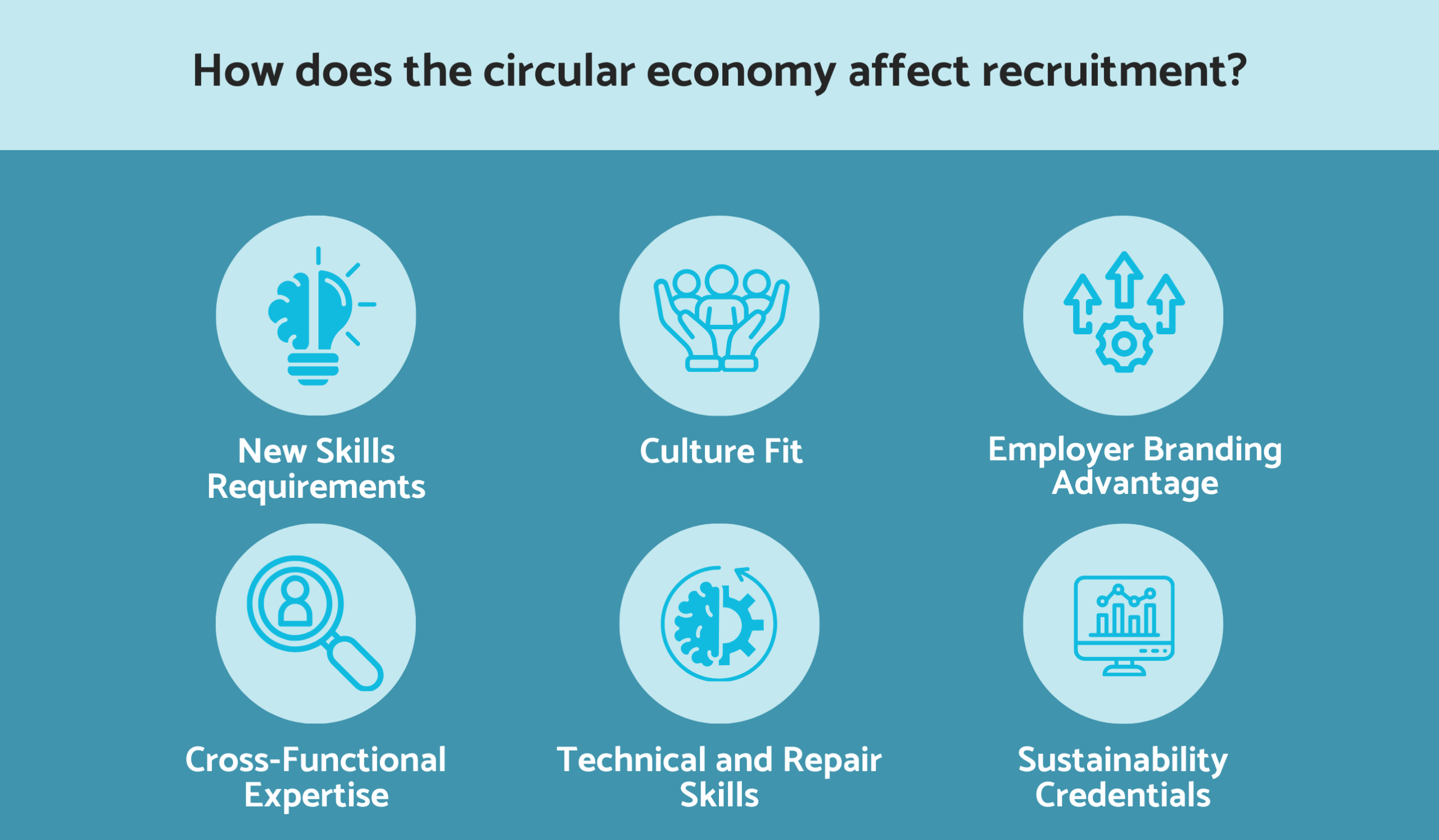
- New Skills Requirements: You will need candidates who can think systematically about your product lifecycles, closed–loop systems, and material flows. What this means is that you will have to recruit and hire new roles that were non-existent, but are focused on recyclability and sustainability.
- Culture Fit: Since the circular economy demands the transformation of ingrained habits, organizations will be expected to broaden their search for green talent by recruiting candidates who challenge traditional ways of doing things.
- Employer Branding Advantage: Organizations with strong qualifications in the circular economy usually find it easier to attract, hire, and retain talent, especially Gen Z workers who prioritize purpose and environmental impact.
- Cross–Functional Expertise: Circular economy programs span departments within organizations, and many employers are searching for candidates who can work at various intersections.
- Technical and Repair Skills: As companies shift towards refurbishment and remanufacturing services, the demand for hands-on technical skills has resurfaced and continues to grow.
- Sustainability Credentials: Companies now actively recruit from graduate programs focused on sustainable business, the circular economy, and industrial ecology.
To see how the circular economy affects recruitment, check out the differences between the linear and circular economies.
Differences between linear economy and circular economy
According to the World Bank, global waste volumes are expected to surge by 70% to 3.4 billion tonnes in 2050. Meanwhile, according to OECD, demand for raw resources will also grow by 2060, creating problems for organizations that rely on these finite resources.
There is, however, a solution to these problems: the circular economy. But first, to fully understand this, why not check out the differences between the linear economy and the circular economy?
Are you thinking about the skills to look out for when recruiting for positions in the circular economy? Continue scrolling!
3. Skills to look out for when recruiting for the circular economy
According to the EIT Campus, there is a significant gap in skill requirements for the circular economy. When candidates are applying for roles, they will need to upskill and reskill themselves if the workforce is to move away from the linear economy.
Both hard and soft skills are essential in recruiting for green jobs, and below we will narrow down some of the skills to look for when hiring candidates.
Top 5 skills to look out for when attempting a zero-waste hiring
- Sustainability and Circular Economy Literacy
When making a sustainable talent acquisition, it is important to search for candidates with sufficient knowledge of sustainability and the circular economy. Ensure that they understand ESG, sustainability metrics, and life–cycle thinking.
- Data and Analytics Skills
Ensure that your candidates are fluent with data and analytics skills that can track material flows and mobility patterns. You should also measure their adaptability and usage of AI tools responsibly, making sure that they are aware of legal restrictions.
- Collaboration
Candidates working in your organization must display collaboration skills across all functions. They should be open to learning to embrace your company’s culture, and how to clearly communicate sustainability goals to non-experts.
- Ethical and Values-Driven Mindset
It is necessary to focus on hiring candidates who have a keen sense of responsibility, ethics, and long–term thinking about how to improve the company’s zero-waste culture and emissions. They must also be willing to participate in and contribute to the social and environmental impacts.
- Design and Innovation Skills
We recommend prioritizing eco–design or circular design during recruitment, as these candidates will be expected to design and formulate strategies for durability, repair, and recycling. They should also display creative problem–solving skills to reduce waste and prolong product longevity.
Hire the ideal candidates with our fully equipped assessment platform. LEARN MORE
Are you wondering what the benefits of the circular economy are? We have a few tips for you below.
4. Benefits of the circular economy in recruitment
Most employers have begun to see the benefits that leaning towards the circular economy could provide. Below, we explain these benefits if you are considering recruiting for the circular economy.
Top 5 Benefits of the circular economy in recruitment
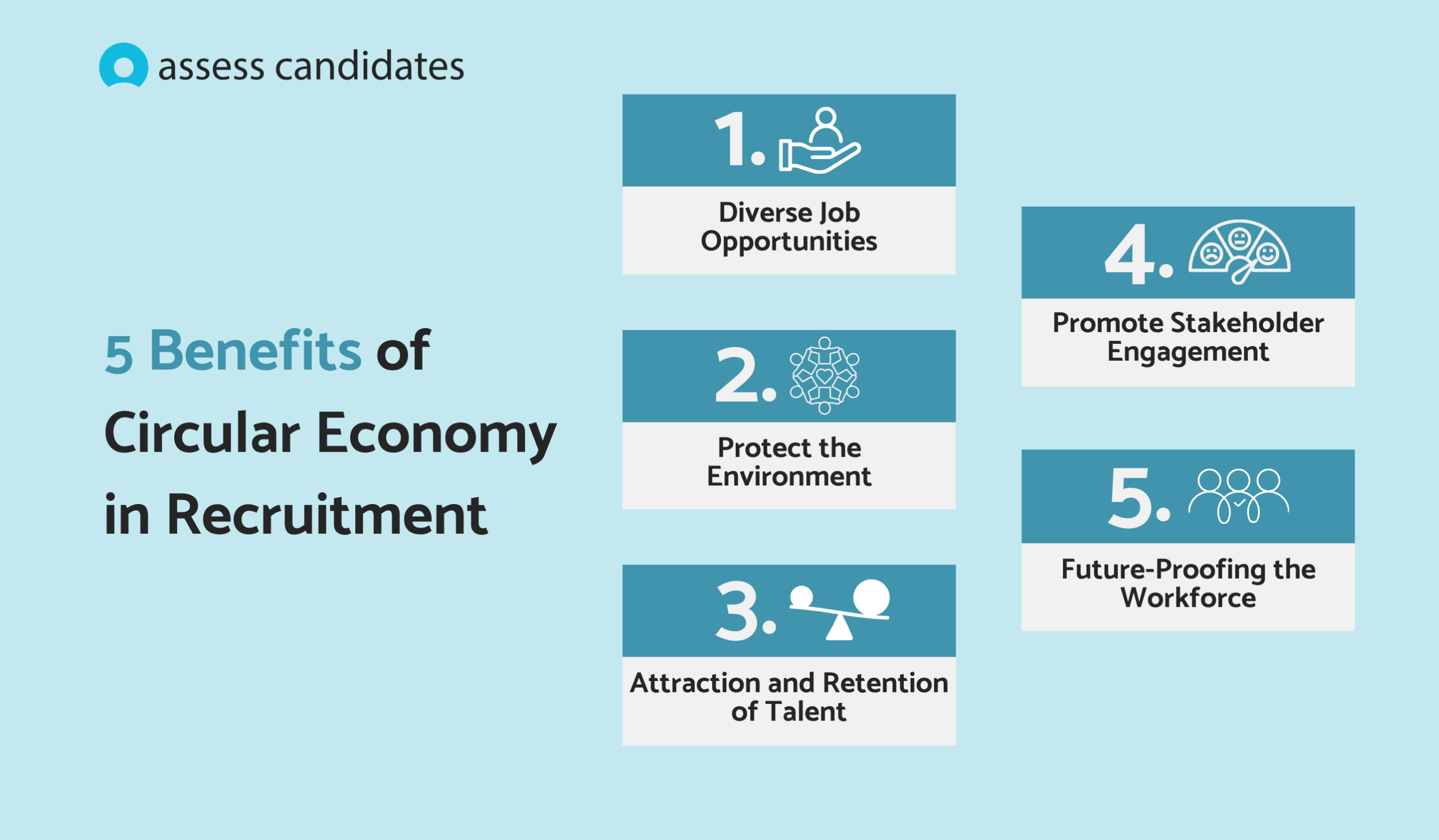
1. Diverse Job Opportunities
The circular economy will create employment across multiple skill levels, providing jobs for people regardless of their culture and geography, promoting inclusivity and diversity, as more roles, including those that have been declining, will be revived.
2. Protect the Environment
This benefit works in two ways: promoting the circular economy helps protect people and the planet. This happens when organizations are conscious of reducing their greenhouse gas emissions, pollution, and waste.
3. Attraction and Retention of Talent
The millennials and Gen Zs will increasingly look for employers whose values align with their environmental activism and concerns. Companies with strong circular economy practices have a better chance at attracting, hiring, and retaining the perfect candidates who help them stand out in the market.
4. Promote Stakeholder Engagement
Demonstrating your commitment to the circular economy will also prove to your stakeholders that you are dedicated to their cause. This will help with your employer brand, stretching your company to various groups who support the economic model.
A study by Cap Gemini Research Institute revealed that approximately 70% of customers are interested in promoting the circular economy.
5. Future-Proofing the Workforce
The regulations around the circular economy continue to grow as the globe seeks to combat climate change. In today’s climate, the circular economy is essential rather than optional. Employers are recruiting for these capabilities and building resilience to the incoming market shift.
Discover assessments designed by Chartered Scientists to recruit high-quality candidates. VIEW PLANS
You have seen why the circular economy is beneficial, and you must be wondering what the best practices are to implement it. Keep scrolling!
5. What practices support a circular economy?
According to the Center for Sustainability and Excellence, US organizations are moving towards circular economy models, as this helps them meet their sustainability goals while securing supply chains amid global resource depletion.
Key practices to implement a circular economy in your recruitment
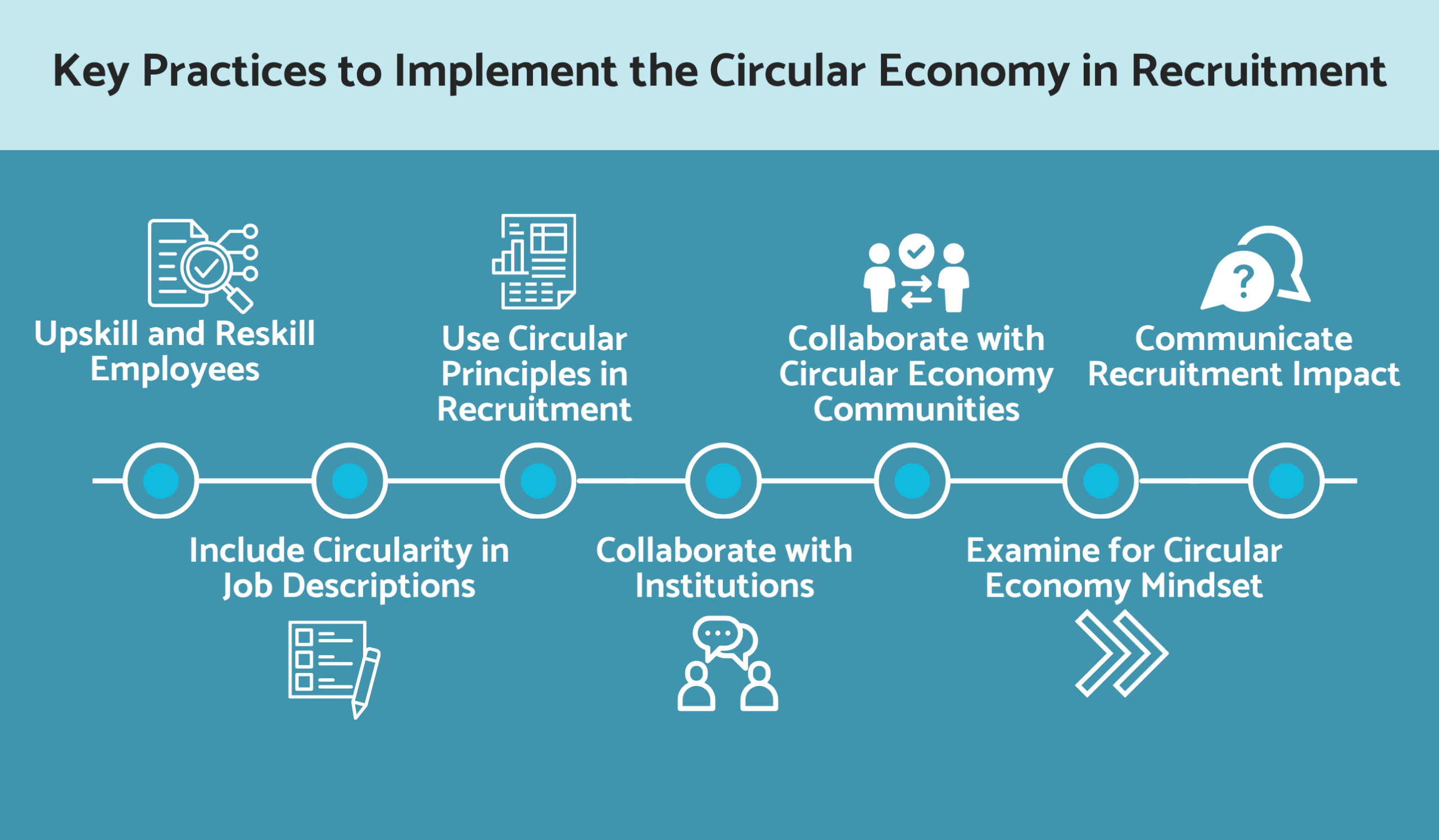
- Upskill and Reskill Employees
Invest in training programs that help your current employees better understand circular economy principles and how to apply them to specific roles. Encouraging internal mobility and showing preference to employees who demonstrate interest will prove to candidates that you invest in employee development.
- Use Circular Principles in Recruitment
You can reduce waste in your hiring process by digitizing applications and using virtual interviews to cut down on candidates’ travel emissions and streamline decision–making, which also respects applicants’ time.
- Collaborate with Circular Economy Communities
You can join circular economy communities, attend conferences, and participate in groups focused on circular business practices. Actively engaging with these communities will boost your brand image and increase your visibility among the green talent pool your organization needs.
- Communicate Recruitment Impact
Track metrics that are specific to circular economy hiring, such as time-to-fill sustainability roles, diversity, and inclusivity of candidate backgrounds, and the retention rates of employees. This data-driven approach will provide you with the clarity needed for any business embarking on the circular economy.
- Include Circularity in Job Descriptions
Clearly include the circular economy skills, sustainability awareness, and systems thinking in your job descriptions wherever relevant. You can do this for roles that are not fully focused on sustainability, but this will alert the candidates to your commitment to the circular economy.
- Collaborate with Institutions
Building relationships and partnering with universities, technical schools, and training programs that provide circular economy education will help you in creating a pipeline of pre–trained green talent who have been taught about the economic model.
- Examine for Circular Economy Mindset
Use psychometric assessment tests to evaluate your candidates’ ability to think systematically and logically about waste reduction and lifecycle impacts. You can also include scenario-based questions that focus on problem-solving in a tight-resource environment.
Wondering what roles and job sectors have adopted the circular economy? Look no further, as we list a few below!
6. Roles that are available in the circular economy
According to PAGE, between 121 and 142 million people worldwide work in the circular economy, and this makes up about 5.8% of the world’s employment, excluding agriculture.
Before we take a look at the available roles, check out the job sectors most focused on promoting the circular economy.
Sectors that embrace the circular economy
- Technology
Tech companies like Apple, Dell, and Fairphone embrace the circular economy by refurbishing, repairing, and offering take-back policies for their products, ensuring that the cycle continues and no resources are wasted.
- Fashion
Companies like Patagonia, H&M Group, and Stella McCartney support the green economy and sustainability by using sustainable materials and offering clothing repair, resale, recycling, and rental services.
- Construction
Construction organizations such as Skanska, Arup, and Interface all partake in the circular economy by designing buildings that can be disassembled and reusing building materials.
- Retail
Companies like Unilever, IKEA, and Loop (by Terracycle) are examples of retail firms that offer take-back schemes to their customers, reuse packages, and lease products rather than sell them.
- Food and Agriculture
Organizations such as Nestlé, Danone, and Too Good To Go have all embarked on this economic model, encouraging reductions in food waste, composting, and regenerative farming.
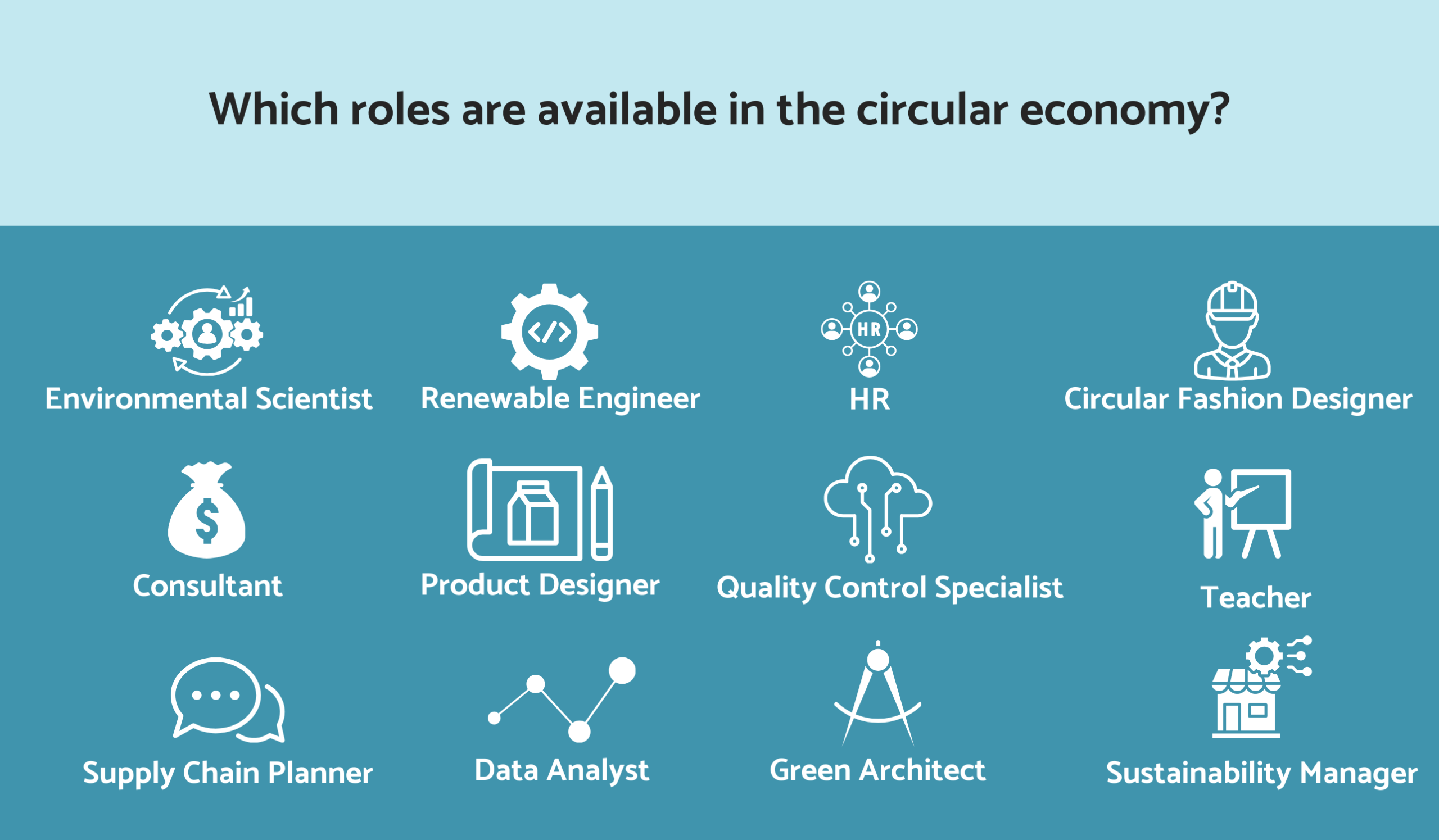
Roles That are Available in the Circular Economy
- Environmental Scientist
- Renewable Engineer
- Circular Fashion Designer
- Data Analyst
- Product Designer
- Green Architect
- Supply Chain Planner
- Sustainability Manager
- Teacher
- HR
- Consultant
- Quality Control Specialist
Are you considering taking that transition into the circular economy? Reach out to us for a thorough evaluation of your recruitment assessment design, and we will ensure you hire the right candidates with a green economy and sustainability mindset. You can take a look at our gallery of psychometric assessment tests.
There are several employers worldwide that have embraced the circular economy and moved away from the linear model, ensuring the safety of the planet and its people. Below, we will list a few game-changers in the workforce that support the green economy model.
Employers that support a circular economy in recruitment
- Apple
- Dell
- Fairphone
- H&M Group
- IKEA
- Loop
- Nestlé
- Patagonia
- Skanska
- Unilever
Discover more expert-created assessments to guide you in recruiting the ideal hire for your company. VIEW PLANS
7. Client success stories on circular economy recruitment
Many companies have shared testimonials about moving away from the linear economy and adopting the circular economy, ensuring they reuse, repair, and recycle resources.
1. Siemens
Challenge:
Siemens had run a check on its structure as it aimed to improve its circular economic stance, but had discovered that automation and digitalisation had made some roles obsolete, putting it at risk of large-scale redundancies.
Solution:
The manufacturing company shifted its recruitment focus to candidates with skills and learning potential. It invested in reskilling and used internal programs to match employees to roles.
Results:
- Minimized job losses
- Retained significant institutional knowledge
- Prepared a future-ready workforce
2. Patagonia
Challenge:
Patagonia was transitioning from linear-economy fashion production to the circular-economy model and discovered a shortage of designers and supply-chain employees with circular-economy knowledge and skills.
Solution:
So the fashion company focused on recruiting candidates who possessed lifecycle thinking and whose values aligned with the company’s. The clothing company also upskilled its existing staff on the circular economy and created new roles to support repair and resale.
Results:
- Broadened its repair and resale operations
- Reduced its textile waste
- High employee retention and strong employer brand image
This is where Assess Candidates comes in; we help ensure your candidates are well-skilled, as our pre-employment psychometric assessment tests measure skills and provide data-driven analytics to inform your hiring decisions.
8. The future of circular economy recruitment
The movement toward the circular economy is a collective journey, and the future of recruitment can be sustainable if actively pursued, and the linear economic model is viewed as wasteful and does not regard resources.
What will the future of circular economy recruitment look like?
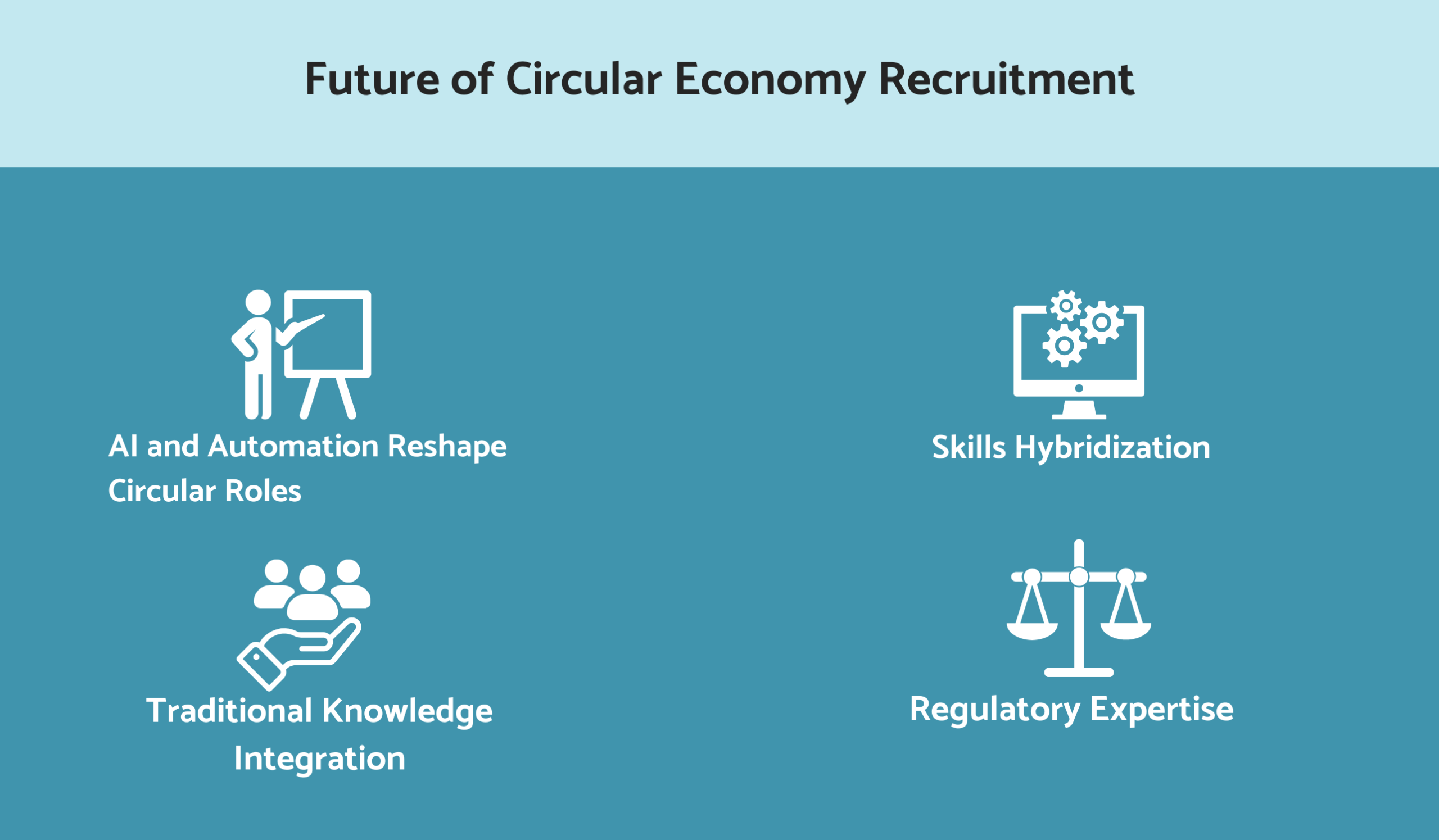
- AI and Automation Reshape Circular Roles
AI will increasingly handle complex tasks such as lifecycle modelling, material sorting, and predictive maintenance scheduling, ultimately changing the nature of the circular economy workforce. This way, your recruitment process will prioritize candidates who can work alongside AI systems and interpret data insights.
- Skills Hybridization
The future workforce will require a mix of skills that are beyond traditional expectations, as recruitment will lean away from narrow specialist hirings and more towards candidates who can link between various disciplines.
- Traditional Knowledge Integration
The circular economy continues to gain traction, and it now reflects many indigenous practices of resource stewardship and regenerative systems that have long existed. The future of recruitment will always value traditional ecological knowledge, and employers will recruit candidates who can bridge traditional knowledge and modern practices.
- Regulatory Expertise
As environmental regulations become more complex and vary by region, companies will attract, hire and retain candidates who are skilled at navigating policy landscapes while executing circular systems. This expertise will enable organizations to stay ahead of the competition.
So why choose Assess Candidates for your zero-waste hiring?
9. Why do companies prefer using Assess Candidates for recruitment?
Recruiters are choosing Assess Candidates for its focus on evaluating candidates based on their skills, ensuring you get the perfect hires whose values align with your sustainable goals.
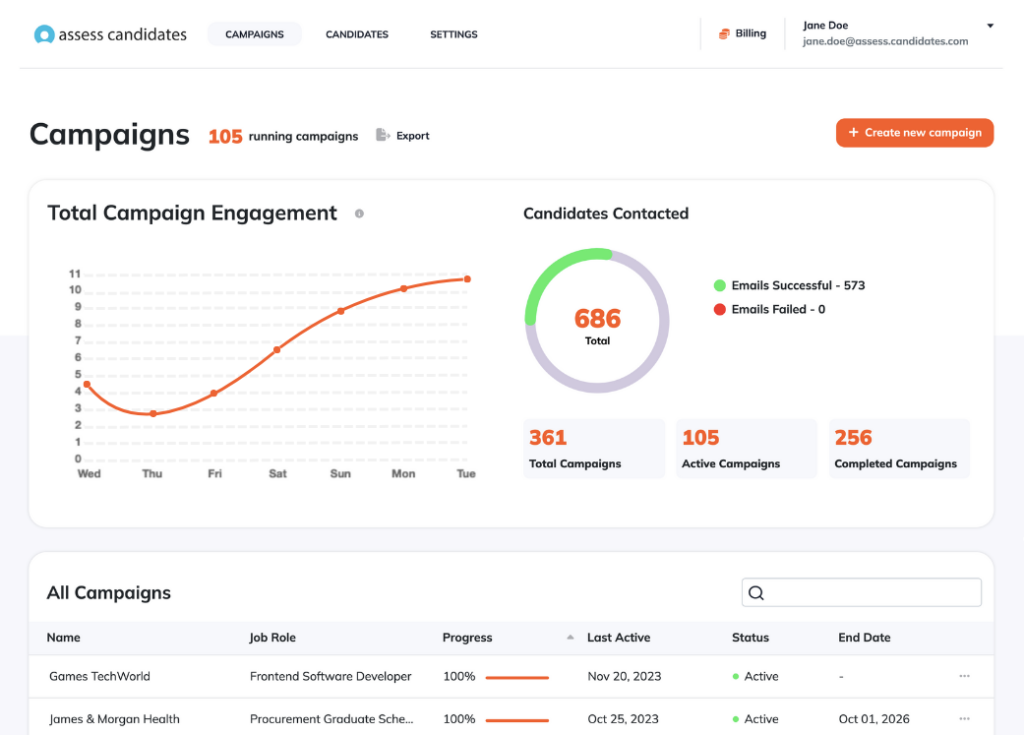
Why employers prefer Assess Candidates skills-based assessments for circular economy recruitment
- Green Assessment Tools: Assess Candidates provides you with the assessment tools that are designed to evaluate your applicants, testing them with the updated skills-based tests, giving you data insight into your hiring decisions for your sustainability goals.
- Reduction of Bias and Fairness: Our platform promotes fairness by reducing unconscious bias that may occur during the recruitment process, guaranteeing you the perfect candidate hires who have all been evaluated through rigorous standardized assessments.
- Cost–Effectiveness: The Assess Candidates platform will help you minimize circular economy recruitment costs by reducing the risk of bad hires and employee turnover when they do not align with your organization’s culture and values.
- Efficiency in High–Volume Screening: Our platform offers you an automated applicant screening tool that filters out unqualified candidates. This is essential during high-volume recruitment. Ensuring that you only recruit the promising candidates with circularity knowledge.
- Customizable Assessments: With Assess Candidates, you can create your own assessment tests to suit your organization’s recruitment needs, depending on the roles that you are hiring for and the levels of interest in the circular economy that your candidates have.
Hire the perfect candidates with our end-to-end skills assessment platform. LEARN MORE
Conclusion
This article explains everything you need to know about transitioning from the linear economy to the circular economy, and the skills to look out for when recruiting candidates whose values align with yours.
Curious to know more about using circular economy skills-based assessment tests in your recruitment process? Keep scrolling to explore our frequently asked questions, and enter your email to get started today.
Frequently Asked Questions
Should candidates have formal education in the circular economy?
Although education in a circular economy, sustainable business is accepted, it may not always be necessary when recruiting, as many successful candidates in these areas come from diverse backgrounds. You should look out for those with strong foundational skills who display curiosity.
Where can I find circular economy talent?
To get the best candidates with circular economy knowledge, you can target TU Delft, the Ellen MacArthur Foundation academic partners, or schools with sustainability MBA programs. You can also attend industry conferences.
How do I compete with other companies for circular talent?
You can compete by standing out with the commitment you demonstrate through your circular economy goals, investment in circular infrastructure programs, and by providing meaningful work where prospective candidates can see your impact in closed-system loops.
What questions should I ask during circular economy interviews?
Companies can ask scenario-based and value-based questions as well as your candidates about their past experiences. This is to gauge their talents and skills in the circular economy, and how they would react and treat the economic model when faced with it.
How can I retain circular talent once they are hired?
To retain your candidates after recruitment, we recommend providing continuous learning opportunities through training programs. You can also build a community through internal networks that connect employees interested in sustainability, encouraging collaboration across all departments.


 English
  Arabic