
Top Hard Skills Interview Questions Interviewer Should Ask



Hard skills interview questions help employers explore whether candidates understand the technical methods, tools, and processes required for a role. Qualifications and confident explanations can provide useful context, but they do not always demonstrate that a candidate can complete the work.
This guide covers 15 interview questions across five categories, examples of strong responses, common evaluation mistakes, and ways to assess technical skills consistently.
Contents
- How to best assess hard skills in interviews?
- What are the types of hard skill interview questions?
- What are the common interview mistakes made when assessing hard skills?
- Why do top companies use Assess Candidates for assessing hard skills during interviews?
Let’s explore the best ways to assess hard skills during interviews.
1. How to best assess hard skills in interviews?
Asking the right technical questions is essential to assess hard skills. Organizations need a structured interview process to evaluate candidates’ technical knowledge, practical abilities, and proficiency in using role-specific tools and technologies.
Below are some of the best ways to assess hard skills during interviews:
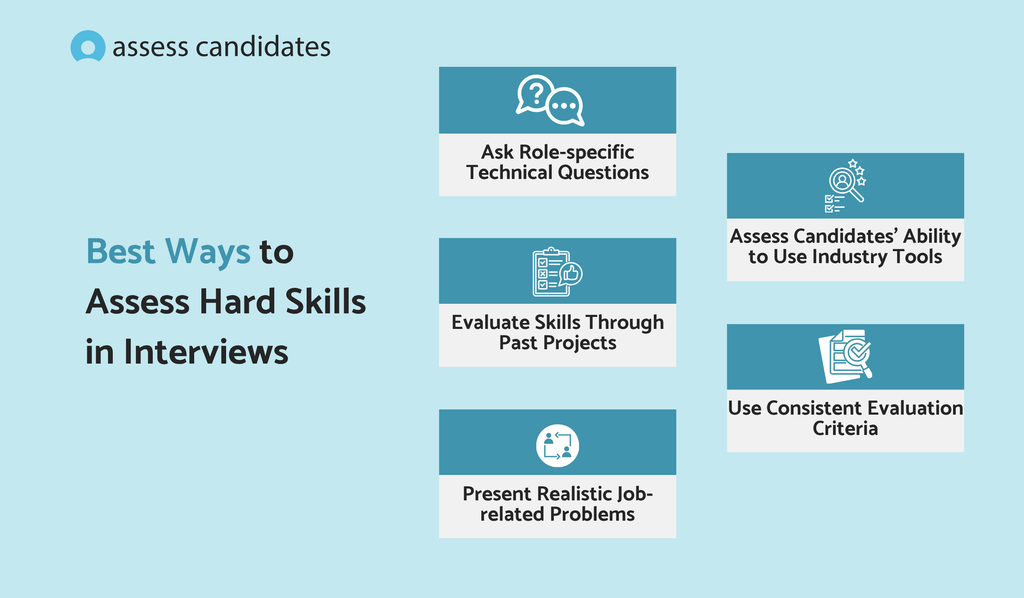
- Ask Role-specific Technical Questions
One of the most effective ways to assess hard skills in interviews is to ask technical questions that align with the role’s responsibilities and required expertise. This will further help you evaluate candidates’ subject knowledge and their ability to apply technical knowledge.
Example: For a software developer role, ask candidates how they would identify and fix a bug in a code snippet.
- Evaluate Skills Through Past Projects
Ask candidates to discuss their previous projects or assignments that demonstrate the hard skills required for the role. This will not only let you verify their practical experiences but also understand how they apply their knowledge to complete work-related tasks.
Example: For a content writer role, ask the candidate to explain how they researched and optimized an article for SEO.
- Present Realistic Job-related Problems
Present candidates with real-world scenarios that reflect the challenges they may encounter in the role. This helps assess their ability to identify errors, apply technical knowledge, and develop effective solutions.
Example: Give a graphic designer candidate a brief with conflicting requirements and ask them to prioritize design elements.
- Assess Candidates’ Ability to Use Industry Tools
Ask candidates about the tools and software they have used in their previous roles and how they have applied them to complete specific tasks. This will help you evaluate their familiarity with industry-standard tools and determine whether they can use them effectively in the workplace.
Example: Ask a project manager candidate how they use tools such as Jira or Trello to track tasks and deadlines.
- Use Consistent Evaluation Criteria
Create clear scoring criteria before interviewing candidates to ensure a fair and consistent assessment. Assess factors such as quality of work, technical accuracy, efficiency, and problem-solving ability based on the role’s requirements.
Example: When evaluating a coding assignment, score every candidate on code accuracy, readability, efficiency, and error handling using the same rating scale.
What could consistent evaluation criteria look like?
Below is an example of evaluation criteria or scoring rubric that employers should adapt to each competency and role.
Evaluate hard skills with structured interviews and standardized assessments. HIRE FOR FREE
This brings us to the most important topic: what are the types of hard skill questions you can ask in interviews?

2. What are the types of hard skill interview questions?
The following 15 hard skills interview questions cover technical knowledge, practical tasks, troubleshooting, industry tools, and workplace scenarios. Adapt each question to the specific role and evaluate responses against predefined criteria. Where practical proficiency matters, use a relevant work sample or technical exercise to support the interview evidence.
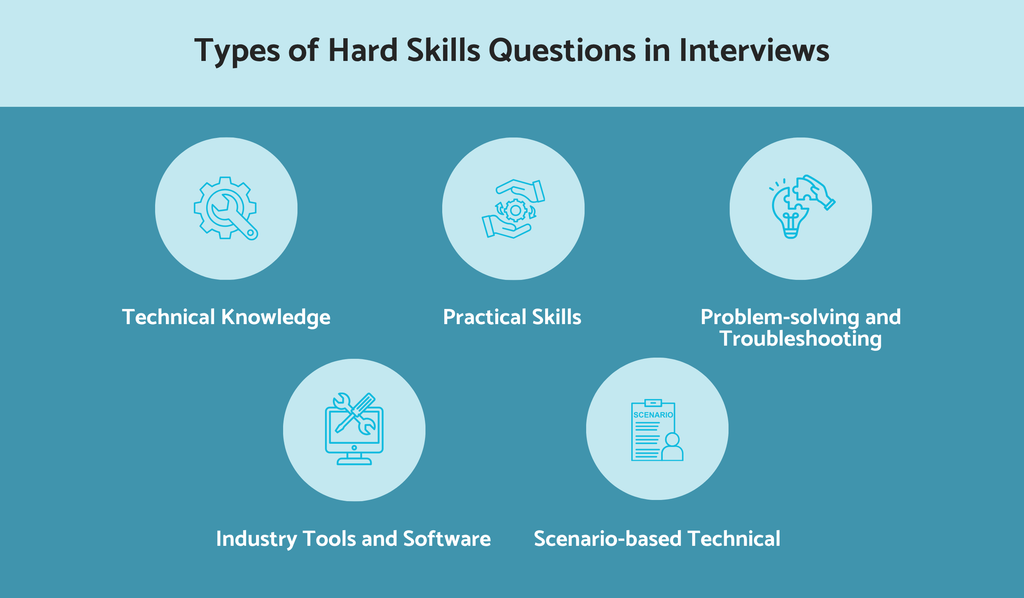
1. Technical Knowledge Questions
Technical knowledge questions explore whether candidates understand the concepts, standards, and methods required for a role. They are most useful when linked to specific responsibilities and supported by follow-up questions about practical application.
Which technical principle or method is most important for completing the task, and how would you apply it?
Role-specific Example (Software Developer): “Which programming principles would you apply when building a secure login system, and how would you use them to protect user data?”
Strong answer: The candidate identifies the core concepts relevant to the position, explains their importance, and connects them to specific job responsibilities.
Potential concerns: The candidate struggles to identify essential concepts, provides generic answers without explaining their relevance, or shows misconceptions about fundamental principles. Overlooking these gaps may lead to hiring someone who lacks the technical knowledge to perform core responsibilities effectively.
What industry standards do you follow when completing technical tasks?
Role-specific Example (Accountant): “Which accounting standards would you follow when preparing financial statements, and how would you ensure the figures comply with the applicable reporting requirements?
Strong answer: The candidate identifies relevant industry standards, guidelines, or quality checks and explains how they incorporate them into their workflow.
Potential concerns: The candidate cannot identify relevant standards, disregards established procedures without justification, and relies on outdated practices without realizing their limitations. Ignoring these red flags may result in compliance issues, inconsistent work quality, and avoidable technical errors.
How would you explain a key technical concept relevant to your field?
Strong answer: The candidate explains the concept accurately in simple terms, uses a relevant example, and demonstrates how it applies in practice.
Potential concerns: The candidate relies on jargon without explaining it, gives an inaccurate definition, and cannot provide an example demonstrating their understanding. Overlooking these weaknesses may lead to hiring candidates who struggle to apply or communicate essential technical knowledge.
2. Practical Skills Questions
Practical skills questions help employers understand how candidates would approach a job-related task. Where direct proficiency matters, a work sample or technical exercise can provide stronger evidence than an interview explanation alone.
How would you complete a task that requires the core technical skills listed in this job description?
Role-specific Example (Data Analyst): “You receive a spreadsheet containing duplicate records, missing values, and inconsistent date formats. How would you clean and prepare the dataset for analysis?”
Strong answer: The candidate breaks the task into manageable steps, identifies the appropriate methods and resources, and explains how they would check the final output against the requirements.
Potential concerns: The candidate cannot outline a clear process, overlooks essential requirements, or fails to explain how they would verify the quality of their work. This may result in missed requirements, inefficient workflows, and substandard deliverables.
How would you check your work for errors before submitting it?
Role-specific Example (Payroll Administrator): “Before submitting monthly payroll, what checks would you perform to identify incorrect salaries, tax deductions, or overtime calculations?”
Strong answer: The candidate describes a systematic review process that includes checking the output against the original requirements, verifying key details, and correcting identified errors.
Potential concerns: The candidate cannot explain how they would verify the output. Ask which checks they would perform and what they would do if the result failed those checks.
Walk me through how you would complete a typical deliverable for this role, including the tools you would use and the checks you would perform before submission.
Strong answer: The candidate describes a logical workflow, explains their choice of tools and techniques, and identifies the quality checks they would perform before submitting the work.
Potential concerns: The candidate cannot explain the steps involved, chooses unsuitable methods, and overlooks accuracy, formatting, and other important quality requirements. If overlooked, these shortcomings may lead to unreliable outputs, missed deadlines, and repeated revisions.
3. Problem-solving and Troubleshooting Questions
Problem-solving and troubleshooting questions help measure a candidate’s ability to identify technical issues, investigate their causes, and implement effective solutions.
How would you troubleshoot a technical problem when the cause is unclear?
Role-specific Example (IT Support Technician): “An employee cannot connect to the company network, but other employees can access it normally. What steps would you take to identify and resolve the issue?”
Strong answer: The candidate gathers relevant information, investigates the potential causes of the issues found, and tests solutions methodically.
Potential concerns: The candidate blames a tool or colleague, changes multiple things without a clear plan, and is unable to explain how they would identify the underlying cause. These signs may lead to unresolved issues, wasted resources, and recurring technical problems.
How would you identify and correct recurring errors in your work?
Strong answer: The candidate reviews previous errors to identify patterns, investigates their underlying causes, and introduces preventive measures such as checklists, automated checks, or revised workflows.
Potential concerns: The candidate treats every error as an isolated incident, makes corrections without investigating the cause, and fails to take steps to prevent the same mistakes from recurring. This pattern may allow preventable errors to persist and undermine overall work quality.
What would you do if your usual solution failed to resolve an issue?
Strong answer: The candidate reassesses their initial assumptions, considers alternative approaches, and tests them systematically.
Potential concerns: The candidate repeatedly tries the same unsuccessful approach, abandons the task without investigating alternatives, and refuses to seek help when the problem exceeds their expertise. Overlooking these weaknesses may lead to prolonged delays, unresolved issues, and unnecessary project disruptions.
4. Industry Tools and Software Questions
Ask candidates to describe how they have used relevant tools to complete specific tasks. Focus on the methods, decisions, and results they can explain rather than the number of software products they list. Familiarity with one platform may also transfer to another when the underlying skills are similar.
Which industry-specific tools have you used? How did they support your work?
Role-specific Example (Project Manager): “Which project management tools, such as Jira, Trello, or Microsoft Project, have you used to track milestones, dependencies, and deadlines? Describe a project where the tool helped you manage delivery.”
Strong answer: The candidate names relevant tools, explains the tasks they performed with them, and describes how those tools improved efficiency, accuracy, or output quality.
Potential concerns: The candidate lists software without explaining its practical applications, exaggerates their proficiency, and is unable to describe a specific task they completed using a claimed tool. These red flags may result in hiring someone who requires extensive training or cannot perform essential tasks independently.
What would you do if you needed to use unfamiliar software to complete an urgent assignment?
Strong answer: The candidate identifies the task’s essential requirements, consults official documentation or reliable tutorials, and tests the necessary features before applying them.
Potential concerns: The candidate starts using the software without understanding its basic functions, ignores accuracy or security risks, and refuses to learn an unfamiliar tool despite having reasonable resources available. Overlooking these issues may increase security risks, compromise output quality, and delay urgent assignments.
How would you use a particular tool to complete a task relevant to this role?
Role-specific Example (Financial Analyst): “How would you use Excel to compare actual expenditure against budget, identify significant variances, and present the findings to management?”
Strong answer: The candidate explains the relevant features, outlines the steps they would follow, and describes how they would verify the result.
Potential concerns: The candidate cannot identify the appropriate features, proposes an unsuitable workflow, or assumes that the tool will produce accurate results without verification. Ignoring these gaps may lead to inefficient tool usage, inaccurate results, and avoidable rework.
5. Scenario-based Technical Questions
Scenario-based technical questions present hypothetical workplace situations to help evaluate how candidates apply their hard skills under specific constraints, including tight deadlines, changing requirements, and limited resources.
How would you complete a technical assignment with limited time and information?
Strong answer: The candidate identifies the essential requirements, clarifies critical uncertainties, and prioritizes the tasks that have the greatest impact on the final result.
Potential concerns: The candidate makes unsupported assumptions without checking critical details, rushes through the task without prioritizing, or sacrifices essential accuracy and quality requirements without justification. This may result in poor decisions, missed deadlines, and costly mistakes.
What would you do if a project requirement changed after you had completed most of the work?
Role-specific Example (Web Developer): “A client requests a major change to a website’s checkout process shortly before launch. How would you assess the technical impact, update the development plan, and manage testing?”
Strong answer: The candidate clarifies the revised requirements, assesses how the changes affect the existing work, and identifies which parts need updating.
Potential concerns: The candidate ignores the changes, continues following outdated specifications, or makes extensive revisions without assessing their impact on the project. These warning signs may lead to misaligned deliverables, wasted effort, and project delays.
How would you maintain technical accuracy when handling several complex tasks simultaneously?
Strong answer: The candidate prioritizes tasks based on urgency and importance, breaks complex assignments into manageable steps, and uses appropriate checklists or validation tools to maintain accuracy.
Potential concerns: The candidate relies entirely on memory, skips verification to save time, or attempts to complete every task simultaneously without a clear prioritization strategy. This may lead to an increase in errors, reduce productivity, and compromise the quality of multiple deliverables.
Boost your hiring with our talent assessment platform. LEARN MORE
Next up, let’s look at common interview mistakes you can avoid when assessing hard skills.
3. What are the common interview mistakes made when assessing hard skills?
Technical interviews are most effective when questions reflect the role’s actual requirements. Relying on credentials alone, asking overly theoretical questions, or applying inconsistent scoring criteria can weaken comparisons between candidates.
The following are some of the common interview mistakes made while assessing hard skills:
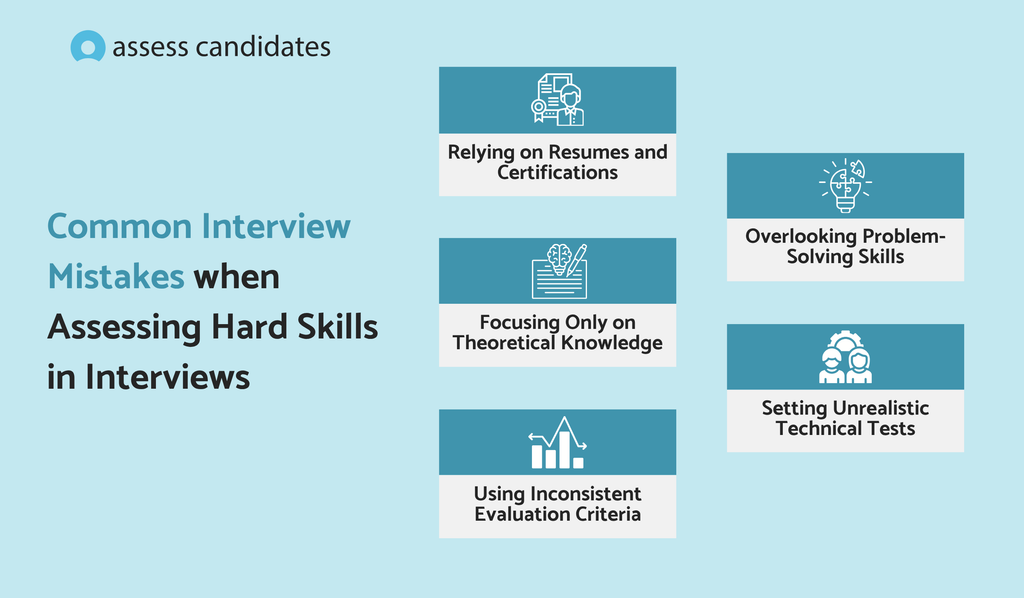
- Relying Solely on Resumes and Certifications
One of the most common mistakes made when assessing hard skills in an interview is relying solely on resumes and certifications. While resumes and certifications can indicate a candidate’s qualifications, they don’t always reflect their technical abilities.
Solution: Ask candidates to explain how they have used their skills in previous roles and validate their claims through relevant technical questions or practical assessments.
- Focusing Only on Theoretical Knowledge
Focusing only on a candidate’s theoretical knowledge instead of practical skills can lead to mis-hires. A candidate may understand technical concepts but struggle to apply them in real life.
Solution: Combine knowledge-based questions with practical exercises, work samples, or realistic scenarios.
- Using Inconsistent Evaluation Criteria
Another common mistake during skill interviews is the use of inconsistent evaluation criteria. Assessing candidates using different standards can lead to unconscious bias and make comparisons less reliable.
Solution: Establish a consistent scoring rubric that defines the expected level of technical proficiency, accuracy, problem-solving ability, and quality of work. Apply the same core criteria to every candidate interviewing for the role.
- Overlooking Candidates’ Problem-Solving Approaches
Focusing solely on whether candidates can arrive at the correct answer can prevent you from understanding their technical reasoning.
Solution: Ask candidates to explain their approach, how they identify errors, and why they choose particular solutions.
- Setting Unrealistic Technical Tests
Assigning overly complex assessments or tasks unrelated to the role that require excessive time can create an unfair candidate experience.
Solution: Design assessments that reflect actual job responsibilities, match the position’s seniority, and allow candidates enough time to demonstrate their abilities without unnecessary pressure.
Assess your candidates’ hard skills with our video interview tool. LEARN MORE
4. Why do top companies use Assess Candidates for assessing hard skills during interviews?
Assess Candidates offer pre-employment assessments that can complement structured technical interviews. Employers should select assessments according to the skills required for the role and combine their results with relevant interview evidence and practical demonstrations where appropriate.
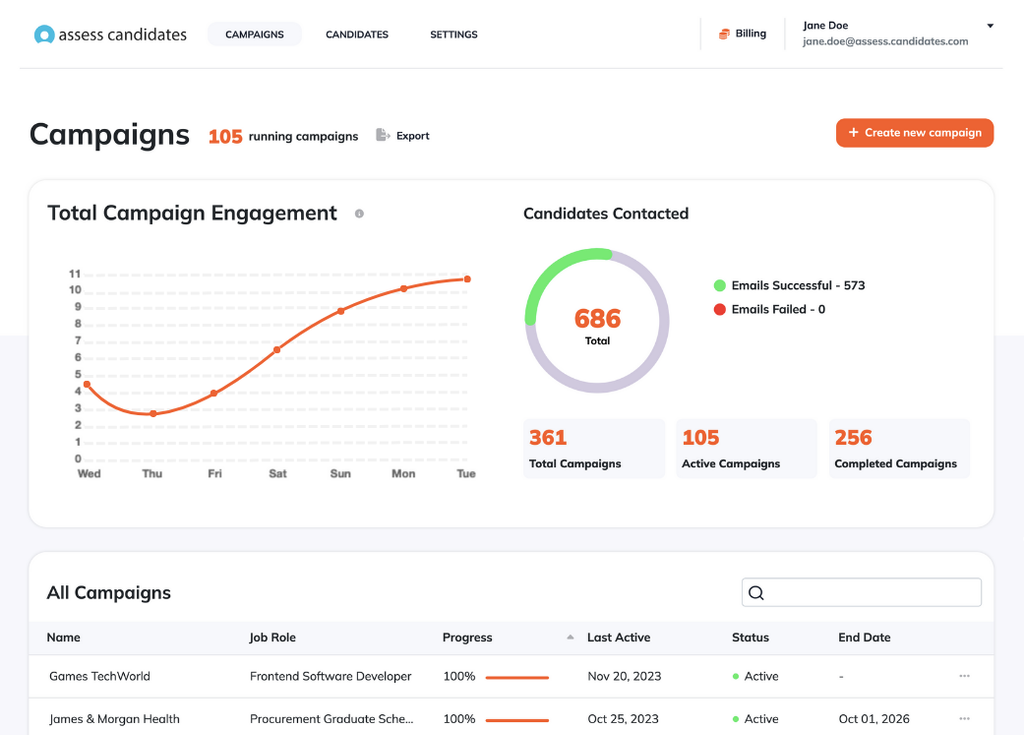
Here is an example of our campaign reporting dashboard, which helps recruiters manage and review candidate results in one place.
A technical interview should reveal how someone thinks about the work. A practical assessment should help establish whether they can do it.
Explore our full range of assessments to find practical assessment solutions suited to your hiring needs.
Not sure which assessments fit your hiring strategy? Contact us for a free analysis of your role requirements.
Partner with Assess Candidates to use a range of role-specific assessments in your hiring process. VIEW PLANS
Conclusion: Key Takeaway
Hard skills interview questions help employers explore technical knowledge, methods, and problem-solving approaches. For roles requiring hands-on proficiency, combine structured questions with realistic practical tasks. Consistent scoring and job-relevant evidence provide a stronger basis for hiring decisions than confident explanations alone.
Interested in learning more about effective candidate assessment? Continue reading for frequently asked questions, and sign up with your email to get started.
Frequently Asked Questions
How to identify the right hard skill interview questions for a role?
You can identify the right hard skill interview questions for a role by reviewing the job description and identifying the technical skills candidates need to perform their responsibilities. Prepare the questions that test their subject knowledge, practical abilities, and familiarity with relevant tools.
How to evaluate candidates’ answers to technical interview questions?
You can evaluate candidates’ answers to technical interview questions by establishing clear scoring criteria before interviewing them. These criteria typically include technical accuracy, problem-solving ability, practical knowledge, and the quality of their proposed solutions.
Can recruiters assess hard skills when they lack technical expertise?
Yes, you can assess hard skills while lacking technical expertise. Collaborate with hiring managers or subject-matter experts to develop relevant questions and define appropriate evaluation criteria. Moreover, use structured assessments and practical exercises designed around the role’s requirements.
How to reduce bias when assessing hard skills during interviews?
You can reduce bias when assessing hard skills during interviews by using structured interviews, standardized scoring rubrics, and job-related assessments to evaluate every candidate against the same criteria.
How many hard skills interview questions can you ask?
You can ask about five to six core interview questions to assess hard skills. However, this also depends on the role’s complexity, interview duration, and seniority level. Prioritize questions that assess essential competencies instead of covering too many topics superficially.


 English
 Arabic