
How Situational Judgment Tests Can Provide Your Candidates with A Realistic Job Preview in 2026



Offering candidates a realistic job preview is a good idea to ensure you are recruiting the right candidates. Situational judgment tests present real-world work scenarios which help you gauge candidates’ competencies and cultural fit whilst allowing applicants to decide whether the role is for them.
But how do you design and implement situational judgment tests that provide candidates with a realistic job preview before advancing through the recruitment process?
In this guide, we will show you how to construct your own tailored situational judgment tests to create a job simulation that gives your candidates a realistic view of the role they are applying for, the expectations, and your organization.
Contents
- What is a situational judgment test?
- What skills does a situational judgment test assess?
- Psychometric assessment tests to pair with situational judgment tests
- How does a situational judgment test create a realistic job preview?
- Best practices for offering candidates a job preview using SJTs?
- Roles to apply candidates with a situational judgment test
- Client success stories
- The future of realistic job previews via situational judgment tests
- Why do companies prefer using Assess Candidates’ SJTs?
Curious to know more about how situational judgment tests can give your candidates a realistic job preview in the hiring process?
1. What is a situational judgment test?
A situational judgment test is a pre–employment psychometric assessment test that presents candidates with realistic, work–based scenarios and questions, and asks candidates to rank the possible responses, ranging from extreme to reasonable actions. These assessments evaluate candidates’ behaviors and performance when faced with workplace challenges.
Situational judgment tests are often used as a skills-based hiring test when recruiting candidates, as they can evidently provide your applicants with a realistic preview of their prospective roles during recruitment.
Assess key behaviors and competencies with our science-backed situational judgement tests. HIRE FOR FREE
Wondering what skills the situational judgment test assesses in candidates during the application process? Keep reading!

2. What skills does a situational judgment test evaluate?
A situational judgment test focuses on evaluating multiple skills and competencies in your candidates. These skills are ranked based on multiple–choice responses provided in scenario–based questions.
Situational judgment test questions are designed on realistic scenarios relevant to the organization, often a daily challenge applicants may face in their role in which they are expected to demonstrate their behaviors and reactions to these problems.
Key skills and competencies that a situational judgment test assesses
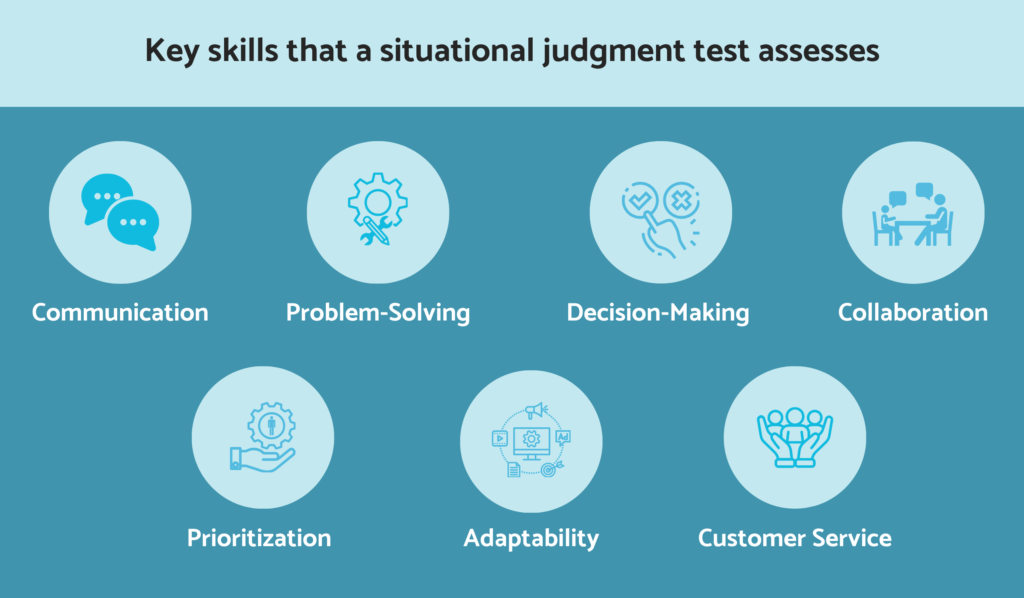
- Communication
You can use situational judgment tests (SJTs) to examine your candidates’ communication skills. These assessments help you to judge whether they are an active communicator across all departments and levels, as required of them in your company.
- Problem-Solving
When presented with a scenario, your candidates may choose a response that either mitigates or escalates the situation. You must be on the lookout for those who can demonstrate their problem–solving skills in case they ever encounter similar situations at work.
- Decision-Making
SJTs evaluate candidates’ decision–making skills when they encounter situations that require a critical decision that could affect their project, colleagues, or employer.
- Collaboration
Situational judgment tests can examine your candidate’s interpersonal skills, including collaboration with other colleagues and departments. SJTs will provide candidates with a preview of how they will realistically interact and collaborate with others in the company.
- Prioritization
A SJT will give candidates a glimpse of the work environment of your company. If organization is key to your role, you should test candidates on their ability to prioritize tasks and respond to them accordingly. Use scenarios in which they have to distinguish between urgent and important tasks.
- Adaptability
Most employers look for candidates who can adapt to new roles or tasks to boost the organization’s brand image. To this end, situational judgment tests assess candidates’ ability to adapt to any role.
- Customer Service
We suggest that you look out for candidates who possess strong customer service skills, especially if you are recruiting for roles where candidates will frequently interact with customers, as these interactions can impact your company brand.
Seeing the skills, why not check out the other assessment tests that employers have paired with situational judgment tests?
3. Psychometric assessments to pair with SJTs
Employers like you have wondered how to provide the best candidate experience during recruitment to ensure they attract and retain the right candidates, and we have recommended that offering candidates a job preview through psychometric assessments is one of the most effective ways to do so.
Situational judgment tests are important for providing candidates with a realistic experience, as the applicants can, through self-selection, decide whether they are comfortable with the daily activities in your organization.
Other assessment tests you can pair with a situational judgment test include:
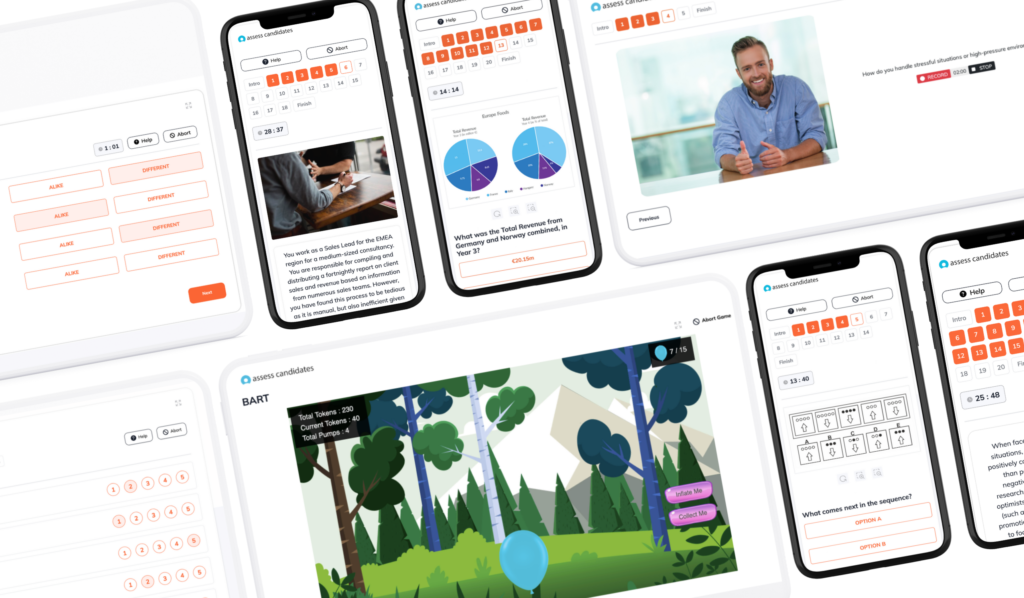
- Verbal Reasoning Test: Verbal reasoning tests gauge how your candidates understand, interpret and draw conclusions from written information, texts or passages. It presents passages of written text with multiple-choice answers.
- Numerical Reasoning Test: Numerical reasoning tests assess a candidate’s mathematical and numerical skills by presenting questions that require analytical reasoning. Candidates are expected to accurately solve problems and provide the right answers on time.
- Logical Reasoning Test: Logical reasoning tests evaluate the candidate’s analytical, deductive, and critical thinking skills. The test presents them with questions that can come in sequences or shapes and require the candidates to accurately determine the next sequence.
- Personality Questionnaire: Similar to situational judgment tests, the workstyle personality questionnaire provides candidates with a realistic job preview and, more importantly, offers insight into their personality and behavior and how well they fit the organization’s culture.
- Game–Based Assessments: Gamified assessments are a modern and unique way to assess candidates during the recruitment process. The game-based assessment process is an interactive and engaging way to determine the candidate’s cognitive skills and personality traits, as the hiring process uses games to assess the candidate.
Here are some gamified assessments that can help you gain data-driven insights into your candidates’ performance and skills.
When recruiting, present situational judgment tests as part of the initial psychometric test stage. At Assess Candidates, we suggest using it to create a well-rounded evaluation. Combining different assessments allows you to measure technical skills, cognitive ability, emotional intelligence, personality, and behavior, providing greater predictive validity for a candidate’s job performance.
Having seen the other psychometric assessments to pair with your situational judgment test, take a look at some of our examples of SJTs.
Examples of situational judgment tests that give candidates a job preview
When designing your assessment process, we recommend considering the type of roles you are hiring for. You can create the right situational judgment test questions that will accurately depict what applicants will experience after employment.
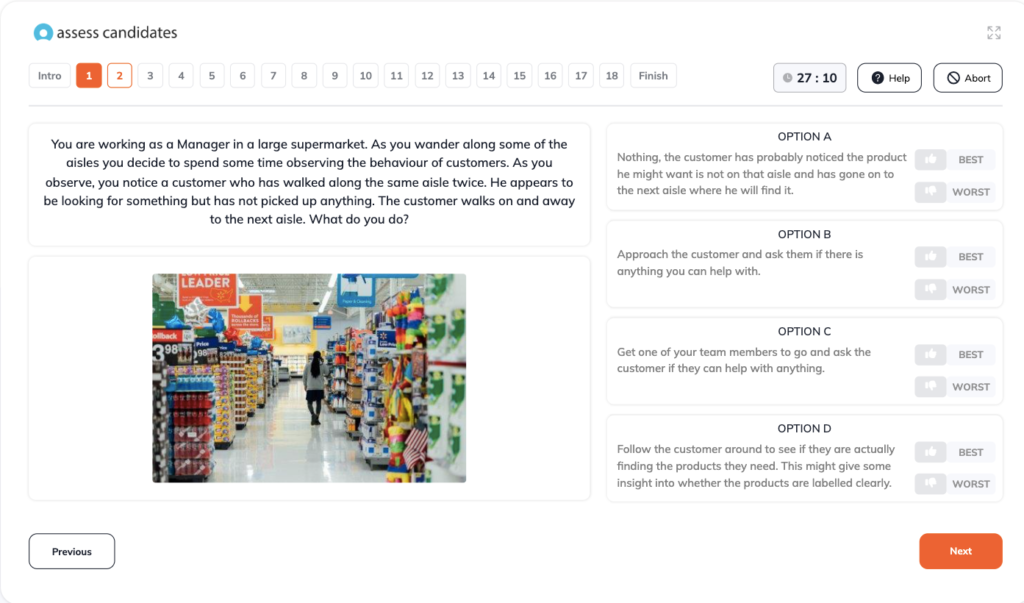
Below are some examples of situational judgment test scenario-based questions:
When developing the situational judgment test questions, we recommend focusing on the skills that you are searching for in your candidates, such as:
1. Customer Service-based Questions
2. Communication-based Questions
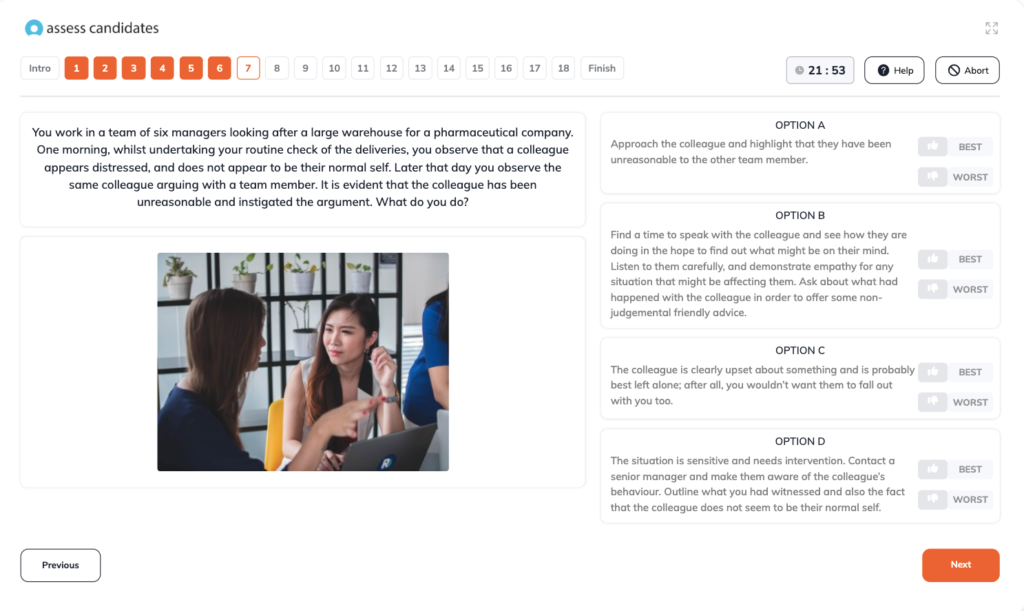
Curate situational judgment tests for your company and offer candidates a realistic job preview. LEARN MORE
The next stage is the benefit of situational judgment in helping candidates get a realistic job preview during recruitment. Continue scrolling!
4. How does a situational judgment test create a realistic job preview?
Including a situational judgment test (SJT) in your assessment process can offer several benefits that will aid you in fully gauging your candidates’ performance and skills, and also provide your candidates with a realistic preview of the job role they are applying for in the recruitment process.
Top 6 benefits of using SJTs to provide a glimpse into the role
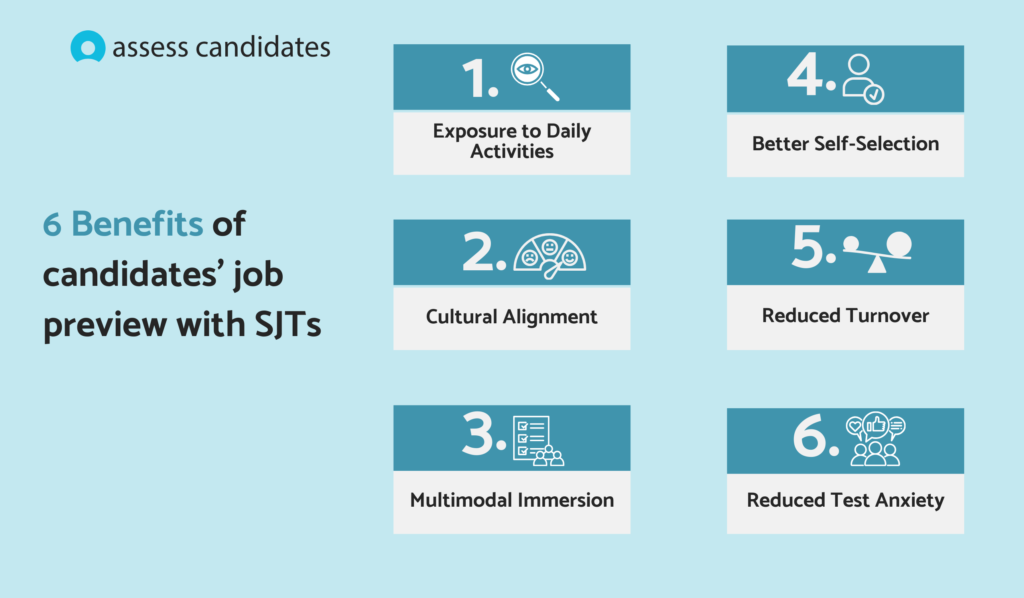
1. Exposure to Daily Activities
Situational judgment tests can present your candidates with a hypothetical scenario that is based on the day-to-day activities required of the employee applying for the roles you are recruiting for. These activities can include handling difficult customers, dealing with tight deadlines, or resolving conflicts between teams.
2. Cultural Alignment
SJTs often depict the organization’s core values, and during recruitment, this will provide your candidates with an opportunity to take a view at your company’s ethics, and understand if you are the right and ideal company for them and if they are culturally fit to work with you.
3. Multimodal Immersion
In 2026, employers are looking to immerse their candidates in their company’s performance expectations and requirements by using situational judgment tests in interactive video or audio formats to make the preview more vivid.
4. Better Self-Selection
The situational judgment test will help your candidates decide whether they are a good match for the role’s requirements, and will allow those who do not feel aligned with your company the chance to withdraw from the hiring process early.
5. Reduced Turnover
The pre-employment psychometric assessment test reduces the chances of your candidates leaving your organization through becoming accustomed earlier to the challenges and experiences they may encounter, enabling them to adapt faster.
6. Reduced Test Anxiety
Presenting your candidates with engaging, interactive scenario-based situational judgment tests ensures a relevant, fair, and unbiased hiring, and it helps reduce candidate anxiety during the recruitment process.
Uncover reliable assessments designed by Chartered Scientists to recruit the right candidates. VIEW PLANS
Are you thinking about the best practices to implement situational judgment tests in your recruitment process? We have the solution for you.
5. Best practices for providing candidates with a job preview using SJTs?
According to Stefane Pollard and Helena Cooper–Thomas, when employers use various competency assessments to assess candidates’ skills across roles and levels, a single situational judgment test can be used for many roles.
Key strategies to give candidates a job preview with SJTs
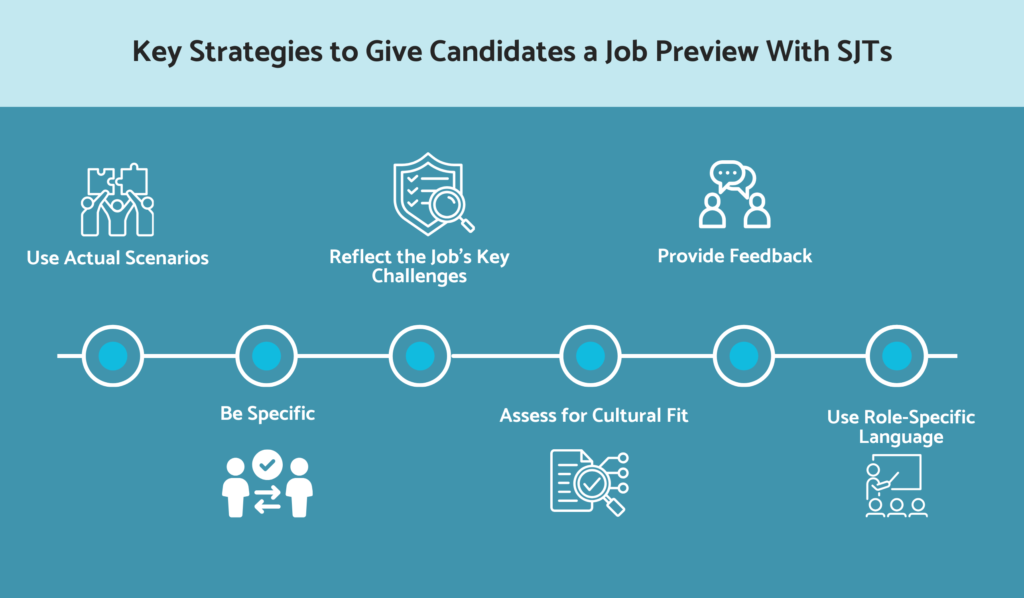
- Use Actual Scenarios
We recommend that when creating your situational judgment test, you should choose from actual situations that your employees have faced in the role you are recruiting for. To get this, you can reach out to current employees or managers to collect a sample of the regular challenges and decisions.
- Be Specific
You should be specific about your context in your scenarios by including information about your work environment and available resources, which helps your candidates visualize themselves in the role they are applying for.
- Reflect the Job’s Key Challenges
You can highlight all the aspects that will be experienced by the candidates who are applying for the role with your situational judgment tests. It is important that you also show the difficulties and frustrations that come with the job so the candidates can have a full view of the role.
- Assess for Cultural Fit
You can include scenarios that demonstrate your company’s values, decision–making authority, and work–life balance expectations for your candidates when they are employed. Doing this will help your candidates align with how your organization operates.
- Provide Feedback
Upon the completion of the assessment process, you can provide explanations and feedback, sharing an insight into your company’s priorities and performance expectations, giving them the whole job preview, even if they may not get the role.
- Use Role-Specific Language
Use terms and phrases that are related to the roles you are applying for, so that it will aid your candidates in understanding the technical aspects of the job and self-assess whether or not they are a good fit for the role.
Up next, we will take a look at the roles and sectors of jobs that use situational judgment tests.
6. Roles to apply candidates with a situational judgment test
Recruiters have often used the situational judgment test during recruitment processes, but some have negated using the test to provide their candidates with a realistic job preview ahead of employment.
According to Clevry, situational judgment tests have always offered employers the opportunity to assess and examine how their candidates behave in their respective roles.
Before we take a look at the roles, check out the job sectors that employ candidates using the SJTs.
Sectors that use SJTs to give job previews
- Healthcare
Employers like the NHS (UK), Cleveland Clinic, and Kaiser Permanente often use situational judgment tests to demonstrate to candidates how they will work in multidisciplinary teams, handle patient conflicts, and navigate ethical issues.
- Finance
Financial and banking institutions like Morgan Stanley, KPMG, and Deloitte all use the situational judgment test in their recruitment to present candidates with scenarios involving regulatory compliance, decision-making with clients’ money, and handling sensitive information.
- Retail
Companies in the retail and customer service sector, such as Amazon, TfL, and Walmart, employ SJTs in their recruitment to preview customer interaction and balance company policies with customer satisfaction.
- Education
Organizations such as medical and dental schools, public schools, and universities use situational judgment tests for the selection of teachers, presenting candidates with a realistic scenario about classroom management, communication with parents, and adapting to diverse learning requirements.
- Legal
Legal firms such as Clifford Chance, Allen & Overy, and Linklaters use the situational judgment test to provide candidates with a realistic job preview of the daily activities they will face if employed at the firm.
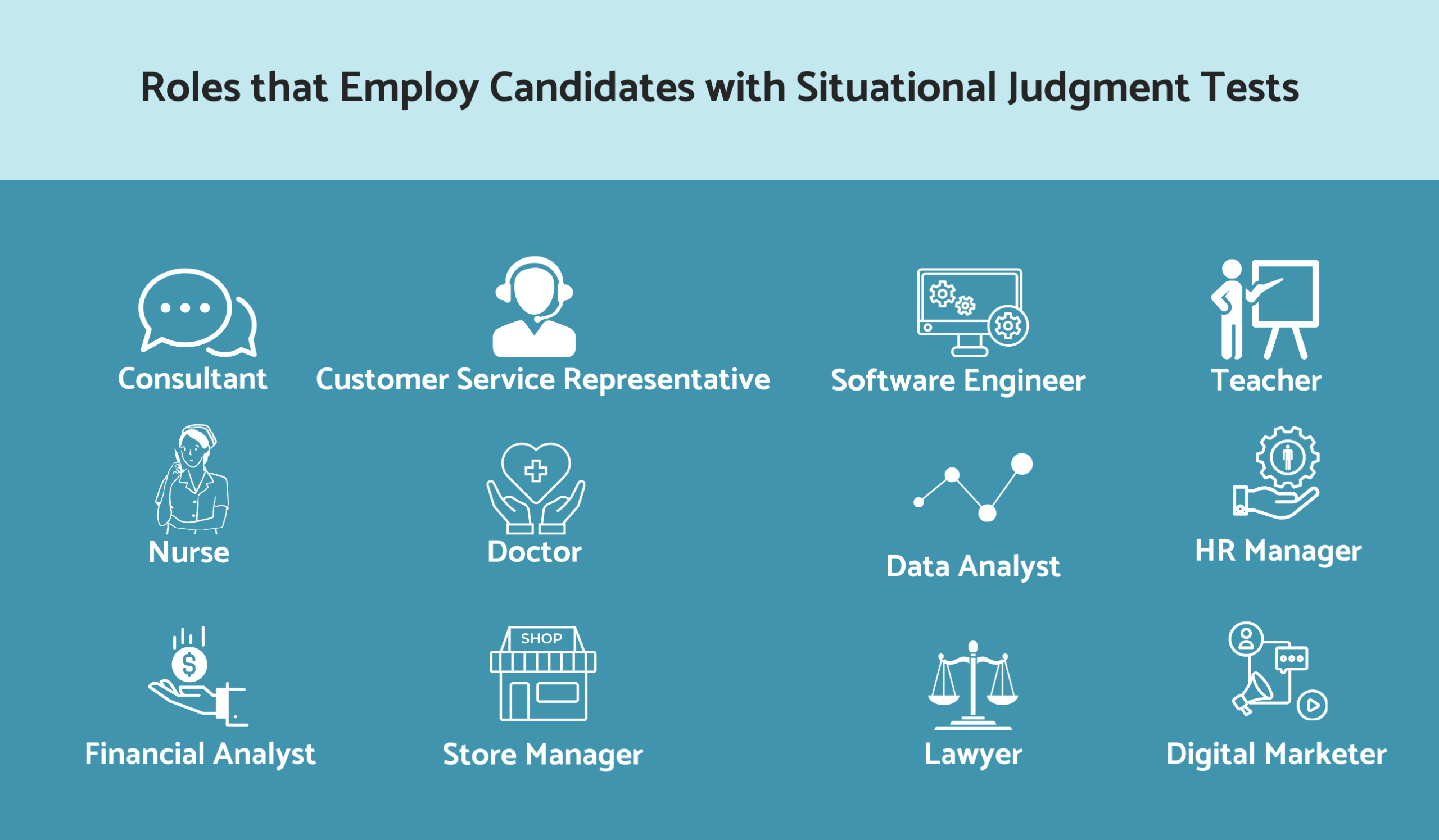
Roles that Employ Candidates with Situational Judgment Tests
- Consultant
- Financial Analyst
- Data Analyst
- Teacher
- Nurse
- Doctor
- Lawyer
- Customer Service Representative
- Store Manager
- HR Manager
- Software Engineer
- Digital Marketer
Are you considering including a situational judgment test in your recruitment process to give your candidates a realistic job preview? You can reach out to us for a thorough evaluation of your recruitment assessment design, and we will ensure you hire the right candidates. You can take a look at our gallery of psychometric assessment tests.
Many organizations around the globe continue to use situational judgment tests in their assessment process because it helps them save costs and time when recruiting candidates. It also reduces the percentage of turnover who quit because they do not align with the company’s culture. Below is a list of employers that include the SJTs in their hiring process.
Employers that use situational judgment tests
- Clifford Chance
- Allen & Overy
- TfL (Transport for London)
- Walmart
- Amazon
- NHS
- Linklaters
- Deloitte
- KPMG
Learn about more expert-created assessments to guide you in recruiting the perfect hire. VIEW PLANS
7. Client success stories
Various employers have spoken up about the benefits of using situational judgment tests to give candidates a realistic preview of the job role they are applying for.
1. Google
Challenge:
Google was looking to hire engineers and project managers with technical skills and creativity, as well as decision-making, collaboration, and communication skills. So they could handle the real-world challenges that they would likely face.
Solution:
To solve their problem, Google integrated a customized situational judgment test into its recruitment process, using scenarios to simulate collaborative problem-solving pressure so candidates would have an idea of the roles.
Results:
- The candidates who performed well in the SJT demonstrated stronger collaboration and problem-solving skills on the job.
- Google saw a rise in its hiring alignment with its innovative culture and team expectations.
- Reduced the chances of mis-hires by focusing on assessing real-world work behaviors.
2. Apple
Challenge:
Apple struggled to improve its hiring results for customer support roles, which required more than just technical expertise to handle customer experiences or provide empathetic responses to customers.
Solution:
The Big tech company incorporated situational judgment test scenarios into its recruitment process that were similar to its typical customer interactions, such as handling customer feedback and interpersonal decisions as part of its job preview.
Results:
- The candidates showed better customer service instincts and easy adaptability to customer engagements.
- Departments that hired focusing on situational judgment tests saw fewer customer complaints and an increase in satisfaction ratings.
- Recruiters reported a higher predictive validity of situational judgment test scores.
This is where Assess Candidates comes in; we help ensure that your candidates are well-skilled, as our pre-employment psychometric assessment tests and situational judgment tests measure skills and provide data-driven analytics to inform your hiring decisions.
8. The future of realistic job previews via situational judgment tests
Check out the possible future of recruitment when many employers like you begin to prioritize providing their candidates with a job preview during the hiring process.
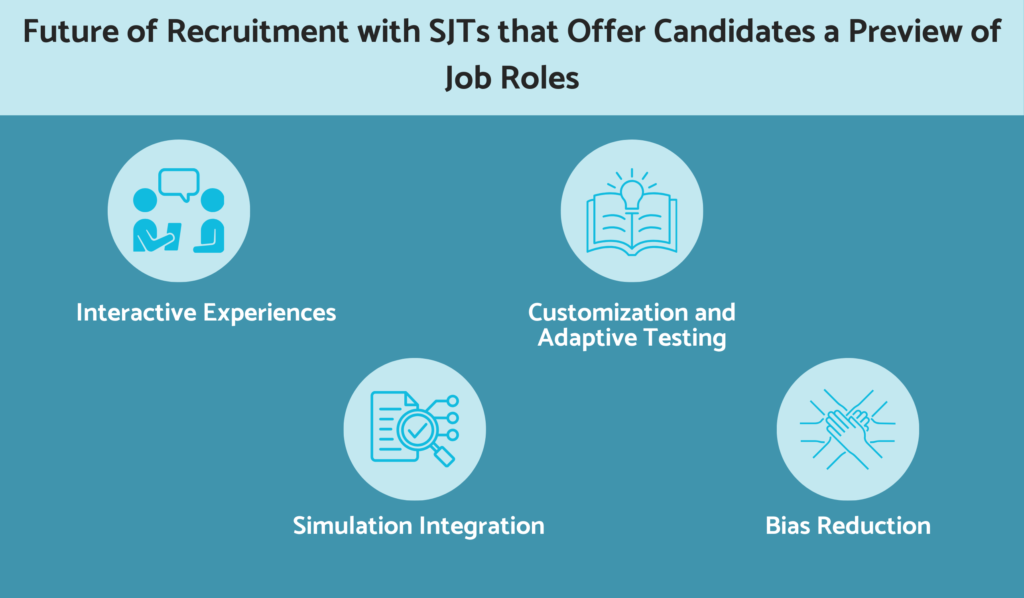
What is the future of recruiting with realistic SJTs?
- Interactive Experiences
Recruitment processes will become more immersive and interactive as employers will continue to shift from text-based multiple-choice questions to video-based scenarios, virtual reality (VR) simulations, and game-based assessments.
- Customization and Adaptive Testing
Personalizing your psychometric assessment tests will enable your situational judgment tests to adjust based on your candidates’ responses and develop unique pathways through the scenarios. If a candidate finds any situation difficult, the test can explore that scenario further or provide more context.
- Simulation Integration
The integration with a realistic job simulation will eventually blur the line between assessment and onboarding, as candidates will be asked to participate in job previews like completing sample tasks and solving actual business problems, which could also function as a trial period.
- Bias Reduction
The future of recruitment will see an influx of efforts to reduce bias and ensure fairness, as future SJTs will likely include multiple response formats and culturally adapted scenarios to assess what matters without bias and unfair disadvantages between groups.
So, why go with Assess Candidates when recruiting with SJTs and providing a job preview?
9. Why do companies prefer using Assess Candidates’ SJTs?
Employers are choosing Assess Candidates because it helps position them in the market as a resourceful company with little to no mis-hires, candidate satisfaction and positive candidate experience during the recruitment process, as they can filter the right hires.
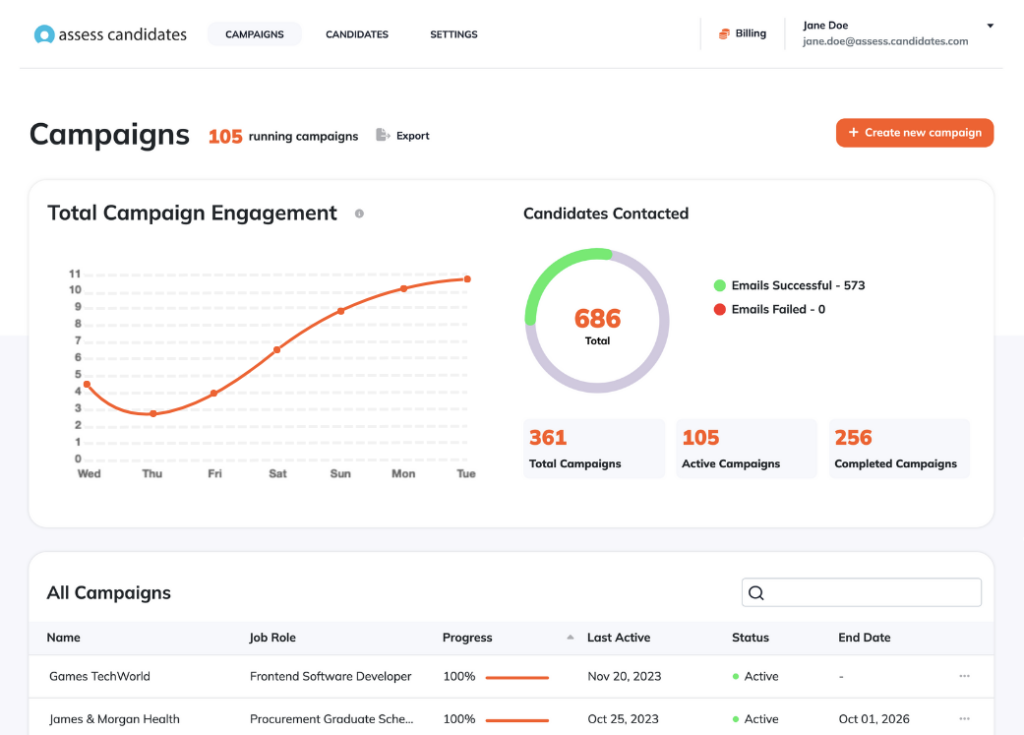
Why recruiters prefer Assess Candidates’ Situational Judgment Tests for job previews
- Choice of Customization: Assess Candidates offers semi-bespoke and fully bespoke solutions that you can use to customize situational judgment tests and design assessments to meet your recruitment needs.
- User–Friendly Platform: Our platform can provide you with an insightful dashboard and comprehensive reports that make for easy ranking, filtering and shortlisting of the perfect candidates to make your hiring decisions data-driven.
- Accessibility and Inclusivity: The platform also includes accessibility features like additional time, a zoom widget, and screen reader compatibility that will help ensure a positive candidate experience for those with disabilities.
- Bias Reduction: Assess Candidates prioritizes fairness and inclusion, as the platform actively reduces bias and presents every candidate with an equal opportunity to succeed in their assessments, regardless of their background.
- Anti–Cheating Measures: The Assess Candidates’ platform uses a cheat-detection technology that records candidate behaviors during the assessment process and informs you of how confident you can be that your candidates did not cheat.
Hire the right candidates with our fully-equipped skills assessment tool platform. LEARN MORE
Conclusion: Key Takeaway
This article guided you in how to use situational judgment tests to provide your candidates with a job preview before moving forward in the recruitment process and wasting more resources.
From learning the meaning of situational judgment tests, the skills they assess, and what to look out for when recruiting candidates for your organization, you are able to recognise the benefits and strategies involved in using SJTs during recruitment, providing your candidates with a positive experience and you with a positive brand image.
Curious to know more about using situational judgment tests in your recruitment process? Keep scrolling to explore our frequently asked questions, and enter your email to get started today.
Frequently Asked Questions
Can SJTs be customized for different job roles?
Yes, SJTs are adaptable and can be customized to suit diverse job roles, ensuring that the assessment aligns with the specific requirements of each position that you are recruiting for.
Are situational judgment tests suitable for all industries and job types?
Yes, situational judgment tests can be tailored to fit a wide range of industries and job types, making them a versatile tool in the recruitment process.
Can SJTs be paired with other assessment methods?
Situational judgment tests can be paired with other assessment tests to get a full range of the candidates’ abilities and skills during the hiring process.
When should I use situational judgment tests?
You can use situational judgment tests before hiring your new employees to gauge their competencies and abilities, whether or not they align with your expected values.
Are there any challenges to using situational judgment tests?
Developing a customized situational judgment test scenario with questions can be time-consuming and complicated, especially if you are tailoring it to each role you are recruiting for. However, it is worth the reward as the candidates will be privy to your intentions and have a preview of the role they are applying for at the early stages of recruitment.


 English
  Arabic