
Job Simulation Tests for Hiring: How to Effectively Assess Competencies in 2026



Job simulations are increasingly becoming a staple of modern recruitment globally. According to SHRM, 54% of employers, including Deloitte and GSK, are already using job simulation exercises to make hiring more cost-effective and efficient.
Where traditional hiring methods, like CVs, cover letters, and unstructured interviews, have frustrated hiring managers for years due to their high cost, inefficiency, and unreliability, interactive job simulation assessments are a practical, engaging way to evaluate candidates. By replicating real job tasks, these pre-employment tests measure competencies like problem-solving, adaptability, and the ability to work under pressure to accurately predict candidate job performance.
The impact is clear: 78% of recruiters report that job simulations have significantly improved their recruitment process and 36% have reduced time-to-fill.
Moreover, realistic job simulation exercises offer candidates a glimpse into the daily demands of the role and company culture to determine their cultural alignment. This enhances the candidate experience and reduces mis-hires due to mismatched expectations.
So, if you are looking to include job simulation tests in your hiring process, you may be asking:
- What is a job simulation assessment in recruitment?
- What do job simulation tests measure?
- What are the top benefits of skill based simulations in hiring?
- Are there any key tips for effectively using simulation exercises?
- What are hybrid skills based simulations?
Whether you are a recruiter, hiring manager, or talent acquisition expert, our article will offer you a comprehensive overview of the different types of job simulations, their benefits, challenges, and how they can transform your hiring process – backed up by real-world examples from leading employers.
So, if you are one of those employers looking forward to leveraging job simulations this year, this article is for you!
Contents
- What are job simulation tests?
- Why are job simulations better than traditional hiring methods?
- What are the different types of job simulations?
- Choosing the right job simulation test: The pros and cons
- At what stage are job simulations used in the hiring process?
- Top strategies practices for implementing job simulation tests into your recruitment strategy
- When to give candidates a job simulation test?
- Which employers use job simulations for hiring?
- Why do top companies choose Assess Candidates pre-employment tests to hire?
- What is the future of job simulation in recruitment?
1. What are job simulation tests?
Job simulations are interactive pre-employment skills assessments that assess how candidates perform in real-world tasks relevant to the role. Either virtual or in-person, these simulation exercises emulate realistic workplace challenges, allowing recruiters to evaluate both technical skills and soft skills, such as problem-solving, adaptability, and decision-making.

How do job simulations help recruiters?
Job simulations for recruitment allow employers to objectively evaluate candidate job performance and potential. By mirroring real-world tasks, they help predict how candidates will perform on the job while also revealing their ability to work in a team, communication style, and cultural fit – factors that traditional CVs and unstructured interviews often miss.
How do job simulations benefit candidates in recruitment?
Job simulations level the playing field for candidates. Beyond purely credentials and subjective interviews, candidates can showcase their skills through real-time tasks and performance. These exercises also give candidates a realistic preview of the role and company culture, helping them decide whether the work and business are a good personal fit before accepting a job offer.
Explore our range of psychometric assessments to complement your job simulations. HIRE FOR FREE
Let’s now discuss what competencies do different job simulation exercises measure?
What key competencies do job simulation tests measure?
While job simulation exercises can be tailored to assess whatever job-relevant competencies you want, and it is not a one-size-fits-all approach, most employers use them to measure a common set of competencies, behaviors, and skills.
Here are 10 common competencies recruiters often measure through job simulation tests:
- Problem-solving: The ability to analyze situations, identify issues, and solve problems effectively.
- Communication: How effectively candidates convey information and listen to others.
- Teamwork and Collaboration: The ability to work harmoniously with others towards common goals.
- Adaptability and Flexibility: How well a candidate adjusts to changing circumstances.
- Decision-making: The capacity to make informed choices promptly.
- Leadership Potential: The ability to guide, motivate, and manage others effectively.
- Attention to Detail: The precision and thoroughness in completing tasks.
- Time Management: The ability to prioritize tasks and manage time efficiently.
- Customer Orientation: The ability to attend to, understand, and meet customer needs.
- Technical Proficiency: The specific technical skills required for a role.

After discussing what skills and competencies job simulations measure, let’s discuss their importance.

2. Why are job simulations better than traditional hiring methods?
Job simulations are one of the best interactive behavioral assessments to streamline your recruitment process. Whilst traditional hiring solutions fail to show how well a candidate will actually perform in the role and are time-consuming, costly, and prone to bias, job simulation tests have become a far more reliable, cost-effective, and efficient tool in hiring to identify the right talent.
In fact, research shows that unstructured interviews predict job success only about 14% of the time, and 74% of employers admit to making a bad hire because of relying too heavily on resumes or gut instinct.
Here are some pros of using simulation exercises instead of traditional methods:

Reduces Hiring Bias
Job simulation exercises allow recruiters to objectively assess candidates on their task performance, ignoring subjective indicators and focusing on how someone handles real job scenarios. In contrast, traditional hiring methods such as resumes and interviews often rely on credentials, names, accents, or prior job titles, which can trigger conscious or unconscious bias.
A call center replaced behavioral interviews with live call simulations. Many interview-confident candidates couldn’t manage actual customer complaints, while quieter applicants excelled under pressure. This led to better hires and improved customer satisfaction scores.
Tests Real-World Skills Over Theoretical or Claimed Knowledge
Job simulation tests allow recruiters to evaluate candidates on their real-time skills over self-reported abilities. These exercises ask: “Do the task now.” While traditional credentials and interviews rely on static skill claims and hypothetical questions like “What would you do if…?”, or ask for past experiences, which may be exaggerated and unreliable.
For Example: A tech company recently replaced resume screening with simulated coding challenges. This allowed them to hire self-taught developers who scored high on code quality, even though their resumes lacked formal education or prestigious companies. These hires outperformed those selected through interviews alone.
Improves Candidate Experience
Job simulation assessments give candidates insight into what the role and work culture entail. This enhances the candidate experience, enabling them to determine whether the role aligns with their expectations and abilities. On the other hand, a traditional recruitment process fails to offer this advantage as job descriptions and interviews can be vague.
For Example: A logistics firm introduced physical simulation tasks (e.g., order picking under time pressure). Candidates who disliked the pace or physical demands opted out early. This avoided mismatches, saving on training and rehiring costs.
Identifies High-Potential Talent and Fosters Inclusivity
Job simulations allow employers to hire top candidates solely on their skills and competencies, especially for graduate hiring. While credential-based recruitment unfairly gives more weight to those with relevant formal education or work experience, and can exclude career-switchers, return-to-work applicants, or individuals without formal degrees despite possessing job-relevant skills.
For Example: A marketing agency gave candidates a branding challenge and analytics task. Several career-switchers outperformed experienced marketers with stronger resumes. They were hired and brought unique insights from other fields.
Reduces Costly Mis-Hires by Predicting Actual Job Performance
Simulation exercises offer employers insights into a candidate’s performance, overall personality, and professional acumen in real-time through simulated performance assessments, thus reducing mis-hires and wastage of organizational resources. In contrast, subjective hiring methods, such as interviews, assess personality traits and job potential subjectively through how the candidate presents themselves, and are thus less reliable.
For Example: A bank used a job simulation in hiring involving client interactions and regulatory tasks. Some smooth-talking candidates failed on compliance tasks, while less confident candidates excelled in accuracy and professionalism. This improved long-term retention and compliance audit scores.
Enables Consistent and Scalable Assessment Across Locations
Online job simulations allow employers to make their recruitment process accessible globally, suitable for remote or mass hiring. Interviews, on the other hand, are often inconsistent across interviewers and limited by time, geography, and are more prone to connectivity issues.
For Example: A BPO firm deployed online job simulations for technical support across multiple countries. This removed interviewer subjectivity and enabled hiring thousands of agents with consistent evaluation criteria, improving the quality and speed of recruitment.
Reduces “Interview Coaching” Effects
Job simulations require on-the-spot thinking and task handling and are the best way to unravel candidates’ true capabilities. Traditional interviews can be “gamed” as many candidates rehearse ideal answers or follow guides to appear as perfect fits, which reduces the validity of the process.
For Example: A luxury hotel group tested front-desk candidates with real-time customer complaint scenarios. Some applicants who aced interviews with polished answers froze under pressure, while others calmly resolved the issues with empathy and tact.
Accelerates Time-to-Hire Without Sacrificing Quality
Job simulation exercises are standardized, enabling employers to conduct an objective, one-step assessment of their candidates’ multi-skills. These assessments significantly help employers boost time-to-hire while focusing on improving the quality of hire. Traditional hiring processes, such as multiple interview rounds, resume filtering, and reference checks, are slow, time-consuming, and often subjective.
For Example: A large retail chain used simulations for cashier and floor staff roles. Candidates went through scenario-based tests (e.g., handling rude customers, quick restocking). Managers were able to shortlist in days rather than weeks, with better-performing hires.
Provides Legal Defensibility in Hiring Decisions
Job Simulation assessment tests are structured, job-related, and measurable, making them legally defensible and compliant with Equal Employment Opportunity guidelines. While subjective interviews and informal resume filters can be legally risky and hard to defend in discrimination cases.
For Example: A healthcare provider used simulation exercises for nursing and admin roles, such as medication-entry or patient-scenario handling. When challenged on a hiring decision, the company used simulation scores as objective evidence of job-fit, protecting them legally.
Aligns Hiring with Business Outcomes
Job simulation assessments are highly flexible and can be tailored to assess key metrics, such as efficiency, creativity, or customer impact, directly linking hiring decisions to KPIs. On the other hand, interviews can be standardized to an extent to evaluate a candidate’s working style and motivation; however, they falter in objectively linking them to how they will help move the business forward.
For Example: A startup added a job simulation in recruitment to assess how support reps handle client escalations. Candidates who kept simulated clients engaged and de-escalated frustrations had higher retention rates in real life. They tied simulation results to turnover data.
Unlock similar benefits with our modern pre-employment psychometric assessments. LEARN MORE
Now, let’s cover the different types of job simulations available in the section below.
3. What are the different types of job simulations?
Depending on the format and purpose, job simulations are of the following key types:
Hard Skills-based Simulations:
Hard skills-based simulation exercises allow recruiters to evaluate candidates on a variety of technical and cognitive abilities with online or in-person tasks.

1. Work Sample Tests
Work sample tests are written simulation tests designed to assess a candidate’s ability in handling job-specific tasks and responsibilities, such as drafting reports, analyzing data, or responding to customer inquiries. Employers such as Google, Deloitte, and IBM utilize these simulation exercises for roles like marketing specialists, customer service representatives, and analysts.
Popular types of work sample tests:
- Analytical Report Writing: How well candidates work with information presented in document files and spreadsheets and communicate findings effectively.
- Email Correspondence: How well candidates draft responses to hypothetical client or colleague emails, evaluating their communication skills and professionalism.
- Policy Development: A candidates’ ability to create or revise organizational policies based on provided guidelines or scenarios.
2. Technical Job Simulations
Technical job simulations evaluate candidates in specific technical skills such as coding, data analysis, and system troubleshooting through hands-on tasks. Employers such as Microsoft, Tesla, and Oracle use these simulations to hire software engineers, data scientists, and cybersecurity analysts.
Popular technical job simulation tools:
- HackerRank Job Simulation: Evaluates programming efficiency, debugging, and problem-solving by challenging candidates to write optimized code and debug errors under time constraints.
- Codility Technical Test: Measures algorithmic thinking, system design, and engineering skills by testing candidates’ ability to develop scalable solutions and optimize system performance.
- Korn Ferry Technical Assessment: Assesses technical reasoning, programming logic, and industry expertise by presenting candidates with real-world technical challenges in their field.
3. Case-study Simulations
Case study simulations evaluate a candidate’s problem-solving skills and business acumen through real-world case study exercises. They are commonly used in assessment center exercises or final interviews by McKinsey, BCG, and Deloitte, to assess candidates for positions like strategy consultants, financial analysts, and business development managers.
Popular case study types in recruitment:
- Profitability Analysis Case Study: Assesses candidates’ ability to identify reasons for declining profits and suggest actionable solutions
- Market Entry Strategy Case Study: Evaluates how well candidates can gauge the viability of entering a new market, considering factors like competition, market size, and potential risks.
- Mergers and Acquisitions Case Study: Assesses the ability to analyze complex business scenarios, such as assessing the financial implications of potential mergers or acquisitions.
4. Take-Home Assignments
Take-home assignments assess critical thinking, creativity, and problem-solving with real-world job tasks that applicants can take at home. These offline job simulation tasks are popular amongst employers like Spotify, The New York Times, and Airbnb to hire for remote or hybrid roles like software developers, journalists, and UX designers.
Popular take-home assignment exercises:
- CodeSignal Take-home Challenge: Tests candidates on their programming and problem-solving skills by asking them to write and optimize code while following best practices.
- Case Study Writing Tasks: Measure candidates on their analytical thinking and writing clarity for consulting and journalism roles by evaluating how they research, structure arguments, and present findings.
- Marketing Campaign Simulations: Assess candidates’ ability to plan and execute a brand strategy by requiring them to create a marketing plan based on a company’s business objectives.
After hard skills, let’s now cover some popular soft skills-based job simulation exercises in our section below.
Soft Skills-based Job Simulations
Soft skills-based simulation exercises are often a part of the final assessment center stage of recruitment. Depending on the role and required skills, these simulation exercises are of the following types:
1. Situational Judgment Tests (SJTs)
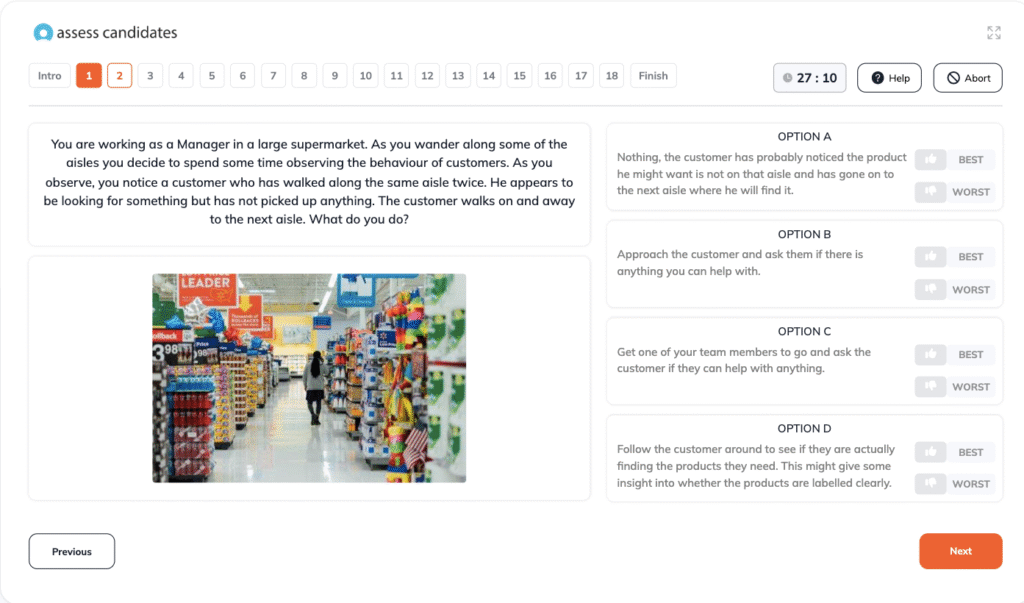
Situational judgment simulation exercises present candidates with hypothetical workplace scenarios through online portals using multimedia videos, images, or audio. Employers such as the NHS, Accenture, and Deloitte use these online simulation tests for hiring physicians, administrative officers, and policy advisors.
Popular examples of situational judgment tests:
- Assess Candidates Situational Judgment Test: We offer 2 SJTs which assess 10 behavioral competencies and core strengths, including working with colleagues, planning and organizing, leading, and delivering results,etc.
- Talent Q Situational Judgment Test: Evaluates the following core areas: decision-making, interpersonal skills, resilience, integrity, motivation, and planning and organizing.
- SHL Situational Judgment Test: Evaluates candidates on competencies such as communication skills, teamwork, and problem-solving.
Check out a sample question from the Assess Candidates Situational Judgment Test below!
2. Role-playing Exercises
Role-playing simulations evaluate soft skills such as candidate’s ability to negotiate, customer service skills, and leadership skills in real-time. Employers such as Amazon, American Express, and KPMG use these job simulation exercises to hire for sales executives, customer service managers, and crisis response coordinators.
Popular role-play simulations in recruitment:
- HireVue Job Simulation: Evaluates a candidate’s ability to respond to customer inquiries, difficult negotiations, and workplace disagreements.
- Cubiks Role-play Exercise: Assesses conflict resolution, teamwork, and collaboration by simulating workplace discussions where candidates must navigate group decision-making and team conflicts.
- Thomas International Role-playing Assessment: Evaluates how well candidates take charge of a business situation, delegate tasks, and guide a team through a challenge.
3. Group Tests
Group tests assess collaboration, leadership, and communication skills through team-based exercises. Employers such as Unilever, EY, and Nestlé utilize these tests to recruit roles like management trainees, consultants, and marketing associates.
Popular group tests:
- Job Simulation Assessment Centre Exercises: Assess candidates’ ability to work in a group on tasks such as case studies or problem-solving activities to evaluate them on their dynamics and decision-making skills.
- Leaderless Group Discussions: Evaluates how candidates showcase leadership acumen, active listening, and how they influence peers in a leaderless setting.
- Team-based Problem-solving Tasks: Assess candidates on their ability to tackle hypothetical business challenges in a group and showcase their conflict resolution and collective strategic planning.
Boost your hiring with a bespoke situational judgement job simulation. LEARN MORE
But, can job simulation exercises also evaluate hybrid skills? Keep reading to find out.
Hybrid Skills-based Simulations
Hybrid skill-based simulation exercises are usually part of the online assessment stage. Depending on the role and skills, these simulation exercises are of the following types:
1. Virtual Job Tryouts
A virtual job tryout is a gamified situational judgment test that measures a candidate’s ability to succeed in a job through an online simulated work environment, assessing cognitive abilities, behavioral traits, and job fit. Employers such as Walmart, Bank of America, and Johnson & Johnson use these assessments to hire call center agents, project managers, and administrative professionals.
Popular virtual job tryouts in recruitment:
- Modern Hire Virtual Job Tryout: This gamified simulation measures cognitive abilities and personality traits by immersing candidates in role-specific challenges that mimic daily tasks.
- Revelian Cognify: Evaluates candidates on their problem-solving, adaptability, and critical thinking by assessing candidates’ reactions to unexpected workplace changes and problem-solving tasks.
- Pymetrics Virtual Assessment: This neuroscience-based assessment evaluates candidates on their emotional intelligence, risk-taking behavior, and decision-making skills through engaging, game-based tasks.
2. In-basket Exercises
In-basket exercises test a candidate’s ability to prioritize, manage time, and make decisions under pressure in a virtual environment. Employers such as UPS, McKinsey, and IBM use these assessments to evaluate executive assistants, operations managers, and project coordinators.
Popular in-basket exercises in recruitment:
- IBM Leadership Development Exercise: Evaluates candidates on their decision-making and task prioritization ability to manage high volumes of information and make quick, effective decisions.
- McKinsey Time Management Task: Tests how candidates’ efficiency in handling multiple deadlines by simulating a fast-paced business environment where prioritization is key.
- Civil Service Administrative Simulation: Assesses organizational and communication skills by requiring candidates to sort, prioritize, and respond to various administrative requests.

So, why do top employers use these different job simulations in recruitment? Let’s explore below.
4. Choosing the right job simulation test: the pros and cons
According to data from ResumeLab, 36% of applicants openly admit to lying on their resumes. With the percentage rising to 56% when asked if they would exaggerate the truth to seem more qualified.
This is why top corporate giants, including Google and IBM, are leveraging job simulations to verify applicants’ listed skills and accurately predict their on-the-job performance.
What are the pros and cons of job simulation tests in hiring?
Let’s now explore the benefits and drawbacks of each job simulation type we discussed in the previous section. You can then decide which is the most effective for your hiring needs.
Situational Judgment Tests (SJTs)
Benefits of situational judgment simulations in hiring:
- Assess Decision-making: Situational judgment tests evaluate candidates’ ability to make sound decisions and their work preferences.
- Insight into Ethical Standards: These tests can reveal a candidate’s ethical considerations and integrity by presenting dilemmas that require moral reasoning.
- Predictive of Job Performance: SJTs are strong predictors of job performance, especially in interpersonal roles.
- Reduced Adverse Impact: Compared to cognitive ability tests, SJTs often have less adverse impact on minority groups, promoting diversity.
- Cost-effective: They are relatively inexpensive to administer and can be distributed to a large number of candidates simultaneously.
Challenges of situational judgment simulation exercises:
- Cultural Bias: SJTs may unfairly favor candidates from certain cultural backgrounds, potentially putting diverse applicants at a disadvantage.
Solution: Get expert advice from diversity-inclusive assessment experts, such as Assess Candidates to design a culturally neutral and up-to-date job simulation and workplace scenarios.
- Surface-level Assessment: Situational tests often focus on hypothetical situations, which may not accurately reflect a candidate’s real-world behavior or deeper competencies.
SOLUTION: Integrate situational judgement tests with other relevant psychometric assessment tests and job simulation exercises for a multi-assessment hiring approach.
- Overemphasis on Test-taking Skills: Candidates adept at standardized tests, such as simulation tests, may overperform well without possessing the desired traits.
SOLUTION: Balance test-taking skills with genuine competence by including a mix of scenario types to ensure the best responses require genuine understanding and application of the desired traits.
- Limited Scope: SJTs typically assess specific scenarios, potentially overlooking a candidate’s ability to handle unforeseen challenges or broader job responsibilities.
SOLUTION: Regularly update your SJTs so they offer a wide range of scenarios, including those that assess a candidate’s ability to handle unforeseen challenges and broader job responsibilities.
- Static Content: Once developed, situational judgment tests can become outdated if not regularly updated to reflect current job realities, leading to misalignment between the test and actual job requirements.
SOLUTION: Get top psychometricians to review and refresh the test content as per industry trends, technological advancements, and feedback from recent test-takers to avoid it getting outdated.
Role-playing Exercises
Benefits of role-play simulations:
- Real-time Interaction: These exercises allow assessment of interpersonal skills, such as communication and negotiation, in a dynamic setting.
- Immediate Feedback: Role-play exercises help facilitators provide instant feedback, promoting candidate development.
- Observation of Soft Skills: These job simulation exercises enable evaluators to observe behaviors like empathy, adaptability, and leadership firsthand.
- Engaging Experience: Role-play exercises come across as engaging to candidates and thus contribute to reducing test anxiety and revealing authentic behaviors.
- Customization: These simulation tests offer recruiters tailor scenarios to reflect specific job challenges, providing relevant insights.
Challenges of role-playing simulation exercises:
- Performance Anxiety: Candidates may experience nervousness during live role-plays, hindering their ability to showcase their true capabilities.
SOLUTION: Provide candidates with stress-reduction techniques and practice simulation test opportunities before the assessment to help them manage anxiety during simulations.
- Assessor Subjectivity: Evaluations can be influenced by the personal bias of assessors, affecting the consistency and fairness of the assessment.
SOLUTION: Mitigate assessor subjectivity by implementing standardized evaluation criteria, measurement tools, and comprehensive assessor training programs.
- Resource Intensive: Conducting live role-plays requires significant time and personnel, making it less feasible for large-scale hiring processes.
SOLUTION: Optimize resources by using technology like AI-driven assessments and simulations. This lowers the need for extensive personnel involvement, offering scalability in large-scale hiring processes.
- Artificial Environment: Simulated scenarios may not fully capture the complexities of real workplace interactions, limiting the assessment’s predictive validity.
SOLUTION: Enhance the authenticity of simulations by incorporating dynamic, real-life scenarios and adaptive challenges that closely mirror actual workplace situations.
Technical Job Simulations
Benefits of technical job simulations in recruitment:
- Skill Verification: Technical job simulations offer a direct route to assess candidates’ job-relevant technical competencies.
- Hands-on Evaluation: These technical simulations allow recruiters to gauge candidates’ potential to perform actual job responsibilities.
- Objective Measurement: Technical simulations allow recruiters to objectively evaluate candidates and reduce bias in hiring.
- Immediate Applicability: These simulation assessments quickly identify the candidates who can seamlessly transition into the role with minimal training.
- Enhanced Predictive Validity: Technical simulation exercises offer reliable and valid results that function as a strong indicator of future technical job performance.
Challenges of technical simulation exercises in recruitment:
- Narrow Focus: Emphasizing specific technical tasks may overlook a candidate’s soft skills, such as communication or teamwork, which are also vital for job success.
SOLUTION: Integrate simulations, such as role-play simulations and group exercises, with assessments that evaluate both technical competencies and soft skills.
- Resource Demands: Developing and administering technical simulations can be costly and time-consuming, especially for specialized roles.
SOLUTION: Utilize scalable and customizable simulation platforms offering efficient creation and deployment of assessments, reducing both the time and costs.
- Potential for Cheating: In unsupervised settings, candidates might seek external assistance, compromising the assessment’s integrity.
SOLUTION: Implement secure assessment platforms such as Assess Candidates, equipped with advanced anti-cheating measures to help maintain the integrity of the assessments.
- Technological Barriers: Candidates may face technical issues or lack access to necessary tools, affecting their performance independently of their actual abilities.
SOLUTION: Ensure simulations are accessible across various devices and require minimal technical specifications. Offer technical support with clear-cut instructions to navigate common issues.
Virtual Job Tryouts
Benefits of virtual job tryout simulations:
- Comprehensive Assessment: These virtual assessments evaluate candidates on a broad range of cognitive skills and traits through diverse simulated tasks.
- Scalability: Virtual job tryouts are online recruitment tools, allowing recruiters to easily administer them to large candidate pools and enhance efficiency.
- Candidate Experience: These virtual simulations offer applicants a realistic preview of job responsibilities, enabling informed decision-making.
- Data-driven Insights: Virtual job tryouts allow recruiters to generate quantifiable data on candidate performance, facilitating objective comparisons.
- Flexibility: They offer candidates the flexibility to complete the assessments remotely, thus contributing to accessibility.
Challenges of virtual job tryout exercises:
- Limited Human Interaction: The absence of interpersonal dynamics in virtual settings may fail to assess communication and teamwork skills effectively.
SOLUTION: Incorporate virtual group discussions and role-playing exercises into the assessment process to add a human touch and effectively evaluate candidates’ interpersonal skills within a virtual environment.
- Standardization Challenges: Ensuring a consistent experience across diverse candidate environments can be challenging, which affects the reliability of results.
SOLUTION: Implement standardized guidelines and utilize reliable candidate assessment platforms to ensure a uniform experience for all candidates, thereby enhancing the reliability of assessment results.
- Data Privacy Concerns: Collecting and storing candidate data digitally raises significant concerns regarding potential privacy and security issues.
SOLUTION: Adhere to data privacy regulations, obtain explicit consent for data collection, and ensure secure storage and handling of candidate information to protect privacy and maintain trust.
- Accessibility Issues: Candidates with disabilities may face challenges if the virtual tryouts are not designed with inclusivity in mind.
SOLUTION: Design virtual assessments with accessibility and inclusivity at the forefront to accommodate candidates with disabilities, thus promoting equal opportunities.
Take-home Assignments
Benefits of take-home simulations:
- Real-world Application: These tests allow recruiters to assess candidates to demonstrate skills in a practical job-relevant context, ensuring only the right candidate with the relevant skills gets hired.
- Flexibility: These offline assignments help recruiters make the recruitment process flexible, allowing candidates to complete tasks at their own pace within a given timeframe, reducing pressure.
- Insight into Work Ethic: Home-based simulations tests assess candidates’ dedication and problem-solving skills to ensure long-term employee satisfaction.
- Portfolio Addition: These allow candidates to add completed assignments to their professional portfolios, enhancing their credentials for future opportunities.
- Enhanced Candidate Experience: These tests ensure candidates engage deeply with the type of work required, thus reducing the chances of mis-hiring.
Challenges of take-home assignment exercises in recruitment:
- Authenticity Verification: It’s challenging to confirm whether the submitted work is solely the candidate’s, raising concerns about authenticity.
SOLUTION: Implement plagiarism detection software and conduct follow-up interviews to discuss the assignment, ensuring the authenticity of the work.
- Variable Time Investment: Candidates may spend varying amounts of time on assignments, resulting in inconsistencies in effort and outcomes.
SOLUTION: Clearly define expected time commitments for assignments to ensure consistency among candidates.
- Resource Disparities: Access to varying levels of resources (e.g., software, reference materials) can create unequal testing conditions.
SOLUTION: Provide all necessary resources and tools necessary for the assignment to all candidates to maintain equity.
- Delayed Feedback: The asynchronous nature of take-home tasks can lead to prolonged evaluation periods, slowing down the hiring process.
SOLUTION: Establish clear deadlines and streamline the review process to ensure timely feedback and maintain hiring efficiency.
Group Tests
Benefits of group simulation exercises for hiring:
- Peer Learning Opportunities: These tests assess a candidates’ ability to learn from each other’s perspectives to boost confidence in culture fit-hiring.
- Assessment of Social Dynamics: These tests evaluate candidates’ abilities to navigate social interactions within a group in real-time to reduce mis-hires.
- Diverse Problem-solving Approaches: Group simulations help hire a workforce that can complement one another and consider multiple viewpoints.
- Observation of Collaborative Innovation: These group tests identify innovative candidates to help boost workplace productivity and reduce attrition rates.
- Stress Management in Team Settings: These group simulation assessments evaluate candidates’ ability to handle stress and conflicts in a team setting.
Challenges of group simulation exercises:
- Dominance Dynamics: Assertive individuals may overshadow others, hindering a fair assessment of all candidates.
SOLUTION: Implement structured turn-taking protocols and define roles to ensure each participant has an equal opportunity to contribute.
- Conflict Aversion: Candidates might avoid necessary disagreements to maintain harmony, limiting the evaluation of conflict resolution skills.
SOLUTION: Design task scenarios encouraging healthy debate with inherent conflicts or divergent opinions. Train assessors to identify constructive disagreements as positive indicators of critical thinking and problem-solving abilities.
- Cultural Communication Styles: Differing cultural norms can lead to misinterpretation of behaviors, resulting in unfair assessments.
SOLUTION: Provide cultural competency training for assessors to understand various communication styles. Implement standardized evaluation criteria focusing on objective behavioral indicators.
- Logistical Complexity: Coordinating multiple candidates simultaneously requires significant planning and resources.
SOLUTION: Utilize digital collaboration tools to facilitate remote group assessments, reducing the need for physical coordination.
Case Study Simulations
Benefits of case study simulations in hiring:
- Contextual Problem-solving: Tests candidates’ ability to cater to specific, relevant scenarios, ensuring to hire the best fit for the role, reducing mis-hires.
- Assessment of Research Skills: These tests evaluate the ability to gather and synthesize information pertinent to the case, ensuring only the top talent gets hired.
- Strategic Thinking Evaluation: Tests candidates’ capacity to develop long-term plans based on case data in real-time for objective skills evaluation.
- Communication Skills: These tests assess how effectively candidates can present their findings and recommendations, boosting confidence in the hiring process.
- Ethical Decision-making: Offers insight into candidates’ abilities to navigate ethical dilemmas in line with the context and company’s diversity and inclusion efforts.
Challenges in case study simulation exercises:
- Industry Bias: Candidates from certain educational or professional backgrounds may be more familiar with case study interview formats, giving them an advantage.
SOLUTION: Ensure diverse interview formats by incorporating various assessment methods, such as behavioral interviews and skill tests, to provide all candidates with equal opportunities.
- Preparation Disparities: Access to preparation resources can vary, leading to unequal readiness among candidates.
SOLUTION: Provide candidates with preparatory materials and sample cases in advance, ensuring all applicants have the opportunity to prepare effectively.
- Narrow Focus: Emphasis on analytical and problem-solving skills may overlook other essential qualities like creativity or empathy.
SOLUTION: Integrate assessments that evaluate a broader range of skills, such as critical thinking exercises and emotional intelligence tests, to gain a holistic view of candidate qualifications.
- Evaluator Subjectivity: Personal biases of interviewers can influence assessments, affecting the consistency and fairness of evaluations.
SOLUTION: Implement structured scoring rubrics and provide interviewer training to minimize subjectivity and promote fairness in the evaluation process.
- Risk of Coaching and Memorization: Candidates familiar with common simulation scenarios through coaching or practice may perform well without genuinely possessing the required skills.
SOLUTION: Develop unique and role-specific simulations that are less susceptible to coaching, ensuring candidates demonstrate authentic competencies.
In-basket Simulations
Benefits of in-basket simulations in hiring:
- Assessment of Delegation Skills: These exercises assess candidates’ ability to strategically assign tasks, ensuring efficient workflow and team productivity in the long run.
- Evaluation of Written Communication: These simulations evaluate the candidates’ ability to effectively communicate in written for client-facing or managerial roles.
- Stress Tolerance Measurement: These tests help identify candidates who can effectively thrive under pressure, particularly when faced with a high volume of tasks within time constraints.
- Attention to Detail: In-basket exercises allow employers to identify candidates who can notice and address specific but subtle details in tasks to complete them effectively.
- Adaptability Assessment: These exercises evaluate candidates’ ability to adapt to unexpected changes in the workplace, ensuring that only those candidates who can thrive in a dynamic work environment are hired.
Challenges in in-basket assignment exercises:
- Artificial Constraints: Simulated tasks may not accurately reflect the complexity or volume of real job responsibilities, limiting the assessment’s realism.
SOLUTION: Design simulations that closely mirror actual job conditions by collaborating with current employees to identify realistic scenarios and tasks, ensuring authenticity in assessments.
- Complexity of Scenario Design: Creating realistic and relevant scenarios that accurately reflect the role’s challenges can be time-consuming and challenging.
SOLUTION: Collaborate with subject matter experts to develop scenarios that align with actual job responsibilities, ensuring relevance and realism in the assessments.
- Assessment Fatigue: Lengthy or repetitive tasks can lead to candidate fatigue, affecting performance and the validity of results.
SOLUTION: Structure assessments to be concise and engaging by focusing on key competencies and incorporating varied tasks, maintaining candidate engagement, and accurate results.
- Evaluator Bias: Subjective interpretations by assessors can influence outcomes, reducing the objectivity of the assessment.
SOLUTION: Implement standardized scoring rubrics and provide training for assessors to minimize subjectivity, ensuring fairness and consistency in evaluations.
Unsure which type of job simulation test is for you? Reach out to the assessment experts. CONTACT US
Now you understand all the different types of job simulations and their pros and cons, let’s discuss at what stage you should use a job simulation in hiring.
5. At what stage are job simulations used in the hiring process?
Employers use job simulation tests at various stages during the hiring assessment process, depending on the role. Recruiters most commonly utilize them at the initial screening stage, with online situational judgment tests, writing samples, and virtual job tryouts, or at the final interview stage in group tests, role plays, and assessment centers.
Imagine you are recruiting for a new employee and have received 1,000 job applications. By inviting all applicants to first take an online job simulation test, you can quickly eliminate those who don’t meet the role’s competency requirements and only advance high quality professionals.
Candidates receive a link to the job simulation assessment platform and have a dedicated period of time (usually several days) to complete the assessment. Recruiters then review candidate results via an online reporting dashboard and select the top candidates to advance to the next round of hiring tests.
Below is a detailed explanation of the purpose and role of job simulation tests at different stages of the hiring process:

The use of pre-employment online job simulation tests at different stages of the hiring process can help organizations save time and resources, reduce biases to ensure a positive candidate experience, and effectively customize onboarding and employee training programs.
So, you may be asking: how do I actually implement job simulations in my hiring process for a comprehensive candidate evaluation? Let’s dive into the best practices and strategies in the following section.
6. Top strategies for implementing job simulation tests into your recruitment strategy
When incorporating an online job simulation test into your hiring process, there are several best practices that you should follow for optimum results.
Here are our top 7 strategies to select the right candidates using job simulations for hiring.

1. Choose the Right Type of Simulation Based on Role Demands
Choose the right type of simulation based on the role and its day-to-day demands. Determine whether a task-based, situational judgment, technical, or immersive simulation will work the best, depending on your role.
Global companies such as Amazon already use virtual job tryouts for operations and customer service roles by asking candidates to handle inventory or customer problems in a virtual warehouse or chat interface.
2. Identify Specific Skills and Competencies to Measure (Hard, Soft, Hybrid)
Define whether you’re assessing technical skills, soft skills, or a hybrid. Match the simulation task to the KSAOs (Knowledge, Skills, Abilities, Other traits) critical for the job. Additionally, utilize game assessments to evaluate candidates with game-based tasks via machine-based algorithms on their behavioral data points.
Google designs coding simulations that not only test algorithmic skill but assess collaborative coding behavior and teamwork skills via pair programming tasks and game assessments.
3. Design Realistic Scenarios that Mirror Job Challenges
Base your simulation tasks on real challenges, pain points, or decision-making dilemmas that occur in the job, ensuring ecological validity. This will help you ensure your candidate can handle not just the simulated tasks but also those on-the-job in real-time under pressure.
JetBlue created real-life call center simulations where customer service applicants had to respond to angry customers, simulate refund processing, and handle communication via email, chat, and phone, just like the real job.
4. Integrate Simulations Early in the Funnel for Better Screening
Use job simulations as an initial screener before interviews. This serves as a dual function as it not only helps recruiters shortlist high-quality candidates, but also allows candidates to ascertain if the job role aligns with their expectations. This saves time and filters enthusiatic candidates with real ability.
Unilever replaced CVs with gamified psychometric tests and job simulations from HireVue at the top of the funnel. This helped them identify high-potential candidates early and led to a reduction in time-to-hire by 75%.
5. Use Adaptive and Data-Driven Simulation Platforms
Choose tools that adapt to candidate responses and offer predictive analytics based on behavioral patterns in the simulation. This allows you to evaluate a candidate’s personality and workplace behavioral tendencies more comprehensively.
PwC utilizes a “Career Unlocked” gamified platform to simulate consulting projects. It adjusts the difficulty based on candidate responses and utilizes machine learning to predict cultural fit and likelihood of success.
6. Combine Simulations with Human Review for Deeper Insight
Review performance clips, transcripts, or response logs, especially for high-touch roles with simulation scores to blend efficiency with judgment. Human review of performances as an add-on will ensure you don’t miss out on those nuanced and deep cultural insights that may be missed or disregarded by AI.
Zappos runs customer service simulations which allow team leads to watch how applicants type live responses or listen to audio role-plays. They rate tone, speed, and empathy in context.
7. Benchmark and Continuously Improve Based on Real Job Outcomes
Regularly compare simulation scores with on-the-job performance of hires. Use the data to refine tasks, scoring rubrics, and what “high potential” looks like. This ensures your hiring process remains up-to-date with the recent trends in the talent flow, so you can set the most suitable cut-off with every hiring.
LinkedIn runs A/B tests on different simulation formats from top providers that include TalentQuest and PredictiveHire, and correlates them with retention, promotion, and manager feedback. This led them to tweak the simulation weight toward collaboration skills.
8. Choose the Right Simulation Software for Holistic and Scalable Assessment
Decide in advance whether to give candidates a standalone job simulation test or combine it with other assessments like cognitive, personality, and psychometric evaluations. Use platforms that support seamless integration of diverse assessment types into one experience to measure both technical execution and behavioral traits at scale.
Unilever combines Pymetrics’ neuroscience-based games with HireVue’s video-based simulations. This hybrid process boosted candidate satisfaction and reduced hiring bias, while doubling the speed of graduate recruitment.
9. Set Role-Aligned Cut-Off Scores Using Industry Benchmarks
Establish cut-off scores for simulation tasks using tools that offer benchmarking features before launching the recruitment campaign. These thresholds or competency bands for different roles should align with role complexity, industry benchmarks, and be based on both simulation outcomes and past hire performance.
Salesforce analyzed historical performance data of high performers to adjust simulation score thresholds for different sales roles. This increased early-stage screening accuracy and reduced ramp-up time for new hires.
Take advantage of our reliable, science-backed candidate assessment platform for your job simulation tests. LEARN MORE
Now let’s cover when to give candidates a job simulation assessment for the best results.
7. When to give candidates a job simulation test?
Pre-employment job simulation tests are one of the most common types of pre-employment tests used by employers in combination with other psychometric tests for candidate selection. As the format can be adjusted accordingly, these simulation assessments are suitable for apprenticeship level and graduate recruitment, right up to experienced managers and senior hires.
In this section, we explore the purpose of job simulation tests in different types of recruitment, identify the roles that would benefit the most from these hiring tests, and highlight employers who are currently using these assessments in their hiring process.
2 examples when employers should use a job simulation for recruitment
- High-volume Recruitment: When recruiting for popular roles like graduate schemes or entry-level positions, you will likely receive a large number of applications and CVs from seemingly equally qualified candidates. Job simulation assessments can help you narrow down the candidates to hire the best technical talent efficiently.
- Low-volume Recruitment: When hiring and assessing for more experienced professional roles, the applicant pool is typically smaller. With this reduced volume, online job simulation tests help you thoroughly evaluate candidates and confirm whether they have the specific job-relevant skills required for the senior-level role.
Which industries use job simulations in recruitment?
Here are the top industries globally that use online job simulation assessments:
- Healthcare: Job simulation tests help healthcare organizations assess candidates’ ability to make critical decisions, diagnose conditions, and provide patient care in high-pressure environments.
- Retail and eCommerce: Online job simulation tests help retail and e-commerce companies assess candidates’ problem-solving skills, customer service capabilities, and ability to manage logistics.
- Aerospace and Defense: Employers in the aerospace and defense industry use job simulation tests to assess candidates’ technical skills in aerodynamics, system design, and operational safety.
- Education and EdTech: Job simulation tests help education and EdTech firms evaluate candidates’ instructional skills, curriculum design capabilities, and ability to engage students through technology.
- Marketing and Advertising: Employers in marketing and advertising use online job simulation tests to assess candidates’ creative thinking, data-driven decision-making, and campaign management skills.
What are the top roles that use online job simulation assessment tests for hiring?
- Software Developers
- Data Scientists
- Marketing Manager
- Financial Analyst
- UX Designer
- Cybersecurity Specialists
- Policy advisor
- IT Consultants
- Automation Engineers
- Technical Product Managers
- Retail Manager
- Customer Support Executive

Let’s now discuss which employers use job simulations in recruitment today.
8. Which employers use job simulations for hiring?
Pre-employment job simulation tests have been increasingly used in the recruitment processes of large multinational companies for decades. Small and medium-sized enterprises (SMEs) and startups are also now leveraging job simulation tests to enhance their hiring.
The top companies using pre-employment job simulation assessments
- Microsoft
- Amazon
- UPS
- Deloitte
- PwC
- Mayo Clinic
- The NewYork Times
- Target
- Walmart
- HubSpot
- Boeing
- Pearson
- Coursera
- UnitedHealth Group
- Nielsen
- GSK
Are job simulations suitable for small and medium-sized enterprises (SMEs)?
Online job simulation tests have been historically underutilized by SMEs due to the demanding infrastructure requirements. While larger organizations may have the technology and budget to set up candidate testing software in-house, smaller organizations do not. However, this infrastructure issue has been addressed in recent years with the advent of specialized third-party SaaS (software-as-a-software) solutions within recruitment.
Now, more and more businesses, regardless of size, are adopting online pre-employment testing services, such as job simulation tests, from third-party assessment providers as a cost-effective candidate selection tool.
Concerns about the cost of integrating an online job simulation assessment test into your recruitment strategy are common, but existing cost models are flexible and offer cost-efficient solutions for any recruitment requirement or volume. It has been proven that the cost of a bad hire or the incapability of broadening and diversifying the talent pool is significantly higher than the cost of the pre-employment tests for hiring.
The availability of cost-effective candidate testing software and the ease of integrating a job simulation assessment platform into your existing recruitment campaign means that smaller businesses can also now benefit from the modern online pre-employment job simulation tests that were previously limited to larger organizations with bigger budgets.
But who are some of the top candidate assessment software providers that you should consider for your assessment process? Let’s find out.
Who are the top candidate assessment software providers?
When selecting a candidate assessment platform for implementing a pre-employment job simulation assessment test, recruiters should evaluate both the quality of the job simulation assessment tools and the overall functionality of the recruitment platform. Consider the following questions:
- Does the candidate assessment software efficiently accelerate candidate evaluation?
- Can I assess the job simulation skills of multiple candidates simultaneously?
- Can I access candidate results and insights in a single click?
- Does the job simulation assessment platform provide an objective evaluation of candidates?
- Can I customize the job simulation assessment test and questions to fit my specific role and organization?
- Is the talent assessment platform user-friendly, and does it ensure a positive candidate experience?
By addressing these questions, you can ensure the candidate assessment platform you choose for your job simulation test meets your needs and enhances your recruitment process.
Here are the top 12 job simulation test providers to help you assess candidates’ competencies:
- Assess Candidates
- HireVue
- TestGorilla
- Codility
- HackerEarth
- HackerRank
- CodeSignal
- DevSkiller
- CodScreen
- iMocha
- Mettl
- Qualified.io
Start hiring with us today and select the best candidates for your role and company. HIRE FOR FREE
However, as discussed previously, an overall candidate evaluation is a prerequisite for an effective hiring process. Here’s where our role comes in for top companies that use online pre-employment job simulation tests.
9. Why do top companies choose Assess Candidates’ pre-employment tests to hire?
At Assess Candidates, we specialize in a variety of pre-employment psychometric tests including situational judgment tests to use in combination with job simulation tests. We ensure a holistic candidate evaluation so you can select the right candidates for your organizational culture and role. With us, you can build a recruitment campaign tailored to meet the unique hiring needs of your organization.
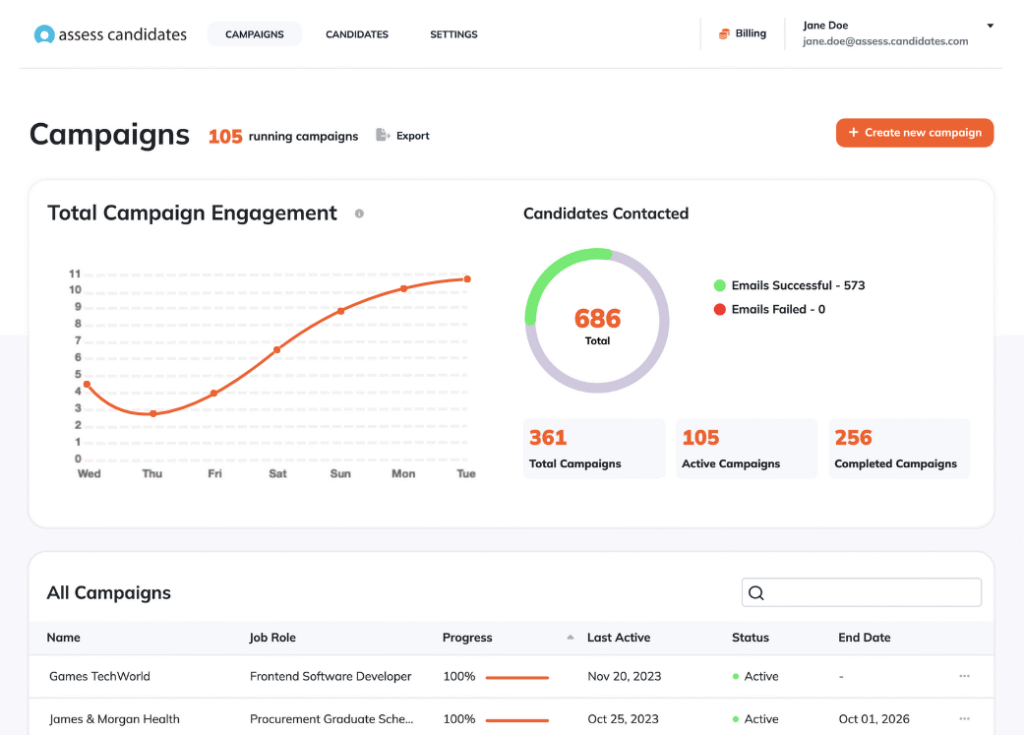
Below is an example of our campaign reporting dashboard available on Assess Candidates. This tool is accessible to hiring managers and talent acquisition professionals, providing valuable insights and easy-to-use sorting functions to streamline candidate assessment.
The top 4 reasons why you should use Assess Candidates’ pre-employment assessments:
1. Scientifically Validated Design: Assess Candidates’ pre-employment psychometric tests are developed by Chartered Scientists, Psychologists, and Psychometricians with decades of experience designing assessment solutions for companies like SHL and IBM Kenexa. Our psychometric tests have undergone rigorous testing and validation to accurately measure candidates’ cognitive abilities and personality traits. These tests consistently have proven successful in selecting and hiring top talent across various organizations and industries.
2. Expert Reporting: Assess Candidates’ user-friendly and easy-to-navigate assessment platform enables employers to analyze candidate reports in detail and make informed hiring decisions based on flexible criteria. Recruiters can easily view individual candidates’ performance on different aptitude and personality tests, and then filter, rank, and shortlist candidates. Additionally, our talent assessment platform also offers the option to integrate with your existing ATS for a seamless experience.
3. Positive Candidate Experience: Assess Candidates’ assessment platform is easily accessible from any device and features an aesthetic and easy-to-use interface for candidates. It provides clear assessment instructions and can be fully branded to match your organization. The tests are designed to require minimal clicks to complete, with the assessment automatically moving to the next question once answered. This ensures a seamless and positive candidate experience, which they will associate with your brand.
4. Accessibility Support: Assess Candidates offers support for individuals with disabilities and visual impairments. All our assessments have the option to add extra time, include zoom functionalities, and ensure the use of accessible color schemes and images in compliance with Web Content Accessibility Guidelines (WCAG) to ensure compatibility with screen readers.
Assess Candidates is one of the major pre-employment aptitude test providers proven to help small, medium, and large employers successfully hire top, best-fit candidates. Why not explore Assess Candidates’ assessments and start hiring today!
Before we end our discussion, let’s see what the future is like for job simulation assessments.
10. What is the future of job simulation in recruitment?
As per Forbes, 55% of CEOs anticipate expanding their hiring process in 2025 and only 7% of small and medium-sized companies plan to reduce their headcount. Therefore, more and more employers will look forward to leveraging technology such as job simulation assessments for an efficient recruitment process.
Here are the top 5 future trends we will continue to see in the future of job simulations:
- Integration of Artificial Intelligence (AI): Platforms like Canditech’s AI-powered Job Simulation Test Builder will continue to utilize AI to automate the creation, evaluation, and scoring of job-specific simulations, enhancing efficiency and objectivity in the hiring process.
- Holistic Assessment Approaches: Platforms like HireVue, which offer comprehensive evaluations by combining various assessment types, including cognitive tests, personality assessments, and skill-based evaluations, to create a well-rounded candidate profile.
- Scenario-based Testing: Software, such as ThriveMap, specializing in offering immersive scenario-based assessments, will rise. This tool places candidates in realistic work situations, effectively evaluating their practical problem-solving abilities and adaptability.
- Customization and Industry-specific Simulations: Major platforms such as Deeplo AI will rise that allow for the creation of tailored industry and company culture-relevant job simulations and company cultures, providing more relevant and accurate assessments of candidates’ abilities.
- Rise of Remote and Virtual Assessments: GSK’s Immersive LifeJob Simulation exemplifies the shift towards blended virtual job simulations, enabling candidates to engage in realistic, remote assessments that mirror actual job tasks.
These advancements are making job simulations more effective and integral to modern hiring practices.
Interested in getting the latest insights and advice on candidate assessment? Keep reading for frequently asked questions and to sign up with your email below to get started.
Frequently Asked Questions
How do job simulation exercises work?
Job simulation exercises work by allowing recruiters to evaluate the candidates’ job and cultural fit. These simulation tests require them to work on tasks that mirror those of the job role to evaluate their technical, cognitive, and soft skills in real-time.
Which simulation tests help measure hard skills?
Hard skills-based simulation assessments, such as case study simulation, work samples, in-basket, and offline exercises, allow recruiters to assess candidates’ job-relevant technical expertise. These tasks vary from working on a case study or project and emailing as per the role.
What is the GSK Job simulation test?
GSK Life Job Simulation exercise is a powerful package for a 5-in-1 recruitment tool that is a combination of numerical reasoning, verbal reasoning, written sample, situational judgment, and video interviewing.
How to make job simulation tests accessible?
Design inclusive job simulation assessments that consider diversity and provide accommodations for candidates with disabilities. Ensure the simulation tasks use culturally neutral language and its content is fair and complies with legal standards.
How to best use job simulation tests in recruitment?
Job simulation test in recruitment is best used in combination with different types of simulation exercises and aptitude tests for a holistic candidate evaluation. Combine these simulation tests with video interviews for competency testing while ensuring the tests are up-to-date.


 English
  Arabic