
How to Measure Emotional Intelligence in the Workplace



As an employer, you will hire some individuals, and you wish you knew how to measure emotional intelligence because of their poor relationships with customers and colleagues. Although these employees are exceptional at their roles, they cannot work as a team, which can negatively affect your business.
According to various research, emotional intelligence (EI) is a strong predictor of organizational outcomes such as job performance, organizational citizenship behaviour, reduced work stress, and job satisfaction.
This means that each employee with a high level of emotional intelligence stays longer at your company, experiences less work-related stress, is more satisfied with their job, and is more productive in their role. Therefore, you must add emotional intelligence assessments to candidates’ core skills tests.
Continue reading this article as it covers what emotional intelligence is, the benefits and challenges of emotional intelligence assessment, and how you can assess your employees’ and candidates’ emotional intelligence.
Contents
- What is Emotional Intelligence (EI)?
- Benefits of emotional intelligence assessments
- Strategies and methods for assessing emotional intelligence
- Challenges of emotional intelligence assessments
- Why companies trust Assess Candidates for emotional intelligence assessments
- Future outlook for EQ assessment
Let us start with understanding what emotional intelligence is.
1. What is Emotional Intelligence (EI)?
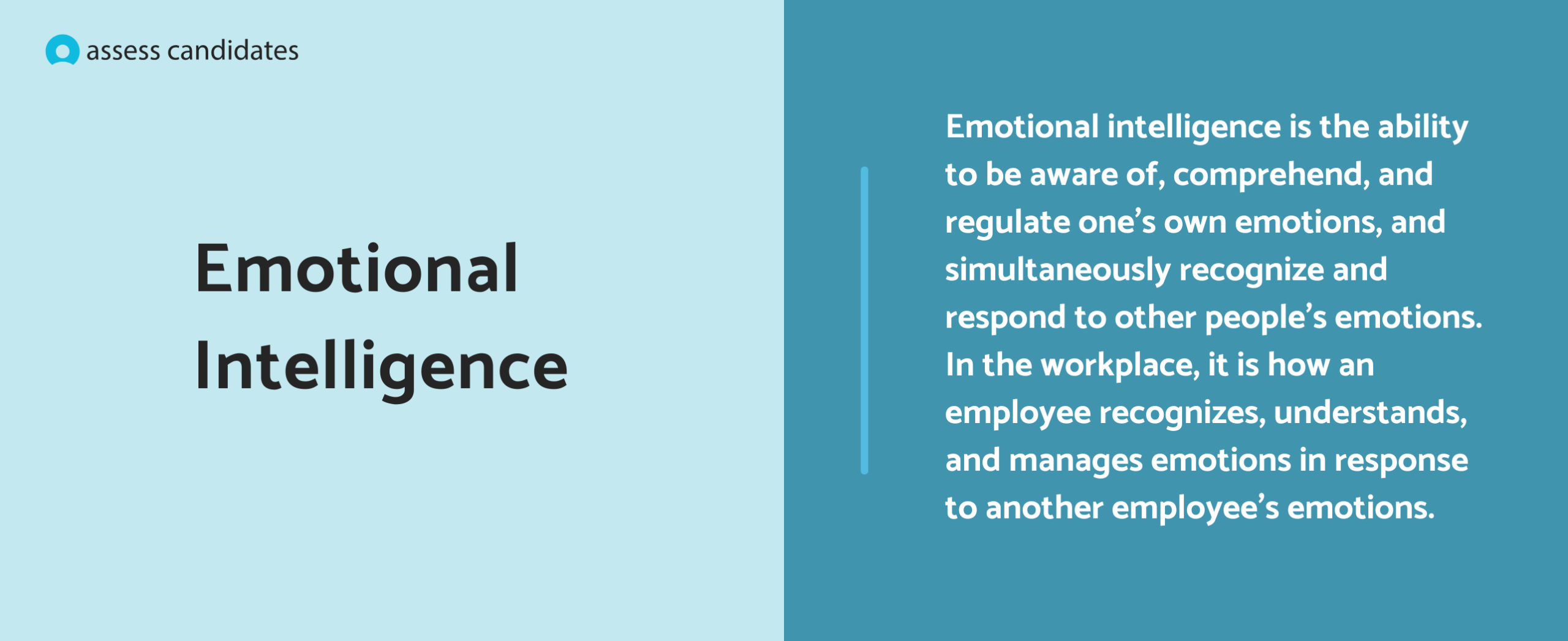
Emotional intelligence is the ability to be aware of, comprehend, and regulate one’s own emotions, and simultaneously recognize and respond to other people’s emotions. In the workplace, emotional intelligence is how an employee or leader recognizes their emotions, understands them, and manages them in response to another employee’s emotions.
Emotional intelligence involves an understanding of the full range of human emotions, including the basic ones: happiness, sadness, fear, anger, surprise; the social ones: pride, embarrassment, jealousy, gratitude; and the complex ones: anxiety, frustration, hope, excitement, and how you react to them, while ensuring you meet an objective.
For example, Manager A observes Employee B’s frustration at accomplishing a task. He assigns Employee C to assist with the task to meet a fast-approaching deadline.
In essence, an emotionally intelligent person is aware of their own and others’ emotions and responds to them to achieve a goal.
Core Emotional Intelligence Indicators
Before an individual can be said to be emotionally intelligent, they must possess certain qualities that form the core elements of emotional intelligence.
- Self-awareness
Self-awareness is the ability to recognize and understand your emotions, triggers, values, weaknesses, and strengths. A self-aware person knows what triggers specific emotions and understands how to regulate their expression to avoid outbursts.
For example, in an interview, Candidate 1005 admits that her weakness is anger, and her trigger is false accusation. That is self-awareness.
- Self-regulation
To self-regulate is to keep your emotions under control, especially when under pressure. It shows that you are not a slave to your emotions but can choose when and how to respond to your triggers. In a work environment, self-regulation helps avoid emotional outbursts, fosters clear communication, and keeps all employees focused on the organization’s goals.
Individuals have different means to self-regulate. Some of them include taking mindful breaths, counting down, asking for clarification, and naming the emotion.
For example, the Supervisor accuses Employee H of failing to submit a report. Employee H, whose trigger is false accusations, takes mindful breaths and professionally denies the accusation.
- Empathy
We often take “putting ourselves in someone’s shoes” to mean empathy, but it doesn’t completely describe it. While feeling what the other person feels is a form of empathy, understanding their emotions or perspectives, interpreting them, and responding to them appropriately, gives a rounded understanding of empathy.
This emotional intelligence component is of utmost importance to customer-facing employees and leaders in an organization. A customer-facing employee must not only understand a customer and their needs, but also interpret those needs and respond appropriately.
For example, the Supervisor sees that Employee H is getting angry. He pauses, double-checks, and finds Employee H’s report. He then apologizes to Employee H.
- Social skills
Social skills involve building and maintaining healthy relationships, communicating effectively, and being comfortable in social situations. Individuals with excellent social skills find it easy to connect with others, communicate without problems, and navigate social gatherings with ease.
Social skills are essential to influencing employees; thus, they are skills leaders should have. Also, they make networking, collaboration, and conflict management easier.
For example, Employee A regularly checks on his team and notes their difficulty in completing a project. He clearly explains his stance on the project and calmly discusses an alternate approach to solving the problem, helping them to adopt his approach
- Motivation
Personal motivation is an important component of emotional intelligence. While motivation generally comes from external sources, an emotionally intelligent individual draws on internal sources. They seek to improve their skills, achieve higher goals, and pursue new targets for personal fulfillment, not external validation.
Self-motivated people are consistent in their quality of performance and delivery, inspire other employees within the organization, and take ownership of their roles, helping the organization achieve its goals.
For example, Employee K, despite closing late, learns a new skill to help her team deliver their project on time.
What is an Emotional Intelligence Measurement/Assessment?
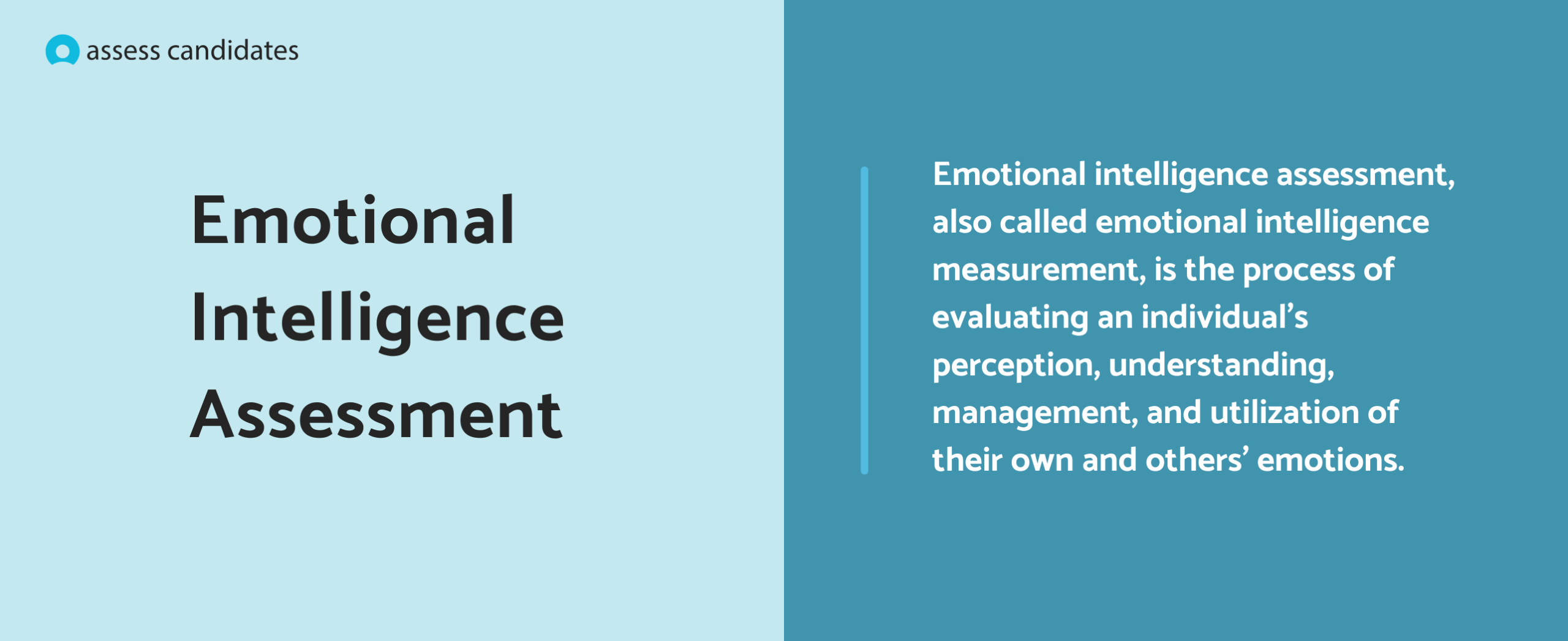
Emotional intelligence assessment, also called emotional intelligence measurement, is the process of evaluating an individual’s perception, understanding, management, and utilization of their own and others’ emotions. It shows a person’s ability to be self-aware, self-regulate, empathize, use social skills, and motivate themselves.
Unlike assessments, such as psychometric tests, that measure candidates’ hard skills to ascertain their suitability for a role, emotional intelligence assessments focus on testing soft skills. They assess the attributes that showcase the components of emotional intelligence and support a candidate’s chances of excelling at their preferred role.
Hire the best candidates with our emotional intelligence assessments. HIRE FOR FREE
Now that you know what emotional intelligence is and how it is assessed, let us explore its benefits.

2. Benefits of Emotional Intelligence Assessments
The success of any business depends on the quality of collaboration among all the parties involved. An organization can achieve its goal only when its employees and leaders work together despite differences in personality and temperament, which necessitates the use of emotional intelligence assessments.
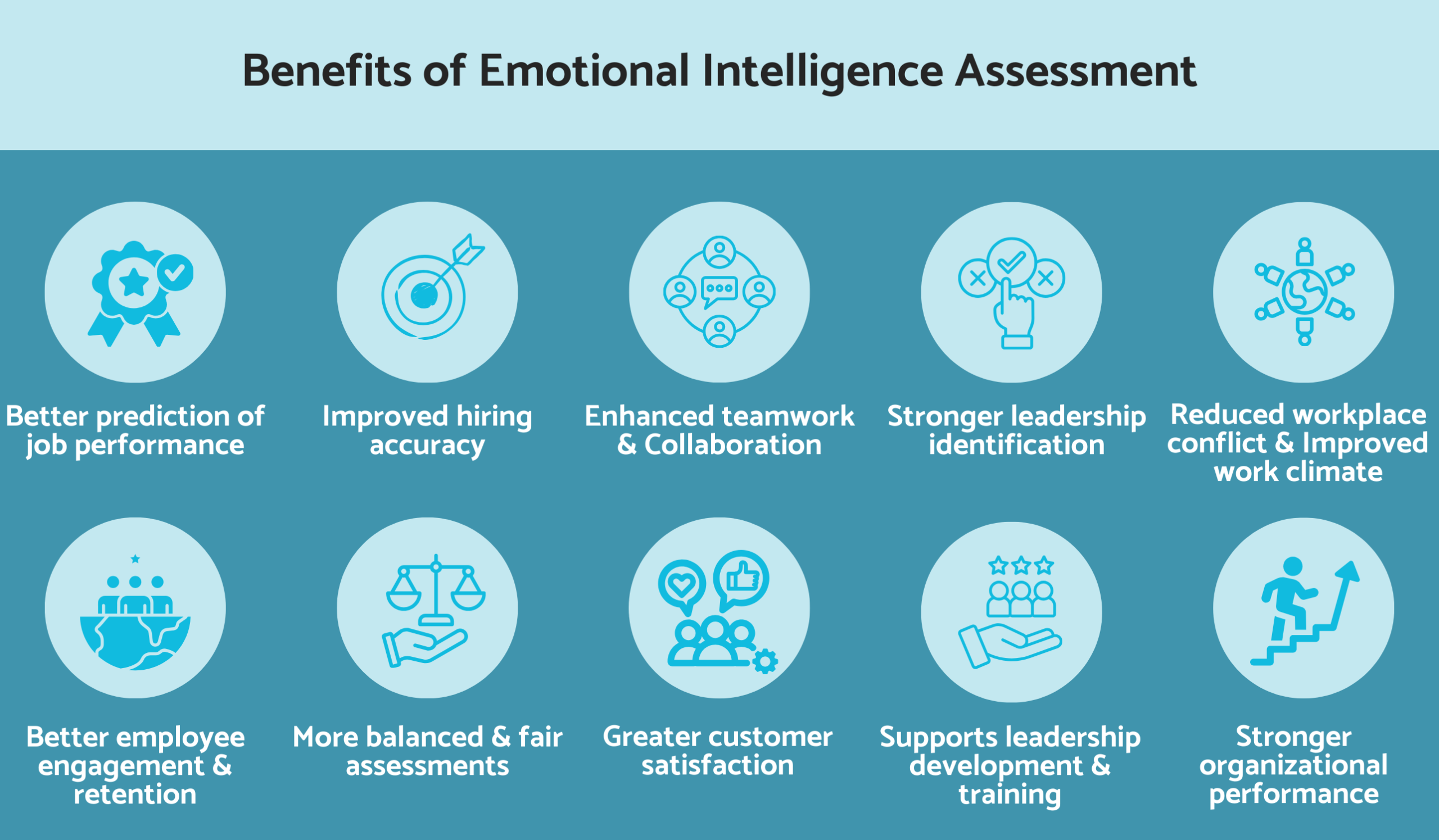
Because individuals differ in their emotional grounding, it is necessary to hire candidates whose personalities and behaviors align with their roles and foster teamwork. You will enjoy the following benefits from assessing candidates’ emotional intelligence before hiring them:
- Better prediction of job performance
All the candidates vying for the same role often do not have similar levels of emotional intelligence. As the role you are looking to fill requires a specific personality and prioritizes certain components of emotional intelligence over others, emotional intelligence assessments ensure that you can predict the best candidate for that role based on the candidates’ assessment results.
You can easily identify candidates who will excel in customer-focused, leadership, or people-facing roles by testing their empathy, social skills, and emotional regulation. Although all the candidates may have the hard skills required to fill these roles, the soft skills that emotional intelligence assessment evaluates can help you determine the candidates who will perform best in those roles.
For example, Candidate A123 stands out as the best applicant for a customer relationship role based on their hard skills. However, Candidate A098 shows better performance potential based on the result of their emotional intelligence test.
- Improved hiring accuracy
Getting the best candidate for a role can be tricky, as the right candidate isn’t always the one with the most obvious hard skills. However, you can improve hiring accuracy by using emotional intelligence tests to assess how candidates’ emotional skills fit the vacant role and how they can influence your company’s progress.
The right emotionally intelligent candidate for the right role ensures you have an employee who is self-motivated and can serve as an inspiration to others, helping your workforce build an excellent workplace culture and improving your company’s bottom line.
For example, after a rigorous evaluation phase, Candidate 001 becomes an employee whose self-drive pushes other employees in her department to push towards achieving their targets and increasing company profits.
- Enhanced teamwork and collaboration
A team comprises people who share similar objectives. Therefore, teamwork and collaboration are impossible when team members disagree about their goals and how to achieve them. Since individuals differ in personality and behavior, each team must have people who can identify individual differences and leverage them to the team’s benefit. That is where emotional intelligence comes in.
Assessing candidates’ emotional intelligence ensures you have a team of employees who thrive in teams and can help others use their skills to achieve the team’s mission without causing rancor. Great collaborators in your company help you achieve your annual goals quickly while minimizing time wasted on resolving team conflicts.
For example, Team A and Team B each have 6 members, but Team A has the higher average emotional intelligence. Team B has numerous conflicts while working on their project, and Team A avoids conflicts and finishes their project faster.
- Stronger leadership identification
When hiring for a leadership role, charisma is an important consideration, as the leader must have people skills. They must be able to inspire other employees to be as motivated as they are. Therefore, assessing candidates’ emotional intelligence for leadership roles is essential to motivating your workforce.
Although other skills are necessary to ensure a candidate’s suitability for a leadership role, their ability to recognize emotions and respond to them accordingly before they escalate is equally important. A true leader must possess a high level of emotional intelligence.
For example, a new head of department inspires his team to expand their skillset due to his dedicated upskilling sessions, which helped him rise to the role quickly.
- Reduced workplace conflict and improved work climate
A tense work environment isn’t the best place to be productive. Where employees consistently disagree with each other, stalling project progress and causing tension across the organization, there will be less growth in the company’s profits and human capital.
In contrast, a friendly work climate where employees recognize and manage their emotions, understand each team member’s triggers, and avoid them will lead to greater employee and organizational growth. Employees will be motivated to be in the workplace and work with their colleagues, improving their productivity, reducing turnover, and increasing the company’s profits.
For example, Candidate D leaves Company H due to its leaders’ lack of constructive feedback culture, stalling her growth. Company R hires her into its socially-aware work climate, and she helps the company reach a new profit milestone.
- Better employee engagement and retention
The emotional and psychological connection to team members, the organization, and work determines commitment to one’s job. An employee who is committed to their job experiences high employee engagement; hence, they are motivated to be diligent in their roles, helping their colleagues and the organization reach their goals. Also, an engaged employee is likely to remain in their role for a long time.
With emotional intelligence assessments, you can identify which candidates will improve your organization’s employee engagement and retention by fostering positive relationships with colleagues. Selecting such candidates ensures that you retain your quality hires, reduce turnover, and save costs on filling roles consistently.
For example, Company V hires three emotionally intelligent candidates to fill leadership roles. Its turnover rate reduces by 100% while employees record a better work attitude.
- More balanced and fair assessments
Cognitive tests evaluate candidates’ hard skills while situational judgment and behavioral tests assess soft skills. Applicants may not possess all the hard skills you need for a role; however, their soft skills can make up for their deficiencies. Most pre-employment assessments consist of psychometric tests that evaluate only hard skills, but that may not always provide a balanced and fair candidate assessment.
Including emotional intelligence assessments in your pre-hire skill tests provides a balanced view of candidates’ abilities. You can see what they can do with tools and how they work with people. A balanced candidate assessment reduces unconscious bias by elevating the importance of soft skills alongside hard skills.
For example, Candidate 386 possesses the educational and technical qualifications required to fill a marketing manager role, but lacks emotional self-regulation skills. Candidate 1556, on the other hand, has marketing and leadership experience, with the emotional skills to handle clients as well. Who should land the role? Candidate 1556!
- Greater customer satisfaction
Customer satisfaction is the lifeblood of every business. To ensure your business remains viable, hire candidates who can relate to your customers regardless of their emotional state. This is especially important for customer-facing roles. Before you hire an applicant based on their sales skills, if you’re in the retail business, test them for emotional intelligence.
An employee with great emotional intelligence should be able to recognize a customer’s emotions, regulate their own responses to manage their own emotions, and solve the customer’s problems to avoid a scene and retain their patronage. This helps your business to have customers who become advertisers.
For example, A distraught customer fumes as he complains about a product. Sales Rep A applies emotional intelligence to resolve the issue and ensures the customer leaves the store happy.
- Supports leadership development and training
While including an emotional intelligence pre-employment assessment is necessary for candidates, you should also use it for existing employees to ascertain the baseline for their leadership training and development needs. Managers can identify their emotional blind spots, strengths, and areas for improvement to help themselves and their teams perform better through emotional connection.
The organization will experience a better work climate, improved productivity, and enhanced employee engagement if its leaders take emotional intelligence tests to strengthen their weak areas. The assessments will lead to a healthier work environment and a stronger bottom line.
For example, Company V puts all its leaders through emotional intelligence assessment and designs training and development programs based on each manager’s weaknesses. At the end of the year, each department records better employee engagement.
- Stronger organizational performance
The aim of testing candidates before they join your organization is to ensure they can meet your existing standards. Improved employee performance translates into better organizational performance. Therefore, you must assess both existing employees and candidates for emotional intelligence if your organization’s performance is to experience growth.
The better your organization performs, the more trust your customers and investors have in you. That means you will be able to scale production, attract quality talent, sell more services and products, and generate more profit for your organization.
For example, Company V has mandated emotional intelligence assessment for its employees and applicants for the past five hiring cycles. Each year, it has experienced improved employee productivity, which has translated into higher profits.
Unlock the benefits of emotional intelligence assessment with our EI assessments. LEARN MORE
Your company can benefit from assessing emotional intelligence by using the strategies and methods we explain next. Read on!
3. Strategies and Methods for Assessing Emotional Intelligence
It is impossible to accurately measure an individual’s emotions or their responses to others’ emotions. However, you can gain insight into how well they can control their emotions and use others’ emotions to their advantage.
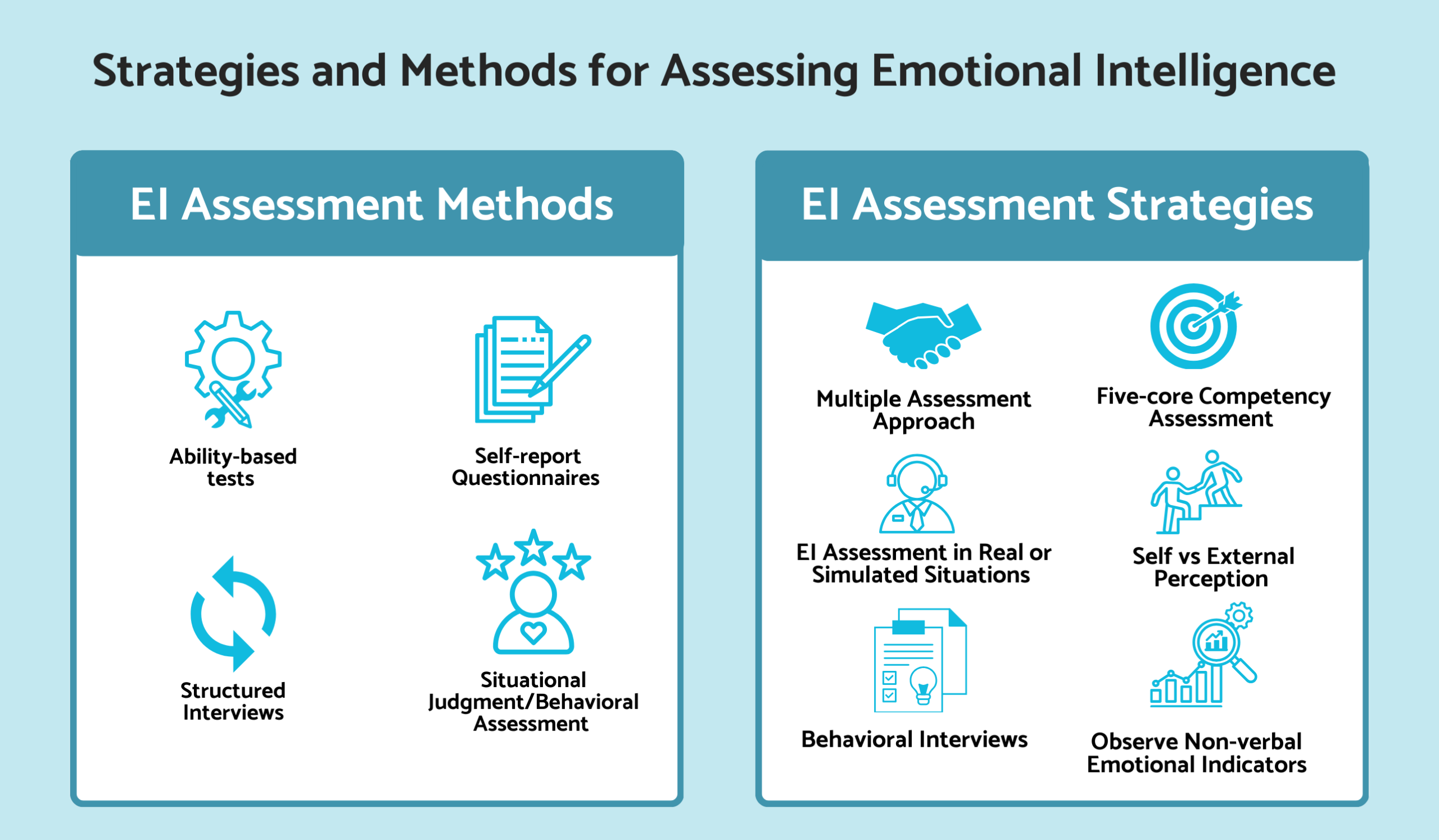
You can assess your employees’ or candidates’ emotional intelligence by testing each component using varying strategies and methods.
Methods for assessing emotional intelligence
There are numerous methods for assessing an individual’s emotional intelligence. Some are chosen for their popularity, while others are preferred for their convenience. Regardless of the method you choose, ensure that the assessor is objective.
Some of the emotional intelligence assessment methods include:
1. Ability-Based Tests
Although emotional intelligence is not a hard skill, you can still ascertain a candidate’s proficiency at each of the EI components and how they can affect your business if they are hired.
Ability-based emotional intelligence tests usually involve showing candidates faces or playing tones with emotions. The candidates must:
- Recognize the emotions
- Choose the best response to an emotional scenario
- Analyze an emotional scenario and how it can influence decision-making
- Determine how emotions shift in social interactions.
An example of an ability-based emotional intelligence test is the I-EQ game-based assessment.
2. Self-Report Questionnaires
With self-report questionnaires, candidates answer some questions about themselves and rate their responses to some emotions. It puts the responsibility of ascertaining emotional tendencies on the candidate, and its efficacy depends on their truthfulness.
Through the candidates’ answers, you can know:
- Their level of empathy.
- How composed they are under pressure.
- Their awareness of their emotional triggers.
- How they handle conflict
- Their communication style.
An example of a self-report questionnaire is the Assess Candidate’s Personality Questionnaire.
3. Structured Interviews
During interviews, interviewers can gauge candidates’ emotional competence for their preferred roles by asking questions that elicit that competence. They use standardized interview questions to look for evidence of:
- Adaptability
- Emotional self-control
- Problem-solving under stress
- Empathy
- Interpersonal skills
An example showing emotional intelligence assessment through structured interviews is an interviewer, via a video interview, asking questions like, “Tell me about a time you received difficult feedback. How did you handle it?”
4. Situational Judgement/Behavioral Assessment
This type of emotional intelligence assessment puts candidates in hypothetical or real-life situations where they must choose the most appropriate response to resolve a dilemma. They are particularly effective at testing candidates vying for customer-facing and team-oriented roles, as they test them for their abilities to:
- Read emotional cues.
- Respond to emotional situations or conflicts.
- De-escalate tension.
- Demonstrate empathy.
- Navigate complicated team dynamics.
Examples of situational judgement tests for emotional intelligence are Assess Candidates’ Situational Judgement Tests and Metal Lobster VR Assessment.
Strategies for assessing emotional intelligence
To get the best emotional intelligence assessment results, you will need to use a combination of methods in your assessment strategy. Your preference of strategy should give you a well-rounded report on your candidates’ and employees’ level of EQ. The best emotional assessment strategy is one that provides self, peer, and situational reports.
Emotional intelligence assessment strategies are:
1. Multiple Assessment (Triangulation) Approach
A single EI assessment will not give you an accurate result on any individual’s emotional intelligence. That is why you should use a multi-assessment approach that usually involves three EI measurement methods. Each method should focus on the individual’s emotional intelligence indicators, emphasizing how they perceive it, how others see them, and how they react in simulated or real situations.
The triangulation EI assessment strategy usually involves methods such as ability-based tests, situational judgement tests, and self-report questionnaires.
2. Five-Core Competency Assessment
The five-core competency emotional assessment strategy focuses on the indicators of emotional intelligence. It uses different EI assessment methods for each indicator, giving you a well-rounded picture of a candidate’s emotional intelligence.
This strategy can use situational judgement to assess social skills, structured interviews to assess motivation, self-report questionnaires to evaluate motivation and awareness, and peer feedback for regulation.
3. EI Assessment in Real or Simulated Situations
One of the best ways to see a candidate’s actual level of emotional intelligence is in a real-life simulated situation. This strategy uses scenarios similar to real-life situations to test a range of emotional intelligence indicators.
A simulated situation for assessing emotional intelligence places the subject (candidate or employee) in a position where they must identify and regulate the emotions present in the scenario. Depending on the scenario, you can also test them for motivation, empathy, and social skills. A practical method for this strategy is the Metal Lobster VR Assessment.
4. Self vs External Perception Comparison
The perception comparison strategy employs personal and peer views to evaluate a candidate’s emotional intelligence. It collects results from self-report questionnaires and compares them with results from a peer feedback EI assessment method, such as the 360-degree feedback.
This strategy effectively increases the accuracy of the emotional intelligence assessment by comparing a personal view to an external view. However, it can be subject to limited accuracy due to personal bias.
For example, an employee who sees himself as self-motivated, a good listener, and cool-headed may be reported by his colleagues as conceited, lacking communication skills, and cold.
5. Behavioral Interviews
Job interviews are traditionally question-and-answer sessions between an interviewer and a job candidate. The questions tell the candidate what the company seeks in its ideal employee, while the answers tell the interviewer if the candidate is the right fit for the role and company. Behavioral interviews do the same thing, except they focus on the emotional intelligence components.
Interviewers ask candidates structured questions aimed at eliciting emotional awareness, reaction control, empathy, communication, and problem-solving approaches from their answers. This strategy relies on the employee or candidate’s answer to form an idea of their EI level. Also, it isn’t an accurate emotional intelligence assessment strategy.
6. Observe Non-verbal Emotional Indicators
You can deduce an employee’s emotional intelligence by observing them in action. Company higher-ups employ this strategy when there is likely to be an opening for leadership promotion. They observe employees who are qualified for leadership positions for behavioral traits that indicate they are worthy of leadership.
This strategy’s accuracy requires that the observer has no bias against or for the subjects. It watches for candidates’ emotional cues during tense situations, listening skills, tone during communication, and body language.
Enhance your workforce quality with our emotional assessment methods and strategies. VIEW PLANS
The strategies and methods for emotional intelligence assessment are relatively easy to practice. However, EI assessment comes with some challenges. Read on to see them!
4. Challenges of Emotional Intelligence Assessments
You can employ strategies and methods to assess your employees’ or candidates’ emotional intelligence, and you’ll gain the benefits associated with it.
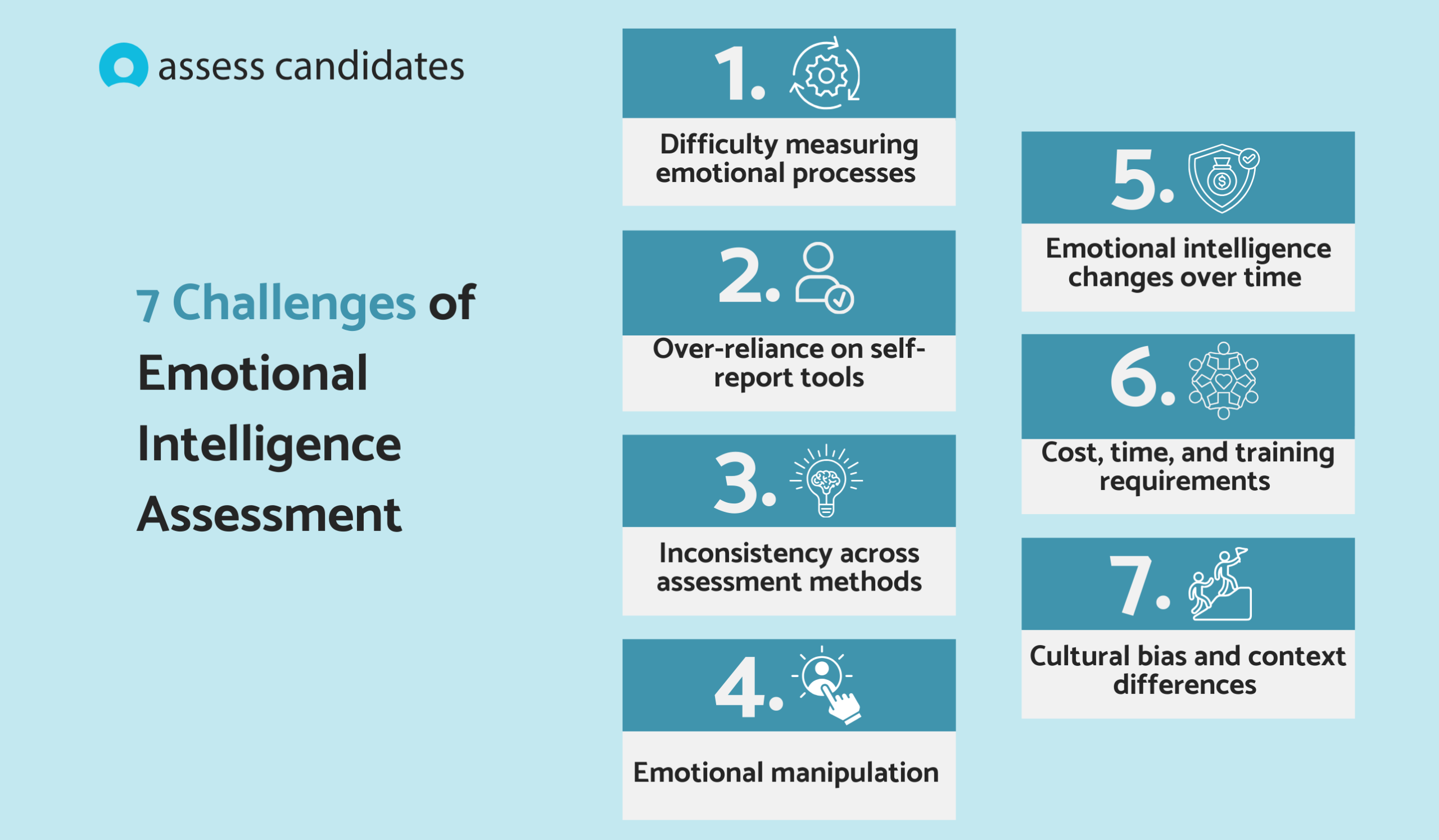
However, just as these assessments offer benefits, they come with their challenges, some of which are:
- Difficulty in measuring internal emotional processes
Emotions, unlike hard skills, are difficult to quantify; hence the need to rely on interpretation for emotional intelligence assessments. The difficulty of measuring emotional processes, due to their subjectivity and dynamism, makes precise scoring impossible. Therefore, subjects may be skeptical of the results’ reliability.
Also, as emotional intelligence assessment methods depend on the subject themselves to report on their emotional tendencies or on an assessor to interpret what they observe, they are open to misinterpretation and misinformation.
Solution: Instead of seeking a precise, quantifiable measurement for emotional intelligence, settle for an objective interpretation from a well-trained assessor.
- Over-reliance on self-report tools
The self-report emotional assessment method is inherently biased. An individual will always see themselves in a positive light. While attempting a self-report questionnaire, a candidate can easily present themselves as self-aware when they are not. Others can overestimate their abilities and provide desirable answers, making the result unreliable.
Although self-report can be a good method to assess emotional intelligence, relying on its results will mostly lead to erroneous conclusions about the subjects.
Solution: Do not rely on self-reports alone when assessing candidates’ emotional intelligence. Use the multi-method emotional intelligence assessment strategy to obtain the best possible approximation.
- Inconsistency across assessment methods
Each EI assessment tool and method measures different indicators. While some assessment tools for EI measure cognitive emotional processing, such as recognizing and understanding emotions, others measure EI via personality perceptions and a mix of both.
The inconsistency in modalities across EI assessment methods leads to inconsistent scoring across the different emotional intelligence assessment tools, resulting in a lack of a universal standard for EI scores.
Solution: Despite the inconsistency across the EI assessment methods, choose the methods that suit your emotional intelligence assessment strategy, and stick with them. That way, you can be fair to all candidates going through your assessments.
- Emotional manipulation
Another challenge with emotional intelligence assessment is the ease with which candidates can manipulate the result, portraying themselves as what they’re not. Some people are adept at faking their emotions, such as listening attentively and expressing empathy, to describe what the assessment needs.
Creating emotional cues and mimicking emotional indicators that favour high EI scores does not give you the accurate picture you need to assess candidates’ suitability for the vacant role.
Solution: Include the non-verbal emotions observation strategy in your EI assessment. Combining this strategy with another one will minimize the emotional expression manipulation.
- Emotional intelligence changes over time,
As people grow, their emotional responses to situations change. An employee who started as a self-absorbed team member can grow, through training or experience, to become a listening, empathetic, and inspiring leader. While the employee’s growth is good for your business, it creates a problem with testing frequency.
You will find it difficult to determine when to test your employees, how often to retest them, and what constitutes an acceptable emotional intelligence score.
Solution: Set a strict periodic schedule for repeated emotional intelligence assessment for your employees. It relieves you of the stress of the appropriate testing time.
- Cost, time, and training requirements
Emotional assessments and training cost money and time. You will spend more time finding the right fit for your company’s vacant role while assessing candidates’ emotional intelligence. Where you find none, you will have to train them.
Also, in-house emotional intelligence assessors must undergo specialized training and acquire licenses and certifications. These will cost your organization valuable time and money.
Solution: Outsource your candidates’ and employees’ emotional assessments to a trusted and reputable recruitment company.
- Cultural bias and context differences
Emotional responses to different situations have different meanings depending on context and culture. What is regarded as assertive in one culture can be aggressive in another. Therefore, an emotional intelligence assessment tool designed for Western culture will not be effective for measuring an Eastern candidate’s emotional intelligence.
This bias leads to an unfair and inaccurate assessment of other cultures’ emotional intelligence, as the tool fails to understand the context of their emotional expressions.
Solution: Use diverse human assessors to give the panel a better understanding of the cultural and contextual basis of diverse candidates’ emotional expressions.
Despite the challenges of emotional intelligence assessment, you can avoid them by outsourcing the test to an experienced candidate assessment outfit. A reliable solution is Assess Candidates.
5. Why Companies Trust Assess Candidates for Emotional Intelligence Assessments
Many organizations avoid testing their employees and candidates for emotional intelligence due to the challenges that surround it. But, they also miss out on the benefits it offers by doing so. You can avoid the problems and enjoy the benefits by leaving the responsibility of emotional intelligence testing to a recruitment organization.
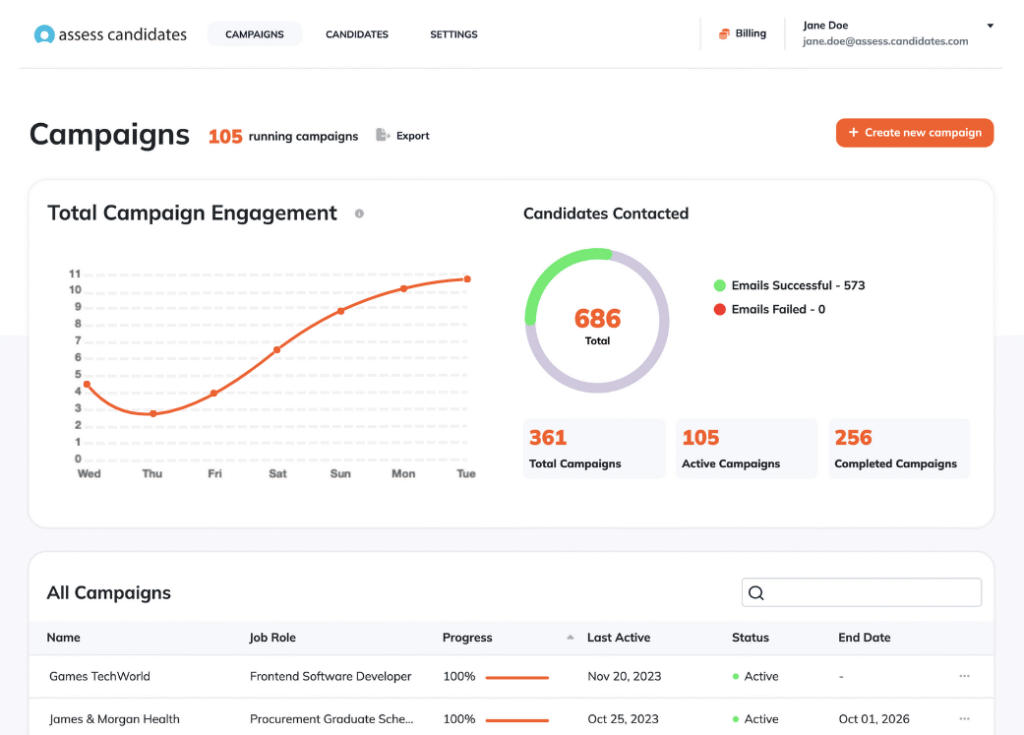
Assess Candidates understand the importance of emotional intelligence assessment, and many companies use them for this purpose. These companies trust Assess Candidates because they offer:
1. Effortless emotional intelligence testing
Unlike IQ testing, emotional intelligence testing is taxing for organizations that try to do it in-house. It requires that human behavior experts be present at every interview in every hiring cycle, which is costly and time-consuming.
Assessing candidates through multiple emotional intelligence assessments, such as Situational Judgement Tests, Metal Lobster VR Assessment, Personality Questionnaire, Hogan Personality Inventory, and SHL Personality OPQ, helps organizations evaluate emotional intelligence, reducing time-to-hire and saving costs.
2. Expert-designed assessments
The expertise required to test employees and candidates for emotional intelligence requires years to acquire. Also, experience in human reading is paramount. Therefore, training in-house experts or hiring them will cost you more than you think. However, Assess Candidates is available to help.
At Assess Candidates, the emotional intelligence assessments are designed by scientists, recruitment and psychology experts with years of experience in candidate assessment. The EI assessments are designed to help you make quick, easy hiring decisions.
3. State-of-the-art science and technology
Most organizations depend on self-reports to evaluate candidates’ emotional intelligence. You can achieve better accuracy by using Assess Candidates’ assessments, which leverage state-of-the-art science and technology to test your candidates’ soft skills, ensuring they are the best fit for that role.
You can save time and improve candidate experience and convenience by using structured video interviews to assess candidates’ emotional intelligence. Virtual Reality is another innovative option you can explore to place candidates in simulated scenarios that assess their emotional responses to work-related situations.
4. Clear and simple result and reporting
Assessing candidates is one thing; understanding the results is another. Psychologists handle emotional intelligence assessments; therefore, the results may be difficult for a non-professional to understand. But with Assess Candidates, the results are simple and clear.
The precise, simple results you get from your candidates’ emotional intelligence assessments help make your hiring decisions easier, reducing time-to-hire and saving costs.
5. Multi-strategy compatibility
Using a single emotional intelligence assessment method or tool does not give you a clear picture of your candidates’ EQ. A multi-method strategy is the best approach. You can combine two strategies to improve assessment accuracy.
At Assess Candidates, you have the liberty to choose as many emotional intelligence assessments to fit your strategies to assess applicants’ skills. Assess Candidates have a range of assessments that you can select from that assess different emotional intelligence indicators.
Discover the best EI assessment result accuracy with our array of emotional intelligence assessments. LEARN MORE
Emotional intelligence assessment is here to stay, as modern recruitment is increasingly leaning towards skill assessment over CV-based hiring. However, what does the future look like for EQ assessment?
6. Future Outlook for EQ Assessment
Emotional intelligence assessment is not as mainstream in recruitment as it should be. However, with the rising focus on skills-based hiring, organizations are beginning to give equal importance to soft skills as to hard skills, and by extension, EQ assessment.
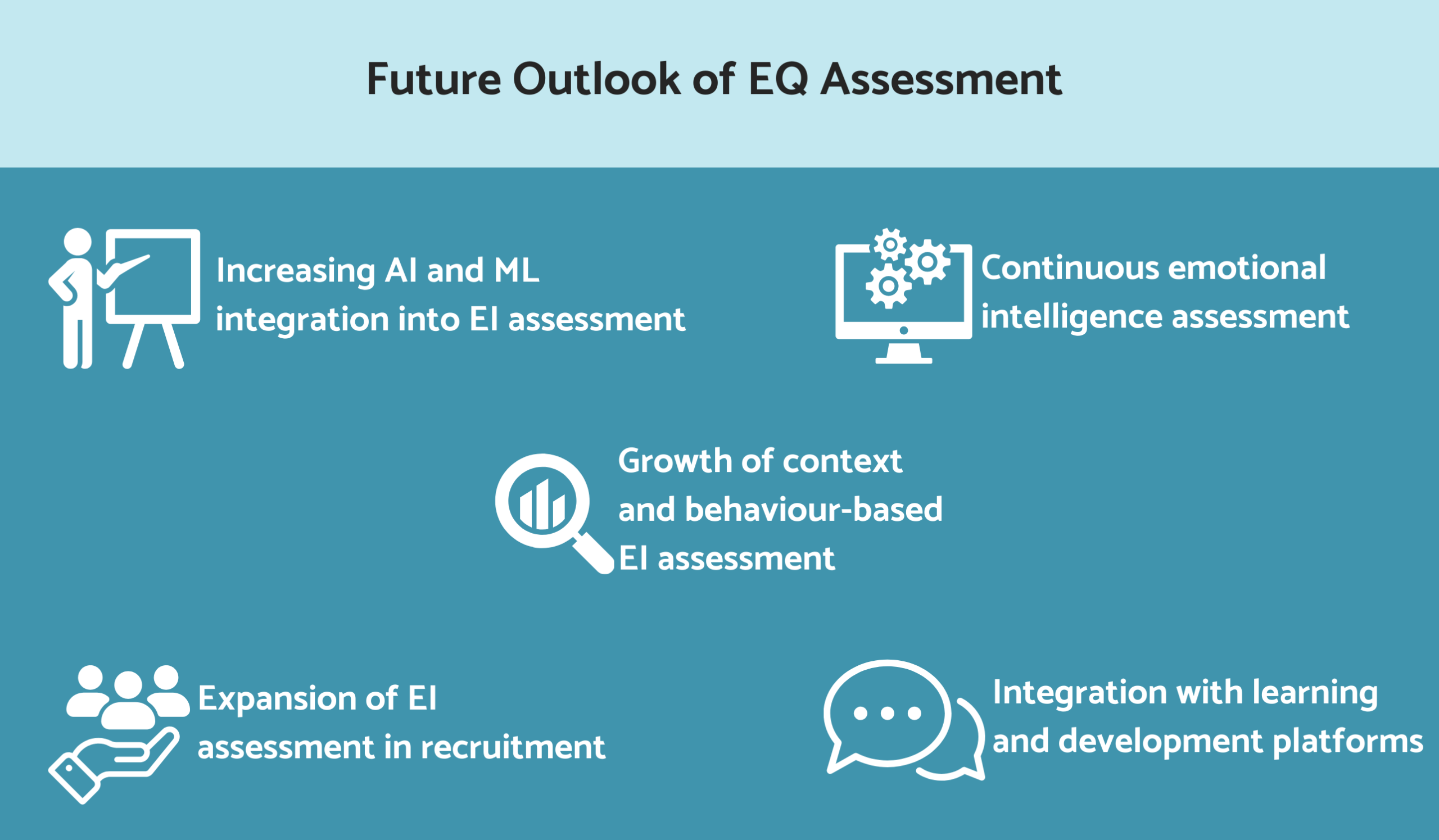
In the future, EQ assessment will experience the following:
- Increasing AI and Machine Learning integration into EI assessment
While psychology professionals are doing great now, integrating AI and Machine learning into EI assessment will ensure greater objectivity, dynamism, and evidence-based assessment results. This integration will also increase productivity, as AI can handle large datasets.
Machine Learning and AI in emotional intelligence assessment will analyze candidates’ facial expressions, voice tones, and micro-emotional cues to ascertain the authenticity of their reactions in simulated scenarios. It will also identify long-term behavioral patterns to track employees’ emotional progress.
- Continuous emotional intelligence assessment
EI assessment will shift from a one-time test taken before candidates secure employment to a continuous process that tracks employees’ progress in emotional maturity. It will become easier for organizations to assess the effectiveness of the emotional expression training they provide to their workforce.
As emotional intelligence can change through training and experience, close employee monitoring within their teams, on individual projects, and in meetings will provide insight into their suitability for leadership roles.
- Growth of context and behaviour-based EI assessment
Now, emotional intelligence assessments depend largely on self- and peer-reports. That means decisions that can affect your business are based on claims rather than facts. In the future, behaviour and context-based assessments will be prevalent.
EI assessments will focus more on candidates’ genuine reactions through role-playing in VR-based emotional scenarios and immersive reality. It will form the foundation of all decisions, such as filling leadership roles, based on emotional intelligence.
- Expansion of EI assessment in recruitment
Today, only a few organizations assess their candidates’ emotional intelligence. This could be due to the costs and integration issues they may introduce into the recruitment process. However, we predict that will change in the future as skill-based hiring becomes more prevalent. Also, as recruitment automation becomes mainstream, built-in EI scoring during pre-employment assessment will become the norm.
Customer-facing roles and leadership positions will prioritize emotional intelligence tests. Soft skills, such as listening, communication, and collaboration, will become essential for balancing hard skills, even in analytical roles.
- Integration with learning and development platforms
Emotional intelligence measurement will integrate with learning and development platforms to provide candidates with personalized coaching tools to improve their emotional intelligence. Employees can also partake in leadership development programs.
Also, the integration will address workplace stress, helping employees manage it and improve their productivity. Your employees and HR can also view their progress on a dashboard.
Enhance your company’s future with our emotional intelligence assessments. HIRE FOR FREE
Conclusion: Key Takeaways
- Emotional Intelligence, EI or EQ, is the ability to recognize, understand, and manage one’s own and other people’s emotions, to respond appropriately. The indicators or components of emotional intelligence are awareness, emotion regulation, empathy, motivation, and social skills.
- Emotional intelligence assessment or measurement is the process of evaluating an individual’s use of the indicators of EI. It measures candidates’ perceptions, understanding, management, and use of their own and others’ emotions through tests.
- The benefits of emotional intelligence assessment include its offer of better job performance prediction, improved hiring accuracy, enhanced teamwork and collaboration, reduced workplace conflict, improved work climate, and better employee engagement and retention.
- Emotion intelligence assessment methods include ability-based tests, self-report questionnaires, structured interviews, and situational judgment/behavioral assessment. EI assessment strategies include Multiple assessment approaches, Five-core competency assessment, EI assessment through real or simulated situations, self vs. external perception comparison, and Behavioral interviews.
- Some of the challenges of emotional intelligence assessment include the difficulty of measuring internal emotion processes, over-reliance on self-report tools, emotional manipulation, time-influenced changes in EI, and cultural bias and context differences.
- Companies trust Assess Candidates with their EI assessments because their assessments are expert-designed, use up-to-date science and technology, deliver precise, straightforward results, and are multi-strategy compatible.
- In the future, EI assessment will involve AI and Machine Learning, be a continuous exercise, be mainstream in recruitment, and integrate with learning and development platforms.
Interested in learning more about how to measure emotional intelligence in the workplace? Continue reading for frequently asked questions and sign up below with your email to get started.
Frequently Asked Questions
What are the tools to measure emotional intelligence?
Emotional measurement tools include the MSCEIT (Mayer-Salovey-Caruso Emotional Intelligence Test), the EQ-i 2.0, and the 360-degree feedback instruments. They measure emotional intelligence through ability-based tests, self-report, and peer report, respectively. To get the best emotional intelligence measurement, combine these tools.
Can emotional intelligence be measured accurately?
No, emotional intelligence cannot be measured accurately, but it can be estimated reasonably well. Although ability-based tests have a stronger scientific backing, their accuracy is limited by what constitutes an appropriate response. Self-report tests encourage bias through socially desirable responses, while peer review or feedback is subject to interpersonal dynamics and workplace politics.
How is EI used in the workplace?
The uses of EI (emotional intelligence) in the workplace include conflict management, leadership effectiveness, customer relations, and team collaboration. Emotionally intelligent leaders can recognize, understand, and manage staff emotions even under pressure, and motivate others. EI is also used for hiring suitable candidates, and employee training and development.
What is the best emotional intelligence test?
The best emotional intelligence test depends on your company needs. While ability-based tests, such as the MSCEIT, are the strongest EI tests, they are not suitable for workplace and recruitment purposes due to their complexity and incompatibility with workplace behaviour. However, tailored self- and peer-reports are better for organizations.
How to improve emotional intelligence in the workplace?
To improve emotional intelligence, organize workshops and training sessions focused on the following indicators: self-awareness, self-regulation, empathy, motivation, and social skills. Explore how to improve on the factors that influence these indicators, such as stress management, active listening, conflict resolution, constructive communication, and self-reflection.


 English
  Arabic