
Pre-employment Checking Tests For Hiring | The 2026 Complete Guide For Recruiters



Checking tests, a common psychometric test, are becoming increasingly popular among recruiters and employers to screen candidates for roles requiring strong clerical skills like attention to detail, precision, and accuracy. These tests help employers evaluate a candidate’s ability to compare information and detect errors quickly and efficiently, providing valuable insights into how effectively they might perform in the role.
This article delves into how recruiters can use online checking tests to simplify hiring by offering a speedy and budget-friendly way to assess candidates. We will also explore common checking test questions and examples used for hiring, the industries that benefit the most from them, and how global companies can use pre-employment checking tests to hire more focused and detail-oriented applicants.
If you are familiar with the concept of checking tests or entirely new to it, you might find yourself asking questions like:
- What are checking tests?
- What do checking tests measure?
- Why should I include a checking assessment in my pre-employment process?
- Where should I incorporate checking tests into the hiring process?
- Which roles benefit the most from using checking tests?
- How to seamlessly integrate checking assessments into my pre-employment process?
Whether you are a recruiter, hiring manager, or talent acquisition expert, our article will help answer your questions and offer key insights and strategies for using checking assessment tests to select candidates with the necessary attention to detail for success in your role and company.
Keep reading to learn more about pre-hire checking tests.
Contents
- What is a pre-employment checking test?
- What do checking tests measure?
- How do online checking tests work in hiring?
- Why do employers use pre-employment checking tests for hiring?
- At what stage in the pre-employment process are checking tests typically used?
- Effective strategies for incorporating checking tests into your recruitment process
- Which roles and positions commonly use checking tests in the hiring process?
- What employers use checking tests for hiring?
- Why do top companies prefer Assess Candidates’ error checking tests for pre-employment screening?
- Checking tests: Client application story
1. What is a pre-employment checking test?
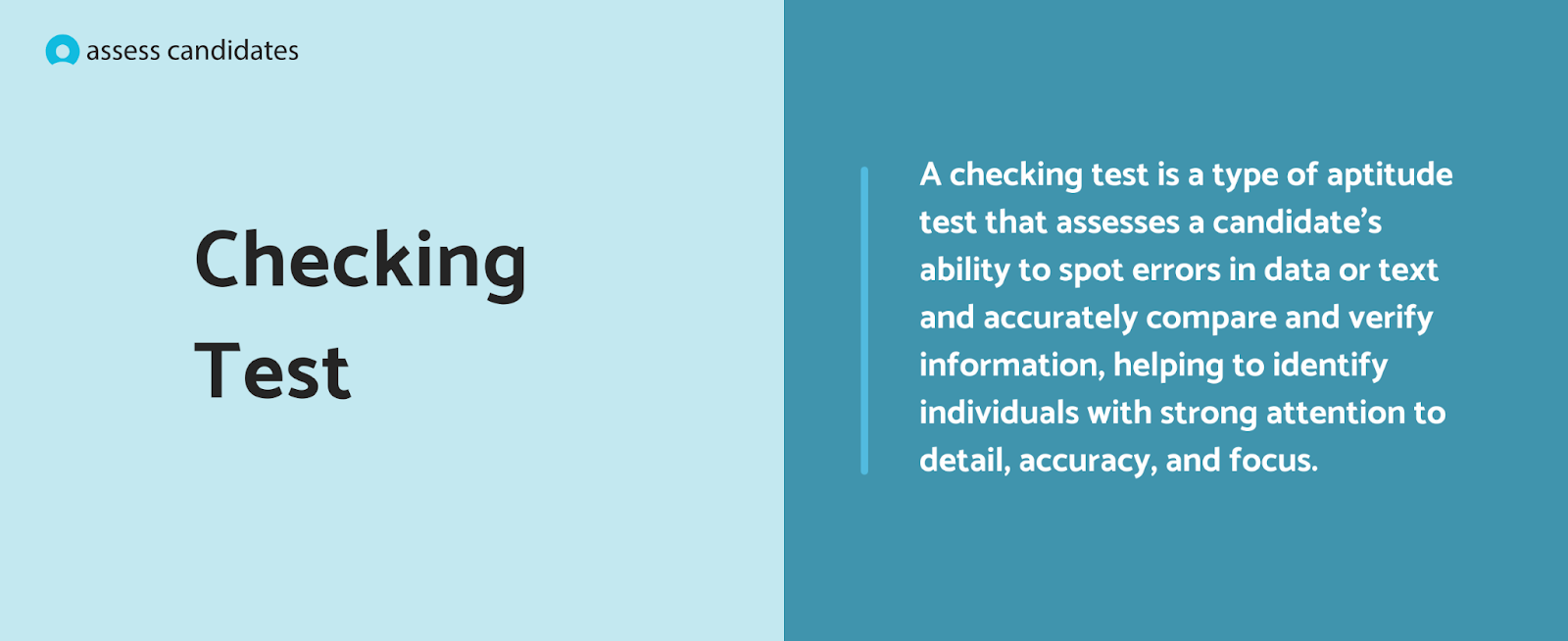
A checking test is a type of aptitude test designed to assess a candidate’s ability to spot errors in data or text and accurately compare and verify information. Employers incorporate these tests into their pre-employment hiring process to identify individuals with strong attention to detail, accuracy, and focus, especially when handling data and tasks quickly.
Leading employers, such as Amazon and Morgan Stanley, use checking tests to predict how efficiently candidates work with large volumes of data, identify discrepancies, and perform accurate reviews under time constraints and pressure.
Did you know? Checking tests are also commonly known as Error Checking Tests or Data Checking Tests. While similar, Data Checking Tests tend to differ slightly in tone, typically featuring a faster pace and simpler prompts.
What types of checking tests do employers use for recruitment?
Checking assessment tests typically fall into 2 categories: number-checking tests and word-checking tests.
- Number-checking Tests: Also known as numerical error checking tests, these assessments require candidates to detect errors in sets of numbers displayed on the screen.
- The errors may include altered, missing, or transposed numbers.
- Numerical error checking tests are commonly utilized for roles that demand high levels of accuracy and efficiency, for example, financial, statistical, or data-oriented work.
- Word-checking Tests: These assessments focus on assessing a candidate’s ability to identify errors in strings of words or letters, testing their attention to detail in spelling, grammar, and language use.
- The errors may include spelling mistakes, grammatical inconsistencies or other language inaccuracies.
- Word-checking tests are commonly utilized for administrative, clerical, editorial, or communication roles, where precision and accuracy in verbal and written language are crucial.
While both test types evaluate candidates on their accuracy and attention to detail, number-checking tests focus on identifying differences or similarities in a set of numbers, while word-checking tests focus on the differences or similarities in a set of words.
In the next section, we will dive into the skills and qualities pre-employment checking assessment tests measure.
Enhance your pre-employment hiring process with our scientifically validated checking tests. HIRE FOR FREE


2. What do checking tests measure?
Pre-employment error checking tests measure a candidate’s ability to quickly and accurately compare information, a clerical skill essential for maintaining high-quality work standards.
What are clerical skills?
Clerical skills are essential for performing administrative tasks effectively in the workplace. Most checking assessments, in general, evaluate the following 5 key clerical skills in candidates:
- Attention to Detail and Thoroughness: A candidate’s ability to detect minor errors or inconsistencies in text or numerical data – essential in industries such as healthcare, manufacturing, and accounting.
- Accuracy: The accuracy with which a candidate reviews and verifies information, ensuring high-quality and error-free results. This is a key quality for the financial, legal, and administrative sectors.
- Written Language Proficiency: A candidate’s command of language and communication, including grammar and spelling – particularly important for publishing, media, and marketing work.
- Numerical Analytical Skills: The ability to understand and analyze numerical data – a crucial skill for positions in finance or data management and data entry.
- Speed: How quickly candidates can complete tasks while maintaining accuracy.

Checking aptitude tests are therefore a common and favored tool for talent acquisition and assessment as they provide recruiters with valuable insights into important job skills – attention to detail, accuracy, and error-detection. They empower employers to make well-informed hiring decisions and select top talent who are highly qualified and capable of driving success in their roles and the organization as a whole.
Now that we have explored the skills that checking online assessments measure, let’s delve into how these tests function as effective hiring tools.
3. How do online checking tests work in hiring?
In a nutshell, pre-employment checking assessments are a type of clerical assessment that usually presents candidates with two or more sets of information. Their task is to quickly, yet carefully, compare the sets, identify the differences, and state which set(s) accurately match the original set.
These tests typically have a short time limit, comprise 30-40 questions per test, and are administered through an online assessment platform. As the test advances, the questions may evolve from basic number-checking or word-checking questions to more advanced error-spotting challenges, whilst maintaining the tight time limit.
Candidates, therefore, have to find a balance between speed and accuracy, skillfully managing the time constraints to finish the test and answer every question with precision.
Although the error checking test format is designed to be straightforward, they place a strong emphasis on speed as their primary goal is to measure a candidate’s ability to check written and numerical information quickly.
Let’s look at some examples of checking assessment questions.
What types of questions can be found on an error checking test?
Here are four examples of checking test questions that candidates might encounter during the test:
- Identifying Identical Sets: These questions ask candidates to identify the written or numerical set that exactly matches a given string.
An example question could be: “Which set is identical to the following?”
- Spot the Difference: Candidates are asked to analyze two or more sets and quickly identify any differences between them. This question type is designed to measure a candidate’s ability to compare information with speed and accuracy.
An example question might involve stating whether the two sets of numbers 127849027463 and 127849028463 are “Alike” or “Different”.
- Spot Transpositions: In this question type, candidates are required to assess numbers or text to identify all swapped, missing, or added digits.
An example question could be: “Determine if there are any discrepancies in the column of numbers and specify the errors identified.”
- Spelling and Grammar: These questions evaluate a candidate’s attention to detail in written language by asking them to spot errors in spelling, punctuation, or grammar within given texts.
An example question might present a sentence such as: “The cat chased it’s tale around the garden” and ask the candidate to identify and correct the grammatical and spelling errors.
Pre-employment checking test example question
To help you visualize, now let’s take a look at an example of a checking test question.

Candidates may struggle to identify errors and complete the full checking assessment within the time limit. Therefore, recruiters should encourage candidates to practice for error checking tests. Offering tips for preparing for checking tests and increasing familiarity with the question formats, like number checking, word checking, and grammar checking, can help reduce candidate stress so that they can showcase their true potential.
Now that we have analyzed the type of questions found on a checking test, let’s discuss how to interpret checking test results.
How to interpret checking assessment results?
You can interpret the results of your checking aptitude test by examining and comparing candidates’ percentile scores. Percentile scores serve as a statistical measure, which indicates candidates’ performance when compared to other test-takers.
For example, a candidate scoring in the 75th percentile has outperformed 75% of those who also took the test. These percentile scores thus allow employers to compare and rank candidates to select the highest performers with the necessary attention to detail skills for the role.
It is important to note that when evaluating candidates and making final decisions, you should also consider other factors like work experience and soft skills along with interpreting the checking test results.
Here are some general guidelines for interpreting checking test scores:
- 90th Percentile and Above: Outstanding performance, indicating a candidate’s capability to spot even the most minor discrepancies with precision and speed. Ideal for roles requiring meticulous detail, such as quality assurance, auditing, or legal proofreading.
- 75th to 89th Percentile: Strong performance, showcasing consistent accuracy and a good ability to detect errors. Well-suited for roles in data entry, administrative support, or compliance monitoring.
- 30th to 74th Percentile: Moderate performance, reflecting competence in handling standard error-checking tasks but a potential struggle with high-pressure or complex scenarios. Suitable for general clerical roles or basic administrative tasks.
- Below 30th Percentile: Below-average performance, suggesting difficulty in identifying errors consistently. Candidates scoring in this range may be suited for roles in industries like retail, customer service, administration, and entry-level training positions.
Pre-employment checking assessments should principally serve as a screening tool. We recommend setting a low cutoff around the 30th percentile to guarantee a basic performance benchmark is met, followed by additional stages to evaluate if a candidate is fit for the given role.
Now, let’s explore some other psychometric tests commonly paired with checking tests during the selection process.
What other psychometric tests do employers use with checking tests for hiring?
Error checking tests are reliable indicators of a candidate’s attention to detail and accuracy. However, their effectiveness improves when combined with other psychometric assessments, such as logical reasoning tests, verbal reasoning tests, numerical reasoning tests, and situational judgment tests.
Decisions about progressing candidates to the next assessment stage should be based on a comprehensive evaluation of their combined results from psychometric testing, reflecting both their technical skills and ability to work accurately under pressure.
Now that we’ve explored how pre-employment checking tests work in hiring, let’s discuss the benefits of using checking tests in hiring.
Explore our error checking tests developed by Chartered Scientists and Psychologists. LEARN MORE
4. Why do employers use pre-employment checking tests for hiring?
Employers use error checking tests in their hiring processes to objectively identify and evaluate candidates on their attention to detail and error-detection skills. Hiring the right candidates with the necessary skills for the role helps foster a more capable and productive workforce, leading to improved team performance and higher retention rates. Moreover, checking assessments streamline the hiring process by efficiently narrowing down large applicant pools, making them especially valuable for graduate employers.
In this section, we will explore the benefits of including an online checking test in your pre-employment hiring process.

What are the benefits of using checking tests in hiring?
- Saving Time and Money
The search for skilled candidates can often be time-consuming, expensive, and challenging. Pre-employment checking assessments are an easy-to-administer, automated tool that streamlines the hiring process.
Instead of reviewing applications manually, error checking tests can quickly screen thousands of candidates early in the selection process. With instant results, hiring managers can identify and eliminate unqualified applicants, focusing only on the most promising candidates to save time.
Additionally, checking tests helps reduce the high costs typically associated with large-scale recruitment efforts. Delivered online and priced per test or via a flat fee, these assessments provide a cost-effective alternative with a minimal cost per candidate. This allows organizations to allocate their resources toward more intensive evaluation methods, such as in-person interviews or assessment centers.
- Improving the Quality of Hires
An error checking test can immensely enhance the quality of new hires. These assessments are scientifically validated to predict candidates’ job performance in areas like attention to detail, precision, and efficiency.
In fact, checking tests are often more reliable indicators of job success for entry-level roles than CVs, which can sometimes be influenced by exaggeration or inaccuracies. They are a vital tool for employers, helping to identify candidates who are detail-oriented, efficient, and more likely to thrive and grow in their positions.
- Reducing Bias
Checking tests are standardized assessments, designed to reduce both conscious and unconscious biases in the hiring process. By selecting candidates objectively based on their attention to detail and potential job performance rather than preconceived biases related to background, education, age, gender, ethnicity, or race, these tests ensure that hiring decisions are fair and objective.
For candidates from underprivileged backgrounds, who may find it challenging to demonstrate their full potential in traditional interview settings, checking assessments offer a platform to showcase their skills. This promotes a fair, inclusive, and objective hiring process that aligns with company values and legal policies.
- Improving Diversity and Inclusion
Online checking tests for hiring boost the candidate pool by enabling the participation of individuals who may not be able to attend in-person interviews or assessments.
By adjusting the cut-off scores for these pre-employment tests, recruiters and hiring managers can further broaden their talent pool to address specific skill requirements or gaps within their teams. This approach promotes a more diverse and inclusive workforce.
- Producing Reliable Data-driven Results
Checking tests are essential for organizations focused on data-driven hiring and reducing uncertainty in the recruitment process. These assessments provide valuable insights into candidates’ abilities, enabling employers to evaluate applicants effectively and identify top performers for the next stage.
By adopting this approach, organizations can significantly minimize the risk of inconsistent hiring decisions.
- Ensuring a User-friendly Candidate Experience
Checking tests are designed to be easily accessible and user-friendly. The assessment questions are straightforward, and the styles vary, presenting different prompts, identical sets, and rules to keep candidates engaged. This ensures a seamless and positive candidate experience.
Unlock the advantages of adding a pre-employment error checking test to your recruitment strategy. HIRE FOR FREE
However, as with any assessment method, it’s essential to be mindful of potential challenges to ensure well-informed and balanced decision-making.
What are the 4 challenges of using checking tests in recruitment?
Here are the top 4 challenges that come with using checking tests in hiring and their potential solutions:
- Test Anxiety: Taking a checking test, like any assessment, can cause stress and anxiety. Furthermore, the checking assessment’s short time limit can hinder candidates from focusing on identifying errors and answering questions with precision and accuracy.
Solution: Motivate your candidates to practice an error checking test before the actual assessment. Acquaintance with the types and formats of questions can reduce anxiety and help them showcase their true abilities under conditions similar to those they might face in the workplace.
- Limited Predictive Validity: A checking test alone cannot fully demonstrate a candidate’s overall skillset. Just because a candidate does well on a pre-employment checking test does not necessarily mean they will perform well in the real world.
Solution: Pair checking tests with other hiring methods, such as a numerical reasoning test, verbal reasoning test, personality test, structured job interviews, and assessment centers. This exhaustive approach offers a more well-rounded view of a candidate’s technical abilities, competencies, and personality traits, improving the predictive validity of results.
- Soft Skills Assessment: When used in isolation, checking tests can prevent candidates from demonstrating their soft skills.
Solution: While checking tests evaluate candidates’ accuracy, and attention to detail, assessing soft skills in recruitment is also crucial. Combining these with situational judgment tests helps you identify detail-oriented individuals with strong adaptability and interpersonal skills. This well-rounded candidate profile thus helps to make better hiring decisions and reduce turnover.
- Cheating Concerns: It is technically possible for candidates to cheat on an online checking test or have someone else take the test on their behalf.
Solution: When choosing an assessment provider, ensure they offer robust cheating prevention measures. Many third-party assessment platforms, such as Assess Candidates, provide technologies and protocols designed to detect cheating and maintain test integrity.
Now that we have a better understanding of the benefits and potential challenges of using checking assessments as hiring tests, we will discuss at what stage in the recruitment process they are typically administered.
5. At what stage in the pre-employment process are checking tests typically used?
Error checking tests can be strategically implemented at various stages during the pre-employment process, depending on the role. However, they are particularly effective at the initial screening stages. These assessments offer a swift and efficient method to measure attention to detail, accuracy, and efficiency.
How to use checking tests in the hiring process?
Let’s assume you are hiring for a new position and are receiving 1,000 job applications. By initially inviting all candidates to complete an online checking test, you can quickly and accurately evaluate their attention to detail and accuracy, ensuring that only the most suitable candidates progress to the next stage of assessments, whether a personality test, video or in-person interview, or assessment center day.
Candidates will be provided a link to the talent assessment platform and given a designated time frame (usually several days) to complete the checking test. Recruiters can access the results through an online dashboard, allowing them to shortlist the top performing candidates for the next stage of the recruitment process.
Below is a detailed explanation of the purpose and role of checking tests at different stages of the hiring process:
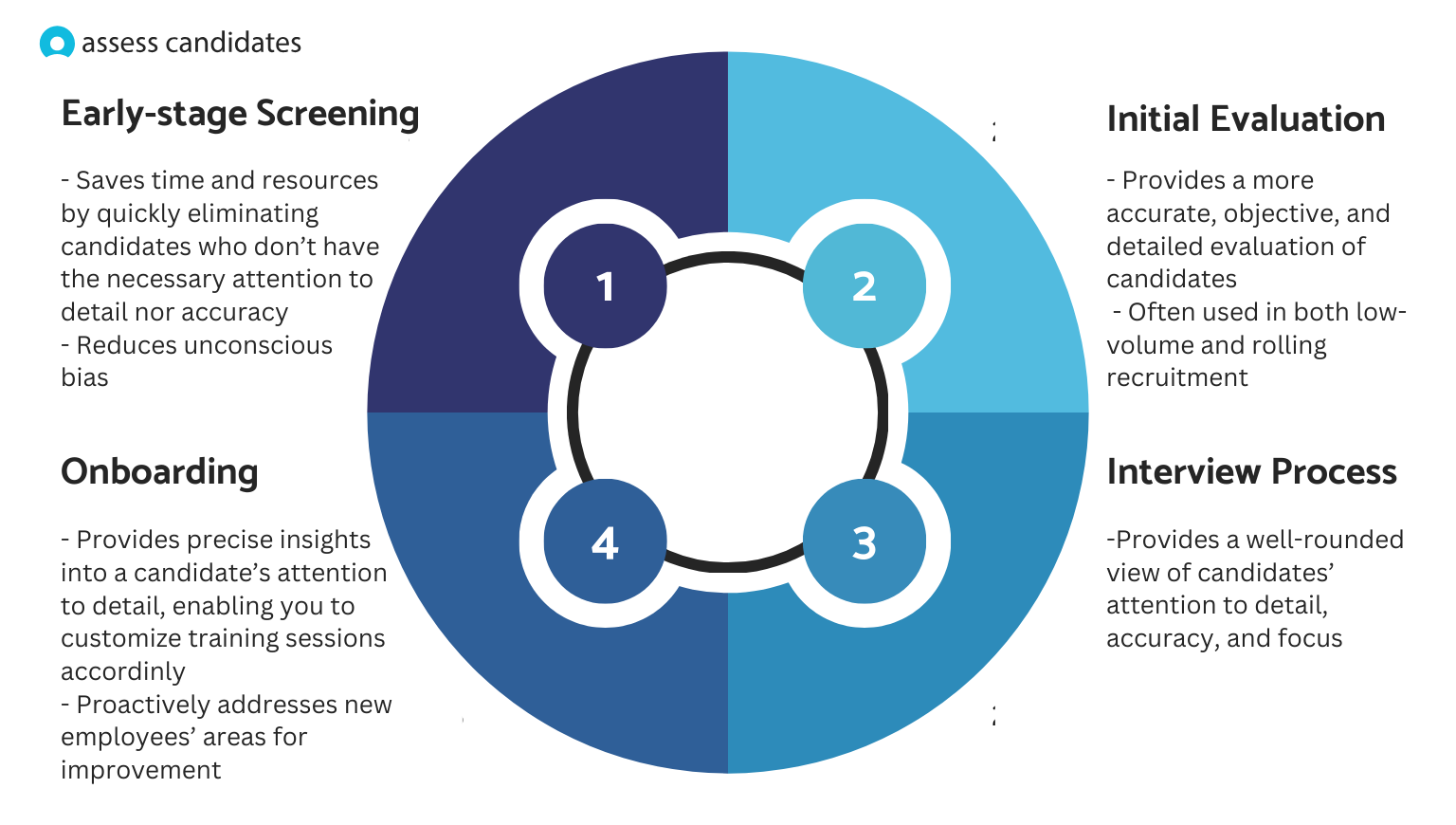
Incorporating pre-employment checking assessments at different stages of the hiring process can help organizations save time and resources, reduce biases, ensure a positive candidate experience, and tailor onboarding and training to meet individual needs. These tests are especially valuable in industries that require strong attention to detail and accuracy, such as finance and accounting, law, and data analytics, and can also be used to assess employees for promotion.
Checking assessments also offer employers valuable insights into areas where they can focus on developing new hires and current employees. Whether your goal is to enhance team accuracy in their work or make more informed decisions, checking test insights are essential for creating targeted learning and development strategies.
Now that we have an idea of where the pre-employment error checking test should be used in the recruitment process, let’s explore effective strategies for using checking tests in the pre-employment hiring process.
Discover more examples of our checking tests in our extensive assessment library. LEARN MORE
6. Effective strategies for incorporating checking tests into your recruitment process
To achieve optimal results when integrating checking tests into your recruitment process, it is crucial to follow several best practices. Here, we have outlined 3 simple steps to help you effectively shortlist and select suitable candidates on your first try.
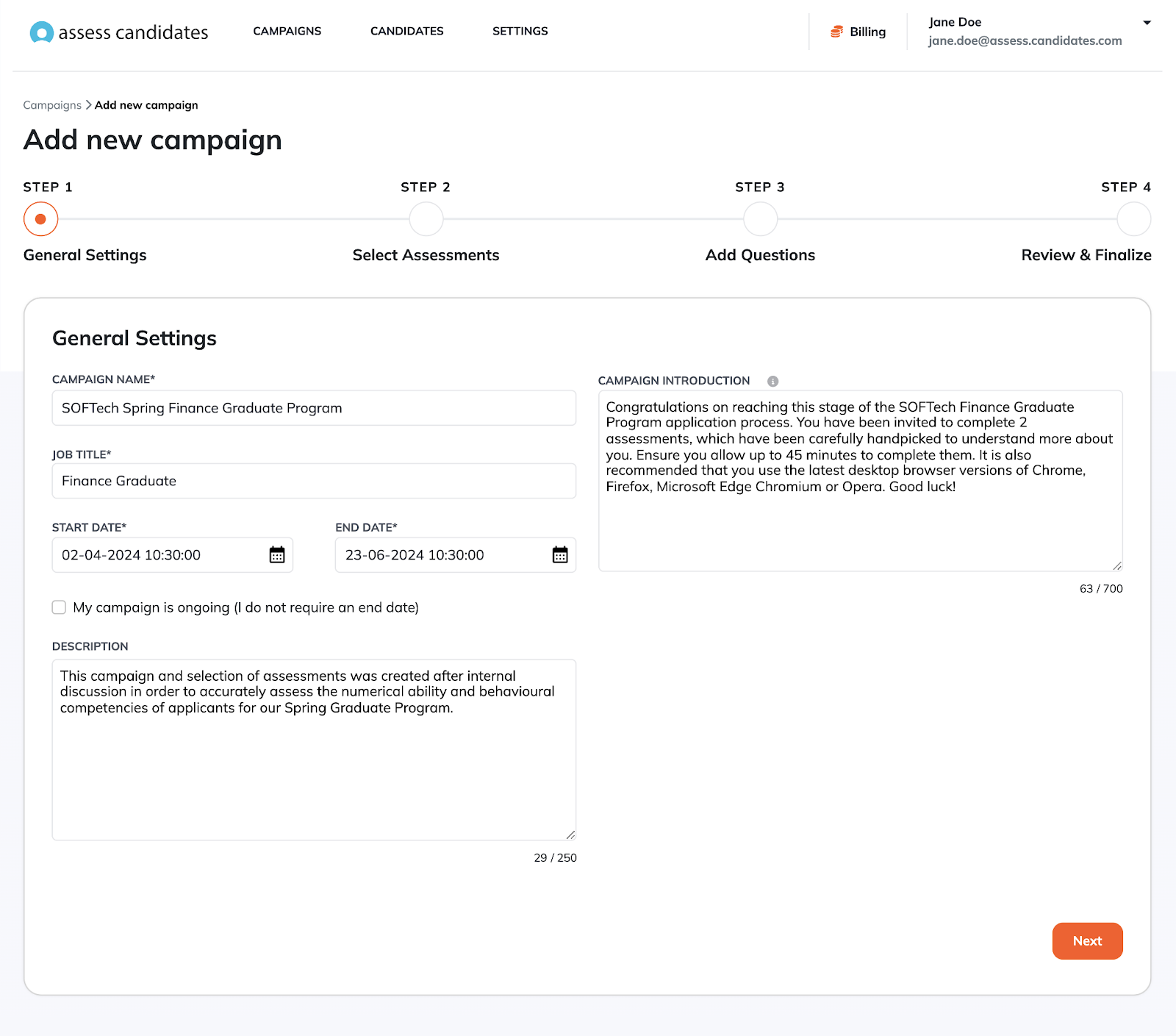
1. Create your checking test campaign
- Decide in advance whether to give candidates a standalone checking aptitude test or combine it with other assessments. We recommend combining the checking tests with other aptitude tests like abstract reasoning, verbal reasoning, numerical reasoning, situational judgment, and personality tests to improve predictive quality while also offering a well-rounded view of candidates’ cognitive abilities, skills, behaviors, and traits. Utilizing multiple assessments also helps reduce bias in the hiring process.
- Employers should also explore how to optimize error checking tests by tailoring them to reflect the specific demands of the role, incorporating industry trends, and ensuring the assessments are as relevant and engaging as possible.
- Before launching your recruitment campaign, set clear cut-off scores for your checking test. These scores should reflect industry standards, the specific requirements of the job, and the level of attention to detail or focus required for the position.
- Set a firm deadline for candidates to complete the assessment and maintain consistent time limits for all candidates. This standardization ensures that candidates are assessed under uniform conditions, making the hiring process fair and objective.
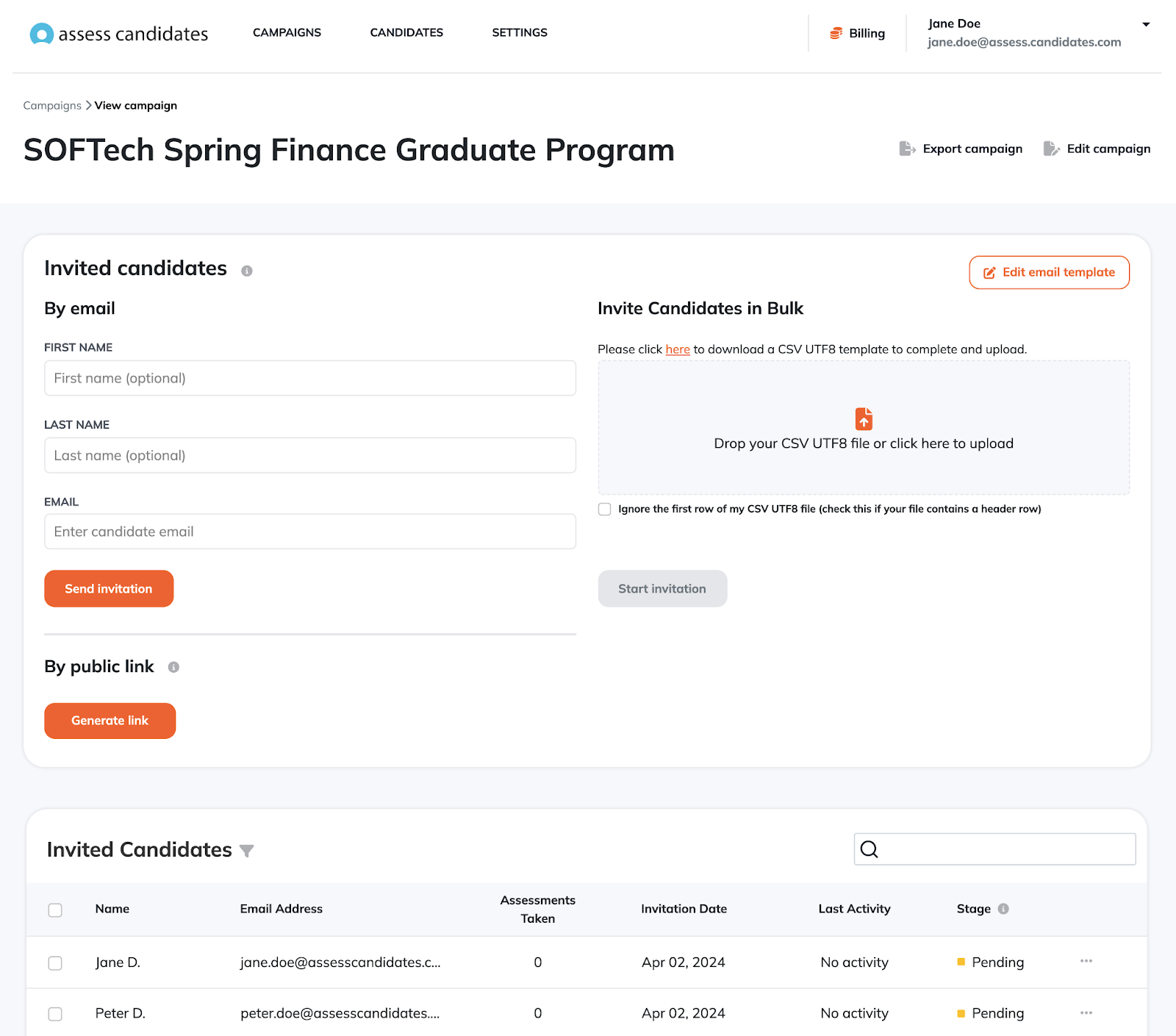
2. Invite candidates to your checking test
- Invite candidates in a single click to complete your error checking test by individual email, CSV file upload or public link.
3. Analyze candidate results and shortlist candidates
- Evaluate candidates’ progress in real-time as they complete the error checking tests. Access automatically graded results and detailed reports immediately after test completion.
- Use advanced tools to rank, filter, and sort candidates based on criteria such as performance score, number of assessments completed, hiring status, confidence score, and more. This feature enables you to efficiently view, compare, and identify top candidates for your role and organization, streamlining the process of advancing the most suitable talent to the next stage of assessment.
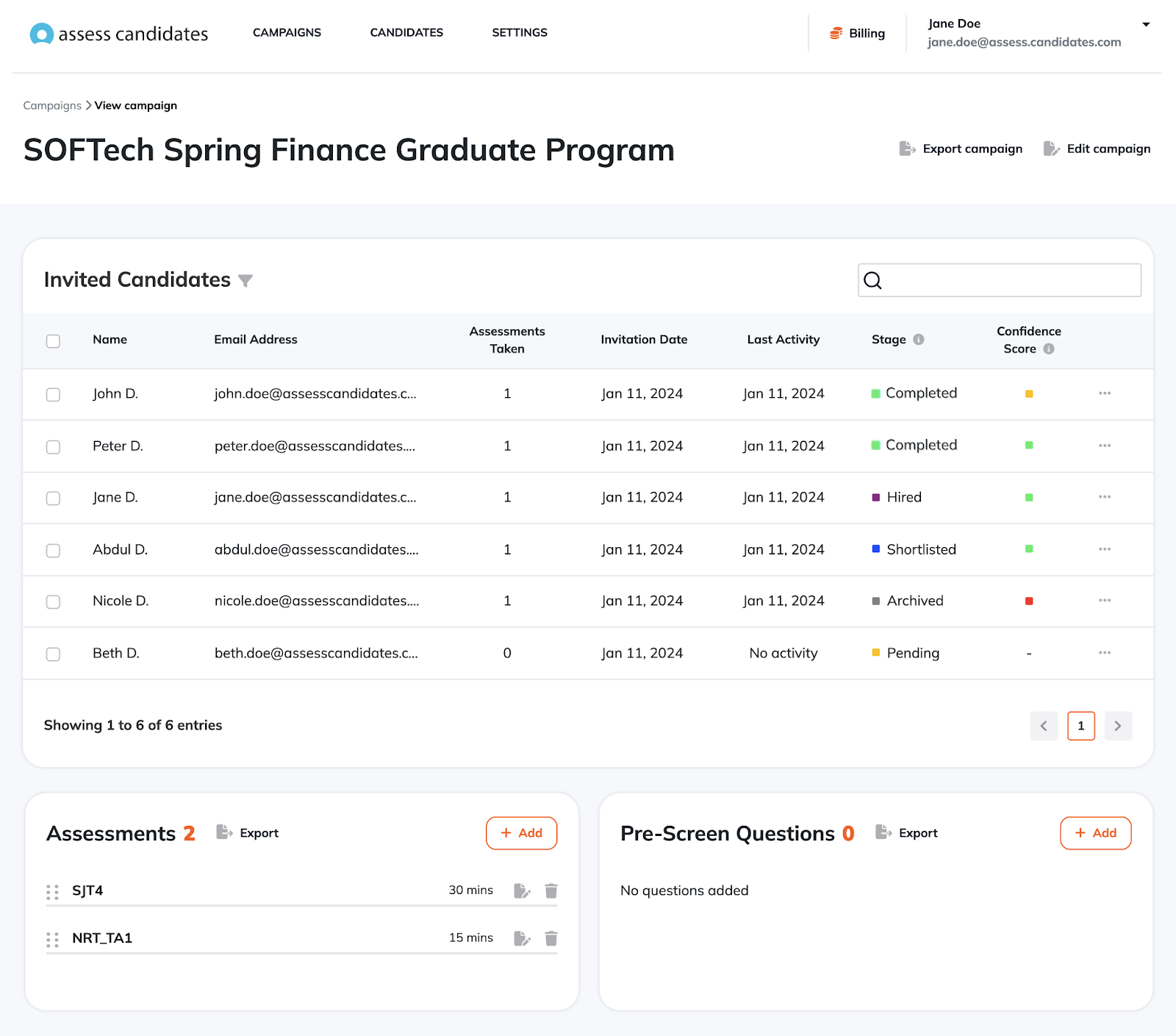
By following this streamlined, hassle-free recruitment process and best practices, you can confidently make informed hiring decisions.
Try our error checking tests and discover how they can help you identify candidates with the attention to detail and precision levels needed for success in your role and organization.
In the next section, we will explore the roles and positions that benefit the most from incorporating checking aptitude tests into hiring.
7. Which roles and positions commonly use checking tests in the hiring process?
Checking aptitude tests are a common type of entry-level pre-employment test used by employers in their candidate selection processes. These tests are suitable for a wide range of roles, from entry-level and graduate roles, including data entry, to more experienced roles like financial specialists and senior clerical managers. Role-specific checking assessments are customized to align with the specific complexities and demands of each job.
In this section, we delve into two example recruitment campaigns where employers should use checking tests for hiring.
2 examples when employers should use checking tests for recruitment
- High-volume Recruitment: Handling large volumes of applicants, especially for graduate recruitment and popular roles, can be demanding. However, checking tests offer a speedy and helpful way to screen candidates early in the selection process, ensuring the procedure is fair and legally defensible. By implementing these tests, recruiters can effectively assess clerical skills like attention to detail, precision, and efficiency.
- Rolling Recruitment: For companies that continue hiring applications on a rolling basis and fill positions as they arise, checking tests offer a consistent, standardized way to assess clerical skills as applications come in. By incorporating these hiring assessments into the pre-employment process, employers can quickly move top-tier candidates through the recruitment stages, ensuring that only the best advance to an interview or practical test.
Which industries and roles should use checking tests to recruit and why?
As error checking tests generally assess clerical skills, such as attention to detail, error identification, and accuracy, they are particularly critical in the following sectors:
- Data Analytics: Checking tests are important for hiring data analysts as they effectively assess precision in reviewing datasets, identifying inconsistencies, and ensuring accurate data entry. These skills are vital when cleaning data, conducting analyses, and generating reliable insights for business decisions.
- Finance: Checking tests are critical for financial roles, including financial analysts and accountants, bookkeepers, and more, as they allow candidates to demonstrate their ability to scrutinize detailed reports, identify anomalies in financial trends, and maintain accuracy when forecasting or evaluating investment opportunities.
- Engineering: Checking tests are used in sectors like engineering as they test candidates on their accuracy which is essential for reviewing blueprints, technical documents, and system designs to ensure the maintenance of safety standards and the achievement of project success.
- Publishing and Editing: Checking assessments help employers in the editorial sector predict candidates’ capability in identifying typographical, grammatical, and formatting errors to ensure a high-quality content delivery for publishing or media production.
- Design: Designing sectors benefit from using checking tests in hiring to predict how well candidates can review drafts and identify inconsistencies in alignment, color schemes, or proportions to craft visually, engaging and technically precise designs.
- Quality Assurance: Checking tests are valuable in hiring for the QA industry, especially for recruiting quality assurance specialists. They assess candidates’ ability to spot discrepancies, maintain quality standards, and address issues proactively. Key traits for success in the QA industry include attention to detail, error detection, and accuracy.
- Auditing: Checking assessments are commonly used for hiring in the auditing industry, as they assess candidates’ ability to perform long tasks accurately and efficiently under time pressure. Checking assessments allow hiring managers to identify individuals who can uphold accuracy in high-pressure situations and effectively handle the demands of auditing work.
Neglecting to assess candidates’ precision or attention to detail can disrupt team performance and impact overall company success. Thus, incorporating checking tests into your hiring strategy is crucial to ensure you select candidates who will positively impact your organization’s goals.
Jobs that use error checking tests for hiring include:
- Accountant/Bookkeeper
- Data Analyst
- Financial Analyst
- Engineer
- Editor
- Designer
- Quality Assurance Specialist
- Software Developer
- Customer Service Representative
- Human Resources Specialist
- Legal Assistant
- Auditor

If you are an employer that is unsure if using a candidate checking test is the right choice for you, click here to learn more or get in touch with us and we will do a free of charge analysis of your recruitment needs.
In the following section, we will examine the employers that incorporate checking assessment tests into their hiring process.
8. What employers use checking tests for hiring?
Checking assessment tests are a vital hiring component, particularly for roles requiring high attention to detail and precision. These tests are widely used by large multinational corporations, as well as small and medium-sized enterprises (SMEs) and startups, to ensure more effective and accurate hiring decisions.
Here is a list of some of the top companies using online checking assessments for hiring:
- Morgan Stanley
- Amazon
- Accenture
- Deloitte
- PwC
- KPMG
- EY
- HSBC
- Macquarie
- Lockheed Martin
- Unilever
- IBM
- Capgemini
Are online checking tests suitable for small and medium-sized enterprises (SMEs)?
Many SMEs have traditionally avoided checking aptitude tests due to the perceived infrastructure and resource requirements. While larger organizations often have the means to implement in-house pre-employment testing, smaller businesses have faced challenges in adopting similar practices. However, with the advent of specialized third-party SaaS (Software-as-a-Service) solutions for recruitment, these barriers have been significantly lowered.
Today, businesses of all sizes can utilize online pre-employment assessments, including checking tests provided by candidate assessment platforms like Assess Candidates. These tools are cost-effective, often more affordable than traditional interviews, and eliminate the need for additional infrastructure. Modern assessment platforms are fully automated, cloud-based, and seamlessly integrated into existing recruitment processes, enabling quick and hassle-free deployment.
While concerns about the cost of implementing checking assessments are common, contemporary pricing models are designed to be flexible, accommodating different recruitment needs and volumes. Moreover, the expense of making a poor hiring decision or missing out on qualified candidates far exceeds the investment in these assessments.
With accessible and affordable candidate testing software, SMEs now have the opportunity to leverage the same advanced evaluation tools previously available only to larger organizations.
Unless your business specializes in pre-employment testing, collaborating with a talent assessment software provider like Assess Candidates is a smart choice.
Let’s discuss some top providers that deliver customized solutions to accurately assess candidates’ attention to detail and error-checking skills.
How to select the best assessment software provider?
When selecting a candidate assessment platform for implementation of your error checking assessment, employers should evaluate both the quality of the assessment tools and the overall functionality of the platform. Consider these key questions:
- Does the candidate assessment software streamline the evaluation process effectively?
- Can the platform evaluate the attention to detail and accuracy of multiple candidates simultaneously?
- Are candidate results and insights accessible with minimal effort, such as through a single click?
- Does the software ensure unbiased and objective assessments of candidates?
- Can the error-checking tasks be customized to align with the specific requirements of the role and your organization?
- Is the platform user-friendly, ensuring candidates have a smooth and positive experience during the test?
By addressing these considerations, you can ensure that the candidate assessment platform you choose for your online checking test enhances your recruitment process while maintaining accuracy and efficiency.
Here are some top pre-employment test providers to help you assess candidates attention to detail, accuracy, and efficiency:
- Assess Candidates
- SHL
- Talent Q
- TestGorilla
- Cubiks
- Test Partnership
- Criteria Corp
- Thomas International
- Aon Assessment
- Saville Assessment
Now that we have looked into the employers that use online checking tests in their recruitment process, let’s delve into why major companies prefer Assess Candidates’ error checking tests for pre-employment screening.
9. Why do top companies prefer Assess Candidates’ error checking tests for pre-employment screening?
As mentioned before, checking tests are a type of aptitude test. At Assess Candidates, we specialize in offering a wide range of pre-employment aptitude tests, including four different types of checking tests, and can tailor recruitment strategies to meet the unique hiring needs of any organization.
Below is an example of the campaign reporting dashboard that you will come across on the Assess Candidates platform. This user-friendly tool offers hiring managers and HR professionals valuable insights and advanced sorting functions, streamlining candidate assessment and selection.

Here are the top 4 reasons why you should use Assess Candidates’ error checking tests as a part of your recruitment process:
- Designed and Scientifically Validated by Expert Psychologists: Assess Candidates’ error checking tests, designed by Chartered Scientists, Psychologists, and Psychometricians with decades of experience creating assessment solutions for companies, like SHL and IBM Kenexa, provide a reliable way to assess candidates. Having gone through rigorous testing and validation to measure candidates’ attention to detail and precision skills accurately, these tests have consistently selected and hired top talent across various organizations and industries.
- Expert Reporting: Assess Candidates’ user-friendly and easy-to-navigate assessment platform enables employers to thoroughly evaluate candidate reports and make informed hiring decisions based on customizable criteria. Recruiters can effortlessly review individual candidate performance on your checking test, then filter, rank, compare, and shortlist applicants. Moreover, our talent assessment platform integrates seamlessly with your existing ATS, streamlining the recruitment process.
- Positive Candidate Experience: Assess Candidates’ error checking tests for hiring are accessible from any device, featuring a sleek, user-friendly interface designed with candidates in mind. The assessment instructions are clearly displayed and fully customizable to align with your organization’s needs. The tests require minimal clicks to complete, automatically advancing to the next question once answered, ensuring a smooth and efficient experience. This ensures a smooth and positive candidate experience, promoting a favorable impression of your brand.
- Candidate Accessibility Support: Assess Candidates is committed to supporting individuals with disabilities and visual impairments. Our aptitude assessments include options for extended time, zoom functionalities, and accessible color schemes and images, all in compliance with Web Content Accessibility Guidelines (WCAG), ensuring full compatibility with screen readers.
Assess Candidates is a leading pre-employment aptitude test provider that is proven to provide end-to-end assessment solutions for small, medium, and large employers. With our user-friendly platform, you can confidently and successfully hire top candidates.
Why not discover the top checking tests and make the right hiring decisions today?
10. Checking tests: client application story
Client Problem Statement:
Imagine a rapidly growing IT company struggling to find and hire the right talent for critical Quality Assurance (QA) roles. Despite drawing several applicants with amazing resumes and technical certifications, the company’s recruitment process lacks a robust method for assessing attention to detail abilities, precision, and efficiency, which are essential for identifying defects and ensuring product quality. As a result, poor hiring decisions lead to missed quality standards, increased project delays, and frustration among team leaders. The company thus requires a more structured approach to assess candidates’ attention to detail and accuracy, ensuring they can thrive in these demanding roles.
Assess Candidates Proposal:
At Assess Candidates, we suggest integrating checking tests early in the hiring process for Quality Assurance (QA) roles. These pre-employment tests are designed to assess candidates’ abilities, including attention to detail, error detection, and accuracy—vital skills for ensuring product or process quality. By incorporating online checking tests into recruitment, recruiters can seamlessly screen a large pool of applicants, identifying candidates with a strong eye for detail and error-detection skills who should progress to the next stage of the hiring process.
Result:
By integrating checking tests into their pre-employment process, the IT company can efficiently identify and hire top talent with the essential attention to detail skills and meticulousness required for QA roles. This dedicated, data-driven method helps recruiters evaluate candidates’ clerical skills, enabling them to make consistent hiring decisions. Utilizing hiring checking tests will help the company meet project goals, enhance operational efficiency, and improve overall team performance.
Interested in learning more about effective candidate assessment? Continue reading for frequently asked questions, and sign up with your email to get started.
Frequently Asked Questions
What skills do checking tests typically assess?
Pre-employment checking tests are designed to assess a candidate’s ability to quickly and accurately compare information, a crucial skill for ensuring high-quality work standards. These tests typically evaluate five key skills: attention to detail, accuracy, language proficiency, speed and numerical analytical skills.
What is considered a good score on checking tests when hiring candidates?
Error checking tests should primarily function as a screening tool. We recommend setting a low cutoff around the 30th percentile to ensure candidates meet a basic performance standard. Further assessment stages should be used to determine whether the candidate is a good fit for the specific role.
What are the challenges faced in using checking tests in the recruitment process?
While checking assessments offer valuable insights into candidates’ abilities, they come with challenges, like test anxiety, that can hinder candidates’ performance, reducing focus and precision. Additionally, despite varying difficulty, these assessments aim to fairly evaluate a candidate’s attention to detail and error detection skills, but external factors can influence outcomes.
Where in the recruitment process are checking tests used?
Checking tests can be strategically used at different stages of the pre-employment process, depending on the role, but they are especially effective during the initial screening phase. These assessments provide a quick and efficient way to evaluate candidates’ abilities, such as attention to detail, thoroughness, and accuracy.
Which jobs typically use checking tests for hiring?
Error checking tests are widely used for hiring across many roles, especially ones that require precise and detailed handling of written or numerical information. These roles include accountant/bookkeeper, data analyst, lawyer, financial analyst, consultant, junior external auditor, financial analyst, accountant, and many more.


 English
  Arabic