
Everything You Need to Know About Hiring in the Healthcare Industry in 2026



Healthcare employers face growing workforce shortages, increasing patient demand, and stricter regulatory expectations. Hiring decisions now depend on evaluating far more than clinical qualifications alone.
Did you know? According to the U.S. Bureau of Labor Statistics, employment in healthcare occupations is projected to grow much faster than the average for all occupations from 2024 to 2034.
Keep reading to explore the most common healthcare roles, major skills to assess, and the best practices for hiring top talent in the healthcare industry.
Contents
- What is the healthcare industry?
- What are some of the major roles in the healthcare industry?
- What top skills to look for when hiring in the healthcare industry?
- What are the best tools to measure healthcare skills during the recruitment process?
- Best practices for hiring in the healthcare industry
- How top healthcare facilities benefit from Assess Candidates to hire candidates
1. What is the healthcare industry?
The healthcare industry is a broad ecosystem of organizations and services that are responsible for promoting, maintaining, restoring, and improving human health. This includes prevention, diagnosis, treatment, rehabilitation, and ongoing patient care. As one of the world’s largest and most significant industries, it touches every aspect of human life.

2. What are some of the major roles in the healthcare industry?
Modern healthcare systems depend on multidisciplinary teams working together to deliver safe and effective patient care. Each role contributes to improving patient health and ensuring that the healthcare facilities operate smoothly.
The following are some of the major roles in the healthcare industry, across various sectors:
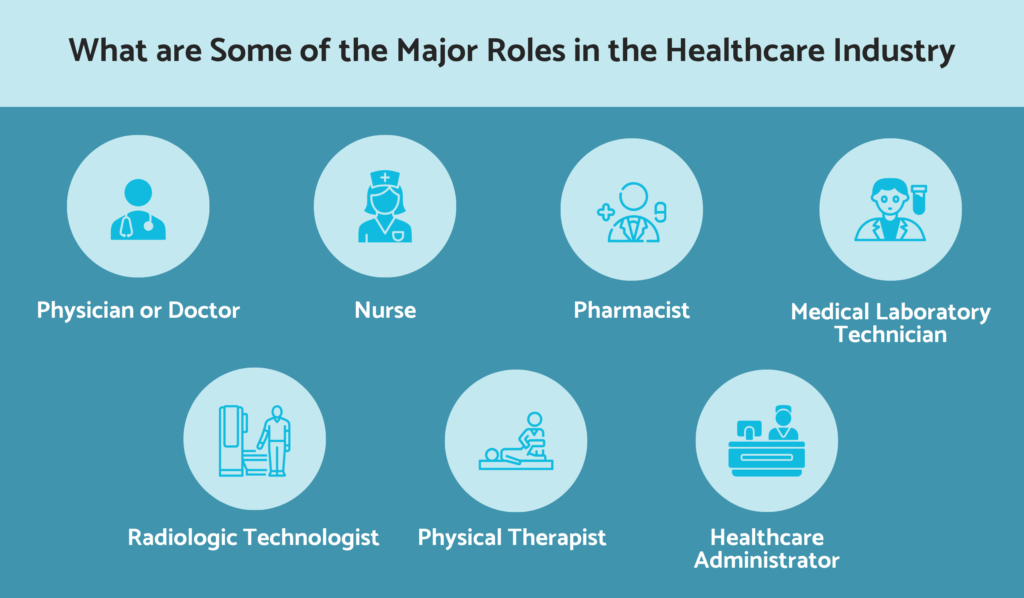
- Physician or Doctor
A doctor or physician examines patients, diagnoses illnesses, prescribes medications, and designs treatment plans. They may specialize in areas such as oncology, pediatrics, cardiology, or internal medicine.
Moreover, they are responsible for making critical medical decisions while also managing complex medical cases.
- Nurse
Nurses are healthcare professionals who provide direct patient care, monitor patients’ conditions, provide medications, and assist doctors during operations. They are also responsible for explaining medical conditions, medications, and recovery plans to patients and their families.
- Pharmacist
The responsibility of a pharmacist is to distribute prescription medications, ensure that the dosage and usage are proper, and make patients aware of the potential side effects and drug interactions.
- Medical Laboratory Technician
Medical laboratory technicians collect and examine blood, tissue, and other biological samples to help diagnose diseases and monitor the effects of treatment. The test results allow doctors to confirm diagnoses and adjust treatments.
- Radiologic Technologist
The main role of a radiologic technologist is operating imaging equipment, including X-ray, CT, and MRI machines, and assisting in the production of diagnostic images. These images further help doctors identify diseases, injuries, and other internal health issues.
- Physical Therapist
A physical therapist helps rebuild a patient’s strength and mobility after surgery, injury or illness that affects their daily life. This is done through targeted and tailored exercise programs.
- Healthcare Administrator
Healthcare administrators are responsible for managing the operational and business aspects of healthcare facilities. This includes managing budgets, supervising staffing, ensuring regulatory compliance, and ensuring the facilities operate smoothly.
Assess healthcare competencies with our wide range of pre-employment assessment tests. HIRE FOR FREE
But what skills should you assess when hiring in the healthcare industry?
3. What top skills to look for when hiring in the healthcare industry?
When hiring for roles in the healthcare industry, it is crucial to assess a candidate’s technical and soft skills to ensure safe, effective, and patient–centered care is provided.
The following are the 5 major skills to be measured when hiring in the healthcare industry:
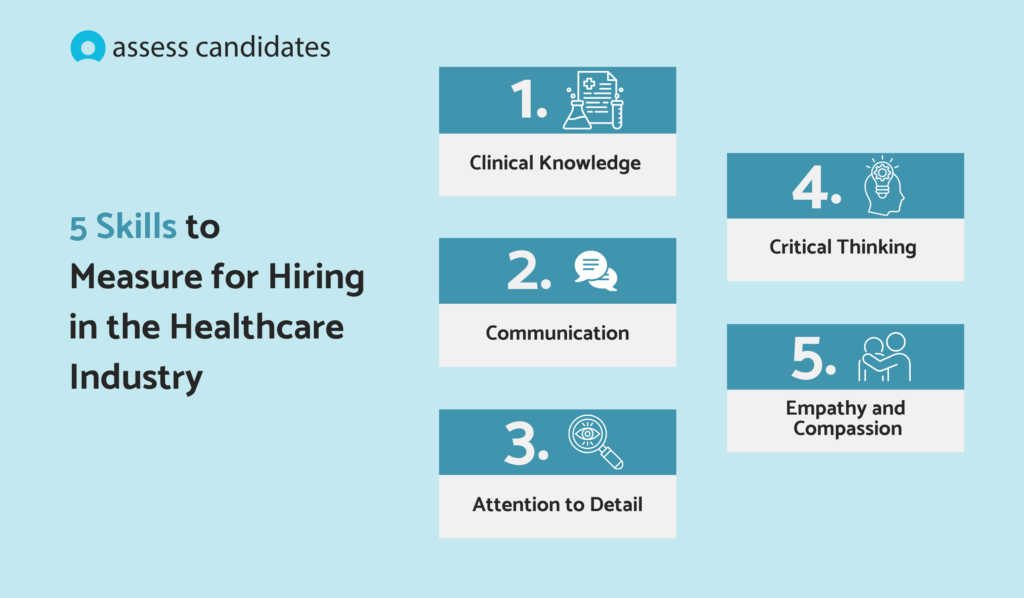
1. Clinical Knowledge
One of the major skills to look for when hiring in the healthcare industry is a candidate’s clinical knowledge. Healthcare workers must have a strong, up-to-date understanding of medical procedures, patient care standards, treatment protocols, and technical proficiency in operating electronic health record (EHR) systems, telehealth platforms, and data management tools.
2. Communication
Soft skills like communication are important for healthcare professionals, as they enable clear communication with patients, their families, and colleagues. Moreover, this is also crucial for explaining the medical information clearly, promoting collaboration, and reducing the risk of medical errors.
3. Attention to Detail
Attention to detail is another essential skill to look for when hiring healthcare employees. This skill helps accurately document patient information, track treatment plans, follow safety protocols to reduce medical errors, and dispense medication properly.
4. Critical Thinking
Critical thinking is one of the most vital skills for a healthcare professional. Applicants with strong critical-thinking skills can assess situations effortlessly, interpret clinical information, and make sound decisions quickly, especially in high-priority emergencies.
5. Empathy and Compassion
In the healthcare industry, empathy and compassion play a huge role. Since patients are mostly in a vulnerable state in the hospital, scared or in pain, providing patient-centered care is necessary. Offering emotional support, understanding their concerns, and connecting with them on a human level improves the patient experience.
Discover our talent assessment platform to hire the top healthcare professionals. LEARN MORE
Let’s take a look at the best tools that you can effectively use to measure healthcare skills at scale.
4. What are the best tools to measure healthcare skills during the hiring process?
Using a combination of assessments and a standardized, structured, and observable hiring process will help you assess both clinical competence and behavioral skills in candidates.
The following are some of the best methods for measuring healthcare competencies accurately:
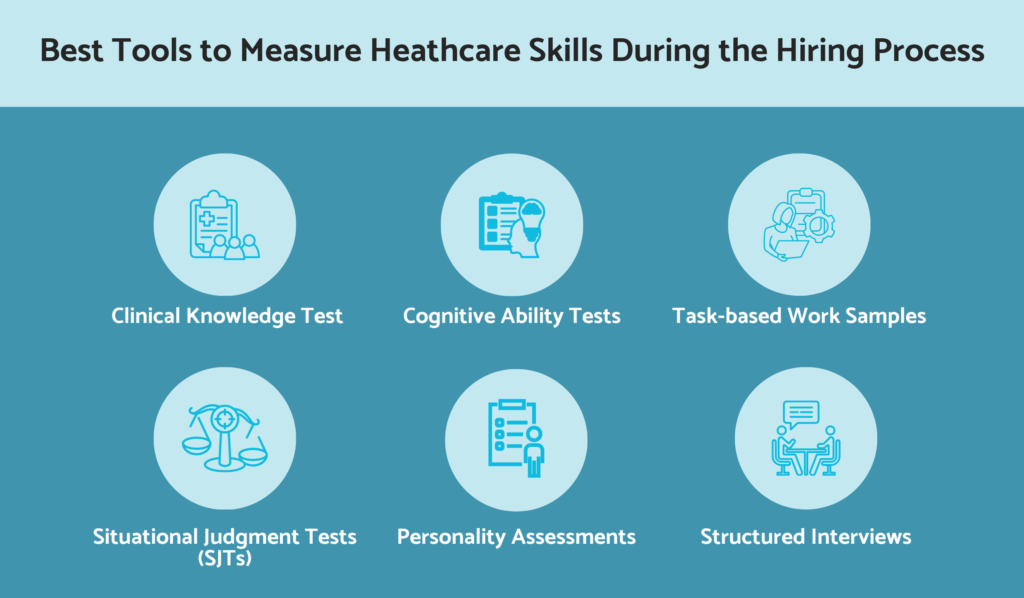
- Clinical Knowledge Test
Clinical knowledge tests or pre-employment clinical assessments are custom assessments that help measure a candidate’s medical knowledge, disease management, anatomy and pharmacology.
These role-specific clinical assessments are especially useful in hiring nurses, technicians, and allied health staff.
- Cognitive Ability Tests
Cognitive ability tests, also known as aptitude tests, help measure a candidate’s critical thinking, logical reasoning, problem-solving abilities, attention to detail, and information processing skills.
Since healthcare employees work under pressure and are often required to make time-sensitive decisions, these tests help identify candidates who can analyze information quickly and respond appropriately.
These tests are useful in hiring healthcare administrators, radiologic technologists, and Emergency Medical Technicians (EMTs).
- Task-based Work Samples
Task-based work samples are pre-employment assessments where candidates receive real or simulated patient cases and are required to collect relevant information, develop differential diagnoses, and create appropriate management plans.
These tests help measure a candidate’s clinical reasoning, diagnostic skills, and management abilities.
These assessments are vital in hiring healthcare administrators, lab technicians, and health informatics & IT specialists.
- Situational Judgment Tests (SJTs)
Situational judgment tests (SJTs) present candidates with real-world clinical workplace scenarios and ask them to choose the most appropriate answers. SJTs help assess a candidate’s clinical reasoning, patient care, ethical judgment, teamwork, and prioritization abilities.
These tests are vital in hiring doctors, paramedics, and therapists.
- Personality Assessments
Personality assessments help measure a candidate’s behavioral traits related to success in healthcare roles. These include conscientiousness, emotional stability, resilience, empathy, teamwork, and adaptability. These are one of the strongest predictors in hiring healthcare workers, as it provides insights into how candidates will most likely behave at work.
These assessments are important in hiring therapists, pharmacists, and medical assistants.
- Structured Interviews
Structured interviews allow applicants in the healthcare profession to be evaluated objectively and fairly as they use a set of consistent, predetermined questions for every candidate. They help assess a candidate’s clinical reasoning, communication, patient-centered care, teamwork, professionalism, and conflict resolution skills.
What are the most common interview questions for healthcare roles?
While interview questions for healthcare roles vary depending on the organization and the type of role, the following are some of the most common interview questions as identified by the National Healthcareer Association:
- Tell me about yourself
- Why are you interested in working here?
- What’s your biggest strength and weakness?
- Why did you leave your last position?
- How do you stay up to date with healthcare advancements?
- What are your career goals?
- Can you tell me about a difficult past experience and how you handled it?
Gain deeper insights into candidates’ skills with our science-backed assessment tools. HIRE FOR FREE
The next section highlights the best practices to follow when hiring healthcare workers.
5. Best practices for hiring in the healthcare industry
Healthcare recruitment has become increasingly complex as organisations balance workforce shortages, compliance requirements, and patient safety expectations.
The following are the 5 major steps to recruit in the healthcare industry:
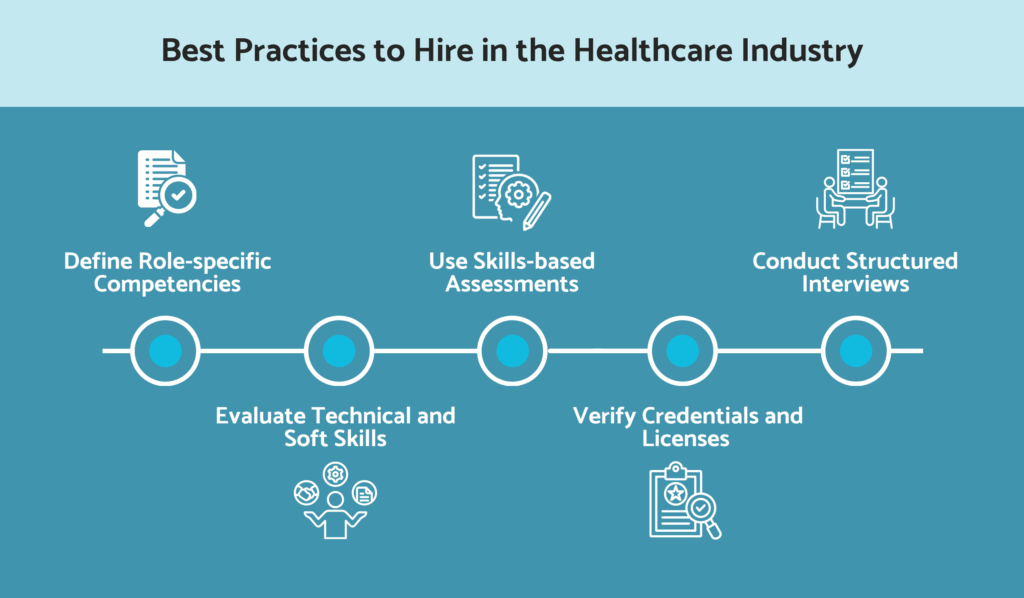
1. Define Role-specific Competencies
Before you start hiring candidates, identify the technical, clinical, and behavioral skills required for the role. Clearly define the role requirements, as this helps attract qualified candidates and ensures consistent evaluation throughout the recruitment process.
2. Use Skills-based Assessments
Incorporate hiring assessments, including clinical knowledge tests, task-based work samples, cognitive ability tests, and situational judgment tests, early in the hiring process. This further helps objectively assess an applicant’s clinical knowledge, decision-making abilities, and job readiness.
3. Conduct Structured Interviews
Conduct structured interviews with standardized questions and scoring criteria to assess applicants objectively. Focus more on asking behavioral and situational questions, as these help assess communication, teamwork, ethical judgment, and patient care.
4. Evaluate Technical and Soft Skills
Assess candidates’ soft skills alongside technical skills. This is because measuring soft skills such as empathy, communication, critical thinking, adaptability, resilience, and teamwork helps healthcare workers build trust with their patients, collaborate effectively with multidisciplinary teams, respond appropriately under pressure, and minimize the risk of medical errors.
5. Verify Credentials and Licenses
Verifying a candidate’s credentials and licenses is non-negotiable when hiring in the healthcare industry. Confirm their educational qualifications, professional certifications, licenses, and relevant work experience early in the hiring process to reduce the risk of mis-hires and to protect patient safety.
Explore our wide range of standardized assessments to boost your skills-based hiring. LEARN MORE
6. How top healthcare facilities benefit from Assess Candidates to hire candidates
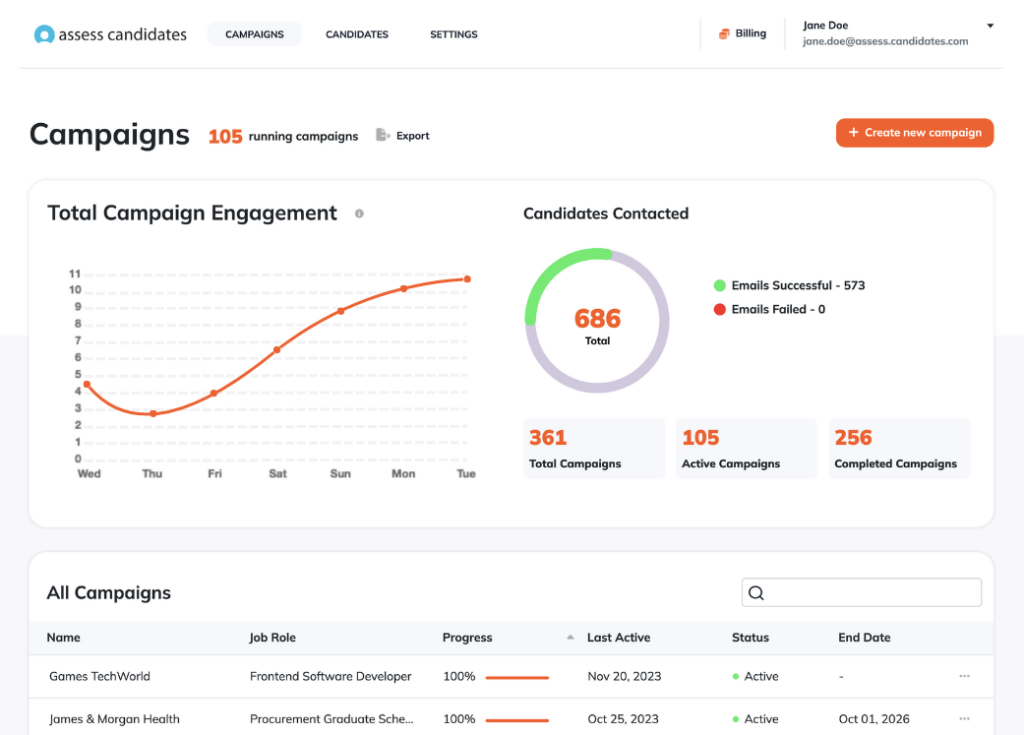
At Assess Candidates, we offer a wide range of pre-employment assessments and create recruitment campaigns customized to each organization’s unique hiring needs.
Here is an example of our campaign reporting dashboard available on Assess Candidates.
Here are 4 reasons why employers choose Assess Candidates for measuring clinical skills in candidates:
- Scientifically Designed by Expert Psychologists: Assess Candidates’ pre-employment assessments are developed by experienced psychologists, psychometricians, and subject matter experts. These assessments are scientifically validated to measure role-critical competencies, such as critical thinking, attention to detail, and situational judgment.
- Advanced Reporting: Gain clear, objective insights into each candidate’s strengths across key healthcare competencies, including decision-making, communication, and problem-solving. With detailed reports and ATS integration, you can compare candidates consistently and streamline high-volume healthcare recruitment.
- Positive Candidate Experience: Our role-specific assessments use realistic healthcare scenarios that allow applicants to demonstrate their skills beyond their resumes. Custom branding also helps create a professional and consistent hiring experience.
- Candidate Accessibility Support: Create an accessible recruitment process with features such as screen-reader compatibility, extended time, keyboard navigation, adjustable visual settings, and zoom functionality. All assessments comply with WCAG accessibility standards, helping every candidate demonstrate their abilities fairly.
Assess Candidates provides reliable, science-based tools that help healthcare organizations evaluate talent accurately. Explore our full range of assessments to identify candidates with the critical thinking and professional competencies required for success across healthcare roles.
Not sure which healthcare assessments best suit your hiring needs? Contact us for a free analysis of your role requirements.
Partner with Assess Candidates to use a range of role-specific assessments in your hiring process. VIEW PLANS
Conclusion: Key Takeaway
Hiring top healthcare professionals requires a structured, skills-based approach that evaluates both clinical expertise and behavioural competencies. Combining role-specific assessments, structured interviews, and credential verification helps employers make objective hiring decisions, reduce medical errors, ensure regulatory compliance, and build a workforce capable of delivering safe, high-quality patient care.
Frequently Asked Questions
How to identify qualified healthcare professionals beyond their resumes?
To identify healthcare workers beyond their resumes, you need to combine healthcare skills assessments with cognitive ability tests, situational judgment tests, and structured interviews. These tests not only help objectively hire applicants but also provide insights into whether they possess the required clinical knowledge, critical thinking, communication, and decision-making skills to perform effectively in healthcare facilities.
How to assess a candidate’s ability to perform under pressure?
Healthcare professionals are mostly required to perform and make decisions under pressure, especially in emergency medical situations. However, you can evaluate a candidate’s ability to work under pressure by using clinical simulations, situational judgment tests, and behavioral interview questions. Assessments help identify candidates who prioritize tasks, make timely decisions, respond to emergencies, and remain calm under pressure.
What to prioritize when hiring healthcare workers?
Prioritize experience and important clinical skills, like clinical knowledge, communication, attention to detail, and critical thinking, to hire qualified healthcare employees. Evaluating both experience and demonstrated skills helps identify candidates who possess the knowledge, judgment, and competencies required for the role.
How to hire healthcare professionals without compromising patient safety?
You can hire healthcare workers without compromising patient safety by incorporating a structured hiring process that includes healthcare skills assessments, credential verification, structured interviews, reference checks, and background screening.
Why is verifying healthcare license credentials important?
You should verify a candidate’s licenses and credentials, such as educational qualifications, professional certifications, and relevant work experience, before hiring. This guarantees that candidates meet regulatory requirements, reduces the risk of employing unqualified professionals, promotes compliance, safeguards patients, and protects the organization’s reputation.


 English
  Arabic