
How to Measure Candidate Experience in 2026



Candidates often share their experiences when applying for roles in companies and industries. These experiences, however positive or negative, can have a lasting effect on the employer brand.
According to the CareerPlug survey, about 52% of candidates reported rejecting job offers due to a poor candidate experience.
In the meantime, according to Teamtailor, 37% of recruiters cited their focus on candidate experience as the key reason behind their recruitment success. This primary focus improved the quality of hire and time to hire.
In this guide, we will share with you how you can measure candidate experience during recruitment processes to ensure that your employer brand remains at its peak and competitors do not get your prospective top talent.
Contents
- What is candidate experience?
- Common candidate experience metrics
- What are the tools to measure candidate experience?
- What is the importance of measuring a candidate experience?
- Best strategies to measure candidate experience
- What are candidate experience surveys?
- Observational signals when measuring a candidate experience
- Client success stories of measuring candidate experience
- What is the future of measuring candidate experience?
- Why do employers use Assess Candidates tests to boost candidate experience when hiring?
Ready to dive into this guide and learn all you need to know about candidate experience? Keep reading!
1. What is candidate experience?
Candidate experience refers to the interactions and perceptions candidates have of your recruitment process while applying for a role at your company. This includes the job search, application, assessment, interview, and onboarding processes.
Start your hiring process with our reliable, science-backed psychometric assessments. HIRE FOR FREE
Wondering how to monitor candidate satisfaction? We have the answer for you in the next section. Continue scrolling!

2. Common candidate experience metrics
According to a CareerArc survey, approximately 50% of job seekers said they would not accept a job offer from a company with a poor reputation, even if the compensation were higher than at their current or previous employer.
6 common candidate experience metrics
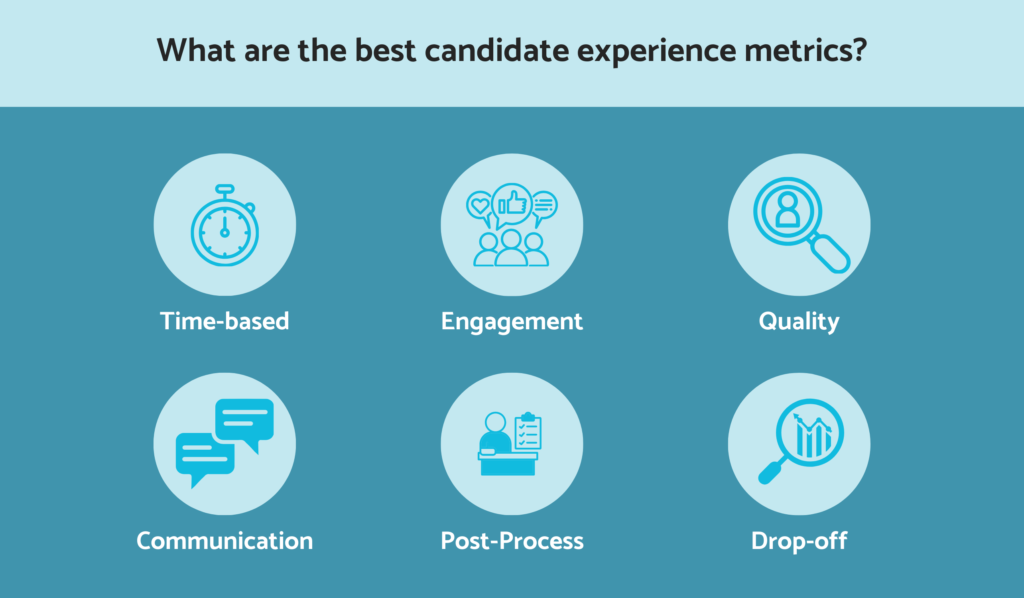
- Time-Based
You measure candidate experience by calculating the length of the recruitment process, from the initial job application to the job offer. When the recruitment process exceeds the stipulated timeframe, your candidate’s experience satisfaction is likely to be negative. This also risks them losing interest in the application if there is a delay in communication.
- Engagement
Candidate experience metric is measured by focusing on the number of candidates who start the application versus those who complete it, the interview rate, and the offer acceptance rate. You also conduct a candidate experience survey with a cNPS (Candidate Net Promoter Score), asking if they will recommend your company to others.
- Quality
This metric comes from candidate satisfaction scores, typically collected through post-interview or post-recruitment surveys. Focusing on the quality of hire through the performance of the candidates you have hired will provide you with sufficient knowledge about candidate experience.
- Communication
Most companies calculate their candidate experience metric based on their response rate to candidate communications. This affects how candidates speak about the company to other potential employers, further impacting the employer brand. You can also monitor the ghosting rate; candidates who disappear during the process.
- Post-Process
You can gather information and data about your applicants’ experience through online review platforms like Glassdoor to see what these candidates say about your company’s hiring process. These platforms offer company reviews and are accessible to anyone in the workforce who cares about their employer brand’s health.
- Drop-Off
Monitor stage–by–stage dropout rates in your recruitment process and investigate why candidates who have shown interest in your company are dropping out. You can conduct surveys post-process to understand the reasons for their withdrawals.
Having seen the ways that you can track candidate experience, take a look at the tools that you can use.
3. What are the tools to measure candidate experience?
Collecting and revising feedback from candidates after they participate in your recruitment process can be time-consuming.
According to McKinsey, 50% of all professionals in the United Kingdom have rejected a job offer due to the time required in the hiring process. Monitoring and analyzing such scenarios with well-equipped tools can improve your candidate satisfaction score.
5 Key Tools to Use in Measuring Candidate Experience
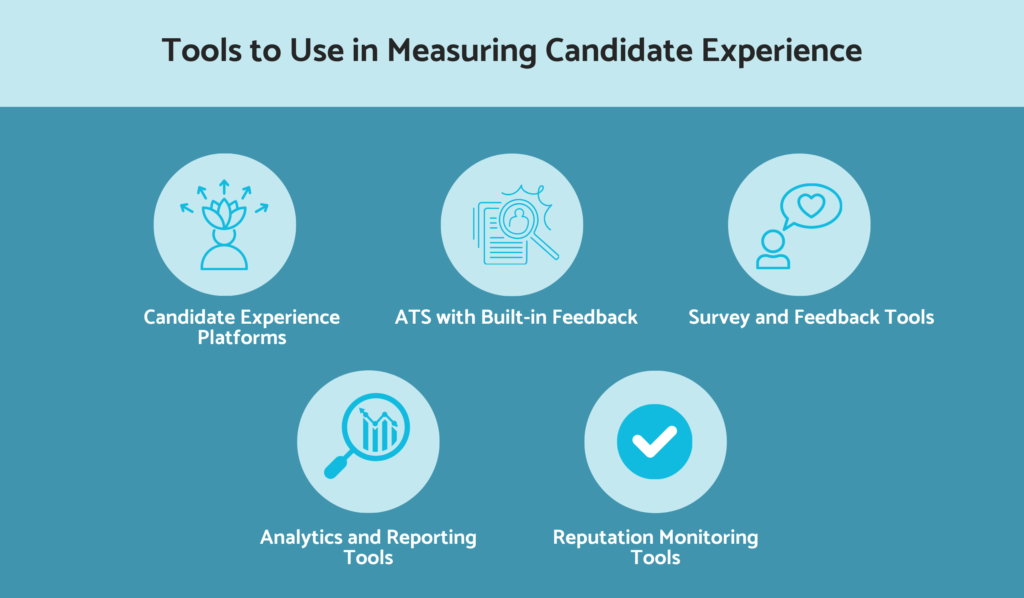
- Candidate Experience Platforms: Using dedicated candidate experience platforms such as Starred, Talenthub, and Trustcircle will help you measure and improve your candidates’ experience throughout the hiring process. They automate feedback collection at several stages, including after the application, after interviews, and after a job offer is accepted or rejected.
These platforms also provide sentiment analysis and offer dashboards to track feedback so you can easily pinpoint where experiences break down.
- ATS with Built–in Feedback: Applicant Tracking Systems (ATS) tools like Workday Recruiting, Lever, and Greenhouse track every candidate’s journey from the start of the application to hiring. They automatically log time–based metrics, including time-to-hire, time-to-first-contact, and stage-by-stage conversion rates.
These ATS platforms offer a unified view of process and experience data, enabling seamless tracking of the candidate experience.
- Survey and Feedback Tools: Tools like SurveyMonkey, Typeform, and Google Forms allow employers like you to design custom surveys that send at specific moments in your recruitment process, like a phone screen or final interview.
The tools are flexible, allowing you to choose question formats like Net Promoter Score, open-ended responses, and star ratings. Although they do not have recruiting-focused features, these tools are easy to integrate with your ATS and affordable to use.
- Analytics and Reporting Tools: Candidate experience measurement tools such as Google Analytics, Hotjar, and LinkedIn Talent Insights help you track candidate behaviour rather than sentiment. This allows you to focus on what your candidates do rather than what they say.
They track how your candidates interact with your careers site, including where they land, how long they stay, which job postings they read, and where they abandon their application process.
- Reputation Monitoring Tools: Glassdoor, Indeed Company Pages, and Comparably all record unfiltered and organic feedback that candidates leave publicly after participating in your recruitment process.
They help you in monitoring interview experience ratings, in identifying recurring complaints about certain stages or interviewers, and in notifying you of the perception of your employer brand.
Ensure a positive candidate experience with our user-friendly hiring assessment platform. LEARN MORE
Are you asking yourself about the importance of measuring candidate experience? Let us explain all about that below!
4. What is the importance of measuring a candidate experience?
According to a CareerArc report, about 72% of candidates are likely to share a negative candidate experience with other prospective candidates, either virtually or in person. Monitoring candidate experience promotes your employer brand and ultimately ensures that your candidates are satisfied during the recruitment process.
The Importance of Measuring Candidate Experience
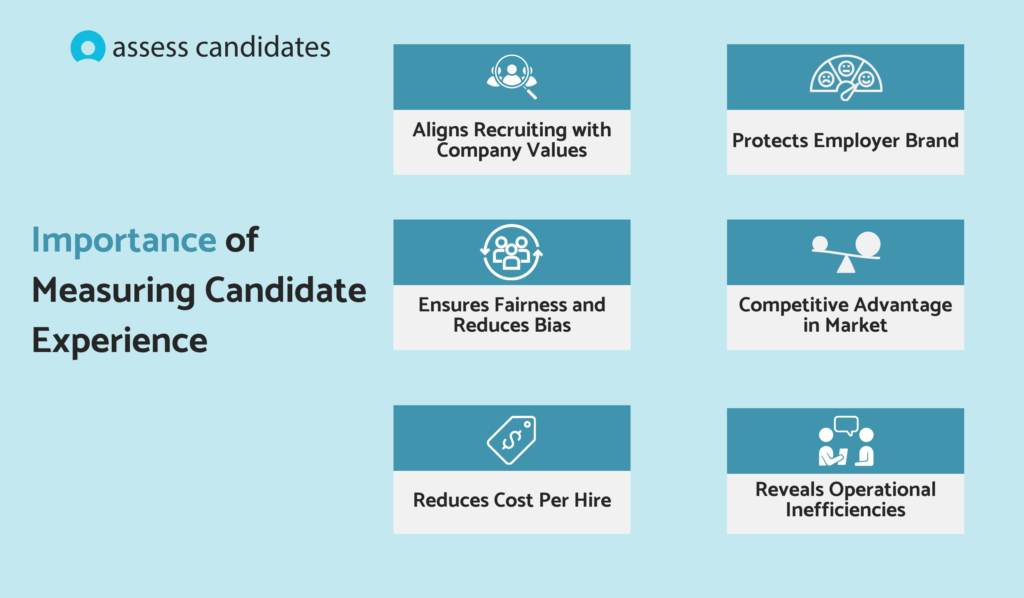
- Aligns Recruitment with Company Values
Many organizations claim to value respect and transparency, yet their recruitment processes contradict those claims. For this, measuring candidate experience creates accountability and ensures that your recruiting strategies truly reflect your values.
- Ensures Fairness and Reduces Bias
By measuring candidate experience across demographic groups, you can learn about what populations witness systematically worse experiences during and after your recruitment process. The results may show a bias in the process, perhaps among the interviewers, or that your assessment methods are not accessible to diverse groups.
- Reduces Cost Per Hire
Reports of poor candidate experience will create inefficiencies throughout your recruitment process. High drop–off rates mean you will need to attract more candidates to fill vacant roles in your organization. By measuring experience and addressing issues raised by your candidates, such as interview delays and a lengthy assessment process, you will reduce the costs associated with restarting a hiring process.
- Protects Employer Branding
Every candidate who goes through your recruitment process automatically becomes an ambassador for your company, whether hired or not. As candidates share their reviews and experiences on public platforms such as Glassdoor and social media, measuring candidate experience helps you maintain and improve your employer brand.
- Competitive Advantage in Market
When unemployment is low and labor is scarce, candidate experience becomes an important factor in recruiting. Measuring your candidate satisfaction score can help you optimize your process and move faster, communicate better, and create a more positive impression than your competitors.
- Reveals Operational Inefficiencies
Candidate experience metrics often reveal problems your recruiting teams are unaware of. Without taking a periodic measurement, you will have no idea about the lacking competencies that you can repair if you want to attract, hire, and retain top talent.
Now that you understand its importance, take a look at the best strategies for measuring candidate experience.
5. Best strategies to measure candidate experience
According to research by Criteria, 54% of job seekers have left their jobs due to poor communication from their employer. However, 67% of candidates believe that their next job will be much better than their previous one and appropriately compensated.
7 Best strategies to measure candidate experience
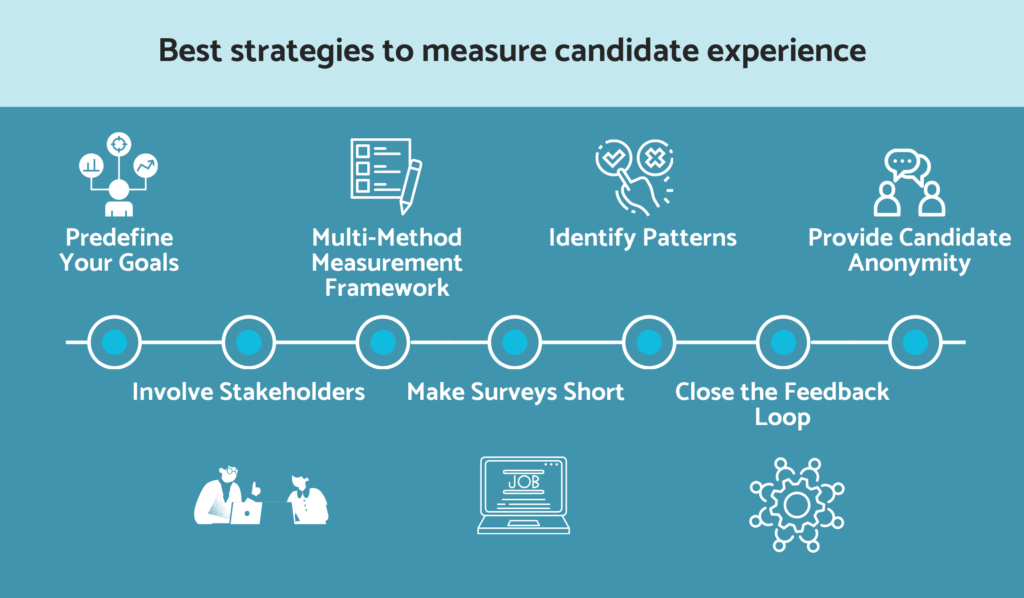
1. Predefine Your Goals
We recommend establishing the results you aim to achieve and the metrics you want to focus on. Doing this will help you identify the pain points and provide solutions to scale your recruitment process.
2. Multi-Method Measurement Framework
Do not rely on a single data source, as the result that you can get from measuring candidate experience will come from multiple measurement methods. Each of the methods will reveal different aspects of the experience that you may not have seen with one method.
3. Identify Patterns
Collective data will likely obscure the information you need, so we recommend analyzing candidate experience by sector, including candidate source, role type, recruiter, demographic group, and location. This way, you will easily spot where the problem lies with candidate experience.
4. Provide Candidate Anonymity
Ensure that you offer anonymity to your candidates when you are taking a survey, as they are more inclined to share their honest opinions when anonymous. Providing anonymity reassures candidates that their reviews do not affect their application status.
5. Involve Stakeholders
Always involve your stakeholders in your measurement design, not just the HR, but also include the hiring managers, recruiters, and sometimes even the recent hires, to decide which metrics matter. Doing this helps you accurately pinpoint pain points otherwise missed, motivating your recruiters to improve the candidate experience when tracking their interview feedback scores.
6. Keep Surveys Short
We recommend keeping your surveys to a maximum of 7 questions, as survey fatigue is real and your candidates may opt out if they feel it is too long. Since these candidates check their email on their smartphones, ensure your surveys render smoothly on mobile devices.
7. Close the Feedback Loop
Collecting feedback without promptly and actively addressing it signals that your lack of concern for your candidates’ input. We recommend establishing a weekly process to review feedback. Share the improvements with your recruiting team and, when appropriate, follow up with candidates to inform them of the changes.
Are you interested in learning about candidate experience surveys? We have highlighted a few below!
6. What are candidate experience surveys?
Many organizations often send to both successful and unsuccessful candidates to understand how they felt during the recruitment process. These surveys help you measure the professionalism and smoothness of your hiring process.
Why do employers use candidate experience surveys?
- Improve Hiring Process: Recruiting companies use candidate experience surveys to identify pain points, such as lengthy response time, poor communication, confusing application steps, and difficult interviews.
- Increase Offer Acceptance Rate: They use these surveys to assess whether candidates feel respected and informed throughout the recruitment process, thereby incentivizing them to accept the offer and strengthening the employer brand.
- Measure Recruiter Performance: Conducting surveys helps companies assess recruiter professionalism, communication clarity, transparency, and fairness toward all candidates applying for a role.
Types of candidate experience surveys that employers use
- Application Stage Surveys: These are sent shortly after a candidate submits their application or completes their initial screening. These surveys focus on the seamless application process and help you identify the technical issues that cause candidates to abandon it.
- Post–Phone Screen Surveys: Sent after the first recruiter conversation, also known as the phone interview/screening. The aim is to measure professionalism, communication clarity, and whether the role was accurately represented. It is the first human interaction with the candidates and could lead to early dropouts.
- Post–Interview Surveys: Candidates receive these surveys after each interview stage and aim to evaluate the interviewer’s preparedness, the quality of the questions, and the overall professionalism of the interview experience.
- Offer Stage Surveys: Shared with candidates who receive the job offers, regardless of whether they accept or decline the role. For those who accept, you can measure their satisfaction with the hiring process, compensation, and benefits. For those who reject the offer, you can ask about their culture fit, competing offers, and the overall recruitment experience.
- Rejection Surveys: Candidates who were not selected to move forward in the application process receive these. These surveys are the most revealing, offering candidates the opportunity to speak without bias.
- Post–Hire Surveys: Distributed to new recruits during the first few months of their recruitment to assess whether the hiring process met their expectations. These surveys ask whether the role aligns with the job description, whether the culture aligns with what was presented in the interviews, and whether the onboarding process was smooth.
- Comprehensive End–to–End Surveys: Candidates receive these surveys at the conclusion of the entire recruitment process and capture the holistic experience across touchpoints. The survey includes the Net Promoter Score (cNPS) questions.
- Exit/Withdrawal Surveys: These surveys are sent when candidates voluntarily withdraw from the application process. These will help you understand why you are losing candidates in your recruitment process and help you address these problems.
- Referral Source Surveys: Candidates receive when referred by employees or applied through certain channels. This survey helps you determine whether these recruiting sources consistently deliver better candidate experiences.
- Event or Career Fair Follow–Up Surveys: Candidates receive this survey after recruitment events, career fairs, and campus visits. They help measure the quality of the recruiter’s interactions at the event and whether candidates wish to apply.
Examples of candidate experience surveys to ask
Regardless of timing, most candidates experience recruitment processes in the following ways. When creating your surveys, we recommend keeping them short and mobile–friendly.
- “How likely are you to recommend our company to a friend or colleague?”
- “Would you consider applying for other open roles at our company in the future?”
- “Were our interviewers respectful and prepared?”
- “How would you rate your experience?”
- “What could we improve about our recruitment process?”
Next are the observational signals used to assess a candidate’s experience. Curious to know more about this? Keep reading!
Integrate insightful candidate experience surveys into your assessment process. HIRE FOR FREE
7. Observational signals when measuring a candidate experience
According to Personio, 58% of surveyed candidates said they would likely accept a role at a company if the recruitment process was good.
Observational signals are behavioral indicators that reveal your candidate’s experience quality without directly asking for feedback. The 4 metrics below track this data.
Top 4 observational signals to measure a candidate’s experience
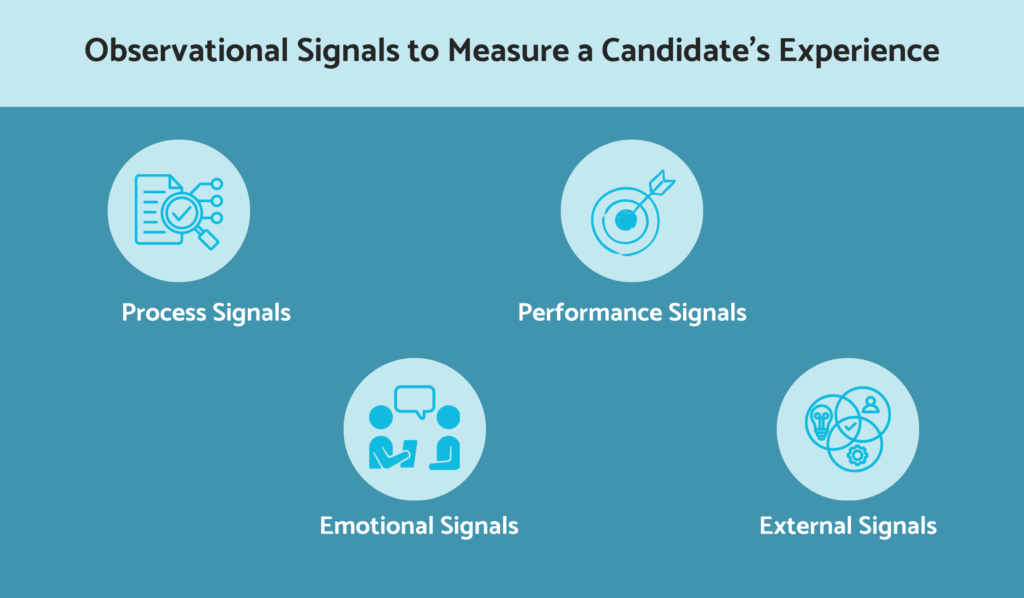
1. Process Signals
This objective, measurable data shows you the efficiency and structure of your recruitment process.
- Application Completion and Abandonment Rate: Measure the percentage of candidates who start against those who complete the application process. A high abandonment rate indicates that the process is either too long or too complex, or that it has glitches.
- Time–Per–Stage: Calculate the duration that a candidate spends in each stage, like from application to first screen, as long wait times are a large source of candidate frustration.
- Response Time: Measure the gap between your candidate’s actions and the recruiter’s follow-up. This is because candidates can interpret slow responses as a lack of interest.
- Email Response Rate: Monitor how candidates engage with your outreach, as this indicates their level of interest and the quality of your messaging.
2. Emotional Signals
Emotional signals capture your candidate’s reaction to their interactions with your recruiting team and your brand.
- Interview Sentiment: Candidates notice when interviewers arrive rushed, distracted, or unprepared, which can reflect a weak hiring culture.
- Candidate Net Promoter Score (cNPS): You should have a high metric that asks your candidates how likely they are to recommend applying to the company, whether or not you hire them.
- Perceived Fairness and Respect: You should measure whether your candidates believe the assessments are relevant to the role and whether you respected their time throughout the process.
3. Performance Signals
These metrics are the measurable results that come from the quality of the experience you provide to your candidates.
- Quality–of–Hire and First–Year Retention: A positive candidate experience aligns candidates’ expectations with the job’s reality, leading to higher long-term engagement.
- Referral Rates: Track whether rejected applicants refer other prospective candidates to your company; this is a strong indicator that you have provided them with a respectful and positive experience.
- Offer Acceptance Rate: A high rate proves that the experience, compensation, and employer brand are well-aligned with your candidate expectations.
4. External Signals
This measurement focuses on the final reviews candidates provide about the overall experience and how they felt during the recruitment process.
- Employer Reviews: Use monitoring platforms such as Glassdoor and Indeed to gather interview feedback and ratings on the difficulty and length of your recruitment process.
- Social Media Sentiment: Track what candidates say about your hiring process on social media platforms like LinkedIn.
Explore reliable assessments created by Chartered Scientists to hire the right candidates. VIEW PLANS
8. Client success stories of measuring candidate experience
Many employers and companies have shared their results in measuring candidate experience and how it has shaped their recruitment process. These candidate satisfaction score measurements have improved hiring, attraction, and retention.
1. Hilton Worldwide
Challenge:
Hilton was receiving inconsistent feedback about its recruitment process and had no visibility into where candidates were dropping off or where they were having negative experiences.
Solution:
The company implemented automated candidate experience surveys across several touchpoints and began monitoring the Net Promoter Score (cNPS) alongside its traditional recruiting metrics.
Results:
- Increased candidate Net Promoter Score from 21 to 33 in a year
- Improved offer acceptance rate by 8%
- Identified delayed communication as the biggest pain point
2. Deloitte
Challenge:
Deloitte’s campus recruiting program attracted top talent but kept losing them during the lengthy recruitment process. The company had no idea why the strong candidates were withdrawing from the process.
Solution:
Deloitte deployed post-interview surveys and exit surveys for candidates who withdrew from the hiring process, while also tracking time-to-hire and stage-by-stage drop-off rates.
Results:
- Deloitte discovered that their average time from the final interview to offer decision was causing 40% of withdrawals
- They saw their Glassdoor interview rating increase from 3.2 to 4.1 stars in a year and six months
- Decreased decision time to 10 days by streamlining approval processes, reducing candidate drop-off by 25%
This is where Assess Candidates comes in: we help ensure your candidates are well qualified by measuring skills and providing data-driven analytics to inform your hiring decisions.
Finally, we arrive at the future of recruitment after measuring candidate experience. Keep scrolling to find out!
9. What is the future of measuring candidate experience?
Having a vast knowledge of how to measure candidate experience for your recruitment, you are probably wondering about what the future will look like if more employers measure candidate experience.
The future of measuring candidate experience
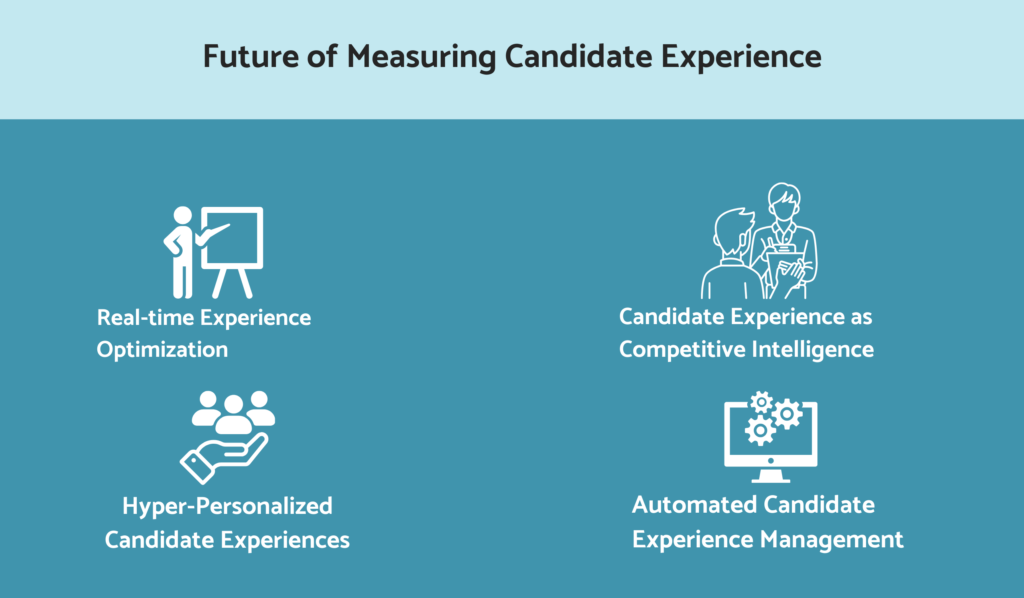
- Real-time Experience Optimization
Recruitment processes will become self-optimizing systems, as all stages of the hiring process will be automatically tested and optimized based on the candidate’s response and satisfaction. Measurement will no longer be periodic; it will be continuous, with feedback loops that adjust the experience in real time.
- Hyper-Personalized Candidate Experiences
Recruitment will shift from a generic process to an individualized one, in which AI and machine learning will examine candidate behavior, preferences, and real–time feedback to customize communication frequency and interview formats. A candidate who prefers written communication will receive updates via messages and a continuous personalized measurement.
- Candidate Experience as Competitive Intelligence
More companies will begin using candidate experience not only to improve their processes but also to surpass their competitors. Platforms will also collect anonymous data across industries, enabling companies to see reviews about their recruitment process. Companies that prioritize the candidate experience will encourage top candidates to apply and secure employment as a result of this data discovery.
- Automated Candidate Experience Management
AI-powered systems will now manage most of the candidate experience with little to no human intervention. Companies will implement chatbots that will offer instant answers to candidate questions, schedule interviews based on mutual availability, and deliver feedback. Human recruiters will focus on high-value relationship building while AI and automation handle routine experience tasks.
Hire best-fit candidates with our customizable assessment tool platform. LEARN MORE
So, why choose Assess Candidates when trying to boost candidate experience in 2026?
10. Why do employers use Assess Candidates tests to boost candidate experience when hiring?
Organizations and industries have spoken about the usefulness of Assess Candidates’ pre-employment assessment tests in recruiting. Our platform offers a wide range of assessment tests to improve your candidate experience.
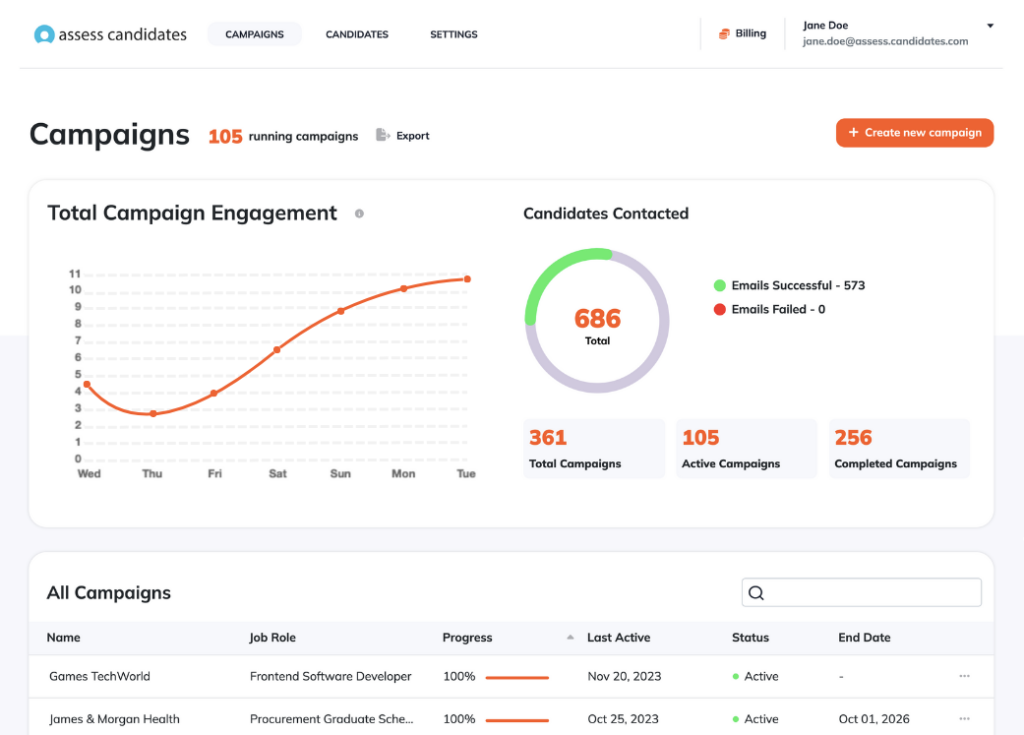
- Ensures Accessibility and Reduces Bias: Assess Candidates reduces bias and provides every candidate with an equal opportunity to pass the assessment test regardless of their background. Our unwavering commitment to fairness, diversity, and inclusion directly improves candidate experience, especially for candidates who face discrimination in the traditional assessment format.
- Maintains Quality and Reduces Time–to–Hire: Many companies use our platform’s pre-employment assessment test because it minimizes their time-to-hire by an average of 22%. A fast recruitment process improves candidate experience by reducing the anxiety and uncertainty that comes with a longer recruiting time.
- Creates Better Job–Person Fit: The assessment platform accurately evaluates whether candidates’ skills, competencies, and personality all align with the job description and role requirements. Assess Candidates helps you reduce and prevent mis-hires, placing applicants in roles where they are unlikely to succeed.
- Shortens Assessment Time and Respects Candidates: With Assess Candidates, we offer a shorter test time and candidate engagement, allowing them to finish with a positive candidate experience. This respects candidates’ time while gathering data about their skills.
- Offers a Professional Branded Experience: Our platform delivers a seamless and professional experience from start to finish. These include realistic workplace scenarios, shorter test times, and AI-driven technology. This enables you to maintain your employer brand throughout the assessment process.
Conclusion: Key Takeaway
In this guide, you will have learned about why candidate experience is important to recruiters who aim to attract and hire the top talent in their organization. You will also have gained insight into best practices to ensure you use the right metrics to calculate the candidate experience. We also listed the right tools to use when measuring your candidates’ experience, so you do not find yourself at a disadvantage when you want to prevent application drop-offs during recruitment.
Curious to know more about measuring candidate experience? Keep scrolling to explore our frequently asked questions, and enter your email to get started today.
Frequently Asked Questions
What are the most important candidate experience metrics to track?
The most important metrics are the Net Promoter Score (cNPS), application completion rate, time-to-hire, time-to-first-contact, overall satisfaction ratings, offer acceptance, interview show rate, stage-by-stage drop-off rates, and public review ratings.
When should you survey candidates during the recruitment process?
You should survey your candidates at multiple touchpoints throughout the recruiting journey, not just at the end. You can send pulse surveys immediately after candidates submit an application, after each interview round, or to new hires at 30, 60, and 90 days.
What is a candidate satisfaction score?
A candidate satisfaction score (CSS) is a metric used by recruiters to measure how satisfied candidates are with their experience throughout the recruitment process, whether or not they got the job. The short survey is usually gathered after candidates complete a significant stage in the hiring process. The score is then calculated using a method similar to the cNPS.
What do you do with negative candidate feedback?
Acknowledge the negative candidate feedback, look for patterns rather than react to individual complaints, categorize the feedback, prioritize the issues that appear most frequently, and fix them immediately. You can then communicate these changes with your recruiting team and the candidates at an appropriate time to show that you are listening.
What is the difference between candidate satisfaction and candidate experience?
Candidate satisfaction is a single metric that measures overall satisfaction with the recruitment process, while candidate experience covers the entire hiring journey. Satisfaction is one of the factors of the candidate’s experience, as you can have satisfied candidates who had a poor experience due to one or more faults.


 English
  Arabic