
Posting Your Interview Questions Before the Interview Process in 2026



In 2026, employers are asking whether they should share their interview questions with candidates before the interviews.
This debate has been ongoing for many years, with recruiters and companies weighing the pros and cons of pre–disclosed interview questions.
According to LinkedIn, sharing your interview questions with candidates beforehand builds a relationship between the company and the candidate, providing a positive candidate experience in the recruitment process.
In this text, we will break down everything you need to know about posting your interview questions to candidates in advance of the interview.
Contents
- What is an interview process?
- Benefits of sharing interview questions before interviews
- Challenges of pre-disclosed interview questions
- Best practices to implement when posting interview questions
- Client success stories of posting interview questions before
- The future of recruitment when you share interview questions
- Why do employers prefer the Assess Candidates’ interview platform?
Curious to know about the pros and cons of posting interview questions before the interviews take place? Keep reading to learn more!
1. What is an interview process?
An interview process is a series of steps or interviews held by employers to better assess a candidate’s skills, knowledge of the role, culture fit, and behavioral tendencies during the recruitment process.
What types of interviews are there? Let us get into that below.
How many types of interviews are there?
There are two primary types of interviews, and they are classified into onsite (physical) interviews and video interviews, which are essentially done remotely and often supervised by Artificial Intelligence (AI).
Let us break down these interviews to understand more about interview processes.
- Physical Interviews: You can request that your candidates come for an on-site interview, where you, team leads, and other hiring staff in your company can interview them. You can choose to share your interview questions with your candidates ahead of the interview to help them prepare for the questions.
- Video Interviews: Video interviews are virtual and offer candidates the convenience of taking them in their own environment. There are two main formats, namely:
- Live Video Interview: This is conducted between interviewers and candidates via video conferencing platforms. It is similar to a traditional interview, except it is virtual.
- Pre–Recorded Interview: Candidates respond to a set of pre–recorded interview questions through an online platform like Assess Candidates without interacting with a live interviewer. The responses are then sent to recruiters for analysis.
If you prefer a video interview, you can also post your interview questions beforehand to give your candidates an idea of the questions they will be asked and to help them prepare answers.
Develop a seamless interview process for you and your candidates. HIRE FOR FREE
Before we assess the benefits and drawbacks of sharing interview questions pre-interview, first it’s important to consider what skills you’re looking to assess through these questions.
Skills to look out for during interviews
Many employers often wonder about what skills they should look for during interviews with candidates, and if you are considering sharing your interview questions with your candidates before the interviews, pinpointing the necessary skills should be easier for you.
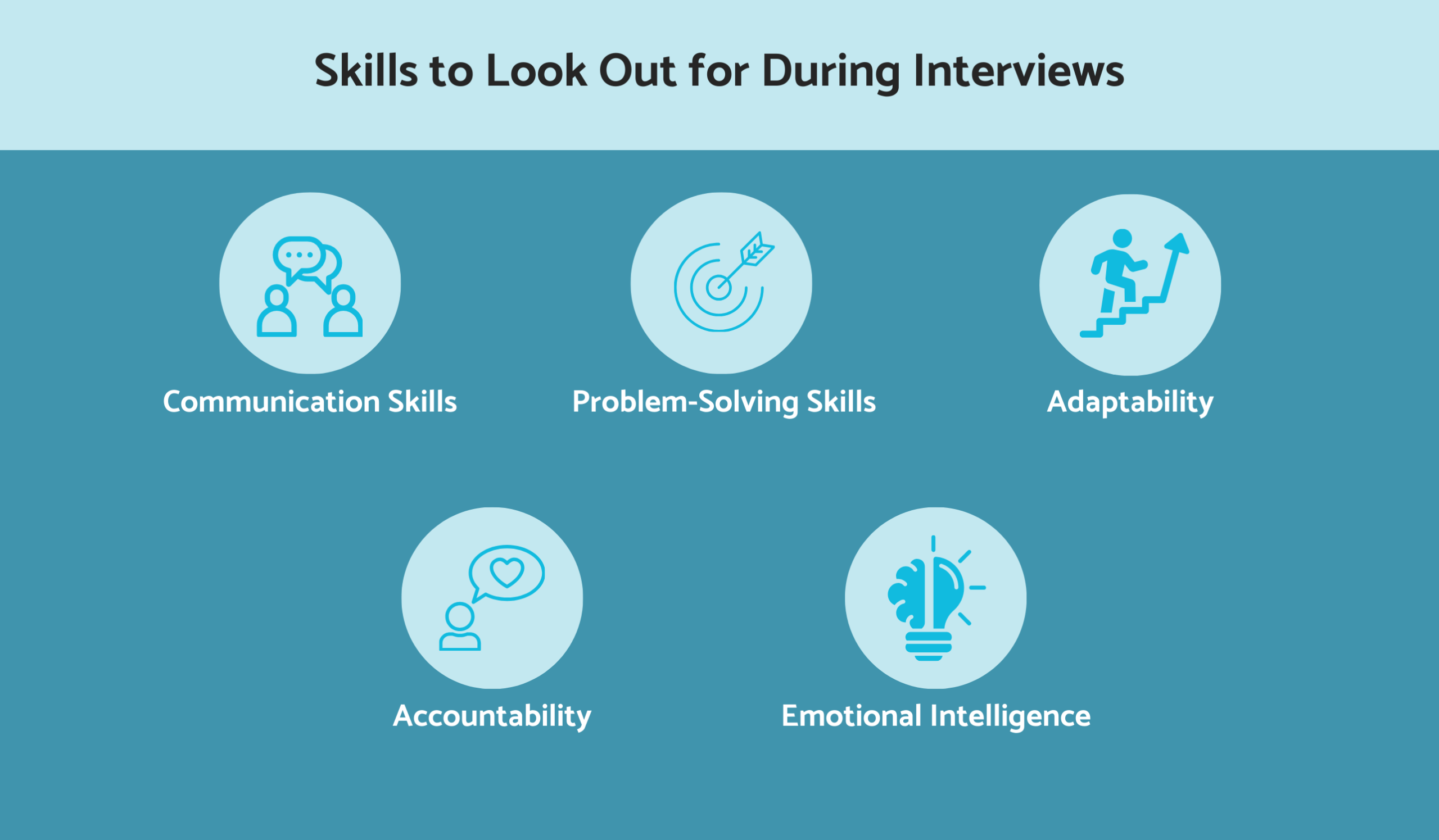
Key 5 skills to look out for during interviews
1. Communication Skills:
When recruiting, look for communication skills in your candidates, including listening, clarity of expression, and the ability to construct messages for different audiences. Having communication skills works alongside collaboration skills, both of which are required of any candidate.
2. Problem-Solving Skills:
Problem-solving is how your candidates approach complex situations, break down problems into manageable bits, and provide the team with achievable solutions. You should look out for candidates who are also critical thinkers and can be creative in challenging obstacles in your company.
3. Adaptability:
Your candidates must be able to adapt to whatever changes the company requires, such as switching departments to solve a critical problem affecting the team. Candidates with high adaptability skills are open to change and embrace it whenever it comes.
4. Accountability:
Focus on hiring candidates who demonstrate accountability as they are likely to take ownership of the responsibility for outcomes, either positive or negative, without shifting blame. This skill helps your candidates hold themselves to high–standards and commit to their tasks.
5. Emotional Intelligence:
Having emotional intelligence includes being self–aware, having empathy, and the skill to manage relationships among colleagues in your organization. Candidates who are emotionally intelligent can handle constructive feedback and be diplomatic when dealing with workplace conflicts.
Now that you understand the skills to look out for, take a closer look at the benefits of sharing your interview questions before.

2. Benefits of sharing interview questions before interviews
If you are wondering what benefits there are for sharing your interview questions before the interview, let us share a few advantages of allowing your candidates to review them ahead of the interview process.
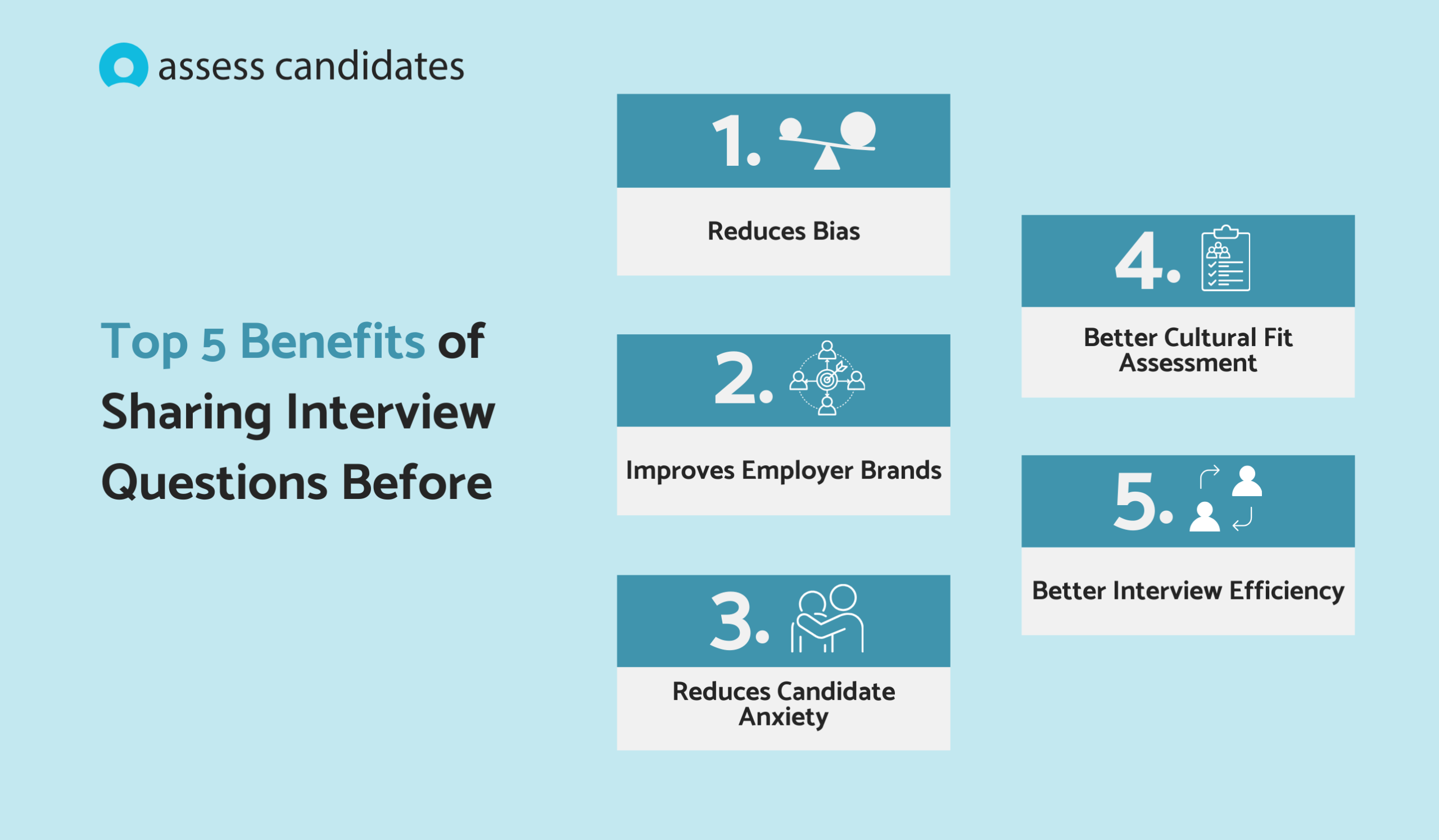
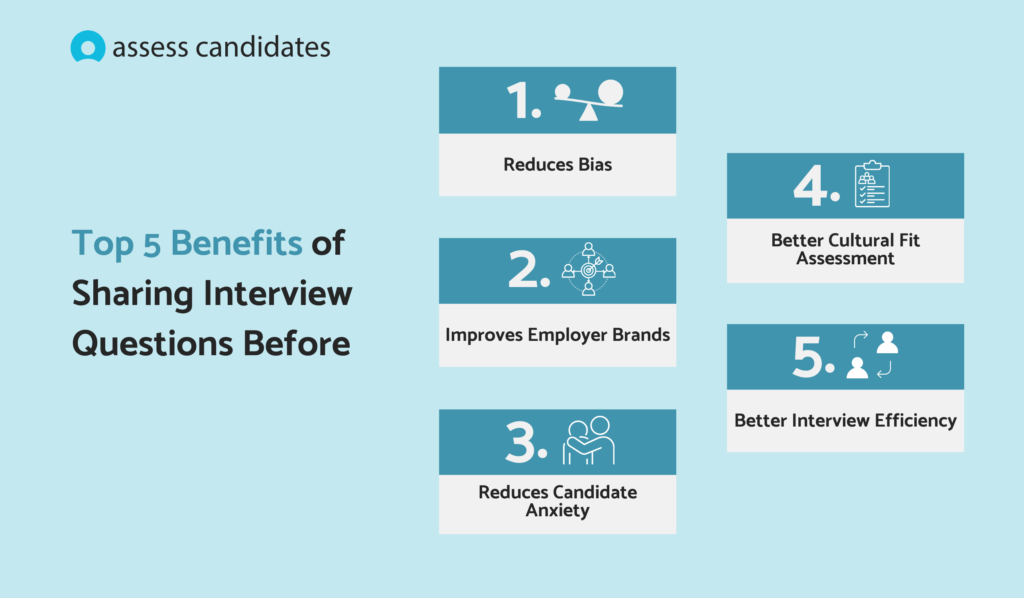
Top 5 benefits of sharing interview questions before
- Reduces Bias
Pre–disclosed interview questions can level the playing field by removing the advantages that favor the extroverted candidates or those comfortable with high-pressure situations. This allows a variety of candidates from diverse backgrounds to fully display their abilities without barriers.
- Improves Employer Brands
Posting your interview questions ahead will promote your employer brand, as candidates will speak positively about your recruitment process and transparency, helping build a positive reputation for your organization.
- Reduces Candidate Anxiety
Providing your candidates with your interview questions ahead of the interview process greatly helps in minimizing candidate anxiety. This can lead to higher attendance rates and greater candidate engagement.
- Better Cultural Fit Assessment
Your candidates coming to the interview prepared will effectively reflect how their values and work styles align with your company’s, providing you with the opportunity to assess if they are culturally fit.
- Better Interview Efficiency
With your candidates prepared for the interview, everyone will remain focused and productive, providing a good experience for you, the employer, and the candidates, ensuring you won’t have to deal with nervousness or unfocused answers.
Explore our expert-designed video interviewing platform to hire your ideal candidates. LEARN MORE
However, it is just as important to know the challenges you could face when sharing interview questions, and the solutions you can use to avoid them.
3. Challenges of pre-disclosed interview questions
Just as there are several benefits to posting your interview questions before the interview, many employers have also shared their grievances with this approach, highlighting the challenges they have faced.
Not to worry though, we will provide you with practical solutions that will help you avoid some of these cons that you may come across.
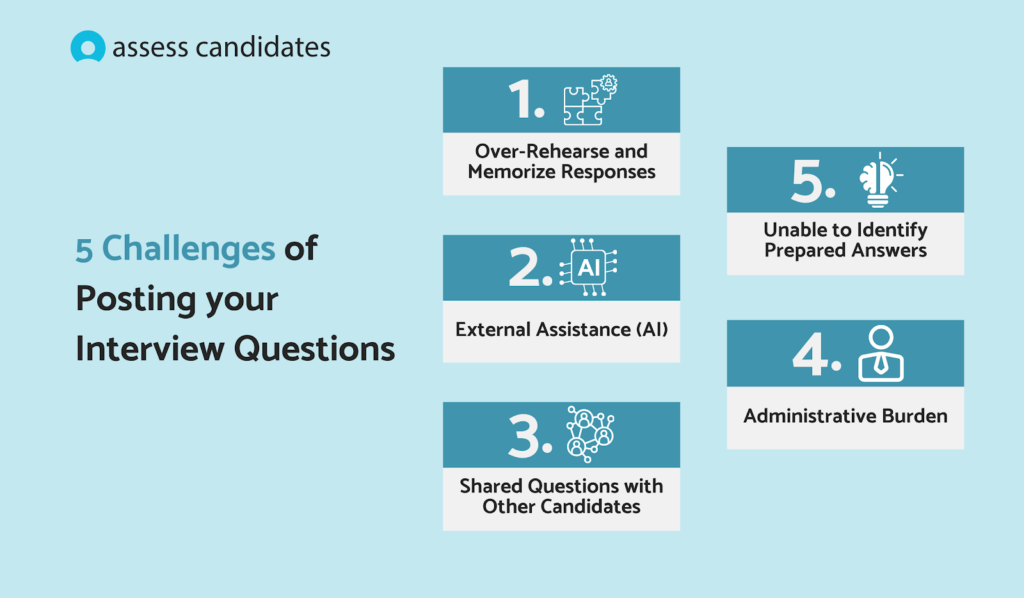
Top 5 challenges of posting your interview questions
- Over-Rehearse and Memorize Responses:
Candidates can over-rehearse and memorize their responses ahead of the interview, which may not reflect their genuine communication style or display their real-time thinking abilities.
Solution: Train your interviewers to use follow-up questions that will require deeper thinking and spontaneous responses. Also, train them on distinguishing between genuine and rehearsed responses.
- External Assistance (AI):
Providing your candidates with your interview questions ahead of the interview can result in some applicants using external tools like AI (ChatGPT) to find the right answers, making it difficult to assess their individual abilities.
Solution: You can combat this by designing questions that require personal examples directly from their experience, making it harder for your candidates to fabricate using AI. You can also ask detailed follow-up questions about the situations they describe.
- Shared Questions with Other Candidates:
Solution: Regularly rotate your questions and create multiple versions of questions that assess the same skills in your candidates. You can also include a confidentiality statement in your communication, requesting that the applicants keep the questions private.
- Unable to Identify Prepared Answers:
Recruiters who used to hire via traditional interviews are finding it difficult to identify when candidates are reciting their prepared responses to the pre-disclosed interview questions.
Solution: You can provide interviewer training on how to evaluate prepared responses and create good and effective follow-up questions to make the candidates give spontaneous answers.
- Administrative Burden:
Sharing interview questions with candidates before the interview process will make the hiring process one step longer, adding more work for interviewers who will have to keep to the timing, track who received what, manage different question sets for different roles, and coordinate many interviews.
Solution: We suggest automating the interview process in your Applicant Tracking System (ATS) by creating triggered emails that send the questions when candidates schedule their interviews.
Up next are our recommended best practices to help you post your interview questions in advance. Take a look:
4. Best practices to implement when posting interview questions
According to Interview Vector, conducting an interview process requires caution, clear communication between you and the interviewees, and strategies to ensure that you effectively gather the information needed to make a calculated and data-driven hiring decision.
Key strategies to implement when sharing interview questions beforehand
1. Choose Questions to Share
You do not have to share all your interview questions ahead of the interview; you can post the core competency–based and behavioral questions and leave room for some spontaneous or follow-up questions, as the interview progresses.
2. Communicate Ahead and Clearly
Ensure that you do not just send the list of interview questions without some context or explanations. We recommend that you include the reason why you are sharing the questions, what you are looking to assess in your candidates, and how they can approach their preparation.
3. Decide Optimal Timing
We suggest sending the interview questions 3 to 7 days before the interview so your candidates can have enough time to prepare and know how to answer your pre–disclosed questions without overthinking.
4. Explain the Benefits
Helping your candidates understand that this method is created to help them achieve their best during interviews will go a long way. Show them the benefits of sharing your interview questions beforehand, and it will reduce any suspicion of the questions being a trick or test.
5. Standardize Across All Candidates
You should make sure that every candidate applying for the same role receives the same interview questions at the same stage of the interview process. Doing this will promote fairness in your recruitment process and ensure that your hiring managers strictly follow this rule.
6. Train Your Hiring Team
Train your hiring or interview team to understand the rationale behind sharing your interview questions beforehand and how to properly assess prepared responses. They should know how to probe deeper and tell the difference between genuine and rehearsed answers.
7. Pair with Other Hiring Practices
You can improve the effectiveness of your hiring process by pairing your interview with other pre-employment psychometric assessment tests. This will create a constructive, structured interview process that minimizes bias while simultaneously improving hiring outcomes.
Explore more flexible candidate assessment solutions developed by Chartered Psychologists. VIEW PLANS
Are you thinking about how to incorporate an interview process into your recruitment? You can contact us to conduct a detailed examination of your hiring needs and ensure you hire the right candidates who will drive productivity and be culturally fit within your organization.
Take a look at some of the testimonies by organizations that posted their interview questions before their interview took place.
5. Client success stories of posting interview questions before
Employers have shared the results of posting their interview questions with candidates before the interview, and we have two such examples below.
1. BrightLoop
Challenge:
BrightLoop struggled with inconsistent interviews across its departments, making it harder to fairly compare the candidates and ultimately slowing down the recruitment decisions.
Solutions:
The SaaS company changed its approach, began posting its interview questions in advance, and aligned its interviewers around a shared, role-specific competency framework.
Results:
- The time-to-hire was reduced by 22%
- Increased consistency across interviewer assessments
- Higher quality and more job-relevant candidate responses
2. NorthRiver Financial Group
Challenge:
NorthRiver was facing concerns about bias, compliance, and the validity of its hiring decisions across high-volume roles.
Solutions:
They standardized their interview process by sharing interview questions in advance and using structured scorecards linked to the requirements.
Results:
- Enhanced consistency across regions and interviewing panels
- Stronger documentation that supports hiring decisions
- Minimized conflict in recruiters’ scoring
This is where Assess Candidates comes in. We help you design your assessment process to ensure it includes an interview process for your candidates.
6. The future of recruitment when you share interview questions
Posting interview questions in advance is shaping up to become one of the future hiring practices among companies as it embraces a more inclusive, transparent, and candidate-focused experience.
What is the future of recruitment when you share interview questions?
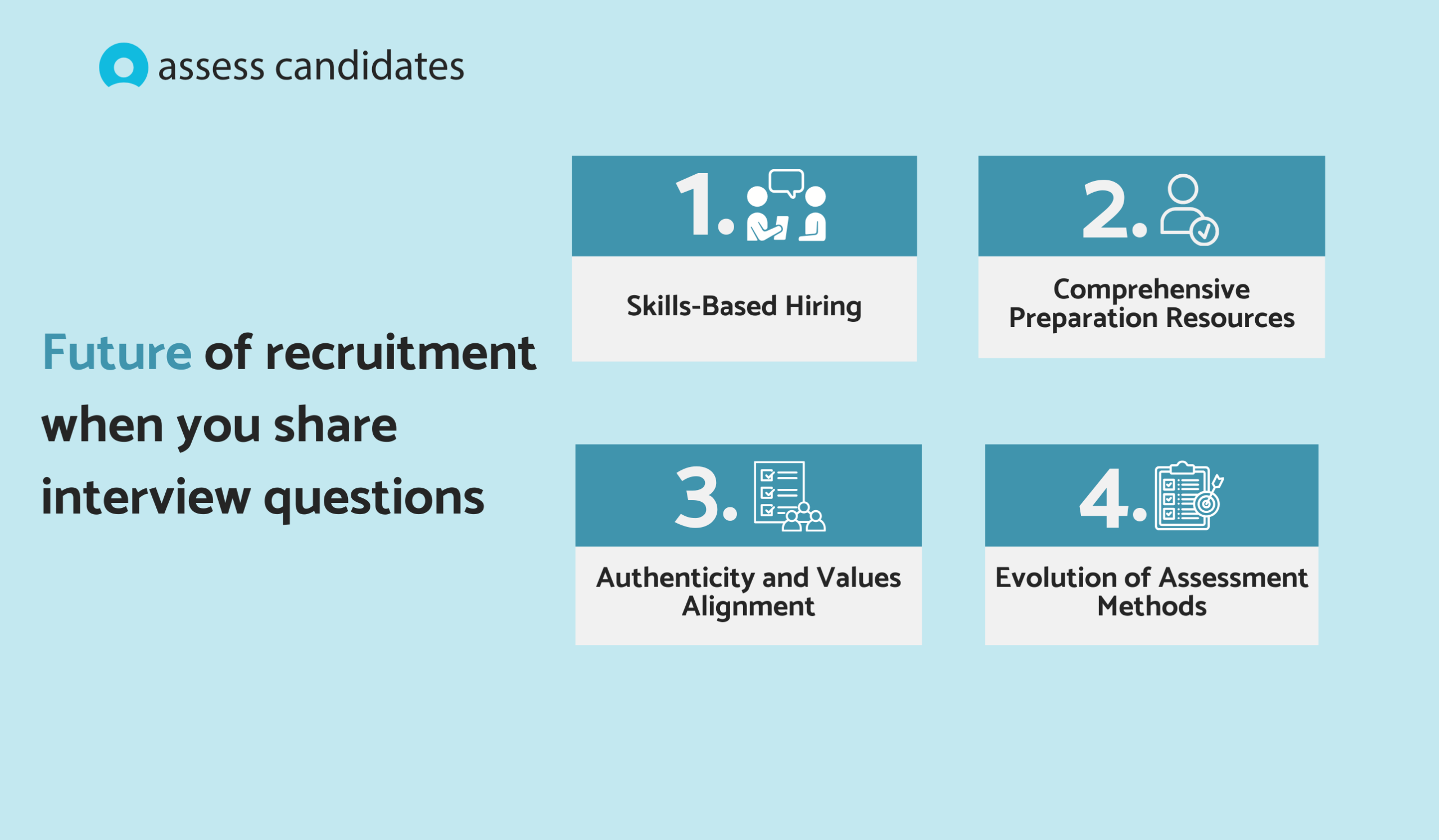
1. Skills-Based Hiring
As the posting of interview questions becomes increasingly common during recruitments, many fellow companies will increasingly focus on candidates displaying actual competencies rather than interview performance. An interview will create questions that will require candidates to showcase their portfolios or problem-solving frameworks that reflect real–world scenarios.
2. Comprehensive Preparation Resources
Some organizations will go beyond just sharing the interview questions but will also share company context, role expectations, and even sample responses with candidates. Doing this will increase neurodiverse candidates’ chances of performing better in the interview process and help eliminate candidate anxiety in recruitment.
3. Authenticity and Values Alignment
When it becomes difficult to catch candidates off-guard, interview processes will then move toward evaluating genuine cultural fit, motivation, and values alignment. Employers will ask questions that probe deeper into why the candidates make certain decisions and how they have grown from shortcomings.
4. Evolution of Assessment Methods
Traditional questions-and-answers will gradually fade away as more employers choose to adopt multi–modal assessment methods. Companies will now include work simulations, group projects, and paid–trial periods.
So, why choose Assess Candidates for your recruitment needs?
7. Why do employers prefer the Assess Candidates’ interview platform?
Companies prefer using Assess Candidates’ video interviewing platform because it merges science-backed, engaging assessments with candidate-friendly technology, assisting you in making fairer and quicker data-driven hiring decisions.
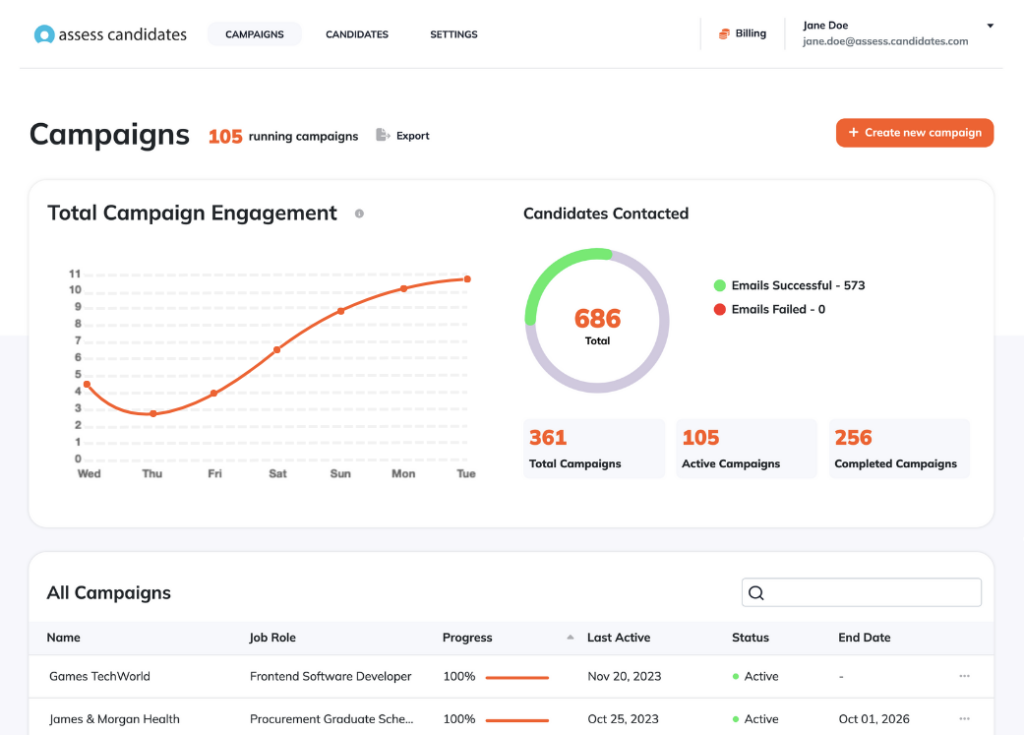
Why do companies use the Assess Candidates video interviewing platform when recruiting
- Positive Candidate Experience: Assess Candidates’ platform presents candidates with engaging assessment formats, such as video interviews and game-based assessments, that will help in reducing your candidates’ anxiety when taking part in the recruitment process.
- Fair Hiring and Bias Reduction: The platform promotes fair and inclusive hiring while simultaneously minimizing bias that interviewers may unconsciously display in the recruitment process, turning a group of candidates away and damaging the employer brand.
- Pre–Recorded Interviews: The platform offers pre-recorded interviews where candidates can record their responses to some pre–determined questions within a time limit. This supports sharing the questions before the interview so they can prepare a thoughtful response.
- Focus on Authenticity: The Assess Candidates platform also prioritizes the measurement of genuine competencies and role–relevant skills over interview performance anxiety. When questions are shared, you can assess the candidate’s skills for which you are recruiting.
- Efficient Screening: Our platform will help you reduce time and costs by filtering out candidates who do not meet the basic requirements and make the recruitment process engaging when you combine your interview process with other pre-employment psychometric assessment tests.
Hire the right candidates with our skills assessment platform. LEARN MORE
Key Takeaway
In this text, we have helped clear up common misconceptions about posting your interview questions before the interview process. In this guide, you will also find the ideal psychometric assessments to pair when recruiting, and solutions to help you avoid the cons of sharing your interview questions with candidates.
Want to know more about using the Assess Candidates platform for your recruitment process? Keep scrolling to explore our frequently asked questions, and enter your email to get started today.
Frequently Asked Questions
How do I prevent candidates from getting help from AI or others?
You can focus on setting personal questions that require specific examples from your candidates’ experience. During the interview, you can also ask follow-up questions about the situations they describe as you assess their competencies.
Should I share all my interview questions or some?
You can share only the necessary interview questions related to the roles and skills you are assessing; however, you can keep some follow-up questions that may come up spontaneously during the interview.
How long do I have to wait before sending the interview questions?
We advise you to wait 3-7 days after they apply before sending the interview questions, to allow your candidates to thoroughly prepare. This will reduce the candidate’s anxiety as they will have an idea of what you will ask.
What about roles that require quick thinking?
For job positions that require real-time problem-solving, you can also share some interview questions while keeping some pressure-test scenarios for the live assessment. Be sure to communicate why you have withheld some questions before the interview.
Am I at a disadvantage if my competitors do not share their questions?
You can leverage this competitive advantage in your employer branding to promote your image in your industry, as your competitors will most likely still follow the traditional recruitment process if they are not on board with this approach.


 English
  Arabic