
Hiring in the Education Industry: 2026 Recruiter’s Guide



Hiring top talent in the education industry requires assessing more than academic qualifications and certifications. Skills such as communication, problem-solving, adaptability, emotional intelligence, leadership, organizational ability, and digital literacy can provide valuable insight into a candidate’s ability to succeed in an education role.
Keep reading to explore the key roles in education, the skills employers should assess, and best practices for hiring education professionals.
Contents
- What is the education industry?
- What are some of the major roles in the education industry?
- What top skills to look for when hiring in the education industry?
- What are the best tools for measuring skills when hiring in the education industry?
- Best practices for hiring in the education industry
- Why top education institutions use Assess Candidates to hire candidates
First, let’s define the education industry and the organizations it encompasses.
1. What is the education industry?
The education industry includes public, nonprofit, and private organizations that provide education, training, and learning support. It encompasses schools, colleges, universities, government education departments, and other educational institutions that help learners develop the knowledge and skills required for academic, professional, and personal development.
The establishments can further be public, non-profit, or for-profit. The main aim of the education industry is to provide students with the skills and knowledge to adapt to the ever-changing world.
Evaluate workplace competencies with our wide range of pre-employment assessment tests. HIRE FOR FREE
The following section covers the most major roles in the education industry.

2. What are some of the major roles in the education industry?
The education industry offers a wide range of career opportunities that support learning, teaching, and institutional operations.
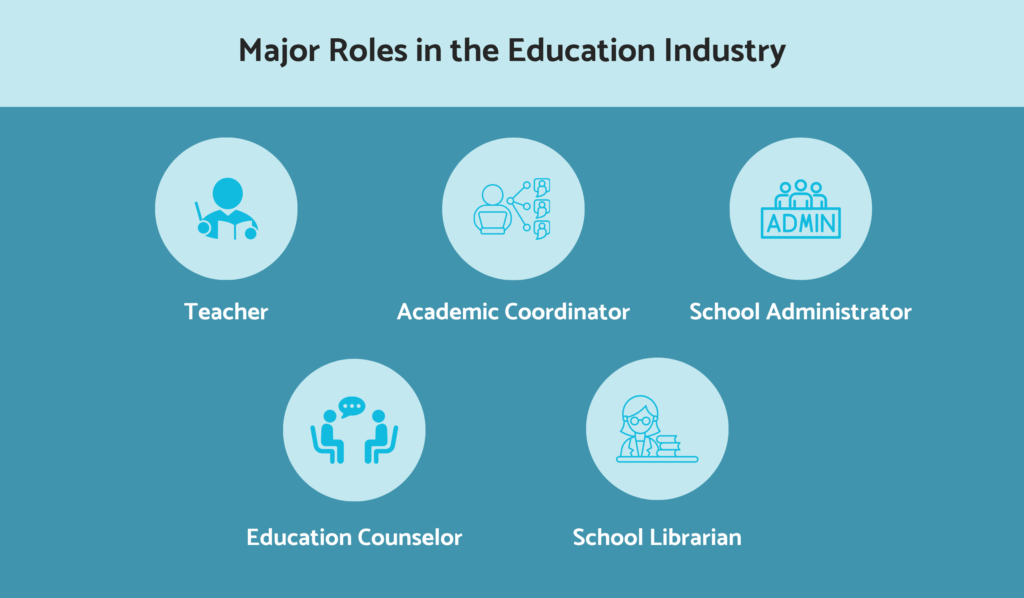
The following are some of the major roles in the education industry:
- Teacher
A teacher is one of the most significant roles in the education industry, responsible for educating students in a specific subject or a group of subjects. Their responsibilities include preparing lessons, crafting lectures, evaluating student performance, providing feedback, and supporting students’ academic development.
- Academic Coordinator
An academic coordinator organizes and coordinates an institution’s educational programs. Their primary responsibilities include coordinating teachers, monitoring academic performance, maintaining teaching standards, developing curriculum, organizing educational activities, and communicating with students and faculty.
- School Administrator
The main responsibility of a school administrator is to supervise the day-to-day operations of an educational institution. They develop policies, coordinate academic activities, manage budgets, maintain records, and ensure the institution meets educational standards.
- Education Counselor
The main responsibility of an education counselor is to help students make informed decisions about their education and career path. They assess students’ interests and goals, assist with applications, recommend courses and programs, provide academic guidance, and support students throughout their academic journey.
- School Librarian
The primary responsibility of a school librarian is to manage the library in educational institutions. They also maintain library collections, assist students and educators in finding resources, organize educational materials, help with research, and manage digital databases.
But what skills should you assess when hiring in the education industry?
3. What top skills to look out for when hiring in the education industry?
When hiring for roles in the educational sector, it is crucial to look out for skills that help candidates adapt, solve problems, communicate, and support people effectively.
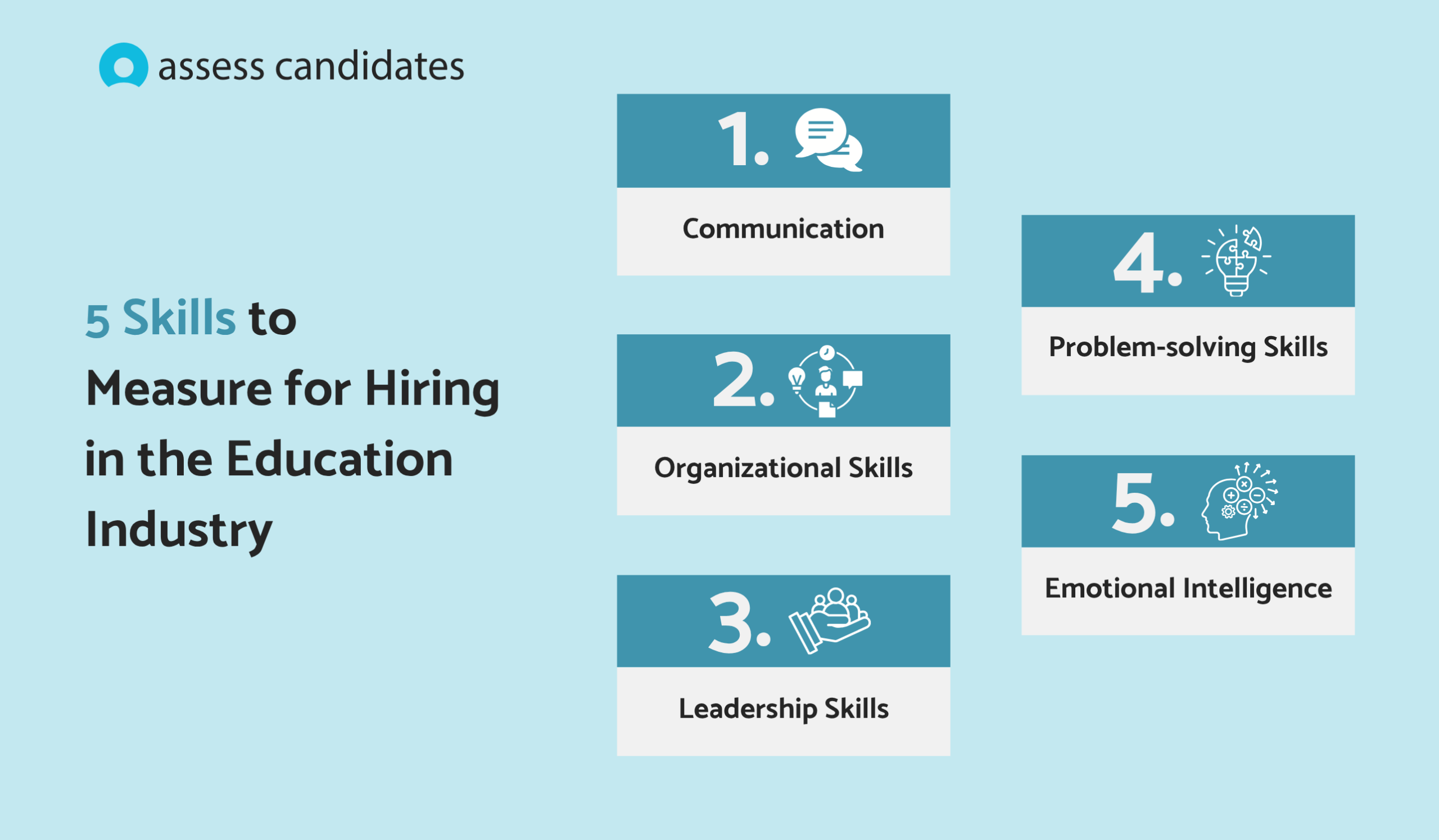
The following are the 5 major skills to be measured when hiring in the education industry:
1. Communication
One of the major skills to look for when hiring in the education industry is communication skills. Education professionals must communicate effectively with students, parents, and colleagues, and share information accurately to foster effective learning.
Did you know? According to Indeed, communication skills were included in 25.57% of education postings.
2. Organizational Skills
Another significant skill to look out for when recruiting in the education industry is organizational skills. Education professionals must be able to organize learning materials, manage schedules, deliver results on time, prioritize tasks, and meet deadlines.
3. Leadership Skills
Leadership skills are important across many education roles, particularly those involving teams, students, or institutional decision-making. Strong education professionals should be able to make informed decisions, guide others, take responsibility, and contribute to a positive learning and working environment.
4. Problem-solving Skills
Problem-solving skills are important for ensuring high-quality hires in the education industry. This skill helps professionals identify potential day-to-day challenges, make sound decisions, evaluate possible solutions, and resolve issues effectively.
5. Emotional Intelligence
Emotional intelligence helps education professionals understand others’ emotions, demonstrate empathy, and manage their own responses effectively. These abilities can support stronger relationships with students, parents, and colleagues while contributing to a supportive learning environment.
Discover our talent assessment platform to hire the best education professionals. LEARN MORE
Let’s now look at the best tools that you can use to hire competent professionals in the education sector.
4. What are the best tools for measuring skills when hiring in the education industry?
Using a combination of assessments and structured interviews can provide a more comprehensive view of a candidate’s competencies. Together, these methods can help employers assess interpersonal skills, practical capabilities, and how candidates are likely to respond to real-world challenges in education settings.
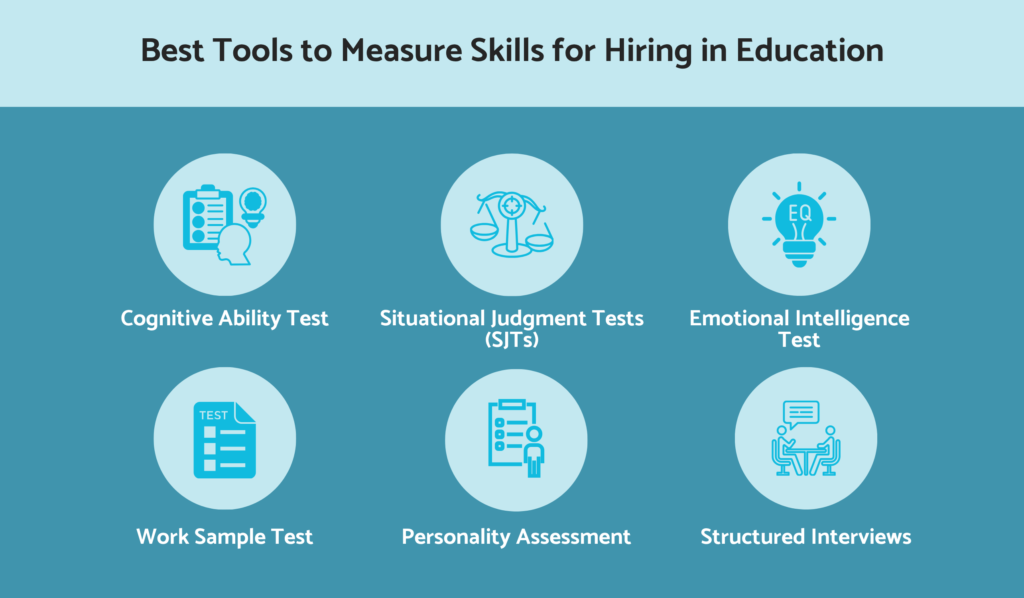
The following are some of the best methods for measuring skills in the education industry accurately:
- Cognitive Ability Test
Cognitive ability tests, also known as aptitude tests, help measure a candidate’s ability to think logically, process information, and solve problems. These assessments are essential in assessing candidates for roles in education for key skills such as reasoning, problem-solving and decision-making.
These assessments are especially useful in hiring teachers and education researchers.
- Situational Judgment Tests (SJTs)
SJTs are particularly useful when employers need evidence of how candidates are likely to approach realistic judgment calls. By presenting candidates in educational roles with realistic workplace encounters, these assessments help measure judgment, decision-making, problem-solving, and interpersonal skills.
These assessments are vital in hiring education counselors and school administrators.
- Emotional Intelligence Test
Emotional intelligence tests help evaluate a candidate’s ability to recognize emotions, understand other people’s perspectives, and handle their responses. These assessments primarily help evaluate educational professionals for skills such as empathy, self-awareness, emotional regulation, and interpersonal skills.
These assessments are significant in hiring student support professionals and education counselors.
- Work Sample Test
For practical roles, work samples add evidence that conventional interviews cannot provide because candidates must demonstrate the task rather than describe how they would perform it.
These assessments are important in recruiting content developers and education administrators.
- Personality Assessment
Personality assessments evaluate a candidate’s behavioral traits, interpersonal abilities, and work preferences. These assessments measure qualities including empathy, patience, collaboration, adaptability, and emotional stability that may be relevant to how candidates interact with students, parents, and colleagues.
These assessments are important in recruiting school administrators and education counselors.
- Structured Interviews
Structured interviews assess candidates using consistent, role-specific questions and predefined evaluation criteria. Structured interviews then give hiring teams a consistent way to explore the reasoning behind those decisions.
What are the most common interview questions for education roles?
While interview questions for education roles vary depending on the organization and the type of role, the following are some of the most common interview questions as identified by the University of Massachusetts Amherst:
- What made you want to be a teacher?
- What role does technology play in your classroom? Provide examples.
- How do you plan to approach different learning styles? Give us an example.
- How will you modify your teaching to help students who are struggling with a subject?
Gain deeper insights into candidates’ behavioral skills with our science-backed assessment tools. HIRE FOR FREE
The next section highlights the best practices you need to follow for hiring leading education professionals.
5. Best practices for hiring in the education industry
Hiring in the education industry requires assessing candidates for both role-specific skills and interpersonal abilities. A structured hiring process can help educational institutions hire top education professionals.
The following are the 5 major steps to recruit in the education industry:
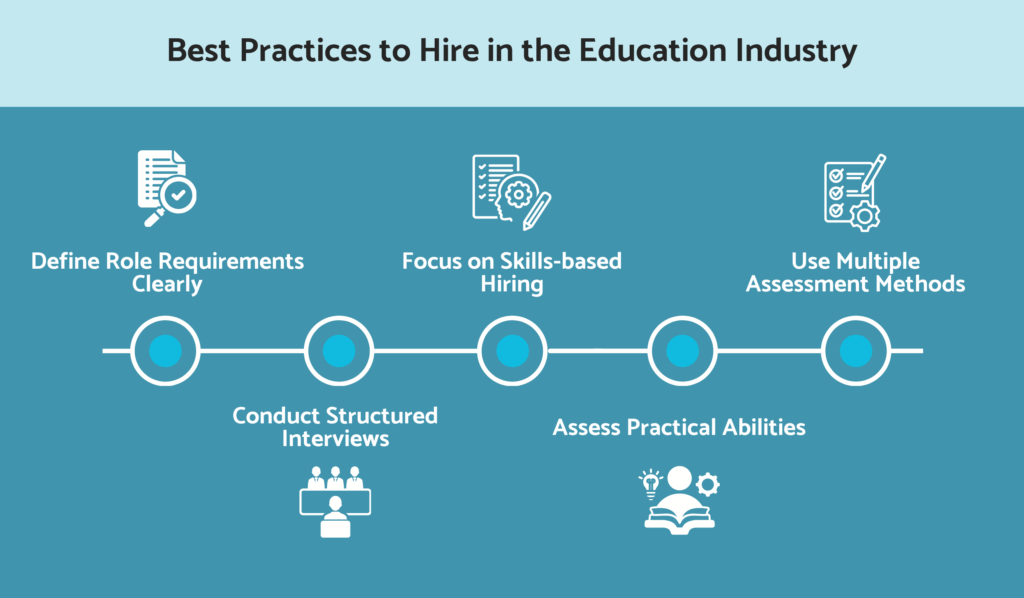
1. Define Role Requirements Clearly
Start your hiring process by creating a clear job description that outlines the responsibilities, experience, qualifications, and skills required for the role. This well-defined description helps attract relevant candidates and provides a consistent basis for assessing applicants.
2. Focus on Skills-based Hiring
Implement a skills-based hiring approach that assesses candidates based on the abilities required to perform the role effectively. Evaluate skills including communication, adaptability, emotional intelligence, and problem-solving alongside academic qualifications and professional experience.
3. Use Multiple Assessment Methods
Use a multi-assessment hiring approach to evaluate candidates from several perspectives. By combining skills assessments, work sample tests, cognitive tests, and structured interviews, you can gain a more comprehensive view of a candidate’s capabilities and suitability for the role.
4. Conduct Structured Interviews
Conduct structured interviews to present candidates with consistent, role-specific questions and evaluate their answers against predefined criteria. This further helps you probe candidates’ responses with follow-up questions, comprehend the logic behind their decisions, and uncover how they have handled real-world situations involving students, parents, colleagues, or other workplace challenges.
5. Assess Practical Abilities
Incorporate practical hiring tasks into the recruitment process to understand how candidates apply their knowledge in real-world situations. For instance, when hiring a teacher, include lesson planning tasks that would demonstrate their teaching and decision-making skills.
Explore our wide range of standardized assessments to improve your skills-based hiring. LEARN MORE
6. Why top education institutions use Assess Candidates to hire candidates
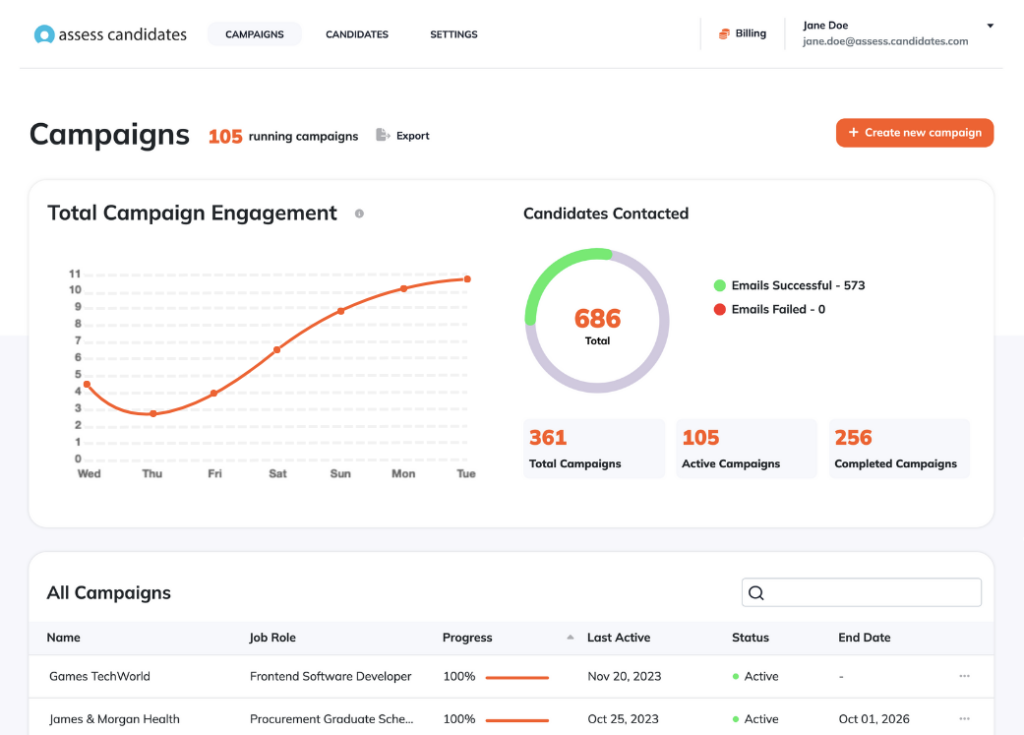
At Assess Candidates, we offer a wide range of pre-employment assessments and create recruitment campaigns customized to each organization’s unique hiring needs.
Here is an example of our campaign reporting dashboard available on Assess Candidates.
Here are 4 reasons education employers use Assess Candidates to evaluate candidates:
- Scientifically Designed by Expert Psychologists: Assess Candidates’ assessments are developed by expert psychologists and psychometricians to measure the competencies that matter most in education roles.
From communication and problem-solving to emotional intelligence, leadership, cognitive ability, and situational judgment, each assessment is scientifically validated to help identify candidates with the skills needed to succeed in the education industry.
- Data-driven Hiring Insights: Our intuitive platform quickly compares candidates using objective reports that measure relevant cognitive abilities, workplace behaviors, and role-specific competencies. This helps educational institutions make faster, more consistent hiring decisions while reducing bias.
- Positive Candidate Experience: Candidates complete role-relevant assessments that reflect real education-related situations, helping employers evaluate practical skills beyond resumes and interviews. Custom branding options also help schools, colleges, universities, and EdTech companies provide a professional and consistent candidate experience.
- Candidate Accessibility Support: Our assessments are accessible, ATS-compatible, and suitable for high-volume recruitment, helping educational institutions assess candidates efficiently while maintaining a fair and inclusive hiring process.
All assessments align with WCAG accessibility standards, ensuring an equitable experience for all applicants regardless of their individual needs.
Assess Candidates provides reliable, science-based tools that help education employers evaluate candidates accurately. Explore our full range of assessments to choose candidates with the skills and workplace competencies needed to succeed in the education industry.
Not sure which education assessments match your hiring needs? Contact us for a free analysis of your role requirements.
Partner with Assess Candidates to use a range of role-specific assessments in your recruitment process. VIEW PLANS
Conclusion: Key Takeaway
Education employers should combine job-relevant skills assessment with structured evaluation rather than relying primarily on qualifications and interviews. A structured, skills-based hiring process that combines pre-employment assessments, work samples, cognitive tests, and structured interviews can help employers evaluate candidates more objectively and understand how they will perform in real-world educational settings.
Frequently Asked Questions
How to assess candidates beyond their education and qualifications?
When hiring in the education industry, you must evaluate candidates beyond their education and qualifications by implementing a multi-assessment hiring approach. Combine pre-employment assessments, structured interviews, and work sample tests to get a more comprehensive view of what candidates can actually do.
How can employers reduce bias when hiring for education roles?
You can reduce bias when hiring for education roles by creating clear selection criteria before reviewing candidates and applying them consistently throughout the process. Also, combining structured interviews with standardized assessments helps you compare candidates using the same criteria.
How to assess whether a candidate fits the educational institution?
You can identify whether a candidate is the right fit for your educational institution by clearly defining your institution’s values, educational approach, and working environment. After this, ask situational and behavioral questions to understand how candidates communicate, collaborate, and approach workplace challenges.
How to improve candidate experience when hiring education professionals?
When hiring education professionals, you can improve the candidate experience by keeping the application process clear, relevant, and easy to navigate. Describe each hiring stage thoroughly, communicate updates promptly, and provide realistic timelines for completing assessments.
How to identify candidates who can adapt well to changes in the education sector?
You can identify candidates who adapt well to changes in the education industry by assessing how they respond to changes in technology, teaching methods, curricula, regulations, and expectations. Assessing these qualities can help employers make stronger hiring decisions as roles and requirements across the education industry continue to evolve.


 English
  Arabic