Numerical reasoning tests are one of the most popular hiring tools in recruitment today!
According to the Talent Strategy Group 2025 Potential Report, 80% of organizations use psychometric tests, such as numerical reasoning assessments, to identify internal leadership potential.
Numerical assessments are standardized, science-backed cognitive ability tests that help recruiters identify top talent with the necessary numerical reasoning skills for a wide range of roles. With rapid technological advancements and the rise of hybrid positions, employers rely on employees with strong cognitive abilities – particularly those who can manage numbers, interpret data, and make logical decisions under pressure.
That’s why recruiters are revamping their recruitment strategies, designing candidate-friendly processes that combine different psychometric testing, game-based assessments, video interview tools, and assessment center exercises. Together, these assessment tools create an efficient recruitment funnel that helps recruiters quickly and accurately screen candidates and select only the most qualified for the role.
The cognitive ability test for hiring we will focus on in this article is the pre-employment numerical reasoning test. This assessment is especially valuable when hiring for roles that require a firm grasp of mental math, quick data interpretation, and strong problem-solving skills.
If you have ever wondered:
Then, this guide is definitely for you! Here, we will explore what numerical reasoning tests measure, and how they help recruiters make more informed, data-driven hiring decisions to build higher-skilled teams.
Whether you’re a hiring manager or HR professional, continue reading to discover how to use numerical assessments to select and hire your next best-fit candidate.
Now, without further ado, let’s start by answering what is a numerical reasoning test?
Pre-employment numerical reasoning tests are timed, online, multiple-choice aptitude assessments designed to evaluate a candidate’s ability to work with numbers and accurately understand and interpret numerical data.
Numerical aptitude tests are a recruiter’s top choice for data-heavy roles, involving financial analysis and data interpretation.

Hire top talent with our expert-designed numerical reasoning tests. HIRE FOR FREE
But what does numerical reasoning mean? Let’s discuss this below.
Numerical reasoning is the cognitive ability to interpret, analyze, and draw logical conclusions from numerical data. It involves working with numbers to solve problems, identify relationships, recognize patterns, and make decisions based on quantitative information.
While numeracy covers basic mathematical knowledge and calculations, numerical reasoning skills go further, requiring candidates to interpret charts, tables, and graphs logically to reach valid conclusions. Numerical reasoning combines core arithmetic and mathematics with advanced concepts like percentages, ratios, averages, sequences, and data interpretation.
Although a basic knowledge of mathematics is expected, it is important to note that numerical reasoning assessments are not math tests, nor does it follow any school syllabus.
Numerical reasoning is one of the most valuable skills in modern business. Across nearly every sector, from finance to sales, employees increasingly work with numerical data, reports, and metrics.
With the digital revolution, more companies, including small and medium enterprises (SMEs), are adopting online numerical tests to ensure they hire high-quality professionals who can:
Investing in the numerical reasoning skills of your current and future employees enhances company performance, modernizes business, and gives a competitive edge. Teams who lack these skills risk costly financial errors, missed opportunities, poor strategic decision-making, and data inaccuracies.
Despite this, many companies still rely on CVs to assess numerical reasoning, a method proven to be a poor predictor of cognitive abilities. On the other hand, pre-employment numerical reasoning tests are a scientifically validated, objective method of measuring a candidate’s skills during hiring, efficiently filtering out those who don’t meet the minimum requirements and advancing those with the desired numerical skills.
So, what specific abilities do numerical reasoning tests assess? Let’s find out next.
Numerical reasoning tests measure a wide range of skills that collectively indicate a candidate’s numerical reasoning ability.

Now we understand the foundation of what numerical reasoning tests and numerical reasoning are, let’s explore how numerical ability testing tools work in hiring.
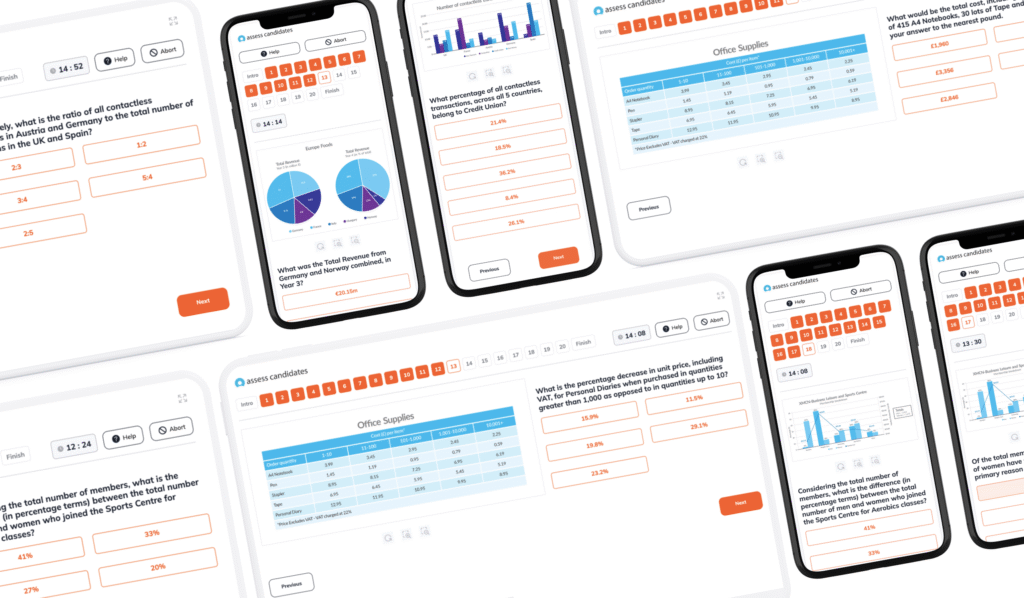
Pre-employment numerical reasoning tests usually form part of the online assessment stage before interviews and an assessment center. These timed standardized tests consist of 15-30 multiple-choice questions that candidates must attempt on an online testing platform within the given time limit.
Candidates receive a link to the numerical assessment platform and have a dedicated period of time (usually several days) to complete the assessment. Depending on the type of test, these numerical tests can be adaptive, i.e., as the test progresses, the difficulty of questions increases or decreases based on the candidate’s most recent responses.
Recruiters then review candidate results via an online reporting dashboard and select the top candidates to advance to the next round of hiring tests.
Numerical reasoning tests are a reliable predictor of how individuals handle numbers and numerical problems in the workplace, helping recruiters predict candidates’ on-the-job performance. For example, candidates identified as having strong numerical reasoning skills in the workplace are likely to be able to:
Choose the best talent for your organization with our numerical reasoning assessments! LEARN MORE
After discussing how they work, let’s cover the example types of numerical reasoning questions candidates find in recruitment.
On numerical aptitude tests, candidates are presented with a variety of questions with numerical information in different formats. Ranging from testing mental ability to balancing speed and accuracy, these questions evaluate a candidate’s ability to effectively handle various types of numerical data under time pressure.
Let’s now discuss each of the above broad types of numerical reasoning test questions in the following section.
Example 1: A shopkeeper buys 120 apples at €15 each. He sells them at a profit of 20%. What is the selling price of each apple?
Example 2: Estimate √48 × 19 without using pen and paper.
Example 3: A product is bought for €800 and sold for €1,000. What is the profit percentage?
Example 4: Here’s one of the example numerical reasoning test questions from Assess Candidates!
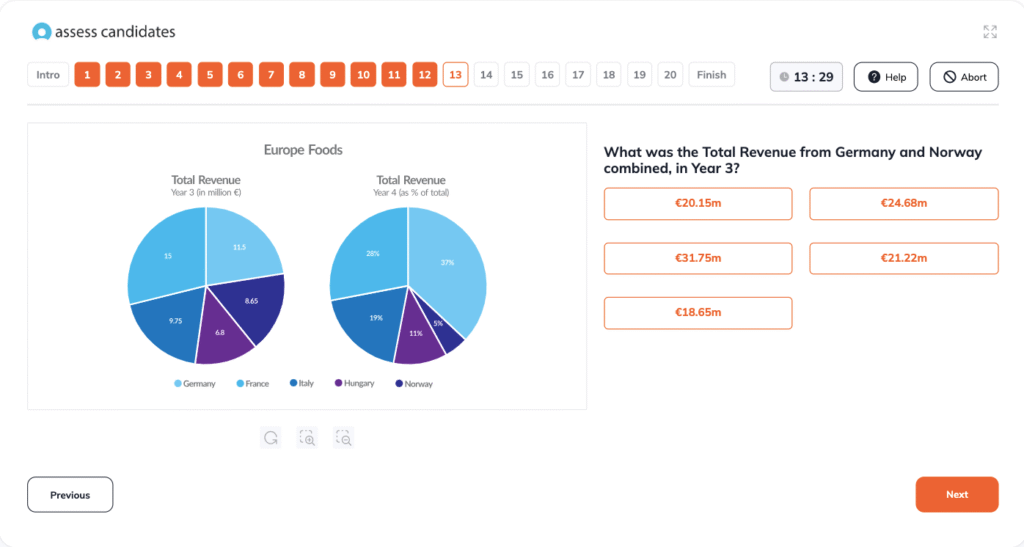
For answers to all the above questions, head to the end of the article!
It is important that candidates prepare and practice for these numerical tests by revising basic arithmetic concepts and familiarizing themselves with interpreting different datasets and graphs in the format of a real numerical reasoning test.
Discover how numerical reasoning tests can strengthen your hiring process. VIEW PLANS
But can you also test candidates on their numerical reasoning using interview questions? Let’s find out in the following section.
Recruiters can also use numerical tests for the interview stage to assess candidates’ numerical aptitude in real time. This helps to validate the numerical assessment results and also assess the candidates based on their overall personality and professional acumen.
At Assess Candidates, we recommend combining numerical reasoning interview questions with pre-screen questions that also test other vital soft skills for the role. These skills may include critical thinking, decision-making, teamwork, communication, adaptability, and time management.
This approach helps you select well-rounded candidates with strong analytical skills and cultural alignment, contributing to overall team success and organizational goals.
Leverage our numerical tests and video interviews developed by expert chartered psychologists. HIRE FOR FREE
So, why do top organizations like Microsoft choose numerical assessments? Let’s find out their key benefits below.
Employers use numerical reasoning assessments to gain objective insights into candidates’ numerical abilities so they can confidently select the best talent with the required skills for the role. Additionally, numerical tests help efficiently narrow down large applicant pools, making them particularly beneficial for graduate employers.
Numerical reasoning tests offer a wide range of benefits for both recruiters and candidates. From streamlining the recruitment process to providing a positive candidate experience, numerical assessments make the hiring process more engaging and effective.

Here are the top 10 benefits of using numerical tests in recruitment:
Numerical reasoning tests are an easy-to-administer, automated pre-employment tool that streamlines the hiring process. Instead of lengthy manual sifting, online numerical tests can assess thousands of candidates in minutes, with the results immediately accessible in one click.
This allows employers to determine early on which candidates meet the role’s requirements, enabling hiring managers and recruiters to screen applicants quickly and efficiently, saving valuable time by avoiding multiple interviews with unqualified candidates.
Using pre-employment aptitude tests, such as the numerical reasoning aptitude test, for initial screening can reduce a large candidate pool by up to 50%. This helps especially in graduate recruitment by making the process quicker and more efficient.
Numerical reasoning assessment tests allow recruiters to evaluate the candidate’s numerical aptitude objectively based off a standardized benchmark. Instead of relying solely on resumes or subjective impressions based on a candidate’s background, education, gender, ethnicity, or race, recruiters receive a measurable score that reflects actual ability.
The result reduces unconscious bias in the hiring process and offers all candidates, including those from underprivileged backgrounds, a fair, inclusive, and legally defensible evaluation process.
Example: A manufacturing company combined supervisor feedback with numerical reasoning test scores; this balanced human judgment with objective skill measurement.
Numerical reasoning assessments help minimize the high financial costs associated with high-volume recruitment. Administered online and typically priced per test or as a flat fee, numerical assessments are often customizable and offer a relatively low cost per candidate, making them an efficient and cost-effective selection method prior to advancing candidates to more expensive methods like in-person interviews or assessment centers.
Example: A bank combined its CV screening with numerical tests; this ensured that candidates with diverse academic backgrounds were fairly compared on financial problem-solving ability.
Numerical reasoning tests are scientifically proven to accurately predict candidates’ job performance in solving numerical problems in the workplace. This is a more reliable predictor of potential and success than CVs, especially since applicants often exaggerate their own skills and abilities. Numerical tests remain a staple tool for employers to select higher-quality hires who will be happier, perform better, and stay longer in their roles and organization.
Numerical reasoning tests, when combined with other cognitive ability tests, such as verbal and logical reasoning and a video interview tool, become even better at predicting performance. Multi-assessment hiring facilitates a comprehensive evaluation of a candidate’s skill sets and potential on-the-job performance.
Online numerical reasoning tests require candidates to strike a balance between accuracy and speed under time pressure. Since leadership roles often require making quick yet informed, data-driven decisions, candidates with a high speed-to-accuracy ratio in numerical tests tend to indicate a potential future leader.
A strong performance highlights their ability to handle actual job responsibilities and make confident decisions, signalling leadership potential.
Example: A telecom company ran numerical data-analysis tests alongside leadership exercises; the overlap identified individuals who could make quick, data-based decisions.
Recruiters with numerical assessments can hire candidates with proven analytical and problem-solving abilities. This hiring approach helps them ensure higher workplace productivity with a minimal chance of errors in financial, technical, or operational decisions.
Additionally, numerical tests help hire job-fit candidates, i.e., those with baseline numerical skills, who can effectively handle budgets, sales data, or operational metrics. This promotes long-term employee satisfaction and their motivation to be in the role.
Example: A logistics firm included delivery-route graph problems in numerical tests alongside group discussions; candidates who performed well demonstrated both data skills and teamwork.
From the candidate’s perspective, the numerical assessment platform is easily accessible, user-friendly, and can be conveniently accessed at home at any time, ensuring a positive candidate experience. The numeric reasoning questions are designed to be approachable, requiring math skills at the level of a basic high-school graduate.
By integrating a numerical reasoning assessment into your hiring assessment process, you can confidently select candidates with the necessary numerical comprehension skills for the role. This leads to a more successful and productive workforce that performs better and stays longer.
Example: A tech startup integrated numerical reasoning tests into its remote hiring process, alongside video interviews. Candidates gave positive feedback with this flexible approach, while recruiters gained reliable data on problem-solving skills, leading to stronger and more engaged hires.
Numerical reasoning tests are invaluable for recruitment strategies focused on making data-driven decisions and eliminating guesswork in the hiring process. A numerical ability test provides accurate, quantifiable data on candidates’ numerical skills, ensuring only those with the necessary abilities move forward in the recruitment process.
This approach helps avoid the costly mistake of a bad mis-hire, thereby improving the employer brand as candidates value organizations with a structured assessment approach.
Example: An accounting firm used numerical reasoning test scores alongside partner interviews. The test data provided a clear benchmark of applicants’ ability to handle financial ratios and ensure data accuracy. This helped them reduce their reliance on intuition and ensured that new hires met the firm’s analytical standards.
By using online numerical reasoning tests, employers make their application processes accessible to a broader range of candidates, including neurodivergent candidates and those who might not be able to travel for interviews. By relying less on academic prestige or prior experience, numerical reasoning tests open doors for candidates from varied backgrounds.
Employers can adjust the assessment’s cut-off rates accordingly to diversify the talent pool and target certain skills while also identifying knowledge gaps in their current team. This fosters a more diverse and inclusive workforce, thereby helping to build the company’s reputation in competitive job markets.
Example: A finance agency combined portfolio reviews with numerical reasoning tests on campaign ROI data; this ensured candidates from both creative and analytical backgrounds were fairly evaluated on their ability to interpret performance numbers.
Employers can use numerical reasoning assessments to evaluate employees and plan their ongoing development programs. Additionally, they can use a reliable numerical assessment platform to shortlist candidates for promotion and various upskilling and reskilling programs. This allows you to have a future-ready workforce, thus giving a competitive edge in the market.
Example: A pharmaceutical company assessed managers with numerical reasoning and leadership simulations; this dual approach identified future R&D leaders.
Leverage the benefits of numerical reasoning tests in your recruitment process. LEARN MORE
However, as with any assessment methodology, numerical reasoning assessments also pose some challenges. Let’s discuss what those are and how to avoid them.
Recruiters might face somd challenges when using numerical reasoning tests in the hiring process. However, with an evidence-backed strategy, you can tackle these head-on for a successful and efficient assessment process.
Completing numerical tests, similar to any assessment, can cause candidates stress and anxiety.
Solution: Encourage your candidates to practice a numerical assessment test before the actual test. This helps them become familiar with the numerical question types and format, putting them at ease and allowing them to showcase their natural abilities under standard working conditions.
Not all candidates have equal access to fast internet, suitable devices, or test environments. This can unintentionally disadvantage some applicants, compromising the inclusivity and fairness of the hiring process.
Solution: Offer both online and in-person testing options, ensure tests are mobile-friendly, and allow flexible scheduling. Choose reliable test providers, such as Assess Candidates, which offer advanced accessibility features and accommodations, including extra time, zoom functionalities, accessible color schemes, and images in compliance with Web Content Accessibility Guidelines (WCAG) for compatibility with screen readers.
Recruiters may place too much weight on numerical reasoning scores, unintentionally filtering out candidates with strong creative, interpersonal, or leadership qualities. This can narrow the selection process too much, overlooking the candidates’ overall skills, such as soft skills and motivation to excel in the role.
Solution: Use numerical reasoning tests as a screening tool rather than the sole decision factor. Focus on multi-assessment hiring by also using other selection methods, such as personality, logical, verbal reasoning, situational judgement, and critical reasoning tests. Combine them with role-specific tasks, team-based exercises, and behavioral interviews for a holistic candidate evaluation, significantly boosting the predictive validity of the assessment process.
Some numerical ability tests may assume candidates’ familiarity with specific notations, currencies, or measurement systems, unintentionally disadvantaging candidates from different backgrounds. This lowers the test validity, compromising the objective evaluation of the intended analytical and numerical aptitude.
Solution: Use standardized tests that rely on universally understood data formats (e.g., percentages, ratios) and avoid culturally specific contexts. Always validate test fairness across different candidate groups.
Numerical assessments that are too long, complex, or poorly designed can frustrate candidates, leading them to abandon the application process. This risks losing top talent and compromising the company’s long-term growth.
Solution: Keep tests concise, i.e., around 20-30 minutes, visually apparent, and aligned with job-relevant tasks. Communicate the value of the test to candidates so they see it as an opportunity rather than a barrier.
In remote settings, there is a risk that candidates may use unauthorized help or share the test content, undermining test integrity.
Solution: Use secure platforms such as Assess Candidates that offer randomized question banks, time-tracking, and cheating prevention measures such as proctoring features. Pair numerical reasoning tests with follow-up interviews to validate the candidate’s ability in real time.
So, when should these numerical assessments be used? Let’s explore this in detail below.
From apprenticeship programmes to managerial recruitment, customizable numerical ability testing tools serve as powerful assets to ensure improved quality of hire and avoid mis-hires.
Example: A multinational bank received 10,000+ applications for its graduate analyst program. By introducing numerical reasoning tests early in the process, they quickly filtered out unqualified applicants and focused interviews on the top 15%, saving weeks of recruiter time while still maintaining quality hires.
Example: A consulting firm used numerical reasoning tests when hiring senior analysts. The assessments validated candidates’ ability to interpret complex cost data, ensuring only those with proven analytical skills moved forward, which minimized the risk of a costly mis-hire.
Example: A fast-growing e-commerce company adopted numerical reasoning tests to continuously assess applicants for analyst roles. This allowed them to build a ready pool of pre-screened candidates and cut average time-to-hire from 8 weeks to 3 weeks.
Example: An engineering firm implemented numerical reasoning tests alongside manager reviews for team-lead promotions. The company created a transparent process that rewarded true analytical ability, helped identify hidden talent, and built trust in the fairness of promotions.
Recruiters use pre-employment numerical reasoning tests at various stages of the hiring assessment process, depending on the role. However, they are most effective at the initial sifting and screening stage, as they offer a quick and efficient method for shortlisting candidates.
Below is a detailed explanation of the purpose and role of numerical reasoning tests at different stages of the hiring process:
Here’s a graphical depiction of the above hiring stages where online numerical tests work:
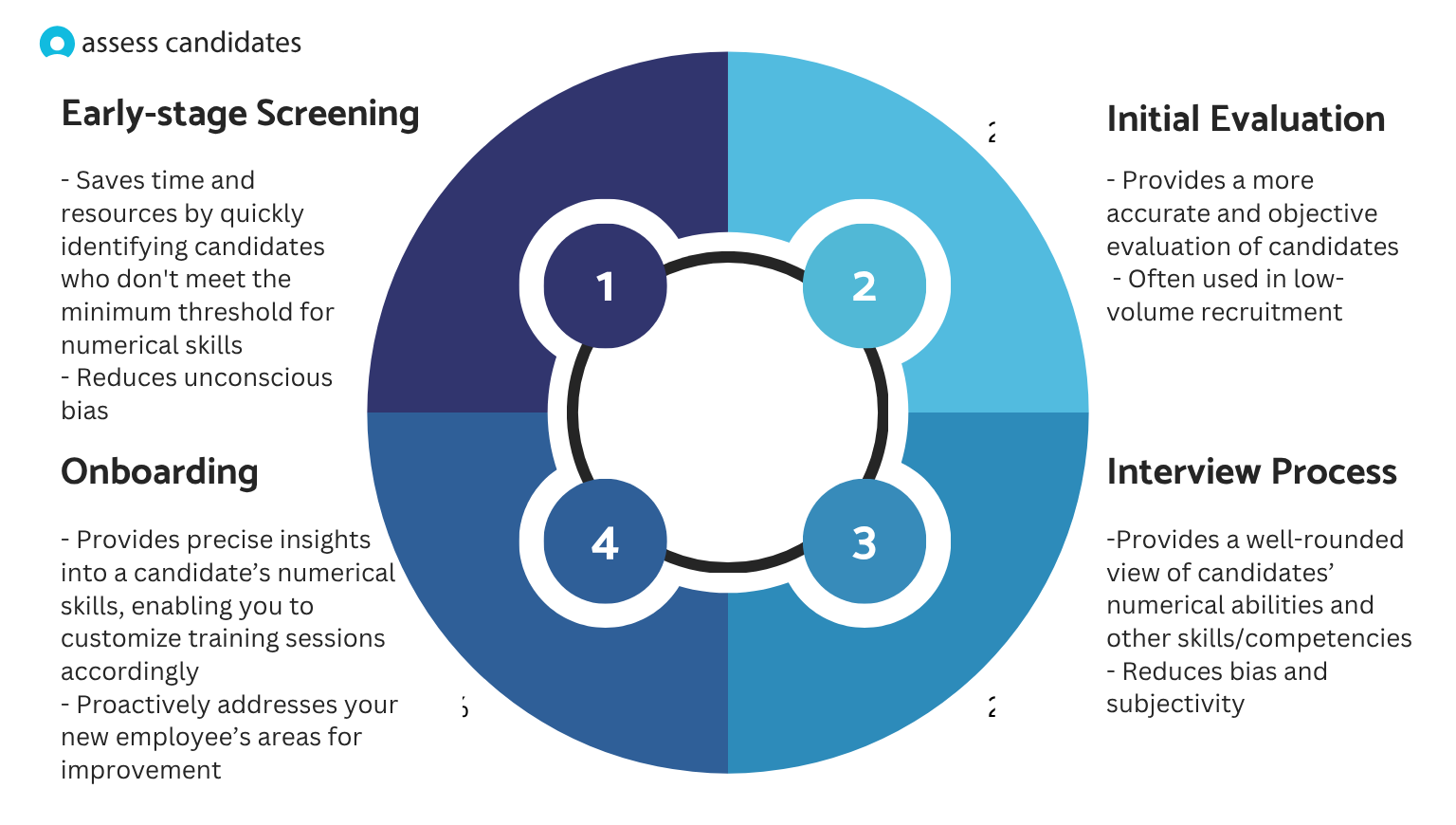
The incorporation of numerical reasoning assessments at different stages of the hiring process helps organizations save time and resources, reduce biases, ensure a positive candidate experience, and customize onboarding and training according to each new employee. Use a numerical reasoning test at the assessment stage that works for you!
Numerical reasoning tests also boost your leadership development and other upskilling programmes! Ask your current employees to take a numerical test to identify their numerical skills, strengths, and areas for improvement. Whether it’s for interpreting financial data effectively, managing budgets, or accurately performing data analysis tasks, these objective insights will help you design targeted employee learning and development programs.
In the next section, we outline step-by-step the best practices for incorporating a numerical reasoning test into your hiring process. Ready to dive in?
Numerical reasoning testing tools work best for graduate and mass recruitment. However, they also help shortlist candidates for medium and low-volume assessment, in particular for technical roles such as a financial analyst and a mechanical engineer.
Here is a simple 3-step guide and best practices for using a numerical ability testing platform such as ours at Assess Candidates:
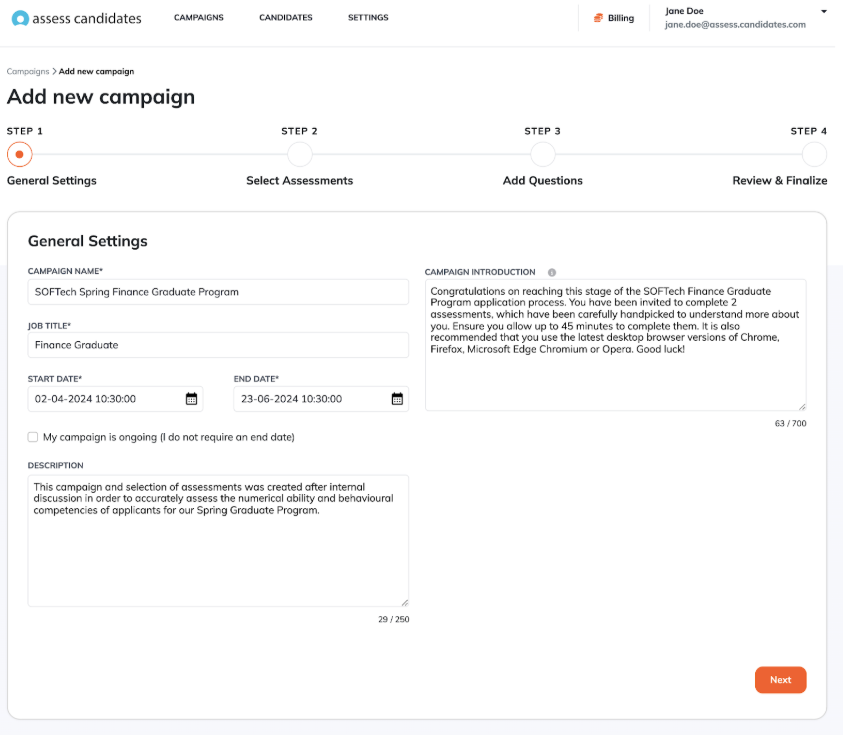
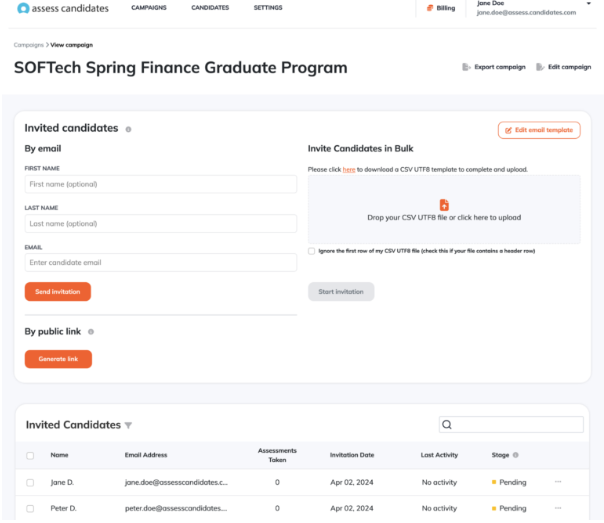
2. Invite candidates to your numerical ability test:
Invite candidates in a single click to complete your numerical reasoning test by individual email, CSV file upload, or public link.
3. Analyze candidate results and shortlist candidates:
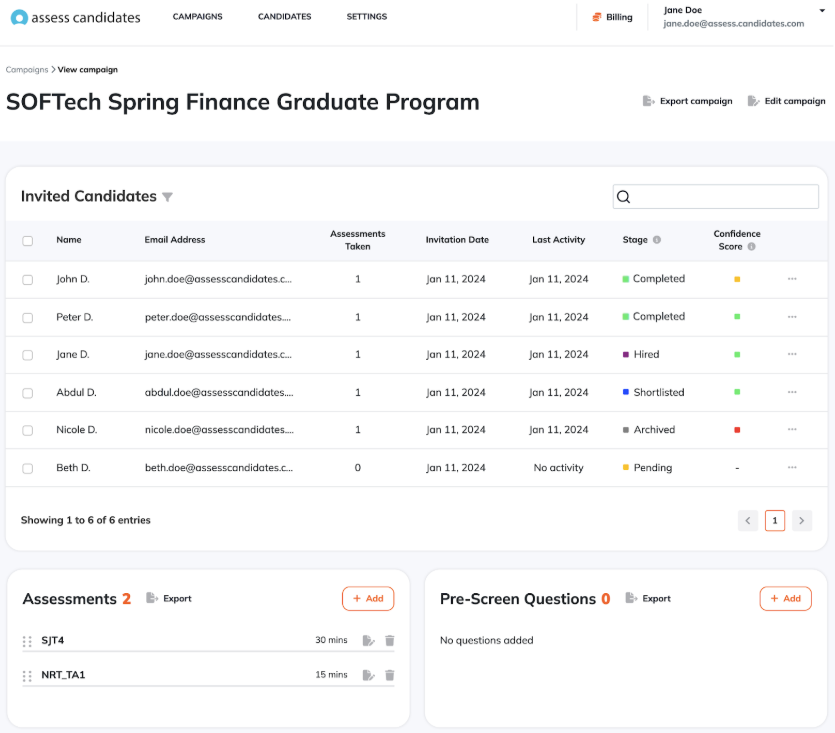
For the best results, at Assess Candidates, we always recommend a multi-assessment approach for the most effective hiring. Combine logical and numerical reasoning tests with other cognitive assessment tests, behavioral tests such as job simulations, and video or in-person interviews, or assessment center exercises.
Streamline your hiring with reliable standardized psychometric tests. LEARN MORE
So, which industries use online numerical tests in recruitment? Let’s find out below.
We have explored how pre-employment numerical reasoning tests are a reliable tool for evaluating a candidate’s numerical aptitude, accuracy, speed, and attention to detail.
Now, let’s see which roles and industries use these cognitive ability tests the most in their hiring.
Roles that use numerical reasoning tests for hiring include:
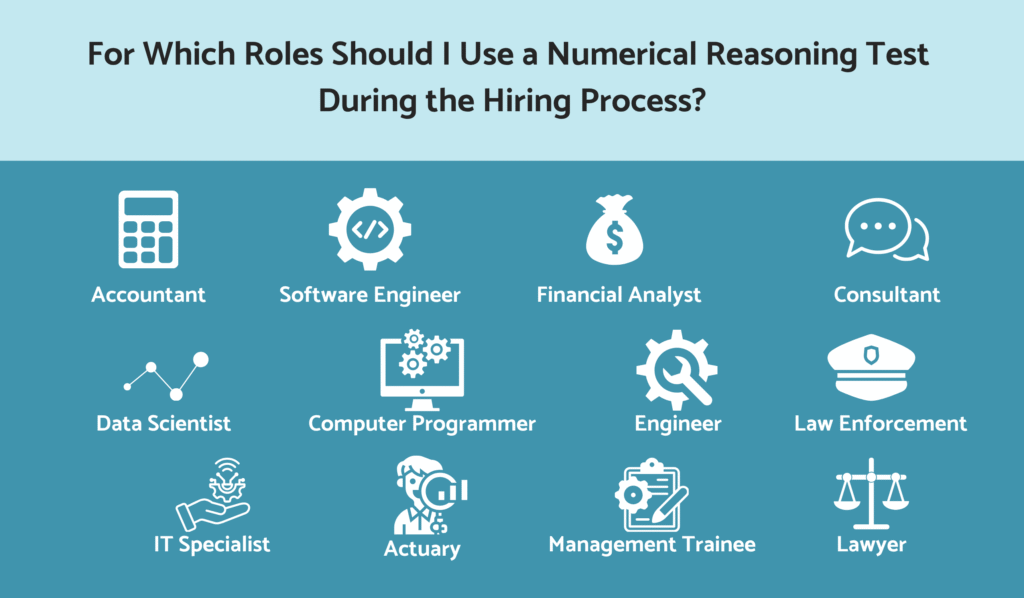
For non-technical roles, such as human resources or customer service executive, numerical Numerical reasoning tests remain important for assessing skills before employment. For instance, even customer service roles often require employees to perform basic mathematical calculations for customers.
For roles that don’t require high levels of numerical reasoning skills, simpler numeracy tests for jobs outline candidates’ basic numeracy skills, attention to detail, and how they manage challenging tasks.
Large multinational companies have been using numerical reasoning tests in their recruitment processes for decades. Small and medium-sized enterprises (SMEs) and startups are also increasingly leveraging numerical reasoning tests to enhance their hiring processes.
Here is a list of some of the top companies using pre-employment numerical reasoning tests:
Overlooking the importance of assessing candidates’ numerical reasoning skills during your hiring process could lead to a decline in team performance and overall company success. Therefore, prioritizing numerical tests in your recruitment strategy is essential.
If you are an employer that is unsure if using a numerical test is the right choice for you, learn more here or get in touch with us for a free-of-charge analysis of your recruitment needs.
Now let’s discuss the leading providers of candidate assessment software that you should consider to help implement your numerical reasoning test
When selecting a candidate assessment platform for implementing a numerical reasoning test, recruiters should evaluate both the quality of the numerical assessment tools and the overall functionality of the recruitment platform. Consider the following questions:
By addressing these questions, you can ensure the candidate assessment platform you choose for your numerical reasoning test meets your needs and enhances your recruitment process.
Use our reliable hiring platform to select top talent with strong numerical reasoning skills. LEARN MORE
Now we will delve into why employers are using the Assess Candidates numerical reasoning tests to enhance their hiring processes.
At Assess Candidates, we specialize in a variety of pre-employment aptitude tests, including numerical reasoning tests, and can build a recruitment campaign tailored to meet the unique hiring needs of any organization.
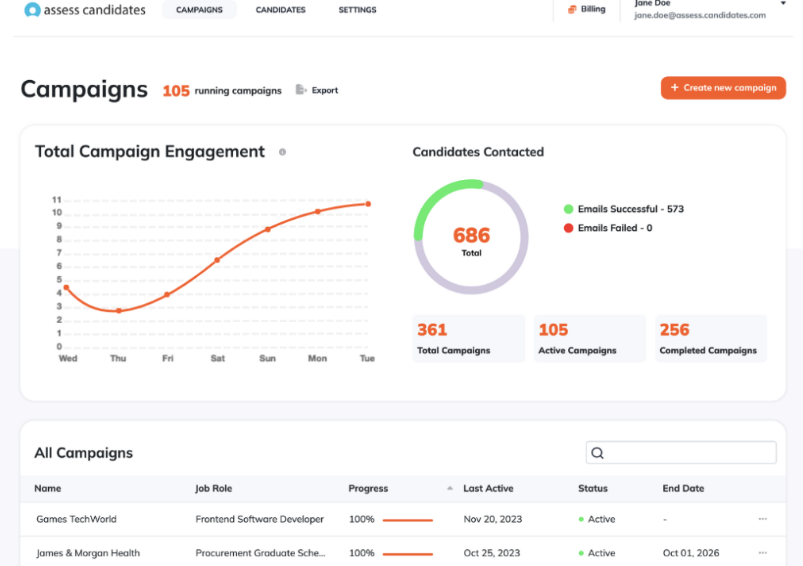
Below is an example of the campaign reporting dashboard available on Assess Candidates. This tool is accessible to hiring managers and talent acquisition professionals, providing valuable insights and easy-to-use sorting functions to streamline candidate assessment.
1. Scientifically Validated Design: Assess Candidates’ numerical reasoning tests are developed by Chartered Scientists, Psychologists, and Psychometricians with decades of experience designing assessment solutions for companies like SHL and IBM Kenexa. Our numerical reasoning tests have undergone rigorous testing and validation to measure candidates’ numerical reasoning skills accurately. These tests consistently have proven successful in selecting and hiring top talent across various organizations and industries.
2. Expert Reporting: Assess Candidates’ user-friendly and easy-to-navigate assessment platform enables employers to analyze candidate reports in detail and make informed hiring decisions based on flexible criteria. Recruiters can easily view individual candidates’ performance on the numerical reasoning test, then filter, rank, and shortlist candidates. Additionally, our talent assessment platform also offers the option to integrate with your existing ATS for a seamless experience.
3. Positive Candidate Experience: Assess Candidates’ numerical assessment platform is easily accessible from any device and features an aesthetic and easy-to-use interface for candidates. It provides clear assessment instructions and can be fully customized to match your organization’s branding. The tests are designed to require minimal clicks to complete, with the assessment automatically advancing to the next question once an answer is provided. This ensures a seamless and positive candidate experience, which they will associate with your brand.
4. Accessibility Support: Assess Candidates offers support for individuals with disabilities and visual impairments. All our assessments have the option to add extra time, include zoom functionalities, and ensure the use of accessible color schemes and images in compliance with Web Content Accessibility Guidelines (WCAG) to ensure compatibility with screen readers.
Assess Candidates is a leading provider of pre-employment aptitude tests, which have been proven to help small, medium, and large employers successfully hire the best-fit candidates. Why not explore Assess Candidates’ numerical reasoning tests and start hiring today!
Consider a mid-sized financial institution facing challenges in selecting and hiring suitable candidates for its investment banking graduate scheme. Their current recruitment process successfully attracts candidates who are a good fit for the organization. Still, it falls short in evaluating essential numerical reasoning skills and candidates’ ability to work with complex numerical data. This gap in the assessment process results in mis-hires, increased training costs, and dissatisfaction among HR and business leaders. The organization needs a more effective selection method to assess candidates’ numeracy, critical thinking, and problem-solving abilities to determine if they are fit to recruit into the graduate scheme.
Assess Candidates would recommend that this company ask candidates to take a numerical reasoning test at the initial screening stage of its hiring process. The numerical test would assess candidates’ aptitude in handling numerical data, performing quick and accurate calculations, and solving complex numerical problems under time pressure, like those faced day-to-day in the workplace. This would enable recruiters and hiring managers to efficiently sift through large volumes of applications and determine the individuals with the desired numerical skills for the role who should advance to the next assessment stage.
By incorporating the numerical reasoning test, this financial institution can better identify and hire top talent who have the necessary numerical reasoning and problem-solving skills for success in the graduate program and across the wider business. This approach provides a reliable and accurate method for assessing candidate skills, empowering recruiters to make informed hiring decisions with confidence. Utilizing numerical reasoning tests aids the organization in meeting its talent acquisition needs for the investment banking graduate program, fostering the development of future industry leaders, and maintaining competitiveness in the financial sector.
Answers to the above questions:
Interested in getting the latest insights and advice on candidate assessment? Keep reading for frequently asked questions and to sign up with your email below to get started.
A numeracy test for a job interview is a cognitive ability test that measures how well a candidate can work with numbers in practical, work-related contexts. These tests typically assess their basic arithmetic (addition, subtraction, multiplication, and division), fractions, decimals, percentages, ratios, proportions, and word problems.
Numerical reasoning tests are a reliable predictor of how individuals may handle numerical information and workplace problems. Thus, those with strong numerical reasoning skills are likely capable of:
Large organizations use numerical reasoning tests to conduct efficient, yet cost-effective and objective, candidate assessments. These tests help recruiters improve the quality of hire through a data-driven recruitment process that supports an inclusive and candidate-friendly hiring process. Additionally, companies use online numerical tests to identify potential leaders to support their succession planning and thus boost their workforce productivity and employee retention.
Yes, online numerical tests have made candidate profiling easier, more efficient, and more affordable for all employers, including SMEs. Popular providers such as Assess Candidates offer Saas (Software-as-a-Service). These include fully automated, cloud-based tests that can seamlessly integrate into existing recruitment campaigns for a smooth and efficient assessment process.
You can effectively prevent attempts to cheat during candidate numerical ability testing by using advanced anti-cheat technology to avoid compromising test integrity. Top providers, such as Assess Candidates, offer anti-cheating features, including web proctoring for remote tests, screen-sharing monitoring, and facial recognition, to ensure the assessment process remains fair and objective.
Verbal reasoning tests have become a key tool for modern candidate assessment, measuring a candidate’s ability to read, interpret, and analyze written information.
Since strong comprehension and communication skills are vital across nearly every industry, verbal tests help employers identify individuals who can process complex information effectively, think critically, and make informed, accurate decisions.
Unlike resumes or interviews that are influenced by subjectivity, verbal reasoning pre-employment tests deliver objective, standardized insights into a candidate’s reasoning and communication abilities. By offering fair and consistent evaluation, they minimize bias, and accurately predict workplace performance. This makes them especially valuable for roles that demand analytical thinking, problem-solving, and clear communication.
From global corporations to SMEs and startups, verbal reasoning assessments provide a cost-effective, efficient way to improve hiring outcomes. When incorporated into your hiring process, you can streamline candidate selection, leading to higher-quality hires, reduced turnover, and a more capable, productive workforce that supports long-term business growth.
Whether you’re a hiring manager or HR professional, you might find yourself asking questions like:
This guide explores these questions in depth. Keep reading to learn how verbal reasoning testing tools can help you consistently hire the best talent for your role and organization.
Next, let’s start with the basics: what are verbal reasoning tests?
A verbal reasoning test, also known as a verbal reasoning aptitude test, is a type of pre-employment aptitude assessment that evaluates how effectively a candidate can comprehend, analyze, and interpret written information. These tests typically present short passages of text, requiring applicants to identify key ideas and apply logical reasoning to draw accurate conclusions.

Verbal reasoning assessments offer recruiters objective, standardized insights into a candidate’s critical thinking, verbal comprehension, and problem-solving – skills that CVs and interviews alone cannot reliably measure. These tests are scientifically proven to predict job performance more accurately than CVs, helping employers select candidates who have the required skills and are more likely to succeed in the role.
Strengthen your pre-employment hiring process with our scientifically validated verbal reasoning tests. HIRE FOR FREE
But what does verbal reasoning mean?
Verbal reasoning is the ability to understand and reason with written information. It goes beyond basic language and reading skills, instead involving verbal comprehension, analysis, identification of key details, and thinking critically to draw logical conclusions and build clear, coherent arguments based on the information provided.

Verbal reasoning skills are fundamental to modern workplace success. Most roles require employees to interpret complex documents, draw accurate conclusions, clearly communicate ideas to colleagues, managers, and clients, and make decisions based on written material.
Particularly in customer-facing roles, strong verbal reasoning reduces misunderstandings and improves daily collaboration and customer interactions. Verbal reasoning skills are even more critical in remote or hybrid work environments, where clear and effective written communication is key to maintaining productivity and alignment.
Measuring verbal reasoning during hiring is a reliable indicator of how individuals might inherently write, communicate, and express themselves professionally in the workplace.
Candidates who score well on the verbal reasoning test have strong verbal reasoning skills and, in the workplace, are more likely to be able to:
In the following section, we will look into what specific skills verbal reasoning pre-employment tests measure.
Verbal reasoning pre-employment tests measure critical thinking, logical reasoning, attention to detail, and communication strengths; all vital for workplace success.
Verbal reasoning aptitude tests typically measure these 4 major skills:

A verbal assessment test evaluates how well candidates read and understand written passages. Candidates must identify main ideas, key details, and underlying messages from written reports, documents, and statements within a limited timeframe. Strong verbal comprehension is especially crucial for roles like consulting, law, or HR, where professionals must grasp key points without misinterpretation.
A verbal reasoning test also measures an applicant’s reasoning abilities and critical thinking skills when connecting information, analyzing arguments, and using logic to draw conclusions. This skill is critical for roles like analysts, researchers, and auditors, where accurate decision-making under time pressure depends on clear, text-based reasoning.
Verbal reasoning tests ensure that candidates answers rely solely on the text and information provided rather than external knowledge or assumptions.
Verbal reasoning questions challenge candidates to spot subtle differences in wording, which can completely alter a statement’s meaning, and avoid misinterpretation. This highlights their precision and focus, which play a crucial role in roles like law, finance, or compliance, where missing small details can cause significant errors.
Verbal reasoning tests also measure a candidate’s grasp of language, including grammar and vocabulary. Strong language skills enable accurate comprehension, interpretation, and communication of complex information, while a wide vocabulary allows candidates to recognize meanings, distinguish word differences, and avoid misinterpretation. In roles like teaching, client communication, law, or marketing, professionals need strong grammar and vocabulary for clarity and credibility.
Identify top candidates by incorporating a high-quality verbal reasoning test into your recruitment process. LEARN MORE
In the following section, we will explore how verbal reasoning tests actually work in hiring.
Recruiters widely use verbal ability tests in hiring, administering them online or during assessment centers based on organizational needs. These tests assess a candidate’s ability to handle complex written information, evaluate arguments, and make sound decisions.
Typically timed in nature, these assessments include 10–20 multiple-choice questions delivered through an online assessment platform. Candidates are required to analyze written passages, draw logical conclusions, and classify statements as “true,” “false,” or “cannot say,” making them especially valuable for roles that demand strong communication, critical thinking, and problem–solving skills.
Did you know? According to the Society for Industrial and Organizational Psychology, candidates who score well on verbal reasoning tests are 4× more likely to succeed in their roles compared to lower scorers.
Verbal reasoning test questions are carefully designed to assess a candidate’s ability to comprehend, interpret, and analyze written information. These questions can appear in formal verbal reasoning tests, skills-based assessments, or even during job interviews.
If you decide not to use a verbal reasoning assessment during initial screening, it is important to assess candidates’ verbal reasoning skills in other ways. Through structured in-person or video interviews or written exercises, recruiters can evaluate how well a candidate processes information and articulates responses. This helps reduce the risk of mis-hires and ensures candidates have the necessary communication and comprehension abilities for the role.
Below are the main types of verbal questions for interview and hiring tests:
The most common type of verbal reasoning question asks candidates to evaluate the truthfulness of statements based on a given passage. Candidates must answer true, false, or cannot say using only the information provided. These statements may be direct or inferential, requiring logical deduction rather than simple text matching.
Example.1:
Passage: “All employees at the company receive annual training. Some employees also participate in monthly workshops.”
Statement: “All employees at the company participate in monthly workshops.”
Spelling and grammar tests evaluate a candidate’s ability to apply correct grammar, punctuation, and spelling – all crucial for clear communication in professional settings.
Example.2 “Choose the sentence that is grammatically correct:
A) She don’t have enough experience for the role.
B) She doesn’t has enough experience for the role.
C) She doesn’t have enough experience for the role.
D) She not have enough experience for the role.”
Vocabulary-based questions assess the range and understanding of a candidate’s word knowledge. They are often part of verbal aptitude and ability assessments and may include various types of questions to evaluate how well candidates understand and use word meanings, synonyms, and antonyms in context.
Example.3 “Choose the word that is most similar in meaning to abundant:
A) scarce
B) plentiful
C) tiny
D) empty.”
Word analogy tests are frequently used in standardized assessments to evaluate verbal reasoning and cognitive skills. In these tests, candidates are presented with a pair of related words and must find another pair that shares a similar relationship.
Example.4 “Dog is to Puppy as Cat is to:
A) Kitten
B) Cub
C) Foal
D) Calf”
Verbal critical reasoning questions present short written passages to assess a candidate’s ability to analyze arguments, identify assumptions, evaluate evidence, and draw logical conclusions. They are especially useful for roles that require problem-solving and evidence-based decision-making.
Example.5
Passage: “Many companies that have introduced flexible work schedules report higher employee morale and lower turnover. Higher morale tends to increase engagement, which then boosts productivity. For these reasons, offering flexible schedules is an effective way to improve overall company performance.”
Question: “Which of the following sentences weakens the argument above?
A) Some employees are less productive when given flexible schedules due to poor time management.
B) Flexible work hours improve employee morale.
C) Most employees prefer fixed schedules for clarity.
D) Flexible schedules reduce the need for office space.”
Reading comprehension questions measure a candidate’s ability to quickly and accurately read and understand written information, requiring them to interpret passages and ideas and extract relevant details.
Example.6
“Passage: Many companies are adopting remote work to improve satisfaction and cut costs, but it can cause communication challenges.
Question: What challenge does remote work create?
A) Higher rent
B) Longer hours
C) Collaboration issues
D) Turnover”
Let’s take a glimpse at a verbal reasoning test question example below:
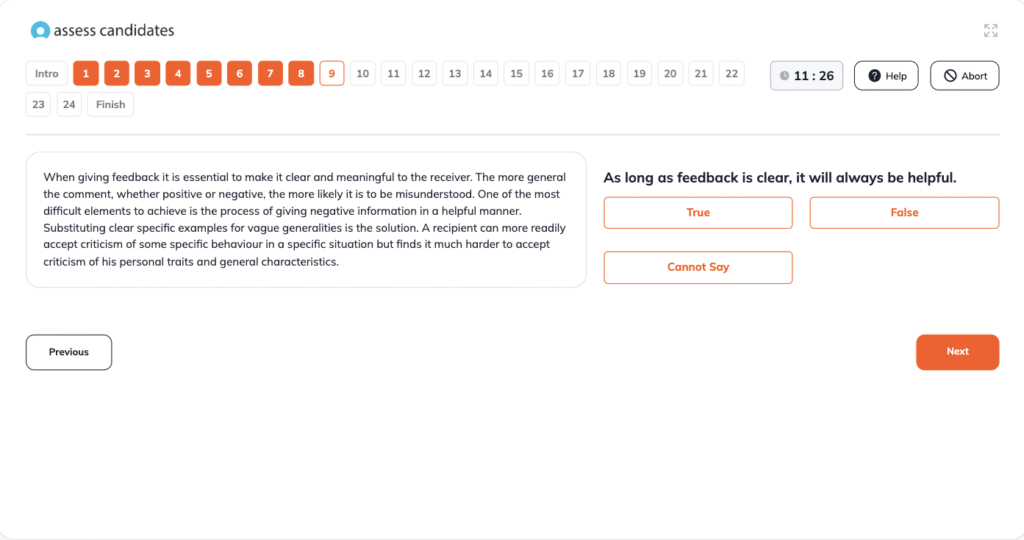
This example comes from Assess Candidates’ off-the-shelf verbal reasoning tests, which employers can also customize to match the specific demands of a role. Customization allows recruiters to evaluate candidates’ verbal reasoning skills in direct relation to job requirements.
Explore more sample verbal reasoning question examples or get in touch with us to discuss tailored assessment options!
Leverage our verbal tests to identify top talent with strong analytical and communication abilities. HIRE FOR FREE
To get answers to all the questions mentioned above, head down to the end of the article.
In the following section, we will delve into the reasons why employers incorporate verbal tests into their recruitment process.
Verbal reasoning tests are used in pre-employment screening to spot candidates who demonstrate strong critical thinking, accurate data interpretation, and effective communication. Unlike resumes or academic records, these tests provide a fair and standardized measure of reasoning ability, enabling organizations to make more informed and reliable hiring decisions.
Furthermore, verbal reasoning assessments streamline the hiring process by quickly filtering large candidate pools, reducing the time and cost involved in recruitment. They also help remove unconscious bias by focusing solely on a candidate’s skills and reasoning abilities, supporting an inclusive hiring process

Employers administer verbal reasoning tests early in the hiring process to filter out unsuitable applicants. This step prevents wasted resources on candidates who look strong on paper but lack essential reasoning skills. By focusing on the best-fit candidates upfront, companies save time, reduce recruitment costs, and improve hiring efficiency.
Organizations that apply pre-employment testing early on in the recruitment process avoid costly hiring mistakes and build stronger, more dependable teams.
Did you know? Using pre employment aptitude tests, such as a verbal reasoning aptitude test, during the initial screening can reduce a large candidate pool by up to half. This approach proves especially valuable in graduate program recruitment, where employers need to distinguish effectively between a large number of seemingly equally qualified applicants
Employers use verbal tests to create a level playing field in recruitment. These standardized tests present the same questions and conditions to every candidate, which allows recruiters to compare applicants objectively. As a result, hiring decisions become fairer and less influenced by bias, which aligns with company policies and is legally defensible.
HR teams evaluate candidates from diverse educational, cultural, or professional backgrounds without giving an unfair advantage to those with more polished resumes.
Employers rely on pre-employment verbal reasoning tests to predict how effectively candidates will perform once hired. Strong performers on these tests typically have sharper problem-solving skills, stronger decision–making, and better adaptability under pressure. Since the test measures reasoning instead of memorized knowledge, it gives employers a reliable preview of how candidates handle workplace challenges.
These tests help managers, analysts, and strategists assess large volumes of information and make well-justified recommendations that influence business outcomes.
Verbal reasoning assessments are invaluable in measuring how well candidates understand, interpret, and analyze written information. These tests confirm whether applicants can identify main ideas, evaluate arguments, and draw accurate conclusions without misinterpretation.
This skill becomes crucial in roles that involve processing reports, contracts, or policies, where small mistakes can cause costly errors.
Candidates generally find their online verbal reasoning test accessible, user-friendly, and convenient to complete from home at a time that suits them. This flexibility reduces stress and removes logistical barriers, creating a smoother and positive candidate experience. Test providers design the questions to be clear, fair, and unbiased, assessing reasoning ability rather than knowledge of specific languages or specialist topics.
Employers use verbal reasoning tests to shortlist candidates with key reasoning and communication skills, improving performance, productivity, and retention. To add value and ensure fairness, tests should be paired with the right platform, clear benchmarks, and other recruitment tools like interviews or job simulations.
While verbal reasoning tests offer many benefits, it’s equally important to consider certain factors before using them in the hiring process.
Solution: Encourage candidates to practice a verbal test before the actual assessment. Familiarity with sample questions and formats helps reduce anxiety, making it easier for candidates to perform under typical working conditions.
Solution: Combine verbal reasoning assessments with other tools such as logical and numerical reasoning tests, situational judgement tests, structured interviews, and assessment centers. This integrated approach provides a well-rounded view of candidates’ technical skills, competencies, and personality traits, improving predictive validity.
Solution: Set lower and more flexible cut-off scores to ensure fair assessment. The test should emphasize reasoning with written information rather than language proficiency, allowing candidates to demonstrate their ability to draw accurate conclusions.
Solution: Choose assessment providers with strong cheating prevention measures. Platforms like Assess Candidates include built-in cheat detection technology to maintain fairness and integrity in the recruitment process.
Solution: Incorporate verbal ability test scores as one part of a holistic hiring process. Combine them with structured interviews, job simulations, and reference checks to gain a complete view of a candidate’s potential.
Solution: Create role-specific verbal reasoning scenarios that mirror real job tasks. Supplement them with situational judgment tests and work samples that replicate actual workplace challenges.
Solution: Select reliable, scalable online platforms like Assess Candidates that provide automated scoring and integrate with your applicant tracking system (ATS). Opt for a validated off-the-shelf verbal assessment instead of developing new ones in-house, unless absolutely needed.
Guarantee an effective recruitment strategy by incorporating a science-backed verbal reasoning test. LEARN MORE
Next up, we will explore the stages of the hiring process where verbal reasoning tests can be presented to candidates.
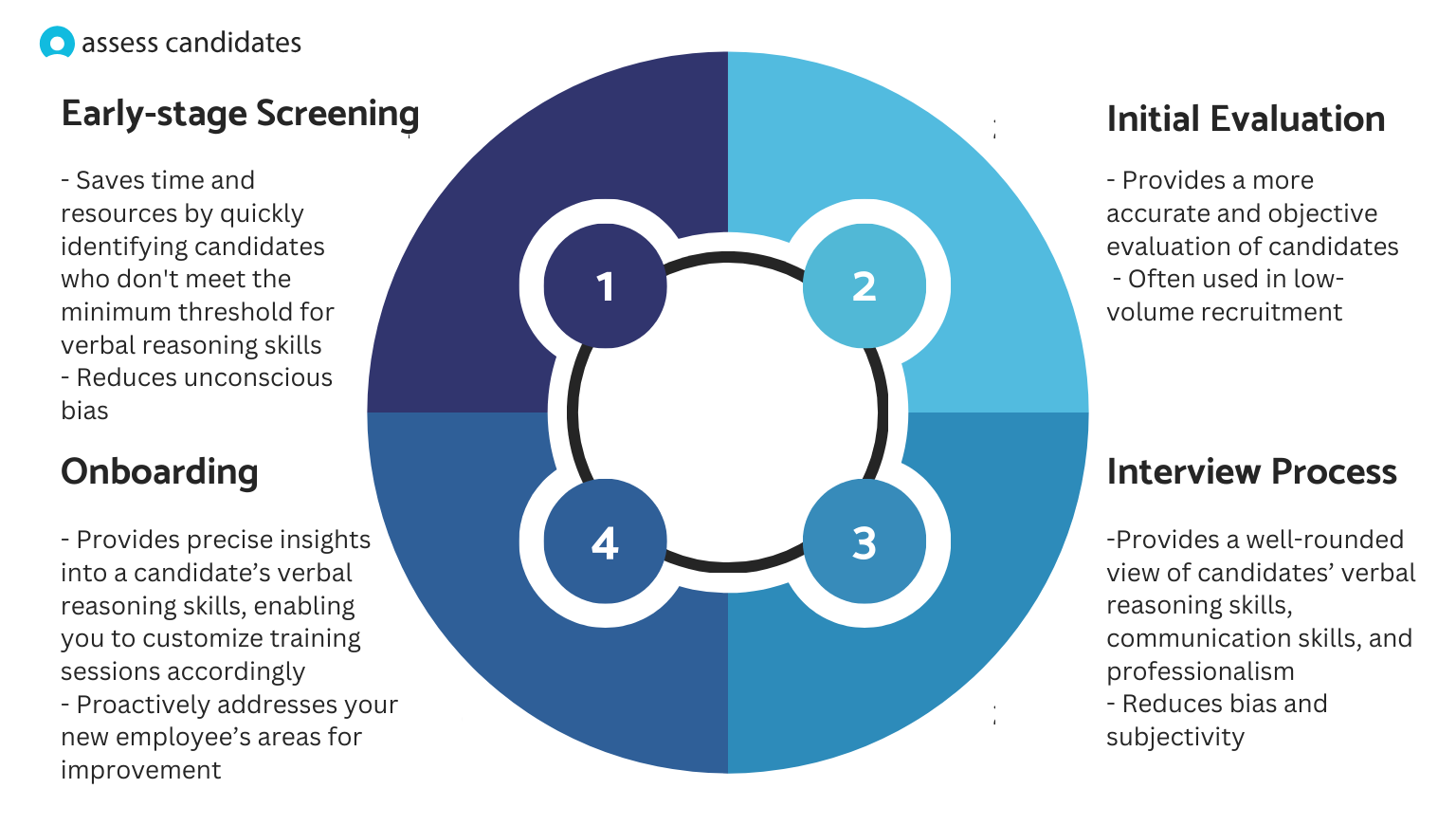
Pre-employment verbal reasoning tests can be implemented at multiple stages of the hiring process but work best during early screening. They quickly shortlist candidates and, when combined with other pre employment aptitude tests like numerical or logical reasoning, deliver more comprehensive and reliable results.
Candidates are sent a link to the talent assessment platform and get a set timeframe, often a few days, to complete the verbal reasoning test.
Below is a detailed explanation of the various hiring stages in which verbal reasoning tests are used:
In the following section, we will explore the best practices for including a verbal assessment in your recruitment process.
Pre-hire verbal reasoning tests can add significant value to a hiring process, but their impact depends on how you use them. Applying best practices ensures the tests remain fair, relevant, and effective in identifying candidates with the right skills for the role.

Conduct a job analysis to pinpoint the tasks and skills that are the most essential for the role. Match these requirements to the skills a verbal reasoning test measures, such as comprehension, critical thinking, and reasoning.
Adjust test difficulty and timing to the role’s seniority. Avoid generic tests and design tailored blueprints for each job family.
Strengthen your hiring process by pairing verbal reasoning with numerical or logical reasoning tests, situational judgment tests, or structured interviews. This blended approach boosts predictive validity and reduces false results.
Plan weightings and sequence in advance, for example, screen with verbal and numerical reasoning first, then follow with interviews for top scorers.
Establish cut-off scores with data from pilot tests, benchmarks, or proven standard-setting methods. Replace rigid thresholds with score bands such as “pass,” “strong,” and “exceptional” to manage borderline cases more effectively.
Revisit cut-off scores regularly and allow retests when necessary to maintain fairness.
Provide candidates with practice questions and clear instructions before the test. Write questions in simple, job-relevant language and avoid culture-specific references or obscure vocabulary.
Support non-native speakers by focusing on reasoning instead of advanced language fluency. Offer reasonable accommodations such as extended time or screen-reader compatibility. Always ensure the test works smoothly on both desktop and mobile devices.
Select pre-employment assessment platforms, such as Assess Candidates, with strong security features like randomized questions, restricted test windows, anti-tab switching, and identity verification. Refresh question banks frequently and apply proctoring when roles demand high security.
Track unusual behavior, such as inconsistent device use or abnormal response times, and investigate fairly. Balance integrity with user comfort to avoid creating a poor candidate experience.
Set expectations by explaining the purpose, length, format, and deadline of the test. Provide a practice link and technical requirements in advance. Keep candidates informed about next steps and timelines after they complete the test.
When possible, share constructive feedback. Clear communication reduces anxiety and improves completion rates.
Now that you have the top tips and proven strategies to implement a verbal reasoning assessment in your recruitment process, let’s take a look at the key industries and roles that should use verbal reasoning tests for hiring.
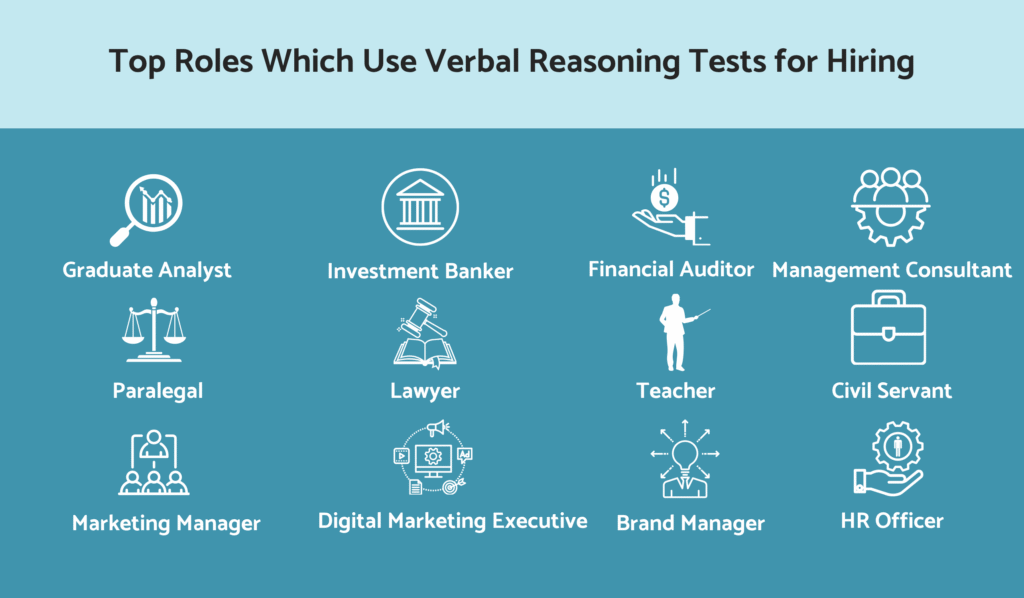
Verbal reasoning assessments evaluate a candidate’s ability to understand, interpret, and draw conclusions from written information. These skills are particularly crucial in industries and roles where strong communication, critical thinking, and decision-making are key.
The following are the top 5 industries that use verbal tests as a part of their recruitment process:
Banks and financial institutions use verbal reasoning tests to evaluate candidates’ ability to read financial reports, contracts, and compliance documents under time pressure. These tests ensure accuracy and reduce risk.
Leading employers, including HSBC, Goldman Sachs and Morgan Stanley, incorporate verbal aptitude tests into their hiring processes.
Law firms administer verbal reasoning assessments to identify candidates who can interpret legal documents, evaluate clauses, and detect inconsistencies in arguments. They need employees who can make precise decisions from dense legal texts.
Top law firms such as Freshfields Bruckhaus Deringer, DLA Piper, and Dentons use verbal assessments to screen candidates.
Consulting firms use online verbal reasoning tests to measure how well candidates analyze reports, extract insights, and provide logical recommendations. This ensures consultants can solve client problems using only the data provided.
Some leading consulting firms, including Deloitte, KPMG, and McKinsey & Company, rely on verbal reasoning tests for graduate recruitment.
Pharmaceutical companies and healthcare organizations use verbal tests to ensure candidates accurately interpret medical research, patient data, and regulatory documents. This minimizes compliance errors and supports patient safety.
Top companies like GlaxoSmithKline (GSK) and Pfizer include verbal reasoning tests in their pre-employment hiring process.
Government agencies use verbal assessment tests to select candidates who can analyze policy documents, interpret regulations, and make informed decisions based on written instructions. This ensures clarity and fairness in decision-making.
The UK Civil Service and the European Union institutions integrate verbal reasoning tests into their competitive entry exams.
Let’s take a look at the leading employers who include verbal reasoning testing tools in their pre-employment recruitment process.
For years, global companies have used verbal tests to evaluate candidates’ comprehension and communication skills. Today, many SMEs and startups are also integrating these assessments into their hiring processes. By doing so, they gain a fairer, more consistent, and objective way to select talent.
Here are some well-known companies that use verbal assessments:
Discover how our talent assessment platform will help you identify top talent. LEARN MORE
Imagine a leading financial services firm is facing difficulties in hiring for financial analyst and client advisory roles. While the company attracts strong applicant numbers, its current recruitment process does not effectively measure candidates’ ability to interpret complex information or communicate it clearly to clients. This gap results in poor hiring decisions, higher training costs, and dissatisfaction among HR teams and senior management.
The firm requires a more reliable assessment method to evaluate candidates’ verbal comprehension, reasoning, and communication skills to ensure success in client-facing and analytical positions.
At Assess Candidates, we recommend that this financial services firm introduce a verbal reasoning test at the initial stage of the recruitment process. The assessment evaluates candidates’ ability to understand, analyze, and interpret written data, as well as their communication and problem-solving skills.
These are critical for roles where clear reasoning and effective client interaction are essential. Results from the test would help recruiters efficiently filter applicants and shortlist the strongest candidates for further evaluation.
By embedding verbal reasoning tests into their recruitment process, the firm can better identify top-performing candidates with the communication and critical thinking abilities required for analyst and advisory roles. This structured approach improves the quality of hires, reduces onboarding and training costs, and enhances client satisfaction.
Ultimately, the company strengthens its workforce, enabling teams to deliver more accurate insights and superior service, while ensuring long-term performance and growth.
Partner with Assess Candidates for scientifically validated verbal reasoning tests. VIEW PLANS
At Assess Candidates, we offer a wide range of pre-employment aptitude tests, including verbal reasoning, and create recruitment campaigns customized to each organization’s unique hiring needs.
Here is an example of our campaign reporting dashboard available on Assess Candidates.
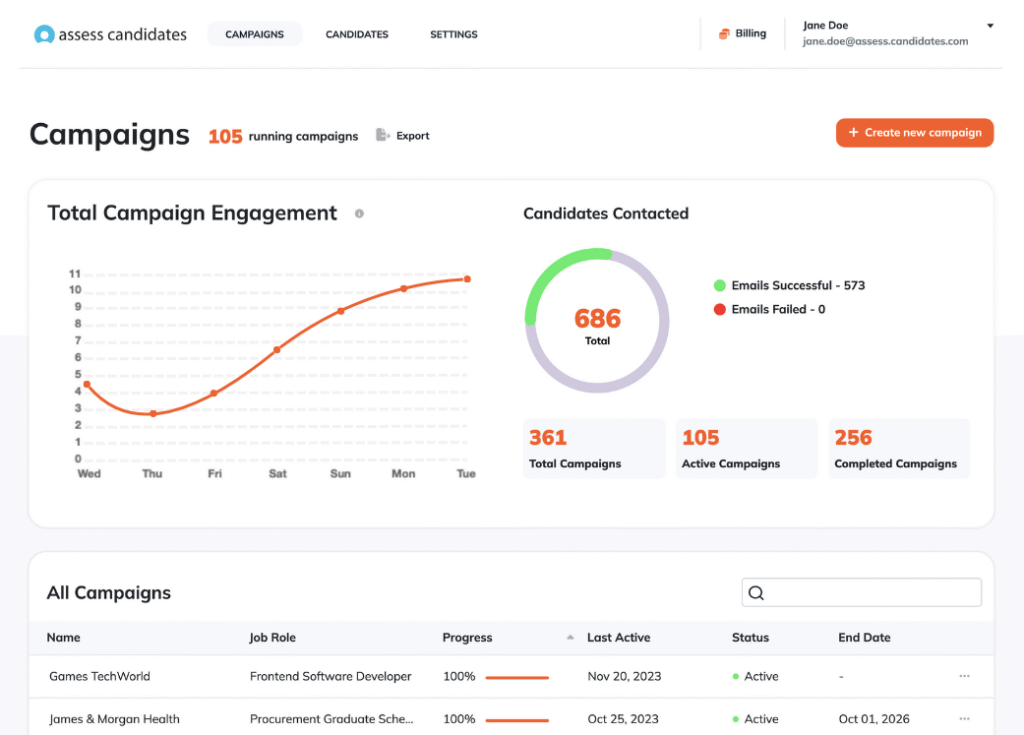
Assess Candidates is a trusted provider of pre-employment aptitude tests, delivering end-to-end solutions for employers of all sizes. Explore our verbal reasoning tests today and start hiring the best-fit candidates with confidence.
Answers to the above example questions:
Assess Candidates’ Verbal Reasoning Test Example Question: False
Interested in learning more about effective candidate assessment? Continue reading for frequently asked questions, and sign up with your email to get started.
Yes, SMEs and startups gain just as much value from verbal reasoning tests as large corporations. These assessments give smaller organizations a structured, cost-effective way to spot high-quality candidates. By basing hiring decisions on objective data instead of intuition, employers improve long-term performance, lower turnover, and build stronger, more reliable teams.
Verbal reasoning aptitude tests offer employers standardized insights into candidates’ comprehension and communication skills. Unlike resumes or interviews that may be influenced by bias, these assessments measure abilities objectively. By evaluating candidates against consistent benchmarks, employers minimize the risk of mis-hires, ensure fairer decisions, and enhance the overall accuracy and reliability of their hiring process.
Most verbal reasoning tests take candidates 10 to 20 minutes to complete. Employers use this short, focused format to evaluate skills without disrupting the hiring timeline. A verbal test quickly reveals how well candidates understand and analyze written information, allowing recruiters to gain meaningful insights while keeping the process efficient and streamlined.
Yes, employers can customize verbal reasoning tests to reflect the language skills the specific role requires. They select appropriate question types, complexity levels, and formats to match industry or job needs. This tailoring ensures candidates face challenges similar to real workplace tasks, which makes the assessment more relevant and predictive of performance.
Employers interpret results using detailed verbal reasoning test reports that highlight scores, rankings, and strengths. They compare candidates against benchmarks and identify top performers quickly. Recruiters then filter, shortlist, and advance candidates based on data-driven insights. This process allows organizations to replace guesswork with objective evidence, making hiring decisions more accurate and reliable.
Employers increasingly use innovative assessment methods to improve hiring accuracy, candidate engagement, and workforce quality.
Gamified tests are one such robust talent assessment to engage candidates effectively, while offering an objective, efficient, and enjoyable hiring experience. These recruitment assessments help interactively shortlist candidates with the necessary skills, aptitude, and personality that fit well with their work culture.
In this article, we will focus on online game-based assessments, their top benefits, and how they work in making informed hiring decisions and building higher-skilled teams.
Now, without further ado, let’s start by defining what game-based tests are.
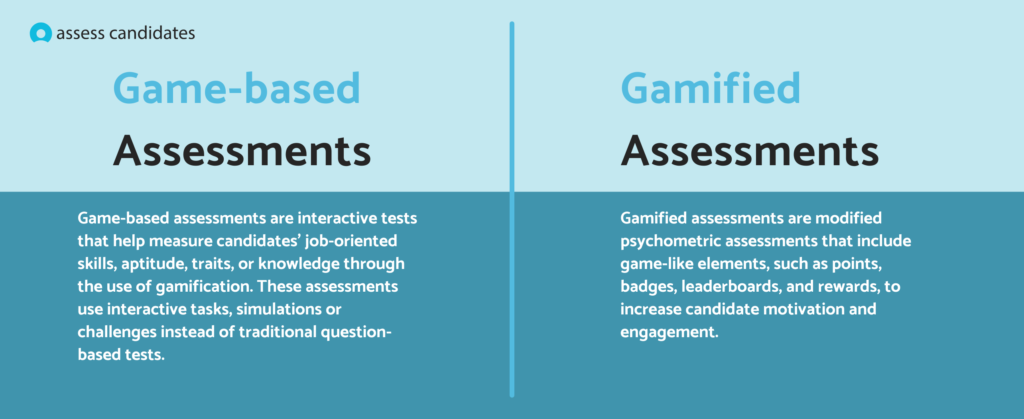
Game-based assessments are interactive tests that help recruiters measure candidates’ job-oriented skills, aptitude, traits, or knowledge through the use of gamification. These assessments use interactive tasks, simulations, and challenges instead of traditional question-based formats to evaluate workplace-relevant skills and behaviors.
While game-based assessments include game-based tasks, gamified assessments are not games themselves. Gamified assessments are modified psychometric assessments that include game-like elements, such as points, badges, leaderboards, and rewards, to increase candidate motivation and engagement.
Example: As part of our BART game, the candidate must pump a balloon to earn rewards, but risks it bursting; their choices directly reveal risk-taking behavior. In contrast, a gamified assessment for the same purpose might simply ask risk-preference questions while adding points, badges, or a leaderboard to make the questionnaire more engaging.
Enhance your hiring assessment process with our full range of immersive game-based assessments. HIRE FOR FREE
Now, let’s learn how game tests work in recruitment.
Game-based assessment tests utilize data analytics and machine learning algorithms to track and analyze the behavior of candidates as they navigate through the recruitment process. Rooted in psychometrics, these online game-based tests track candidates’ behavioral and cognitive data to offer objective and reliable insights into their job-related skills, competencies, and preferences.
Game-based assessments, through their interactive format, record data such as response times, decision-making processes, interactions, and outcomes. These objective indicators help recruiters evaluate candidate potential, workplace behaviors, and likely job performance.
So, what skills and abilities do recruiter games help employers measure? Keep reading to find out.
Game-based assessments utilize game-like tasks and challenges to test specific skills and traits that are predictive of on-the-job performance, for example, problem-solving, decision-making, critical thinking, learning agility, and resilience.
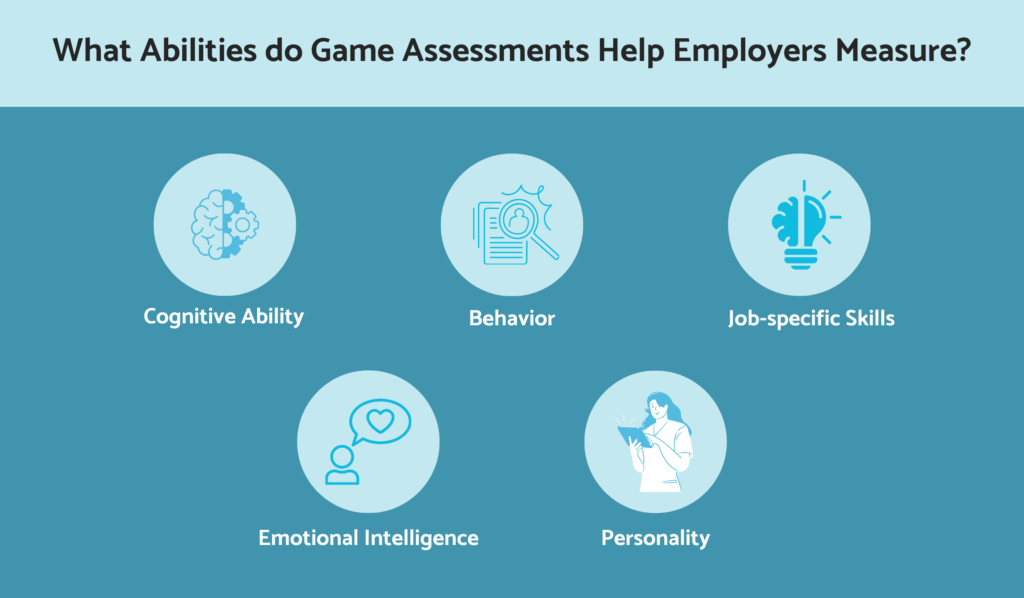
Cognitive ability refers to the functions and skills involved in perception, memory, learning, reasoning, judgment, and understanding. Online game based assessments in recruitment can measure cognitive abilities such as mental arithmetic, problem-solving, attention, and memory. These abilities are crucial for job roles that involve complex problems and require critical thinking and decision-making under time pressure.
Game-based assessments can also effectively assess candidates’ behavioral competencies and soft skills, such as communication skills, multitasking and prioritizing, teamwork, leadership, and adaptability, which are essential for success in most job roles.
Online game-based assessments can also evaluate job-specific skills such as programming, data analysis, and customer service through job simulations. This style of game-based assessment utilizes a simulated work environment to evaluate how candidates approach and resolve problems effectively.
Emotional intelligence refers to the ability to recognize, understand, and manage one’s own emotions and those of others. Game assessments in recruitment, such as the i-EQ™ game-based assessment, can measure emotional intelligence through tasks that require candidates to display empathy, self-awareness, and social skills.
Online game-based assessment tests are an effective method for capturing candidates’ personality and preferences. One example is the Balloon Analogue Risk Task (BART) game. Although this task may seem to only measure one personality trait, such as risk-taking, it, in fact, also looks at candidates’ decision-making, sociability, and work management.
By combining game-based assessments with other hiring methods, employers can make more informed selection decisions and improve workforce quality.
Hire top talent with our range of psychometric assessments. LEARN MORE
In the next section, let’s explore the key benefits that recruitment games offer over traditional psychometric tests.
Game-based assessments offer a range of unique benefits that enhance the effectiveness of the recruitment process.
Here are the top 6 benefits of game-based assessments over traditional psychometric assessments:
Game-based assessments are a relatively recent innovation for assessing candidates in recruitment. While most traditional psychometric tests, such as aptitude tests and personality tests, have been available on the market for some time and have a long history of scientific research and validation, they typically only evaluate one major cognitive ability.
However, game-based assessments provide valuable insights into candidates’ behavioral data, offering insights into their personality, working style, executive functioning, and ability to handle pressure through a single suitable test or battery all while enhancing the candidate experience through interactive challenges.
Example: In a traditional personality questionnaire, a candidate might rate statements such as “I stay calm when criticized,” which measures personality traits like emotional stability. In contrast, the i-EQ™ game assessment presents interactive scenarios that require the candidate to recognize emotions, manage reactions, and adapt their behavior, capturing not only personality-related traits dynamically but also broader skills, such as empathy, self-control, and adaptability, simultaneously.
Game assessments don’t require a controlled or proctored environment, unlike psychometric assessments, which typically take place in testing and assessment centers. As the name suggests, candidates can undertake the interactive game challenges flexibly, even remotely, from their laptops or phones, without the need to travel long distances to complete the hiring assessment.
Example: In a traditional memory test, a candidate might need to visit a test centre, with a paper-and-pencil or fixed computer setup, and follow strict instructions. In contrast, the Cognition-M game assessment allows candidates to play an online memory game on any device and in any browser, from anywhere (home, café, etc.), with clear instructions and untimed rounds, reducing stress over setting and timing.
Game assessments are designed to be short, ideally anywhere from 5-10 minutes per game. This differs from traditional psychometric assessments, such as numerical reasoning tests, which can take 20-25 minutes to complete on their own. Additionally, game-based assessments involve tasks that keep the candidates’ engaged throughout, offering a positive experience, reduced fatigue, stress, and attrition rate.
Example: In a traditional in-tray exercise, a candidate might be given a long list of emails and tasks in a simulated inbox, with strict deadlines and pressured typing or essay-style written responses. In contrast, the MTA-Tray game assessment asks the candidate to sort parcels into the correct mailboxes in visual, bite-sized tasks, which take approximately 6 minutes in total, thereby reducing stress by being visually focused and less text-heavy.
Online game-based assessments are dynamic, presenting unique challenges to test candidates on their various competencies and skills. These adaptive and engaging assessments match candidates’ abilities and gather data throughout the entire game process rather than just the outcome. On the other hand, traditional psychometric tests often involve repetitive question styles to assess cognitive abilities that can be practiced, leading to the ‘training effect’. This reduces the test’s predictive validity.
Example: In traditional attention tests, repeated practice can inflate scores through familiarity. The PassCode™ game assessment instead uses dynamic code-cracking under time pressure. Since sequences change and errors reset progress, rote rehearsal offers little advantage.This ensures performance reflects accurate attentional control and adaptability, not test practice.
Game assessments work by measuring candidates’ natural behaviors in action to assess their personality and working style. Game assessments such as the Balloon Analogue Risk Task don’t rely on self-reporting. This helps reduce social desirability bias, which is a potential issue with traditional assessments, where candidates may deliberately answer questions about their personality traits and preferences in a more favorable light for employers.
Example: In a traditional personality questionnaire, the candidate may choose socially “correct” answers (e.g., “I always stay focused at work”) because they believe it’s what the employer wants. In contrast, the Cognition-A™ game requires candidates to perform attention/focus tasks (e.g., responding to stimuli, managing distractions), where performance is observed. Thus, responses aren’t about how candidates claim to behave, but about how they actually behave under test conditions.
Game assessments, due to their interactive design, are candidate-friendly, including those on the neurodivergent spectrum. These engaging assessments focus on measuring both conscious and unconscious behaviors and actions, rather than the final response. This approach thus offers space for natural strengths to show up, such as pattern recognition, problem-solving, persistence, or hyperfocus, giving a fairer view of overall candidate ability. This is unlike traditional psychometric tests, which can be more stressful due to their text-heavy and lengthy design.
Example: In traditional trait-based surveys, cultural or linguistic differences might lead some candidates to interpret questions differently or feel less confident answering. The i-EQ game, however, utilizes visual emotional expression recognition and interactive scenarios to assess emotional intelligence, which is less reliant on nuanced language and background context. This allows a broader range of applicants to demonstrate skills regardless of educational or cultural background.
Looking forward to knowing how to hire the best with game assessments. CONTACT US
When used alongside other hiring methods, game-based assessments can provide valuable insight into how candidates think, behave, and perform under pressure.
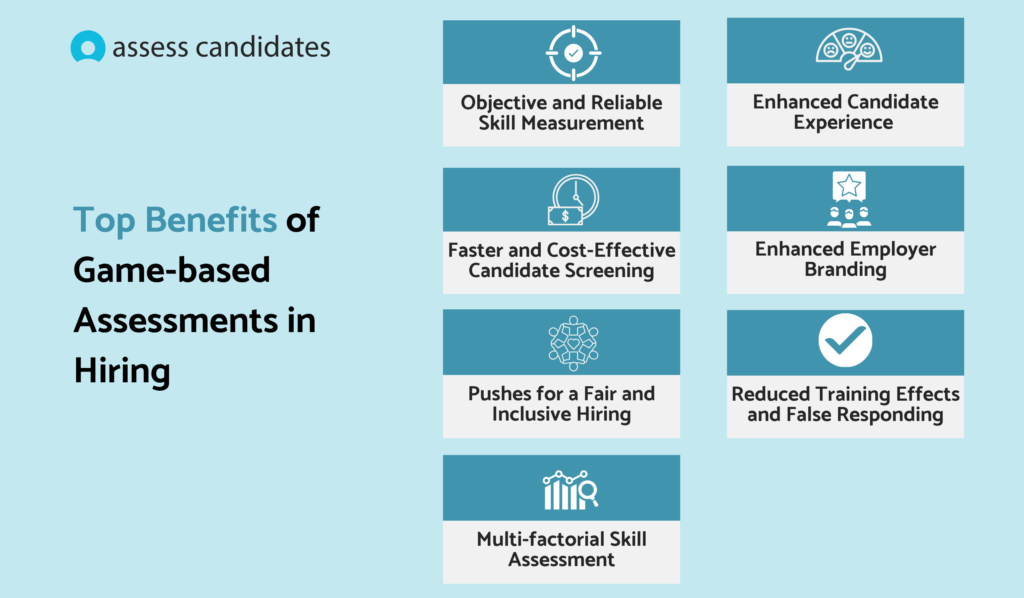
Due to their uniqueness, adaptive difficulty, and immersive nature, game-based assessments aim to measure candidates’ natural behaviors and cognitive abilities. These objective standardized assessments carry high predictive validity as they measure key data points in real-time over self-report. This provides employers with authentic and trustworthy insights into candidates, enabling them to predict job performance accurately, resulting in improved hiring decisions.
Example: A finance firm had several hires who had excellent resumes, yet underperformed on the job. They introduced the Flanker Task to assess selective attention. Over 6 months, those who scored well in Flanker had 25% fewer performance issues.
Game-based assessments come under specialized third-party SaaS (Software-as-a-Service) solutions for talent acquisition that offer immediate candidate results. These engaging and cost-effective tools are fully automated, quick to administer, and allow recruiters to assess a large number of candidates in one go. This makes the hiring process quite faster and efficient since game assessments come with the flexibility to suit any recruitment type or volume.
Game assessments offer recruiters a diverse approach to hiring using objective data points and machine learning algorithms. This helps reduce conscious and unconscious biases through a performance-based hiring process rather than focusing on demographic factors or preconceived notions, unlike traditional CVs and interviews. Game-based tests also diversify the talent pool through their appeal to a broader range of candidates. This allows the recruiters to hire for both culture-fit and culture-add, and preparing a resilient and talented workforce with a more diverse range of skills and competencies.
Example: An international consulting firm noticed that candidates from non-prestigious universities were underselected. After including the Cognition-M™ game test in the assessment mix, more candidates from diverse backgrounds advanced, improving diversity in hires.
Game-based assessments can assess multiple competencies such as memory, problem-solving, attention, resilience, EQ, etc, in one game or a set of games. This allows recruiters to use these objective indicators as anchors to further validate their aptitude and competencies in later stages, such as assessment centres and interviews. Additionally, game-based tests also enhance candidates’ experience in the hiring process while simultaneously assessing them on a variety of behavioral indicators seamlessly.
Example: A banking employer used a suite of game-based assessments: Cognition-A™ (attention), PassCode™ (resilience), i-EQ™ (emotion recognition). They found that hires who scored well across multiple games were more adaptable and had better retention after one year.
Game-based assessments are designed to create a more relaxed, stress-free assessment environment for candidates by replacing traditional questions with interactive and immersive tasks. Additionally, this innovative assessment process ensures a fair and objective yet fun and positive candidate evaluation, reducing anxiety and fatigue. This helps attract and retain top talent through increased candidate engagement, reduces application withdrawals, and expands the pool of high-quality candidates, making it easier for employers to find the right person for the job.
Example: A tech startup was getting many applicants, but had high dropouts during their numerical and verbal tests. They added a game like MathBubbles™ early in screening. Drop-off rates dropped by around 40%, and more candidates reached the interview stage.
An enhanced candidate experience through game-based assessments also boosts employer brand. These assessments convey employers as innovative, dynamic, and attentive to candidate experiences. This is an important competitive edge for companies in the war for talent, helping to retain candidates during the hiring process and attract higher-quality candidates in the future, especially Gen Z.
Example: A mid-sized IT firm was struggling to compete with bigger names. After switching to game-based assessments, they saw more applications from high-quality candidates, especially younger talent, citing the “fun and modern assessment process.”
Game assessments often adapt in real time, change patterns or sequences, use behavior rather than just answers, so rote preparation or rehearsed responses help less. This serves a dual function as it reduces training effects and serves a broad candidate base, including those with no prior gaming experience. Additionally, game assessments also record the time taken to complete each test and the response-to-time ratio. This helps recruiters identify any social desirability bias in case the candidate takes longer to respond than is necessary. This allows employers to help make better informed decisions about which candidates to hire.
Example: A marketing firm noticed candidates excelling in traditional reasoning tests, yet struggling with creativity and adaptability on the job. By introducing adaptive game-based tools like PassCode™ and MTA-Tray™, they achieved stronger alignment between scores and workplace success, while also uncovering potential social desirability bias in responses, which was later confirmed during interviews.
However, like any assessment methodology, there must be a consideration of the drawbacks in using them so you can make an informed decision for your hiring process.
Solution: Combine game-based assessments with other types of assessments, such as traditional cognitive ability tests or personality questionnaires. This can provide a comprehensive evaluation of a candidate’s abilities.
Solution: Game assessments have been scientifically validated as an effective selection tool for hiring.
Solution: Whilst looking for solutions on the market, consider checking what measures the assessment test providers offer to prevent cheating. Many third-party assessment providers, like Assess Candidates, will offer cheat detection technology and mechanisms.
Solution: Partner with third-party vendors or providers, like Assess Candidates, who specialize in game-based assessments. We can offer cost-effective solutions that are tailored to your hiring needs. Additionally, employers can consider using game-based assessments as a supplemental tool rather than a replacement for traditional assessment methods.
Solution: Choose game-based assessments designed with accessibility in mind, offering simple interfaces and inclusive design principles. Providers like Assess Candidates build tools that focus on fairness and ease of use across diverse applicant groups.
Solution: Use assessments that are compatible with multiple devices and browsers, and ensure providers offer technical support and retry options to minimize disruptions.
Solution: Partner with providers who comply with international data protection standards (like GDPR) and communicate transparently with candidates about how their data will be used and safeguarded.
So, while game assessments in recruitment can be an effective choice to include, they still fall short when assessing for specific cognitive abilities, such as numerical reasoning or verbal comprehension. Therefore, we at Assess Candidates always recommend using game tests in combination with other traditional selection methods, such as psychometric assessments, for a holistic candidate evaluation.
So, which game tests do employers use in recruitment? Let’s find out below.
Recruiters usually use a combination of different game assessments to evaluate candidates for a role. Depending on the role, employers evaluate the candidates’ traits, behaviors, adaptability, and skills to predict their job and culture fit.
Below is a table that outlines the different online game-based assessments from Assess Candidates, the skills that are measured, and the industries they could be used in:
Let’s now discuss each of these gamified assessment tools in detail.
Employers use a variety of game-based assessments to assess different types of cognitive skills, such as memory and attention:
The Cognition-A™ game presents candidates with a rectangular box and asks them to match colored shapes to the correct color word on the sides of the rectangle. Incorporating the Stroop Effect (1935), this game-based assessment, though untimed, usually takes a candidate 3 minutes to complete. Here, the candidate, for example, a red colored object when moved to the side labeled ‘red’ has to match it to the correct color word, ignoring the color of the background. Candidates continue playing until failure, when the session will end.
Cognition A™ game-based assessment measures attention and accuracy to determine how candidates might naturally process and handle multiple sources of information at the same time in the workplace.
Here is what our Cognition A™ game assessment looks like:
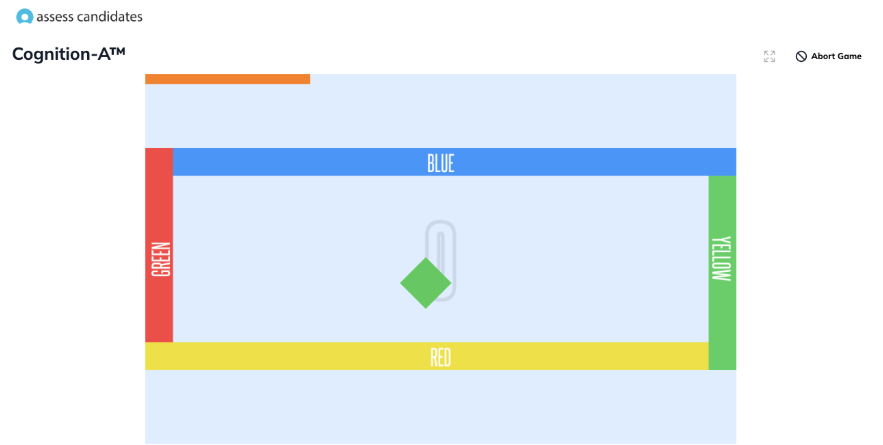
The Cognition-M™ game requires candidates to remember the positioning and sequence of orange blocks after they appear for a few seconds and then disappear. The number of orange blocks and the difficulty level increase after each correct answer. Candidates continue playing until failure, when the session will end, usually taking about 3 minutes.
Cognition-M™game-based assessment assesses the candidates’ short-term memory to determine how they might naturally process multiple sources of information, remember key information daily, and stay organized in the workplace.
Here is what our Cognition M™ game assessment looks like:
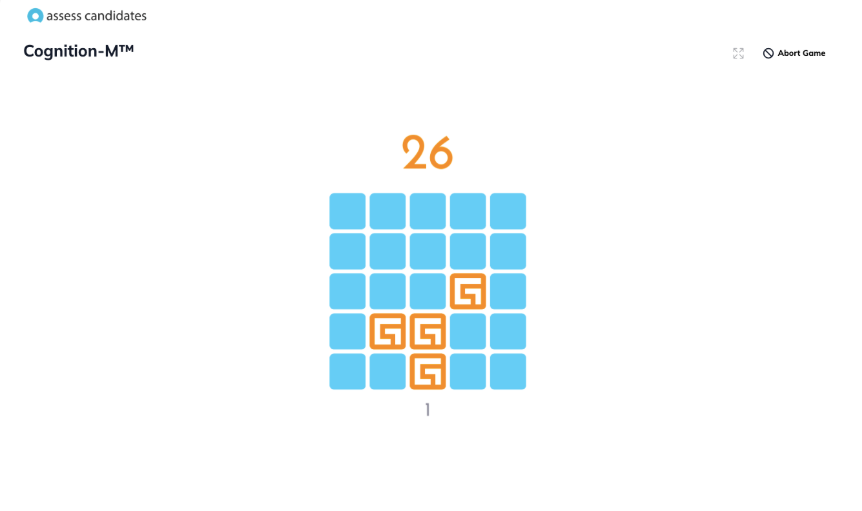
The MTA-Tray™ game involves sorting 63 colored parcels into the correct colored mailbox in a large post office in 3 rounds. Different types of mail need to be sent to the correct centers, with some awarding more points than others, and it takes around 6 minutes to complete.
The MTA-Tray™ game assessment tests candidates’ organizational, multi-tasking, and prioritization skills when dealing with multiple sources of information and tasks in the workplace. It also measures accuracy and attention to detail.
Here is what our MTA-Tray™ game assessment looks like:
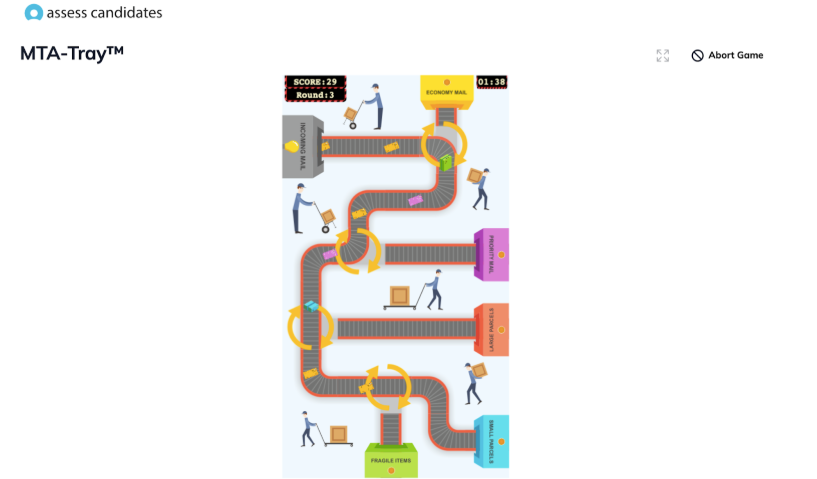
The Flanker task game assessment is based on the Eriksen and Eriksen Flanker Task (1974) and presents candidates with multiple fish in a line that are pointing in a particular direction. Using the keyboard or on-screen arrows, candidates have a couple of seconds to indicate the direction of the center ‘target’ fish, whilst ignoring the direction of other neighboring ‘distractor’ fish. There are 80 rounds in total.
The Flanker task game assessment measures candidates’ attention and attention suppression, their ability to ignore distracting irrelevant information. This correlates to how candidates might naturally be able to concentrate and analyze information in high-pressure work environments.
Here is what our Flanker task game assessment looks like:
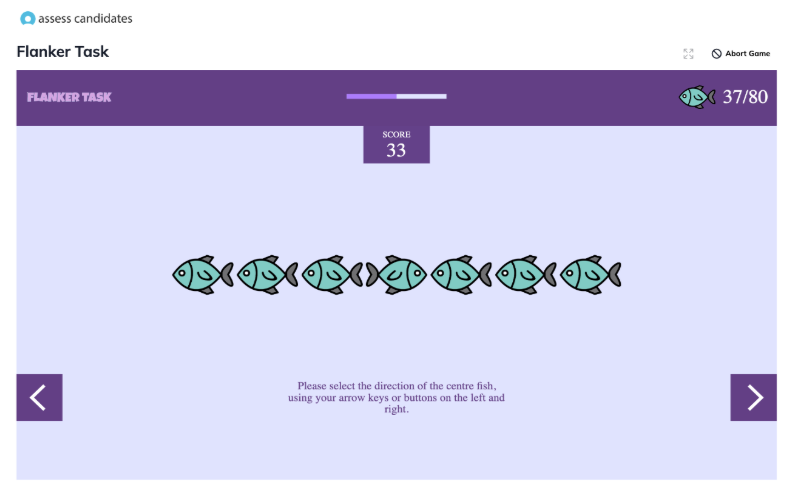
The MathBubbles™ game presents candidates with math sums in 10 bubbles per round and requires them to calculate and select the correct bubbles that correctly reach a target number. This 9-round game assessment test takes 5 minutes to complete, with each round lasting 30 seconds.
This game measures candidates’ mental arithmetic and technical ability to quickly calculate numerical sums. This correlates to how candidates might naturally handle numerical information under time pressures in the workplace.
The MathBubbles™ game assessment measures candidates’ mental arithmetic and technical ability to calculate numerical sums quickly. This correlates to how candidates might naturally handle numerical information under time pressures in the workplace.
Here is what our MathBubbles™ game assessment looks like:
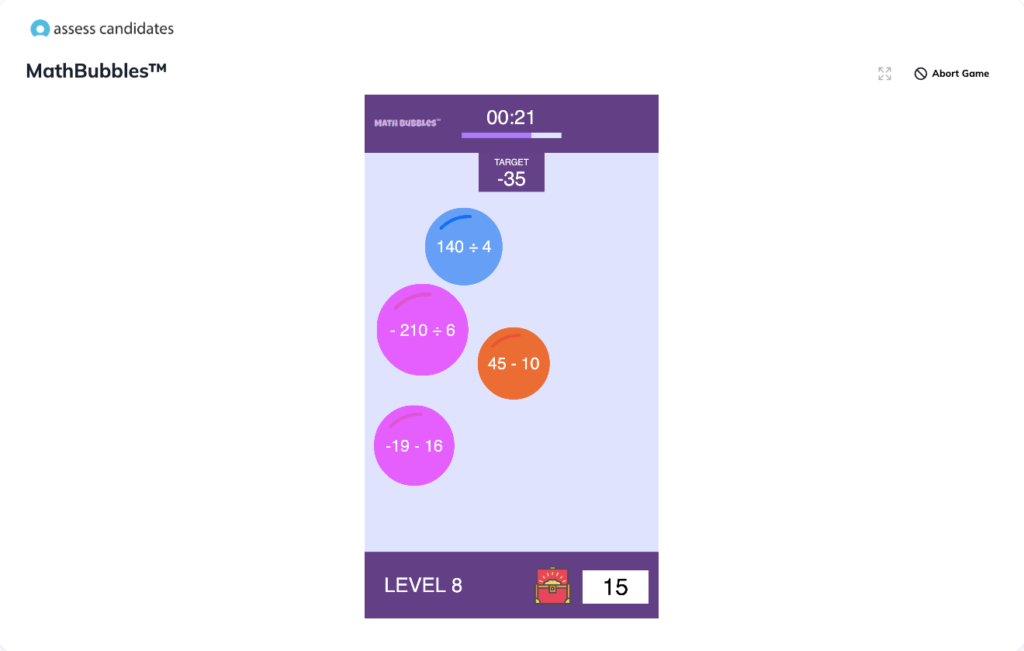
The BART game assessment requires the candidates to pump 15 balloons to collect the tokens using the‘inflate me’ button in around 5 minutes. They can later bank their total tokens at any time by clicking the ‘collect me’ button, or choose to continue pumping with the risk that the balloon could burst and they would lose all their tokens for that balloon.
Based on the Balloon Analogue Risk Task from Lejuez et al. (2002), this game test measures candidates’ preferences and personality, specifically their risk-taking, decision-making, and sociability. This correlates to how candidates might prefer to approach risks and complex decisions in the workplace.
Here is what our BART game assessment looks like:
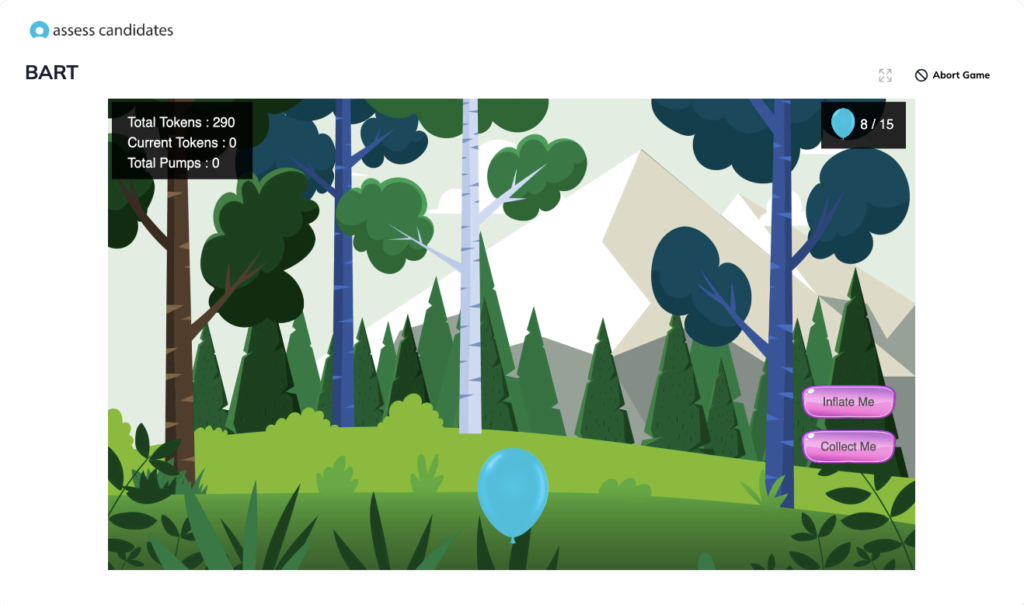
The PassCode™ game requires candidates to select the green tick once the desired digit is highlighted to crack the 5 codes for the mobile phone in total. If done incorrectly, too fast or too slow, the code is reset.
The PassCode™ game assessment test assesses candidates’ attention levels and resilience. This correlates to how candidates might concentrate, make quick, accurate decisions, and bounce back from mistakes and challenges in the workplace.
Here is what our PassCode™ game assessment looks like:
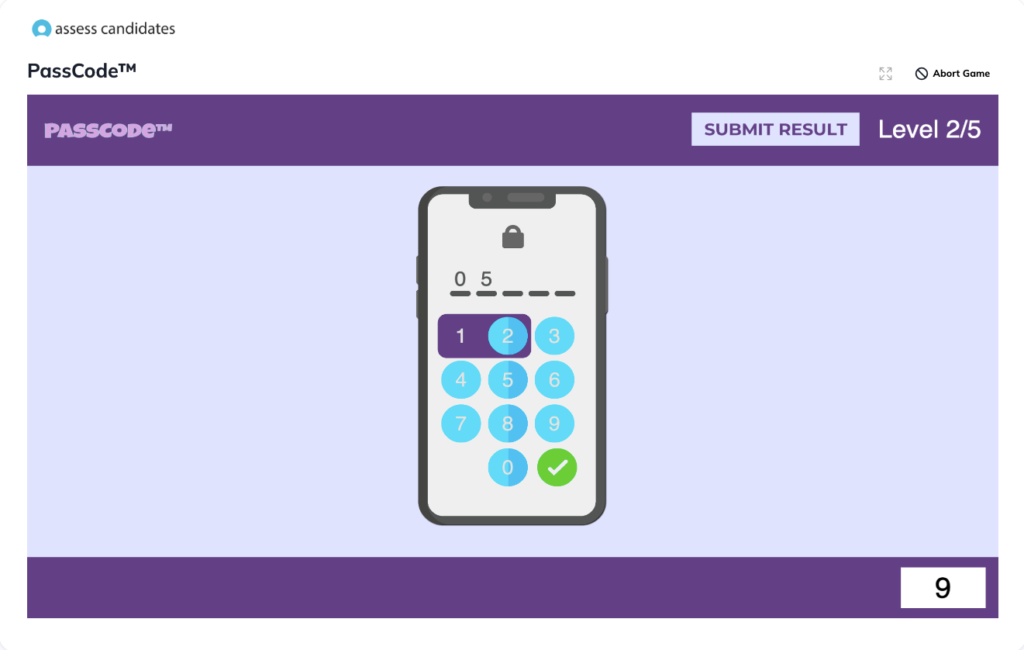
The i-EQ™ game requires candidates to accurately recognize the emotional expressions of 40 different people’s faces and body language from pictures.
The i-EQ™ game assessment test assesses one aspect of emotional intelligence and sociability. How well candidates understand and manage the emotions of others correlates to how well and naturally they communicate, empathize, and work with others.
Here is what our i-EQ™ game assessment looks like:
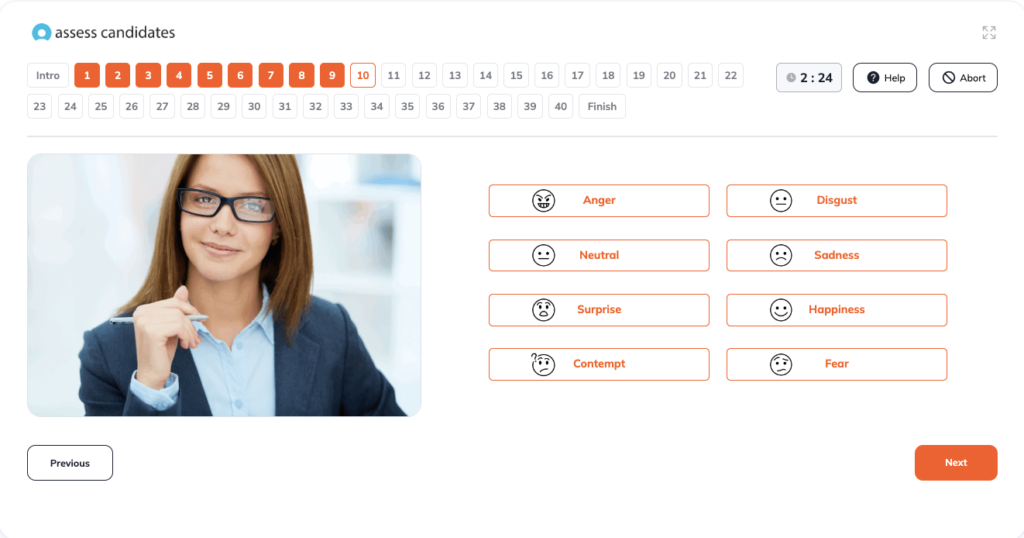
Recruit top talent with effective job skills with our game assessments. LEARN MORE
So, at what stage should we use game assessments? Let’s find out in the section below.
Most employers introduce game-based assessments during the early or middle stages of recruitment, where they help identify promising candidates before interviews.
Employers will invite applicants to take a game-based assessment online, either instead of or in combination with other online employment assessments, such as numerical, verbal, and logical reasoning tests, situational judgment tests, and/or personality tests. This is a good method for screening candidates and sifting through them before moving on to video or in-person interviews or assessment centers.
Game assessments are usually distributed online. A candidate receives a link to a pre-employment testing platform and has a dedicated period of time (usually several days) to complete the game assessment. Recruiters then review candidate results and select individuals to advance to the next round of hiring assessment.
Below is a detailed explanation of how game-based assessments can be effectively implemented at various stages of the hiring process:
Game-based assessments are a growing trend in HR and talent acquisition as they provide valuable, comprehensive insight into the potential of future hires during employee selection assessments.
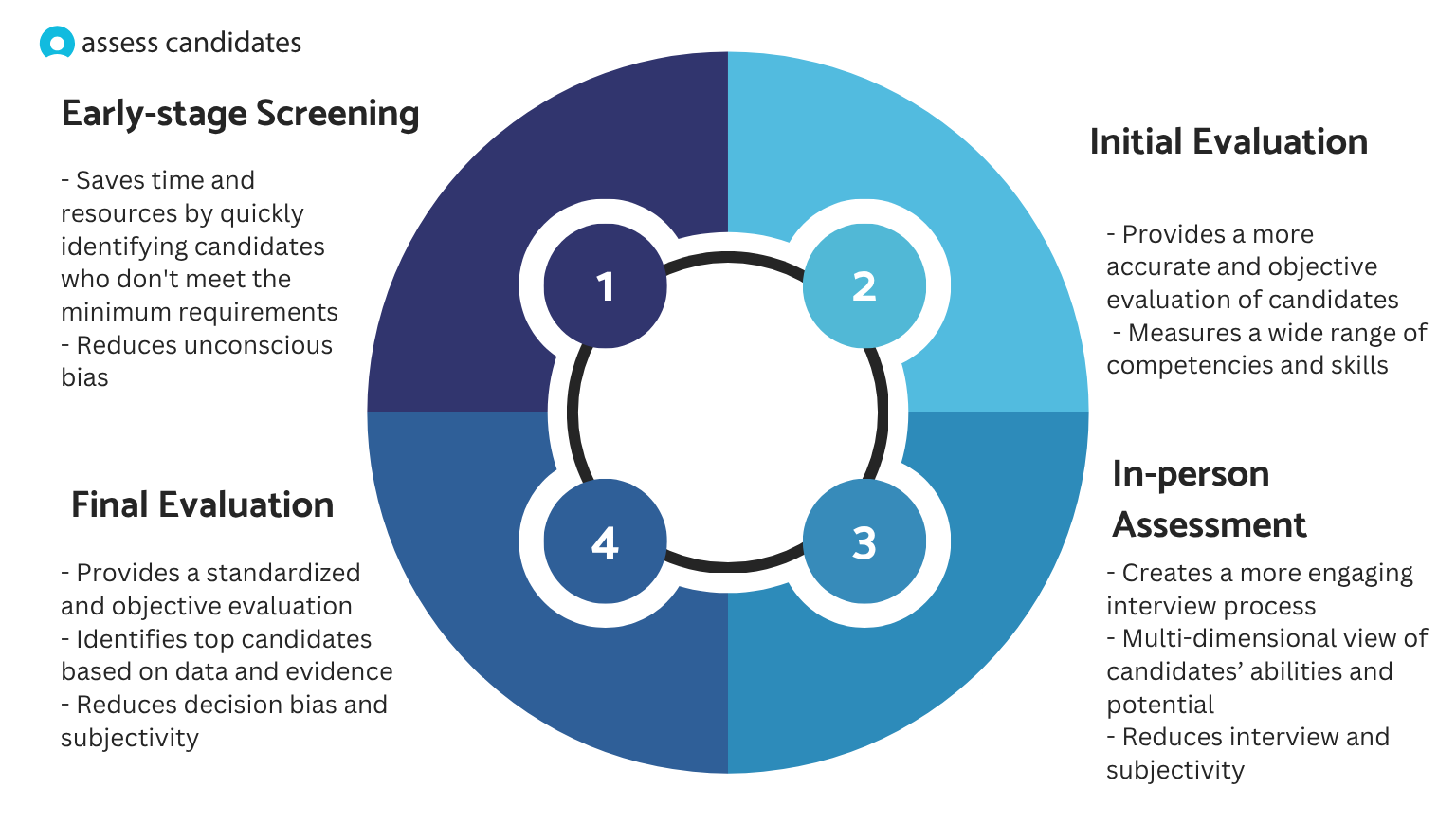
Game-based assessments are particularly effective in hiring scenarios where candidate volume, engagement, or cognitive performance are key priorities. For example:
Explore effective hiring solutions with game assessments with us. VIEW PLANS
Here are the top industries globally that use game-based assessments in recruitment:
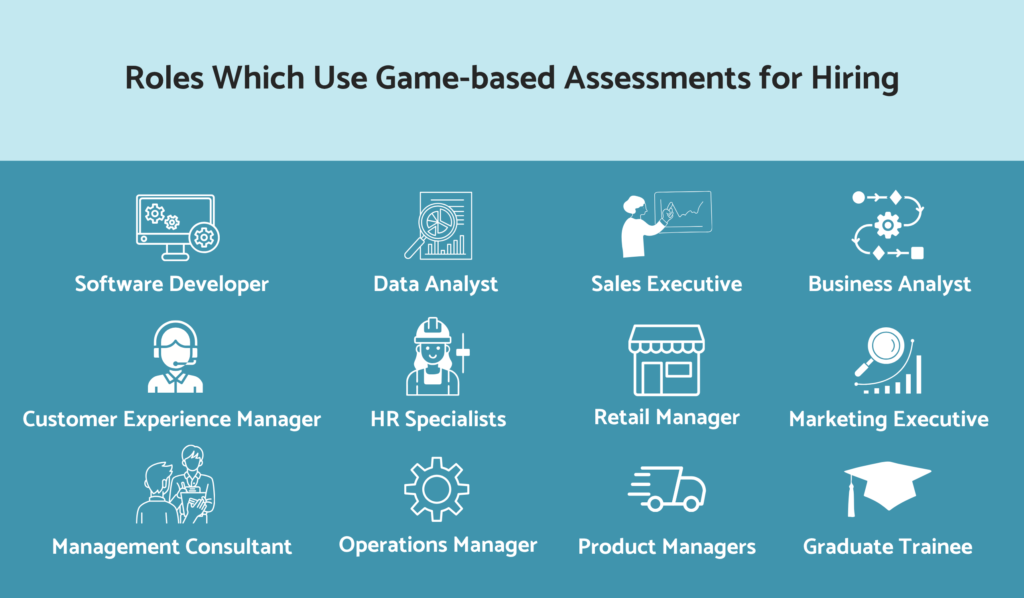
So, which employers use recruiter games frequently for the roles above? Read on to explore some top examples.
Employers across industries are adopting game-based assessments to evaluate candidate potential more objectively and at scale.
Here is a list of some of the top employers using game-based assessments for hiring:
When selecting a candidate assessment platform for implementing a pre-employment job simulation assessment test, recruiters should evaluate both the quality of the job simulation assessment tools and the overall functionality of the recruitment platform. Consider the following questions:
By addressing these questions, you can ensure the candidate assessment platform you choose for your job simulation test meets your needs and enhances your recruitment process.
Here are the top 12 game test providers to help you assess candidates’ competencies:
Start hiring with us today and select the best candidates for your role and company. HIRE FOR FREE
So, how can game assessments be used for a successful hiring process? Let’s find out below.
Game-based assessments in recruitment work best, especially in large-volume graduate hiring, where they engage candidates and measure cognitive and behavioral skills at scale. However, they are equally effective in medium and low-volume hiring for technical roles such as a software developer or a mechanical engineer, where organizations seek to assess complex problem-solving, adaptability, and decision-making.
Here is a 3-step guide to prepare an effective game-based assessment process using our talent assessment platform.
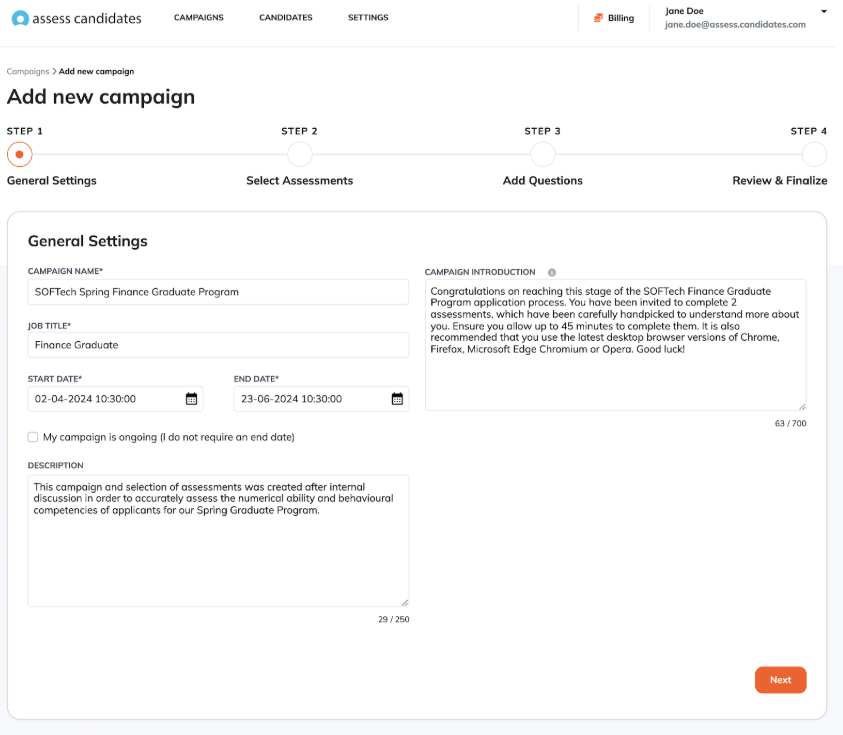
Invite candidates in a single click to complete your game assessments by individual email, CSV file upload, or public link.
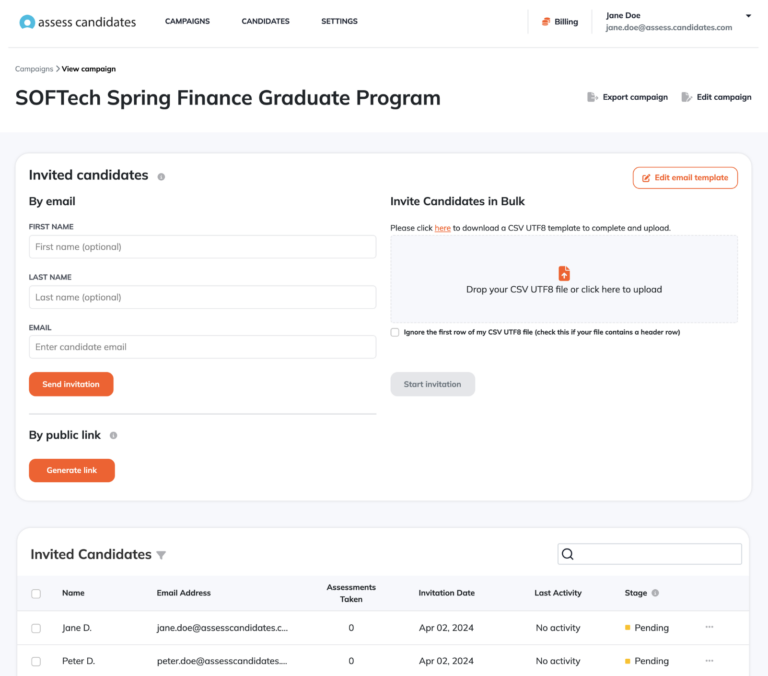
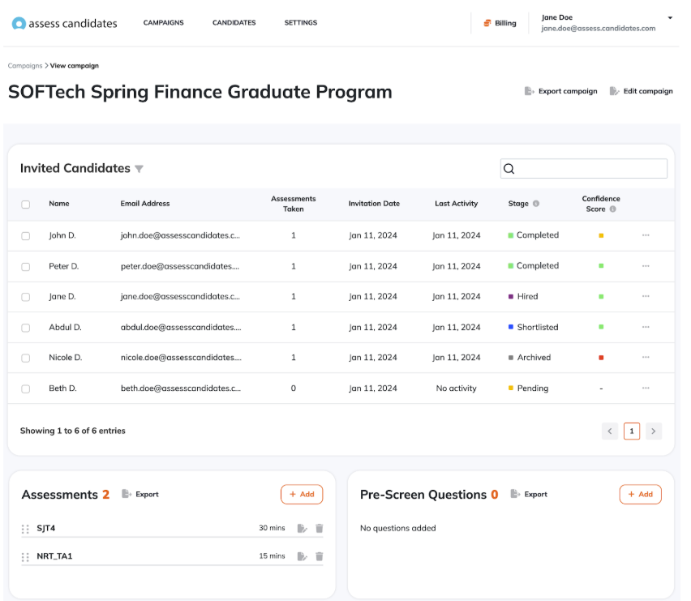
Selecting a provider with scientifically validated games is critical if you want assessment results that accurately predict workplace performance.
So, why choose us?
At Assess Candidates, we specialize in game-based assessments that use interactive tasks and challenges to measure specific cognitive skills and/or behavioral competencies, providing a more engaging and enjoyable experience for your candidates.
Here is an example of our reporting dashboard available on Assess Candidates, which will be accessible to you as a hiring manager or talent acquisition professional when assessing candidates.
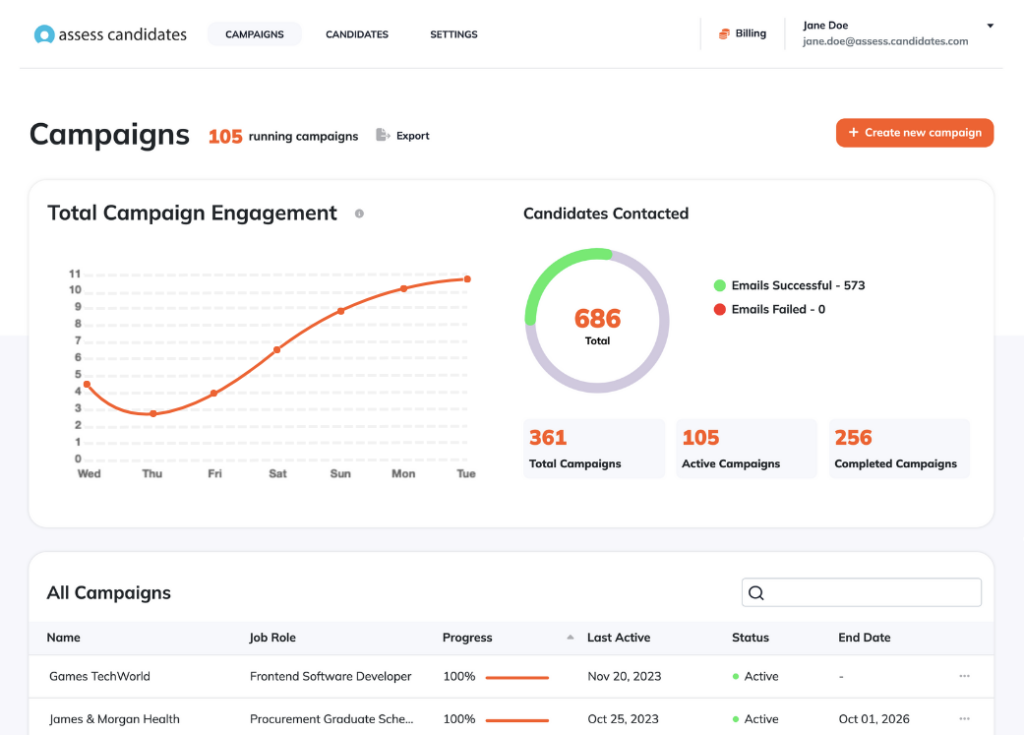
Here are the top four reasons why you should use Assess Candidates’ game-based assessments as your hiring assessments:
Before moving on to the FAQs, let’s discuss a client success story on how they finally used game assessments for success.
A mid-sized sales organization was struggling with declining revenue growth and customer satisfaction. Despite hiring candidates with strong sales records and solid resumes, the company discovered that many lacked resilience, adaptability, emotional awareness, and the ability to manage complex information flow in high-pressure sales environments. This mismatch resulted in weak client rapport, lost deals, inconsistent performance, and eroded team morale.
Over time, turnover increased, recruitment costs rose, and the company’s reputation as a desirable employer began to decline.
To resolve these issues, the company was advised to integrate game-based assessments into its hiring process alongside other assessment methods. These engaging gamified assessments would evaluate critical non-obvious traits in a more interactive and predictive way. For example:
After implementing game-based assessments, the sales company observed stronger hires with better resilience, focus, emotional awareness, and decision-making under pressure. Additionally, sales performance improved as deals closed at higher rates; teams were more consistent and adaptive. Turnover decreased as hiring precision improved, resulting in fewer mismatches. This recruitment strategy helped them minimize over-reliance on any single tool while maximizing predictive power.
Game-based assessments combine engagement, data-driven evaluation, and predictive hiring insights to help employers identify high-potential candidates more effectively. When used alongside psychometric testing, interviews, and job simulations, they contribute to more accurate and objective hiring decisions.
Interested in learning more about effective candidate assessment? Continue reading for frequently asked questions, and sign up with your email to get started.
Gamification in recruiting refers to the incorporation of gaming elements into a conventional non-game-related recruitment process. Applied strategically with the right tools and technology, this can assess candidates and make the hiring assessment process more progressive and engaging.
Psychometrics is the scientific study of measuring psychological variables, including cognition, behavior, and personality. It focuses on creating reliable and valid tests for research, education, clinical, and workplace purposes. The field ensures assessments accurately reflect individual differences and predict performance or outcomes effectively. Psychometrics also develops methods to improve measurement tools and interpret scores meaningfully across various contexts.
Training effect in psychometric tests occurs when performance improves due to repeated practice rather than actual ability. It arises from familiarity with test formats, instructions, or question types instead of true skill changes. This effect can reduce the validity of results, making score interpretation less accurate. Researchers use strategies like alternate test forms or sufficient time gaps to minimize the impact of training effects.
Game-based assessments are not suitable for highly technical or safety-critical roles requiring precision and expertise. Industries like healthcare, aerospace, and defense often need strict compliance and specialized knowledge beyond what games can assess. Traditional tests may better evaluate domain-specific skills, technical ability, and regulatory adherence, ensuring safe and reliable hiring decisions.
Yes, game assessments have made candidate profiling easy, efficient, and affordable for all employers, including SMEs. Popular providers such as Assess Candidates offer Saas (Software-as-a-Service). These include fully automated, cloud-based tests that can seamlessly integrate into existing recruitment campaigns for a smooth and efficient assessment process.
Pre-employment psychometric tests are transforming modern hiring by empowering recruiters to streamline processes, boost accuracy, and enhance the candidate experience.
With 53% of job applicants experiencing at least one negative hiring experience and traditional screening methods becoming increasingly time-consuming, difficult, and costly, employers are switching to innovative psychometric assessment tools to improve efficiency, fairness, and employer branding.
Science-backed psychometric tests play a crucial role in pre-screening candidates by measuring cognitive abilities, workplace behavior, personality traits, and cultural fit, helping to predict future job performance and potential to succeed. By implementing these assessments early in your recruitment strategy, you will save time and hiring costs whilst reducing turnover, boosting productivity, and building stronger teams.
Psychometric assessments empower you to select and hire the right candidates for your role and organization.
In this article, we will answer the following common questions about pre employment psychometric testing and provide practical solutions:
Are you a recruiter, hiring manager, or talent acquisition expert looking for answers to these questions? We have got you covered.
Let’s explore the benefits, ideal use, and how to seamlessly integrate pre-employment psychometric assessment tests into your hiring process to help you find the best candidates for your roles.
Are you ready? Let’s dive into it!
A psychometric test is a standardized assessment tool for measuring a candidate’s cognitive abilities, personality traits, and workplace behaviors. These tests objectively evaluate candidates’ strengths and weaknesses, helping to quickly and accurately predict on-the-job performance and overall suitability for specific roles and organizations.

For hiring managers and recruiters, incorporating psychometric tests into the candidate selection process is essential. These assessments offer deeper insights into a candidate’s potential, ensuring employers hire individuals who not only have the right skills and competencies for the role but also align with the company’s culture and values.
We recommend using pre employment psychometric testing across all positions and industries to make the recruitment process more accurate and effective.
Psychometric tests are commonly administered online through a talent assessment platform. They are typically timed, involve multiple-choice questions, and ask candidates to complete the assessment within a timeframe (often a few days).
In the following section, let’s dive into exploring the different types of psychometric tests and how each of them can add value to your hiring strategy.
Enhance your hiring assessment process with our full range of immersive psychometric tests. HIRE FOR FREE

Pre-employment psychometric assessments come in all shapes and forms as they assess a broad range of work-related abilities, behaviors, and traits among candidates.
Here are the 7 most popular psychometric assessments that you can choose from to ensure an effective candidate evaluation process:
Let us have a look at all the various types of psychometric tests and how they assess candidates, starting with aptitude tests.
Aptitude tests are a type of psychometrics test designed to assess a candidate’s cognitive abilities, including numerical, verbal, and logical reasoning skills. These tests provide valuable insights into a candidate’s ability to problem solve, think critically, and process information effectively.
In addition, there are aptitude tests which measure soft skills like memory, attention to detail, and learning speed.
These cognitive tests help employers to accurately predict whether candidates have the necessary skills to perform well in the role, leading to well-informed decision-making, higher-quality hires, and improved job performance.
Here are some of the most common types of aptitude tests:
Numerical Reasoning Question Example

Discover our pre-employment aptitude tests designed to identify top talent. LEARN MORE
Error-checking tests are a specialized type of aptitude test designed to evaluate a candidate’s attention to detail and accuracy when working with written or numerical data. These checking tests require the candidate to quickly compare two versions of a set of numbers or alphabetical text and accurately spot any subtle errors or discrepancies.
Checking assessments are ideal for hiring for roles that demand strong precision, meticulousness, and attention to detail, for example, clerical, administrative, and data-entry roles.
Here are the most common types of error checking tests:
Word Checking Test Question Example

Behavioral assessments evaluate candidates on their work-related behaviors – how well they perform in specific work-based scenarios. This helps predict job performance and cultural fit, especially for roles requiring strong interpersonal and decision-making skills.
The most common behavioral psychometric tests are situational judgment tests (SJTs). These assessments present candidates with realistic workplace scenarios and ask them to choose how they would rank potential responses to those situations.
SJTs measure candidates’ core behavioral competencies and strengths, such as their decision-making skills, interpersonal abilities, and practical judgment in work scenarios. Employers, therefore, use science-backed situational tests to predict how candidates navigate their role responsibilities, handle challenges, and interact with others in the workplace.
Situational Judgement Test Question Example

Workstyle personality assessments analyze a candidate’s preferences, work style, motivation, and values. By evaluating specific personality traits, behaviors, and interpersonal tendencies, these tests help predict how a candidate will fit within the company culture, collaborate with teams, and handle job-specific challenges.
If you’re looking to hire for roles that require strong teamwork and adaptability, personality questionnaires are your go-to.
Recruiters tend to use the following 3 main types of personality tests globally for their recruitment processes:
Employers globally also use integrity tests that, as the name suggests, allow them to evaluate candidates’ integrity with workplace behavior and work ethics.
Personality Test Question Example

Game-based assessments are interactive psychometric tests that evaluate a candidate’s cognitive skills, behaviors, preferences, and adaptability. These assessments measure key attributes such as risk-taking, decision-making, problem-solving, emotional intelligence, attention to detail, resilience, memory, and organization, providing a more holistic and immersive alternative to traditional testing methods.
Typically, game-based assessments require candidates to complete a series of interactive tasks or challenges incorporating game-like elements ranging from simple puzzles to more complex simulations. This innovative testing approach evaluates candidates’ performance in a fun, interactive way, enhancing candidate engagement whilst providing employers with deeper insights into their abilities and potential.
Let us have a look at some of the most common types of game assessments:
Risk-taking Game-based Assessment Example

Enhance your hiring assessment process with our full range of immersive game-based assessments. LEARN MORE
Coding tests help employers assess a candidate’s proficiency in specific programming languages, frameworks and their problem-solving abilities when hiring for software development roles. Candidates are often required to write clean, efficient code or identify and fix potential coding errors using their debugging skills.
By simulating real-world coding challenges, employers can effectively gauge a candidate’s technical expertise and problem-solving approach.
Let us discuss the common types of coding tests:
Language proficiency tests assess a candidate’s ability to communicate effectively in a given language. They are essential in hiring for roles that require strong communication skills, especially in multilingual settings or roles requiring extensive client interactions.
Language proficiency tests come in the following formats:
A detailed analysis of the types of psychometric tests from an expert candidate assessment provider like Assess Candidates will give you insights into which psychometric assessments are the most suitable for your hiring campaign.
Now that we’ve covered the different types of psychometric tests, it’s helpful to understand what these tests measure. Let’s get into it.
Psychometric assessments measure a candidate’s key cognitive skills, work-related behaviors, and personality traits relevant to the role in order to help employers predict their job performance and potential.

Here are the key abilities that psychometric tests assess:
Hire skilled, motivated talent who align with your company using our psychometric tests. HIRE FOR FREE
Now that we have an idea of what exactly psychometrics assessments measure, let’s delve into the reasons why employers use psychometric tests for their hiring campaigns and how you can use them too.
Psychometric tests are a widely favored tool for pre-employment assessment and candidate selection. In modern hiring practices, recruiters prefer to use psychometric tests for a data-driven, scientific evaluation of candidate’s personalities, cognitive abilities, behaviors, and cultural fit.
Psychometric assessment tests deliver objective, reliable insights that guarantee a fair and unbiased assessment of every candidate. This is unlike traditional hiring methods, which rely on subjective impressions and can lead to a biased approach to hiring.
Psychometric tests have been used by employers for over 100 years. Recent surveys suggest that 75% of The Times Top 100 companies, plus around 70% of UK companies with over 50 employees, utilize some form of psychometric testing as part of their recruitment process.
Research shows that organizations using psychometric testing in hiring gain substantial advantages, including simplified recruitment and significant cost savings. These assessments enhance hiring accuracy, minimize unconscious biases and discrimination, improve job performance predictions, and ensure consistency across roles.
Psychometric tests are a great way to filter out the candidates whose personalities and cognitive abilities do not align with the job early on in the hiring process. This makes them especially valuable for graduate recruitment and high-volume hiring.

Here are the benefits of psychometric testing in recruitment:
Psychometric tests provide an objective assessment as they are standardized and unbiased, reducing the influence of personal conscious or unconscious biases that can arise during CV screening and traditional interviews. Psychometric assessments are scientifically designed to assess specific aptitude skills and personality traits over subjective factors related to background, education, age, gender, ethnicity, or race, ensuring a fair and consistent evaluation.
This is especially beneficial for large organizations, which require consistent and impartial standards to assess candidates across various locations and comply with strict legal policies.
Pre-employment psychometric tests help predict the future performance of candidates by assessing cognitive abilities, personality traits, and emotional intelligence, leading to better job fit and long-term performance. This has been backed by numerous studies that argue the strong predictive validity of psychometric testing makes it an effective tool for determining potential job performance.
The leading research on this subject was conducted in 1983 by Schmidt and Hunter. It analyzed research over 85 years and concluded that the correlation between cognitive ability testing and job performance stood at 0.51. It meant that the test scores of these tests could predict approximately 26% of the variance in job performance.
Pre-employment psychometric testing filters out unsuitable candidates early in the process, saving time and resources for both employers and candidates. They allow only those candidates who match the cognitive and personality profiles required by the job to move forward. This means the organization can streamline their focus to only those high-potential candidates and save a considerable amount of time in the hiring process.
A report from the Society for Human Resource Management (SHRM) indicates that pre-employment assessments reduce time-to-hire by up to 25%, a key factor in competitive talent markets (SHRM, 2022).
Moreover, psychometric tests help cut the high costs associated with large-scale recruitment. Administered online and typically priced either per test or via a flat fee, these assessments offer a low cost per candidate, making them a cost-effective selection solution. By filtering candidates early, online psychometric testing reduces the number of candidates invited to more expensive hiring methods, such as in-person interviews or assessment centers.
Psychometric tests help to choose the candidates whose skills, behaviors, and personality align with the role and organizational culture. This ensures longer employee tenure, better employee engagement and satisfaction, and thus a lower turnover rate.
Assessments such as personality and emotional intelligence assessments in particular ensure organizations hire candidates that align with the company. These candidates are more likely to succeed and prevent the risk of re-hiring – a major financial and operational burden.
Studies estimate that psychometric tests reduce turnover rates by about 30%, largely because of improved job satisfaction and better role alignment.
Online psychometric tests expand the candidate pool by allowing individuals to participate who may not be able to attend in-person interviews or assessments. Recruiters can also adjust the cut-off scores for these tests to diversify their talent pool, addressing specific skills or gaps within their existing team. This strategy promotes a more diverse and inclusive workforce.
Pre employment psychometric testing uses reliable data to ensure that all candidates are evaluated using the same criteria, promoting consistency and fairness. They allow companies to establish standard criteria across similar roles so that each candidate has the same competency benchmark. This data-driven consistency plays a significant role in building stronger teams and aligning employees’ capabilities with the organizational culture.
Psychometric tests are designed to be easily accessible and user-friendly for candidates. The questions are straightforward, and the styles vary, presenting different numerical data, verbal information, sequences, shapes, images, challenges, and rules to keep candidates engaged. In particular, game-based assessments aim to reduce candidate anxiety by testing candidates in a fun, interactive way. This ensures a seamless and positive candidate experience.
Unlock the benefits of psychometric testing with our user-friendly talent assessment platform. HIRE FOR FREE
However, similar to any other assessment methodology, the use of pre-employment psychometric assessments also has some disadvantages. Let’s have a look at them in the next section.
Pre employment psychometric testing measures cognitive skills, aptitude, and personality but it cannot assess crucial aspects like creativity, hands-on practical skills, or job-specific expertise holistically.
Solution: Combine assessments with other selection methods, such as structured interviews, assessment centers, job simulations, and reference checks to gain a more comprehensive and accurate understanding of the candidate’s capabilities.
Psychometric testing can entice candidates to manipulate results by selecting answers they think will be more favorable, particularly in personality tests.
Solution: To reduce candidate manipulation in psychometric tests, use forced-choice formats, time limits, adaptive testing, and situational judgment tests. Randomize questions and combine tests with interviews or work samples. Assess Candidates’ personality test includes a social desirability scale to flag overly favorable or critical responses, ensuring more authentic results.
Pre-employment psychometric tests can also be manipulated by candidates cheating especially since the increased use of technology in this space.
Solution: To reduce candidate manipulation in psychometric tests, use forced-choice formats, time limits, adaptive testing, and situational judgment tests. Randomize questions and combine tests with interviews or work samples. Assess Candidates’ personality test includes a social desirability scale to flag overly favorable or critical responses, ensuring more authentic results.
The results of psychometric assessments require professional interpretation by trained HR specialists to avoid misinterpretation, which can lead to poor hiring decisions.
Solution: Train HR specialists in your organization to accurately interpret the results of psychometric assessments and invest in training programs and expert consultancy from assessment providers such as Assess Candidates.
Psychometric assessments can trigger test anxiety in some candidates, directly affecting candidate performance. Anxiety can narrow their focus, making it harder to hold information in the working memory and process it effectively.
Solution: You can effectively help prevent test anxiety for candidates by encouraging candidates to practice psychometric tests before the actual assessments.
Psychometric tests can be extremely beneficial in all stages of the hiring process. Let us discuss at what stages in the section below.
Depending on the organization, hiring processes can be long and consist of several different stages. Recruiters can use psychometric tests at strategic points throughout the recruitment process to dive deeper into candidates’ work-related personalities, cognitive skills, and behaviors whilst streamlining the process. However, online psychometric tests are particularly effective at the initial screening stages to assess these abilities early on.
Psychometric tests are typically used after the initial job application to help streamline candidate selection. These assessments provide objective data to help quickly filter out unsuitable candidates based on cognitive abilities, alignment with the company’s values, and personality traits. By integrating psychometric testing early in the hiring process, employers can save time and resources and reduce unconscious bias for a fair, efficient, and data-driven selection process.
Psychometric assessments can be implemented directly before the first interview stage. This allows recruiters to gain deeper insights into each candidate’s strengths, thinking style, skills, and work preferences, allowing recruiters to tailor interview questions and explore key attributes in greater depth. This enables a more targeted and insightful interview process and more informed hiring decisions.
For example, you can get insights from a candidate’s cognitive test results regarding their problem-solving capabilities. On the other hand, a personality test can highlight adaptability or teamwork orientation. Recruiters can then use these insights during interviews to further assess and verify job fit.
Psychometric tests can be used for interviews to guide further discussion, especially for specialized and senior roles. We recommend using psychometric test questions as structured interview questions, allowing recruiters to thoroughly evaluate a candidate’s full potential.
In the final stages, psychometric assessment tests help recruiters make data-backed final decisions by standardizing evaluations, especially for senior and technical roles. These tests ensure a structured, consistent, and unbiased hiring decision-making process, helping to identify the best-fit candidate for the role.

Employers can also leverage pre employment psychometric testing internally to identify candidates for promotion and developmental opportunities. These tests offer valuable insights into employees’ strengths, potential, and areas of growth, allowing employers to create targeted learning and development strategies that foster career progression.
A study by the University of Cambridge presented that when pre-employment psychometric assessments were used alongside regular performance reviews, biases in promotion decisions were reduced by nearly 40%.
When you use a psychometric assessment for hiring, you ensure a well-rounded, reliable evaluation. This helps you build a high-performing and compatible team for your organization.
Now that we have a clear understanding of the stages where psychometric tests can enhance the hiring process, let us consider best practices for integrating these assessments effectively.
Psychometric testing unleashes its full potential and benefits when you follow several best practices in your recruitment strategy. Implement these 3 simple steps to guarantee accurate, transparent, and unbiased candidate assessments that are beneficial not only for you, as a recruiter, but also for your candidates.


Now that we have had a look at the best practices for implementing psychometric tests into your recruitment strategy, we move onto discussing when we recommend giving your candidates a psychometric test.
Psychometric tests help employers assess candidates beyond resumes by measuring cognitive abilities, personality traits, and workplace behavior. These tests apply to a wide range of roles, from entry-level positions to senior leadership. By tailoring assessments to job requirements, employers can select candidates who fit both the role and the company culture.
In this section, we highlight when employers should use psychometric tests for hiring.
Psychometric testing is particularly beneficial for highly skilled positions or managerial roles, where a candidate’s ability to solve complex problems and make sound decisions is essential for success.
Employers who integrate psychometric tests into their hiring strategy ensure a data-driven, unbiased selection process that improves retention and builds a high-performing workforce.
Moving forward, let’s take a look at the industries and roles that use psychometrics tests for recruitment.
Psychometric tests are essential in recruitment for a variety of industries and roles due to their ability to evaluate a broad range of cognitive skills and behaviors, like analytical thinking, logical reasoning, verbal comprehension, and problem-solving. Here are the top 7 industries and roles where psychometric tests are particularly beneficial:
Integrating psychometric testing in recruitment and selection is vital in these industries, ensuring that candidates have the cognitive skills, behaviors, and personality traits required to contribute to the organization’s success.

We can see how psychometric tests can be applied to a wide variety of roles across various industries. This is because these roles require certain skills like adaptability, problem-solving, analyzing, or interpersonal skills, which psychometric tests can help reveal. This makes psychometric tests a powerful and flexible tool to suit your hiring needs and accelerate your recruitment process.
Now that we have explored the various roles and industries that use psychometric tests, let us discuss the employers that use psychometric tests for hiring.
Psychometric assessments are a standard component of recruitment for large multinational corporations. Additionally, Small and Medium-sized enterprises (SMEs) and startups are increasingly utilizing psychometric tests to enhance the effectiveness and precision of their hiring processes.
Below are some of the leading employers using pre-employment psychometric testing for hiring:
Now, let us discuss whether psychometric tests are useful for small and medium-sized enterprises (SMEs).
Traditionally, most SMEs have overlooked the use of psychometric tests in their hiring process due to the perceived infrastructure challenges associated with pre-employment psychometric assessments.
SMEs usually do not have the resources to implement in-house pre-employment testing, and this is why they have found it more challenging to integrate these tests. However, the emergence of Saas (Software-as-a-Service) has significantly solved this problem.
Today, the majority of businesses use online pre-employment assessment tools and psychometric tests from top test providers like Assess Candidates. Assess Candidates provide pre-employment assessment tests that are affordable and require no additional infrastructure from the employer. Our recruitment assessments are fully automated, cloud-based, and can be seamlessly integrated into existing recruitment campaigns. This makes them swift and easy to deploy.
With the availability of affordable candidate testing software and the ease of incorporating psychometric and aptitude assessments into current recruitment workflows, smaller businesses can now leverage advanced evaluation tools that were once primarily accessible to larger organizations.
A 2017 survey from SHRM found that nearly one-third (32%) of respondents were using personality and behavioral assessments when filling executive-level roles, and 28% of respondents deployed them for middle-management openings.
When selecting a candidate assessment platform for implementing a psychometrics test, you, as a recruiter, should assess both the quality of the assessment tools and the overall functionality of the recruitment platform. Consider the following questions:
By considering these questions, you can ensure the candidate assessment platform you choose for your psychometric test meets your requirements and improves the quality of your recruitment process.
Here are some pre-employment screening providers to help you assess candidates:
Now that we know about the top 10 psychometric test providers, let’s explore the reasons why top companies use Asses Candidates’ psychometric testing for hiring.
At Assess Candidates, we specialize in various pre-employment assessments, including psychometric tests, and can design customized recruitment campaigns to suit the specific hiring needs of any business.
Let’s take a look at the campaign reporting dashboard that you, as a hiring manager or talent acquisition expert, will find on the Assess Candidates platform.

Assess Candidates’ psychometric tests are designed by chartered scientists, psychologists, and psychometricians with decades of experience designing solutions for companies like SHL and IBM Kenexa.
We provide you with psychometric tests that have gone through rigorous testing and validation to measure a candidate’s cognitive skills, personality traits, and numerical aptitude accurately.
Our tests have consistently proven successful in hiring the top candidates who best fit the organization’s needs across various industries.
Assess Candidates’ user-friendly and easy-to-use platform makes it highly convenient for employees to analyze data and make informed decisions. Whether the recruiters want to view a candidate’s performance or filter, rank, compare, and shortlist candidates, we have got it all covered for you!
Additionally, we offer a talent assessment platform that includes the option to integrate with your existing ATS for a seamless experience.
Assess Candidates offers candidates a user-friendly platform that can be accessed by any electronic device. Moreover, our platform is designed to be aesthetically pleasing and secure to ensure a positive candidate experience that candidates associate with your brand.
Assess Candidates includes support for disabled and visually impaired individuals. We ensure that our assessments, such as psychometric tests, have accessibility options to increase the time limit, include zoom functionalities, and ensure the use of accessible color schemes and images in compliance with Web Content Accessibility Guidelines (WCAG), guaranteeing compatibility with screen readers.
Now, let us have a look at a practical client application story that demonstrates how psychometric tests transformed their hiring process.
A leading FMCG company struggled with high employee turnover and low retention. Despite receiving strong applications, their hiring process failed to assess long-term fit. As a result, poor hiring decisions led to disengaged employees, frequent resignations, and rising recruitment costs. The company needed a structured approach to hiring and retaining the right talent.
We introduced Assess Candidates’ psychometric assessments early in the hiring process to evaluate personality traits, work styles, and cultural alignment. With our platform, the company is able to:
The FMCG company reduced turnover, improved retention, and built a more engaged workforce. This structured, data-driven hiring process helped them stand out as a top employer in the industry.
Interested in getting the latest insights and advice on candidate assessment? Keep reading for frequently asked questions, and sign up below with your email to get started.
Yes, scientifically validated psychometric tests are reliable, as they objectively measure cognitive abilities, personality traits , and behaviors relevant to job performance. However, their effectiveness depends upon factors like test validity, consistency, and how well they are integrated into the hiring process.
Psychometric tests include questions on logical reasoning, numerical aptitude, verbal reasoning, and situational judgment, as well as personality questions. The type of question depends on the assessment and what the recruiter is looking to evaluate.
Psychometric tests can have certain limitations as well. They may not capture a candidate’s full potential (especially for creative roles), are open to candidates cheating or providing socially desirable answers, and may favor certain cultural backgrounds. This is why we recommend combining psychometric assessments with other hiring tools and skilled interpretation for a holistic and reliable approach.
The validity of a psychometric test varies, but it is generally considered accurate for 6-12 months, depending on the role. Some experts recommend reassessing personality traits every 12–24 months if significant role changes occur.
Psychometric tests are highly accurate in predicting job performance, especially when properly validated and combined with other assessments like structured interviews. They can accurately predict job performance up to 26%. However, the predictive validity can also vary by job type and context.
Aptitude tests are increasingly used in modern recruitment to assess a candidate’s core abilities beyond their CV. These assessments measure general cognitive skills, including numerical and verbal reasoning, problem-solving, critical thinking, and the capacity to learn and adapt to new situations.
Depending on the type of aptitude test, candidates may encounter numerical reasoning questions, verbal comprehension exercises, abstract pattern recognition, and scenario-based problem-solving. Each question type aims to evaluate how quickly and accurately a candidate can analyze information, think logically, and make sound decisions under pressure.
By emphasizing reasoning, analysis, and decision-making skills, aptitude tests allow employers to identify individuals who can manage complex tasks and perform effectively under pressure. This supports data-driven hiring decisions and helps select candidates with strong growth potential, contributing to building resilient, high–performing teams in dynamic work environments.
Keep reading to explore how aptitude tests can help you select top talent.
Now that we’ve summarized what this article covers, let’s find out what an aptitude test is.
An aptitude test or cognitive ability test is a type of psychometric test that measures a candidate’s natural abilities, cognitive skills, and potential to succeed in specific areas such as numerical, verbal, logical, or spatial reasoning. These tests mainly focus on evaluating how well someone can learn, adapt, and solve problems, making them a valuable tool in recruitment.
Employers often include aptitude tests in the pre-employment hiring process to assess candidates’ technical abilities, critical thinking, and overall suitability for the role, helping them make well-informed decisions when selecting the best-fit applicants.
Did you know? According to a report by Harvard Business Review, 76% of organizations with more than 100 employees rely on assessment tools such as aptitude tests for external hiring.
Enhance your hiring accuracy with our scientifically validated cognitive aptitude tests. HIRE FOR FREE
In the following section, we will take a look at the different types of aptitude tests used in recruitment.
Aptitude tests for recruitment come in various forms, each designed to evaluate specific cognitive abilities and skills. They measure numerical, verbal, logical, and abstract reasoning, as well as problem-solving and learning potential, giving employers a well-rounded view of a candidate’s strengths and suitability for the role.

The following are the main types of aptitude tests used during the hiring process:
A numerical reasoning test is a pre-employment numerical test that measures a candidate’s ability to interpret data, analyze numbers, and draw accurate conclusions from charts, tables, or graphs.
The following are some of the major skills measured by numerical reasoning tests:
Let’s take a look at one of the example Assess Candidates’ off-the-shelf numerical reasoning test questions:
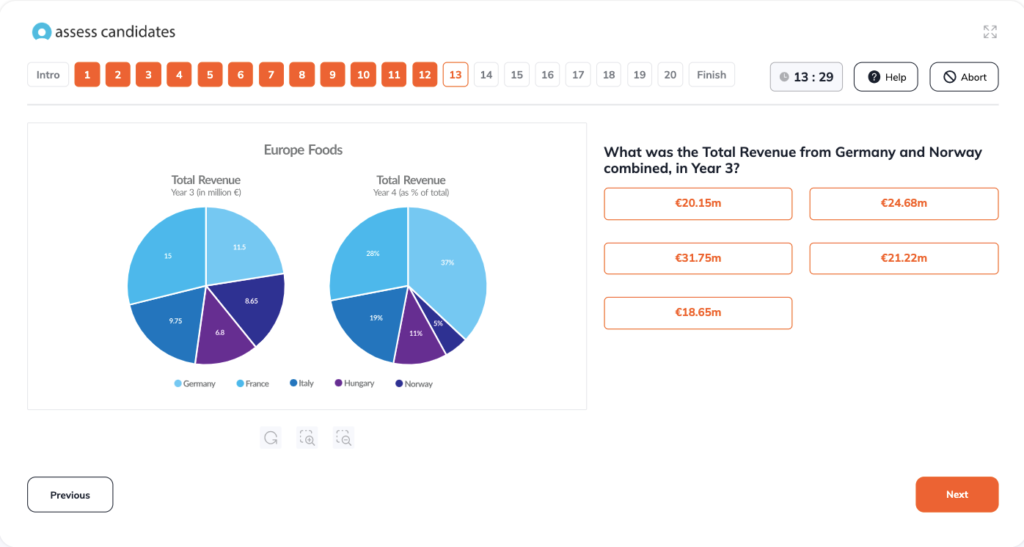
A verbal reasoning test or verbal aptitude test is a type of pre-employment assessment that measures a candidate’s ability to comprehend, analyze, and interpret written information.
The following are some of the major skills measured by verbal reasoning tests:
Let’s take a look at one of the example Assess Candidates’ off-the-shelf verbal reasoning test questions:
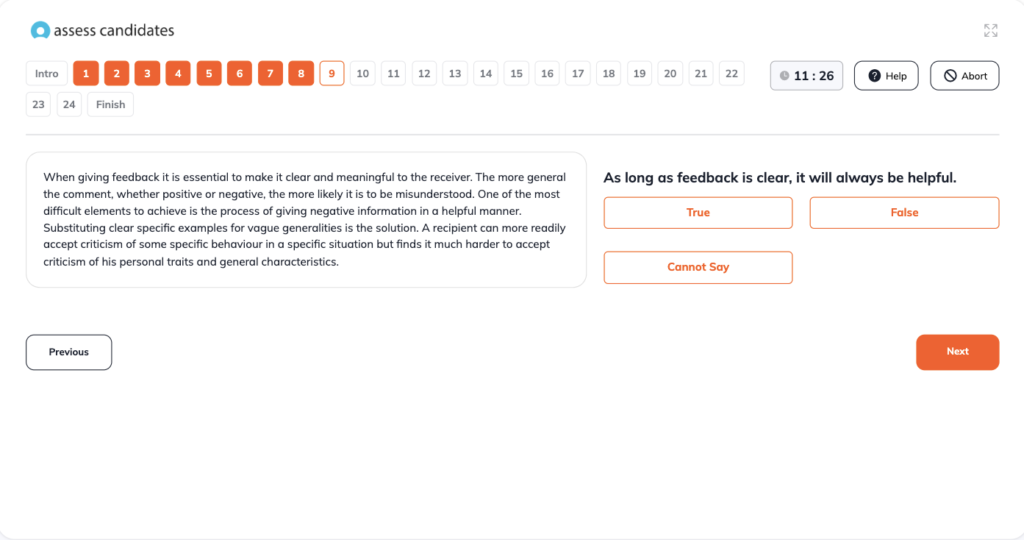
A logical reasoning test, or logical test, is a pre-employment assessment that evaluates problem-solving skills by analyzing abstract information, spotting patterns, and drawing conclusions.
The following are some of the major skills measured by logical reasoning tests:
Let’s take a look at one of the example Assess Candidates’ off-the-shelf logical reasoning test questions:
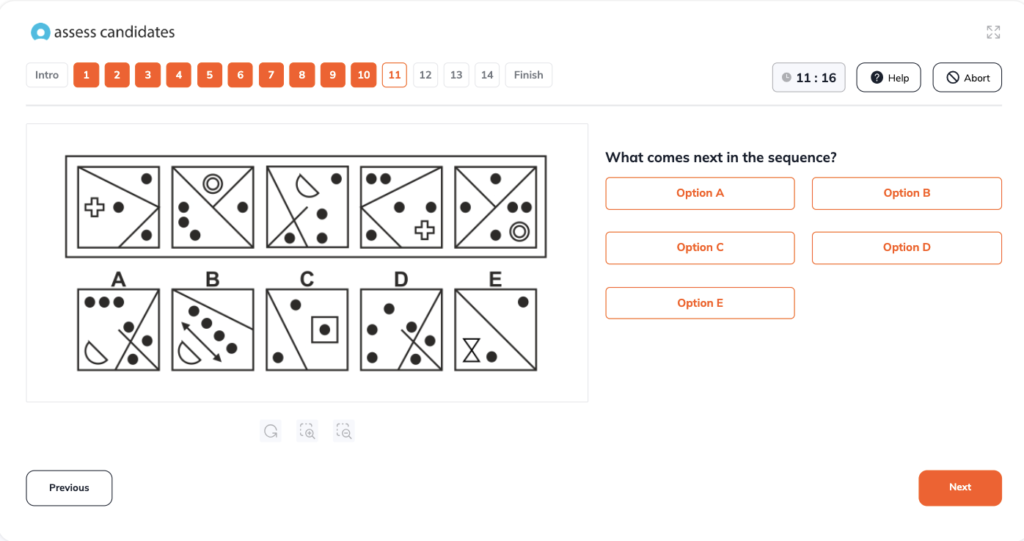
An abstract reasoning test is a widely used form of psychometric assessment in recruitment that measures a candidate’s ability to solve problems, grasp new concepts, and identify patterns or relationships in visual information.
The following are some of the major skills measured by abstract reasoning tests:
Let’s take a look at one of the example Assess Candidates’ off-the-shelf abstract reasoning test questions:
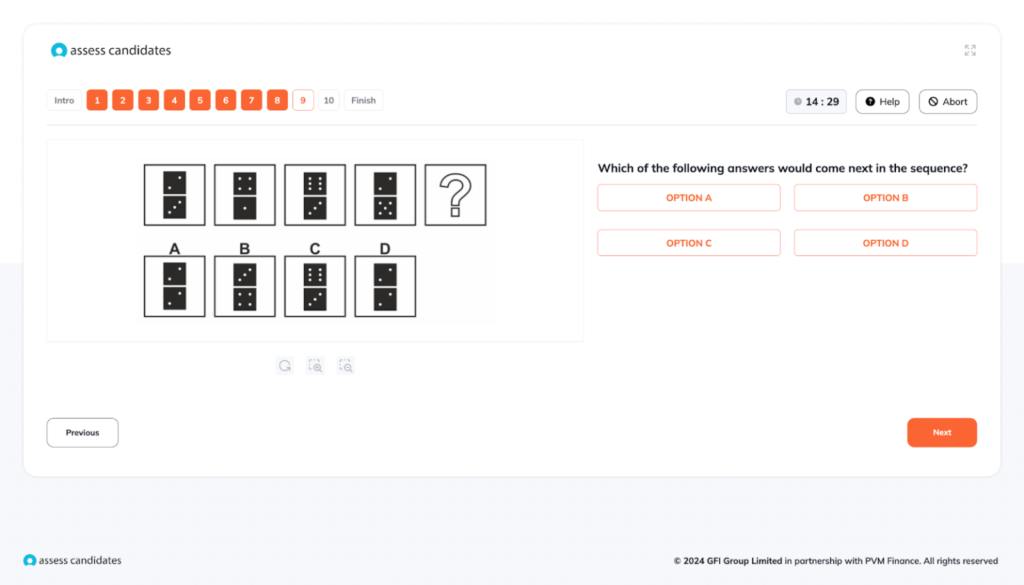
A diagrammatic reasoning test is a pre-employment cognitive aptitude test that evaluates a candidate’s ability to interpret visual information, apply logic, and solve problems using shapes, symbols, and patterns.
The following are some of the major skills measured by diagrammatic reasoning tests:
Let’s take a look at one of the example Assess Candidates’ off-the-shelf diagrammatic reasoning test questions:

A spatial reasoning test, also called a spatial awareness test, is a pre-employment assessment that measures a candidate’s ability to interpret and manipulate 2D and 3D shapes, recognize patterns, and visualize object transformations.
The following are some of the major skills measured by spatial reasoning tests:
Let’s take a look at one of the example Assess Candidates’ off-the-shelf spatial reasoning test questions:

A situational judgment test (SJT) is a pre-employment behavioral test that assesses how candidates handle realistic workplace scenarios. It measures practical judgment and key competencies to determine role suitability.
The following are some of the major skills measured by situational judgment tests:
Let’s take a look at one of the example Assess Candidates’ off-the-shelf situational judgment test questions:
Critical reasoning tests, also called critical thinking tests, are pre-employment aptitude assessments that measure a candidate’s ability to analyze information and draw logical, well-reasoned conclusions.
The following are some of the major skills measured by critical reasoning tests:
Let’s take a look at one of the example Assess Candidates’ off-the-shelf critical reasoning test questions:
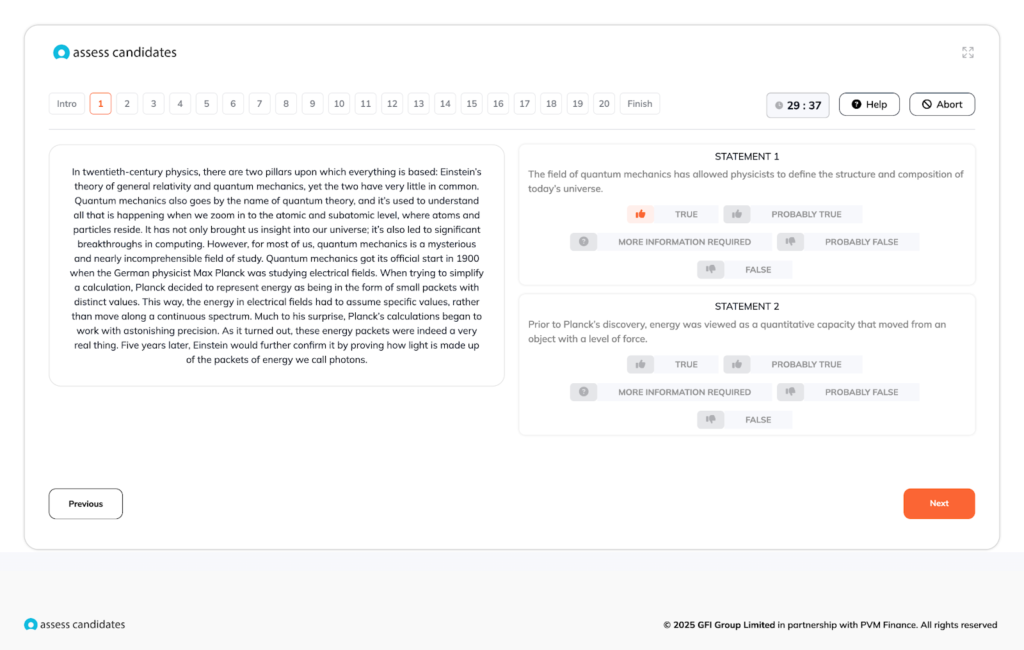
To get answers to all the questions mentioned in the images above, head down to the end of the article.
Discover our aptitude tests to identify top candidates with exceptional problem-solving and reasoning skills. LEARN MORE
In the following section, we will look into the importance of aptitude tests in the hiring process.
Aptitude tests are an essential part of modern recruitment, enabling employers to look beyond resumes and interviews to objectively evaluate candidates’ core skills and potential. They deliver reliable insights into problem-solving, reasoning, and learning ability, which are the key indicators of workplace performance and long-term success.

Aptitude tests standardize evaluation by measuring every candidate against the same criteria. They minimize unconscious bias in interviews and highlight skills and potential over background, education, or connections.
Aptitude tests directly measure problem-solving, reasoning, and analytical skills, making them stronger predictors of workplace performance than resumes or interviews that only showcase past achievements or soft skills.
Recruitment demands significant resources, especially when recruiters must review large volumes of applications. Aptitude tests streamline the process by filtering out unsuitable candidates early, saving recruiters valuable time and cutting hiring costs.
By removing unfit applicants at the start, HR teams focus their efforts on candidates with the highest potential, boosting efficiency throughout the hiring cycle.
Aptitude tests assess a wide range of cognitive skills, including numerical, verbal, logical, and abstract reasoning, to ensure that only candidates with the right capabilities move forward. They enable better hiring decisions by selecting candidates who not only meet basic requirements but also show adaptability and strong learning potential.
As a result, employees perform effectively from the start, need less training, and deliver greater long-term value to the organization.
Aptitude tests measure ability rather than relying solely on education or experience, giving candidates from diverse backgrounds an equal opportunity. This helps organizations build inclusive teams with broader perspectives.
While aptitude tests offer numerous advantages, it’s equally important to consider certain factors before using them in the selection process.
Solution: Combine game-based assessments with traditional aptitude tests or personality questionnaires. This creates a more engaging experience and reduces anxiety while still measuring critical abilities.
Solution: Customize tests to align with real job challenges, or pair them with work sample tests for greater relevance.
Solution: Opt for culturally neutral, well-validated tests developed with diverse benchmark data to ensure fairness across different candidate groups.
Solution: Choose assessment providers that comply with accessibility standards (WCAG) and offer accommodations such as screen readers, larger text, or extended time where needed. Providers like Assess Candidates prioritize inclusivity by providing WCAG-compliant features.
Solution: Choose providers with strong security measures such as remote proctoring, ID verification, randomized question banks, and cheat detection systems. Providers like Assess Candidates implement these safeguards to maintain test integrity.
Boost your recruitment process by including cognitive ability tests to identify top candidates faster. HIRE FOR FREE
Next up, we will explore the stages of the hiring process where aptitude tests are applied.
Employers can strategically use aptitude tests at different stages of the recruitment process, depending on the role’s nature and seniority. These tests add the most value during early screening and candidate filtering, where they quickly identify individuals with strong cognitive abilities.
By applying aptitude tests at this stage, employers efficiently spot top-performing candidates while saving time and resources. For stronger results, combine aptitude tests with other assessments, such as personality tests and game-based assessments, to build a more complete picture of each candidate’s potential.
Below is a detailed explanation of the various hiring stages in which aptitude tests are used:

Let’s now look into how aptitude tests work as recruitment tests in job interviews.
If employers skip aptitude tests during the initial screening, it becomes crucial to evaluate candidates’ cognitive skills during interviews, whether in-person or via video.
Including structured aptitude-based questions covering numerical, verbal, logical, abstract, or diagrammatic reasoning can help evaluate problem-solving, critical thinking, comprehension, and decision-making abilities. This further provides a more accurate measure of a candidate’s potential and reduces the risk of mis-hires or skill gaps.
Aptitude questions are widely used in job interviews to evaluate a candidate’s core cognitive abilities and problem-solving skills. These questions help employers gauge how well candidates can reason, analyze information, and apply their knowledge in practical scenarios relevant to the role.
Numerical reasoning tests evaluate a wide range of skills, from basic arithmetic and percentages to complex problem-solving. They include graph-based questions, estimations, and multi-step numerical exercises.
Example: “A store sold 120 units of a product in January and 150 units in February. What was the percentage increase in sales from January to February?”
Verbal reasoning test questions assess a candidate’s ability to understand and analyze written information. They include true/false/cannot say questions, vocabulary, grammar, word analogies, and reading comprehension tasks.
Example:
Passage: “All employees at the company receive annual training. Some employees also participate in monthly workshops.”
Statement: “All employees at the company participate in monthly workshops.”
Logic test questions assess a candidate’s reasoning and analytical skills by having them recognize patterns, solve hypothetical or real-world problems, draw conclusions from statements, and identify broader trends.
Example: “What comes next in the sequence: 2, 4, 8, 16,?”
Abstract reasoning tests evaluate a candidate’s ability to recognize patterns, relationships, and rules in visual or conceptual information. They commonly include sequence, matrix, odd-one-out, and analogical comparison questions.
Example:
“Next in the Sequence:
A sequence of shapes is shown: ■, ▲, ■, ▲, ■, ?”
The diagrammatic reasoning test assesses a candidate’s ability to interpret and analyze visual information using logical rules. Common types include sequence diagrams, flowcharts, and diagram completion tasks.
Example: “Which diagram below matched the missing part of the sequence?”
Spatial reasoning tests evaluate a candidate’s ability to visualize, manipulate, and navigate objects or spaces. Common question types include 2D to 3D transformations, rotations, reflections, block counting, and map reading.
Example.8: A shape is shown, and the candidate is asked to select “Which option represents the shape after a 90-degree clockwise rotation?”
Situational judgment tests measure a candidate’s behavioral competencies and decision-making in workplace scenarios. Common question types include conflict resolution, customer service, decision-making, and teamwork.
Example: “You notice two team members are constantly disagreeing, which is affecting team morale and productivity. How would you handle this situation?
Options:
- Ignore the conflict and focus only on your own tasks.
- Bring both members together to discuss openly and find common ground.
- Immediately report the issue to your manager without attempting to address it yourself.
- Speak to each member individually, then mediate a joint resolution.”
Critical reasoning tests measure a candidate’s ability to analyze information, think logically, and make sound judgments. They include questions on inference, assumptions, deductions, interpretations, argument evaluation, and strengthening or weakening conclusions.
Example:
Passage: “All employees complete mandatory safety training. Some employees also attend optional skill workshops.”
Question: Evaluate the statement: “All employees attend optional skill workshops.”
Strengthen your hiring strategy by incorporating psychometric tests. LEARN MORE
To get answers to all the questions mentioned above, head down to the end of the article.
In the following section, we will explore the best practices for including aptitude tests in your pre-employment process.
To get the best results from an aptitude test in your hiring process, follow these key best practices.
Below are three simple steps to help you efficiently shortlist and select the right candidates from the start.
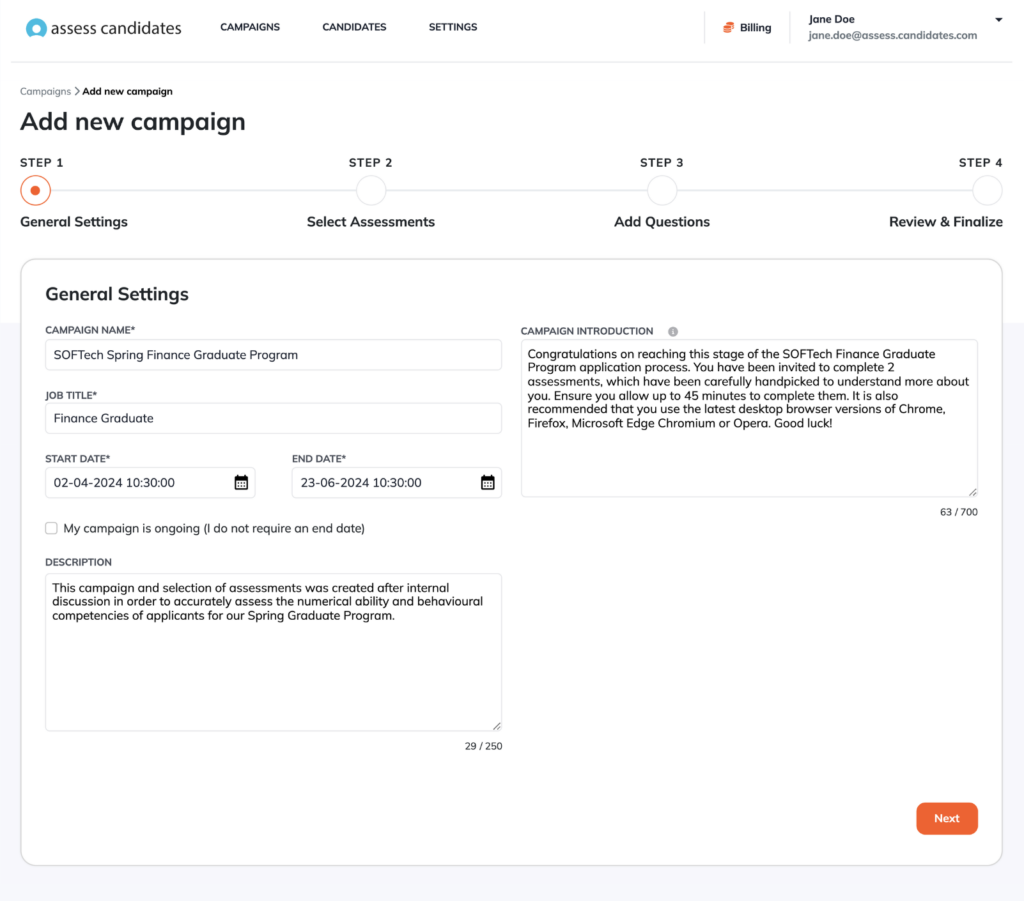
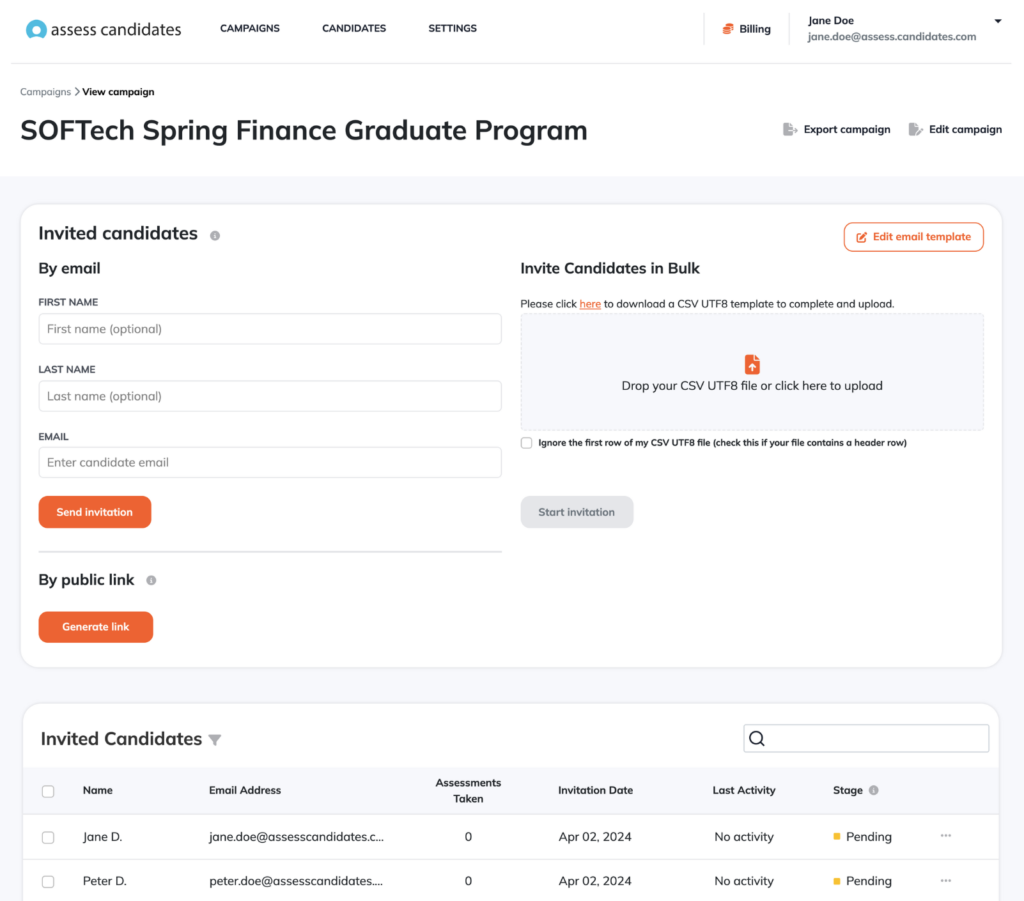
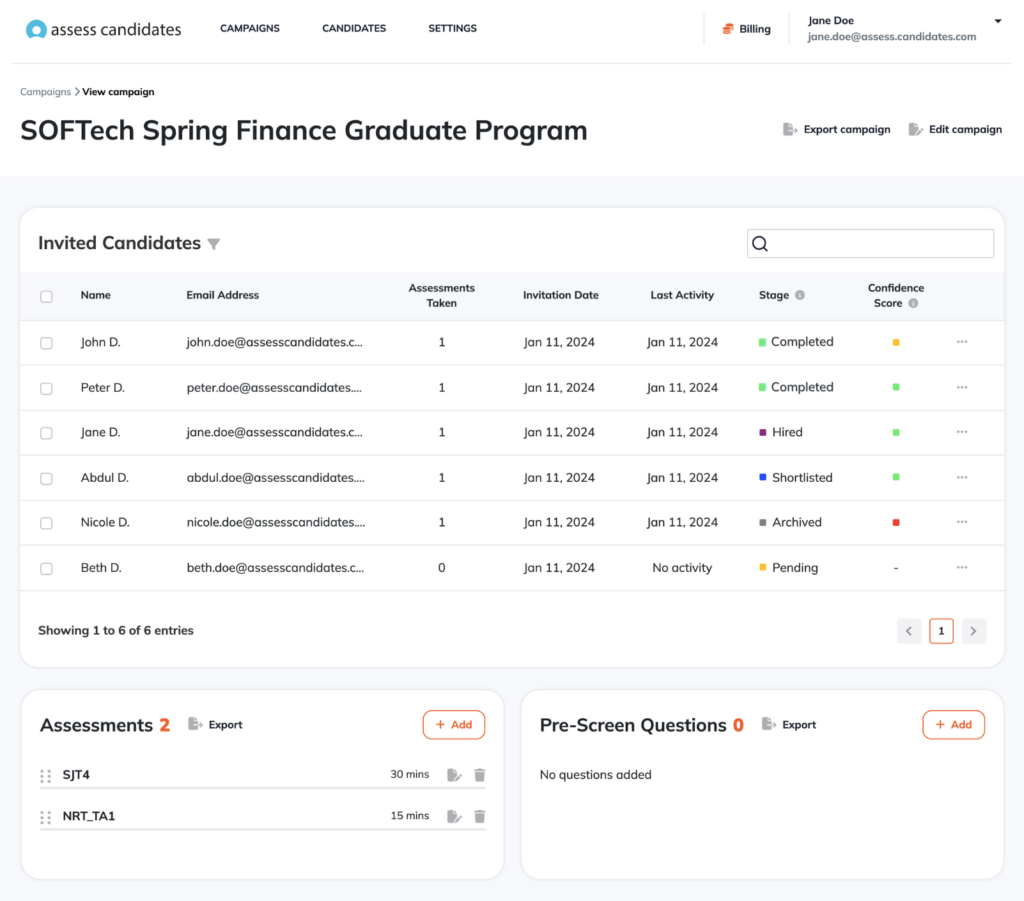
By following this structured, efficient process, employers can make informed, data-driven hiring decisions and identify candidates with the aptitude skills required for success across multiple roles
Next up, we will take a look at the key industries and roles that should use aptitude tests for recruitment.
Different industries and roles require distinct competencies, and aptitude tests allow organizations to identify candidates who are most likely to succeed. By providing a fair, standardized, and efficient evaluation method, aptitude tests help businesses make informed hiring decisions and build a high-performing workforce.
The following are the top 5 industries that use cognitive ability tests for hiring:
Banks and financial institutions evaluate candidates’ numerical reasoning, analytical thinking, and decision-making skills through aptitude tests to ensure accurate handling of financial data and reduce risks.
Major employers like HSBC, Goldman Sachs, and Morgan Stanley use aptitude tests extensively in employment.
Tech companies measure logical reasoning, abstract thinking, and numerical ability with aptitude tests to identify candidates who can solve coding challenges, analyze data, and design systems effectively.
Leading employers like Google, Microsoft, and Infosys rely on pre-employment cognitive ability tests for graduate and lateral hiring.
Consulting firms assess data interpretation, problem–solving, and structured reasoning through aptitude tests to select candidates who can deliver actionable solutions to client problems.
Top consulting firms, including Deloitte, KPMG, and McKinsey & Company, make aptitude testing central to recruitment.
Engineering firms apply aptitude tests to assess spatial reasoning, mechanical comprehension, and problem-solving, selecting candidates who can apply technical knowledge in real-world scenarios.
Siemens, Rolls–Royce, and General Electric rely on cognitive ability tests for recruitment.
Retail and FMCG companies use aptitude tests to measure numerical reasoning and decision-making under pressure, identifying candidates who can manage inventory, analyze sales data, and interpret customer insights.
Leading companies like Unilever, Procter & Gamble (P&G), and Walmart include aptitude tests in the hiring process.
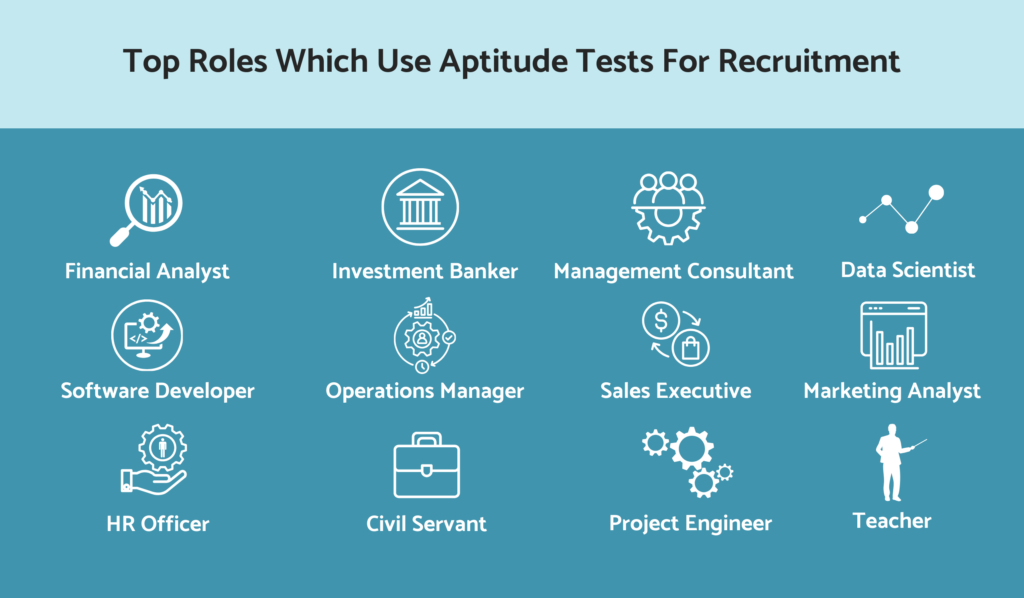
In the following section, we will explore the employers that utilize aptitude tests in their pre-employment recruitment process.
Employers across industries frequently use aptitude tests to evaluate candidates’ cognitive abilities, problem-solving skills, and learning potential. By objectively measuring numerical, verbal, logical, and abstract reasoning, these tests help organizations identify the most suitable candidates, make informed, data-driven hiring decisions, and build a capable, high-performing workforce.
Here are some well-known companies that use aptitude tests in their recruitment process:
Explore our talent assessment platform to discover top talent and join us. LEARN MORE
Imagine a rapidly expanding technology firm is struggling to hire skilled professionals for analytical and technical roles. Although the company receives numerous applications, its current recruitment process does not effectively assess candidates’ overall aptitude, including logical reasoning, numerical ability, and problem-solving skills.
This gap results in inconsistent hiring decisions, extended project ramp-up times, and added pressure on HR and technical teams. The company needs a reliable method to evaluate candidates’ core cognitive abilities to ensure success in critical roles.
At Assess Candidates, we recommend introducing a comprehensive aptitude test at the initial stage of recruitment. This test measures candidates’ numerical reasoning, verbal reasoning, logical reasoning, and problem-solving skills. By evaluating these abilities early, recruiters can quickly filter applicants and focus on those with the strongest cognitive capabilities, ensuring they are well-suited for analytical, technical, and decision-making responsibilities.
Recruiters are primarily responsible for administering the aptitude test and deciding the appropriate benchmark score or cut-off range required for candidates to move forward. For instance, a company might set the aptitude test passing score at the 70th percentile, meaning only candidates who perform better than 70% of the norm group are considered for subsequent rounds.
Cut-off ranges for aptitude tests typically fall between the 50th percentile (for large applicant pools) and the 70th–80th percentile (to select only top-performing candidates).
Implementing aptitude tests will allow the company to identify high-performing candidates with the cognitive skills needed for success. This structured approach will improve hiring quality, reduce onboarding time, and strengthen team productivity.
Ultimately, the organization will build a more capable workforce, driving efficiency, innovation, and long-term growth.
Partner with Assess Candidates to include scientifically validated psychometric tests in your hiring process. VIEW PLANS
So, why choose us?
At Assess Candidates, we offer a comprehensive suite of pre-employment aptitude tests, including numerical, verbal, and logical reasoning, and create recruitment campaigns tailored to each organization’s unique hiring needs.
Here is an example of our campaign reporting dashboard available on Assess Candidates.
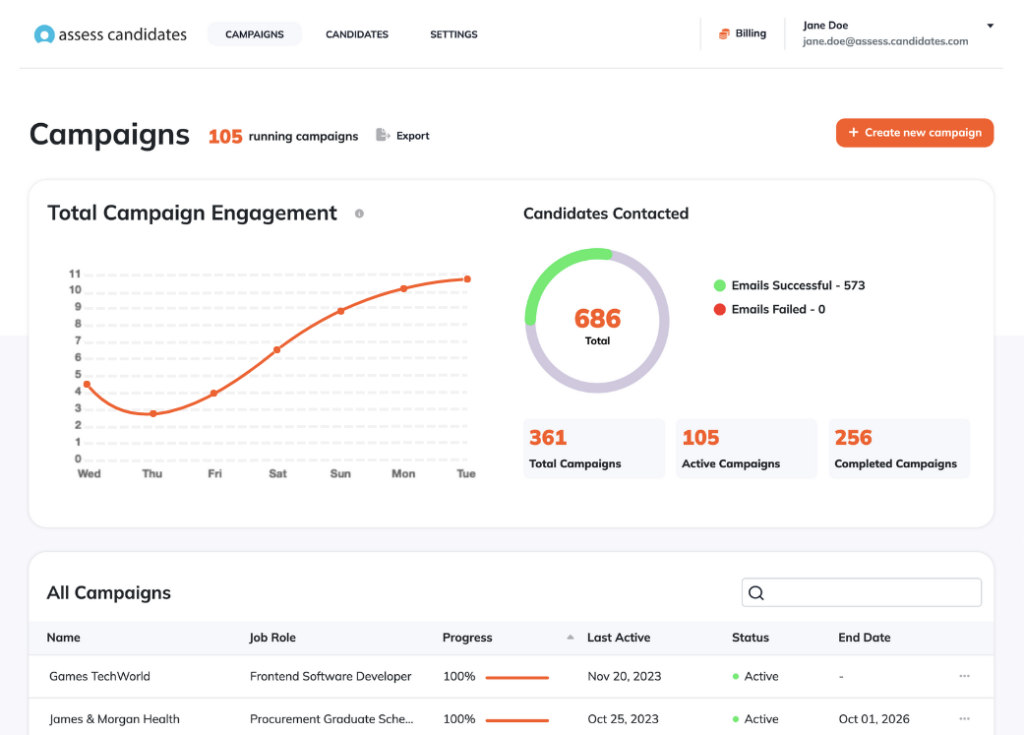
Assess Candidates provides reliable, end-to-end pre-employment assessment solutions for employers of all sizes. Explore our aptitude tests today and start hiring the best-fit candidates with confidence.
Not sure if aptitude tests suit your recruitment process? Contact us for a free analysis of your hiring needs.
Answers to the above example questions
Interested in learning more about effective candidate assessment? Continue reading for frequently asked questions, and sign up with your email to get started.
Aptitude tests allow employers to objectively evaluate candidates’ cognitive abilities, including numerical, verbal, logical, and abstract reasoning skills. They standardize assessments, eliminate bias, and highlight problem-solving, learning potential, and decision-making, helping employers shortlist candidates who fit the role and contribute effectively from day one.
No. Employers should use aptitude tests to complement, not replace, interviews. While tests evaluate cognitive abilities objectively, interviews assess soft skills, cultural fit, and role-specific competencies. Combining both methods provides a balanced, data-driven evaluation and captures a complete picture of each candidate’s suitability.
Employers interpret aptitude test results using detailed scoring metrics, including overall performance, percentile ranks, and skill-specific insights. They set an aptitude test pass mark as a clear cut-off to identify candidates meeting minimum requirements. Comparing results and top performers ensures consistent, role-aligned, and data-driven hiring decisions.
At Assess Candidates, we recommend setting the aptitude test pass mark around the 30th percentile. This lower cut-off ensures you don’t overemphasize a single assessment, allowing you to efficiently filter candidates while maintaining a balanced and fair hiring process that considers multiple evaluation methods.
Yes. Aptitude tests can be used across a wide range of industries and roles, from finance, consulting, and IT to healthcare, manufacturing, and retail. They customize tests to focus on relevant cognitive abilities, ensuring that candidates demonstrate the skills needed to succeed at both entry-level and senior positions.
Situational judgement tests (SJTs) are used in recruitment to assess how candidates respond to realistic workplace scenarios. They help employers evaluate decision-making, problem-solving, teamwork, communication, and professional judgment in situations similar to those candidates may face on the job.
This guide explains how SJTs work and how you can use them responsibly to hire.
First, let’s start by defining what a situational judgment test is.
A situational judgement test is a pre-employment assessment that presents candidates with realistic workplace scenarios and asks them to choose, rank, or rate possible responses. It helps employers understand how candidates are likely to approach job-relevant situations.
SJTs can support better hiring decisions by showing how candidates respond to role-relevant scenarios. They are strongest when combined with structured interviews, skills tests, and other assessment methods.
Strengthen your hiring accuracy with our scientifically validated situational judgment tests. HIRE FOR FREE
Situational judgment refers to a person’s ability to evaluate a scenario, weigh up possible responses, and choose the most effective course of action. In recruitment, it reflects how candidates handle workplace dilemmas such as managing conflicts, prioritizing tasks, or making ethical decisions.
Situational judgment skills are essential in today’s workplace, where employees frequently face complex challenges, team conflicts, and customer-facing dilemmas. Strong situational judgment allows candidates to assess scenarios, make sound decisions, and respond effectively to real-world situations, helping organizations operate smoothly and achieve lasting success.
Employees with well-developed situational judgment can:
All these abilities are particularly important in leadership, customer service, and high–stakes roles.
In the following section, we will take a look at the specific skills measured by situational judgment tests.
Situational judgement tests measure job-relevant behaviours such as problem-solving, communication, teamwork, ethical judgment, adaptability, and decision-making under pressure.
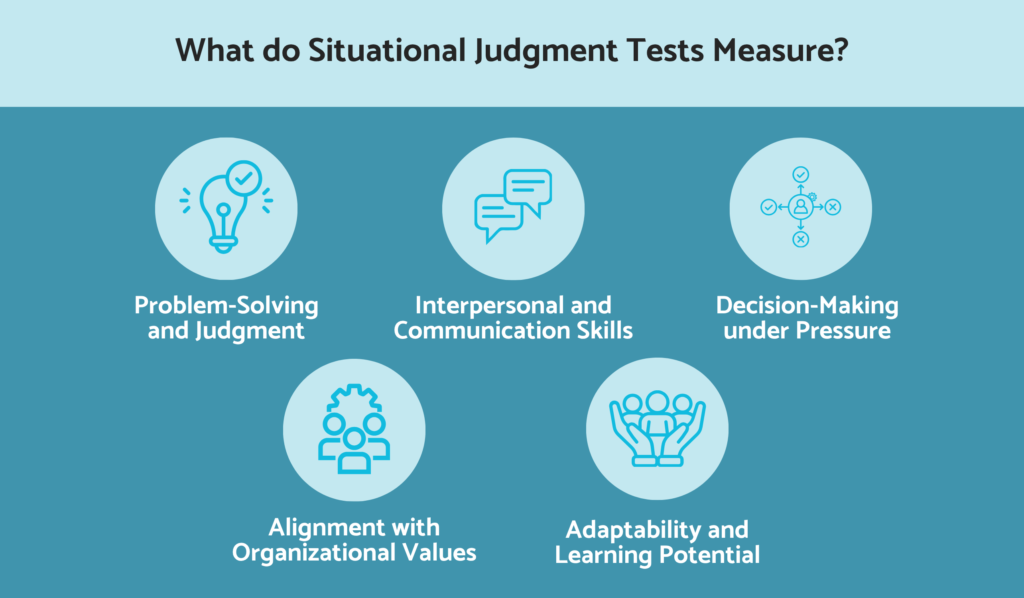
The following are the 5 major skills that can be measured in a situational judgment assessment:
In an SJT, candidates analyze realistic workplace scenarios, identify key issues, weigh potential outcomes, and select the most effective course of action. They demonstrate critical thinking and the ability to apply practical judgment in real-world challenges.
A situational judgment assessment assesses how candidates manage conflicts, provide constructive feedback, collaborate with colleagues, and communicate clearly. Their responses reveal how they interact, build relationships, and maintain teamwork in professional settings.
Time-sensitive or stressful scenarios in SJTs evaluate candidates’ ability to evaluate options, prioritize tasks, and make prompt decisions. This highlights their resilience, focus, and performance under pressure.
In a situational judgment test (SJT), candidate responses reflect whether they align with company ethics, professionalism, and culture. This shows whether they are likely to contribute positively to the organization’s environment.
In an online situational judgment test, candidates adjust their strategies when faced with novel or challenging situations. This demonstrates flexibility, openness to change, and the capacity to learn quickly in rapidly evolving work environments.
Optimize your recruitment strategy by integrating a situational judgment test. LEARN MORE
Next, let’s take a look at how situational judgment assessments work as recruitment tests.
Situational judgment tests (SJTs) used in recruitment differ widely depending on the employer and test provider. Some are strictly timed, while others allow unlimited completion time, and the number of questions can range anywhere from 18 to over 70.
SJTs are widely used in recruitment as part of application screenings, interviews, or assessment centers. Typically, candidates choose or rank actions in time-limited scenarios, testing their ability to analyze situations, prioritize responses, and apply practical judgment under pressure.
The most common SJT formats are:
As candidates progress through the test, the scenarios typically grow more challenging, shifting from simple judgment calls to complex workplace dilemmas. In untimed versions, test-takers have the flexibility to consider each situation carefully and provide thoughtful responses.
Situational judgment tests (SJTs) present candidates with realistic workplace scenarios that mirror common challenges such as tight deadlines, conflicting priorities, interpersonal disputes, ethical dilemmas, or customer issues.
These scenarios may be delivered in written descriptions, visual prompts, or short video clips, requiring candidates to place themselves in the situation and decide on the most appropriate response. By simulating day-to-day pressures, SJTs highlight how candidates think, prioritize, and manage responsibilities in a professional setting.
Response formats vary depending on the test design. Candidates may be asked to choose the best and worst actions from a list, rank all available options from most to least effective, or rate each choice on a scale of effectiveness.
Some assessments also use video-based simulations or interactive tasks, where responses can influence how the scenario unfolds. These formats together give employers a clear picture of candidates’ judgment, decision-making, and ability to separate constructive approaches from counterproductive ones.
Let’s take a look at one of the example Assess Candidates’ off-the-shelf situational judgment test questions:
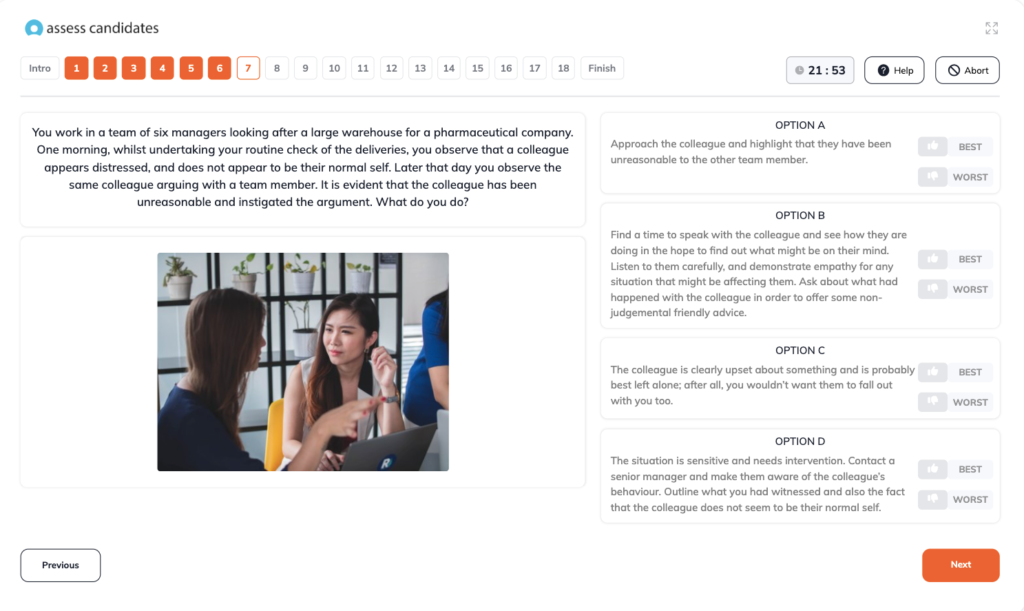
While off-the-shelf solutions suit most needs, we also offer customization options to tailor assessments to the specific requirements of any role. Get in touch with our experts to discuss custom solutions.
Discover our situational judgment tests customized to find top talent with strong situational judgment skills. LEARN MORE
In the following section, we will dive into the reasons why employers use situational judgment tests in their recruitment process.
Employers use SJTs because they provide a structured way to compare how candidates respond to realistic workplace challenges.
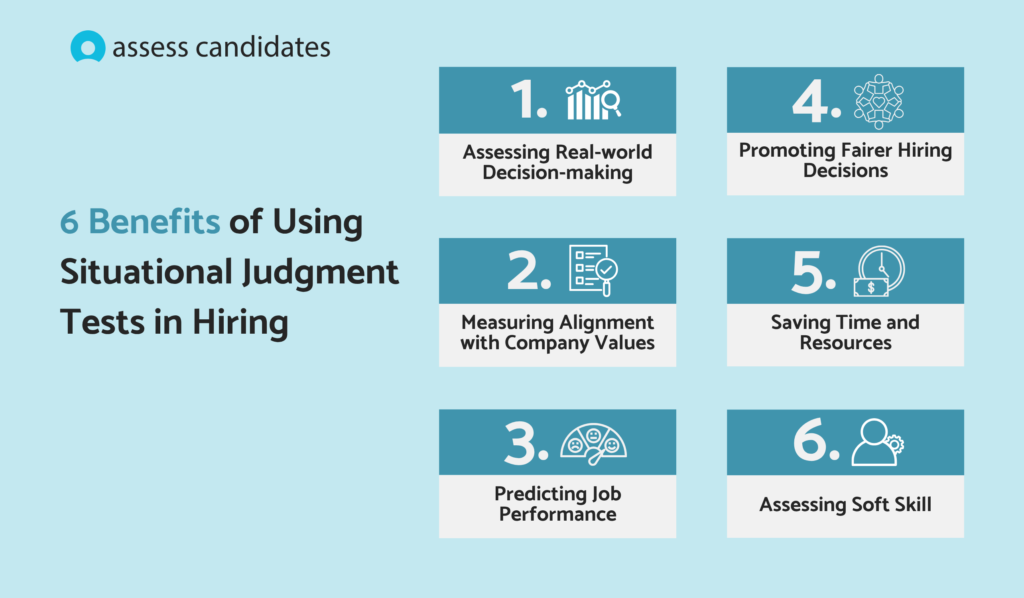
The following are the 6 main reasons why employers include situational judgment assessments in their pre-employment hiring process:
SJTs place candidates in realistic workplace scenarios, letting employers see how they analyze problems, weigh options, and take effective action. These tests show how candidates apply their knowledge, spotting issues, prioritizing tasks, and anticipating outcomes.
By designing situational judgment tests around the organization’s priorities, such as teamwork, integrity, or customer focus, employers can see whether candidates naturally act in ways that reflect their culture. Responses to ethical dilemmas or team conflicts indicate which candidates are likely to uphold company standards in real situations.
Situational judgment assessments evaluate candidates’ actual behavioral responses to job-relevant challenges, providing a strong indication of future on-the-job success. They help identify candidates who can handle pressure, collaborate effectively, and perform tasks as required, beyond what resumes or interviews can reveal.
SJTs focus on behaviour rather than background or credentials, reducing bias and creating a more level playing field for all candidates. They minimize reliance on subjective impressions and unstructured interviews, enabling consistent and defensible selection decisions.
Employers can quickly and objectively screen large candidate pools using online situational judgment tests. Automated delivery and scoring streamline the hiring process, allowing recruiters to focus on the most promising candidates while reducing the risk of costly hiring mistakes.
SJTs excel at assessing soft skills by providing insight into candidates’ interpersonal and communication skills, teamwork, leadership, and emotional intelligence. By presenting scenarios that involve collaboration, conflict resolution, or client interactions, these tests reveal how effectively candidates navigate social and professional dynamics.
SJTs are useful, but they should not be used as the only hiring tool. Their effectiveness depends on role relevance, test design, scoring quality, and how results are interpreted.
Solution: Encourage candidates to practice sample SJTs beforehand. Familiarity with formats and scenarios reduces stress, enabling them to showcase genuine judgment and decision-making skills.
SJTs lose impact if hiring teams struggle to read results or connect them to job requirements.
Solution: Customize SJTs around role-specific competencies and provide recruiter training. With expert guidance, teams can interpret reports effectively, extract meaningful insights, and make confident hiring decisions.
Online situational judgment tests may be compromised by candidates seeking outside help or exploiting loopholes.
Solution: Choose providers with strong anti-cheating safeguards. Features like monitoring, identity checks, and cheat-detection tools maintain test integrity. Providers like Assess Candidates implement these safeguards to maintain test integrity.
Standard SJTs often overlook company culture or role-specific demands.
Solution: Consider semi-bespoke or fully customized tests tailored to your competency framework. Assessment test professionals, such as Assess Candidates, can design solutions aligned to your unique requirements.
Bespoke SJTs can be costly, especially for small and medium-sized businesses.
Solution: Partner with cost-effective providers like Assess Candidates, who deliver tailored tests at competitive rates. While customization may involve upfront costs, it reduces turnover, training expenses, and repeated recruitment, making it a long-term investment rather than a burden.
Situational judgment assessments often reflect workplace norms specific to certain industries or cultures, which can disadvantage candidates from diverse backgrounds who interpret scenarios differently.
Solution: Reduce cultural bias by designing SJTs with input from diverse stakeholders, using inclusive language, and validating scenarios across different regions and industries. Partnering with global assessment providers ensures fair and culturally sensitive test design.
Although SJTs measure judgment, decision-making, and assessing soft skills, they do not fully capture technical expertise, creativity, or role-specific knowledge.
Solution: Use SJTs as part of a balanced assessment strategy. Combine them with technical skills tests, portfolio reviews, structured interviews, or work simulations to create a holistic view of a candidate’s abilities.
Depending solely on online SJTs may cause employers to overlook complementary hiring methods, resulting in incomplete evaluation of candidates.
Solution: Position SJTs as one piece of a multi-method assessment process. Integrating them with interviews, psychometric tests, or assessment centers ensures balanced, evidence-based hiring decisions.
Next up, we will analyze the stages of the hiring process where situational judgment tests are applied.
Situational judgment tests (SJTs) can be integrated at multiple stages of the hiring process, depending on the role’s level and the organization’s needs. They prove especially valuable during the early screening stage, where they help employers quickly identify candidates with the right competencies. At the same time, candidates gain a realistic preview of the role, which allows them to self-assess their interest and suitability.
Below is a detailed explanation of the various hiring stages in which situational judgment tests are used:
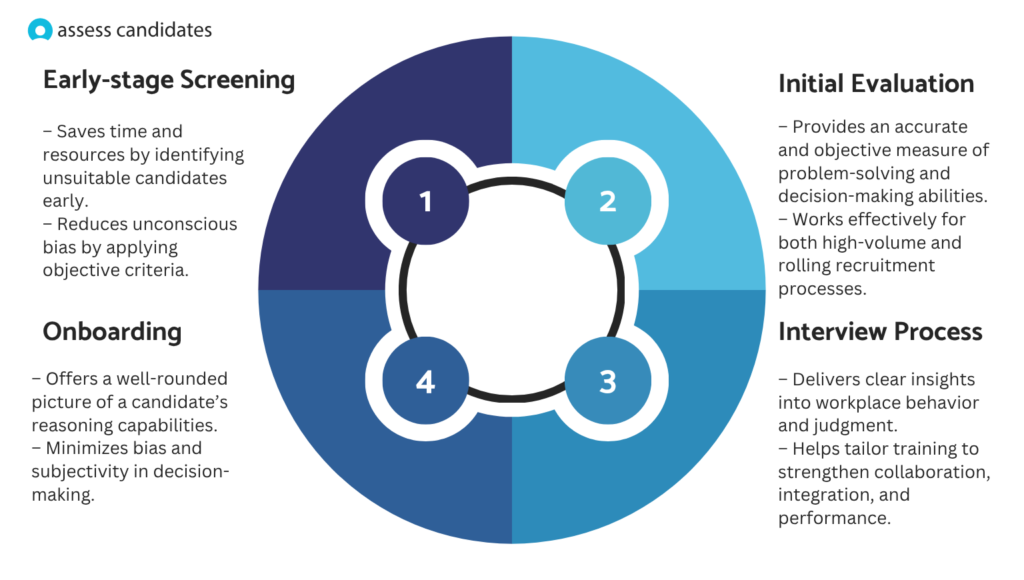
Streamline your hiring and select the top candidates with our situational judgment tests. HIRE FOR FREE
Let’s now explore methods for evaluating a situational judgment test in a job interview that involves a situational judgment assessment.
If you decide not to use a situational judgment test (SJT) during the initial screening, you can still incorporate it into the interview process, whether in-person or via video. However, this approach can be less efficient, as interviewers must evaluate responses and competencies in real time rather than having pre-assessed insights into each candidate’s strengths and weaknesses.
Nonetheless, using SJTs during interviews helps reduce the risk of mis-hires and identifies candidates who best align with your role and organizational needs. Situational judgment interview questions assess decision-making, problem-solving, and interpersonal skills through realistic workplace scenarios, providing a clear view of how candidates are likely to handle on-the-job responsibilities and challenges.
In job interviews, situational judgment questions place candidates in realistic workplace scenarios to see how they would respond. They allow employers to evaluate essential skills such as problem-solving, decision-making, interpersonal communication, and alignment with organizational values, offering a clear view of how candidates are likely to perform on the job.
Example 1: A team member misses an important deadline. Which action is the best and which is the worst?
A) Offer support to help them catch up
B) Immediately report them to your manager
C) Ignore the issue
D) Criticize them publicly
Example 2: Your colleague repeatedly submits incomplete reports. Rank these actions from most to least effective:
A) Provide constructive feedback
B) Offer assistance to improve their work
C) Escalate to management
D) Ignore the problem
Example 3: A client is upset about the delayed delivery. Rate the following responses:
A) Apologize and offer a solution
B) Shift blame to the team
C) Explain delays and propose a revised timeline
D) Ignore the complaint
Example 4: You are managing a virtual team project, and two members miss deadlines. The simulation asks: ‘What is your next step?’ Choices may lead to different outcomes and follow-up scenarios based on your decision.
Boost your recruitment process with Assess Candidates’ scientifically validated situational judgment tests. VIEW PLANS
The answers to the example questions are included near the end of the guide.
In the following section, we will take a look at the best practices for including situational judgment assessments in your pre-employment process.
To use SJTs effectively, employers should define the role competencies first, choose or design scenarios that reflect real work, apply scoring consistently, and combine results with other selection evidence.
Below are 3 simple steps to help you efficiently evaluate and shortlist the right candidates from the start.
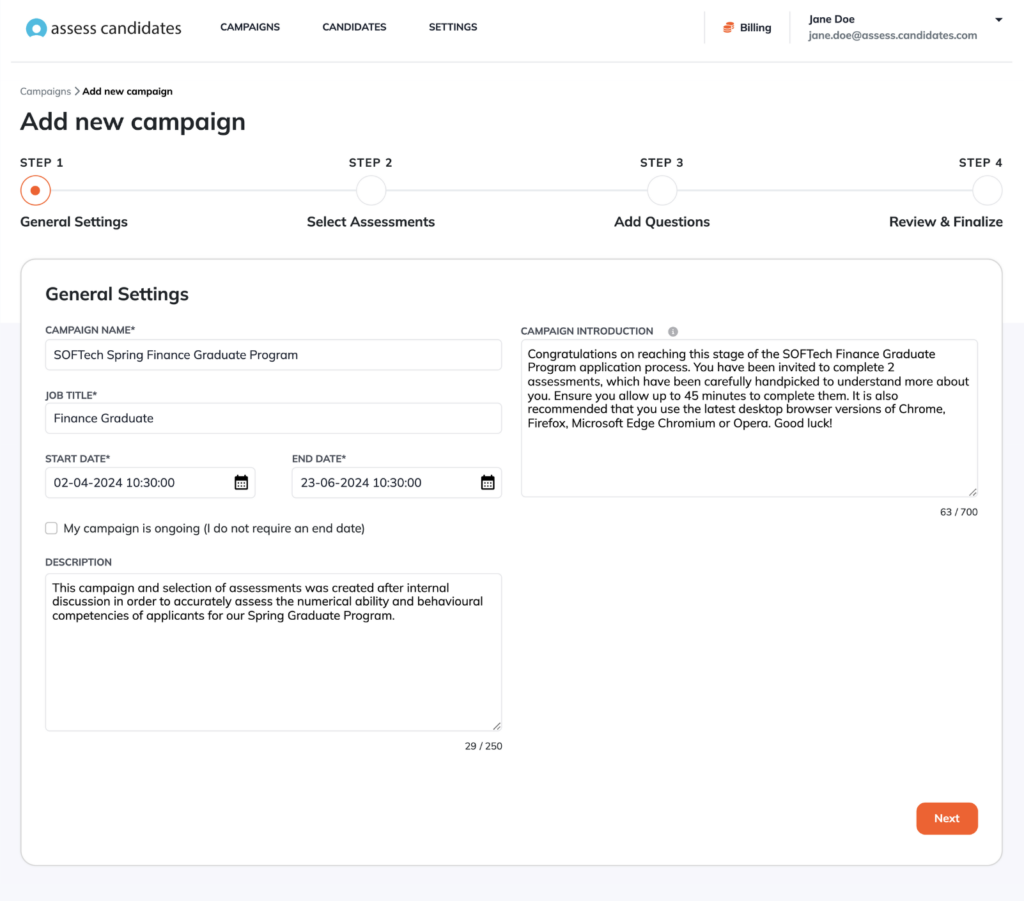
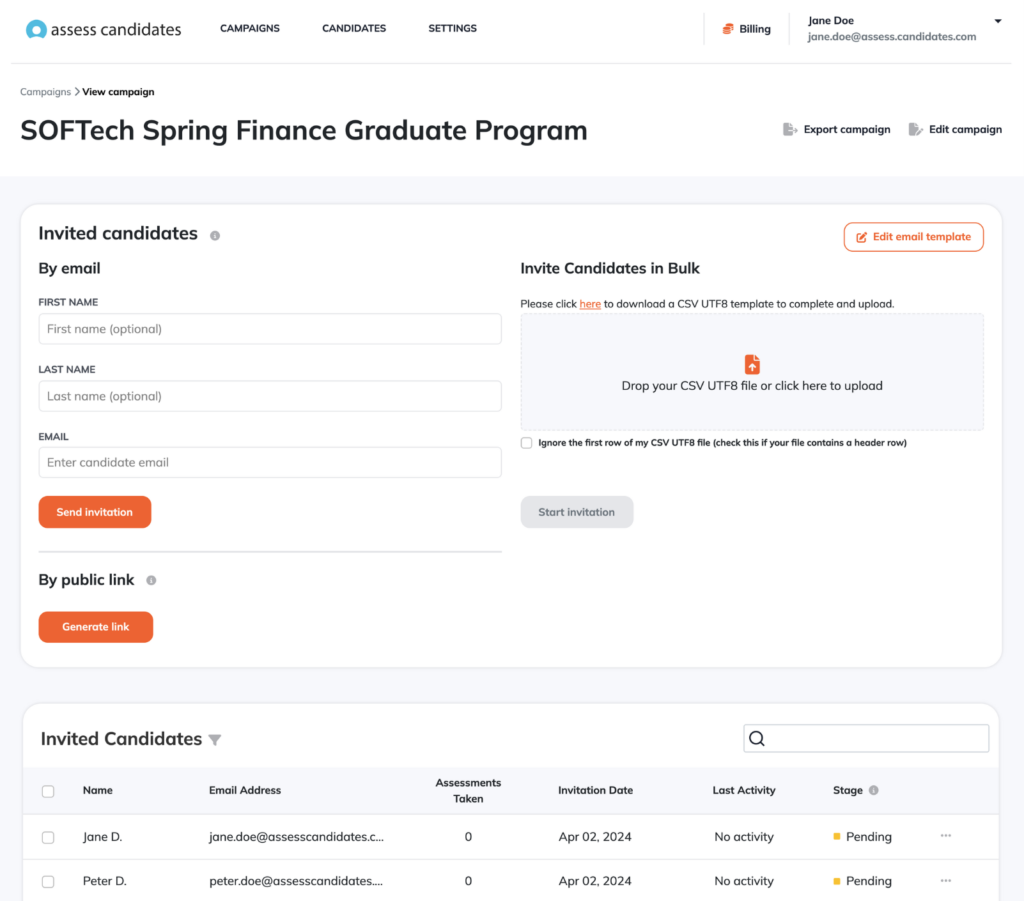
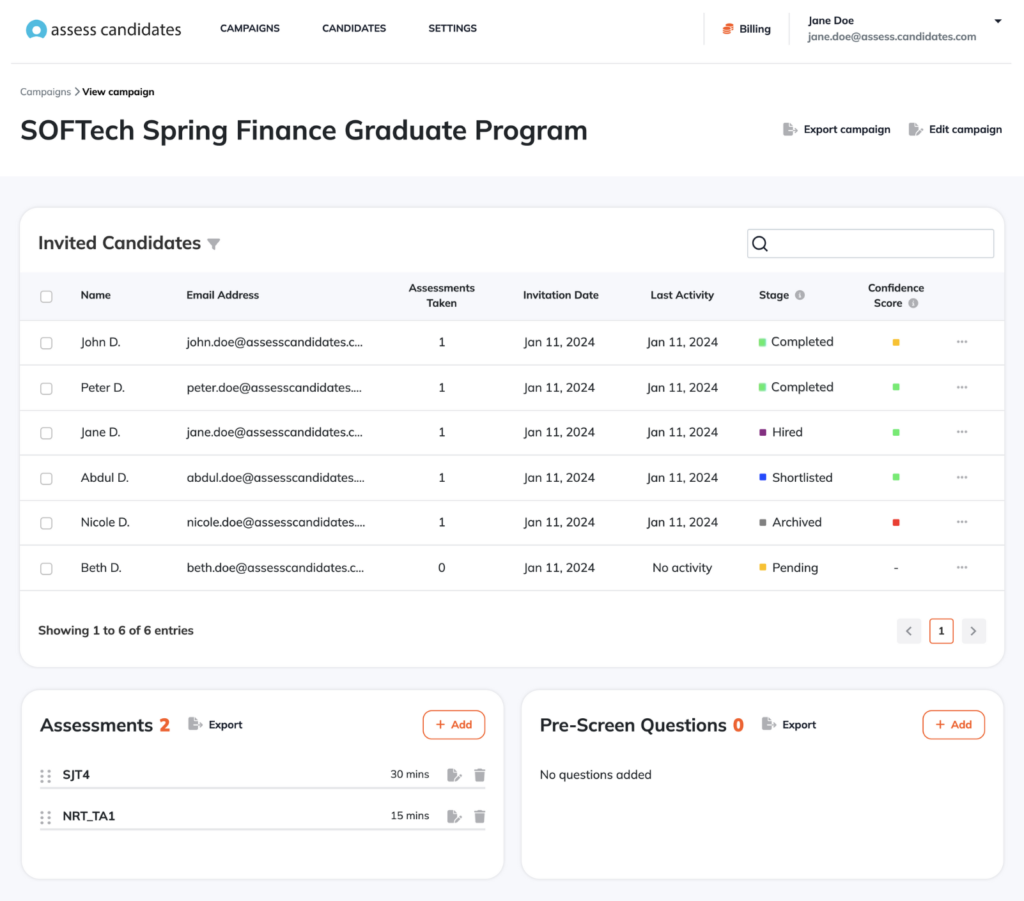
By following this structured process, employers can make data-driven hiring decisions and identify candidates with the judgment, problem-solving, and interpersonal skills required for success.
Identify top talent efficiently with our advanced situational judgment assessment platform. LEARN MORE
Let’s take a look at the industries and roles that should use situational judgment tests for recruitment.
Situational judgment assessments (SJTs) are effective for evaluating candidates’ decision-making, problem-solving, and interpersonal skills in real-world scenarios. They are particularly useful in industries like finance, healthcare, consulting, technology, retail, public sector, and education, and for roles such as analysts, managers, nurses, teachers, and customer service professionals.
The following are the top 5 industries that use situational judgment assessments as a part of their pre-employment process:
Financial institutions use situational judgment tests (SJTs) to assess how candidates handle scenarios involving ethics, risk evaluation, and client management. These tests help identify individuals who can make sound decisions under pressure.
Major employers that have included these tests in their hiring process include Barclays, HSBC, and Morgan Stanley.
Hospitals, clinics, and healthcare providers utilize SJTs to evaluate decision-making, patient care prioritization, and teamwork in high-pressure settings. They are commonly used for nurses, doctors, and allied health professionals.
Major healthcare institutions that use SJTs in their hiring processes include the NHS (UK), Cleveland Clinic, and Mayo Clinic.
Consulting firms employ situational judgment assessments to measure problem-solving abilities, client interaction, and team collaboration in complex situations. These tests help spot candidates who can thrive in ambiguous and fast-paced environments.
Leading firms that use situational judgment assessments include Deloitte, PwC, and Accenture.
Retailers and service-focused companies use SJTs to assess customer handling, conflict resolution, and service orientation, ensuring candidates can maintain professionalism in challenging interactions.
Major employers that use these tests for hiring include Walmart, Tesco, and Starbucks.
Tech companies rely on situational judgment tests to evaluate teamwork, adaptability, and ethical decision-making, particularly for roles involving client solutions, project management, or cross-functional collaboration.
Major companies that have integrated these tests into their hiring processes are Microsoft, Google, and IBM.
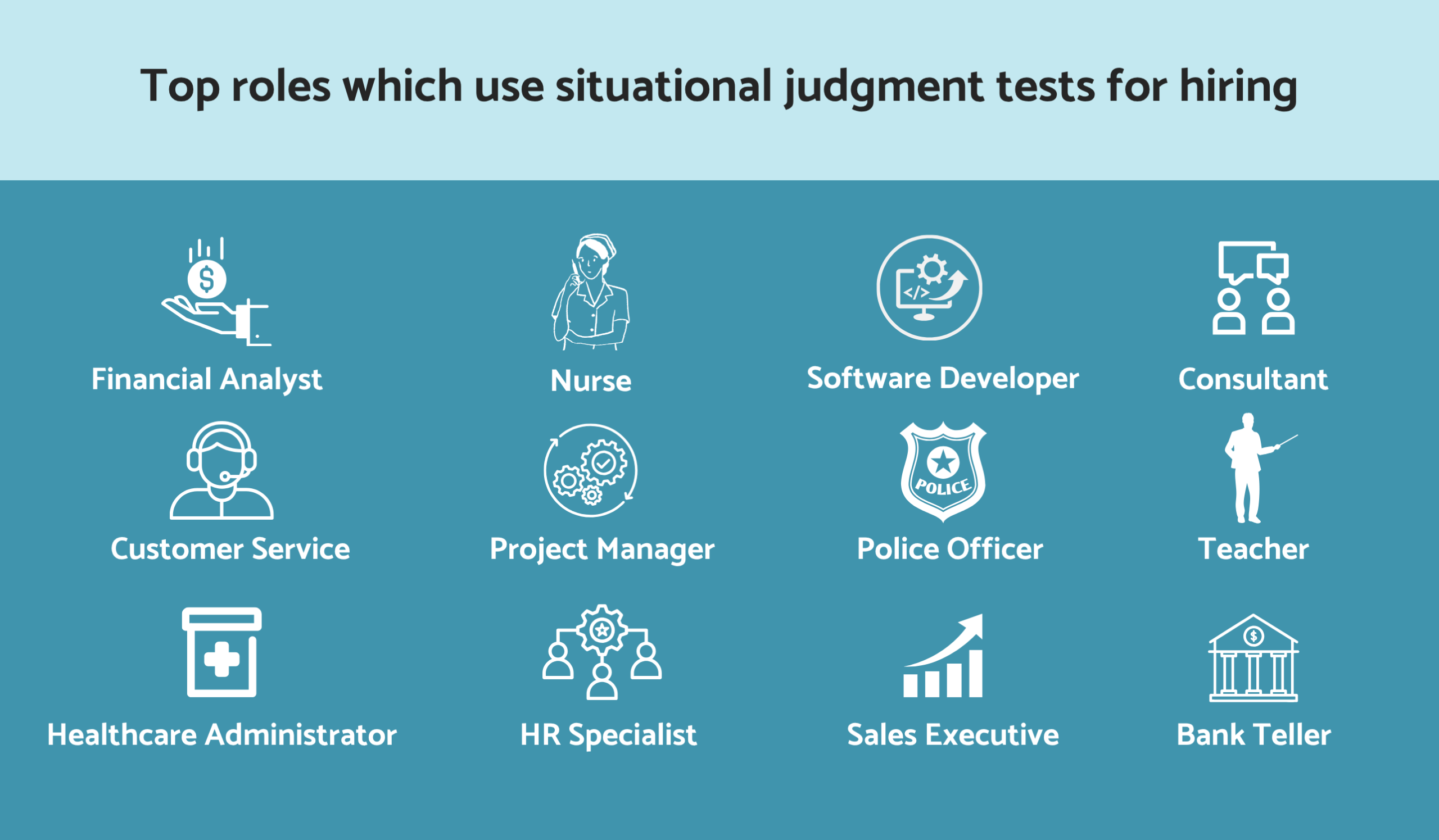
Let’s take a look at the employers who use SJTs in their pre-employment hiring process.
Many organizations use situational judgment tests (SJTs) to assess how candidates navigate workplace challenges, make informed decisions, and demonstrate strong interpersonal skills. Industries such as finance, consulting, healthcare, technology, retail, and the public sector rely on SJTs to identify individuals suited for roles demanding problem-solving, teamwork, and ethical judgment.
Here are some well-known companies that have used situational judgment tests in their recruitment process:
Explore our talent assessment platform to identify top talent with us. LEARN MORE
Suppose a large retail chain is facing high turnover among store managers and customer service supervisors. While the company attracts many applicants, its current recruitment process does not effectively assess candidates’ ability to handle workplace challenges, resolve conflicts, or make ethical decisions under pressure. This results in inconsistent team performance, customer dissatisfaction, and additional training costs.
The company needs a more reliable method to evaluate candidates’ judgment, interpersonal skills, and decision-making abilities to ensure success in leadership and customer-facing roles.
At Assess Candidates, we recommend introducing situational judgment tests (SJTs) early in the recruitment process. These assessments simulate real workplace scenarios, measuring candidates’ problem-solving, decision-making, teamwork, and ethical judgment.
SJTs help identify individuals who can navigate complex situations, manage teams effectively, and deliver excellent customer service. Test results allow recruiters to shortlist candidates most likely to succeed in leadership and customer-focused positions.
By incorporating SJTs into the hiring process, the retail chain can identify candidates with strong interpersonal skills, sound judgment, and the ability to handle challenging situations. This results in higher-quality hires, reduced turnover, enhanced team performance, and improved customer satisfaction.
Ultimately, the company strengthens its managerial workforce, enhances operational efficiency, and fosters a positive work environment, supporting long-term growth and success.
Partner with Assess Candidates for scientifically validated situational judgment tests. VIEW PLANS
SJTs are most effective when they reflect real role challenges, are easy for candidates to complete, and give recruiters clear, job-relevant evidence.
At Assess Candidates, we offer a wide range of pre-employment aptitude tests, including situational judgment tests, and create recruitment campaigns customized to each organization’s unique hiring needs.
Here is an example of our campaign reporting dashboard available on Assess Candidates.
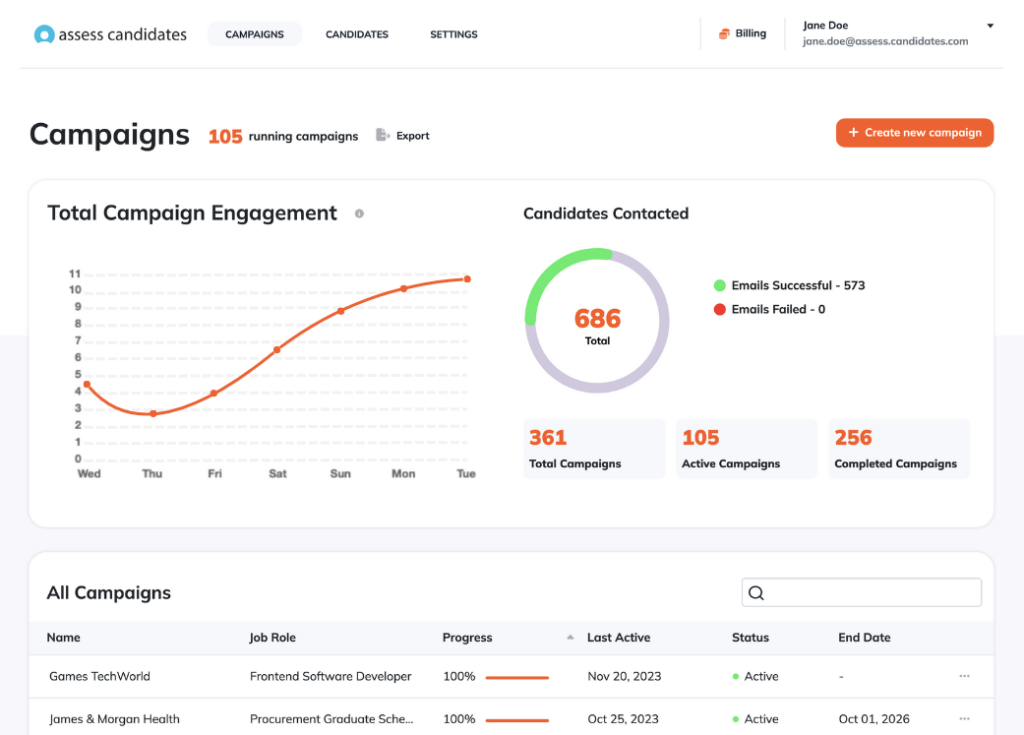
Assess Candidates provides reliable, end-to-end pre-employment assessment solutions for organizations of all sizes. Explore our situational judgment tests today and start hiring candidates who demonstrate the judgment, teamwork, and decision-making skills your roles require.
Not sure if SJTs are right for your recruitment process? Contact us for a free analysis of your hiring needs.
Answers to the above example questions
Assess Candidates Situational Judgment Test Example Question:
Interested in learning more about effective candidate assessment? Continue reading for frequently asked questions, and sign up with your email to get started.
Yes. SJTs can be tailored to reflect an organization’s culture, values, and job requirements. Custom scenarios replicate real challenges employees face, helping you evaluate candidates on relevant skills. This boosts accuracy in predicting performance and increases the chance of hiring strong role fits.
Yes, situational judgment tests use standardized, scenario-based questions that assess judgment and decision-making skills rather than background or demographic information. They minimize unconscious bias, evaluate behavioral competencies fairly, and support diversity, equity, and inclusion by giving every applicant an equal opportunity to succeed.
Situational judgment assessments engage candidates by letting them demonstrate how they would handle workplace challenges. They deliver clear instructions, run smoothly on multiple devices, and present realistic scenarios. This makes the assessment practical, relevant, and candidate-friendly while strengthening your employer brand.
Situational judgment test scores show how closely a candidate’s responses align with effective workplace behaviors. Employers can use them to objectively compare applicants, identify top performers, and maintain consistency in evaluations. Benchmarking against role standards makes hiring more reliable and data-driven.
Employers typically use SJTs in the early-to-mid stages of recruitment to screen large applicant pools. SJTs complement other tests, filter candidates by judgment skills, save recruiter time, and ensure only the most capable applicants progress further in the process.
Employment personality tests help employers identify candidates who align with both role requirements and company culture, providing structured insights into workplace behavior, motivation, and interpersonal style.
This guide provides a comprehensive overview of workplace personality testing and its role in modern recruitment.
Ready to know more about the personality test in recruitment? Keep reading!
A personality test is a pre-employment assessment that measures workplace traits, behaviors, motivations, and interpersonal preferences to help employers evaluate job fit and cultural alignment.
A work personality test is a self-report instrument designed to systematically capture consistent patterns of thoughts, feelings, and behaviors that define an individual’s personality.
According to a 2022 report from the Society for Human Resource Management, 57% of employers incorporate personality assessments as part of their hiring practices.
In 2026, employers are increasingly using personality questionnaire tests in their selection processes to enhance the quality of their hires and candidates accepted into their organizations. A study by Harvard Business Review corroborates this statement, proving that the quality of hires has increased by 30% since employers began implementing personality tests in their recruitment processes.
Looking to hire the right employees? Try our personality tests to find the perfect candidates for your role. HIRE FOR FREE
With the definition of a work personality test in mind, let us examine the science behind personality tests in the recruitment process.
The science behind personality tests comes from psychology, particularly the study of individual differences, which focuses on how people consistently vary in their thoughts, emotions, and behaviors. These recruitment personality tests are grounded in well-researched theories and statistical methods that aim to measure personality traits reliably and validly.
Research from the Society for Industrial and Organizational Psychology indicates that organizations using personality assessments effectively experience a 24% boost in employee performance and a 30% decrease in turnover.
Personality assessments for hiring are built on four core scientific foundations:
The most widely accepted approach suggests that personality can be described in terms of stable traits. For example, the Big Five model (Openness, Conscientiousness, Extraversion, Agreeableness, Neuroticism) is supported by decades of research and cross-cultural studies.
The field of measurement in psychology ensures tests are consistent over time and actually measure what they claim to measure. Statistical techniques like factor analysis help identify which questions cluster together to reflect specific traits.
Many assessments aim to predict outcomes such as job performance, leadership ability, cultural fit, and well-being. Research indicates that certain traits, such as conscientiousness, are strong predictors of workplace success.
Personality tests are also linked to theories of motivation, emotional regulation, and decision–making, offering insight into how individuals are likely to behave in different environments.
Upon understanding the basis of the creation and science behind personality assessments in the hiring process, you must be thinking about the purpose of personality assessments in recruitment.
The goal of personality tests in recruitment is to provide employers with a structured, objective way to evaluate how well a candidate’s behavioral tendencies, motivations, and interpersonal style align with the requirements of a role and the culture of the organization.
At their core, these assessments aim to go beyond resumes and interviews by offering more profound insights into traits that influence long–term success, such as reliability, teamwork, adaptability, leadership potential, or resilience.
One reason personality assessments remain popular is their ability to bring greater consistency to hiring decisions, particularly when evaluating large candidate pools.
Moving forward, it is necessary to know how these employment personality tests assess the candidate’s personality during the recruitment phase.
Personality tests assess a candidate’s personality by using customized questionnaires or assessments that measure key traits, behaviors, and preferences relevant to the workplace. These tests do not focus on technical skills but rather on how a person is likely to think, interact, and perform in a professional environment.
Personality tests in recruitment assess various traits and behavioral tendencies that can give employers insight into how a candidate may perform and interact in a work environment.
Below are the top 5 methods in which hiring managers assess candidate personalities during recruitment.
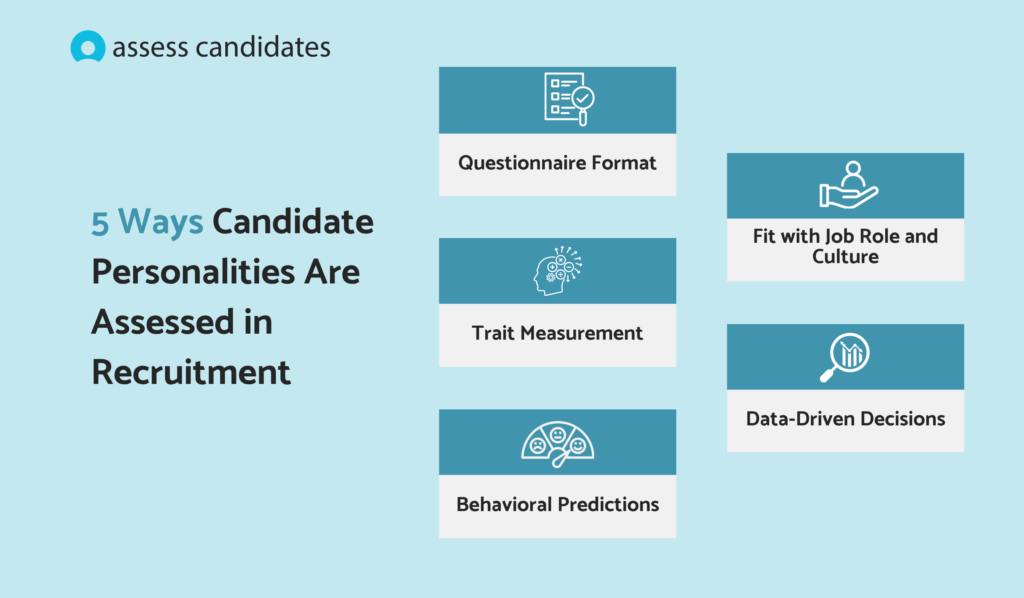
Candidates respond to a series of statements (e.g., “I enjoy working in groups” or “I pay close attention to details”) using rating scales such as strongly agree to strongly disagree.
The responses are scored against established personality models to reveal consistent patterns of behavior.
Recruiters use the results to predict workplace behaviors, including teamwork (such as collaboration and communication style), leadership potential (decision-making, assertiveness), work ethic (reliability, organization, and responsibility), and adaptability (openness to change and stress tolerance).
You can match the personality profile of a candidate with the demands of the role and the company’s culture. For example, a sales position may value high extraversion and persuasiveness, while an analyst role may require high conscientiousness and attention to detail.
The test results provide an additional, objective layer of information beyond resumes and interviews, enabling recruiters to make more informed hiring decisions.
The employment personality test used by employers often measures several behaviors and traits in candidates. Let us take a look at the characteristics and behaviors that employers measure in a personality test.
Personality tests in recruitment measure several traits of candidates to assess how they influence their work, interaction, and adaptation in professional settings. They focus less on skills or knowledge and more on the how behind a person’s approach to tasks and relationships.
Below are 5 things that employers measure using personality assessments when hiring:
Use our psychometric tests to assess your applicants’ key traits. LEARN MORE
Now that we have covered what recruiters measure using personality tests, we can proceed to learn about the various types of personality tests available.
A variety of personality tests are applied in hiring, each providing a distinct way of assessing candidates’ traits to align with diverse organizational structures, business models, workplace settings, and job responsibilities.
The Big Five, also known as the Five-Factor Model (FFM), is one of the most scientifically validated frameworks for understanding personality. Developed from decades of factor-analytic research, it organizes human personality into five broad dimensions known as OCEAN, and they mean:
These traits encompass essential aspects of behavior, including creativity, diligence, sociability, cooperation, and emotional stability.
The HEXACO model extends the Big Five by adding a sixth trait focused on ethics, sincerity, and fairness, making it relevant where integrity matters. The six HEXACO personality model dimensions are:
Research shows HEXACO offers a fuller personality view by emphasizing moral tendencies and hiring managers widely use this model in workplaces and research.
The NEO Personality Inventory, developed by Costa and McCrae, is one of the most comprehensive and respected assessments of the Big Five model. Unlike broader measures, it breaks each of the five major traits into six detailed facets, producing a total of thirty personality dimensions. This allows for an in-depth understanding of an individual’s behavioral patterns, motivations, and emotional tendencies.
Raymond Cattell developed this workplace personality test, which identifies sixteen primary personality traits through factor analysis and further organizes them into broader global factors.
The 16 Personality Types model is based on four basic dimensions:
The 16PF offers a nuanced understanding of individual differences, covering interpersonal style, problem-solving, emotional expression, and motivation.
The Hogan Assessments, created by Robert Hogan, are specifically designed for workplace applications and consist of three interconnected tools. The Hogan Personality Inventory (HPI) measures traits that predict job performance, the Hogan Development Survey (HDS) identifies potential derailers that may emerge under stress, and the Motives, Values, Preferences Inventory (MVPI) examines cultural fit and motivational drivers.
Together, these tools provide organizations with an extensive system for selecting talent, predicting performance, preventing leadership failure, and aligning individuals with organizational culture.
The SHL Occupational Personality Questionnaire, commonly referred to as the OPQ32, is one of the most widely used personality profiling tests for recruitment. It evaluates thirty-two specific behavioral styles grouped into three clusters:
Unlike general personality models, the OPQ is tailored to workplaces, linking traits to job skills. Its strengths include focus on organizational outcomes, workplace norms, and user-friendly reports. However, it is proprietary, needs trained interpretation, and, like most self-report tools, is subject to social desirability bias.
The DiSC model, derived from William Moulton Marston’s theory, measures personality across four dimensions:
It is a simple and practical framework that explains how people approach tasks, interact with others, and manage challenges. Because of its straightforward language, managers widely use the DiSC in organizational settings to improve teamwork, communication, and leadership effectiveness.
The Enneagram of Personality is a nine–type model that explores individuals’ core motivations, fears, and coping mechanisms. Each type represents a distinct way of perceiving and interacting with the world, and the system highlights how these types are interconnected.
The nine types of Enneagram personality models are:
Although it lacks the same level of empirical validation as other models, the Enneagram offers deep psychological insights into personal growth, self-awareness, and interpersonal dynamics.
The Myers–Briggs Type Indicator (MBTI), developed by Isabel Briggs Myers and Katharine Cook Briggs, is based on Carl Jung’s theory of psychological types. It categorizes individuals into sixteen personality types according to four dichotomies:
While the MBTI is less scientifically reliable compared to trait-based models, it is widely recognized for its accessibility and ease of understanding.
The work-style personality assessment aims to help organizations evaluate how well candidates align with both the specific role and company culture. Its key features include the ability to customize the assessment for each role: recruiters can specify role-specific personality frameworks, define scoring thresholds (e.g., red, amber, green zones), and generate tailored job-fit scores.
The WPQ is grounded in the Big Five Personality Traits, focusing on the following dimensions:
Upon reading about the types of personality assessments that you could offer in your recruitment, why don’t we show you some examples of personality tests?
Below is an example of a personality assessment used in recruitment:
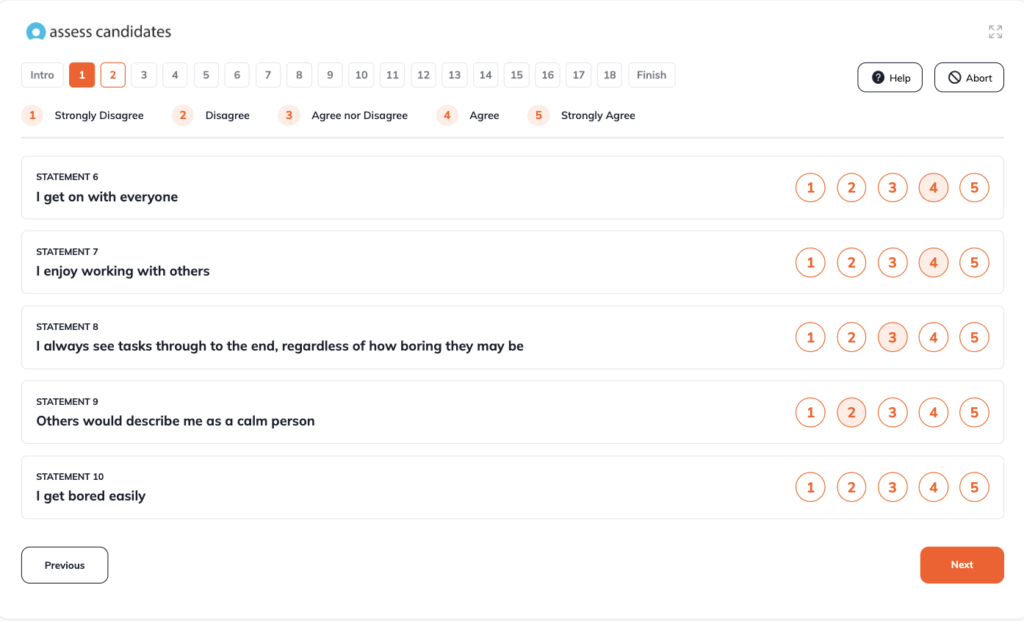
This work personality test offers behavioral statements for participants to review and rate their agreement or disagreement, such as “I get on with everyone,” using a Likert scale from strong disagreement to strong agreement.
In the following section, we highlight the benefits of psychometric pre-employment personality assessments below.
According to research by the Harvard Business Review, companies have since recorded a 30% improvement in the quality of their hires since they began implementing workplace personality questionnaire tests in their recruitment.
Here are the 8 benefits of including work personality tests in your pre-employment assessments.
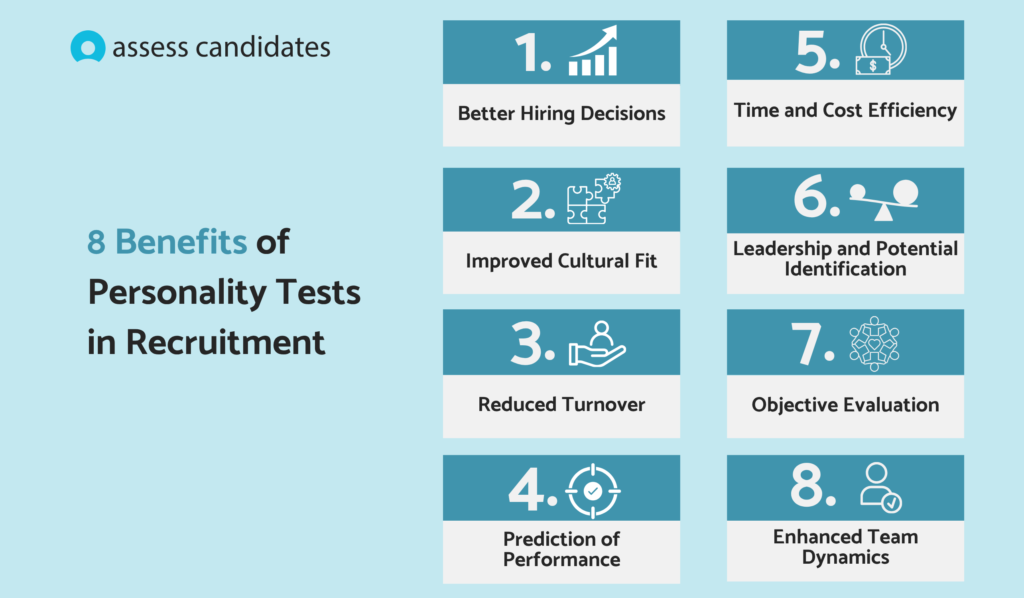
Recruitment personality tests provide recruiters with a structured understanding of a candidate’s decision-making style and interpersonal approach. This information enables you to go beyond resumes and interviews, resulting in more accurate judgments about whether a candidate’s natural disposition aligns with the position’s requirements.
A candidate’s ability to succeed often depends on how well their values, attitudes, and preferred work style match the organization’s culture. Employment personality tests systematically measure these aspects, enabling recruiters to select candidates who are more likely to integrate smoothly into the workplace and maintain long-term engagement.
High employee turnover is costly in both financial and operational terms. By identifying candidates whose personalities align with both the role and the organizational environment, you can reduce the likelihood of early resignations or dismissals.
Decades of research in organizational psychology show that certain traits, such as conscientiousness and emotional stability, are reliable predictors of job performance. Work personality tests identify these traits in candidates, allowing you to estimate how effectively they will handle the responsibilities and pressures of the role.
Barrick and Mount’s (1991) meta-analysis showed that conscientiousness reliably predicts job performance across different professions, with a correlation of about 0.22 to 0.26, indicating that diligent individuals tend to perform better at work.
Personality profiling tests for recruitment can be resource-intensive, particularly when unsuitable candidates progress too far in the process. Personality assessments help filter applicants at earlier stages, enabling you to focus your time and budget on candidates with the highest potential for success, thereby increasing hiring efficiency.
Organizations often seek not just immediate role fit but also long-term potential. Personality assessments for hiring highlight traits linked to leadership, resilience, and growth capacity. This allows you to identify individuals who can take on greater responsibilities in the future and support organizational development.
Traditional recruitment methods, such as unstructured interviews, are vulnerable to subjective impressions and inconsistent judgments. Personality tests provide standardized criteria for assessing all candidates, ensuring fairness and consistency in the selection process, as this helps create a more reliable foundation for hiring decisions.
Teams perform best when members bring a balance of complementary traits and skills. Therefore, personality assessments for hiring give you insight into how candidates are likely to contribute to group interactions, communication, and collaboration.
Enhance your hiring with our personality assessments to hire the best talent. LEARN MORE
With the benefits of personality tests listed above, what strategies can recruiters use to utilize these tests during the hiring process?
Implementing workplace personality tests during recruitment can be a valuable way to enhance team dynamics, improve communication, and optimize roles based on individual strengths. However, to get the most value out of them, careful planning and execution are essential.
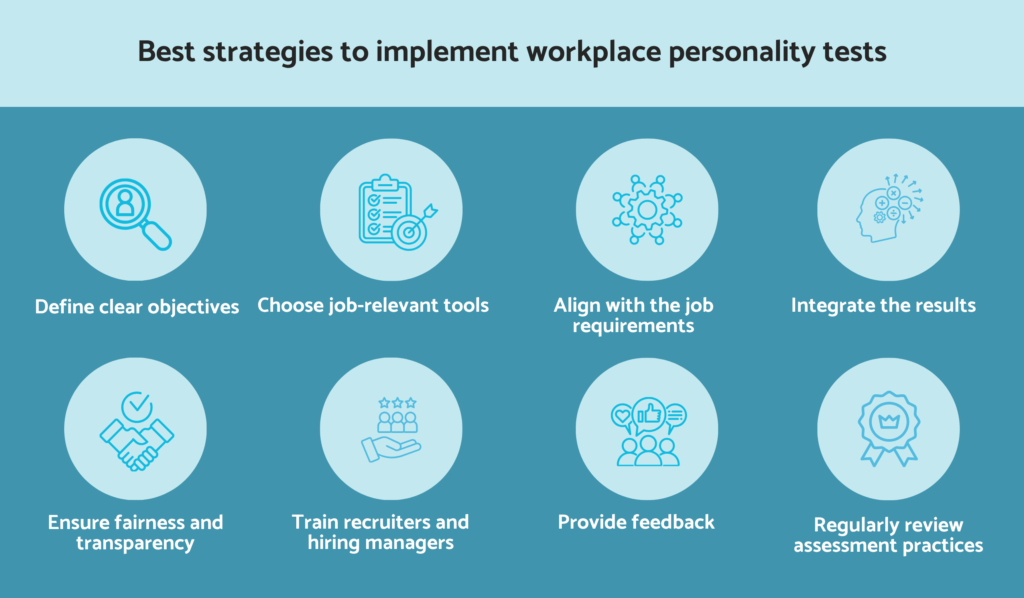
To properly understand the implementation of personality profiling tests for recruitment, we must examine the other pre-employment assessment tests commonly offered to candidates during the hiring process.
Pre-employment psychometric assessment tests in recruitment measure candidates’ mental capabilities, personality traits, and behavioral styles in a standardized, objective way. Their primary purpose is to help employers make more accurate and fair hiring decisions by assessing qualities that are not readily apparent during interviews or from resumes.
Here are the other pre-employment psychometric assessment tests used in recruitment:
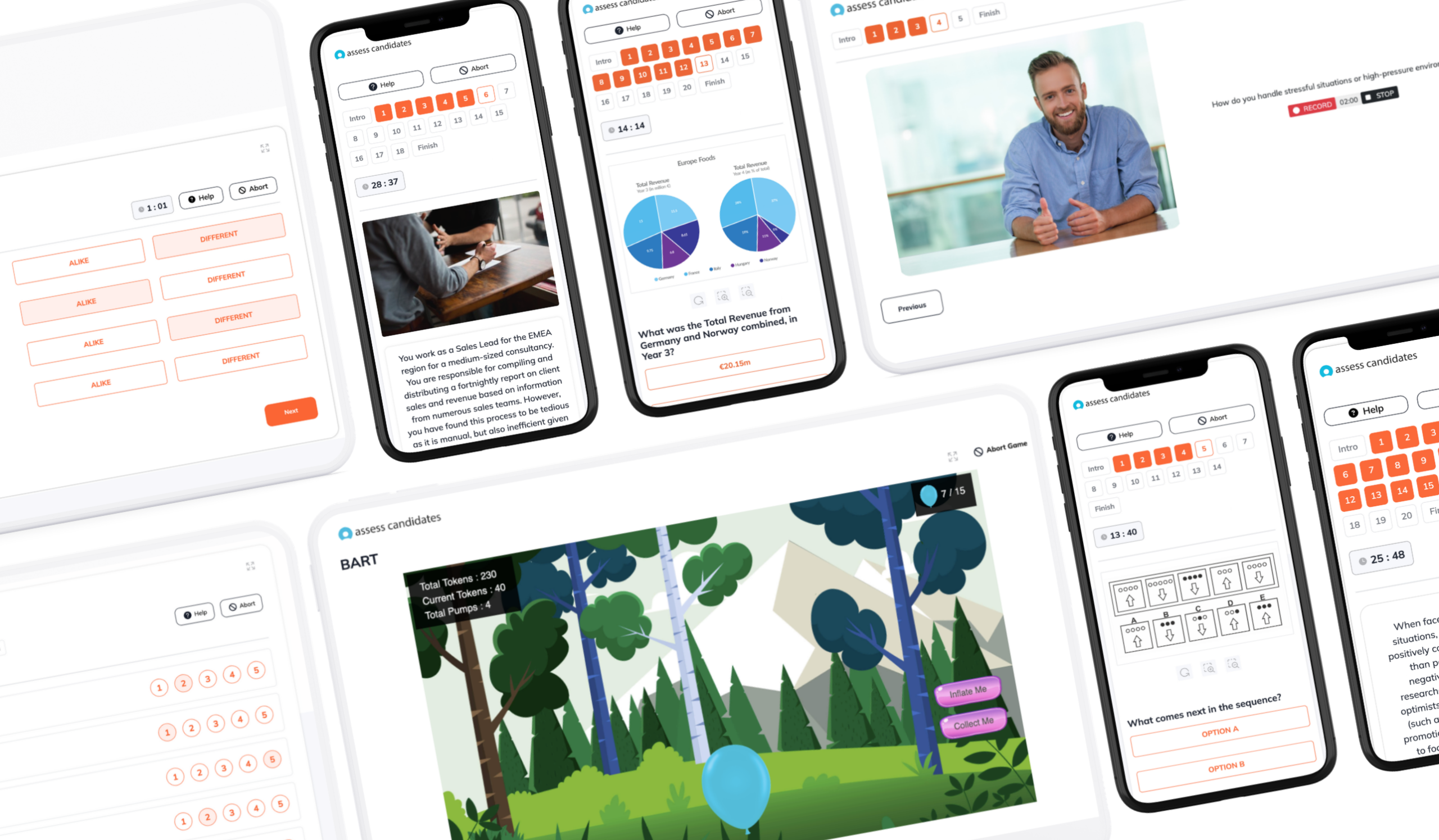
The use of psychometric tests adds value to recruitment by ensuring consistency and fairness, since all candidates are measured against the same standardized benchmarks. They also reduce reliance on subjective judgment, which can minimize unconscious bias.
Under the psychometric tests, 7 tests are offered to candidates, and they are:
Verbal reasoning tests measure a candidate’s capacity to understand, evaluate, and make logical inferences from written material. The tests are beneficial for positions such as managers, lawyers, journalists, customer service professionals, and graduate trainees, where strong communication and analytical reading abilities are essential.
Numerical reasoning tests evaluate a candidate’s skill in handling numerical data, analyzing information, and making conclusions from figures presented in formats such as charts, tables, and graphs. Recruiters commonly use these assessments for roles including financial analysts, accountants, data analysts, and engineers, where proficiency in quantitative analysis and data interpretation is critical.
Logical reasoning tests assess a candidate’s capability to interpret information, identify patterns, and reach sound conclusions using deductive, inductive, and critical thinking. Hiring managers frequently use Logical tests for positions such as analysts, consultants, and engineers, where strong problem-solving abilities and structured decision-making are vital.
Abstract reasoning tests evaluate a candidate’s ability to recognize patterns, logical rules, and relationships in unfamiliar information without depending on words or numbers. Recruiters often use Abstract tests in hiring for roles such as analysts, engineers, IT specialists, and management trainees, where success depends on problem-solving skills, strategic thinking, and adaptability to new ideas.
Critical reasoning tests assess a candidate’s ability to interpret information, recognize logical relationships, and make well-founded judgments supported by evidence. Critical thinking tests focus on skills such as deduction, inference, and evaluation, and are structured to be fair, inclusive, and standardized against broad benchmarks, ensuring reliability in recruitment decisions.
Spatial reasoning tests assess a candidate’s capacity to visualize, manipulate, and comprehend the spatial relationships between objects. Recruiters commonly use spatial tests in professions such as architecture, engineering, design, aviation, and technical operations, where working with diagrams, blueprints, or three-dimensional structures is a key requirement.
Diagrammatic reasoning tests measure a candidate’s ability to interpret and analyze visual data displayed through diagrams, flowcharts, or process maps. Hiring managers frequently use diagrammatic tests in fields such as engineering, IT, data analysis, and technical management, where understanding complex systems and logical workflows is critical to effective performance.
Behavioral assessments evaluate an individual’s psychological characteristics, habitual responses, and behavioral patterns. Hiring managers widely use these assessments in areas such as human resources, education, and clinical practice to better understand a person’s personality, motivations, strengths, and areas that may present difficulties.
Situational judgment tests present hypothetical workplace scenarios to candidates, who must choose the best response. They are often used by supervisors, customer service representatives, sales staff, and trainees, where success depends on effective decision–making, problem–solving, and interpersonal skills.
Emotional Intelligence (EQ) assessments measure a person’s ability to understand, manage their own emotions, and influence others’ feelings. Recruiters use emotional awareness tests in areas such as managers, team leaders, and sales professionals, where skills like empathy, communication, conflict resolution, and relationship building are crucial to success.
Skills-based tests are assessments that measure an individual’s competence in performing job-related tasks or functions specific to a role, profession, or area of study. Unlike tests that emphasize theoretical knowledge, these focus on practical ability, providing insight into how effectively a candidate can carry out the tasks essential to the position.
Coding tests assess a candidate’s programming, problem-solving, and software development skills through tasks such as coding, debugging, and optimization in various programming languages. They assess knowledge of algorithms, data structures, and system design for roles such as software engineers, web developers, data scientists, and backend developers.
Error-checking tests evaluate a candidate’s speed and accuracy in spotting mistakes in data, assessing attention to detail, focus, and ability to work under time constraints. They are relevant for roles like data entry, proofreading, administrative work, and quality control professionals.
Game-based assessments enable companies to evaluate candidates’ cognitive abilities, decision–making skills, and problem–solving capabilities in an interactive, engaging environment by focusing solely on cognitive performance rather than subjective factors.
Here are the pre-employment game-based assessments offered by Assess Candidates:
Video interviews provide a consistent hiring process by presenting all candidates with the same set of questions. They improve reliability by allowing recruiters to review recorded responses and expressions, ensuring a fairer evaluation and more accurate selection of the most suitable candidate.
Personality tests are often used in interviews as they are an effective method that has become an essential tool in assessing an applicant’s emotions and workplace personality through a series of questionnaires with responses ranging from moderate to extreme. At Assess Candidates, we recommend taking a holistic approach to candidate evaluation by using a combination of assessment tests that measure emotional, cognitive, and logical abilities.
Use our pre-employment tests to confidently hire the most suitable candidates for your company. HIRE FOR FREE
Considering applying workplace personality tests in your selection process? If you are familiar with situational judgment tests, you may wonder why you need a personality questionnaire test, as both assess a candidate’s behavioral tendencies in a company setting.
Here, we have listed out the differences between the two tests.
Many employers have raised questions about the differences between situational judgment and personality tests because both assess and evaluate the candidate’s emotional and behavioral actions and reactions when faced with specific scenarios within a company.
Below, we answer that question with a side-by-side comparison of both assessment tests:
Suppose you are wondering what challenges exist in using personality tests for recruitment. In that case, we have highlighted a few of them for you, along with suggestions on how to bypass these problems.
Using personality tests in recruitment comes with several significant challenges. One of these is the potential for social desirability bias, where applicants tailor their responses to appear favourable rather than accurate, which can severely distort the results for individuals.
To learn more about the challenges of using personality tests in recruitment, continue reading!
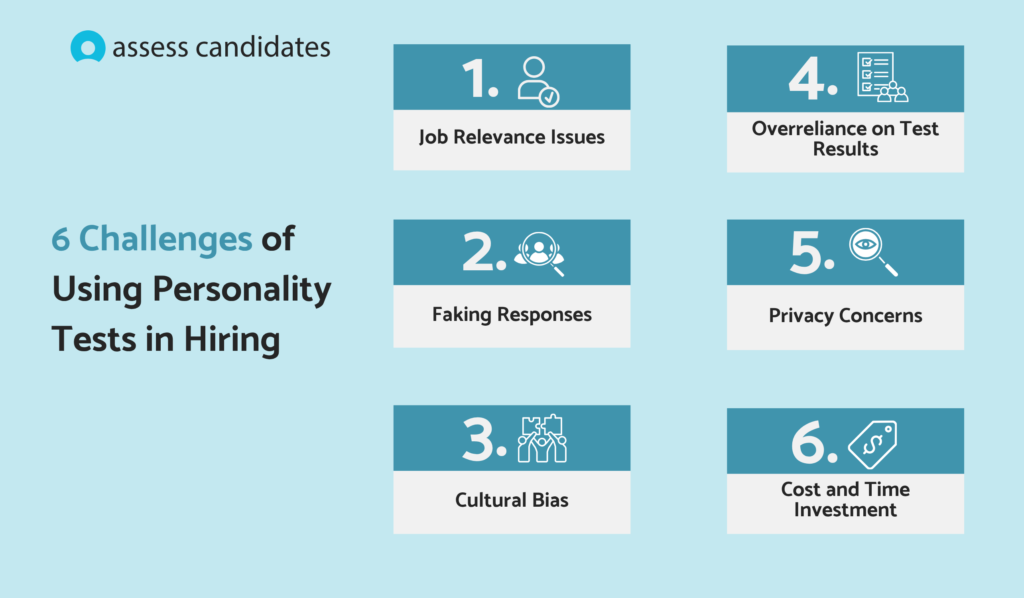
Some personality tests are too general and may not measure traits directly linked to job performance, leading to misleading results about a candidate’s suitability, which can reduce the test’s predictive validity in recruitment.
Select validated, job-specific personality assessments and regularly update them to ensure they align with the role and industry requirements.
Candidates may intentionally give socially desirable answers rather than truthful ones, which distorts their actual personality profile, making it difficult to identify genuine traits.
Use consistency checks and pair test results with interviews or situational assessments to reduce faking and verify authenticity.
Certain tests may not account for cultural differences, potentially disadvantageous to candidates from diverse backgrounds and thereby raising concerns about fairness and inclusivity in global hiring.
Adopt culturally sensitive tests and apply norm groups from diverse populations to ensure fairness in evaluation.
Employers may depend too heavily on personality tests while neglecting other assessment methods, and this can result in incomplete or biased hiring decisions.
Combine personality tests with skills-based and cognitive assessments to create a balanced, multi-method selection process.
Candidates might feel uncomfortable with personal questions and worry about how companies store or use their data, which can create distrust in the recruitment process.
Be transparent with candidates about the purpose of the test and implement strict data privacy measures to build trust.
High-quality, validated tests can be expensive and require training for recruiters to interpret the results accurately. This may strain resources for smaller organizations.
Choose scalable tools and provide recruiter training, ensuring tests remain cost-effective while still being accurately interpreted.
When used carefully and with purpose, personality tests can filter out unsuitable candidates and support a more inclusive hiring process. Reach out to us for a free review of your recruitment practices, along with expert advice on strategies to attract and retain a workforce that aligns well with your organizational culture.
Improve your role as a recruiter with a reliable AI-powered talent assessment platform. LEARN MORE
Are you curious about what roles are best suited to apply candidate personality assessments? Further down, we have listed out the possible job roles and sectors where you can use the workplace personality questionnaire tests.
Pre-employment personality tests assess applicants during the recruitment process, as they provide recruiters with a deeper understanding of the candidate’s characteristics, thought patterns, emotions, and behaviors.
Personality assessments can add value across a wide range of industries by helping employers understand how candidates approach work, interact with others, and adapt to changing environments.
To that, we have highlighted a few job sectors that use personality tests in recruitment.
Personality assessments are used in corporate environments to evaluate leadership potential, teamwork, communication style, and adaptability. They help identify candidates who can thrive in high-pressure settings, work collaboratively, and align with company culture.
Personality tests assess empathy, stress tolerance, integrity, and communication, all traits critical for patient care and ethical practice. They help ensure professionals can handle emotionally charged situations and maintain professionalism.
Personality assessments can measure patience, motivation, empathy, and leadership skills. They help institutions select individuals capable of inspiring students and fostering positive learning environments.
Here, the focus is on interpersonal skills, emotional intelligence, and stress management. Personality tests help select candidates who can remain calm under pressure, deliver quality service, and manage diverse customer interactions.
In tech roles, personality tests measure problem–solving style, creativity, collaboration, and adaptability to change. They ensure candidates can integrate into dynamic teams and adapt to fast-evolving technologies.
These assessments help identify traits like integrity, analytical thinking, and ethical decision–making. Hiring managers can use personality tests to ensure candidates can handle sensitive information and make sound judgments under pressure.
In fields such as media, design, and marketing, personality assessments evaluate creativity, openness to experience, and resilience. They help match candidates with roles that demand innovation and adaptability.
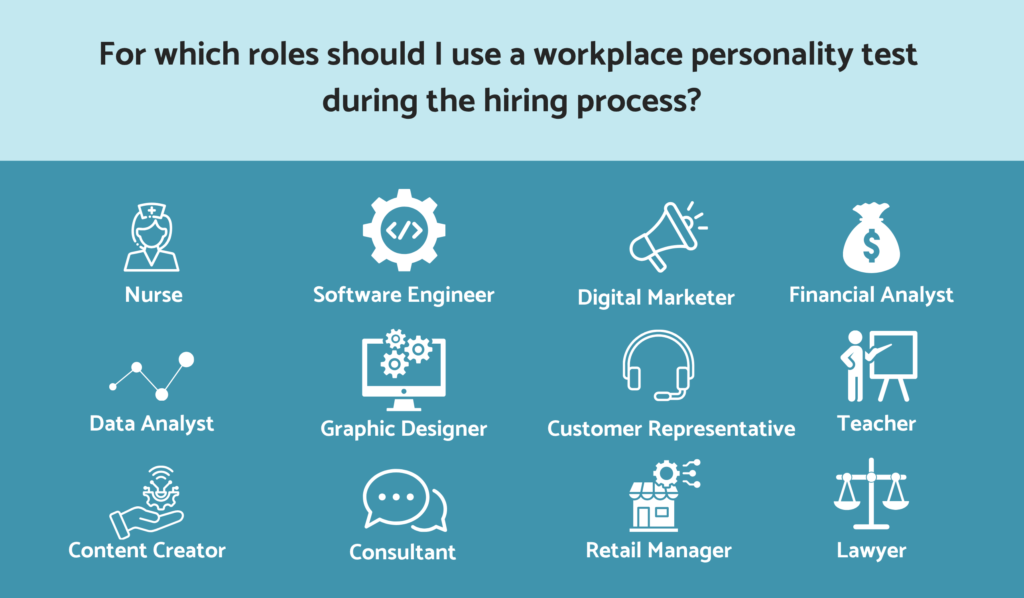
Having understood the roles that personality tests play in recruitment, let us examine how employers utilize these tests in their hiring process.
Employers use personality tests in recruitment to better understand whether candidates are a good fit for both the role and the organization. This helps assess cultural alignment, ensuring that a candidate’s values and work style match the company environment.
They also use recruitment personality tests to measure job suitability by identifying traits that are important for specific roles. Since certain personality traits, like conscientiousness and resilience, are linked to stronger job performance, the results can help predict how well a candidate will perform in the long run.
Organizations increasingly use personality assessments to complement traditional hiring methods and strengthen role fit, team compatibility, and long-term retention.
Over the years, many employers have shared their experiences with using workplace personality tests for employees, and below, we have provided two case study stories from employers who used the personality tests.
Using workplace personality questionnaire tests has proven to be effective in the recruitment of candidates during the hiring process, and employers throughout the globe have shared their experiences with implementing personality tests in recruitment.
Challenge: BrightCode experienced a high turnover rate among new hires within the first six months. While candidates had the technical skills, many struggled to adapt to the fast-paced, collaborative startup environment.
Solution: The company introduced personality assessments into its recruitment process to measure traits like adaptability, teamwork, and openness to change. Candidates still underwent technical evaluations, but final hiring decisions also took into account the results of personality tests.
Results:
Challenge: StyleMart struggled to identify candidates who could thrive in customer-facing roles. Many hires lacked the resilience and persuasion skills necessary to succeed in competitive sales environments, resulting in inconsistent store performance.
Solution: The HR team implemented personality tests focused on sales-related traits such as extraversion, resilience, and achievement drive. Test results were used alongside interviews to select candidates with natural strengths in persuasion and customer engagement.
Results:
Selecting the right personality assessment provider is just as important as choosing the assessment itself.
That’s where Assess Candidates come in, making the hiring journey seamless and stress-free.
Recruiters choose Assess Candidates’ personality tests because they deliver scientifically validated insights, streamline decision-making, and elevate the candidate experience. This gives companies the confidence to hire the right people, faster and more fairly.
Assess Candidates’ work-style personality questionnaires are developed by chartered scientists and psychometricians. These assessments are rigorously validated to predict factors like role fit, cultural alignment, work preferences, and long-term performance, all backed by decades of research and industry-standard validation procedures.
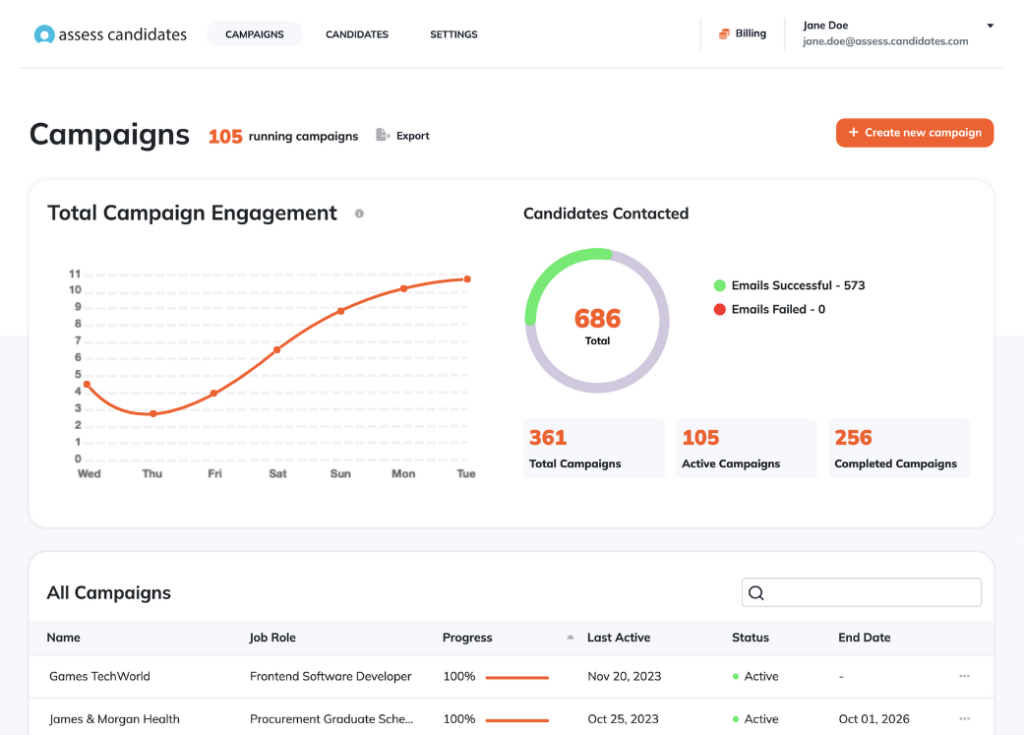
Assess Candidates’ assessments are designed to be accessible, inclusive, and engaging. Untimed personality questionnaires, support for disabilities such as extended time, screen readers, and Zoom features, along with a branded, user-friendly portal, all contribute to a positive perception of the hiring process.
Explore personality tests developed by Chartered Scientists to help you recruit the best candidates. VIEW PLANS
Find and hire the right people with ease using our advanced platform. Check out our top hiring assessments and begin making confident, evidence-based decisions now.
The following trends are expected to shape the future of personality testing in recruitment.
As recruitment continues to evolve, personality tests are expected to play an even greater role in shaping how organizations identify, evaluate, and retain talent.
With advancements in technology, data analytics, and a stronger focus on diversity and employee well-being, personality assessments will move beyond being just a screening tool and become an essential part of strategic workforce planning.
Key developments likely to shape the future of personality testing in recruitment include:
Personality tests will increasingly leverage AI to provide deeper, real-time insights into candidate behavior and long-term performance potential. This allows recruiters to predict not only job fit but also career trajectory within the organization.
Rather than relying on a single assessment, future recruitment strategies are likely to combine personality insights with cognitive, behavioral, and skills-based data to build a more complete picture of candidate potential.
Personality insights will help tailor recruitment and onboarding processes to individual candidates, enabling more effective and personalized recruitment and onboarding experiences. This makes the hiring journey more engaging and increases the likelihood of long-term retention.
Advanced personality assessments will be designed to minimize bias and support inclusive hiring practices. They will give every candidate an equitable opportunity to demonstrate their strengths beyond resumes or interviews.
Personality tests will no longer end at hiring but will inform employee training, leadership development, and career progression. This creates a continuous talent management cycle that benefits both employers and employees.
With more engaging, accessible, and user-friendly assessments, candidates will view the process positively rather than as a hurdle. This enhances employer branding and helps attract top-tier talent.
Workplace personality tests help employers evaluate behavioral tendencies, cultural alignment, leadership potential, and long-term job fit. When combined with cognitive assessments, structured interviews, and skills testing, they contribute to more accurate, objective, and successful hiring decisions.
Want to know more about personality questionnaire tests in recruitment? Keep scrolling to uncover more about the frequently asked questions, and sign up with your email to begin.
Yes, when developed and validated by professional psychometricians, personality tests are backed by research and data. They are carefully designed to predict job performance and workplace behavior.
Well-designed tests are inclusive, accessible, and structured to reduce bias. They provide candidates from diverse backgrounds with an equal opportunity to showcase their potential.
Candidates gain a fairer chance to highlight strengths that might not be evident in resumes or interviews. They also receive a better understanding of how they may fit into the role and company culture.
Good personality tests are built to detect inconsistencies in responses. They encourage honest answers, as faking results can lead to a poor job fit later.
Not all, but their use is rapidly growing across industries. Employers value them because they provide objective, data-driven insights that improve hiring success.
No, personality tests are used alongside interviews, skills assessments, and other tools. They provide an additional layer of insight to support a more balanced hiring decision.
Are you curious about the effectiveness of video interviewing in recruitment? Video interviews are becoming a key tool for modern recruiters in 2026, providing a comprehensive, convenient, and fair evaluation of a candidate’s cultural fit, behavioral tendencies, and skills.
The COVID-19 pandemic prompted employers to adopt virtual methods of hiring candidates, and this approach has since proven to be both efficient and cost-effective.
Beyond convenience, videos interviews for recruitment also alleviate candidate anxiety by offering greater control, a familiar environment, and flexibility to candidates. They can avoid travel stress, practice responses in advance, and take breaks between questions, thus contributing to a smoother, more positive candidate experience.
So, how do employers effectively include video screening in their recruitment process? We answer this and more key questions in our latest article, including:
By the end of this guide, you will comprehensively understand how to implement video interviewing to enhance your hiring efficiency, evaluate candidates fairly and without bias, and deliver an engaging experience for every candidate.
Ready to learn more about video interviews for recruitment? Let’s dive in.
A video interview is a type of job interview conducted remotely using video technology, allowing candidates and interviewers to connect virtually instead of in person. Recruiters can assess a candidate’s qualifications, communication skills, and overall suitability for a role by observing both verbal and non-verbal cues in real time or through pre-recorded responses.

Video interviews have become a key tool in modern recruitment to screen candidates efficiently and flexibly. They help evaluate soft skills, core competencies, and cultural alignment, providing a comprehensive view of applicants. Usually conducted in the early stages of recruitment, they serve as a bridge between initial applications and final stage in–person interviews or assessment centers.
According to Lighthouse Research & Advisory, 61% of companies believe that incorporating peer interviews and interactions through video hiring solutions is the most effective way to attract top talent.
By enabling virtual engagement with multiple applicants, video interviews streamline the shortlisting process so recruiters can identify top candidates more effectively.
Select top talent with our video interview tool that delivers fair, consistent, and insightful hiring decisions. HIRE FOR FREE
Are you wondering what the different types of video interviews are? Hold on tight as we explain them below.
There are 2 main types of video assessments, and they are:

A pre–recorded video interview involves candidates responding to a set of pre-determined questions without interacting with a live interviewer. The recruiter provides questions through a video interview platform, and the candidate records their answers within a specified time frame, often with time limits for each response.
These recordings are then submitted to the hiring team to review at their convenience. This format allows you to evaluate multiple candidates efficiently. The structured, standardized questions ensure fairness and help remove constraints due to availability and time.
A live video interview is a real-time virtual meeting between a candidate and one or more interviewers, conducted through video conferencing platforms. It closely resembles a traditional face-to-face interview, with opportunities for back-and-forth conversation, clarifications, and deeper exploration of the candidate’s skills, experiences, and personality.
This format enables employers to assess a candidate’s interpersonal abilities, adaptability, and cultural fit while allowing candidates to ask questions and engage directly with the hiring team.
How does a video interview work? Continue reading to discover the workings behind video interviewing.
A video interview works by connecting candidates and employers through digital platforms that utilize video technology, either in real-time or through pre-recorded responses.
Here is the typical process of a video interview:
You might be wondering how the a video interview assesses candidates during the recruitment process. Keep reading to see more!
Video assessment interviews are assessed using structured scoring systems or rubrics. Recruiters evaluate candidates on factors such as communication skills, clarity of responses, problem–solving abilities, professionalism, and cultural fit. Some platforms also utilize AI to analyze speech, tone, and facial expressions, although final decisions typically combine both human judgment and technology.
Video assessments give you deeper insights into a candidate’s skills, personality, and potential fit for the role. They go beyond written assessments by allowing you to observe how candidates express themselves, handle questions, and present their ideas in real time or recorded. This provides a more holistic view of the individual’s capabilities and workplace readiness.
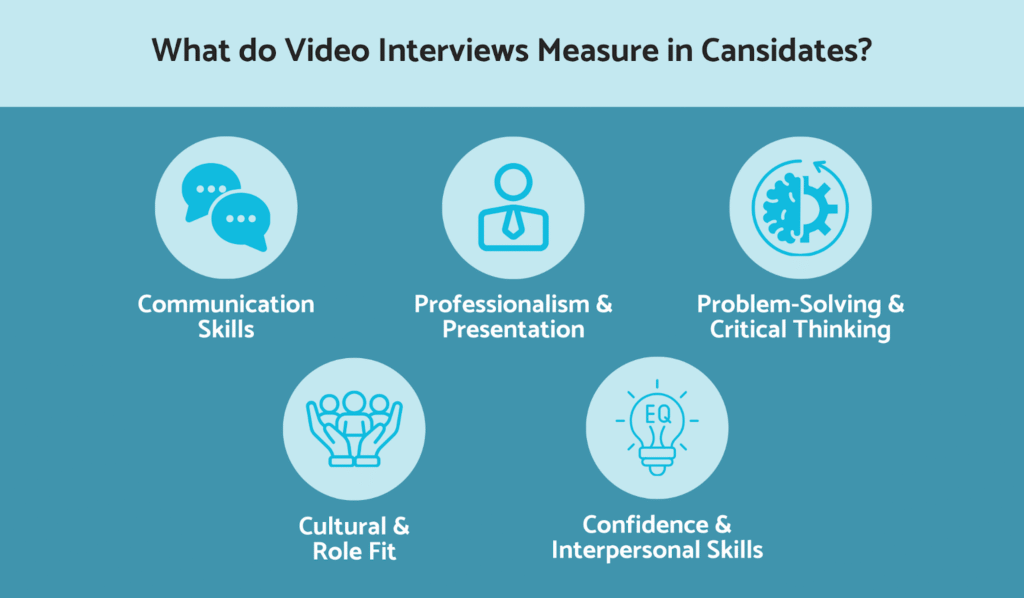
You can assess how clearly and confidently candidates express their thoughts. Strong communication demonstrates that a candidate can effectively share ideas with colleagues, clients, or stakeholders.
The way a candidate presents themselves on video, including body language, attire, and demeanor, reflects their level of professionalism. Employers seek signs that the individual can represent the company in a positive light in client-facing or team environments.
Through situational or competency-based questions, you can evaluate how candidates approach challenges. Their answers demonstrate analytical ability, creativity, and the ability to make decisions under pressure.
Video interviews reveal aspects of a candidate’s personality, values, and behavior that indicate whether they will be a good fit within the organization. This helps you predict long-term engagement and teamwork success.
You pay attention to how comfortable and confident candidates appear when speaking. This is especially important for roles that require leadership, customer interaction, or influencing others.
Use our reliable video interviewing platform to evaluate your candidates. LEARN MORE
So, why do so many employers use video interview solutions? Next, we will examine the video interview benefits.
Video interviews are now a crucial part of modern hiring processes, providing a flexible, efficient, and insightful way to evaluate candidates. They eliminate time and location barriers while revealing how candidates present themselves. Using video assessments helps organizations make better hiring decisions and improves the experience for both recruiters and applicants.

Video interviews eliminate the need for travel and scheduling logistics, saving both the employer and candidate significant time and expenses. Recruiters can screen more candidates in less time, speeding up the hiring process.
Employers can reach candidates across different locations without geographical limitations. This makes it easier to attract diverse talent and access specialized skills that may not be available locally.
Pre-recorded interviews enable candidates to answer questions at their convenience, allowing recruiters to review responses at a time that suits their schedule best. This creates a smoother and less stressful experience for both sides.
With standardized questions, every candidate receives the same interview structure. This reduces bias and ensures a fairer comparison of candidates’ responses and performance.
Unlike written assessments, video interviews enable recruiters to observe an individual’s communication style, professionalism, and confidence. This provides a fuller picture of how the candidate might perform in fundamental workplace interactions.
Recruiters can share recorded interviews with other decision-makers in the company. This helps teams review candidates together and make more informed, collaborative hiring choices.
Video interviews align perfectly with modern work practices, especially when hiring for remote or hybrid roles. They help employers assess how comfortable candidates are with digital communication tools.
Improve your hiring process with our user-friendly and bias-free video recruitment platform. HIRE FOR FREE
Having explored the benefits of video interviews, let us unpack the differences between in-person and video interviews in more detail.
A job interview is often the first chance candidates get to form an impression of your company, making it crucial to choose thoughtfully between an in-person or virtual format. There are several differences and each approach offers distinct advantages depending on the situation.
At Assess Candidates, we recommend using video interviews as part of a broader candidate assessment strategy rather than solely relying on them. Combining video screening with a variety of different psychometric tests and skills-based assessments provides a holistic view of each candidate’s potential. But which psychometric assessments should accompany video interviewing in the recruitment process?
Psychometric assessments, when paired with video interviews, provide a more comprehensive evaluation of candidates by combining objective data with personal interaction.
While the video interview highlights communication, problem–solving, and cultural fit, psychometric assessments can measure cognitive ability, personality traits, and behavioral tendencies in more depth. Together, they offer a balanced, fair, and accurate view of a candidate’s skills and potential.
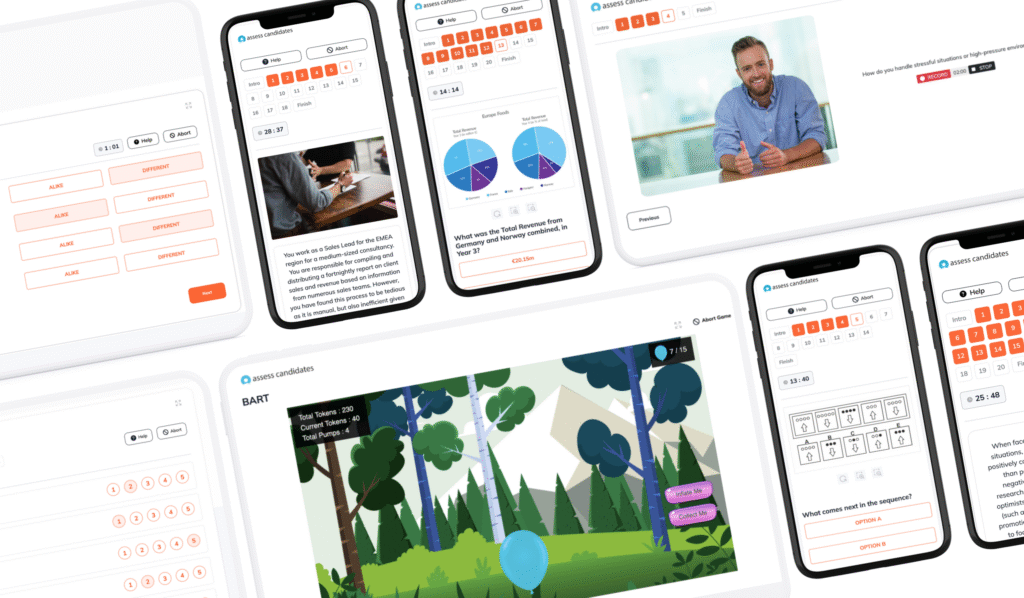
Here is a list of the different psychometric tests you could use during the candidate assessment process.
Psychometric assessment tests in recruitment objectively evaluate a candidate’s cognitive skills, personality, and behaviors. They help predict job performance, cultural fit, and long-term success, providing standardized, unbiased insights that promote fairer, more informed hiring decisions. These are the following assessments:
Logical reasoning tests measure a candidate’s ability to analyze information, identify patterns, and draw logical conclusions. It evaluates problem–solving, critical thinking, and decision–making skills. Employers use logical reasoning assessments to predict how well candidates can handle complex tasks and make sound judgments.
Verbal reasoning tests evaluate a candidate’s ability to understand, interpret, and analyze written information. Verbal reasoning tests measure skills such as reading comprehension, critical thinking, and drawing logical conclusions from text. Employers use it to assess how well candidates can process and communicate information effectively.
Numerical reasoning tests assess a candidate’s ability to interpret and work with numerical data, such as graphs, tables, and statistics. Numerical reasoning tests evaluate mathematical skills, data analysis, and logical problem–solving. Employers use it to assess a candidate’s ability to make decisions based on numerical information.
Personality questionnaires assess a candidate’s traits, preferences, and work style. Personality questionnaires help employers understand interactions, task approach, and cultural fit. Unlike ability tests, it measures personality, not skills.
Situational judgment tests present candidates with realistic work scenarios and ask them to select the most appropriate response. Situational judgment tests assess decision–making, problem–solving, and interpersonal skills. Employers use it to predict candidates’ workplace behavior.
Critical reasoning tests, or critical thinking tests, measure a candidate’s ability to analyze information, make objective decisions, distinguish facts from opinions, and present reasoned arguments.
Abstract reasoning tests measure a candidate’s ability to identify patterns, logical rules, and relationships in unfamiliar information. It assesses problem–solving, lateral thinking, and the capacity to learn new concepts quickly. Employers use it to gauge a candidate’s adaptability and innovation.
Diagrammatic reasoning tests evaluate a candidate’s ability to comprehend and analyze visual information, including flowcharts, diagrams, and process maps. It assesses logical thinking, problem–solving, and the ability to follow processes or identify rules. Employers use it to evaluate how candidates handle complex systems and abstract concepts.
Spatial reasoning tests measure a candidate’s ability to visualize, manipulate, and interpret shapes or objects in space. It evaluates skills like mental rotation, pattern recognition, and understanding spatial relationships. Employers use it to assess problem-solving skills in fields that require design, engineering, or technical reasoning.
Companies such as Assess Candidates and SHL offer online psychometric assessment tests to examine your candidates’ strengths.
Skills-based tests measure a candidate’s ability to perform specific tasks or demonstrate job-related competencies. They focus on practical skills, such as coding, writing, data entry, or technical tasks, rather than general aptitude.
Examples of popular skills-based tests are:
Coding tests examine a candidate’s programming skills and problem-solving ability through writing and debugging code. It assesses knowledge of programming languages, algorithms, and logical reasoning. Employers use it to confirm whether candidates can develop reliable and efficient software solutions.
Error checking tests measure a candidate’s ability to quickly and accurately spot mistakes in data, text, or sequences. It assesses attention to detail, concentration, and accuracy. Employers use these checking tests for roles where precision is critical, such as data entry, proofreading, or quality control.
Codility and HackerRank offer coding tests.
Game-based assessments are interactive tests using game-like tasks to evaluate candidates’ abilities and traits. They make assessments more engaging and provide data-driven insights into skills and personality, helping employers identify potential in a less formal, candidate-friendly way.
Companies that offer game-based assessment tests are Assess Candidates and Pymetrics.
When hiring, video assessments can be placed either before or after psychometric tests. At Assess Candidates, we recommend using a mix of both to create a well-rounded evaluation. Combining different assessments allows you to measure technical skills, cognitive ability, emotional intelligence, personality, and behavior, giving a more precise prediction of a candidate’s job performance.
Explore our end-to-end pre-employment assessment library to optimize your recruitment of candidates. LEARN MORE
Knowing what video interview questions to ask is crucial in a video interview, and here, we will examine some example video interview questions.
To better understand the roles of video assessments in the hiring stage, we have drafted a few pre-recorded video interview example questions to familiarize yourself with, ahead of including the interviews in your recruitment process.
Here are 5 examples of pre-recorded video interview questions.
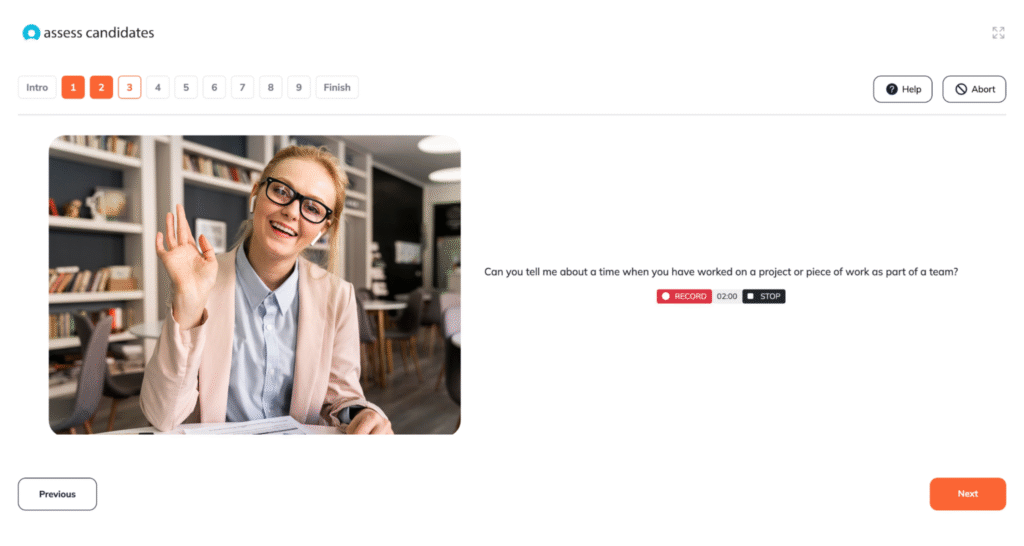
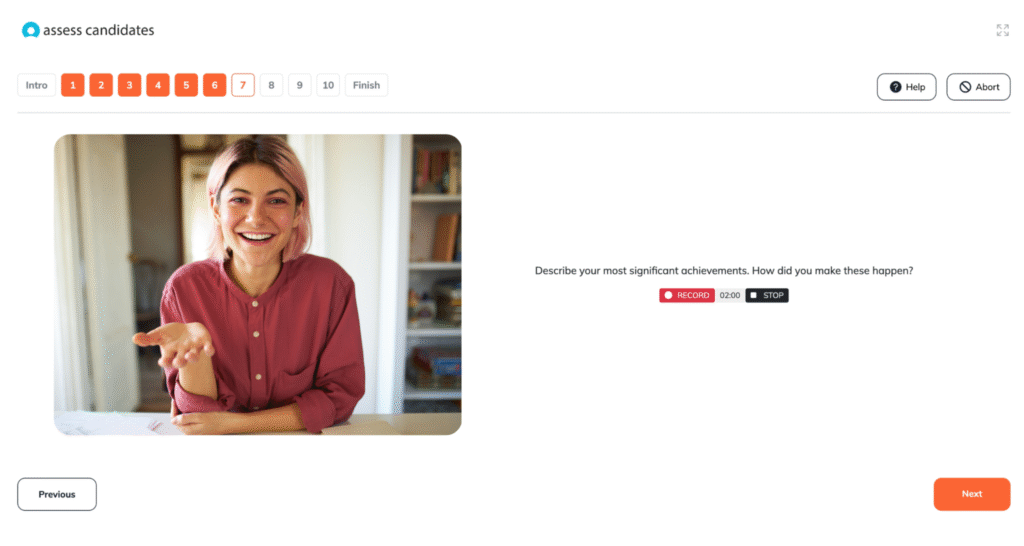
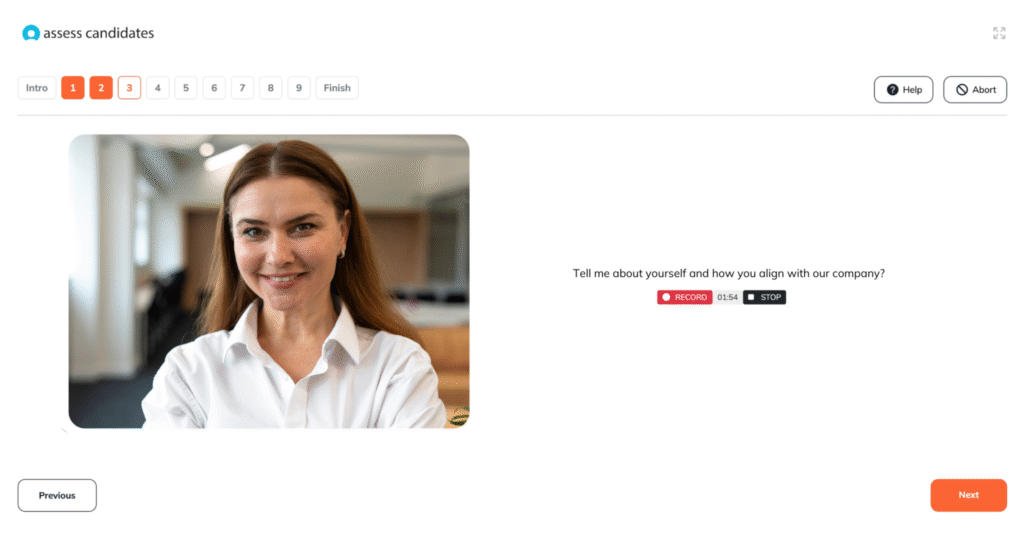
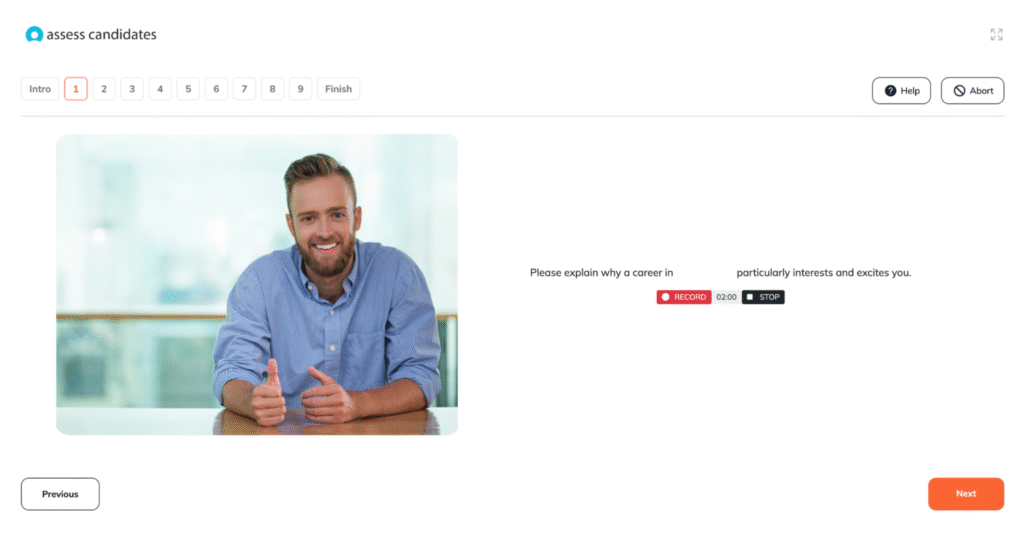
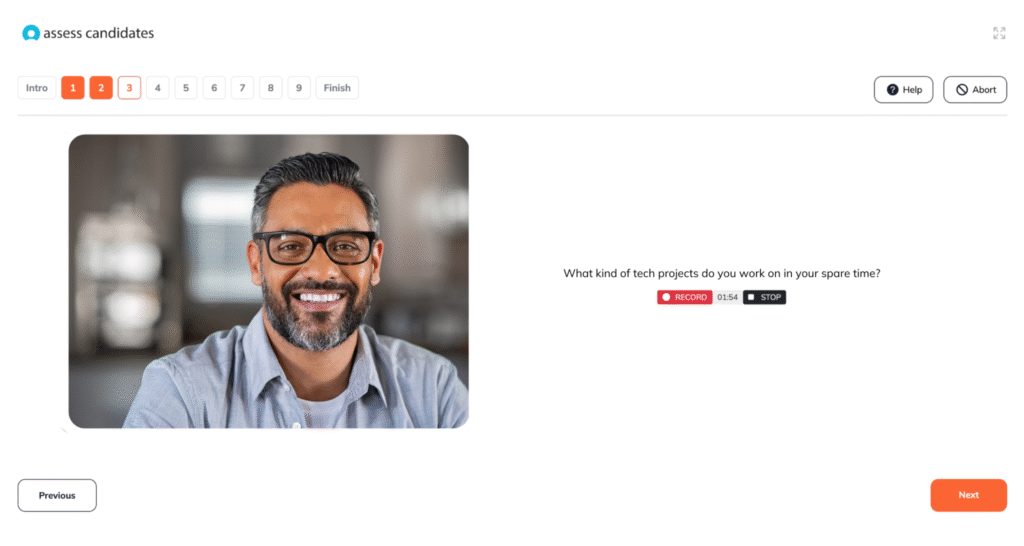
Assess Candidates offers a variety of 13 pre-recorded video interview formats, each including questions designed to evaluate competencies, technical skills, cultural fit, strengths, and motivations. Each automated video interview includes nine to ten questions, allowing candidates two minutes to respond to each one.
Having seen the examples of video interviewing, check out the best strategies for incorporating video interview assessments into your recruitment.
Video assessments have become a powerful tool in modern hiring, enabling organizations to save time, broaden their talent pool, and make more informed decisions. However, to maximize their value, companies need to approach them strategically.
By setting clear goals and combining them with other recruitment methods, video interviewing can become an integral part of a well-rounded hiring process.

Use our science-backed, reliable psychometric tests to assess your candidates’ skills. LEARN MORE
To effectively apply video assessment interviews in your recruitment process, consider the obstacles and strategies for mitigating them, thereby preventing similar issues from recurring. Continue scrolling to see the challenges of using video interviews.
Organizations use video interviews as a widely adopted tool in modern hiring to enjoy efficiency, flexibility, and access to a broader talent pool. However, like any recruitment method, they have certain drawbacks that you may want to consider.
Understanding these challenges helps you strike a balance between the benefits of video interviews and their potential limitations, ensuring a fair and effective hiring process.
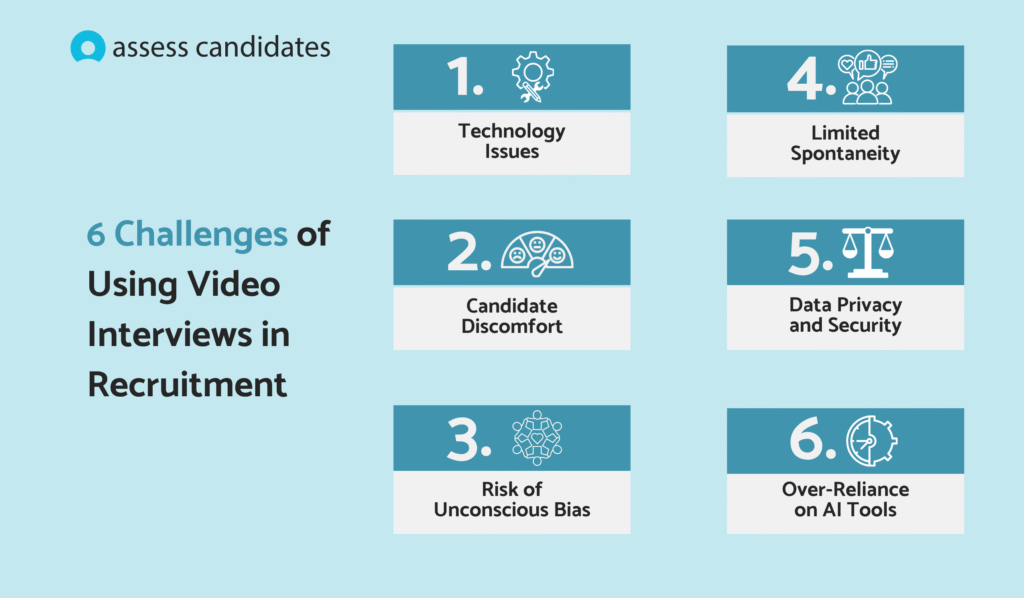
Candidates may encounter issues with internet connectivity, software glitches, or limited access to suitable devices. These technical barriers can create stress and affect performance, even if the candidate is otherwise qualified.
Solution: Provide clear technical guidance in advance, offer practice sessions, and ensure your platform is user-friendly and accessible on multiple devices.
Not all applicants feel confident speaking on camera, which may lead to underperformance compared to an in-person setting. This can disadvantage candidates who are skilled but less comfortable with digital formats.
Solution: Advise candidates to practice with example questions or mock video interview questions to prepare ahead of their interview dates, and provide them with hands-on tips on how to pass their video interviews.
Visual impressions such as background, appearance, or speaking style may influence hiring decisions. Without structured scoring, bias can creep in more easily than in written tests.
Solution: Train interviewers on bias awareness, use standardized scoring rubrics, and, where possible, have multiple reviewers assess responses.
In pre-recorded interviews, candidates cannot ask clarifying questions or engage in natural dialogue. This can make their answers feel less authentic and reduce opportunities to build rapport.
Solution: Use a mix of live and pre-recorded interviews, or design clear, well-explained questions to minimize confusion.
Storing and sharing video interviews raises concerns about candidate data protection, as employers increasingly rely on various digital tools for video interviewing.
Solution: Select platforms that comply with data protection regulations, be transparent about storage policies, and limit access to authorized personnel only.
Some platforms utilize AI to analyze tone, facial expressions, or word choice; however, these technologies are not always reliable or bias-free. Sole reliance on AI risks overlooking strong candidates.
Solution: Use AI insights as a supplement, not a replacement, for human judgment, ensuring that trained recruiters make final hiring decisions.
You must now be curious about what roles are best suited for online video assessments.
Video interviews are well-suited for assessing candidates’ communication skills, professionalism, technical abilities, and cultural fit, particularly for roles that require frequent interaction, technical expertise, or remote work.
Video interviews are especially useful in the early stages of hiring to screen for key requirements, such as language proficiency for customer support roles or presentation ability for marketing positions. They are also valuable for assessing candidates applying for remote roles, where effective communication and a reliable home setup are essential.
To that end, let us explore the list of sectors that require video assessments during the hiring stage.
Healthcare organizations, such as the Mayo Clinic and UnitedHealth Group, rely on video interviews to assess not only technical expertise but also communication and empathy. This helps employers quickly identify professionals who can balance patient care with specialized knowledge.
Firms in consulting, law, and other service sectors, such as Deloitte and PwC, use video interviews to assess problem–solving skills, client–facing abilities, and cultural fit. It allows for consistent evaluations across multiple candidates and offices.
Companies like Google and Microsoft utilize video interviews to screen candidates across global technical talent pools efficiently. This approach is particularly useful for roles that require coding, problem–solving, and adaptability, as candidates can be evaluated remotely without geographic limitations.
In the finance industry, firms such as Goldman Sachs and J.P. Morgan utilize video interviews to assess analytical ability, professionalism, and trustworthiness. They save time in early screening stages, particularly for high-volume graduate recruitment.
Educational institutions, such as Pearson and Kaplan, use video interviews to evaluate teaching style, subject knowledge, and communication skills. This is especially valuable for remote learning positions or when hiring international educators.
Companies such as Starbucks and Walmart often use video interviews to assess customer service skills and presentation. It allows them to see how candidates might interact with customers in retail before moving to in-person stages.
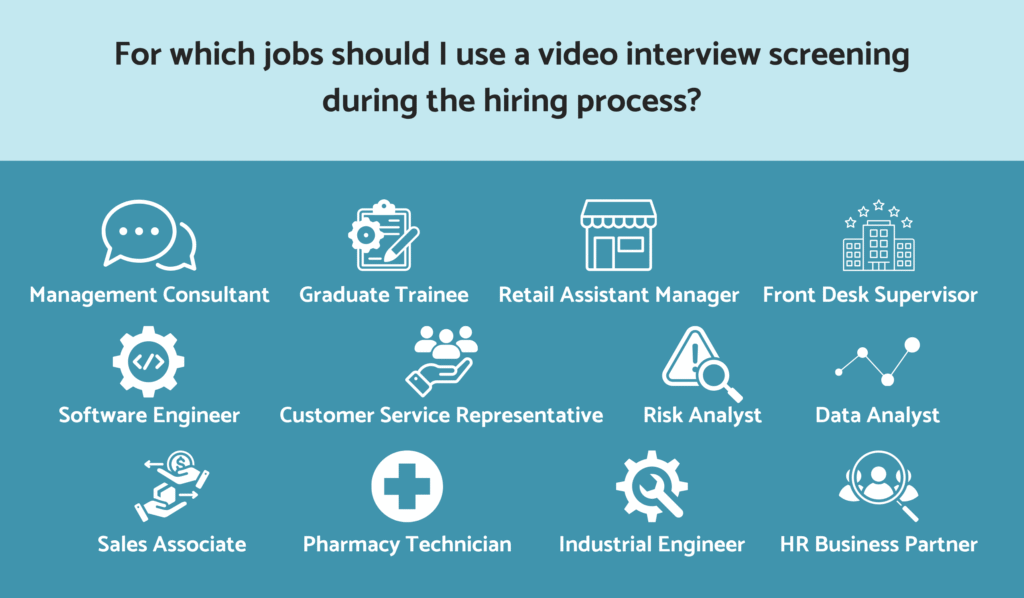
If you’re unsure about integrating video interviews into your assessment process, contact us for a free evaluation of your recruitment needs. We will help refine your candidate requirements to attract and hire the right talent.
Many employers have incorporated video interviewing into recruitment. To assess their success, check out the list of employers using these solutions.
Video interviews have become a standard part of modern recruitment, giving employers a faster and more flexible way to evaluate candidates. They help organizations streamline hiring, save costs, and assess skills such as communication, professionalism, and problem–solving. Employers also value the consistency and fairness that structured video interviews bring to the selection process.
Many well-known companies across various sectors utilize video interviews to recruit top talent. From global technology giants to finance leaders and major retailers, organizations rely on this method to tap into broader talent pools and make informed decisions.
Below is a list of companies that use video interviews as part of their recruitment process:
Leverage reliable video interviews curated by verified scientists to hire the right candidates. VIEW PLANS
By this time, you must be wondering who the providers of recruitment video interviews are. Let’s find out below!
Choosing a video interview provider is just as important as the interview solutions themselves, as this is a brand that many candidates will associate with your company. Therefore, it is significant to highlight a few of the top providers of video interview solutions in the industry.
Several companies have shared their success stories about adding video interviews to their recruitment processes. Why not take a look at some of these scenarios?
Leading companies in their respective industries have all documented their experiences with using on–demand video interviewing during the hiring process.
Below, we have some real-world examples of clients sharing their success stories about applying video interviews in recruitment.
Challenge:
Google faced difficulties managing the high volume of applications from candidates worldwide. Traditional in-person interviews were costly, time-consuming, and limited access to diverse talent pools.
Solution:
The company adopted video interview assessments to streamline its early screening process. Standardized questions ensured fairness, while video recordings allowed hiring teams across regions to review candidates collaboratively.
Results:
Challenge:
Starbucks struggled with high-volume hiring for customer-facing roles, particularly during seasonal peaks. In-person interviews were difficult to coordinate across multiple locations.
Solution:
The company introduced video interviews to assess candidates’ customer service skills and cultural fit. Recruiters could review recorded responses at any time, reducing scheduling challenges.
Results:
This is where the Assess Candidates video interview platform comes in, as we help companies standardize and upgrade their recruitment stages by also offering video interviewing solutions to employers.
Employers prefer the Assess Candidates video interview tool because it combines science-driven assessment with user-friendly technology, helping them make smarter, faster, and fairer hiring decisions.
The platform offers structured, data-driven insights that enhance candidate evaluation while ensuring inclusivity and accessibility throughout the process.
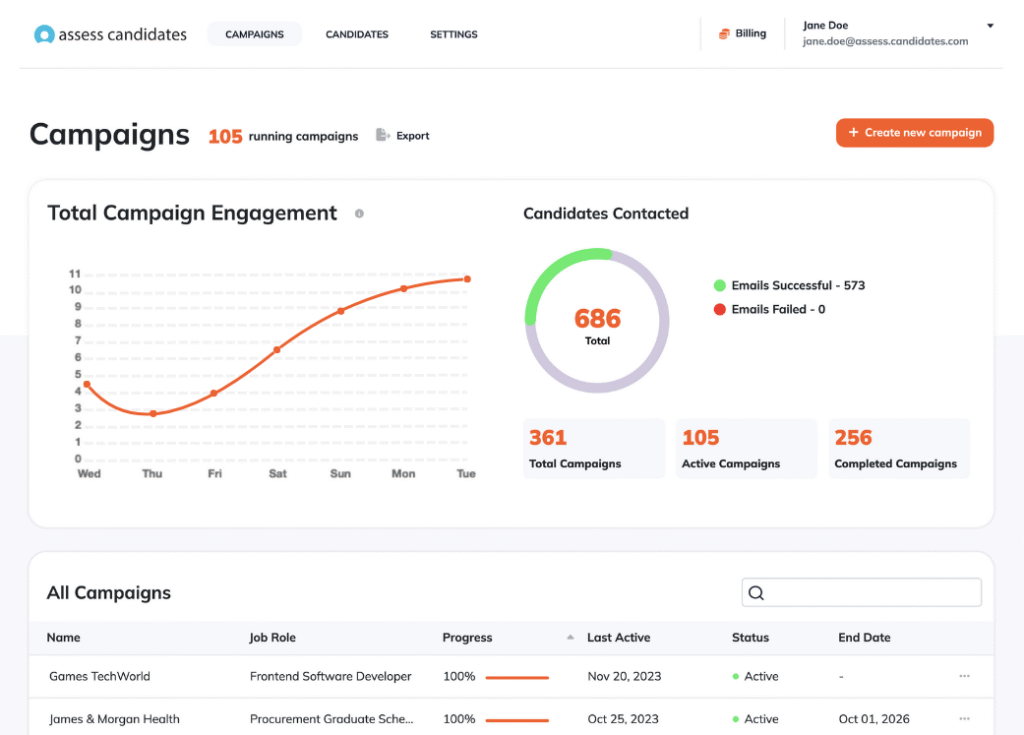
Use our video recruitment platform to guarantee a positive candidate experience. LEARN MORE
With our advanced platform, you can attract and hire top talent with confidence, using our online video interview platform. Explore our top hiring assessments and start making informed hiring decisions today!
Finally, we will consider what the future could look like with more employers using video interviews in their recruitment. Keep scrolling to know more!
The hiring landscape is evolving rapidly as organizations seek faster, fairer, and more reliable ways to identify talent. Video interviews are becoming a central part of modern recruitment because they combine technology with structured assessments, offering advantages that traditional methods cannot match.
By enhancing efficiency, accessibility, and the candidate experience, video interviews are shaping the future of hiring.
Video interviews save significant time by removing the need for travel and scheduling multiple rounds of in-person meetings. Recruiters can review recorded responses at their convenience, streamlining the selection process and reducing overall time-to-hire.
Employers can reach candidates from diverse locations, overcoming geographical barriers. This opens up opportunities to hire diverse talent pools, including international applicants and individuals who may not have access to in-person interviews.
Structured video interview questions ensure every candidate is assessed under the same conditions. This consistency reduces bias and allows employers to compare applicants more fairly, improving the quality of hiring decisions.
Advanced video interview platforms provide analytics and scoring systems that highlight candidate performance across multiple areas. These insights help recruiters make objective, evidence-based hiring choices instead of relying solely on intuition.
Candidates benefit from flexibility by recording interviews at a time that suits them, reducing stress and scheduling conflicts. This convenience creates a positive impression of the employer and improves candidate engagement.
As businesses move toward digital-first operations, video interviews align recruitment with broader workplace innovations. They demonstrate that a company is forward-thinking, modern, and adaptable in its approach to talent acquisition.
Video interviews reduce costs associated with travel, accommodation, and venue arrangements for both candidates and employers. This makes the hiring process more sustainable and budget-friendly without compromising quality.
Want to dive deeper into video recruitment? Keep scrolling to explore our frequently asked questions, and enter your email to get started today.
Video interviews evaluate a range of qualities, including communication skills, confidence, problem-solving abilities, and cultural fit. Depending on the role and interview questions, they may also assess technical knowledge to determine the candidate’s suitability for the position.
Candidates should test their technology, ensure good lighting and sound, and practice answering questions clearly and concisely. Preparation helps reduce nerves and enables one to present oneself confidently.
Reputable video interview platforms utilize advanced and secure data encryption methods, along with robust privacy controls, to effectively safeguard candidate information from unauthorized access or breaches. Employers must also always ensure strict compliance with relevant data protection regulations to maintain trust and legal standards.
Though video interviews are highly effective and efficient tools that save time and resources during the early and mid-stages of the recruitment process, many employers still prefer to conduct final face-to-face interviews to assess better and confirm the best candidate for the position.
Video interviews benefit employers by enabling faster hiring processes, which save time and streamline recruitment, while also reducing costs to make hiring more economical. They also gain broader access to a diverse talent pool, along with detailed insights into candidate performance, enhancing fairness and consistency in selection.
Video interviews offer candidates several benefits, such as increased work flexibility and reduced travel-related stress. Pre-recorded video interviews also offer candidates a great opportunity to showcase their skills in a less intensive environment. This approach also promotes fairness by providing equal chances for applicants from diverse regions.
When video interviews are appropriately structured, they ensure that all candidates receive the same questions and adhere to equal time limits. This builds a consistent and fair evaluation process, minimizes potential biases, and promotes objective assessment of each applicant.
Assessment centers are a structured and highly effective method for employers to evaluate candidates for hiring, promotions, and development opportunities.
Unlike traditional interviews that rely on subjective impressions, assessment centers use real-world job simulations to assess each candidate in a fair and measurable way on a broad range of competencies, including analytical thinking, problem-solving, collaboration, communication, and leadership.
Did you know? According to the Chartered Institute of Personnel and Development’s Recruitment, Retention and Turnover survey, 34% of employers use assessment centers to recruit managers, professionals, and graduates.
Typically half or full assessment days include exercises like group discussions, case studies, role plays, and structured in-person or virtual interviews. Trained assessors observe each participant and score their performance against consistent, job-relevant benchmarks. By replicating real workplace challenges, assessment centers allow candidates to demonstrate how well they can perform on the job and under pressure, whilst helping recruiters to make better-informed, data-driven final hiring decisions.
Whether you are a recruiter, hiring manager, or talent acquisition expert who is already familiar with assessment centers or you are learning about them for the first time, you may find yourself wondering:
In this complete guide, we offer key insights and practical strategies for leveraging assessment center exercises to hire best-fit, qualified candidates for your role and company, while maintaining an objective and consistent evaluation process.
So, keep reading to learn more about what an assessment centre is in recruitment.
An assessment center or assessment day is a structured selection process used by employers to assess candidates’ competencies, skills, and overall suitability for a specific role. It involves presenting a group of candidates with a series of individual and group exercises, designed to simulate real job tasks and challenges, and directly comparing their performance side by side.

Unlike traditional interviews or standalone pre-employment tests, assessment centers combine multiple simulations and techniques to observe candidates’ behaviors in realistic work-related scenarios. This multi-method approach offers a holistic, objective preview into a candidate’s performance and potential on the job before you hire them.
Enhance your assessment center by shortlisting better candidates first with science-backed assessments. HIRE FOR FREE
Organizations use various types of assessment centers to evaluate candidates on their specific skills, behaviors, and job fit. Each aligns with specific hiring objectives and needs. By understanding the different assessment center examples, you can select the most effective approach for your company – whether for hiring candidates or supporting internal mobility and existing employee development.
Generally, these are the 4 types of assessment centers:
Assessors can conduct traditional face-to-face assessment centers, requiring applicants to attend assessment activities at the company office or third-party location. Exercises often include group discussions, presentations, or role-plays, giving candidates the opportunity to socially interact with each other and allowing assessors to observe interpersonal dynamics, communication styles, and body language firsthand.
Example: Corporations like Caterpillar and JPMorgan Chase run in-person assessment days with role-play exercise tasks and final interviews.
Delivered remotely via video conferencing, digital platforms, and collaboration tools, virtual or online assessment centers simulate work activities designed to evaluate candidates’ on-the-job skills and competencies, all without the need to travel to an office. These centers provide flexibility, accessibility, and cost savings while ensuring structured and consistent evaluations – ideal for global recruitment.
Example: Major multinational employers like Amazon and Deloitte use virtual assessment centers as part of their recruitment process to evaluate candidates at scale across locations.
A hybrid model blends both in-person and virtual elements, offering flexibility and broader access. Candidates may complete some assessments online first before attending a final interview or hands-on group task in person.
Example: Organizations like Unilever and Deloitte have adopted hybrid formats to combine convenience with rich, in-person insights.
Unlike the previous formats, developmental assessment centers focus on identifying existing employees‘ strengths and growth areas. These programs identify internal talent for promotions, support succession planning, and guide training and upskilling initiatives. In addition to exercises, participants often receive structured personalized feedback and coaching.
Organizations conduct developmental assessment centers in-person, virtually, or through a hybrid approach to accommodate logistical needs, participant locations, and business preferences.
Example: Companies like General Electric and Johnson & Johnson use an assessment center and developmental center to strengthen leadership pipelines and foster internal mobility.
Let’s now explore in more detail how virtual and in-person assessment centers differ.
Organizations utilize both virtual and in-person assessment centers to evaluate candidates depending on their hiring goals and needs. These centers differ in their delivery methods, tools, and overall experience.
By understanding these differences, you can select the most suitable approach for your business based on convenience, cost, and the desired level of interaction.
In the following section, we will look into the exercises commonly used in assessment centers for hiring.
Recruiters employ a range of practical tasks and exercises during assessment centers to comprehensively assess candidates’ aptitude, traits, behaviors, and fit for the position and organization. These activities mimic actual job scenarios and allow evaluation of key abilities like communication, collaboration, problem-solving, and decision-making.

In a case study analysis, depending on the industry and role, employers present candidates with 1-2 case study problems to propose solutions. It enables employers to assess candidates on their critical thinking, analytical skills, and strategic decision-making abilities.
This exercise is commonly used in roles such as finance, investment banking, engineering and operations, and the public sector.
Although the questions asked may vary, some common case study questions include:
Example question: “What are the key issues reflected in the data, and what steps would you recommend to improve customer satisfaction?“
Example question: “You are the CEO of a company considering a merger. What key factors would you evaluate before deciding whether to proceed?”
Example question: “Discuss with the team to review individual responsibilities and the timelines to ensure everyone is on the same page regarding expectations for the remainder of the product development process.”
Assessment centre group exercises are used by employers to determine how candidates interact with others in a collaborative setting.
A common group exercise is group discussion (GD) – structured with an assigned leader or without. In a leaderless group discussion (LGD), participants debate a topic or solve a problem as a team, highlighting who are the natural leaders. Alternatively, those involving a designated leader to guide the conversation reveal how candidates respond to forced leadership.
Other group exercises include team-based tasks, such as building a structure from limited resources or negotiating a business strategy.
Group exercises are commonly used in roles such as healthcare, consulting, sales, and business development.
Did you know? 92% of candidates face group exercises as a part of their assessment centres.
Some common assessment centre group exercise examples include:
Example question: “A product launch faces unexpected delays. As a group, identify the causes and develop an action plan to get back on track.”
Example question: “Your team must devise a plan to manage a public relations crisis. Present your approach and key communication messages.”
Example question: “Your team is tasked with planning a company event within a limited budget and timeline. Collaborate to divide responsibilities, prioritize tasks, and create a detailed plan.”
Role-play simulations mimic real workplace interactions, such as handling a difficult customer, conducting a performance review, or mediating team conflict. Candidates are given a scenario and must act out their response. These exercises are used by employers to identify how well candidates understand the demands of the role and can negotiate and compromise.
Some common roles that use role-play simulations include sales and business development, customer service and support positions, and human resources and recruitment.
Example question: “Focusing on the given scenario of an angry customer who was wrongly charged a fee, play the role of a bank manager. Resolve the issue while maintaining customer trust.”
Individual presentation exercises require candidates to prepare and deliver a short presentation on a given topic, often related to a case study or business scenario. The topic may be provided in advance, allowing time for preparation, or given on the spot to assess impromptu skills. Employers use these exercises to assess public speaking, clarity of thought, persuasion, and structuring arguments.
Some common roles that use presentation exercises include marketing, sales, leadership, management, academia & research, and the public sector.
Example scenario: “Develop a marketing campaign for a product launch. You must deliver a 20-minute presentation covering objectives, messaging, channels, content strategy, engagement tactics, and success metrics to senior management.”
In these exercises, candidates are required to actively manage a series of tasks that reflect an ongoing workplace scenario. Whether they are handling physical documents (in-tray) or responding to emails (e-tray), candidates must prioritize tasks, adapt to new information, and maintain strong attention to detail. Employers use these exercises to test how well candidates organize their workload, make decisions, and communicate under pressure.
These exercises are primarily used for roles requiring strong organizational and decision-making skills, including managerial and supervisory positions, administrative and executive assistants, and government and civil service jobs.
For example: A common assessment centre e-tray exercise could place candidates in the role of an operations coordinator for a national retail chain preparing to launch a flagship store in four weeks. The applicant will receive emails from HR, logistics, marketing, and regional management, each presenting issues or requests requiring decisions. With access to supporting documents like timelines and proposals, candidates must prioritize tasks, respond professionally, resolve problems, and ensure all operations, staffing, and promotional activities stay on track for a successful and timely store opening.
These exercises involve candidates performing written tasks common in the role, such as drafting a business email, summarizing a case study, or writing a strategic memo. Employers use these exercises to evaluate a candidate’s written communication, conciseness, clarity, grammar, and logical structure.
Written exercises are especially important for roles requiring strong written communication, such as administration, law, or corporate positions.
For Example: An assessment centre written exercise example could involve a candidate who is given a case file about a lawsuit and asked by the manager to write a report. The report should provide a detailed analysis highlighting the most relevant facts, along with any conclusions or recommendations based on your evaluation. The goal is to assess the candidate’s ability to interpret information, think critically, and communicate clearly in writing.
Improve your assessment centre with psychometric tests for both technical and soft skills. LEARN MORE
In addition to these assessment center exercises, many employers also include final one-on-one or group interviews as part of the assessment day. These interviews offer a chance to explore candidates’ motivations, values, and communication styles in more depth.
Next, we will explore the different types of interviews commonly used in assessment centers and how they complement the overall evaluation process.
Structured interviews are also a core part of the assessment centre process. Whether conducted online or in person, employers follow a consistent format with standardized questions tailored to the job role and type of assessment centre.
The purpose of assessment center interviews? To gather deeper insights into a candidate’s past behavior to predict future performance and evaluate key competencies and motivations, such as leadership, adaptability, problem-solving, and teamwork.
Did you know? Employers often combine interviews with psychometric tests, such as aptitude, personality, or situational judgment tests, to gain a fuller picture of a candidate’s abilities and potential fit.
Depending on the role and purpose, employers may use a variety of interview types, including:

Recruiters use a mix of interview question styles to assess a candidate’s abilities, personality, and suitability for the role. Here’s a breakdown:
Hire competent best-fit candidates in your assessment center with our AI-powered video interview tool. LEARN MORE
Now we have covered all the different types of assessment centre exercises, how does an assessment centre actually work for hiring? Let’s find out below.
An assessment center is a structured, multi-stage hiring method designed to evaluate candidates across a range of job-relevant competencies and skills through realistic workplace simulations and challenges.
It ensures a comprehensive candidate evaluation by combining multiple assessment tools, observer insights, and collaborative scoring. For this reason, assessment centers are ideal for making final decisions about which shortlisted candidates to hire.
In short: Assessment centers give recruiters a 360-degree view of candidate potential, combining performance across multiple tasks with collaborative, evidence-based scoring. This enables more confident, data-driven hiring decisions, especially for complex, high-stakes, or leadership roles.
Identify top-performers before assessment center invitation with our talent assessment platform. HIRE FOR FREE
So, why are assessment centers such a popular choice for hiring? Let’s take a closer look at the benefits for employers.
Employers use assessment centers in recruitment because they provide a thorough, structured, unbiased evaluation of candidates’ beyond what traditional interviews or CVs can reveal. By simulating real-world job scenarios, assessment centers allow employers to observe how candidates think, behave, and collaborate under pressure, providing a more accurate prediction of their on-the-job performance.
Unlike interviews or individual tests, assessment centers combine multiple assessments, including group exercises, individual case study tasks, and interviews, to give a well-rounded view of each candidates’ core strengths, weaknesses, and cultural fit. This supports more objective and data-driven hiring decisions, reduces unconscious bias, and helps employers identify candidates who are both qualified and capable to thrive in the role.

Assessment centers predict job performance effectively by immersing candidates in realistic work scenarios. Unlike traditional interviews that ask hypothetical questions, simulation exercises, such as case studies, role-plays, and in-tray exercises, push candidates to show how they would tackle actual job challenges.
By watching how candidates solve problems under time pressure or collaborate in team tasks, employers gather reliable evidence of whether they have the necessary capabilities that align closely with on-the-job success. This predictive accuracy helps reduce the risk of costly mis-hires, which must be avoided especially for roles that demand strong decision-making and stress management.
Cornelia Tanzer Assessment Development Tools states that, “compared to other diagnostic methods, such as interviews, assessment centres offer the highest predictive accuracy regarding a person’s suitability for a specific position.”
Assessment centers are a comprehensive way to evaluate both technical and soft skills like interpersonal abilities. They combine aptitude tests that measure hard skills like analytical reasoning or job-specific knowledge with group exercises and role-plays that reveal soft skills such as communication, leadership, and emotional intelligence.
This balanced approach ensures candidates not only meet theoretical qualifications but also demonstrate the interpersonal and collaboration skills essential for workplace success.
Assessment centers are highly standardized, which helps minimize subjective hiring biases. All candidates complete the same set of exercises under identical conditions, and assessors evaluate their performance using consistent, predefined criteria.
A diverse panel, including HR professionals, heads of department, and team leads, offers multiple perspectives and balances out individual biases.
This structured process prevents the influence of first impressions or personal connections, a common issue with unstructured interviews, and creates a fairer evaluation environment that particularly supports underrepresented candidates.
Assessment centers promote transparency, benefiting both employers and candidates. Candidates value knowing how they will be evaluated, reducing anxiety and fostering a seamless and positive candidate experience.
The immersive format of assessment centers also acts as a realistic job preview, giving candidates a chance to assess whether the role and company culture suit them. This mutual clarity often results in stronger long-term retention, as those who move forward tend to be genuinely aligned with the job’s expectations.
Assessment centers offer value far beyond initial recruitment. When used as development centers, they become effective tools for internal talent management, helping organizations identify employees ready for promotion or in need of targeted training.
The same assessment exercises used to assess external candidates can be used with a different purpose to uncover skill gaps in current staff, supporting more strategic professional development. This dual-purpose approach makes the investment in assessment centers more cost-effective and sustainable in the long run.
Power your assessment center with data-driven insights from our psychometric tests. VIEW PLANS
However, with any assessment center method, it’s essential to be aware of potential disadvantages to ensure well-informed and balanced decision-making.
Here are the top 5 assessment centre disadvantages that you should consider before running one:
Solution: Use a hybrid model to control costs without sacrificing quality. Adopt scalable, on-demand digital assessments, such as cognitive aptitude tests, personality questionnaires, or situational judgement tests, to screen candidates efficiently in the early stages. Reserve resource-intensive streamline final evaluations for a smaller pool of shortlisted candidates, condensed into a half-day format. You can also assign pre-work components to maximize efficiency.
Solution: Accelerate your timeline with modular, pre-built exercises and flexible scheduling. Use ready-to-deploy assessment center templates and digital tools to reduce setup time. Incorporate asynchronous elements, such as recorded video interviews, virtual case studies, or e-tray tasks, that candidates can complete at their convenience. For live components, offer flexible time slots or shorter half-day sessions. This streamlined approach helps keep top candidates engaged and your hiring process competitive.
Solution: Mitigate bias through training, diverse perspectives, and AI-backed objectivity. Provide all assessors with practical bias-awareness training focused on recognizing and minimizing subjective influences. Use diverse evaluation panels to introduce multiple perspectives and reduce individual bias. Where possible, incorporate AI-enabled tools for behavioral tracking, performance scoring, and structured feedback, helping standardize results and spotlight talent based on data, not impressions.
Solution: Customize assessments to reflect real-world, role-specific tasks. For technical roles, integrate practical exercises using actual tools, coding environments, or problem-solving tasks tailored to the position. For creative roles, prioritize portfolio reviews, creative briefs, or open-ended design challenges judged by subject matter experts. This ensures that evaluation aligns with the actual demands of the role, delivering more valid and actionable insights.
Solution: Design candidate-friendly assessments with built-in breaks and flexibility. Break the assessment into shorter, manageable sessions across multiple days, or allow candidates to complete certain tasks asynchronously. Schedule regular breaks between exercises, and provide prep materials in advance to reduce anxiety and improve performance. This thoughtful structure enhances candidate experience, lowers fatigue, and produces more reliable insights.
We have explored the assessment center advantages and disadvantages, let’s now dive into the effective strategies that you can use for assessment centers in hiring.
Assessment centers are powerful tools for evaluating candidates in high-stakes roles. To achieve optimal results, it is crucial to prepare thoroughly and follow several best practices. Here, we have outlined 3 simple steps to help you effectively shortlist and select suitable candidates with greater confidence.
Note: While we don’t provide assessment center exercises, our talent assessment platform helps you identify the best candidates to invite to your assessment center through validated pre-employment tests – including cognitive ability, situational judgment, and personality tests, game-based assessments, and video interviews.
Tip: Use our pre-employment tests to screen and shortlist candidates before your in-person or virtual assessment center begins.


By combining our assessment platform with your assessment center strategy, you streamline early-stage candidate screening, reduce administrative workload, and improve decision-making accuracy.
Assess Candidates is a reliable assessment platform that helps you identify high-potential candidates with the required skills before they reach the assessment center stage.
Combine our talent assessment platform with your assessment center to make smarter hiring decisions. LEARN MORE
In the next section, we will explore the roles and positions that benefit the most from using assessment centers in the hiring process.
Assessment centers are most effective when hiring for roles that demand a combination of cognitive ability, problem-solving skills, and interpersonal traits. They are especially valuable in positions where handling complex situations, solving problems under pressures, and working with others are core requirements. These typically include:
The following are some key industries that widely adopt assessment centers for their effectiveness in evaluating complex, job-related competencies:
Some major firms, including Goldman Sachs and JPMorgan Chase, use assessment centers for hiring.
Major consulting firms like McKinsey, BCG, and Bain use assessment centers for recruitment.
Programs like the UK Civil Service Fast Stream test judgment in political situations and the ability to balance competing public interests.
Tech giants like Google and Boeing use the assessment center method to hire.
Pharmaceutical companies like Pfizer and Johnson & Johnson use assessment centers for hiring.
Roles commonly hired through assessment centers include: H3

If you are an employer that is unsure if using an assessment center is the right choice for you and your company, get in touch with us and we will do a free of charge analysis of your recruitment needs.
In the following section, we will examine the different employers that use assessment centers for recruitment.
Assessment centers are widely used by global industry leaders across both public and private sectors, spanning industries from customer service to technology, as a key part of their hiring and training programmes.
Here is a list of some of the top international companies using assessment centers:
Many SMEs have traditionally avoided using assessment centres due to perceived infrastructure and resource challenges. While larger organizations often have the means to implement comprehensive assessment centre processes, smaller businesses have faced difficulties in adopting similar practices. However, with the rise of digital solutions for recruitment, these barriers have been significantly reduced.
Today, businesses of all sizes can run virtual assessment centres. These are cost-effective, often more affordable than traditional interview methods or in-person assessment centres, and require no additional infrastructure. Modern assessment centre platforms are cloud-based, fully automated, and easily integrated into existing recruitment processes, making deployment quick and hassle-free.
While concerns about the cost of implementing assessment centres are common, flexible pricing models cater to various recruitment needs and volumes. Furthermore, the cost of a poor hiring decision or missing out on qualified candidates far exceeds the investment in these assessment tools.
With accessible and affordable candidate testing software, SMEs now have the opportunity to use the same advanced evaluation tools that were once exclusive to larger organizations. Collaborating with a talent assessment software provider, like Assess Candidates, is a smart choice unless your business specializes in pre-employment testing and assessment centres.
In the following section, we will take a look at some top assessment providers that offer customized solutions for hiring candidates.
When selecting an assessment platform, employers should evaluate both the quality of the assessment tools and the overall functionality of the platform. Consider these key questions:
By addressing these considerations, you can ensure that the candidate assessment platform you choose for your recruitment process enhances your recruitment process while maintaining accuracy and efficiency.
Here are the top 10 pre-employment talent assessment providers:
Let’s delve into why leading companies rely on Assess Candidates for pre-employment screening.
At Assess Candidates, we specialize in offering a wide range of pre-employment aptitude tests and can tailor recruitment strategies to meet the unique hiring needs of any organization.
Below is an example of the campaign reporting dashboard that you will come across on the Assess Candidates platform. This user-friendly tool offers hiring managers and HR professionals valuable insights and advanced sorting functions, streamlining candidate assessment and selection.

Assess Candidates is a leading pre-employment test provider that is proven to provide end-to-end assessment solutions for small, medium, and large employers. With our user-friendly platform, you can confidently and successfully hire top candidates.
Why not discover the top assessments and make the right hiring decisions today?
Imagine a rapidly expanding manufacturing company facing challenges in hiring the right talent for key Production Manager roles. Although they receive numerous applications with strong resumes and relevant certifications, their recruitment process lacks an effective method for recruiting the right candidates and efficiently managing the production workflows.
Consequently, poor hiring decisions result in missed production targets, quality control problems, and operational bottlenecks. The company needs a more structured approach to evaluate these essential skills, ensuring candidates can meet role demands and support streamlined production processes
At Assess Candidates, we recommend incorporating assessment center exercises as the final stage of the hiring process for Production Manager roles. These exercises are designed to evaluate candidates’ abilities in attention to detail, decision-making, leadership, communication, and operational efficiency, critical skills for managing complex production environments. By integrating customized assessment center exercises, employers can effectively assess shortlisted candidates to identify those who demonstrate strong problem-solving skills and attention to detail before hiring them.
By integrating assessment center exercises into their hiring process, the manufacturing company can quickly identify and hire top talent with the essential skills for managing production workflows. This structured, data-driven approach helps recruiters assess candidates’ attention to detail and operational capabilities, leading to more informed hiring decisions. As a result, the company can meet production targets, improve process efficiency, and enhance overall team performance, driving smoother operations and long-term success.
Interested in learning more about effective candidate assessment? Continue reading for frequently asked questions, and sign up with your email to get started.
Assessment centers typically follow a structured, multi-stage process designed to evaluate candidates across a range of skills and competencies. The key stages often include: pre-assessment tasks and materials like written briefs, participation on the day in a combination of core exercises like psychometric tests, role plays, group discussions, and presentations, and final one-on-one or panel-style interviews.
The main exercises in assessment centers involve case study analysis, group exercises, role-play simulations presentation exercises, in-tray/e-tray tasks, written exercises, and structured interviews. Observing and scoring candidates performance during these exercises offers a well-rounded, realistic preview into their skills and overall suitability for the role and organization.
Assessment centers effectively predict job performance by using realistic workplace simulations, such as case studies, group discussion, written exercises, and role-plays, which assess candidates’ core competencies like collaboration, communication, leadership, and ability to work well under pressure. They provide comprehensive evaluations of both technical and interpersonal abilities, reduce bias, enhance candidate experience, and offer value beyond hiring.
Assessment centers, are widely used for hiring across many roles, especially ones which demand ,management of complex situations. These roles include management consultants, engineers, marketing managers, financial analysts, sales executives, customer service managers, HR professionals, project managers, and more.
Developmental assessment centers are designed to identify existing employees’ strengths and areas for growth to support with their career development and training. In contrast, assessment centers in recruitment evaluate candidates’ skills and competencies to determine their suitability for a new job. The former supports ongoing growth, while the latter guides recruitment decisions.
Critical reasoning tests are becoming one of the most insightful pre-employment assessment tools used to evaluate and hire candidates in 2026.
Nowadays, employers are seeking candidates who can make logical, objective decisions in the workplace, and the best way to identify candidates with these skills is to include critical-thinking assessment tests in the employment process.
In this guide, we will explain all that you need to know and more about critical thinking assessments, their benefits, and the best strategies to implement the test in your recruitment process.
Curious to know more about these questions? We have the answers ready for you. Keep reading!
Critical reasoning tests assess a candidate’s ability to think critically and logically, to make sound decisions. They help you evaluate the candidates’ ability to recognize assumptions, analyze arguments, and make insightful conclusions based on the provided information.
Although critical reasoning tests are often presented in verbal information, they may also include numerical information to test your numerical reasoning skills.
Kickstart your recruitment process with scientifically validated critical reasoning tests. HIRE FOR FREE
So, why are critical reasoning tests important? Let’s find out below.
Employers use critical thinking assessments in recruitment for several purposes, which we will discuss below.
Having seen the purpose of critical reasoning tests in recruitment processes, check out the skills that the critical assessment test assesses in your candidates.
According to ScienceDirect, critical thinking is a complex set of cognitive skills that play a crucial role in making informed judgments. Critical reasoning skills are an important asset to candidates looking to work in firms and organizations that require accurate decision-making skills and many more skills that you will come to understand further in this guide.
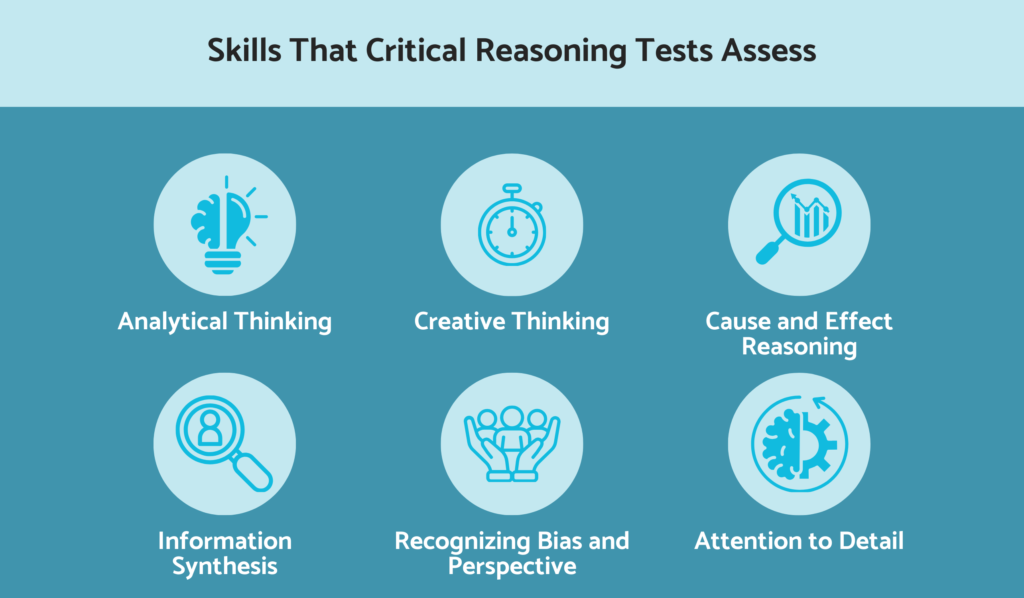
Critical reasoning tests examine candidates’ ability to gather, analyze, and interpret information provided during the hiring process. They will be tested on how well they can finish these tests.
Candidates will be judged on their performance across different stages of the critical assessment test. These can be identifying patterns in information and drawing an abstract conclusion from related data.
Applicants are tested on their understanding of the relationship between events and determining whether two things happening at once means one caused the other.
The test will assess your candidates’ ability to combine pieces of information from various sources or parts of an argument to form a comprehensive understanding.
Critical thinking helps you assess candidates on their understanding of how different viewpoints, hidden assumptions, or personal interests shape how arguments are presented. Candidates must be able to identify if the arguer’s position or agenda influences an argument.
Candidates must be able to notice subtle differences or changes in words that can significantly change the meaning of a sentence. Missing these nuances may lead to misinterpreting the arguments.
Discover reliable assessments designed by Chartered Scientists to hire right candidates. VIEW PLANS
Many employers have questioned the differences between logical and critical reasoning tests, asking if they are the same. Below, we will look at what sets the two assessment tests apart.
According to research, logical and critical reasoning tests may have bits of components embedded in each other, but they are not the same. To explore how far these two differ, we have drawn a table below to explain in more detail.
Knowing the difference between these two, you must now be wondering if there are benefits to implementing critical reasoning tests. Come along!
Applying a pre-employment critical thinking test in your hiring process can benefit your organization by helping you select and retain only the skilled applicants, eliminating those who cannot meet the required pass mark.

Critical reasoning tests can narrow the candidate pool by selecting only those who perform well in the pre-employment assessment. The test helps you identify the perfect candidate to hire for your company.
Compared to lengthy hiring processes, interviews, and assessment tests, virtual critical thinking tests are relatively affordable. They offer a return on investment when used as an initial screening tool during the recruitment process.
When used alongside other hiring methods, such as interviews and personality questionnaires, critical reasoning assessments can provide additional insight that may help you make informed hiring decisions.
Critical thinking removes the chances of candidates facing bias or the interviewers displaying favoritism during the interview stage, thereby ruining the candidate experience. With critical assessment tests, candidates will be judged fairly based on their skills and results.
Using customised, professional pre-employment assessment platforms demonstrates that your organization has a sophisticated, rigorous selection process, which can improve your brand image and, in turn, attract high-quality candidates.
Critical reasoning tests warn you ahead by alerting you to which candidates will require additional support development in some areas, even if they are hired with a low score in the critical reasoning.
Use our critical thinking assessments to guarantee excellent talent for your organization. LEARN MORE
With every pro comes a con; if you are worried about the challenges of using a critical thinking test for employment, check out these solutions on how to bypass them. Keep reading!
Many employers like you have crossed this threshold, wondering whether any challenges could hinder their ability to hire talent through the critical assessment tests in their recruitment.
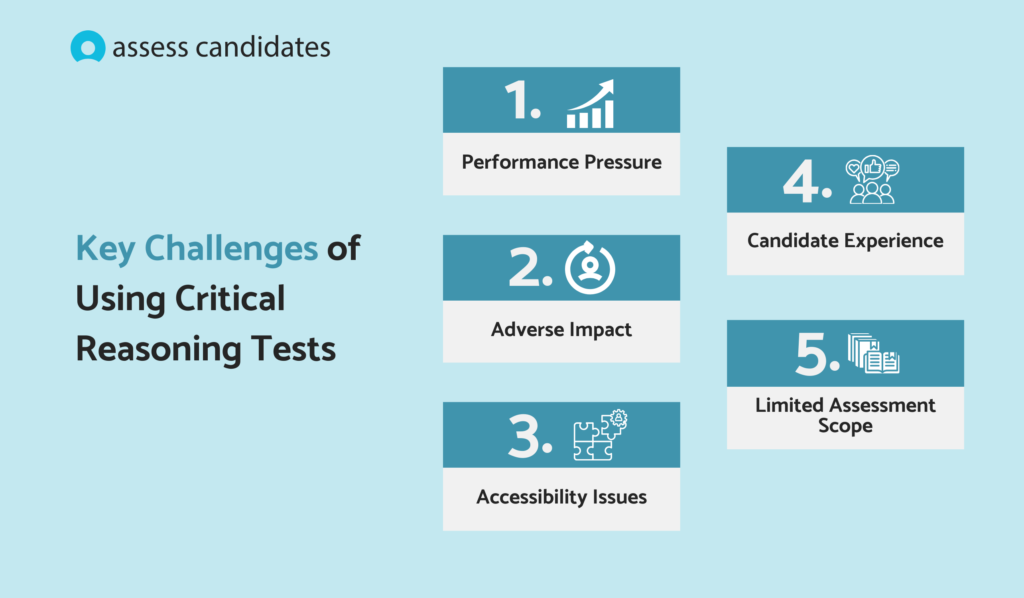
Some candidates may perform poorly on the timed tests due to anxiety, even though they possess the skills necessary to pass the critical reasoning test and advance in your recruitment process.
Solution: You can provide practice tests so your candidates can familiarize themselves with the test format and include clear instructions along with reasonable time limits.
Critical reasoning tests can often show score differences between demographic groups. This can lead to disadvantages for certain candidates and create legal risks if the test is rigged to screen out protected groups.
Solution: Validate the tests to ensure that they are job-relevant and use them along with other assessments. You should also regularly monitor results for adverse impact and reduce the cut-off marks.
Candidates with disabilities, learning differences, or those who require accommodations may have difficulties with standard test formats. This may potentially lead to discrimination claims or you missing out on talented candidates.
Solution: You can offer reasonable accommodations, such as extra time, and make sure that tests are accessible to screen readers and other technologies. Ultimately, you can consider alternative assessment methods alongside the test if appropriate.
Some candidates find critical reasoning tests stressful or irrelevant to the job they are applying for. This can create a negative candidate experience that damages the employer’s brand and leads qualified candidates to drop out of the application process.
Solution: You can openly share why the critical thinking test is used and how it relates to the role they are applying for. This ensures that the process is user-friendly and provides accurate feedback, so the candidate experience is positive beyond the test.
Critical reasoning tests are designed to measure analytical thinking, but they fail to capture other important qualities, such as emotional intelligence, creativity, teamwork, collaboration, and communication.
Solution: Use critical thinking tests as part of an assessment process that includes interviews, personality assessments, work simulations, and other tools that can be used to evaluate candidates in the recruitment process.
Knowing about critical reasoning tests is a step towards including them in your assessment method, but do you know the best strategies to implement them? We have you covered. Continue reading!
According to a LinkedIn report, 60% employers value the usage of critical thinking when assessing and hiring candidates. To successfully gauge your candidates’ critical thinking skills, you need to implement the assessment using the next steps we recommend.
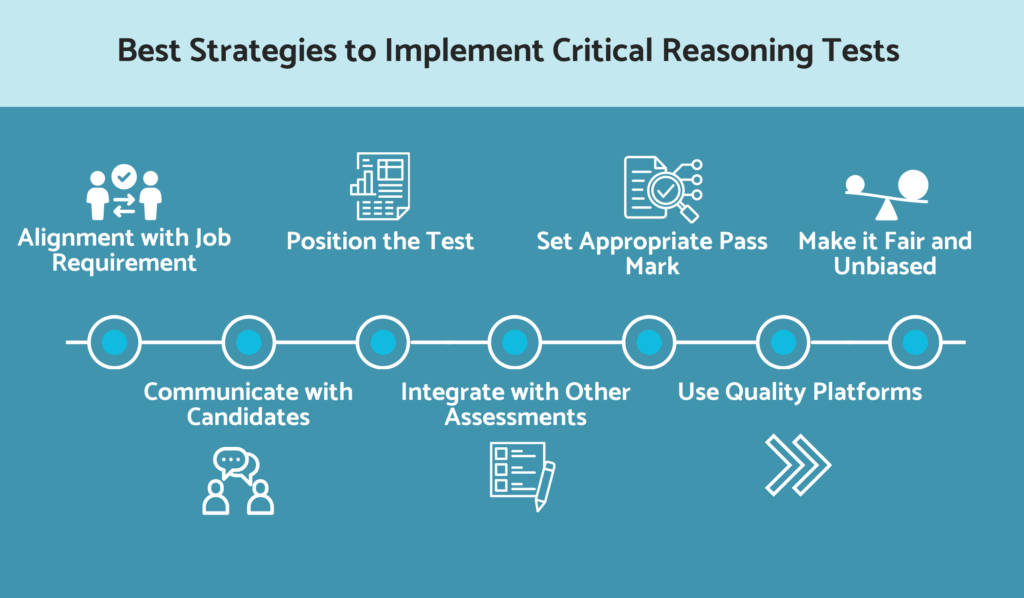
Before choosing a test, it is important that you understand which critical reasoning skills are most relevant for the vacant role candidates will be applying for. Make use of test scenarios that are similar to the tasks that the candidates will face on the job.
Ensure that you place the critical reasoning assessment before the interview process, as it works best in the early screening stage of the recruitment process. This allows you to efficiently filter the large pool of candidates and select those who meet your cognitive skills requirements.
Provide pass marks that are based on your organization’s needs rather than random percentages or percentiles. We recommend selecting a pass mark higher than your current employees’ marks so you can easily screen out the unqualified applicants.
We suggest ensuring that your critical assessments are fair and unbiased towards a specific demographic during the recruitment process, and that you use simple language. Also, ensure the test is inclusive and accessible to a diverse group of candidates.
Explain to your candidates why you are using the critical reasoning tests in the recruitment process, its duration, the time limit, the test format, and what to expect. Offer practice questions and samples to candidates to give them an overview of what the test assesses.
Pair critical reasoning tests with other behavioral and situational judgment tests. This will help you assess whether the candidates can apply their reasoning skills in real-world situations, rather than just answering abstract questions.
Ensure you invest in reliable, user-friendly online testing platforms that provide automatic scoring and a positive candidate experience. These platforms should also operate on either laptops or smartphones.
Having seen how to implement the test in your recruitment, why not take a look at the other pre-employment assessments used in recruitment?
Use our pre-employment tests to recognize and hire the most suitable candidates for you. HIRE FOR FREE
Many employers have asked about the best platforms that offer critical reasoning tests along with other pre–employment assessment tests. In this section, we will list out the top platforms that offer critical reasoning assessment tests.
Are you ready to start hiring candidates for your company? Let us take a look at some roles that require critical reasoning tests in their recruitment processes.
In the new age of hiring, employers are favoring the usage of critical thinking assessment tests by including them in the recruitment process, due to the fact that they accurately gauge the candidates’ communication, creative thinking, information evaluation, and problem–solving.
Take a look at some of the sectors that require critical reasoning tests.
Employers in finance companies like JPMorgan Chase, Morgan Stanley, and Goldman Sachs use critical reasoning tests to learn the candidate’s ability to evaluate data, assess risks, and make high-risk decisions.
Recruiters in the legal service, such as Clifford Chance, Hogan Lovells, Allen & Overy, use the Watson-Glaser critical reasoning test to examine the candidate’s skill in identifying assumptions, evaluating arguments, and spotting errors in reasoning.
Job sectors in technology, such as Google, Microsoft, and Apple, often use critical thinking tests to gauge whether their applicants can correctly interpret data, evaluate technical trade-offs, and logically solve problems.
Consulting firms like McKinsey & Company, Deloitte, and Accenture expect the applicants to analyze complex business problems and propose logical solutions.
This sector requires evaluating data, identifying trends, and weighing evidence to support recommendations. Companies that use the critical thinking test for these skills include UnitedHealth Group, Johnson & Johnson, and Siemens Healthineers.
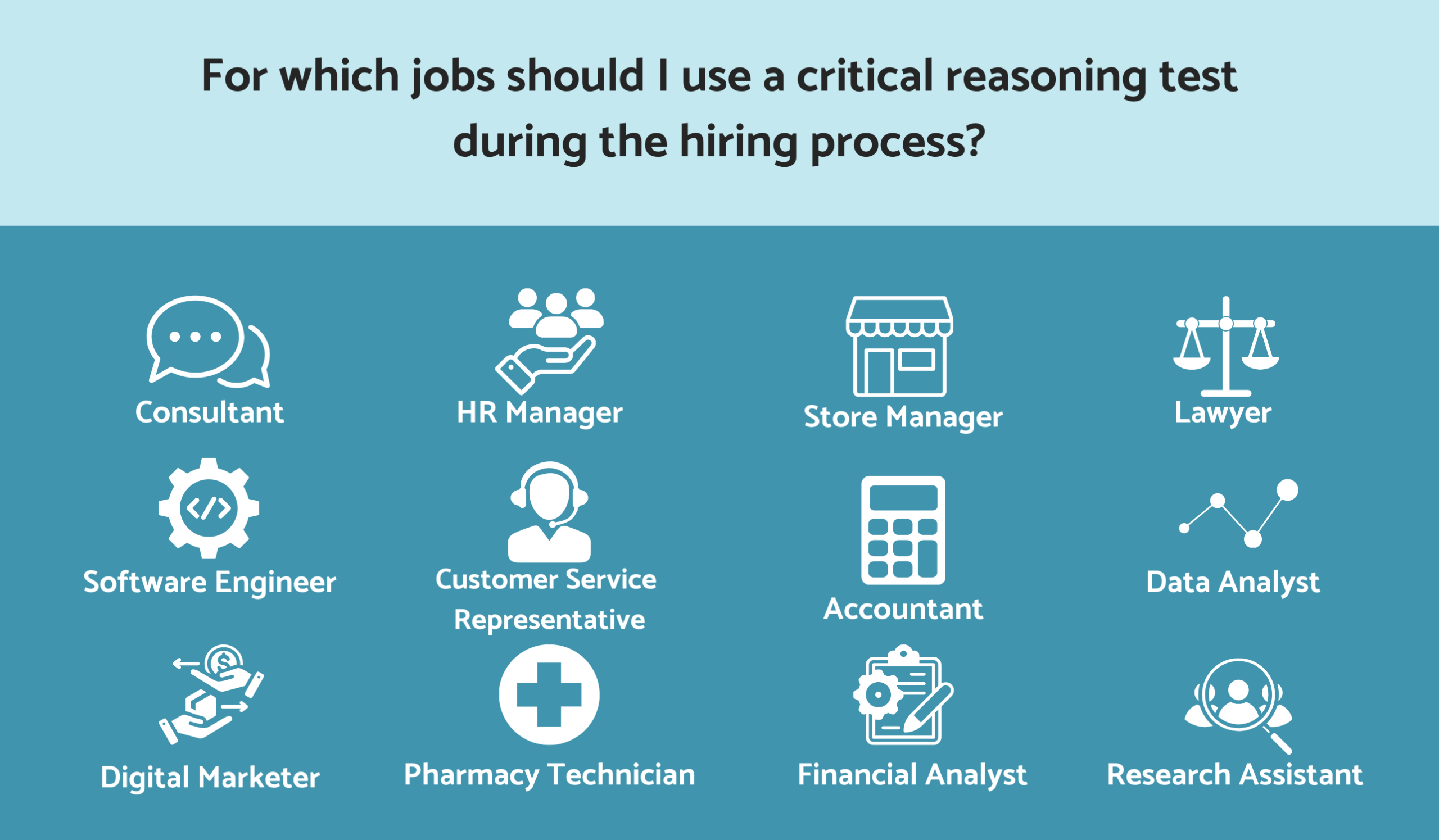
Are you wondering about how to go about customizing your pre-employment psychometric assessments to ensure that they include critical reasoning tests in your recruitment process? You can contact us for a detailed examination of your hiring needs to ensure that you hire and retain the perfect candidates who fit your critical thinking requirements.
More companies are beginning to recognize the importance and benefits of having critical reasoning tests in their assessment process. If you are curious about the companies that use this test, check them out below.
Discover more reliable assessments designed by Chartered Scientists to recruit the right employees. VIEW PLANS
Multiple companies and employers across the globe are expanding their employee assessment processes by adding the critical reasoning test. Here are real-world samples from employers who shared their sites.
McKinsey receives thousands of applications annually, and many of these applicants are qualified, but there is a limited number of vacancies in the organization, and it prefers employing someone who can actually evaluate arguments, assess business cases, and make sound decisions.
McKinsey introduced a critical reasoning and problem-solving test as part of the McKinsey Solve game, and candidates who can analyze information, identify assumptions, and draw logical conclusions are selected.
Ogilvy was in search of candidates who could critique ideas, campaign strategies, and identify flaws, but creative portfolios do not show proof of reasoning skills.
They leaned on critical reasoning mini case studies that required candidates to analyze marketing data, strategy arguments, and spot inconsistencies.
This is where Assess Candidates comes in, helping you improve your recruitment process and ensuring that you hire the best candidates who possess critical thinking abilities.
So, what’s the future of critical reasoning tests? Let us take a look at the future of recruitment using critical reasoning tests in the next section!
According to the World Economic Forum, critical thinking and problem-solving are essential skills in any workplace, as they are among the most requested by employers.
Employment in the future will now have assessment tests that will take cognizance of candidate anxiety and how to reduce it by using friendlier interfaces, providing feedback during the tests, and allowing practice modes.
Future assessments might include candidates solving problems in real time with AI evaluators or other candidates, thereby assessing multiple candidates’ work and responses to each other’s ideas.
Future critical reasoning tests will incorporate AI-based fairness monitoring to detect and correct bias in real time.
Critical thinking assessment tests may blur the line between assessment and development, as learning platforms now offer practice opportunities alongside tutorials and skill-building exercises.
As other assessment methods improve, traditional critical reasoning tests may become less essential, as AI can evaluate reasoning through natural conversations, work samples, and observation of behaviors.
Companies in this age are increasingly choosing to include Assess Candidates’ critical reasoning tests in their recruitment process, as it has become evident that employees with these skills tend to perform better, offer problem-solving skills and can think creatively, which is a benefit to employers looking to scale their brands.
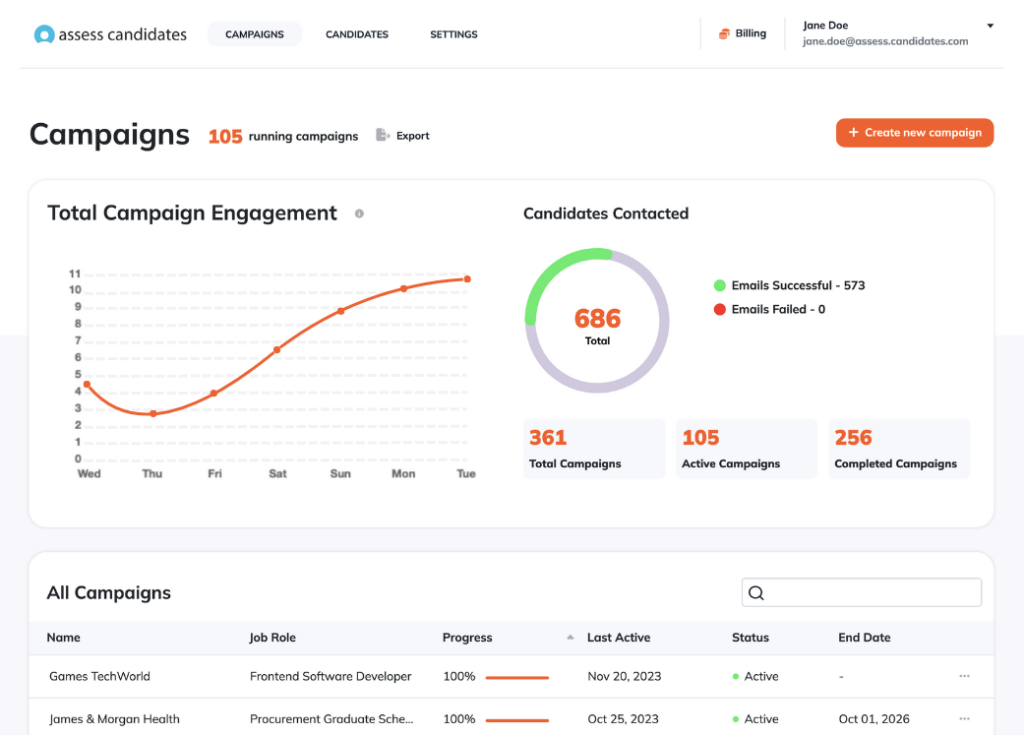
Hire top candidates with our critical reasoning assessment platform. LEARN MORE
Want to know more about using critical reasoning tests in your recruitment process? Keep scrolling to explore our frequently asked questions, and enter your email to get started today.
The Watson-Glaser critical reasoning test assesses how candidates can analyze information, recognize assumptions, examine arguments, and make logical conclusions with the information provided.
Most critical reasoning tests take between 20-40 minutes to complete, whereas some Watson-Glaser tests last between 30-40 minutes. This is also all dependent on your company preferences, enabling you to set the questions the candidates have to answer.
Critical reasoning tests usually account for about 20-30% of the overall hiring decision. It is important that you do not use it alone to assess your candidates’ skills, but instead pair it with other assessment methods.
To prevent candidates from cheating on critical thinking assessments, ensure that you use a secure online assessment platform that offers AI-based cheating detection and screen recording so that candidates are unable to cheat.
Yes, it is possible to use the same critical reasoning test for different roles within your company during the application process, but make sure it is validated for each role candidates are applying for.
Ready to start hiring? Write to us, or try for free and assess candidates in minutes.


Copyright © 2009-2026 GFI Group Limited. All rights reserved
 English English
  Arabic