
Workplace Personality Tests for Hiring | The 2026 Recruiter’s Guide



Employment personality tests help employers identify candidates who align with both role requirements and company culture, providing structured insights into workplace behavior, motivation, and interpersonal style.
This guide provides a comprehensive overview of workplace personality testing and its role in modern recruitment.
Contents
- What is a personality test?
- What is the science behind personality tests?
- How do personality tests assess a candidate’s personality in recruitment?
- What are the types of personality tests?
- What are the benefits of personality tests for recruitment?
- What are the best strategies to implement workplace personality tests?
- What other pre-employment psychometric assessments are used?
- What are the challenges of using personality tests in the hiring process?
- What job roles are best suited for personality assessments?
- Client success stories on using personality tests
- Why do recruiters use Assess Candidates personality tests for recruitment?
- What is the future of hiring with personality tests?
Ready to know more about the personality test in recruitment? Keep reading!
1. What is a personality test?
A personality test is a pre-employment assessment that measures workplace traits, behaviors, motivations, and interpersonal preferences to help employers evaluate job fit and cultural alignment.
A work personality test is a self-report instrument designed to systematically capture consistent patterns of thoughts, feelings, and behaviors that define an individual’s personality.
According to a 2022 report from the Society for Human Resource Management, 57% of employers incorporate personality assessments as part of their hiring practices.
In 2026, employers are increasingly using personality questionnaire tests in their selection processes to enhance the quality of their hires and candidates accepted into their organizations. A study by Harvard Business Review corroborates this statement, proving that the quality of hires has increased by 30% since employers began implementing personality tests in their recruitment processes.
Looking to hire the right employees? Try our personality tests to find the perfect candidates for your role. HIRE FOR FREE
With the definition of a work personality test in mind, let us examine the science behind personality tests in the recruitment process.

2. What is the science behind personality tests?
The science behind personality tests comes from psychology, particularly the study of individual differences, which focuses on how people consistently vary in their thoughts, emotions, and behaviors. These recruitment personality tests are grounded in well-researched theories and statistical methods that aim to measure personality traits reliably and validly.
Research from the Society for Industrial and Organizational Psychology indicates that organizations using personality assessments effectively experience a 24% boost in employee performance and a 30% decrease in turnover.
Personality assessments for hiring are built on four core scientific foundations:
- Trait Theory
The most widely accepted approach suggests that personality can be described in terms of stable traits. For example, the Big Five model (Openness, Conscientiousness, Extraversion, Agreeableness, Neuroticism) is supported by decades of research and cross-cultural studies.
- Psychometrics
The field of measurement in psychology ensures tests are consistent over time and actually measure what they claim to measure. Statistical techniques like factor analysis help identify which questions cluster together to reflect specific traits.
- Predictive Validity
Many assessments aim to predict outcomes such as job performance, leadership ability, cultural fit, and well-being. Research indicates that certain traits, such as conscientiousness, are strong predictors of workplace success.
- Cognitive and Behavioral Science
Personality tests are also linked to theories of motivation, emotional regulation, and decision–making, offering insight into how individuals are likely to behave in different environments.
Upon understanding the basis of the creation and science behind personality assessments in the hiring process, you must be thinking about the purpose of personality assessments in recruitment.
What is the purpose of personality tests in recruitment?
The goal of personality tests in recruitment is to provide employers with a structured, objective way to evaluate how well a candidate’s behavioral tendencies, motivations, and interpersonal style align with the requirements of a role and the culture of the organization.
At their core, these assessments aim to go beyond resumes and interviews by offering more profound insights into traits that influence long–term success, such as reliability, teamwork, adaptability, leadership potential, or resilience.
One reason personality assessments remain popular is their ability to bring greater consistency to hiring decisions, particularly when evaluating large candidate pools.
Moving forward, it is necessary to know how these employment personality tests assess the candidate’s personality during the recruitment phase.
3. How do personality tests assess a candidate’s personality in recruitment?
Personality tests assess a candidate’s personality by using customized questionnaires or assessments that measure key traits, behaviors, and preferences relevant to the workplace. These tests do not focus on technical skills but rather on how a person is likely to think, interact, and perform in a professional environment.
Personality tests in recruitment assess various traits and behavioral tendencies that can give employers insight into how a candidate may perform and interact in a work environment.
Below are the top 5 methods in which hiring managers assess candidate personalities during recruitment.
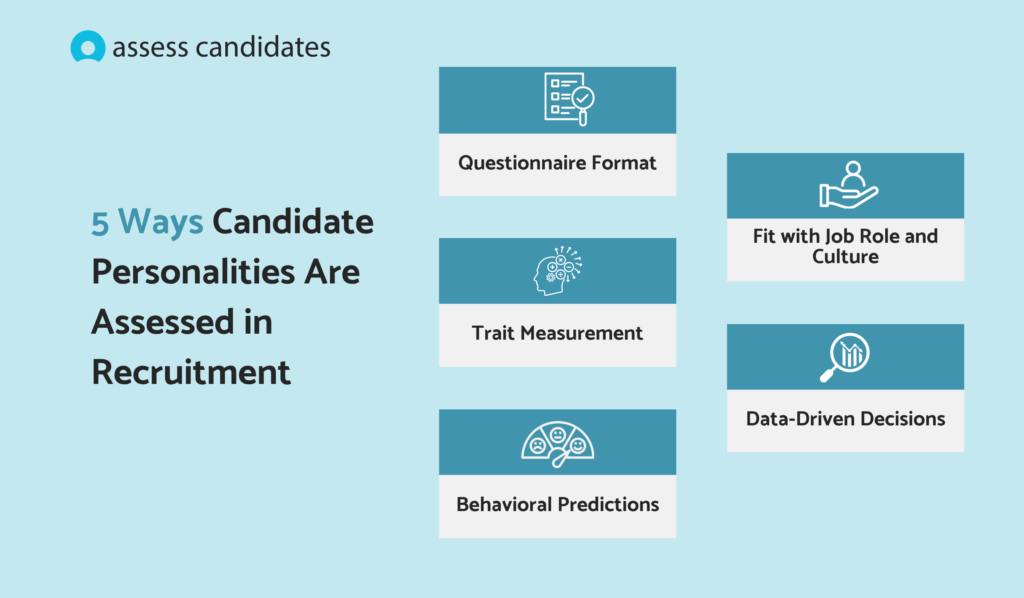
1. Questionnaire Format
Candidates respond to a series of statements (e.g., “I enjoy working in groups” or “I pay close attention to details”) using rating scales such as strongly agree to strongly disagree.
2. Trait Measurement
The responses are scored against established personality models to reveal consistent patterns of behavior.
3. Behavioral Predictions
Recruiters use the results to predict workplace behaviors, including teamwork (such as collaboration and communication style), leadership potential (decision-making, assertiveness), work ethic (reliability, organization, and responsibility), and adaptability (openness to change and stress tolerance).
4. Fit with Job Role and Culture
You can match the personality profile of a candidate with the demands of the role and the company’s culture. For example, a sales position may value high extraversion and persuasiveness, while an analyst role may require high conscientiousness and attention to detail.
5. Data-Driven Decisions
The test results provide an additional, objective layer of information beyond resumes and interviews, enabling recruiters to make more informed hiring decisions.
The employment personality test used by employers often measures several behaviors and traits in candidates. Let us take a look at the characteristics and behaviors that employers measure in a personality test.
What do personality tests measure in candidates?
Personality tests in recruitment measure several traits of candidates to assess how they influence their work, interaction, and adaptation in professional settings. They focus less on skills or knowledge and more on the how behind a person’s approach to tasks and relationships.
Below are 5 things that employers measure using personality assessments when hiring:
- Core Personality Traits: These traits highlight qualities such as reliability, sociability, adaptability, and emotional stability.
- Workplace Behaviors: How a candidate is likely to behave on the job, such as communication style, leadership potential, teamwork, and conflict resolution.
- Motivation and Preferences: This focuses on what drives a person, including their interest in collaboration versus independent work, preference for routine versus variety, or comfort with change and challenges.
- Cultural and Role Fit: Alignment between a candidate’s personality profile and the organization’s values, work culture, and the specific demands of a role.
- Emotional and Interpersonal Skills: Attributes such as empathy, resilience, stress management, and the ability to foster positive workplace relationships.
Use our psychometric tests to assess your applicants’ key traits. LEARN MORE
Now that we have covered what recruiters measure using personality tests, we can proceed to learn about the various types of personality tests available.
4. What are the types of Personality Assessments?
A variety of personality tests are applied in hiring, each providing a distinct way of assessing candidates’ traits to align with diverse organizational structures, business models, workplace settings, and job responsibilities.
Here are 9 of the types of personality tests for hiring that you should know.
- The Big Five (OCEAN) Model
The Big Five, also known as the Five-Factor Model (FFM), is one of the most scientifically validated frameworks for understanding personality. Developed from decades of factor-analytic research, it organizes human personality into five broad dimensions known as OCEAN, and they mean:
- Openness to Experience: creativity, curiosity, imagination
- Conscientiousness: organization, diligence, dependability
- Extraversion: sociability, assertiveness, energy
- Agreeableness: compassion, cooperativeness, trust
- Neuroticism: emotional stability vs. anxiety, moodiness
These traits encompass essential aspects of behavior, including creativity, diligence, sociability, cooperation, and emotional stability.
- HEXACO Personality Model
The HEXACO model extends the Big Five by adding a sixth trait focused on ethics, sincerity, and fairness, making it relevant where integrity matters. The six HEXACO personality model dimensions are:
- Honesty–Humility: sincerity, fairness, lack of greed
- Emotionality: emotional sensitivity, dependence
- Extraversion: sociability, enthusiasm, liveliness
- Agreeableness: forgiveness, patience, tolerance
- Conscientiousness: diligence, organization
- Openness to Experience: curiosity, creativity
Research shows HEXACO offers a fuller personality view by emphasizing moral tendencies and hiring managers widely use this model in workplaces and research.
- NEO Personality Inventory (NEO-PI-R / NEO-PI-3)
The NEO Personality Inventory, developed by Costa and McCrae, is one of the most comprehensive and respected assessments of the Big Five model. Unlike broader measures, it breaks each of the five major traits into six detailed facets, producing a total of thirty personality dimensions. This allows for an in-depth understanding of an individual’s behavioral patterns, motivations, and emotional tendencies.
- 16 Personality Factor Questionnaire (16PF)
Raymond Cattell developed this workplace personality test, which identifies sixteen primary personality traits through factor analysis and further organizes them into broader global factors.
The 16 Personality Types model is based on four basic dimensions:
- Extroversion or Introversion
- Sensing or Intuition
- Thinking or Feeling
- Judging or Perceiving
The 16PF offers a nuanced understanding of individual differences, covering interpersonal style, problem-solving, emotional expression, and motivation.
- Hogan Assessments
The Hogan Assessments, created by Robert Hogan, are specifically designed for workplace applications and consist of three interconnected tools. The Hogan Personality Inventory (HPI) measures traits that predict job performance, the Hogan Development Survey (HDS) identifies potential derailers that may emerge under stress, and the Motives, Values, Preferences Inventory (MVPI) examines cultural fit and motivational drivers.
Together, these tools provide organizations with an extensive system for selecting talent, predicting performance, preventing leadership failure, and aligning individuals with organizational culture.
- SHL Occupational Personality Questionnaire (OPQ32)
The SHL Occupational Personality Questionnaire, commonly referred to as the OPQ32, is one of the most widely used personality profiling tests for recruitment. It evaluates thirty-two specific behavioral styles grouped into three clusters:
- Relationships with people
- Thinking styles
- Feelings and emotions
Unlike general personality models, the OPQ is tailored to workplaces, linking traits to job skills. Its strengths include focus on organizational outcomes, workplace norms, and user-friendly reports. However, it is proprietary, needs trained interpretation, and, like most self-report tools, is subject to social desirability bias.
- DiSC Model of Behavior
The DiSC model, derived from William Moulton Marston’s theory, measures personality across four dimensions:
- Dominance
- Influence
- Steadiness
- Conscientiousness
It is a simple and practical framework that explains how people approach tasks, interact with others, and manage challenges. Because of its straightforward language, managers widely use the DiSC in organizational settings to improve teamwork, communication, and leadership effectiveness.
- Enneagram of Personality
The Enneagram of Personality is a nine–type model that explores individuals’ core motivations, fears, and coping mechanisms. Each type represents a distinct way of perceiving and interacting with the world, and the system highlights how these types are interconnected.
The nine types of Enneagram personality models are:
- The Reformer
- The Helper
- The Achiever
- The Individualist
- The Investigator
- The Loyalist
- The Enthusiast
- The Challenger
- The Peacemaker
Although it lacks the same level of empirical validation as other models, the Enneagram offers deep psychological insights into personal growth, self-awareness, and interpersonal dynamics.
- Myers–Briggs Type Indicator (MBTI)
The Myers–Briggs Type Indicator (MBTI), developed by Isabel Briggs Myers and Katharine Cook Briggs, is based on Carl Jung’s theory of psychological types. It categorizes individuals into sixteen personality types according to four dichotomies:
- Extraversion (E) vs. Introversion (I)
- Sensing (S) vs. Intuition (N)
- Thinking (T) vs. Feeling (F)
- Judging (J) vs. Perceiving (P)
While the MBTI is less scientifically reliable compared to trait-based models, it is widely recognized for its accessibility and ease of understanding.
- Assess Candidate Work-style Personality Questionnaire
The work-style personality assessment aims to help organizations evaluate how well candidates align with both the specific role and company culture. Its key features include the ability to customize the assessment for each role: recruiters can specify role-specific personality frameworks, define scoring thresholds (e.g., red, amber, green zones), and generate tailored job-fit scores.
The WPQ is grounded in the Big Five Personality Traits, focusing on the following dimensions:
- Introversion versus Extroversion
- Easy-going versus Conscientiousness
- Emotion versus Emotional Stability
- Conventional versus Openness
- Self-focus versus People-focus
Upon reading about the types of personality assessments that you could offer in your recruitment, why don’t we show you some examples of personality tests?
Example of personality tests for employment
Below is an example of a personality assessment used in recruitment:
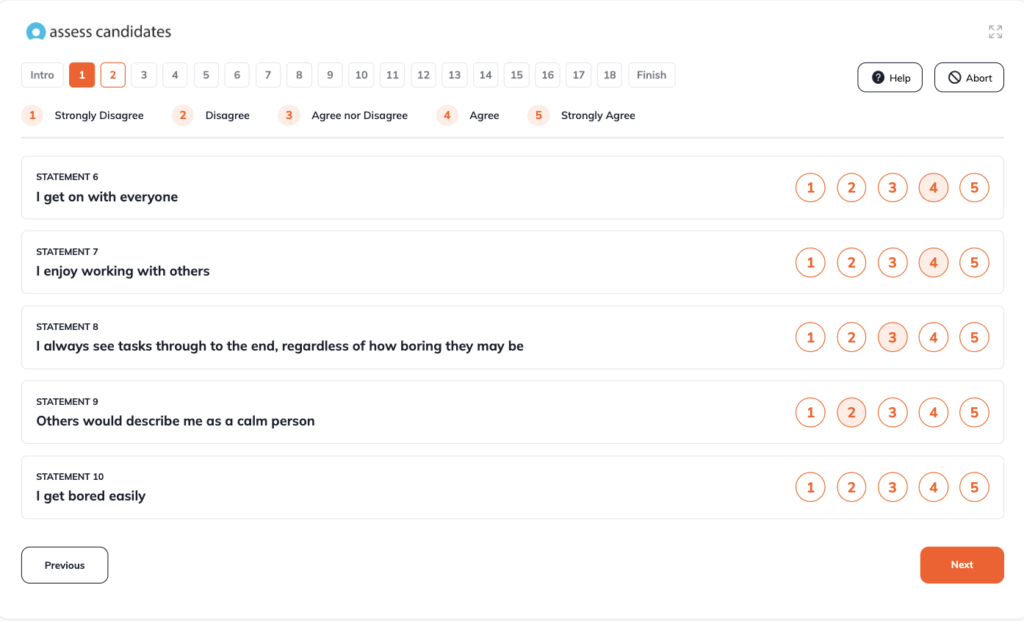
This work personality test offers behavioral statements for participants to review and rate their agreement or disagreement, such as “I get on with everyone,” using a Likert scale from strong disagreement to strong agreement.
- Strongly Disagree
- Disagree
- Agree nor Disagree
- Agree
- Strongly Agree
In the following section, we highlight the benefits of psychometric pre-employment personality assessments below.
5. What are the benefits of personality tests for recruitment?
According to research by the Harvard Business Review, companies have since recorded a 30% improvement in the quality of their hires since they began implementing workplace personality questionnaire tests in their recruitment.
Here are the 8 benefits of including work personality tests in your pre-employment assessments.
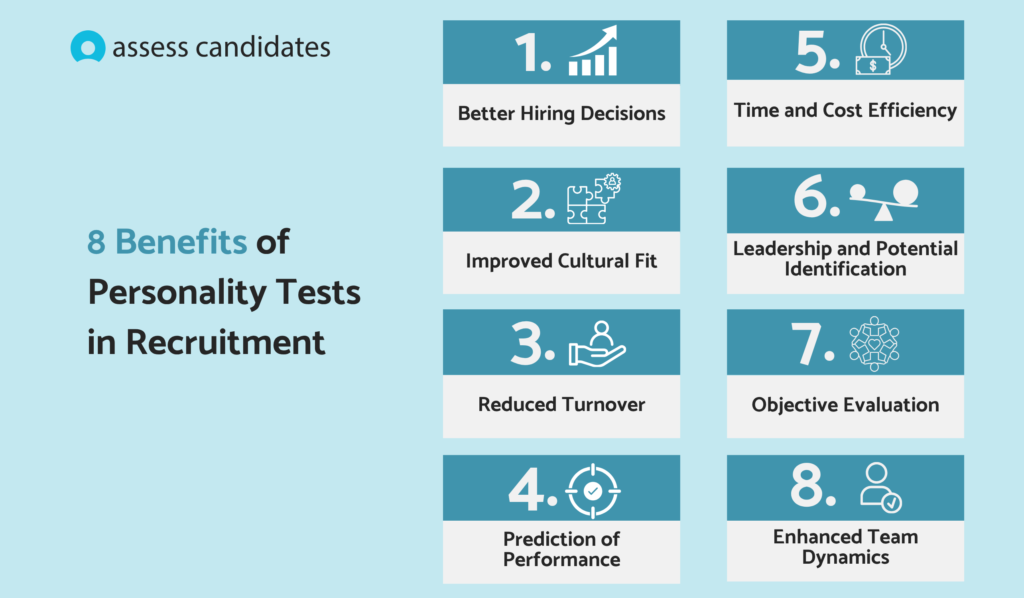
1. Better Hiring Decisions
Recruitment personality tests provide recruiters with a structured understanding of a candidate’s decision-making style and interpersonal approach. This information enables you to go beyond resumes and interviews, resulting in more accurate judgments about whether a candidate’s natural disposition aligns with the position’s requirements.
2. Improved Cultural Fit
A candidate’s ability to succeed often depends on how well their values, attitudes, and preferred work style match the organization’s culture. Employment personality tests systematically measure these aspects, enabling recruiters to select candidates who are more likely to integrate smoothly into the workplace and maintain long-term engagement.
3. Reduced Turnover
High employee turnover is costly in both financial and operational terms. By identifying candidates whose personalities align with both the role and the organizational environment, you can reduce the likelihood of early resignations or dismissals.
4. Prediction of Performance
Decades of research in organizational psychology show that certain traits, such as conscientiousness and emotional stability, are reliable predictors of job performance. Work personality tests identify these traits in candidates, allowing you to estimate how effectively they will handle the responsibilities and pressures of the role.
Barrick and Mount’s (1991) meta-analysis showed that conscientiousness reliably predicts job performance across different professions, with a correlation of about 0.22 to 0.26, indicating that diligent individuals tend to perform better at work.
5. Time and Cost Efficiency
Personality profiling tests for recruitment can be resource-intensive, particularly when unsuitable candidates progress too far in the process. Personality assessments help filter applicants at earlier stages, enabling you to focus your time and budget on candidates with the highest potential for success, thereby increasing hiring efficiency.
6. Leadership and Potential Identification
Organizations often seek not just immediate role fit but also long-term potential. Personality assessments for hiring highlight traits linked to leadership, resilience, and growth capacity. This allows you to identify individuals who can take on greater responsibilities in the future and support organizational development.
7. Objective Evaluation
Traditional recruitment methods, such as unstructured interviews, are vulnerable to subjective impressions and inconsistent judgments. Personality tests provide standardized criteria for assessing all candidates, ensuring fairness and consistency in the selection process, as this helps create a more reliable foundation for hiring decisions.
8. Enhanced Team Dynamics
Teams perform best when members bring a balance of complementary traits and skills. Therefore, personality assessments for hiring give you insight into how candidates are likely to contribute to group interactions, communication, and collaboration.
Enhance your hiring with our personality assessments to hire the best talent. LEARN MORE
With the benefits of personality tests listed above, what strategies can recruiters use to utilize these tests during the hiring process?
6. What are the best strategies to implement workplace personality tests?
Implementing workplace personality tests during recruitment can be a valuable way to enhance team dynamics, improve communication, and optimize roles based on individual strengths. However, to get the most value out of them, careful planning and execution are essential.
Here are 8 top strategies for implementing workplace personality tests:
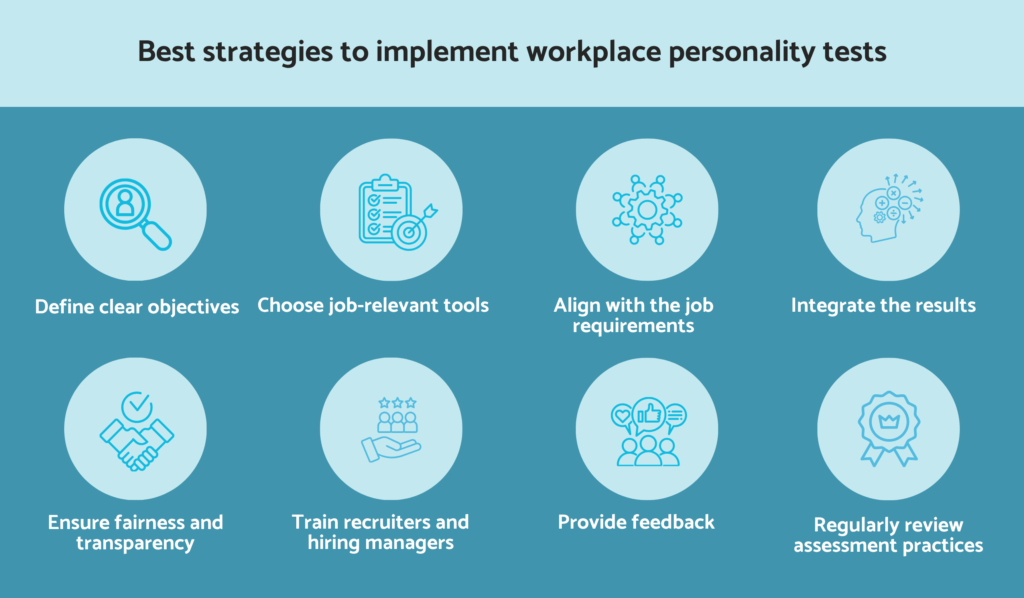
- Define clear objectives before using tests: Organizations should identify why they are using personality assessments in the first place. For example, the goal might be to improve cultural fit, reduce turnover, enhance team collaboration, or identify leadership potential. Without a clear objective, tests risk being misapplied or offering little value.
- Choose scientifically validated and job-relevant tools: Not all personality tests are created equal; therefore, employers should select assessments with strong reliability and validity, preferably those backed by research and proven to predict workplace outcomes. Tools like the Big Five, Hogan Assessments, or the SHL OPQ32 are more appropriate for hiring decisions, while MBTI or Enneagram are better suited for development and self-awareness.
- Align the assessment with job requirements: Tailor the tests to measure traits that are genuinely relevant to the role. For example, conscientiousness might be critical for roles that demand precision and responsibility, while extraversion may matter more in sales or customer-facing positions. Using job analysis to align traits with role demands ensures fairness and effectiveness.
- Integrate results into a broader selection process: Personality tests should never be the sole basis for hiring. They work best when combined with structured video interviews, skills, assessments, and cognitive ability tests. This multi-method approach provides a more holistic view of a candidate and reduces the risk of overreliance on one tool.
- Ensure fairness, transparency, and legal compliance: Employers must communicate openly with candidates about why the test is being used and how results will be applied. Tests should comply with equal employment opportunity laws and ethical guidelines to prevent discrimination and ensure fairness in the testing process. Using standardized, norm-referenced tests helps ensure fair treatment for all applicants.
- Train recruiters and hiring managers in interpretation: Personality test results can be complex, and misinterpretation can lead to poor hiring decisions. HR professionals and managers should receive adequate training in understanding reports, recognizing strengths and risks, and linking results to job performance indicators.
- Provide feedback and use results beyond hiring: Sharing feedback with candidates when possible creates a positive candidate experience. Additionally, results can be used for onboarding, team placement, leadership development, and long-term employee growth, ensuring the assessment adds value beyond the hiring stage.
- Regularly review and update assessment practices: Ensure to review personality assessments periodically to ensure they remain valid and relevant to changing organizational needs. Collecting data on performance outcomes can also help determine whether the tests are achieving their intended goals, such as reducing turnover or improving team effectiveness.
To properly understand the implementation of personality profiling tests for recruitment, we must examine the other pre-employment assessment tests commonly offered to candidates during the hiring process.
7. What other pre-employment psychometric assessments are used?
Pre-employment psychometric assessment tests in recruitment measure candidates’ mental capabilities, personality traits, and behavioral styles in a standardized, objective way. Their primary purpose is to help employers make more accurate and fair hiring decisions by assessing qualities that are not readily apparent during interviews or from resumes.
Here are the other pre-employment psychometric assessment tests used in recruitment:
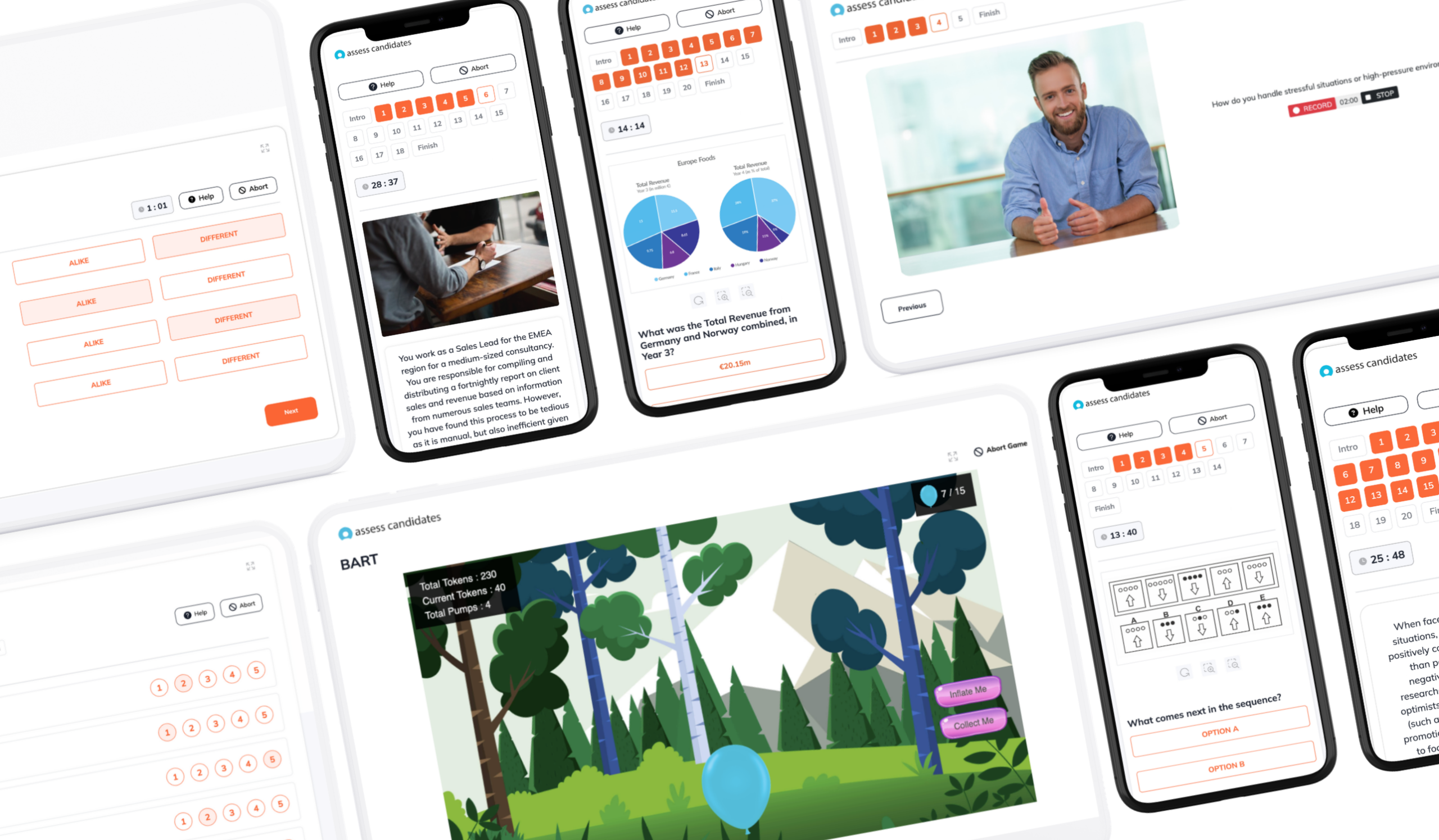
1. Psychometric Assessment Tests
The use of psychometric tests adds value to recruitment by ensuring consistency and fairness, since all candidates are measured against the same standardized benchmarks. They also reduce reliance on subjective judgment, which can minimize unconscious bias.
Under the psychometric tests, 7 tests are offered to candidates, and they are:
- Verbal Reasoning Test
Verbal reasoning tests measure a candidate’s capacity to understand, evaluate, and make logical inferences from written material. The tests are beneficial for positions such as managers, lawyers, journalists, customer service professionals, and graduate trainees, where strong communication and analytical reading abilities are essential.
- Numerical Reasoning Test
Numerical reasoning tests evaluate a candidate’s skill in handling numerical data, analyzing information, and making conclusions from figures presented in formats such as charts, tables, and graphs. Recruiters commonly use these assessments for roles including financial analysts, accountants, data analysts, and engineers, where proficiency in quantitative analysis and data interpretation is critical.
- Logical Reasoning Test
Logical reasoning tests assess a candidate’s capability to interpret information, identify patterns, and reach sound conclusions using deductive, inductive, and critical thinking. Hiring managers frequently use Logical tests for positions such as analysts, consultants, and engineers, where strong problem-solving abilities and structured decision-making are vital.
- Abstract Reasoning Test
Abstract reasoning tests evaluate a candidate’s ability to recognize patterns, logical rules, and relationships in unfamiliar information without depending on words or numbers. Recruiters often use Abstract tests in hiring for roles such as analysts, engineers, IT specialists, and management trainees, where success depends on problem-solving skills, strategic thinking, and adaptability to new ideas.
- Critical Reasoning Test
Critical reasoning tests assess a candidate’s ability to interpret information, recognize logical relationships, and make well-founded judgments supported by evidence. Critical thinking tests focus on skills such as deduction, inference, and evaluation, and are structured to be fair, inclusive, and standardized against broad benchmarks, ensuring reliability in recruitment decisions.
- Spatial Reasoning Test
Spatial reasoning tests assess a candidate’s capacity to visualize, manipulate, and comprehend the spatial relationships between objects. Recruiters commonly use spatial tests in professions such as architecture, engineering, design, aviation, and technical operations, where working with diagrams, blueprints, or three-dimensional structures is a key requirement.
- Diagrammatic Reasoning Test
Diagrammatic reasoning tests measure a candidate’s ability to interpret and analyze visual data displayed through diagrams, flowcharts, or process maps. Hiring managers frequently use diagrammatic tests in fields such as engineering, IT, data analysis, and technical management, where understanding complex systems and logical workflows is critical to effective performance.
2. Behavioral Tests
Behavioral assessments evaluate an individual’s psychological characteristics, habitual responses, and behavioral patterns. Hiring managers widely use these assessments in areas such as human resources, education, and clinical practice to better understand a person’s personality, motivations, strengths, and areas that may present difficulties.
- Situational Judgment Test
Situational judgment tests present hypothetical workplace scenarios to candidates, who must choose the best response. They are often used by supervisors, customer service representatives, sales staff, and trainees, where success depends on effective decision–making, problem–solving, and interpersonal skills.
- Emotional Intelligence Assessments
Emotional Intelligence (EQ) assessments measure a person’s ability to understand, manage their own emotions, and influence others’ feelings. Recruiters use emotional awareness tests in areas such as managers, team leaders, and sales professionals, where skills like empathy, communication, conflict resolution, and relationship building are crucial to success.
3. Skills-Based Test
Skills-based tests are assessments that measure an individual’s competence in performing job-related tasks or functions specific to a role, profession, or area of study. Unlike tests that emphasize theoretical knowledge, these focus on practical ability, providing insight into how effectively a candidate can carry out the tasks essential to the position.
- Coding Test
Coding tests assess a candidate’s programming, problem-solving, and software development skills through tasks such as coding, debugging, and optimization in various programming languages. They assess knowledge of algorithms, data structures, and system design for roles such as software engineers, web developers, data scientists, and backend developers.
- Error Checking Test
Error-checking tests evaluate a candidate’s speed and accuracy in spotting mistakes in data, assessing attention to detail, focus, and ability to work under time constraints. They are relevant for roles like data entry, proofreading, administrative work, and quality control professionals.
4. Game-Based Assessments
Game-based assessments enable companies to evaluate candidates’ cognitive abilities, decision–making skills, and problem–solving capabilities in an interactive, engaging environment by focusing solely on cognitive performance rather than subjective factors.
Here are the pre-employment game-based assessments offered by Assess Candidates:
5. Video Interviews
Video interviews provide a consistent hiring process by presenting all candidates with the same set of questions. They improve reliability by allowing recruiters to review recorded responses and expressions, ensuring a fairer evaluation and more accurate selection of the most suitable candidate.
Personality tests are often used in interviews as they are an effective method that has become an essential tool in assessing an applicant’s emotions and workplace personality through a series of questionnaires with responses ranging from moderate to extreme. At Assess Candidates, we recommend taking a holistic approach to candidate evaluation by using a combination of assessment tests that measure emotional, cognitive, and logical abilities.
Use our pre-employment tests to confidently hire the most suitable candidates for your company. HIRE FOR FREE
Considering applying workplace personality tests in your selection process? If you are familiar with situational judgment tests, you may wonder why you need a personality questionnaire test, as both assess a candidate’s behavioral tendencies in a company setting.
Here, we have listed out the differences between the two tests.
What are the differences between situational judgment and personality tests?
Many employers have raised questions about the differences between situational judgment and personality tests because both assess and evaluate the candidate’s emotional and behavioral actions and reactions when faced with specific scenarios within a company.
Below, we answer that question with a side-by-side comparison of both assessment tests:
Suppose you are wondering what challenges exist in using personality tests for recruitment. In that case, we have highlighted a few of them for you, along with suggestions on how to bypass these problems.
8. What are the challenges of using personality tests in the hiring process?
Using personality tests in recruitment comes with several significant challenges. One of these is the potential for social desirability bias, where applicants tailor their responses to appear favourable rather than accurate, which can severely distort the results for individuals.
To learn more about the challenges of using personality tests in recruitment, continue reading!
Here are 6 challenges of using personality tests for employees in hiring
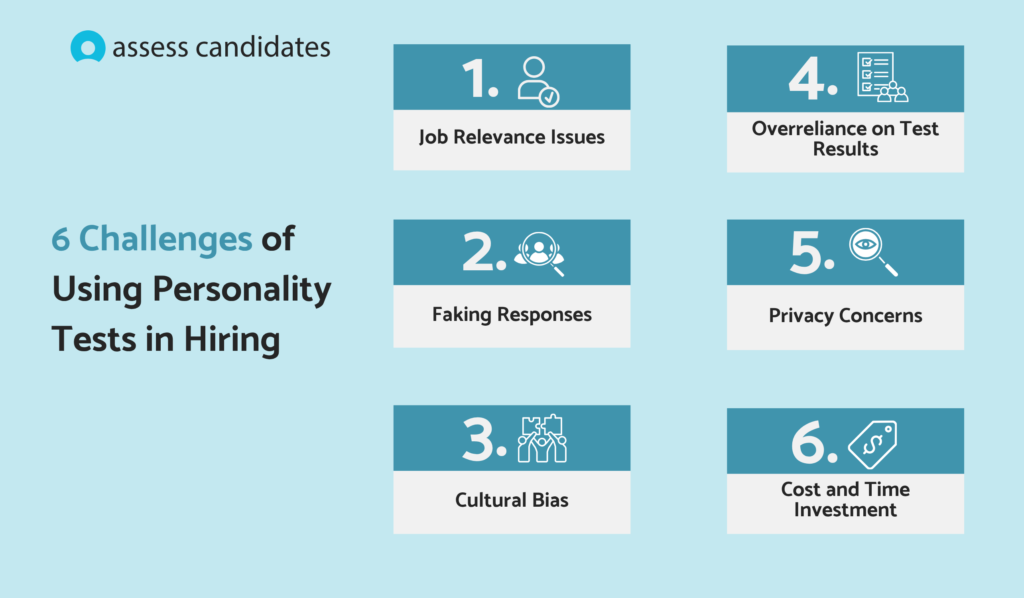
- Job relevance issues
Some personality tests are too general and may not measure traits directly linked to job performance, leading to misleading results about a candidate’s suitability, which can reduce the test’s predictive validity in recruitment.
Select validated, job-specific personality assessments and regularly update them to ensure they align with the role and industry requirements.
- Faking responses
Candidates may intentionally give socially desirable answers rather than truthful ones, which distorts their actual personality profile, making it difficult to identify genuine traits.
Use consistency checks and pair test results with interviews or situational assessments to reduce faking and verify authenticity.
- Cultural bias
Certain tests may not account for cultural differences, potentially disadvantageous to candidates from diverse backgrounds and thereby raising concerns about fairness and inclusivity in global hiring.
Adopt culturally sensitive tests and apply norm groups from diverse populations to ensure fairness in evaluation.
- Overreliance on test results
Employers may depend too heavily on personality tests while neglecting other assessment methods, and this can result in incomplete or biased hiring decisions.
Combine personality tests with skills-based and cognitive assessments to create a balanced, multi-method selection process.
- Privacy concerns
Candidates might feel uncomfortable with personal questions and worry about how companies store or use their data, which can create distrust in the recruitment process.
Be transparent with candidates about the purpose of the test and implement strict data privacy measures to build trust.
- Cost and time investment
High-quality, validated tests can be expensive and require training for recruiters to interpret the results accurately. This may strain resources for smaller organizations.
Choose scalable tools and provide recruiter training, ensuring tests remain cost-effective while still being accurately interpreted.
When used carefully and with purpose, personality tests can filter out unsuitable candidates and support a more inclusive hiring process. Reach out to us for a free review of your recruitment practices, along with expert advice on strategies to attract and retain a workforce that aligns well with your organizational culture.
Improve your role as a recruiter with a reliable AI-powered talent assessment platform. LEARN MORE
Are you curious about what roles are best suited to apply candidate personality assessments? Further down, we have listed out the possible job roles and sectors where you can use the workplace personality questionnaire tests.
9. What job roles are best suited for personality assessments?
Pre-employment personality tests assess applicants during the recruitment process, as they provide recruiters with a deeper understanding of the candidate’s characteristics, thought patterns, emotions, and behaviors.
Personality assessments can add value across a wide range of industries by helping employers understand how candidates approach work, interact with others, and adapt to changing environments.
To that, we have highlighted a few job sectors that use personality tests in recruitment.
Sectors that use personality tests in recruitment:
- Corporate and Business
Personality assessments are used in corporate environments to evaluate leadership potential, teamwork, communication style, and adaptability. They help identify candidates who can thrive in high-pressure settings, work collaboratively, and align with company culture.
- Healthcare
Personality tests assess empathy, stress tolerance, integrity, and communication, all traits critical for patient care and ethical practice. They help ensure professionals can handle emotionally charged situations and maintain professionalism.
- Education
Personality assessments can measure patience, motivation, empathy, and leadership skills. They help institutions select individuals capable of inspiring students and fostering positive learning environments.
- Customer Service and Hospitality
Here, the focus is on interpersonal skills, emotional intelligence, and stress management. Personality tests help select candidates who can remain calm under pressure, deliver quality service, and manage diverse customer interactions.
- Technology and IT
In tech roles, personality tests measure problem–solving style, creativity, collaboration, and adaptability to change. They ensure candidates can integrate into dynamic teams and adapt to fast-evolving technologies.
- Legal and Compliance
These assessments help identify traits like integrity, analytical thinking, and ethical decision–making. Hiring managers can use personality tests to ensure candidates can handle sensitive information and make sound judgments under pressure.
- Creative Industries
In fields such as media, design, and marketing, personality assessments evaluate creativity, openness to experience, and resilience. They help match candidates with roles that demand innovation and adaptability.
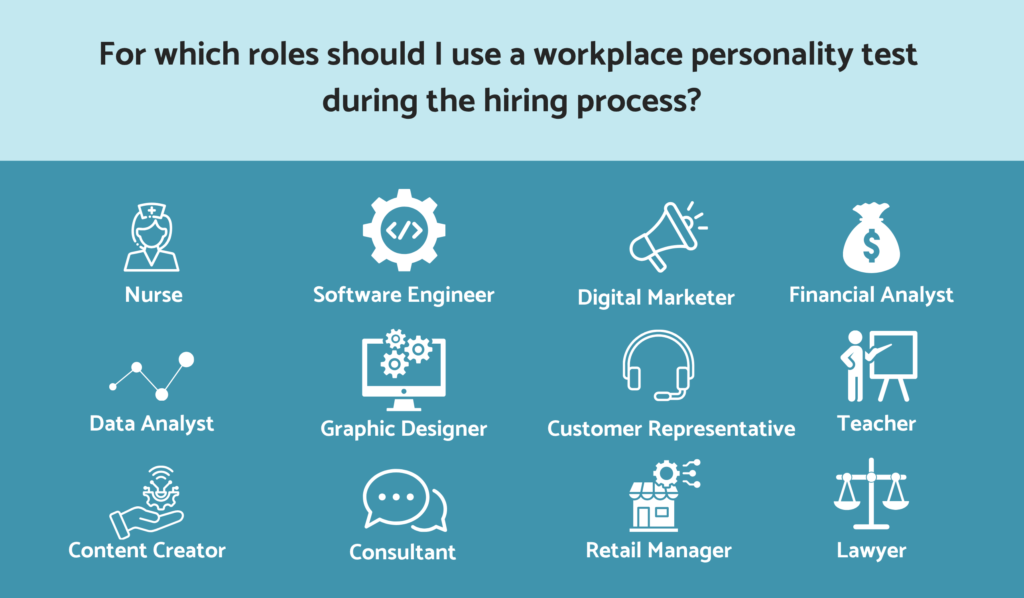
Roles that use workplace personality questionnaire tests for recruitment
- Nurse
- Software Engineer
- Digital Marketer
- Financial Analyst
- Data analyst
- Graphic Designer
- Customer Representative
- Teacher
- Content Creator
- Consultant
- Retail Manager
- Lawyer
Having understood the roles that personality tests play in recruitment, let us examine how employers utilize these tests in their hiring process.
Why do employers use personality tests in their selection process?
Employers use personality tests in recruitment to better understand whether candidates are a good fit for both the role and the organization. This helps assess cultural alignment, ensuring that a candidate’s values and work style match the company environment.
They also use recruitment personality tests to measure job suitability by identifying traits that are important for specific roles. Since certain personality traits, like conscientiousness and resilience, are linked to stronger job performance, the results can help predict how well a candidate will perform in the long run.
Organizations increasingly use personality assessments to complement traditional hiring methods and strengthen role fit, team compatibility, and long-term retention.
Here are a few employers that use personality tests in their hiring process:
- Facebook (Meta)
- Microsoft
- Goldman Sachs
- JP Morgan Chase
- Deloitte
- PwC
- Walmart
- Johnson & Johnson
- Delta Airlines
- Manpower Group
Over the years, many employers have shared their experiences with using workplace personality tests for employees, and below, we have provided two case study stories from employers who used the personality tests.
10. Client success stories on using personality tests
Using workplace personality questionnaire tests has proven to be effective in the recruitment of candidates during the hiring process, and employers throughout the globe have shared their experiences with implementing personality tests in recruitment.
BrightCode
Challenge: BrightCode experienced a high turnover rate among new hires within the first six months. While candidates had the technical skills, many struggled to adapt to the fast-paced, collaborative startup environment.
Solution: The company introduced personality assessments into its recruitment process to measure traits like adaptability, teamwork, and openness to change. Candidates still underwent technical evaluations, but final hiring decisions also took into account the results of personality tests.
Results:
- Reduced turnover by 40% within the first year.
- Improved team cohesion and collaboration, as hires were better aligned with the company culture.
- Managers reported spending 30% less time resolving interpersonal conflicts.
- Employees hired with the new system showed 20% higher engagement scores in internal surveys.
StyleMart
Challenge: StyleMart struggled to identify candidates who could thrive in customer-facing roles. Many hires lacked the resilience and persuasion skills necessary to succeed in competitive sales environments, resulting in inconsistent store performance.
Solution: The HR team implemented personality tests focused on sales-related traits such as extraversion, resilience, and achievement drive. Test results were used alongside interviews to select candidates with natural strengths in persuasion and customer engagement.
Results:
- Sales productivity increased by 25% across stores using the new hiring process.
- Customer satisfaction scores improved by 15%, as associates were more personable and attentive.
- Training costs decreased, since new hires adapted faster and required less remedial coaching.
- The average tenure of sales associates rose from 8 months to 14 months, reducing hiring costs.
Selecting the right personality assessment provider is just as important as choosing the assessment itself.
That’s where Assess Candidates come in, making the hiring journey seamless and stress-free.
11. Why do recruiters use Assess Candidates personality tests for recruitment?
Recruiters choose Assess Candidates’ personality tests because they deliver scientifically validated insights, streamline decision-making, and elevate the candidate experience. This gives companies the confidence to hire the right people, faster and more fairly.
Assess Candidates’ work-style personality questionnaires are developed by chartered scientists and psychometricians. These assessments are rigorously validated to predict factors like role fit, cultural alignment, work preferences, and long-term performance, all backed by decades of research and industry-standard validation procedures.
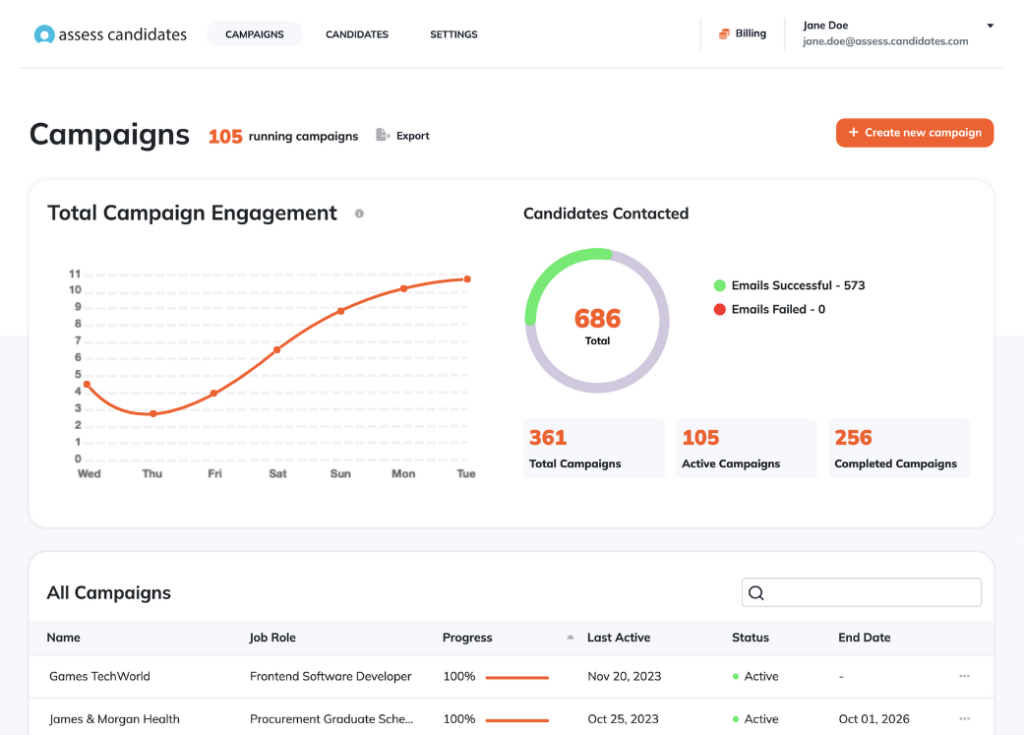
Assess Candidates’ assessments are designed to be accessible, inclusive, and engaging. Untimed personality questionnaires, support for disabilities such as extended time, screen readers, and Zoom features, along with a branded, user-friendly portal, all contribute to a positive perception of the hiring process.
Here are reasons why companies and employers prefer using Assess Candidates’ personality tests in recruitment:
- Data-driven candidate alignment: Employers utilize these assessments to predict which candidates are best suited for the role and the organizational culture, thereby improving hiring quality and fit. They rely on validated insights, rather than gut feelings, to inform their decisions.
- Efficiency and scalability in recruitment: Automating invites, evaluations, ranking, and filtering saves recruiters time and removes administrative burdens. This is especially valuable when dealing with high volumes of applicants or fast-paced hiring cycles.
- Enhanced fairness and inclusivity: Assess Candidates is built to minimize bias, with accessibility accommodations that ensure all candidates, including those with disabilities, have an equitable chance to showcase their real potential.
- Improved candidate experience and employer brand: By offering clear, engaging, and respectful assessments, recruiters not only reduce drop-offs but also leave candidates with a positive impression of the hiring process and organization.
Explore personality tests developed by Chartered Scientists to help you recruit the best candidates. VIEW PLANS
Find and hire the right people with ease using our advanced platform. Check out our top hiring assessments and begin making confident, evidence-based decisions now.
The following trends are expected to shape the future of personality testing in recruitment.
12. What is the future of hiring with personality tests?
As recruitment continues to evolve, personality tests are expected to play an even greater role in shaping how organizations identify, evaluate, and retain talent.
With advancements in technology, data analytics, and a stronger focus on diversity and employee well-being, personality assessments will move beyond being just a screening tool and become an essential part of strategic workforce planning.
Key developments likely to shape the future of personality testing in recruitment include:
1. Greater Use of AI and Predictive Analytics
Personality tests will increasingly leverage AI to provide deeper, real-time insights into candidate behavior and long-term performance potential. This allows recruiters to predict not only job fit but also career trajectory within the organization.
2. Integration with Other Assessment Tools
Rather than relying on a single assessment, future recruitment strategies are likely to combine personality insights with cognitive, behavioral, and skills-based data to build a more complete picture of candidate potential.
3. Personalized Candidate Journeys
Personality insights will help tailor recruitment and onboarding processes to individual candidates, enabling more effective and personalized recruitment and onboarding experiences. This makes the hiring journey more engaging and increases the likelihood of long-term retention.
4. Focus on Diversity and Bias Reduction
Advanced personality assessments will be designed to minimize bias and support inclusive hiring practices. They will give every candidate an equitable opportunity to demonstrate their strengths beyond resumes or interviews.
5. Linking Assessments to Employee Development
Personality tests will no longer end at hiring but will inform employee training, leadership development, and career progression. This creates a continuous talent management cycle that benefits both employers and employees.
6. Improved Candidate Experience
With more engaging, accessible, and user-friendly assessments, candidates will view the process positively rather than as a hurdle. This enhances employer branding and helps attract top-tier talent.
Conclusion: Key Takeaway
Workplace personality tests help employers evaluate behavioral tendencies, cultural alignment, leadership potential, and long-term job fit. When combined with cognitive assessments, structured interviews, and skills testing, they contribute to more accurate, objective, and successful hiring decisions.
Want to know more about personality questionnaire tests in recruitment? Keep scrolling to uncover more about the frequently asked questions, and sign up with your email to begin.
Frequently Asked Questions
Are personality tests scientifically reliable?
Yes, when developed and validated by professional psychometricians, personality tests are backed by research and data. They are carefully designed to predict job performance and workplace behavior.
Are personality tests fair for all candidates?
Well-designed tests are inclusive, accessible, and structured to reduce bias. They provide candidates from diverse backgrounds with an equal opportunity to showcase their potential.
How do personality tests benefit candidates?
Candidates gain a fairer chance to highlight strengths that might not be evident in resumes or interviews. They also receive a better understanding of how they may fit into the role and company culture.
Can candidates “cheat” a personality test?
Good personality tests are built to detect inconsistencies in responses. They encourage honest answers, as faking results can lead to a poor job fit later.
Do all companies use personality tests during the recruitment process?
Not all, but their use is rapidly growing across industries. Employers value them because they provide objective, data-driven insights that improve hiring success.
Do personality tests replace interviews?
No, personality tests are used alongside interviews, skills assessments, and other tools. They provide an additional layer of insight to support a more balanced hiring decision.


 English
  Arabic