
Culture Fit or Culture Add: What Should You Hire For?



Hiring for culture fit has long been considered the safe option. If someone blends in easily, shares similar values, and understands “how things work”, they’re expected to perform well and fit in quickly.
However, over time, many teams start to notice a downside. When everyone fits in too well, ideas start to become stagnant, innovation slows, and diversity quietly fades. Teams may seem harmonious on the surface yet struggle to adapt or grow.
This is where culture add enters the conversation. Instead of asking, “Will this person fit in?”, the question shifts to, “What new perspectives, skills, or lived experiences can they bring while still aligning with core company values and purpose?”
Research shows that 82% of managers consider cultural fit important when evaluating candidates, yet only about half actually understand what their organizational culture is. This often leads to homogeneous teams and unintentionally limits innovation.
So how do you decide which approach actually builds stronger teams? And how can organizations hire in a way that protects company culture without narrowing perspectives? Let’s unpack these questions in this article!
Contents
- What does culture fit mean in hiring?
- How can an ineffective culture-fit approach backfire on diversity and inclusion?
- What is culture add?
- Why culture fit alone doesn’t support long-term growth
- How can hiring teams assess values without overlooking skills and potential?
To begin with, let’s look at what culture fit really means, and why it has become such a powerful hiring filter in the first place.
1. What does culture fit mean in hiring?
Culture fit in hiring usually refers to finding candidates who align with an organization’s values, behaviors, and ways of working.
In theory, it’s about shared principles, expectations, and company culture. In practice, however, it can quietly slip into choosing people who feel familiar, and who think, communicate or act like those already on the team.
Culture fit’s popularity is easy to understand. It feels efficient and low-risk, promising smoother collaboration and reassuring hiring managers that a new hire will “settle in” quickly. In fast-paced workplaces, that sense of comfort and predictability can be appealing.
The challenge is that culture fit can also be vague and subjective. Without clear definitions, decisions can drift from shared values or capability to personal preference, favoring similarity over substance.
What starts as a tool for cohesion can unintentionally exclude different perspectives, backgrounds, or working styles and become a barrier to diversity, innovation, and growth.
Discover how reliable pre-employment assessments can help you evaluate culture fit more objectively. HIRE FOR FREE
Understanding what culture fit truly means and how it’s being applied in hiring decisions is the first step toward using it more thoughtfully rather than automatically. This now raises a critical question: when does hiring for culture fit genuinely strengthen teams, and when does it quietly narrow them?
Let’s explore that next!

2. How can an ineffective culture-fit approach backfire on diversity and inclusion?
Hiring for culture fit can help teams thrive when it’s based on clearly defined, shared values like integrity, collaboration, accountability, or respect. When these are measurable and tied to the role, teams build trust faster, communicate more effectively, and align more easily, especially in highly collaborative enviroments.
The trouble starts when culture fit is judged on gut feel rather than evidence. Comments like “they didn’t feel right” or “they’re not like us” often signal unconscious bias, not a genuine mismatch in values. That’s when culture fit stops supporting cohesion and starts reinforcing familiarity instead.
A study found that candidates with linguistic similarity to current employees are 33–53% more likely to be hired, a strong indicator that hiring for fit can unintentionally reinforce similarity and reduce diversity.
This is how exclusion happens quietly. Candidates with different backgrounds, communication styles, or perspectives may be screened out, not because they lack capability or shared values, but because they challenge what feels familiar. Over time, teams become increasingly homogeneous, innovation slows, and organizations miss out on diverse ways of thinking and problem-solving.
Culture Fit Hiring Practices: What to Avoid and What to Do Instead
Below is a list of hiring practices that you should avoid as they exclude new perspectives, and ones that you should follow so that your culture fit hiring supports inclusion:
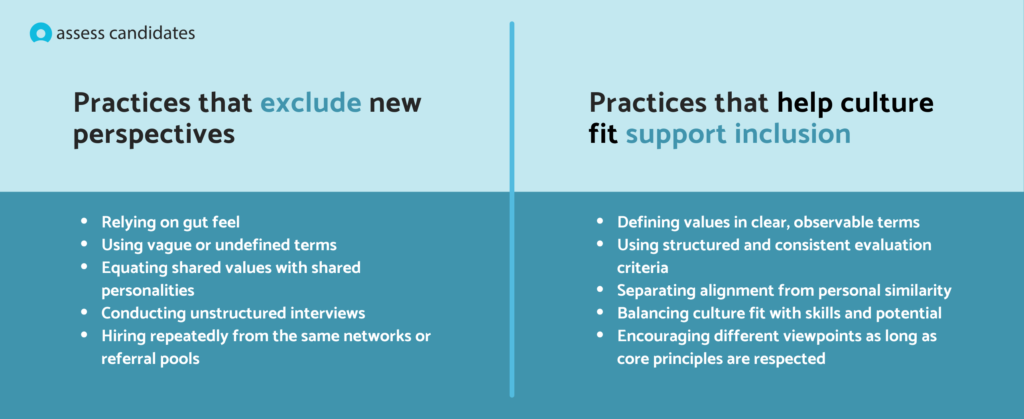
Practices that exclude new perspectives
These approaches often narrow teams without meaning to:
- Relying on gut feel or “chemistry” instead of evidence-based criteria
- Using vague labels like “culture fit” or “good attitude” without defining what they mean
- Equating shared values with shared personalities or communication styles
- Conducting unstructured interviews with no consistent evaluation framework
- Hiring repeatedly from the same referral networks or talent pools
Practices that help culture fit support inclusion
These practices keep culture fit aligned with fairness and growth:
- Defining values in clear, observable behavioural terms
- Using structured and consistent evaluation criteria for all candidates
- Separating values alignment from personal similarity
- Balancing culture considerations with skills, growth potential, and learning ability
- Encouraging different viewpoints as long as core principles are respected
Used thoughtfully, culture fit can strengthen teams. Used casually, it can narrow them. The key is ensuring it remains a tool for alignment, not a shortcut for sameness.
Measure the right traits and behaviors for your role with our flexible, end-to-end assessments. Learn More
Moving on, let’s now see how hiring for culture fit is different from hiring for culture add, and why many organizations are shifting their approach
3. What is culture add?
Culture add refers to hiring people who bring new perspectives, experiences, values, or skills that are currently missing in your organization, while still aligning with your core values.
Hiring for culture add focuses less on blending in and more on contributing meaningfully. Instead of asking whether a candidate matches existing personalities or working styles, the goal is to ensure alignment with shared values, purpose, and behaviors whilst welcoming fresh ideas and perspectives.
In a survey, 67% of recruiters reported that while cultural fit remains important, many are shifting toward assessing how candidates’ complementary skills and perspectives can help the organization grow. This reflects a move to culture add thinking.
The key difference lies in intent. Hiring candidates who simply “fit in” often prioritizes comfort and similarity in those who communicate, think, or work like the existing team. Hiring for culture add, on the other hand, recognizes that strong cultures aren’t built through sameness, but through shared values combined with diverse experiences and viewpoints.
Culture fit vs culture add: What’s the difference?
Culture add hiring enables organizations to protect what truly matters, such as ethics, accountability, and collaboration, while still welcoming new ideas and better ways of working. Instead of narrowing culture with each hire, culture add allows it to evolve and strengthen over time.
In essence, culture hiring shouldn’t be just about maintaining sameness; it should be about reinforcing shared core values while intentionally making space for growth.
Find diverse, high-quality talent that also fits your company culture with our expert assessment platform. HIRE FOR FREE
So why might framing this as culture fit vs culture add be the wrong conversation to have in the first place?
4. Why culture fit alone doesn’t support long-term growth
Why hiring for “fit” or “add” misses the bigger picture
Framing the discussion as culture fit vs culture add oversimplifies how company culture actually works in organizations. It turns hiring into a false choice between preserving values and inviting difference, when in reality, strong cultures need both.
Company culture is not a static template that candidates must match, nor is it a gap to fill. It is a living system shaped by shared principles and continuously enriched by evolving perspectives.
Problems arise when culture is treated as sameness. Labeling someone as a “culture fit” can become a proxy for familiarity, while calling someone a “culture add” can imply they are being brought in as an exception rather than an equal contributor. Teams don’t need people who all think, speak, or behave alike; they need employees who are aligned on core values while approaching problems in different ways.
A better lens to think about culture
When organizations move beyond the binary of fit vs add and focus on values alignment alongside diversity of thought, culture becomes more resilient and adaptive. Instead of asking whether a candidate fits or adds, a more meaningful question is:
“Will they strengthen our culture by upholding our values and contributing their own perspective?”
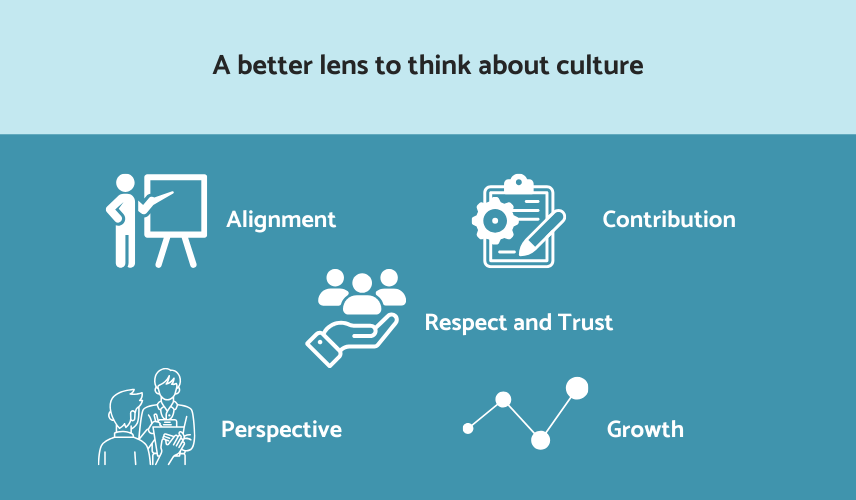
Rather than relying on labels, a healthy culture can be understood through a few simple principles:
- Alignment
- Contribution
- Constructive challenge
- Respect
- Perspective
- Growth
These principles shift the conversation away from labels and toward what truly matters: building teams that share purpose, think independently, and evolve together.
Research shows that companies embracing culture add and inclusive hiring practices report 5.4× higher employee retention and greater readiness to innovate.
Boost the quality of your hires with Assess Candidates’ culture fit and culture add assessments. View Plans
In the next section, we will take a look at what practical steps you can take to prioritize skills and potential without losing sight of your company values.
5. How can hiring teams assess values without overlooking skills and potential?
Hiring teams often struggle with a false trade-off: hire someone who shares our values or someone who has the skills to do the job. In reality, the most effective hiring decisions come from assessing how people think, behave, and grow, not just how well they interview.
A structured, data-led approach makes a real difference. When hiring teams use consistent pre-employment assessments, like those offered by Assess Candidates, they move beyond gut feel and evaluate candidates more fairly, objectively, and at scale.
1. Start with clarity on what your values actually mean in practice
Before you can assess values, you need to define which ones truly matter for the role and what they look like in action.
Instead of vague ideas like “team player” or “good attitude”, which are open to bias and interpretation, values should be defined as observable behaviors, such as:
- Collaboration
- Ethical decision-making
- Ownership of outcomes
When values are framed this way, they become something you can actually assess, not just talk about.
2. Use behavioral assessments to see values in action
Once values are clear, behavioral assessments help reveal how candidates are likely to act in real workplace situations.
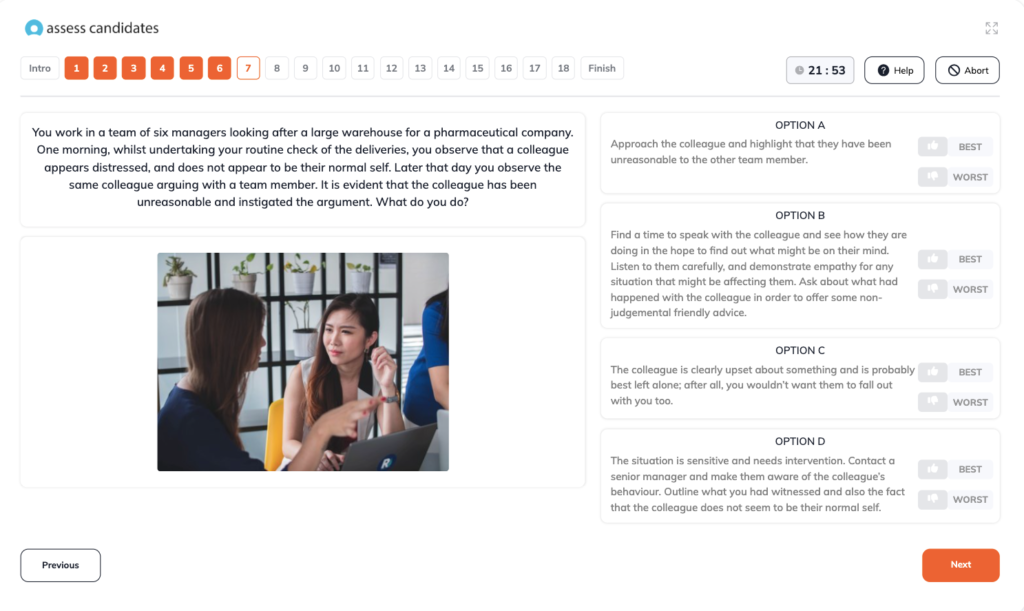
Situational Judgment Tests (SJTs) present realistic scenarios and ask candidates how they would respond. These tests are particularly effective for assessing decision–making, accountability, and interpersonal judgement, all key indicators of values in practice.
Assess Candidates Situational Judgment Test Example
3. Understand work style without hiring for “sameness”
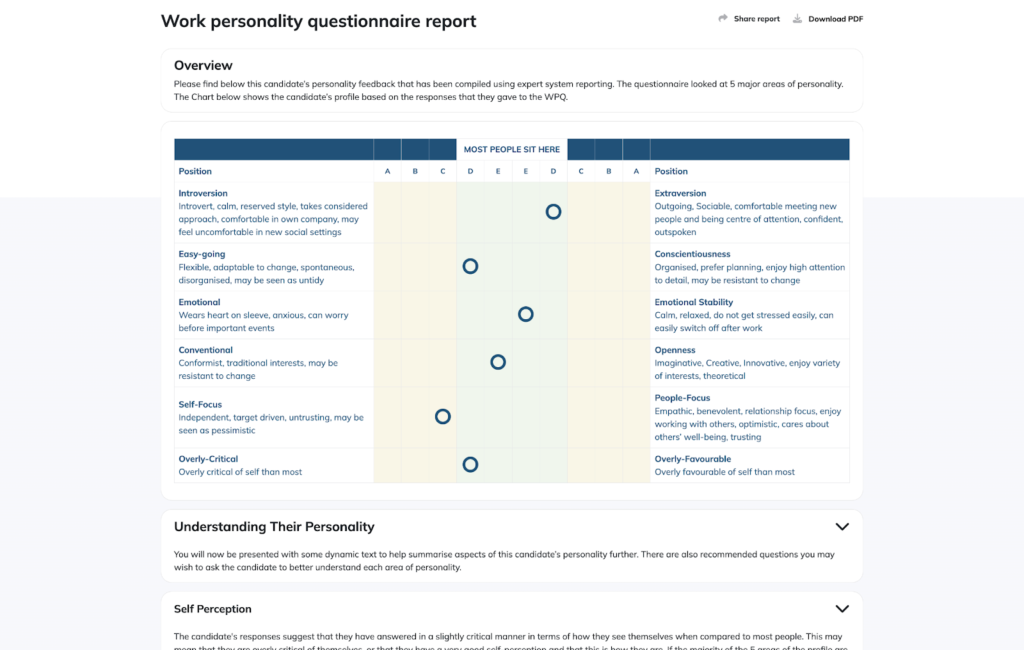
To understand how candidates prefer to work, personality questionnaires provide insight into motivation, communication style, and work preferences.
Used correctly, these personality tools don’t look for people who all think the same; instead they help hiring teams understand whether a candidate’s natural working style aligns with the organization’s way of working, while still allowing for diversity of thought and perspective.
Assess Candidates Personality Test Example
4. Assess skills and future potential, not just past experience
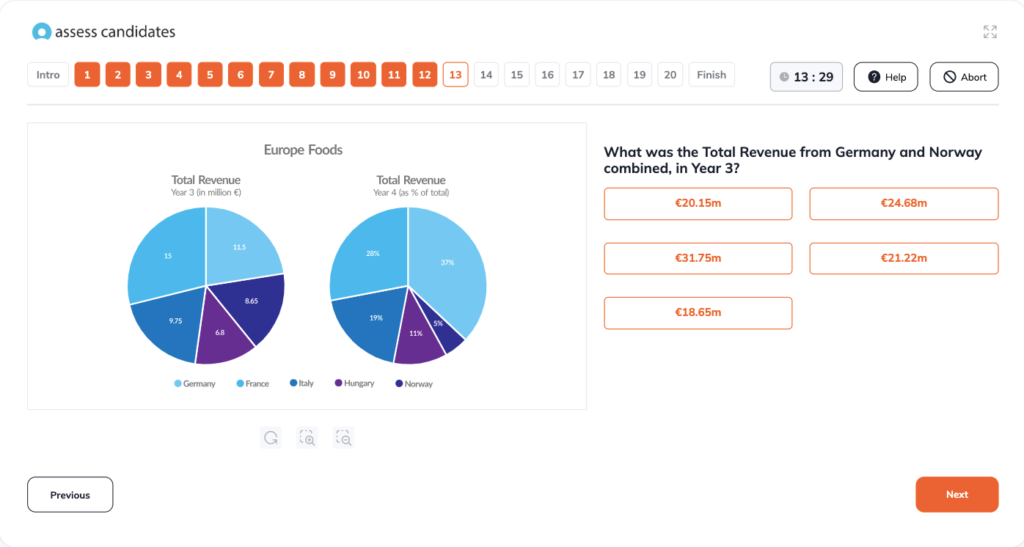
Skills and potential are best assessed through cognitive ability tests such as numerical, verbal, logical reasoning, and error-checking assessments.
These tests evaluate problem-solving ability, numerical skills, communication skills, learning agility, and attention to detail, which are all strong predictors of future performance, especially in roles that require growth, adaptability, and taking on new challenges over time.
Assess Candidates Numerical Reasoning Test Example
5. Make assessments engaging, especially for early-career roles
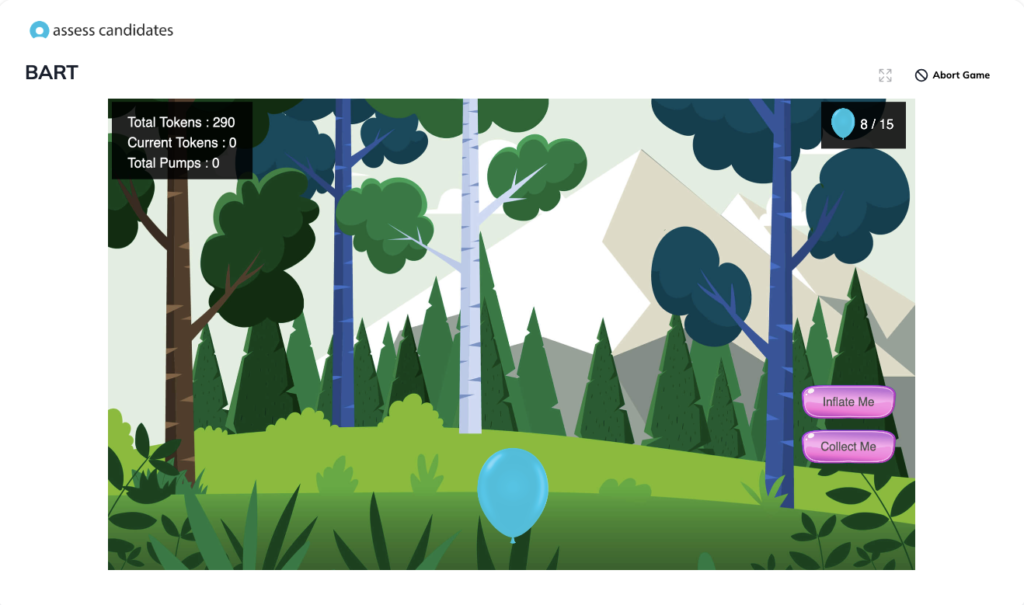
For a more modern and engaging candidate experience, game-based assessments combine behavioral and cognitive insights in a low-pressure, interactive format.
Game assessments are particularly useful for early-career hiring and high-volume recruitment, where potential often matters more than prior experience, and where engagement can significantly impact completion rates and candidate perception.
Assess Candidates Game-Based Assessment Example
6. Bring human touch back with structured interviews
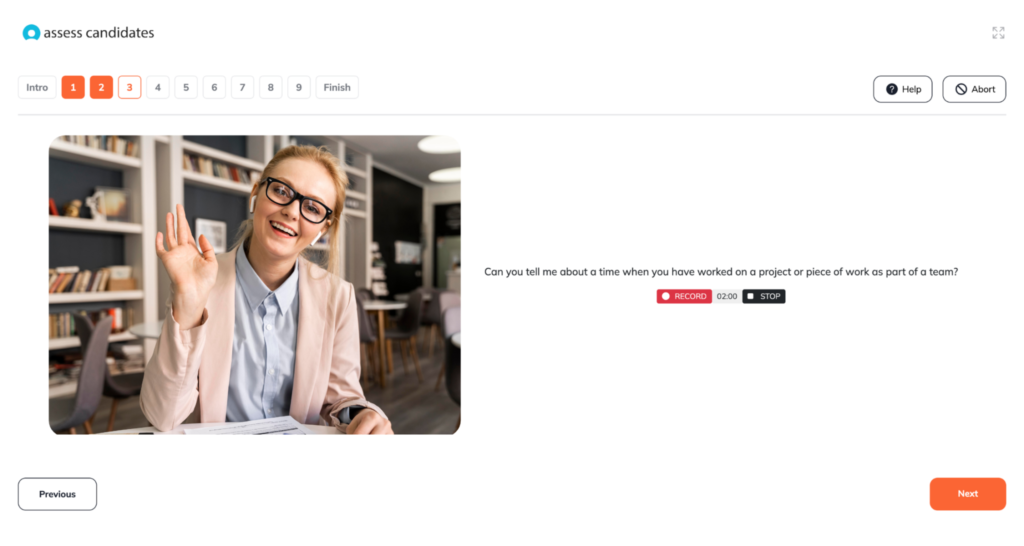
Finally, structured video interviews allow hiring teams to bring a human layer back into the process.
When combined with assessment data and guided by consistent criteria, they help validate earlier insights, reduce bias, and ensure every candidate is evaluated fairly.
Assess Candidates Video Interview Example
Take advantage of our wide range of reliable candidate assessments on our user-friendly hiring platform. LEARN MORE
The key is not to rely on any single tool, but to combine multiple assessments and signals – values, behaviour, skills, and potential – into a holistic view of each candidate.
How different assessments support values, skills, and potential:
When hiring teams use structured assessments alongside clearly defined value, they don’t have to choose between culture and capability. They can build teams that share principles, bring different perspectives, and grow together over time.
Equally important is how these assessments are delivered:
- Accessible test design, such as flexible time limits, clear instructions, multiple formats, and reduced reliance on speed, helps neurodivergent candidates perform at their best.
- Robust anti-cheating and proctoring tools ensure fairness and integrity, so every candidate is evaluated on genuine ability, not advantage.
When accessibility and assessment security work together, hiring becomes both more inclusive and more credible.
Want to learn more expert hiring tips and insights? Browse the FAQs below or subscribe with your email to get started.
Frequently Asked Questions
Is “culture fit” still relevant in modern hiring?
Yes, culture fit in modern hiring is still relevant, but only when it is clearly defined. Culture fit works when it refers to alignment with core values and ethical standards, not to personality, background, or social similarity. When left vague, it risks becoming a proxy for comfort rather than contribution.
How does the idea of “culture add” change the hiring conversation?
Culture add shifts attention to what a candidate brings to the table that expands thinking, improves problem-solving, or challenges assumptions, without undermining shared values. It encourages teams to value difference as a strength rather than a disruption.
Can hiring for culture unintentionally weaken diversity and inclusion?
Yes, it can, if culture is interpreted as sameness. When values are confused with “how people like us behave”, qualified candidates from different backgrounds may be excluded. Defining culture through observable, job-relevant behaviors helps prevent this outcome.
Do organizations have to choose between cultural alignment and skills or potential?
No. Skills, potential, and values address different dimensions of performance. Skills reflect what someone can do today, potential signals how they learn and adapt, and values shape how they work with others. Effective hiring evaluates all three deliberately.
What happens if a highly skilled candidate doesn’t align with core values?
Even strong skills can’t offset ongoing value misalignment. Skills can be developed, but persistent misalignment with core values often creates long-term friction. Strong hiring decisions prioritize both competence and values to ensure sustainable performance and healthy team dynamics.


 English
  Arabic