
Pre-employment Game-based Assessment Tests for Hiring | The 2026 Guide For Recruiters



Employers increasingly use innovative assessment methods to improve hiring accuracy, candidate engagement, and workforce quality.
Gamified tests are one such robust talent assessment to engage candidates effectively, while offering an objective, efficient, and enjoyable hiring experience. These recruitment assessments help interactively shortlist candidates with the necessary skills, aptitude, and personality that fit well with their work culture.
In this article, we will focus on online game-based assessments, their top benefits, and how they work in making informed hiring decisions and building higher-skilled teams.
Contents
- What are game-based assessments?
- How do game-based assessments work?
- What skills do game-based assessments measure?
- How do game-based assessments differ from other traditional psychometric tests?
- Why should employers use game assessments in their recruitment process?
- Which game assessments do employers use for recruitment?
- At what stage are game-based assessment methods used in the hiring process?
- When to use game-based assessments in hiring?
- Which industries can hire with game-based assessments?
- How to use game-based assessments effectively to maximize ROI?
- Why do top companies choose Assess Candidates’ game-based assessments to hire
- Why choose game assessments: Client success story
Now, without further ado, let’s start by defining what game-based tests are.
1. What are game-based assessments?
Game-based assessments are interactive tests that help recruiters measure candidates’ job-oriented skills, aptitude, traits, or knowledge through the use of gamification. These assessments use interactive tasks, simulations, and challenges instead of traditional question-based formats to evaluate workplace-relevant skills and behaviors.
How are game-based assessments different from gamified assessments?
While game-based assessments include game-based tasks, gamified assessments are not games themselves. Gamified assessments are modified psychometric assessments that include game-like elements, such as points, badges, leaderboards, and rewards, to increase candidate motivation and engagement.
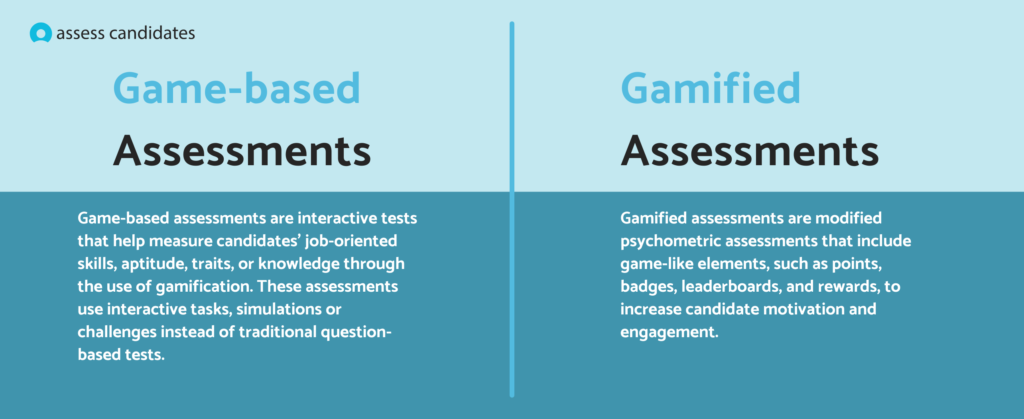
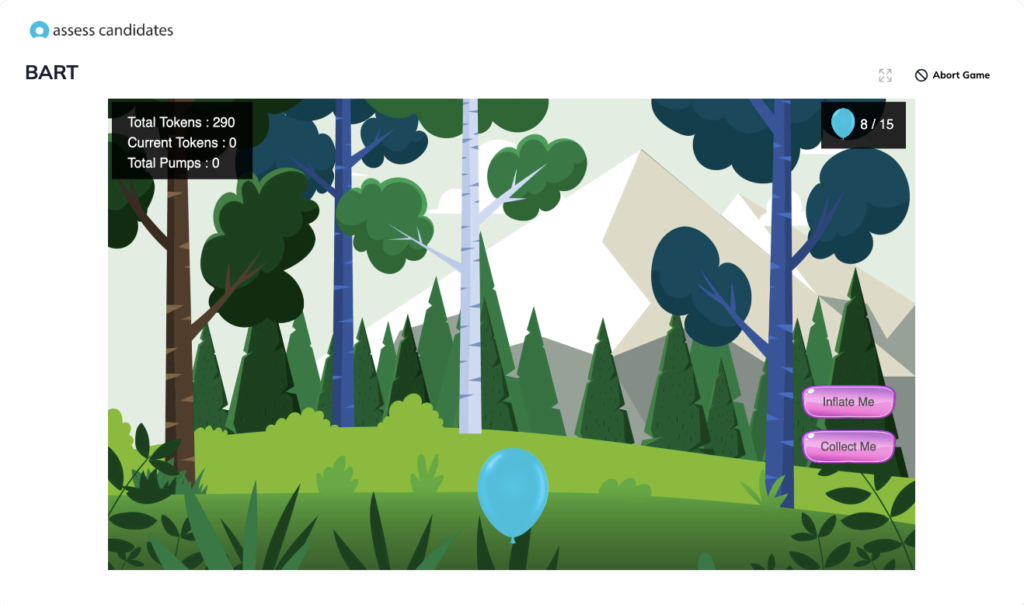
Example: As part of our BART game, the candidate must pump a balloon to earn rewards, but risks it bursting; their choices directly reveal risk-taking behavior. In contrast, a gamified assessment for the same purpose might simply ask risk-preference questions while adding points, badges, or a leaderboard to make the questionnaire more engaging.
Enhance your hiring assessment process with our full range of immersive game-based assessments. HIRE FOR FREE
Now, let’s learn how game tests work in recruitment.

2. How do game-based assessments work?
Game-based assessment tests utilize data analytics and machine learning algorithms to track and analyze the behavior of candidates as they navigate through the recruitment process. Rooted in psychometrics, these online game-based tests track candidates’ behavioral and cognitive data to offer objective and reliable insights into their job-related skills, competencies, and preferences.
How does gamification help recruiters assess psychometric ability?
Game-based assessments, through their interactive format, record data such as response times, decision-making processes, interactions, and outcomes. These objective indicators help recruiters evaluate candidate potential, workplace behaviors, and likely job performance.
So, what skills and abilities do recruiter games help employers measure? Keep reading to find out.
3. What skills do game-based assessments measure?
Game-based assessments utilize game-like tasks and challenges to test specific skills and traits that are predictive of on-the-job performance, for example, problem-solving, decision-making, critical thinking, learning agility, and resilience.
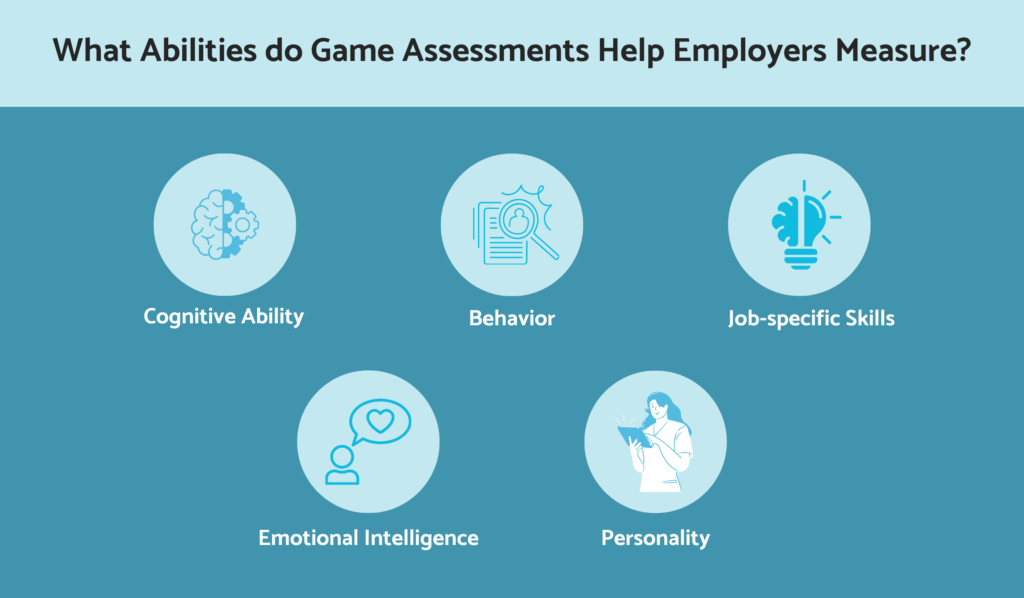
The major abilities that online game-based assessments help measure
- Cognitive Ability
Cognitive ability refers to the functions and skills involved in perception, memory, learning, reasoning, judgment, and understanding. Online game based assessments in recruitment can measure cognitive abilities such as mental arithmetic, problem-solving, attention, and memory. These abilities are crucial for job roles that involve complex problems and require critical thinking and decision-making under time pressure.
- Behavior
Game-based assessments can also effectively assess candidates’ behavioral competencies and soft skills, such as communication skills, multitasking and prioritizing, teamwork, leadership, and adaptability, which are essential for success in most job roles.
- Job-specific Skills
Online game-based assessments can also evaluate job-specific skills such as programming, data analysis, and customer service through job simulations. This style of game-based assessment utilizes a simulated work environment to evaluate how candidates approach and resolve problems effectively.
- Emotional Intelligence
Emotional intelligence refers to the ability to recognize, understand, and manage one’s own emotions and those of others. Game assessments in recruitment, such as the i-EQ™ game-based assessment, can measure emotional intelligence through tasks that require candidates to display empathy, self-awareness, and social skills.
- Personality
Online game-based assessment tests are an effective method for capturing candidates’ personality and preferences. One example is the Balloon Analogue Risk Task (BART) game. Although this task may seem to only measure one personality trait, such as risk-taking, it, in fact, also looks at candidates’ decision-making, sociability, and work management.
By combining game-based assessments with other hiring methods, employers can make more informed selection decisions and improve workforce quality.
Hire top talent with our range of psychometric assessments. LEARN MORE
In the next section, let’s explore the key benefits that recruitment games offer over traditional psychometric tests.
4. How do game-based assessments differ from other traditional psychometric tests?
Game-based assessments offer a range of unique benefits that enhance the effectiveness of the recruitment process.
Here are the top 6 benefits of game-based assessments over traditional psychometric assessments:
1. Offers Simultaneous Cognitive and Non-Cognitive Assessment
Game-based assessments are a relatively recent innovation for assessing candidates in recruitment. While most traditional psychometric tests, such as aptitude tests and personality tests, have been available on the market for some time and have a long history of scientific research and validation, they typically only evaluate one major cognitive ability.
However, game-based assessments provide valuable insights into candidates’ behavioral data, offering insights into their personality, working style, executive functioning, and ability to handle pressure through a single suitable test or battery all while enhancing the candidate experience through interactive challenges.
Example: In a traditional personality questionnaire, a candidate might rate statements such as “I stay calm when criticized,” which measures personality traits like emotional stability. In contrast, the i-EQ™ game assessment presents interactive scenarios that require the candidate to recognize emotions, manage reactions, and adapt their behavior, capturing not only personality-related traits dynamically but also broader skills, such as empathy, self-control, and adaptability, simultaneously.
2. Doesn’t Require a Controlled Environment
Game assessments don’t require a controlled or proctored environment, unlike psychometric assessments, which typically take place in testing and assessment centers. As the name suggests, candidates can undertake the interactive game challenges flexibly, even remotely, from their laptops or phones, without the need to travel long distances to complete the hiring assessment.
Example: In a traditional memory test, a candidate might need to visit a test centre, with a paper-and-pencil or fixed computer setup, and follow strict instructions. In contrast, the Cognition-M game assessment allows candidates to play an online memory game on any device and in any browser, from anywhere (home, café, etc.), with clear instructions and untimed rounds, reducing stress over setting and timing.
3. Lesser Time Intensive and Stressful
Game assessments are designed to be short, ideally anywhere from 5-10 minutes per game. This differs from traditional psychometric assessments, such as numerical reasoning tests, which can take 20-25 minutes to complete on their own. Additionally, game-based assessments involve tasks that keep the candidates’ engaged throughout, offering a positive experience, reduced fatigue, stress, and attrition rate.
Example: In a traditional in-tray exercise, a candidate might be given a long list of emails and tasks in a simulated inbox, with strict deadlines and pressured typing or essay-style written responses. In contrast, the MTA-Tray game assessment asks the candidate to sort parcels into the correct mailboxes in visual, bite-sized tasks, which take approximately 6 minutes in total, thereby reducing stress by being visually focused and less text-heavy.
4. Prevent Practice Effect
Online game-based assessments are dynamic, presenting unique challenges to test candidates on their various competencies and skills. These adaptive and engaging assessments match candidates’ abilities and gather data throughout the entire game process rather than just the outcome. On the other hand, traditional psychometric tests often involve repetitive question styles to assess cognitive abilities that can be practiced, leading to the ‘training effect’. This reduces the test’s predictive validity.
Example: In traditional attention tests, repeated practice can inflate scores through familiarity. The PassCode™ game assessment instead uses dynamic code-cracking under time pressure. Since sequences change and errors reset progress, rote rehearsal offers little advantage.This ensures performance reflects accurate attentional control and adaptability, not test practice.
5. Reduce Social Desirability Bias
Game assessments work by measuring candidates’ natural behaviors in action to assess their personality and working style. Game assessments such as the Balloon Analogue Risk Task don’t rely on self-reporting. This helps reduce social desirability bias, which is a potential issue with traditional assessments, where candidates may deliberately answer questions about their personality traits and preferences in a more favorable light for employers.
Example: In a traditional personality questionnaire, the candidate may choose socially “correct” answers (e.g., “I always stay focused at work”) because they believe it’s what the employer wants. In contrast, the Cognition-A™ game requires candidates to perform attention/focus tasks (e.g., responding to stimuli, managing distractions), where performance is observed. Thus, responses aren’t about how candidates claim to behave, but about how they actually behave under test conditions.
6. Promotes Inclusivity
Game assessments, due to their interactive design, are candidate-friendly, including those on the neurodivergent spectrum. These engaging assessments focus on measuring both conscious and unconscious behaviors and actions, rather than the final response. This approach thus offers space for natural strengths to show up, such as pattern recognition, problem-solving, persistence, or hyperfocus, giving a fairer view of overall candidate ability. This is unlike traditional psychometric tests, which can be more stressful due to their text-heavy and lengthy design.
Example: In traditional trait-based surveys, cultural or linguistic differences might lead some candidates to interpret questions differently or feel less confident answering. The i-EQ game, however, utilizes visual emotional expression recognition and interactive scenarios to assess emotional intelligence, which is less reliant on nuanced language and background context. This allows a broader range of applicants to demonstrate skills regardless of educational or cultural background.
Looking forward to knowing how to hire the best with game assessments. CONTACT US
5. Why should employers use game assessments in their recruitment process?
When used alongside other hiring methods, game-based assessments can provide valuable insight into how candidates think, behave, and perform under pressure.
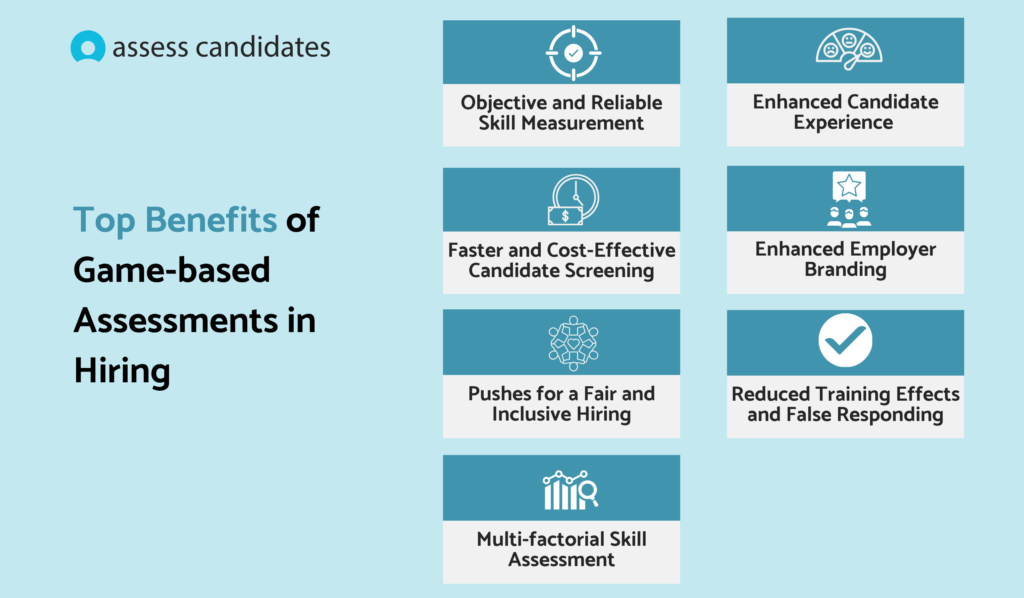
Top reasons why employers use game-based assessments in hiring:
- Objective and Reliable Skill Measurement
Due to their uniqueness, adaptive difficulty, and immersive nature, game-based assessments aim to measure candidates’ natural behaviors and cognitive abilities. These objective standardized assessments carry high predictive validity as they measure key data points in real-time over self-report. This provides employers with authentic and trustworthy insights into candidates, enabling them to predict job performance accurately, resulting in improved hiring decisions.
Example: A finance firm had several hires who had excellent resumes, yet underperformed on the job. They introduced the Flanker Task to assess selective attention. Over 6 months, those who scored well in Flanker had 25% fewer performance issues.
- Faster and Cost-Effective Candidate Screening
Game-based assessments come under specialized third-party SaaS (Software-as-a-Service) solutions for talent acquisition that offer immediate candidate results. These engaging and cost-effective tools are fully automated, quick to administer, and allow recruiters to assess a large number of candidates in one go. This makes the hiring process quite faster and efficient since game assessments come with the flexibility to suit any recruitment type or volume.
- Pushes for a Fair and Inclusive Hiring
Game assessments offer recruiters a diverse approach to hiring using objective data points and machine learning algorithms. This helps reduce conscious and unconscious biases through a performance-based hiring process rather than focusing on demographic factors or preconceived notions, unlike traditional CVs and interviews. Game-based tests also diversify the talent pool through their appeal to a broader range of candidates. This allows the recruiters to hire for both culture-fit and culture-add, and preparing a resilient and talented workforce with a more diverse range of skills and competencies.
Example: An international consulting firm noticed that candidates from non-prestigious universities were underselected. After including the Cognition-M™ game test in the assessment mix, more candidates from diverse backgrounds advanced, improving diversity in hires.
- Multi-factorial Skill Assessment
Game-based assessments can assess multiple competencies such as memory, problem-solving, attention, resilience, EQ, etc, in one game or a set of games. This allows recruiters to use these objective indicators as anchors to further validate their aptitude and competencies in later stages, such as assessment centres and interviews. Additionally, game-based tests also enhance candidates’ experience in the hiring process while simultaneously assessing them on a variety of behavioral indicators seamlessly.
Example: A banking employer used a suite of game-based assessments: Cognition-A™ (attention), PassCode™ (resilience), i-EQ™ (emotion recognition). They found that hires who scored well across multiple games were more adaptable and had better retention after one year.
- Enhancing the Candidate Experience
Game-based assessments are designed to create a more relaxed, stress-free assessment environment for candidates by replacing traditional questions with interactive and immersive tasks. Additionally, this innovative assessment process ensures a fair and objective yet fun and positive candidate evaluation, reducing anxiety and fatigue. This helps attract and retain top talent through increased candidate engagement, reduces application withdrawals, and expands the pool of high-quality candidates, making it easier for employers to find the right person for the job.
Example: A tech startup was getting many applicants, but had high dropouts during their numerical and verbal tests. They added a game like MathBubbles™ early in screening. Drop-off rates dropped by around 40%, and more candidates reached the interview stage.
- Enhanced Employer Branding
An enhanced candidate experience through game-based assessments also boosts employer brand. These assessments convey employers as innovative, dynamic, and attentive to candidate experiences. This is an important competitive edge for companies in the war for talent, helping to retain candidates during the hiring process and attract higher-quality candidates in the future, especially Gen Z.
Example: A mid-sized IT firm was struggling to compete with bigger names. After switching to game-based assessments, they saw more applications from high-quality candidates, especially younger talent, citing the “fun and modern assessment process.”
- Reduced Training Effects and False Responding
Game assessments often adapt in real time, change patterns or sequences, use behavior rather than just answers, so rote preparation or rehearsed responses help less. This serves a dual function as it reduces training effects and serves a broad candidate base, including those with no prior gaming experience. Additionally, game assessments also record the time taken to complete each test and the response-to-time ratio. This helps recruiters identify any social desirability bias in case the candidate takes longer to respond than is necessary. This allows employers to help make better informed decisions about which candidates to hire.
Example: A marketing firm noticed candidates excelling in traditional reasoning tests, yet struggling with creativity and adaptability on the job. By introducing adaptive game-based tools like PassCode™ and MTA-Tray™, they achieved stronger alignment between scores and workplace success, while also uncovering potential social desirability bias in responses, which was later confirmed during interviews.
However, like any assessment methodology, there must be a consideration of the drawbacks in using them so you can make an informed decision for your hiring process.
Top drawbacks to consider when using game-based assessments in recruitment
- Limited Scope: Game-based assessments tend to focus on specific skills or traits, such as problem-solving or decision-making, rather than providing a comprehensive evaluation of a candidate.
Solution: Combine game-based assessments with other types of assessments, such as traditional cognitive ability tests or personality questionnaires. This can provide a comprehensive evaluation of a candidate’s abilities.
- Face Validity Concerns: Some candidates may initially struggle to see the connection between game performance and workplace performance.
Solution: Game assessments have been scientifically validated as an effective selection tool for hiring.
- Cheating: It is technically possible that candidates can cheat on a game-based assessment online, or it can be completed by someone else.
Solution: Whilst looking for solutions on the market, consider checking what measures the assessment test providers offer to prevent cheating. Many third-party assessment providers, like Assess Candidates, will offer cheat detection technology and mechanisms.
- Cost: Developing and implementing game-based assessments can be costly, particularly for small and medium-sized businesses. The cost of developing or licensing the recruitment games, administering the assessments, and analyzing the results can be prohibitive for some employers.
Solution: Partner with third-party vendors or providers, like Assess Candidates, who specialize in game-based assessments. We can offer cost-effective solutions that are tailored to your hiring needs. Additionally, employers can consider using game-based assessments as a supplemental tool rather than a replacement for traditional assessment methods.
- Candidate Accessibility: Not all candidates may be equally comfortable with digital games, particularly older applicants or those less familiar with gaming environments, which can disadvantage them in the process.
Solution: Choose game-based assessments designed with accessibility in mind, offering simple interfaces and inclusive design principles. Providers like Assess Candidates build tools that focus on fairness and ease of use across diverse applicant groups.
- Technical Issues: Online game assessments can face technical glitches, such as lag, device incompatibility, or internet connectivity problems, which may affect a candidate’s performance unfairly.
Solution: Use assessments that are compatible with multiple devices and browsers, and ensure providers offer technical support and retry options to minimize disruptions.
- Data Privacy Concerns: Candidates may worry about how their gameplay data is stored, analyzed, or shared, which can reduce trust in the process.
Solution: Partner with providers who comply with international data protection standards (like GDPR) and communicate transparently with candidates about how their data will be used and safeguarded.
So, while game assessments in recruitment can be an effective choice to include, they still fall short when assessing for specific cognitive abilities, such as numerical reasoning or verbal comprehension. Therefore, we at Assess Candidates always recommend using game tests in combination with other traditional selection methods, such as psychometric assessments, for a holistic candidate evaluation.
So, which game tests do employers use in recruitment? Let’s find out below.
6. Which game-based assessments do employers use for recruitment?
Recruiters usually use a combination of different game assessments to evaluate candidates for a role. Depending on the role, employers evaluate the candidates’ traits, behaviors, adaptability, and skills to predict their job and culture fit.
Below is a table that outlines the different online game-based assessments from Assess Candidates, the skills that are measured, and the industries they could be used in:
Let’s now discuss each of these gamified assessment tools in detail.
Which game assessments help employers measure attention and memory?
Employers use a variety of game-based assessments to assess different types of cognitive skills, such as memory and attention:
- Cognition-A™ Game
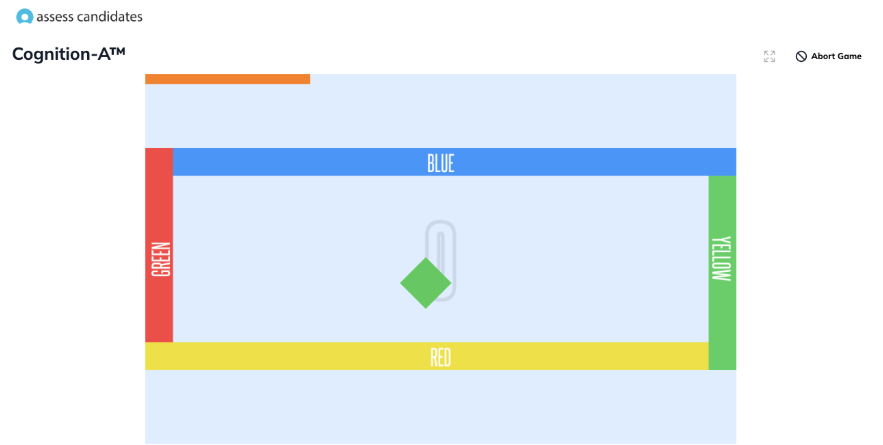
The Cognition-A™ game presents candidates with a rectangular box and asks them to match colored shapes to the correct color word on the sides of the rectangle. Incorporating the Stroop Effect (1935), this game-based assessment, though untimed, usually takes a candidate 3 minutes to complete. Here, the candidate, for example, a red colored object when moved to the side labeled ‘red’ has to match it to the correct color word, ignoring the color of the background. Candidates continue playing until failure, when the session will end.
How does the Cognition A™ game work?
Cognition A™ game-based assessment measures attention and accuracy to determine how candidates might naturally process and handle multiple sources of information at the same time in the workplace.
Here is what our Cognition A™ game assessment looks like:
- Cognition-M™ Game
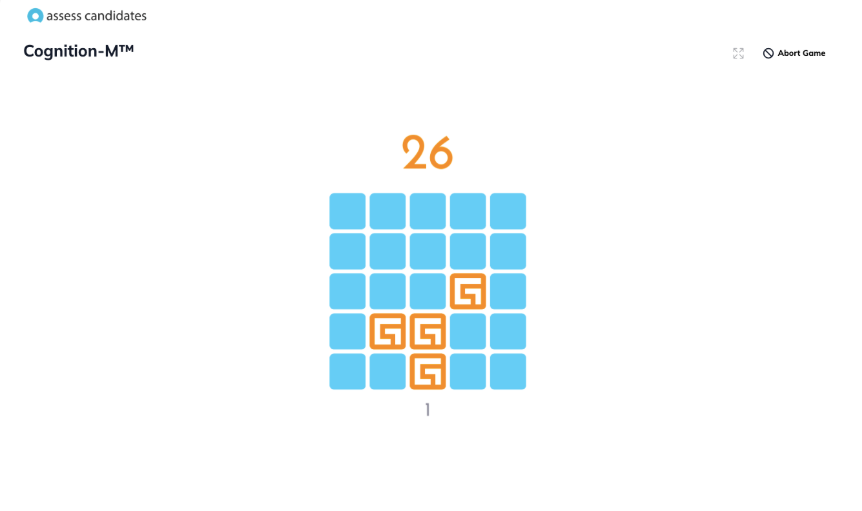
The Cognition-M™ game requires candidates to remember the positioning and sequence of orange blocks after they appear for a few seconds and then disappear. The number of orange blocks and the difficulty level increase after each correct answer. Candidates continue playing until failure, when the session will end, usually taking about 3 minutes.
How does the Cognition-M™ game work?
Cognition-M™game-based assessment assesses the candidates’ short-term memory to determine how they might naturally process multiple sources of information, remember key information daily, and stay organized in the workplace.
Here is what our Cognition M™ game assessment looks like:
- MTA Tray™ Game
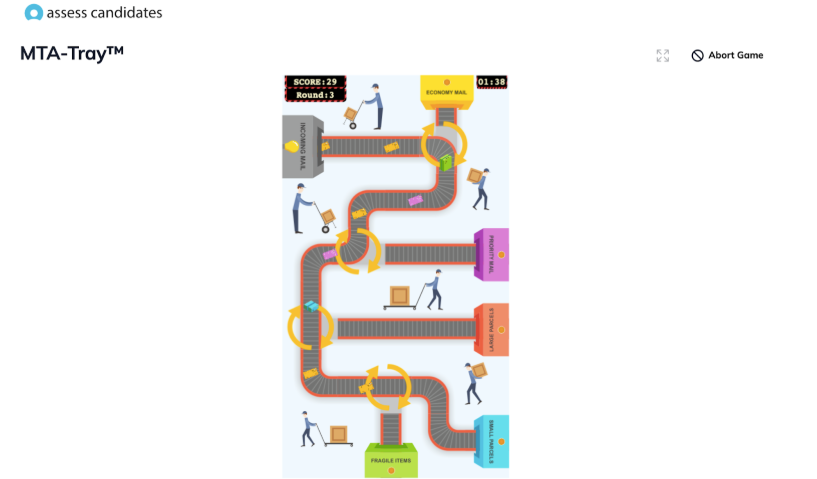
The MTA-Tray™ game involves sorting 63 colored parcels into the correct colored mailbox in a large post office in 3 rounds. Different types of mail need to be sent to the correct centers, with some awarding more points than others, and it takes around 6 minutes to complete.
How does the MTA-Tray™ game assessment work?
The MTA-Tray™ game assessment tests candidates’ organizational, multi-tasking, and prioritization skills when dealing with multiple sources of information and tasks in the workplace. It also measures accuracy and attention to detail.
Here is what our MTA-Tray™ game assessment looks like:
- Flanker Task Game
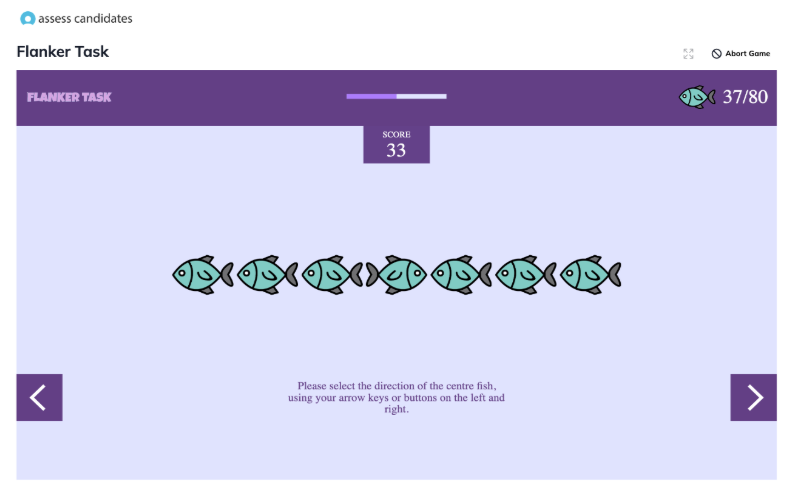
The Flanker task game assessment is based on the Eriksen and Eriksen Flanker Task (1974) and presents candidates with multiple fish in a line that are pointing in a particular direction. Using the keyboard or on-screen arrows, candidates have a couple of seconds to indicate the direction of the center ‘target’ fish, whilst ignoring the direction of other neighboring ‘distractor’ fish. There are 80 rounds in total.
How does the Flanker task game assessment work?
The Flanker task game assessment measures candidates’ attention and attention suppression, their ability to ignore distracting irrelevant information. This correlates to how candidates might naturally be able to concentrate and analyze information in high-pressure work environments.
Here is what our Flanker task game assessment looks like:
Which game assessment helps employers measure math skills?
- MathBubbles™ Game
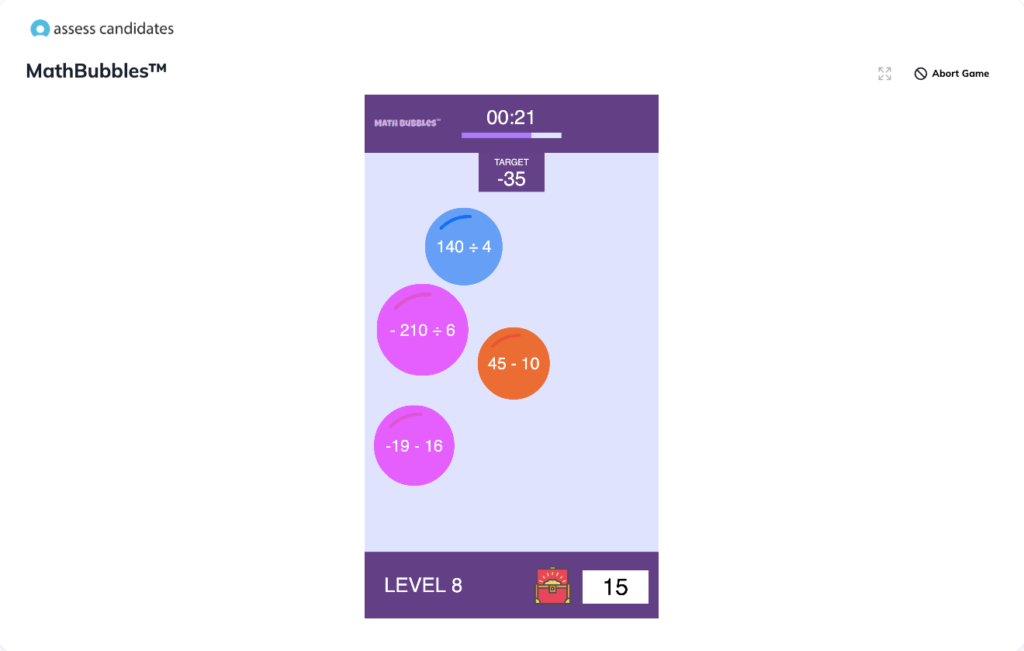
The MathBubbles™ game presents candidates with math sums in 10 bubbles per round and requires them to calculate and select the correct bubbles that correctly reach a target number. This 9-round game assessment test takes 5 minutes to complete, with each round lasting 30 seconds.
This game measures candidates’ mental arithmetic and technical ability to quickly calculate numerical sums. This correlates to how candidates might naturally handle numerical information under time pressures in the workplace.
How does the MathBubbles™ game assessment work?
The MathBubbles™ game assessment measures candidates’ mental arithmetic and technical ability to calculate numerical sums quickly. This correlates to how candidates might naturally handle numerical information under time pressures in the workplace.
Here is what our MathBubbles™ game assessment looks like:
Which game assessments help employers measure personality and emotional intelligence?
- Balloon Analogue Risk Task (BART) Game
The BART game assessment requires the candidates to pump 15 balloons to collect the tokens using the‘inflate me’ button in around 5 minutes. They can later bank their total tokens at any time by clicking the ‘collect me’ button, or choose to continue pumping with the risk that the balloon could burst and they would lose all their tokens for that balloon.
How does the BART game assessment work?
Based on the Balloon Analogue Risk Task from Lejuez et al. (2002), this game test measures candidates’ preferences and personality, specifically their risk-taking, decision-making, and sociability. This correlates to how candidates might prefer to approach risks and complex decisions in the workplace.
Here is what our BART game assessment looks like:
- PassCode™ Game
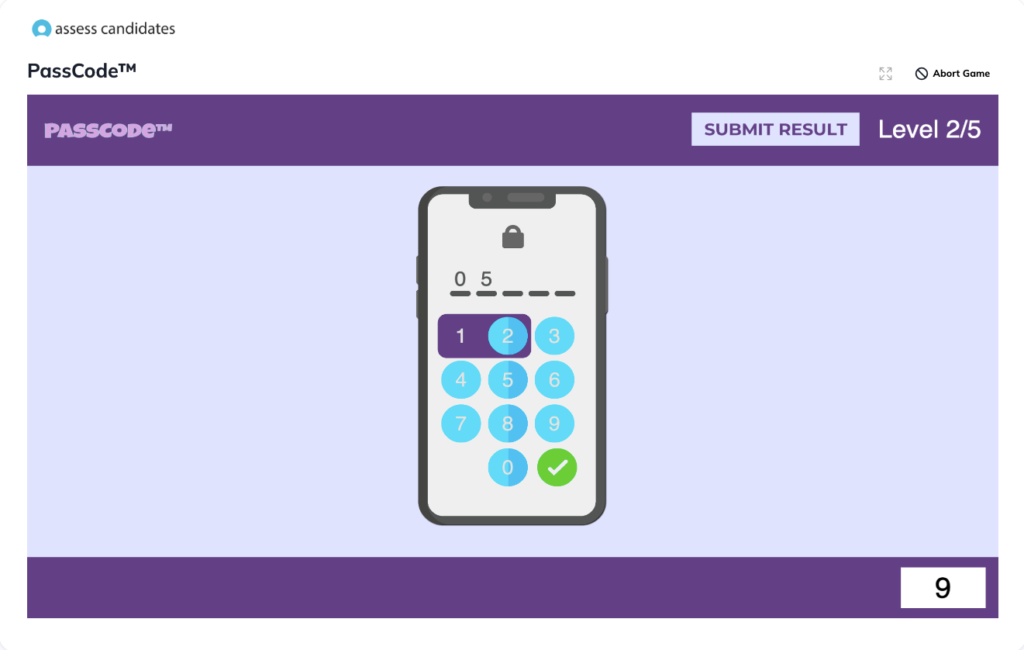
The PassCode™ game requires candidates to select the green tick once the desired digit is highlighted to crack the 5 codes for the mobile phone in total. If done incorrectly, too fast or too slow, the code is reset.
How does the PassCode™ Game assessment work?
The PassCode™ game assessment test assesses candidates’ attention levels and resilience. This correlates to how candidates might concentrate, make quick, accurate decisions, and bounce back from mistakes and challenges in the workplace.
Here is what our PassCode™ game assessment looks like:
- i-EQ™ Game
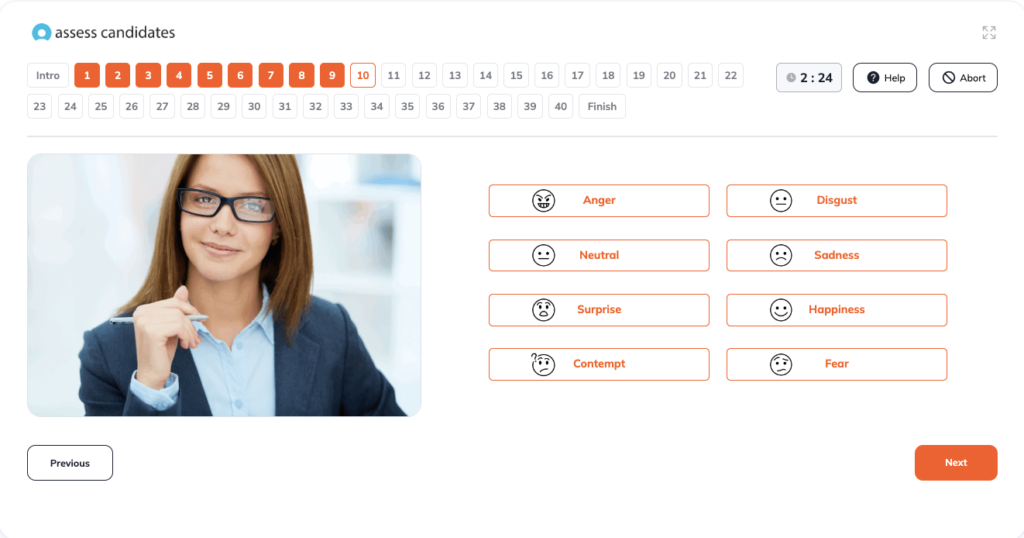
The i-EQ™ game requires candidates to accurately recognize the emotional expressions of 40 different people’s faces and body language from pictures.
How does the i-EQ™ game assessment work?
The i-EQ™ game assessment test assesses one aspect of emotional intelligence and sociability. How well candidates understand and manage the emotions of others correlates to how well and naturally they communicate, empathize, and work with others.
Here is what our i-EQ™ game assessment looks like:
Recruit top talent with effective job skills with our game assessments. LEARN MORE
So, at what stage should we use game assessments? Let’s find out in the section below.
7. At what stage are game-based assessment methods used in the hiring process?
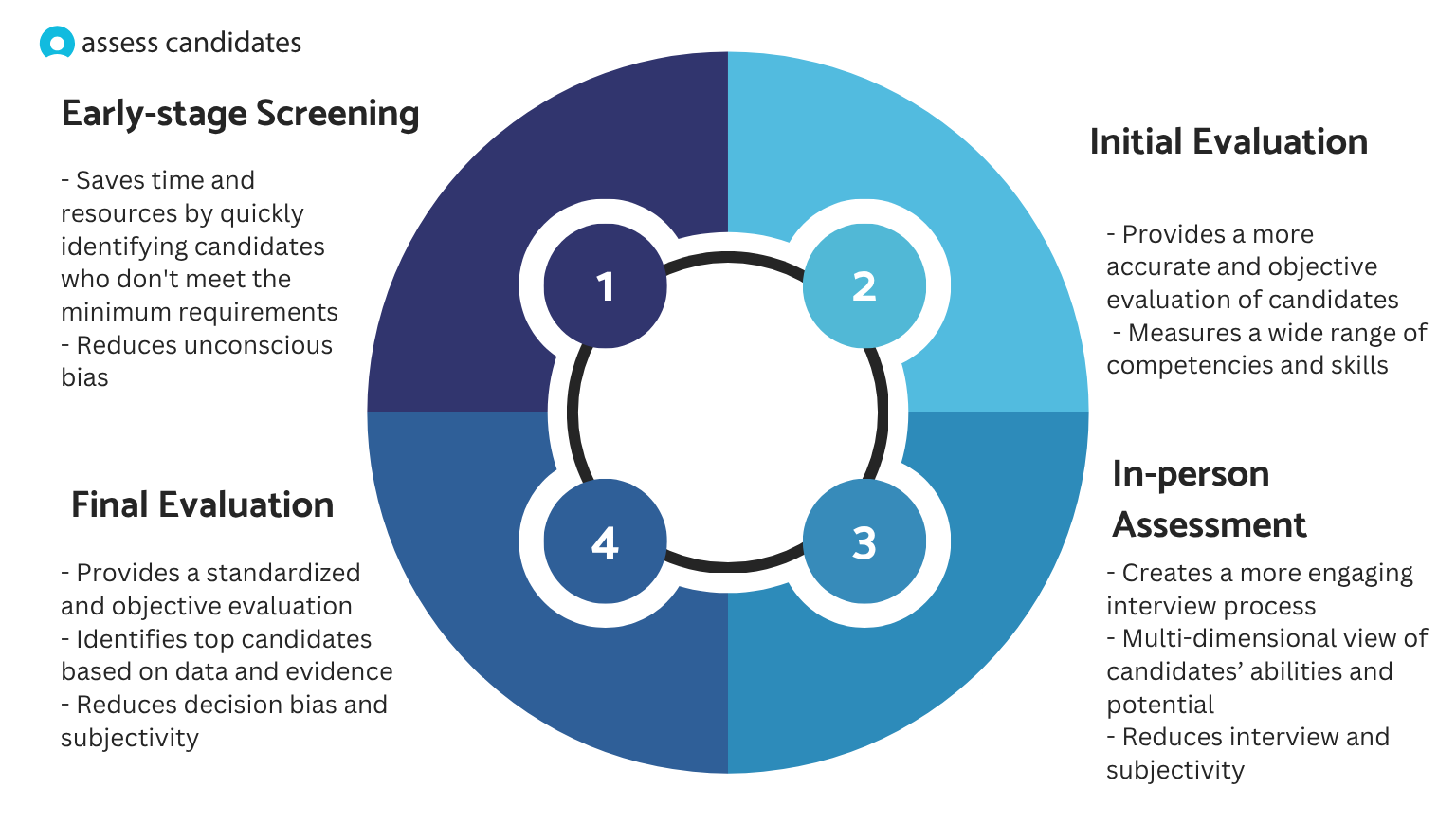
Most employers introduce game-based assessments during the early or middle stages of recruitment, where they help identify promising candidates before interviews.
Employers will invite applicants to take a game-based assessment online, either instead of or in combination with other online employment assessments, such as numerical, verbal, and logical reasoning tests, situational judgment tests, and/or personality tests. This is a good method for screening candidates and sifting through them before moving on to video or in-person interviews or assessment centers.
Game assessments are usually distributed online. A candidate receives a link to a pre-employment testing platform and has a dedicated period of time (usually several days) to complete the game assessment. Recruiters then review candidate results and select individuals to advance to the next round of hiring assessment.
Below is a detailed explanation of how game-based assessments can be effectively implemented at various stages of the hiring process:
Game-based assessments are a growing trend in HR and talent acquisition as they provide valuable, comprehensive insight into the potential of future hires during employee selection assessments.
8. When to use game-based assessments in hiring?
Game-based assessments are particularly effective in hiring scenarios where candidate volume, engagement, or cognitive performance are key priorities. For example:
4 examples when employers should use game-based assessments in recruitment
- Roles that require cognitive skills: Game-based assessments can test candidates’ cognitive abilities in a way that traditional assessments may not, allowing employers to accurately and reliably identify candidates with the desired skills for the role.
- High-volume recruitment: If you are recruiting to fill a large number of roles, game assessments can help you quickly and efficiently screen large volumes of candidate applications, enabling you to focus your time and resources on only the most promising applicants.
- Roles with high turnover: If you are hiring for roles with high turnover rates, game-based assessments can help you identify candidates whose natural skills and competencies are aligned with the role and company. Best-fit candidates are more likely to feel energized in the workplace, perform better, and remain in the role for a longer period.
- Attracting the next generation of candidates: If you are looking to attract the next generation of candidates, such as Gen Z, game-based assessments are a great way to engage them in the early stages of the recruitment process. Younger candidates are often more familiar with technology and may find hiring games more appealing than traditional assessments.
Explore effective hiring solutions with game assessments with us. VIEW PLANS
9. Which industries can hire with game-based assessments?
Here are the top industries globally that use game-based assessments in recruitment:
- Technology: IT companies use game-based assessments to evaluate candidates’ problem-solving skills, logical reasoning, and adaptability in rapidly changing digital environments.
- Banking and Financial Services: Employers in the financial sector use game-based assessments to test candidates’ numerical reasoning, risk management, and decision-making under pressure.
- Consulting and Professional Services: Consulting firms leverage game-based tests to measure analytical ability, strategic thinking, and innovative problem-solving in real-world business scenarios.
- Telecommunications: Employers in this industry use game-based assessments to test candidates’ multitasking skills, information processing speed, and customer service orientation.
- FMCG and Retail: Fast-moving consumer goods and retail companies use game-based assessments to measure situational judgment, creativity, and people management skills.
- Marketing and Advertising: Employers in marketing and advertising use game-based assessments to assess candidates’ creativity, data-driven decision-making, and campaign management skills.
What are the top roles for which employers use game-based assessment tests?
- Software Developers
- Data Analysts
- Management Consultants
- Retail Manager
- Sales Executives
- Customer Experience Managers
- Human Resource Specialists
- Operations Managers
- Graduate Trainees
- Business Analysts
- Product Managers
- Marketing Executives
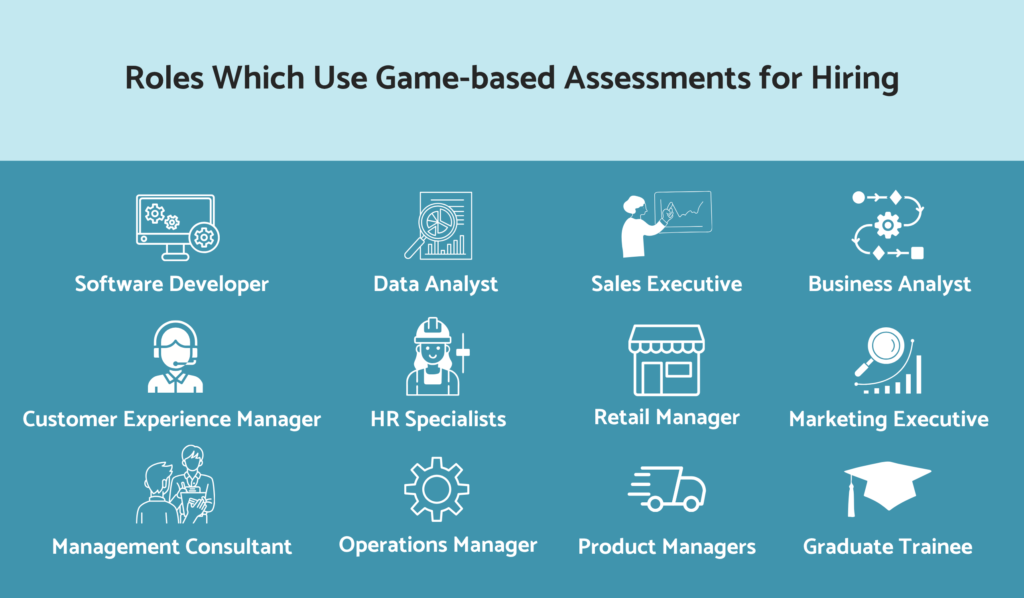
So, which employers use recruiter games frequently for the roles above? Read on to explore some top examples.
Which employers use game-based assessments for hiring?
Employers across industries are adopting game-based assessments to evaluate candidate potential more objectively and at scale.
Here is a list of some of the top employers using game-based assessments for hiring:
- PwC
- Phillips
- BAE
- Maki
- Delve
- EY
- Unilever
- EY
- ANZ
- Shell
- Deloitte
Which top game assessment providers do employers use in hiring?
When selecting a candidate assessment platform for implementing a pre-employment job simulation assessment test, recruiters should evaluate both the quality of the job simulation assessment tools and the overall functionality of the recruitment platform. Consider the following questions:
- Does the candidate assessment software efficiently accelerate candidate evaluation?
- Can I assess the cognitive skills and personality of multiple candidates simultaneously?
- Can I access candidate results and insights in a single click?
- Does the game assessment platform provide an objective evaluation of candidates?
- Can I customize the game assessment test and questions to fit my specific role and organization?
- Is the talent assessment platform user-friendly, and does it ensure a positive candidate experience?
By addressing these questions, you can ensure the candidate assessment platform you choose for your job simulation test meets your needs and enhances your recruitment process.
Here are the top 12 game test providers to help you assess candidates’ competencies:
- Assess Candidates
- HireVue
- Pymetrics
- Harver
- Nautics
- inGame
- SHL
- Talent Q
- eSkill
- Arctic Shores
- Knack
- Aon
Start hiring with us today and select the best candidates for your role and company. HIRE FOR FREE
So, how can game assessments be used for a successful hiring process? Let’s find out below.
10. How to use game-based assessments effectively to maximize ROI?
Game-based assessments in recruitment work best, especially in large-volume graduate hiring, where they engage candidates and measure cognitive and behavioral skills at scale. However, they are equally effective in medium and low-volume hiring for technical roles such as a software developer or a mechanical engineer, where organizations seek to assess complex problem-solving, adaptability, and decision-making.
Here is a 3-step guide to prepare an effective game-based assessment process using our talent assessment platform.
How to effectively design and implement game assessments in hiring?
1. Create your game assessment campaign:
- Clearly define the specific skills, behaviors, and personality traits necessary for the role. Then, depending on your recruitment campaign, choose a combination of game-based and psychometric assessments for a holistic candidate evaluation. E.g., for a marketing assessment process, a multi-assessment approach with MTA Tray™ and i-EQ™ game assessments with job simulations will be effective.
- Combine these game-based assessments with other assessment tools, such as video interviews and assessment centers, for a well-rounded candidate profile.
- Choose a test provider like Assess Candidates, which provides scientifically validated assessments to predict job performance. Avoid the use of generic assessment tests that fall short of validity.
- Establish a clear deadline and make sure to provide sufficient time for candidates to complete their psychometric assessments. Ensure that all candidates have a consistent time limit, with the option to offer accessibility features for neurodivergent candidates. This standardization guarantees that applicants are evaluated under equitable conditions, promoting fairness and objectivity in the hiring process.
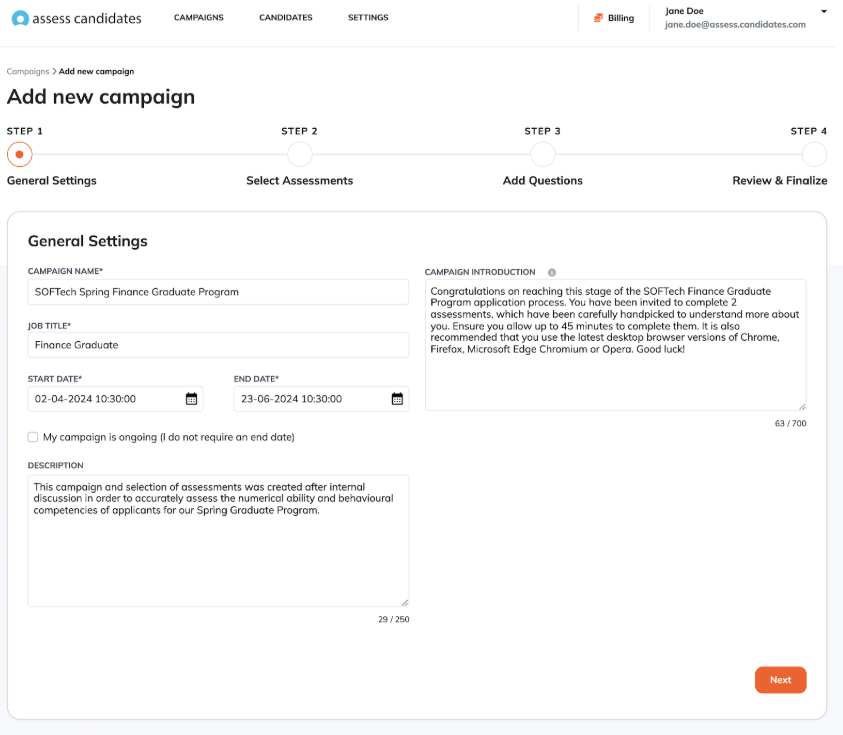
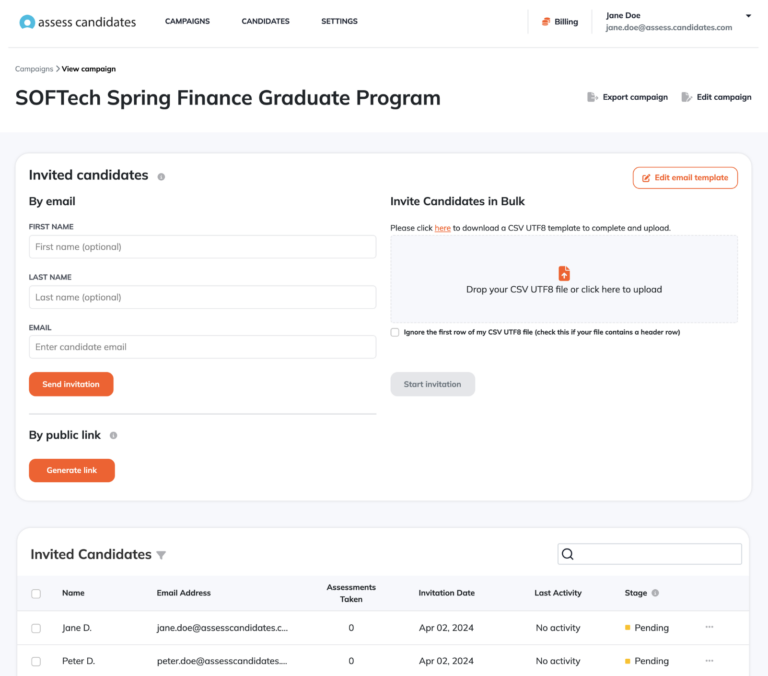
2. Invite candidates to your game assessment:
Invite candidates in a single click to complete your game assessments by individual email, CSV file upload, or public link.
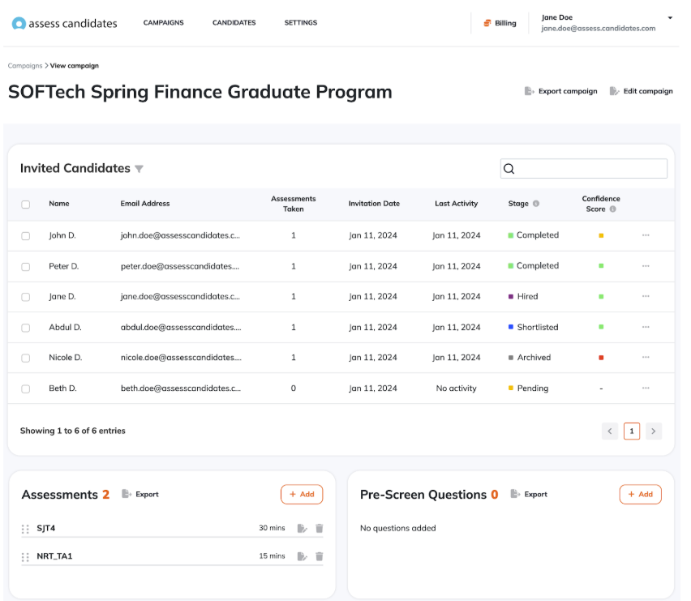
3. Analyze candidate results and shortlist candidates:
- Monitor candidates’ progress in real time as they complete the game-based assessments. Access automatically scored results and detailed reports immediately after completion.
- Use advanced analytics to rank, filter, and sort candidates based on criteria such as performance score, number of assessments completed, hiring status, confidence score, and more. This enables recruiters to quickly compare results and select top talent for progression to the next stage.
- Ensure that hiring managers and recruiters receive adequate training to interpret game-based assessment outcomes correctly. Proper training avoids misinterpretation and ensures results are applied meaningfully in the decision-making process.
Selecting a provider with scientifically validated games is critical if you want assessment results that accurately predict workplace performance.
So, why choose us?
11. Why do top companies choose Assess Candidates’ game-based assessments to hire
At Assess Candidates, we specialize in game-based assessments that use interactive tasks and challenges to measure specific cognitive skills and/or behavioral competencies, providing a more engaging and enjoyable experience for your candidates.
Here is an example of our reporting dashboard available on Assess Candidates, which will be accessible to you as a hiring manager or talent acquisition professional when assessing candidates.
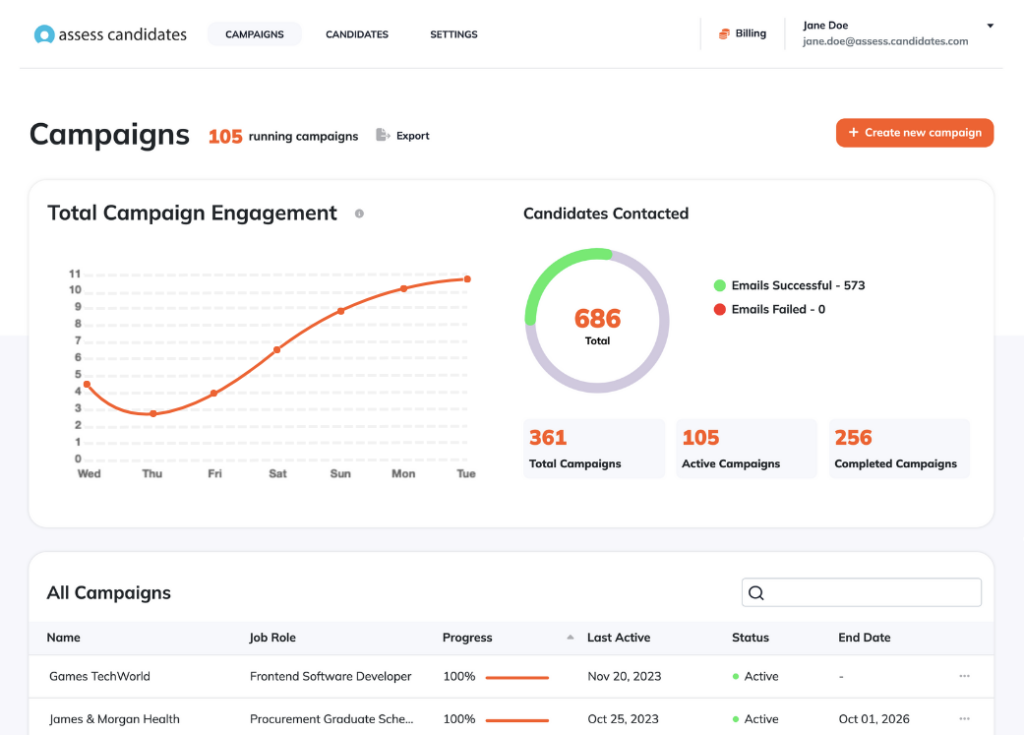
Here are the top four reasons why you should use Assess Candidates’ game-based assessments as your hiring assessments:
- Expert design: Assess Candidates’ game-based assessments, designed and developed by Chartered Scientists, Psychologists, and Psychometricians, have undergone rigorous testing and validation. As a result, they offer a reliable method for selecting top talent across a wide range of organizations. We have ensured that our game-based assessments accurately measure specific competencies and skills.
- ATS compatibility: Assess Candidates’ user-friendly assessment system allows employers to view detailed reports on candidate performance and make informed hiring decisions with confidence based on their own hiring criteria. Employers can easily filter, rank, and shortlist candidates based on how well they have performed in each game-based assessment. We also have the added option to integrate with your existing ATS for a seamless experience.
- Engaging candidate experience: Assess Candidates’ immersive and interactive game-based assessments provide a more positive and engaging candidate experience when compared to traditional assessments. Our game-based assessments are presented to candidates on a portal that is accessible from any device and fully branded to your organization for a seamless experience that candidates associate with your company.
- Accessibility support: Assess Candidates provides support for individuals with disabilities, including additional time allowances and features for those with visual impairments. This includes zoom functionalities and avoiding certain colors and images, in compliance with the Web Content Accessibility Guidelines (WCAG), to ensure compatibility with screen readers.
Before moving on to the FAQs, let’s discuss a client success story on how they finally used game assessments for success.
12. Why choose game assessments: Client success story
Client Problem Statement
A mid-sized sales organization was struggling with declining revenue growth and customer satisfaction. Despite hiring candidates with strong sales records and solid resumes, the company discovered that many lacked resilience, adaptability, emotional awareness, and the ability to manage complex information flow in high-pressure sales environments. This mismatch resulted in weak client rapport, lost deals, inconsistent performance, and eroded team morale.
Over time, turnover increased, recruitment costs rose, and the company’s reputation as a desirable employer began to decline.
Assess Candidates’ Proposal
To resolve these issues, the company was advised to integrate game-based assessments into its hiring process alongside other assessment methods. These engaging gamified assessments would evaluate critical non-obvious traits in a more interactive and predictive way. For example:
- BART game-based assessment: to assess candidates’ risk-taking behavior, helping identify those who can make bold yet calculated moves in sales negotiations.
- i-EQ™ game-based assessment: to measure emotional intelligence, especially recognition and management of emotions in social interactions.
- MTA-Tray™ game-based assessment: to evaluate the ability to organize, prioritize, and manage multiple sources of information, simulating juggling leads, pipelines, and customer inputs.
- Flanker Task game-based assessment: to measure selective attention and inhibition, traits useful when handling distracting or conflicting demands in sales calls.
- PassCode™ game-based Assessment: to assess focus, resilience, and rapid information decoding, useful when interpreting rapidly changing lead data.
Result
After implementing game-based assessments, the sales company observed stronger hires with better resilience, focus, emotional awareness, and decision-making under pressure. Additionally, sales performance improved as deals closed at higher rates; teams were more consistent and adaptive. Turnover decreased as hiring precision improved, resulting in fewer mismatches. This recruitment strategy helped them minimize over-reliance on any single tool while maximizing predictive power.
Conclusion: Key Takeaway
Game-based assessments combine engagement, data-driven evaluation, and predictive hiring insights to help employers identify high-potential candidates more effectively. When used alongside psychometric testing, interviews, and job simulations, they contribute to more accurate and objective hiring decisions.
Interested in learning more about effective candidate assessment? Continue reading for frequently asked questions, and sign up with your email to get started.
Frequently Asked Questions
What is gamification in recruitment?
Gamification in recruiting refers to the incorporation of gaming elements into a conventional non-game-related recruitment process. Applied strategically with the right tools and technology, this can assess candidates and make the hiring assessment process more progressive and engaging.
What is psychometrics in game-based tests?
Psychometrics is the scientific study of measuring psychological variables, including cognition, behavior, and personality. It focuses on creating reliable and valid tests for research, education, clinical, and workplace purposes. The field ensures assessments accurately reflect individual differences and predict performance or outcomes effectively. Psychometrics also develops methods to improve measurement tools and interpret scores meaningfully across various contexts.
What is the training effect in psychometric tests?
Training effect in psychometric tests occurs when performance improves due to repeated practice rather than actual ability. It arises from familiarity with test formats, instructions, or question types instead of true skill changes. This effect can reduce the validity of results, making score interpretation less accurate. Researchers use strategies like alternate test forms or sufficient time gaps to minimize the impact of training effects.
When can we not use game assessments in the hiring process?
Game-based assessments are not suitable for highly technical or safety-critical roles requiring precision and expertise. Industries like healthcare, aerospace, and defense often need strict compliance and specialized knowledge beyond what games can assess. Traditional tests may better evaluate domain-specific skills, technical ability, and regulatory adherence, ensuring safe and reliable hiring decisions.
Do game assessments work for small and medium-sized enterprises (SMEs)?
Yes, game assessments have made candidate profiling easy, efficient, and affordable for all employers, including SMEs. Popular providers such as Assess Candidates offer Saas (Software-as-a-Service). These include fully automated, cloud-based tests that can seamlessly integrate into existing recruitment campaigns for a smooth and efficient assessment process.


 English
  Arabic