
Top Skills Employers Should Assess When Hiring in 2026



Hiring well in 2026 means knowing which skills predict performance, not just which credentials look impressive on a CV.
Making the right hiring decisions depends on many factors, and in 2026, skills assessments are among the latest hiring trends that many global employers are adopting in their organizations. By knowing what skills to look for, you will be avoiding mis–hires and building a company with quality hires.
In this guide, we will take a closer look at the top skills that employers should assess when recruiting candidates in 2026.
Contents
- What are skills-based assessments?
- Why are skills assessments necessary for recruitment?
- Types of skills employers look for when hiring
- Tools to assess candidates’ skills during recruitment
- Best practices to evaluate candidates’ skills
- Skills assessment examples from leading employers
- Future of recruitment with skills assessments
- Why do companies use Assess Candidates for skills assessments?
Here’s what employers should assess, how to measure those skills, and how to avoid common mistakes.
1. What are skills-based assessments?
A skills-based assessment is a recruitment method that evaluates whether candidates can demonstrate the competencies required for a role through tests, simulations, exercises, or work samples.
According to HR Magazine, about 72% of recruiters are opting to hire candidates based on skills-based assessments rather than just reviewing CVs.
Begin your hiring process with our skills-based assessments. HIRE FOR FREE
Now we know what skills assessments are, it’s also key to understand why it is necessary to use these assessments.

2. Why are skills assessments necessary for recruitment?
The benefits of implementing a skills assessment in your recruitment process include reducing bias, attracting high–quality candidates, and more.
6 Benefits of using skills assessments in hiring
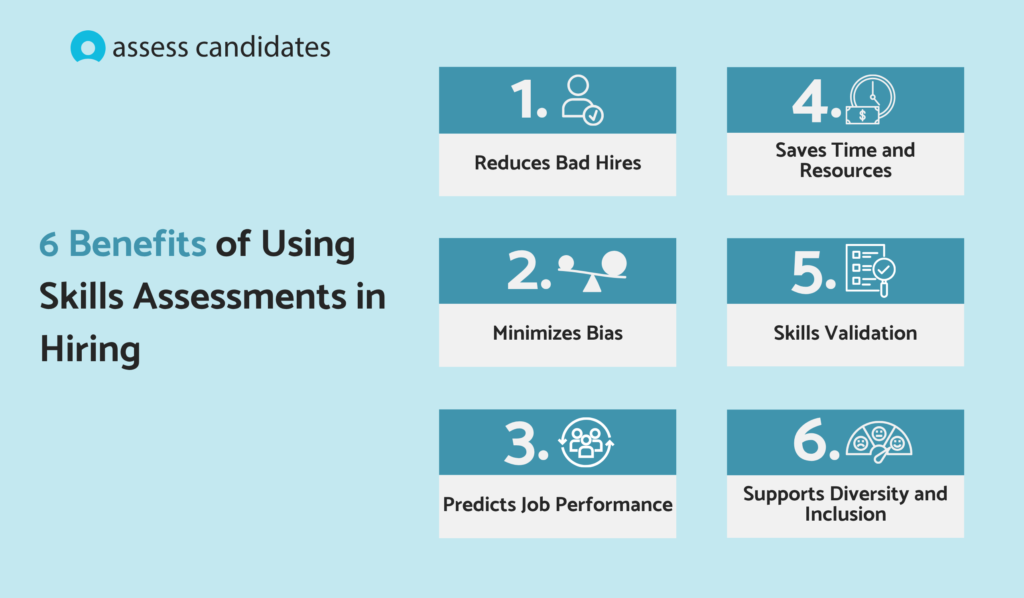
- Reduces Bad Hires
Having resumes and interviews is not enough to get the full measure of your candidates’ skills in the recruitment process, as a candidate may be eloquent in their communication but unable to perform the tasks. This is why a skills assessment is advised: it adds another layer of verification and reduces the risk of mis-hiring, which can cost your organization resources.
- Minimizes Bias
Many employers have revealed that unconscious bias often influences traditional recruitment, as they often favor candidates based on the information provided in their resumes. However, a skills assessment redirects the focus to candidates’ abilities, giving each a fair and equal opportunity in the recruitment process, regardless of their diverse backgrounds.
- Helps Predict Job Performance
Having detailed knowledge of your candidates’ past behaviors and demonstrated skills is a better predictor of their future performance than their degrees and years of experience. With skills assessments, when candidates complete a task that mirrors the real job roles, you will be able to make data–driven hiring decisions based on how they perform the tasks.
- Saves Time and Resources
When you set assessment tests early in the hiring process, you will easily filter the least skilled candidates from those who meet the required threshold. This way, you will be able to invest your time and resources in the right candidates who have the potential to work in your company.
- Skills Validation
Candidates may over-focus on presenting their best selves on a resume and in interviews by overstating their abilities. However, with skills assessments, you will fact–check their skills to determine whether they are genuine and at the level required by the role you are hiring for.
- Supports Diversity and Inclusion
Because of their focus on abilities rather than certifications, skills assessments open you up to a broader, more diverse talent pool. This ensures that candidates from non–traditional backgrounds or without prestigious qualifications receive the same opportunities to showcase their values and skills.
So, what types of skills should employers look for when recruiting? Continue scrolling to find out!
3. Types of skills employers look for when hiring
According to the LinkedIn Global Talent Trends Report (2019), about 89% of recruiters cited candidates’ lack of soft skills, rather than technical skills, as the reason for their bad hires.
Skills recruiters look for when hiring
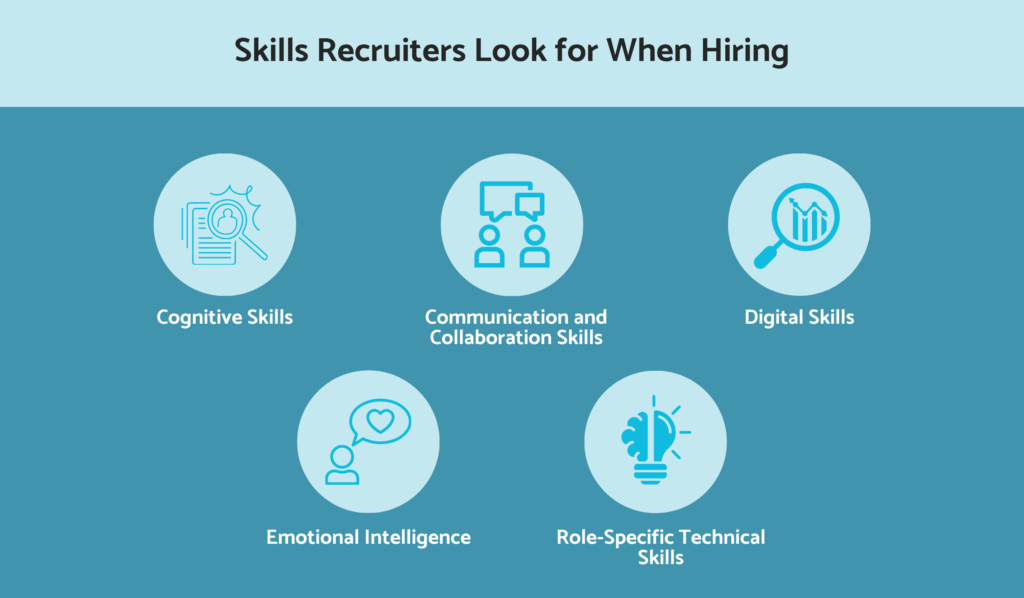
1. Cognitive Skills
Recruiters assess cognitive skills to understand how candidates process information, solve problems, and learn new tasks. The cognitive skills that recruiters assess include:
- Numerical Reasoning: Numerical reasoning involves the candidates’ ability to reason with numbers and numerical data. This includes the candidates’ ability to understand, interpret, and make accurate conclusions.
- Verbal Reasoning: Verbal reasoning is how a candidate comprehends, analyzes, and interprets written information. Verbal reasoning is often needed in a role to identify key ideas and apply logical reasoning to draw accurate conclusions quickly.
- Logical Reasoning: Logical reasoning is how well a candidate uses their problem-solving skills to reason with provided data, such as through patterns. This is often shown through the candidate’s ability to solve abstract problems and draw conclusions based on logic.
2. Communication and Collaboration Skills
Today’s hiring trends have adopted skills-based hiring, and many employers are focusing on integral soft skills that promote togetherness between employees in a workplace. Communication and collaboration skills can be demonstrated in various ways, such as:
- Situational Judgment: Employees may demonstrate their situational awareness depending on how they react in response to realistic work-based scenarios they are likely to encounter. This can help to assess their behavior and ability to communicate, helping to predict their suitability for the role.
- Personality: Understanding more about the candidate’s work personality traits and characteristics can help to determine their suitability within a role, a team, and as part of the wider company culture.
- Spoken Communication: Many roles require employees to have excellent spoken communication skills in order to engage with clients, other departments and management.
- Written Communication: As well as spoken communication, how an employee prepares and presents their ideas through various written formats may be crucial for many client-facing roles.
3. Digital Skills
Being computer literate is a skill that most employers demand from their candidates in today’s recruitment requirement. This is because most organizations run their activities on computers and expect candidates to have digital skills such as Microsoft Excel, Microsoft Word, Google Docs, Google Sheets, and PowerPoint presentations.
4. Emotional Intelligence
This skill includes self–awareness, empathy, and emotion regulation, enabling individuals to build relationships, manage stress, and navigate interpersonal dynamics effectively. This skill is essential for many people-focused roles such as sales, customer service and consulting.
5. Role-Specific Technical Skills
More senior vacancies may require technical or hard skills that are significant for the role. These skills are often necessary to be considered for roles in engineering, accounting, and healthcare.
- Coding Knowledge: When recruiting for tech-inclined roles in an organization, recruiters look out for candidates who possess coding skills and programming languages like Java, SQL, Python, C++, and JavaScript.
- Accounting Skills: Employers in the finance industry look for candidates who possess certain skills in this field. This can include knowledge of accounting software such as Xero, QuickBooks, FreshBooks, NetSuite, and Sage 50.
- Marketing Skills: Through the various branches of marketing, all roles require common skills and tools to be successful on the job. Employers in the marketing industry look for candidates who possess skills like SEO, branding, AI, and analytics, and tools like HubSpot and Google Analytics, Mailchimp, SEMRush, and Ahrefs.
According to Workday, 81% of employers believe that skills-based recruitment is a necessary model for a company’s growth potential.
So how do we assess these skills? We have the answers below; keep reading.
4. Tools to assess candidates’ skills during recruitment
According to Workday, 51% of employers reported being worried about a future talent shortage, whereas 31% of recruiters believe that the skills candidates currently possess are all they need to upskill their business in the future.
How to assess candidates’ skills when hiring
1. Psychometric Tests
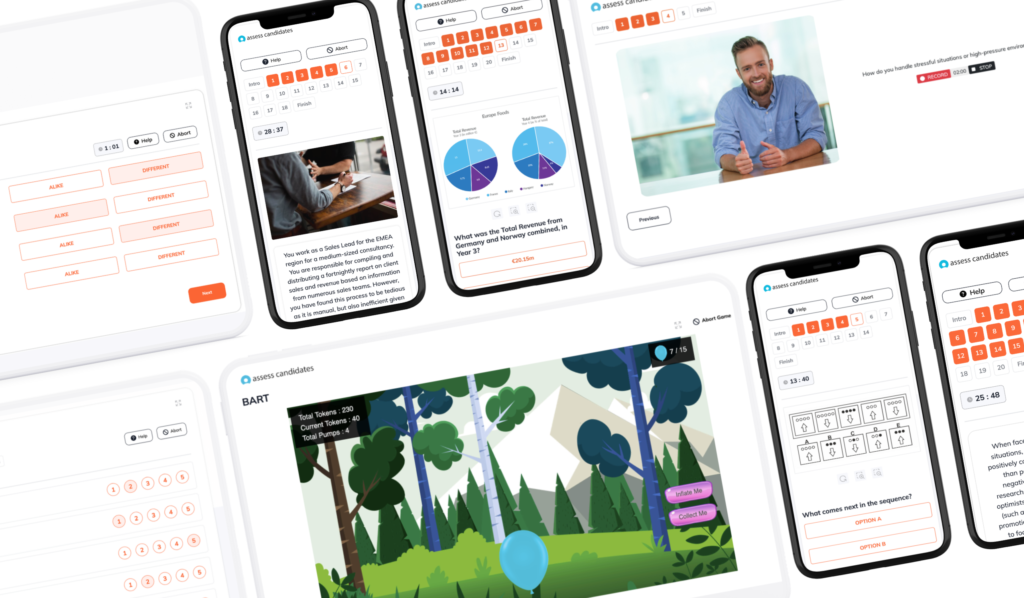
Platforms like Assess Candidates, TestGorilla, and Wonderlic offer employers pre–employment assessment tests that assess a variety of required skills for the role, usually before or after screening. These platforms evaluate your candidates’ cognitive abilities and predict learning speed and problem–solving skills.
2. Behavioral Assessments
Platforms such as Assess Candidates, Criteria Corp, and Talent Q (Korn Ferry) offer many recruiters behavioral assessments that evaluate candidates’ behaviors, emotional intelligence and reactions through a series of questions that simulate workplace scenarios in situational judgment tests and personality questionnaires. Using behavioral assessments, you will gain insight into your candidates’ decision–making styles, cultural fit, and values.
3. Technical Assessments
Technical assessment platforms like Codility, HackerRank, and Assess Candidates provide you with an objective measurement of your candidates’ coding skills, especially if you are recruiting for a technical role. The assessments can include time limits and set to be automatic or live tests, giving you the opportunity to watch candidates work in real time.
4. Assessment Centers
Platforms such as Assess Candidates, IBM Kenexa, and Cubiks (Talogy) offer you a multidimensional overview of a candidate’s skills across different exercises such as group, case study, presentation, role-play, In-tray/E-tray, and written exercises within a half–day or full–day program. Assessors observe and score candidates based on pre-determined criteria. The results are often reliable and reduce bias in your recruitment process.
5. Video Interviewing Platforms
Video interviewing platforms such as HireVue, Assess Candidates, and Pymetrics record your candidates’ responses and present questions to measure their cognitive and emotional traits. AI–video interviewing platforms help analyze factors such as response content, non-verbal cues, communication clarity, risk tolerance, culture fit, and emotional regulation.
Explore our range of scientifically validated skills-based assessments. LEARN MORE
Thinking about the best practices to evaluate skills assessments in recruitment? Keep scrolling!
5. Best practices to evaluate candidates’ skills
According to the IAWP, in today’s recruitment climate, resumes and interviews alone are insufficient to provide recruiters with adequate knowledge of a candidate’s skills; therefore, there is a need for skills tests.
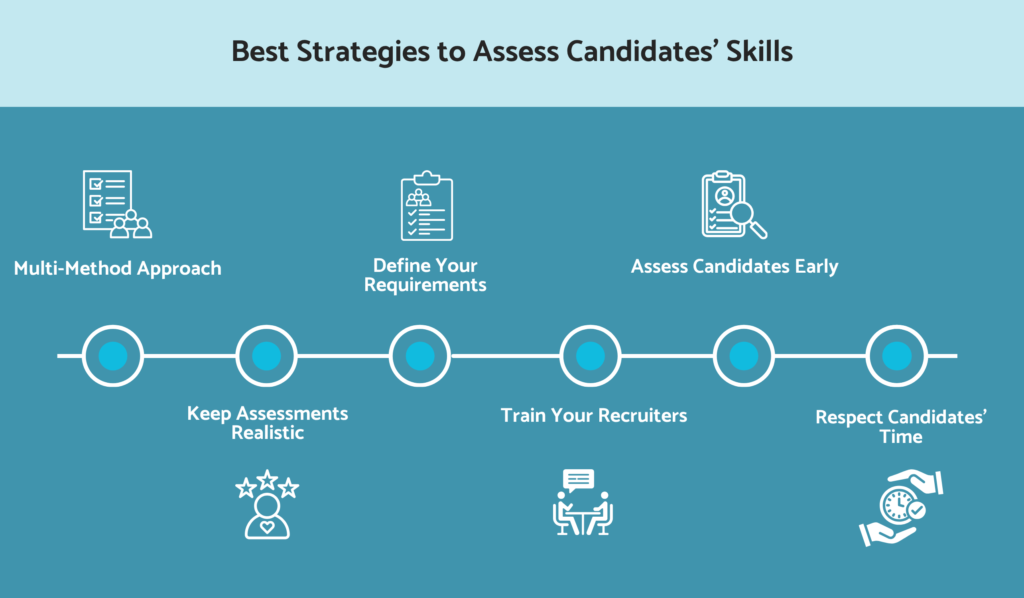
Best strategies to assess candidates’ skills
1. Multi-Method Approach
Using just one assessment tool may not provide a full view of your candidates’ skills when hiring. By using a multi-method approach, recruiters can mix technical tests, psychometric tests, interviews, and situational judgment tests, you will have a well-rounded view of the candidates’ skills.
2. Define Your Requirements
Before you begin designing your assessment process, we recommend that you clearly identify the specific skills your role requires. Ensure that you list the technical and behavioral skills and that every evaluation tool you use is tied directly to job performance rather than to generic traits.
3. Assess Candidates Early
Introducing skills assessment early in your recruitment process, before investing time in multiple interview rounds, will help filter candidates by ability from the start. This will make your hiring process more focused and efficient and ensure that your interviewers spend their time on skilled candidates.
4. Keep Assessments Realistic
Every task or assessment you put out must closely reflect the role of the candidates in your organization. Therefore, we recommend avoiding generic or overly academic assessments that do not reflect the daily activities of the role you are recruiting for. These realistic assessments also provide candidates with a preview of the role they are applying for.
5. Train Your Recruiters
Not all assessment tools will produce poor results if the people administering or scoring them are not properly trained. Train your interviewers so that they know how to score responses, what each assessment measures, and how to avoid common biases.
6. Respect Candidates’ Time
Ensure that all assessments are appropriately measured so that they do not waste your candidates’ time. This is because candidates may be unmotivated to complete a lengthy assessment process that does not consider their time.
Create the best hiring process for your candidates with our assessment library. HIRE FOR FREE
Following these strategies, let us take you through some success stories of employers assessing required skills for hiring. Keep reading!
6. Skills assessment examples from leading employers
Many employers have shared their experiences with hiring top talent when they specified recruiting for skills rather than just traditional qualifications. Let us take a look at some of them.
1. Unilever
Challenge:
Unilever was processing over 200,000 graduate applications annually, making it impossible to fairly assess each candidate using traditional methods. This is because the process was slow, expensive, and heavily biased towards candidates with elite backgrounds.
Solution:
The organization replaced CVs and first-round interviews with AI–powered video interviews and game–based assessments, allowing every applicant to be evaluated solely on their abilities and not their background.
Results:
- Reduced time–to–hire by 75%, cutting the hiring process from four months to four weeks
- Significantly increased the diversity as more candidates from different backgrounds were represented in the final stages of recruitment
- Saved over 100,000 hours of interviewing time annually across the global HR department
2. Deloitte
Deloitte was struggling to identify candidates with strong leadership and problem–solving skills through traditional interview formats, leading to inconsistent hiring quality across regions. They required a reliable, scalable way to evaluate skills for graduates and experienced candidates.
Solution:
The firm launched structured assessment centers that included case study simulations, group exercises, and competency-based interviews, all scored against a standardized framework.
Results:
- Improved first-year performance ratings among new recruits, with managers reporting stronger readiness from the first day
- Minimized early attrition by over 20%, as candidates hired through the structured process were better suited for the role requirements
- Improved consistency in hiring decisions across different offices and interviewers’ panels
7. Future of recruitment with skills assessments
Ensuring you assess the right skills in your candidates is necessary to attract high-quality candidates and improve staff performance in your organization.
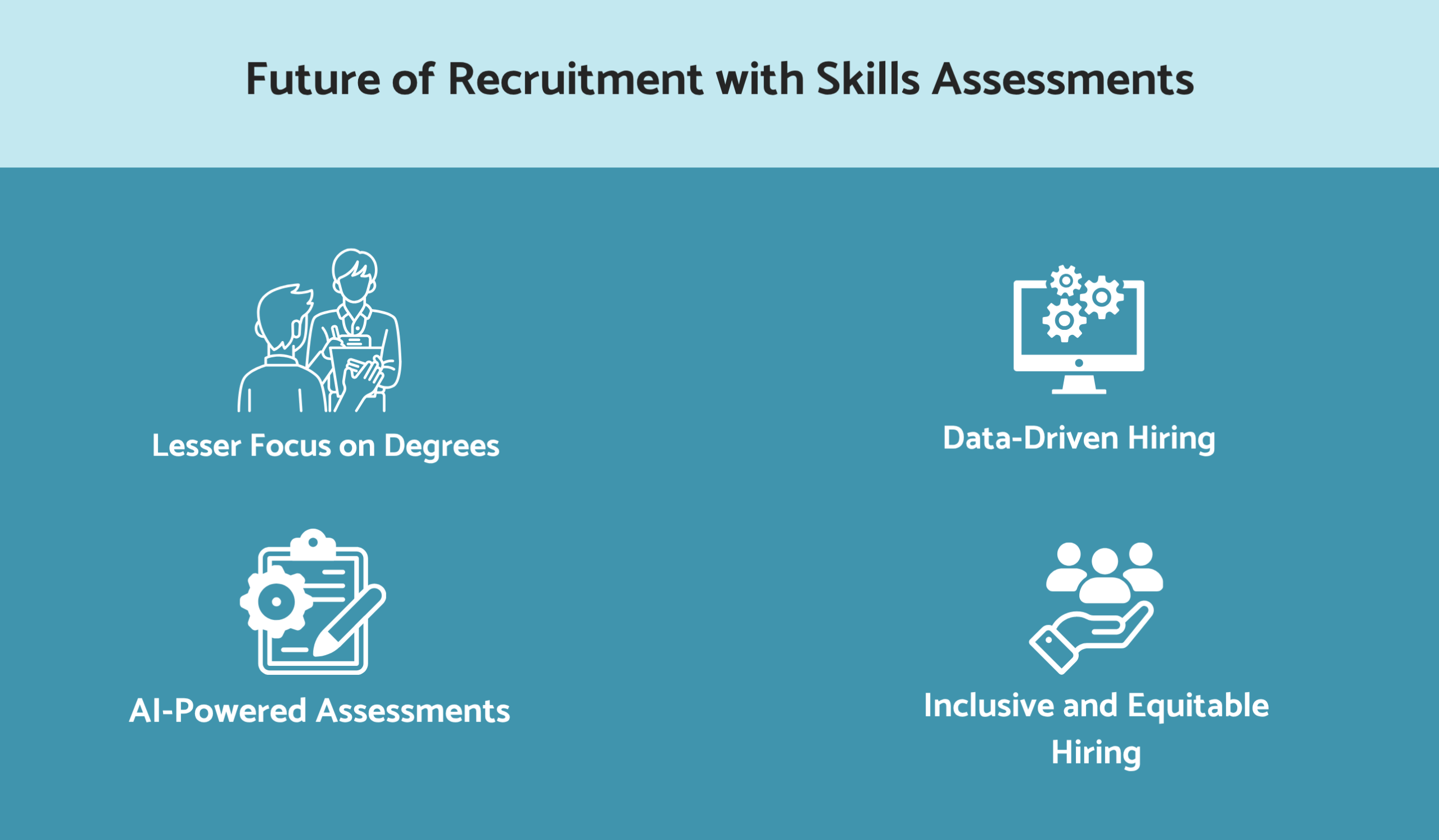
What is the future of recruitment when employers assess skills?
- Lesser Focus on Degrees
The traditional reliance on university degrees as a measure of skills will no longer hold in most recruitment processes, as employers will focus on candidates’ skills and what they can offer. This is because employers are beginning to recognize that candidates can be self–taught and trained in alternative pathways, thereby widening the talent pool.
- AI-Powered Assessments
AI will play an increasingly important role in how skills are examined during assessment processes. Future assessments will now use AI to dynamically adapt difficulty based on your candidate responses and analyze patterns in how problems are solved. Artificial intelligence will also more accurately predict candidates’ long-term potential.
- Data-Driven Hiring
Recruitment decisions will increasingly be driven by data rather than intuition, as organizations create rich databases that link assessment results to on-the-job performance and retention rates. This will enable you to refine what skills you want and how they measure them, further making skills assessments progressively smarter and reducing the cost of mis–hires.
- Inclusive and Equitable Hiring
As skills will eventually replace credentials as the primary recruitment assessment filter, systemic obstacles that have barred minority groups will no longer be upheld. Candidates from underrepresented communities, career changers, and returning workers will be given fair opportunities in the recruitment process.
Explore our assessments created by Chartered Scientists to hire the top talent. VIEW PLANS
So, why choose Assess Candidates for your skills assessment?
8. Why do companies use Assess Candidates for skills assessments?
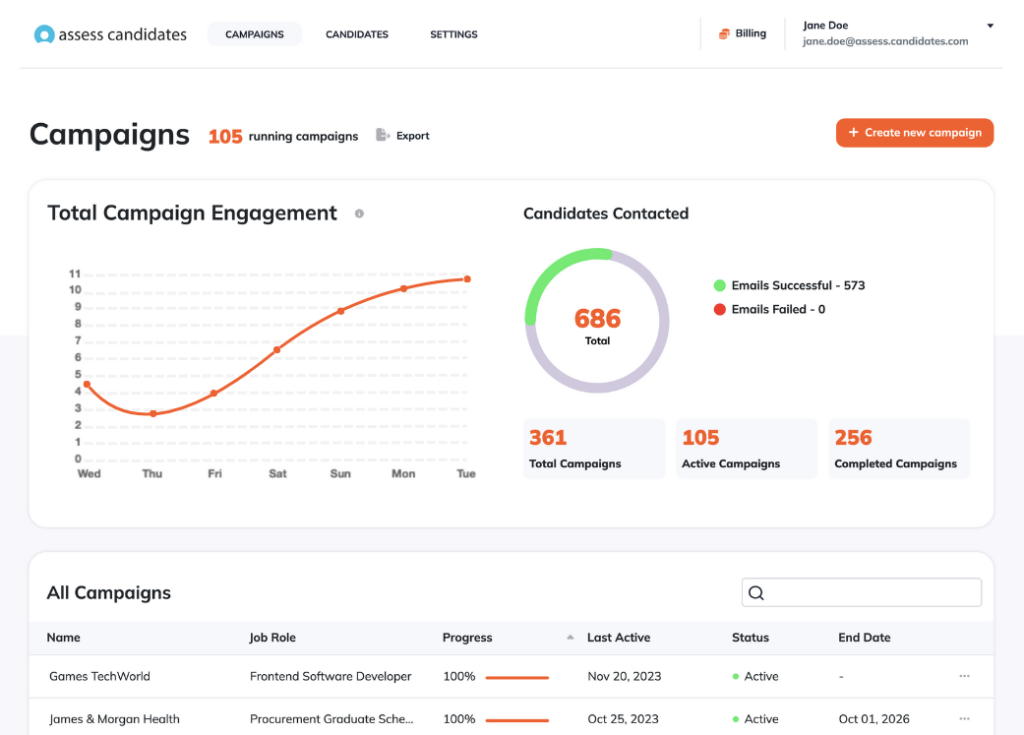
Assess Candidates helps recruiters create a more structured skills-focused assessment process through assessments, reporting, and fairer candidate evaluation.
- Positive Candidate Experience: Assess Candidates boasts of branded candidate portals, a seamless admin setup, and short assessment durations. This improves the candidate experience, enhancing completion rates and employer branding.
- Inclusive and Accessible Hiring: Fairness and inclusion are built into every assessment on our platform; this helps with minimizing bias and giving every candidate an equal chance to succeed regardless of background, with accessibility features like additional time, zoom functionality, and screen reader compatibility for candidates with disabilities.
- Data–Driven Reporting: Assess Candidates offers intuitive dashboards and comprehensive reports, enabling you to easily rank, filter, and intelligently shortlist top candidates to make confident, data–driven hiring decisions.
- Science–Backed Assessments: Our platform’s pre-employment psychometric assessment tests are developed by psychologists. These tests predict on–the–job performance with valid reliability and help you reduce the risk of having a mis-hire.
- Customizable Assessment Builder: Assess Candidates allows you to choose and drop the assessment tests that you require when making skills-based hires. You can combine assessment tests and include some company-specific questions to ensure that you hire the right candidates for the vacant roles in your business.
Hire the right candidates with our assessment tool platform. LEARN MORE
Conclusion: Key Takeaway
Recruitment today is leaning away from the traditional hiring methods and focusing on skills-based hiring. To hire and retain top talent in your company, knowing the right skills to look for and how best to look for them can save you time and effort.
Want to know more about using skills assessment when hiring candidates? Keep scrolling to explore our frequently asked questions, and enter your email to get started today.
Frequently Asked Questions
What is the biggest mistake recruiters make when assessing skills?
The biggest mistake an employer makes is evaluating the wrong things, such as relying heavily on credentials, years of experience, or interview performance, while ignoring practical skills assessment. The most effective solution to this is to assess a combination of cognitive ability,behavioral traits, and role-specific skills.
How often should I update the skills I assess?
Ideally, you should reassess the skills you are measuring annually. You should regularly review your competency frameworks, track which skills are boosting performance in current employees, and stay informed about emerging skill trends within your industry.
Should I assess different skills for different senior roles?
You should assess candidates’ skills depending on the roles and levels you are recruiting for. A well-designed assessment process highlights specific skills at each level rather than applying a one-size-fits-all approach across the organization.
Are soft skills now more important than technical skills?
Soft skills are not more important than technical skills, but they are equally relevant for candidates during the recruitment process. While technical skills can be trained or taught on the job, soft skills are more ingrained and much harder to build quickly. The top candidates will have a mix of both during the hiring process.
Why has AI literacy become one of the top skills to assess?
AI literacy has become one of the most sought-after skills by employers in today’s job market as the world moves toward embedding AI into daily activities. Employers are interested in whether candidates can operate these AI tools in practice so they can work faster and smarter.


 English
  Arabic