
How To Measure Stress Management in the Workplace



Work-related stress affects productivity, retention, and employee wellbeing across every industry. Employers that measure stress management objectively can improve hiring decisions, reduce burnout, and build healthier, more resilient teams.
According to the American Institute of Stress, over 80% of American workers report experiencing workplace stress, and over 50% believe it has affected their lives at home.
Employers are looking to understand and measure the stress employees face in the workplace while simultaneously attracting and hiring top talent in the industry.
In this guide, we share best practices for measuring stress management during hiring and retaining top candidates in your organization.
Contents
- What is stress management in the workplace?
- Why is stress management important in the workplace?
- How to assess stress management in the workplace?
- Red flags of stress management in the workplace
- Top strategies to implement stress management in the workplace
- Client success stories of stress management in the workplace
- How does Assess Candidates help employers measure stress management?
To learn more about stress management and how to attract your candidates into your company, keep reading!
1. What is stress management in the workplace?
Stress management is the process of identifying workplace pressures and implementing solutions to reduce their negative effects on your staff’s well-being and performance. It is a set of practices used to reduce, prevent, and manage job–related stress for staff in a workplace.
Start measuring your stress management with our psychometric assessments. HIRE FOR FREE
Organisations across industries increasingly recognise unmanaged workplace stress as a major driver of turnover, absenteeism, and reduced productivity.

2. Why is stress management important in the workplace?
According to Dale Carnegie, major causes of workplace stress include poor communication, unclear job expectations, and heavy workloads. Stress among your employees likely leads to significant turnover and damages your employer brand.
So why is handling pressure important for every employer?
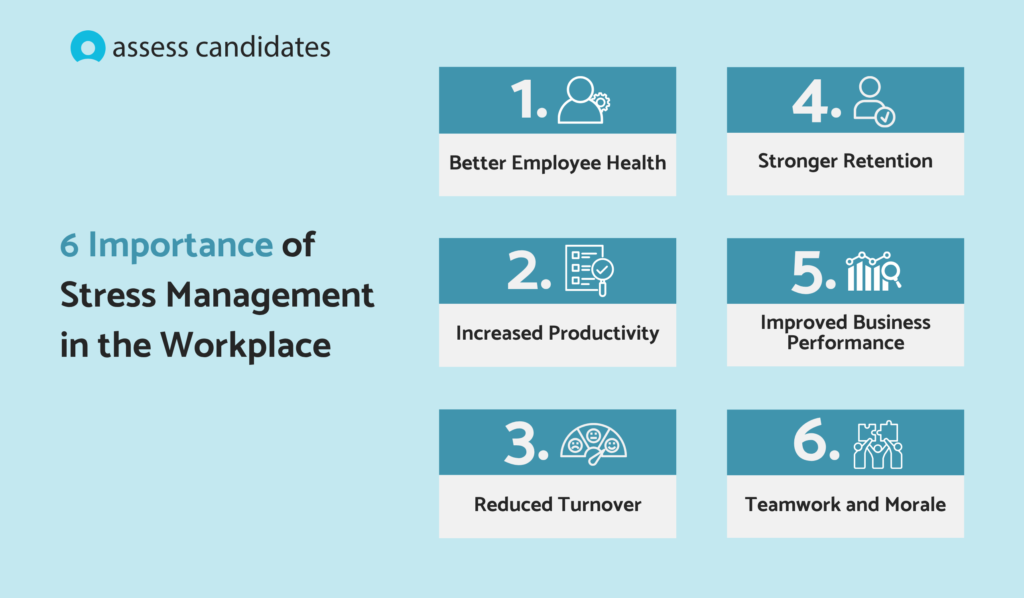
Top 6 Importance of stress management in the workplace
1. Better Employee Health
Stress management in the workplace helps reduce your candidates‘ anxiety, burnout, and fatigue, keeping them healthier and better able to handle daily work activities. Enforcing coping strategies in your workplace also supports emotional balance, as your employees are less likely to be overwhelmed by the pressure of their daily work routine.
2. Increased Productivity
When you manage the stress your company faces, your staff will focus better, think more clearly, and complete tasks more efficiently. This will lead to fewer delays and improved productivity within the company, as employees manage their time and handle responsibilities without pressure.
3. Reduced Turnover
Your employees will be less motivated to quit your organization when your workplace feels supportive and a safe space. Lower turnover in your company saves you the time and resources that would otherwise be spent on hiring and training new employees.
4. Stronger Retention
When stress is managed effectively, your skilled employees are more likely to remain with your company. Retaining top talent in a highly competitive industry also protects your productivity and reduces disruption in key roles.
5. Improved Business Performance
A calm, healthy, and focused workforce tends to perform better overall compared to those with stressed and unhappy employees in an organization. A calm workforce will improve your customer service, quality of work, and long–term business results.
6. Teamwork and Morale
Having a less stressful work environment usually means less conflict and better communication and collaboration among employees. This helps facilitate smooth collaboration and maintain a positive atmosphere in the company.
Next, let’s explore how to measure these resilience strategies.
3. How to assess stress management in the workplace?
According to the American Psychological Association’s 2025 survey, Americans have cited work as one of the most significant sources of stress in their lives. Common sources of stress include excessive workload, low salaries, lack of social support, and insufficient autonomy over work-related decisions.
How to evaluate stress management in the workplace
- Surveys
Platforms such as Zoios, Snap Survey, and Loving Life offer employers a way to monitor employee stress levels in the workplace. You can use surveys to observe your employees’ current workplace stress levels, common stressors, or whether they feel supported in your company. By taking surveys, you will gain insight into how the workplace functions from your staff’s perspective.
- Situational Judgment Tests
Assess Candidates, SHL, and TestGorilla are useful in assessing decision–making under pressure, judgment, and behavioral responses to stress–related scenarios. Situational judgment tests can be used as a developmental or selection tool for employees at work.
- Personality Tests
Personality test platforms such as Assess Candidates, TestTrick, and Hire Truffle can be used to understand employees’ tendencies, such as conscientiousness, emotional stability, and dependability, in the workplace. These factors often affect how workers handle stress. However, personality assessment tests should not be used alone to gauge your staff’s stress in the workplace, as it is not the same as workplace stress exposure.
- Game-based Assessment Tests
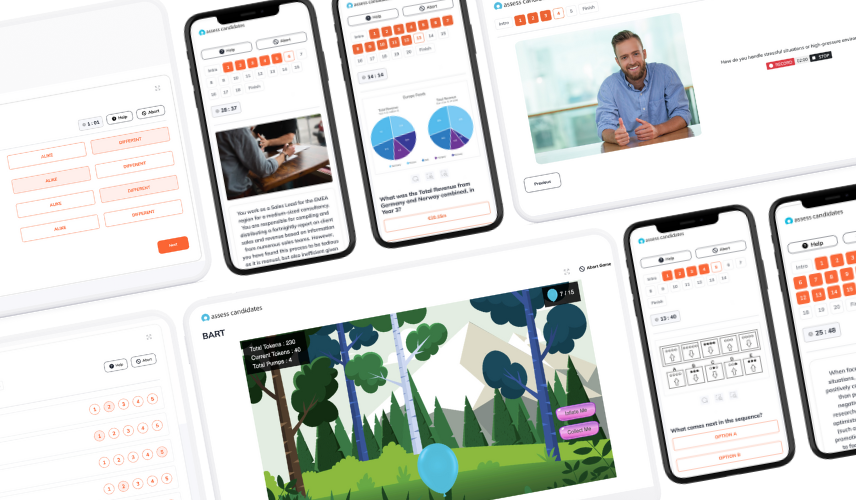
Game-based assessment platforms such as Assess Candidates, TestGorilla, and HireVue can evaluate how your employees handle workplace pressure, make decisions, and respond to various scenarios.
Game-based assessments that measure stress management and resilience include Flanker Task Game-based Assessment, i-EQ™ Game-based Assessment, Cognition-M™ Game-based Assessment, among others.
Recruit your top candidates with our pre-employment assessment platform. LEARN MORE
Once you’ve assessed your candidates, you will want to score their stress management. Here’s how to do so!
How to score stress management in the workplace?
According to the American Institute of Stress, several studies have proved that work stress is a significant stressor for American adults, and it has intensified progressively over the past few decades.
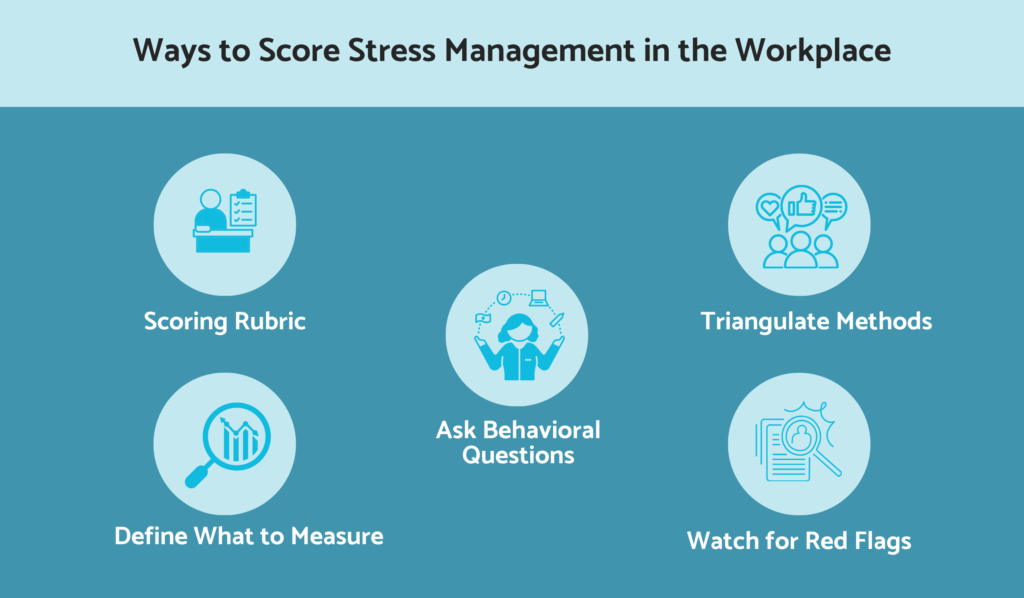
5 Ways to score stress management in the workplace
1. Scoring Rubric
This method measures how stressed your employees are and how well they are coping in your employment. You can conduct a survey using a 1–5 scale across items such as support, time pressure, workload, and emotional strain, then sum the scores to obtain your stress score. Higher scores indicate a higher stress level.
2. Define What to Measure
Stress management can be broken into three steps: emotional regulation, sustained performance, and adaptive coping. Therefore, you should have a strong scoring structure that addresses all three focal points to ensure your results are accurate after measuring your employees.
3. Ask Behavioral Questions
The best signal you can receive about stress management in your workplace comes from asking your candidates to describe a real situation rather than a theoretical one. Ensure they narrate their experiences of stress in the workplace to you, along with how they overcame it.
4. Triangulate Methods
Self-report interviews can introduce social desirability bias, as your candidates will know what constitutes a good answer. Therefore, improve your score by including an additional assessment, such as a situational judgment test or a work sample task, to observe the actual behaviors of your candidates rather than a description.
5. Watch for Red Flags
Look out for candidates who consistently describe stress as something that happens to them or who offer coping strategies to offload it onto their colleagues. This is usually a sign of limited self–awareness instead of genuine resilience.
Alongside these red flags, it’s crucial that you spot the following issues that you may encounter.
4. Red flags of stress management in the workplace
According to Headspace’s 2025 Workforce State of Mind report, approximately 92% of employees report that their sleep is negatively affected by work, and 58% say they are considering leaving their jobs due to poor mental health.
Red flags of poor stress management in the workplace
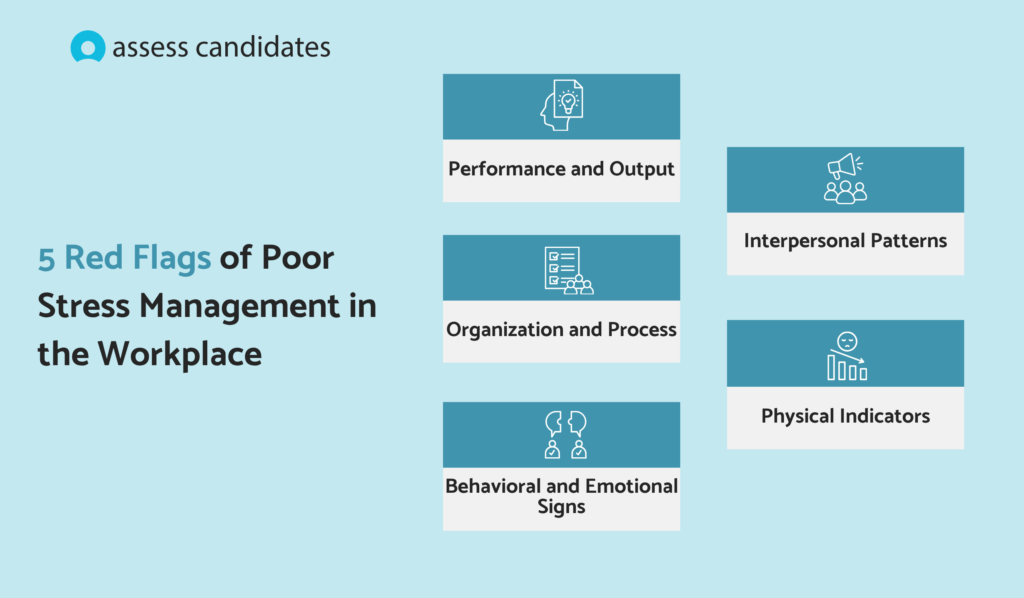
- Performance and Output
Consistently missing deadlines is one of the clearest signals of poor coping strategies in a workplace, especially when there is a decline from the previous performance report. There will also likely be a decrease in work quality under pressure, with more incomplete tasks and careless errors.
Solution: We suggest breaking larger projects into smaller milestones with regular check-ins, rather than a single distant deadline, so you can address problems early. Introduce a prioritization method to your employees where they work based on the task’s urgency and are not overwhelmed.
- Organization and Process
Disorganization in the workplace tends to compound under stress. Watch for signs such as cluttered workspaces, missed meetings, or an inability to plan more than a day or two ahead. Your staff demonstrating procrastination on difficult tasks and rushing close to the deadline are signs of poor stress management.
Solution: Encourage a single system of record for tasks and deadlines across your company rather than having scattered notes and memories. For procrastination on difficult tasks, we recommend ensuring that your employees tackle the most difficult items on the list first, not last.
- Behavioral and Emotional Signs
Stress in the workplace is often very visible before it is seen in performance. Your staff will likely display irritability or a short temper in instances that would not normally require it. They may withdraw from team interactions or communicate less than before.
Solution: We suggest that you send a direct, private message to your employee, as it is more effective than addressing them in a group setting or leaving it unaddressed. Focus on the observable changes rather than the assumptions about the cause, and ask them what support would be most helpful to them.
- Interpersonal Patterns
If your employees are blaming each other or external entities instead of reflecting on what could have been done differently, it is a red flag to watch for, especially if it becomes a pattern. Should they have difficulty requesting assistance or delegating tasks, even when overloaded, it is a sign of weak stress management in your organization.
Solution: For your employees’ constant patterns of blame, we suggest a structured reflection after a project’s completion. Where someone struggles to ask for assistance, introduce delegation as a skill, not a weakness, to be practiced from the top down in your company.
- Physical Indicators
Increased absenteeism, a noticeable pattern of last-minute sick days, visible fatigue, or comments about not sleeping and feeling overwhelmed are worth noting in your workplace.
Solution: Review the current workload against realistic capability and adjust the deadlines or redistribute the tasks among the team, and address the cause rather than the symptom. You can offer workplace well-being resources or an employee assistance program if available in your company.
Explore assessments created by Chartered Scientists to recruit skilled candidates. VIEW PLANS
Below, we have outlined the top workplace wellbeing strategies in your workplace.
5. Top strategies to implement stress management in the workplace
Unmanaged workplace stress rarely affects only individual employees. It disrupts team performance, increases recruitment costs, and weakens long-term organisational resilience.
According to the Health and Safety Executive (HSE), employers are legally required to protect their staff from work-related stress. Assessing the risk of stress and its impact on your employees’ lives is the way to ensure that you do not damage your employer brand.
Best strategies to implement stress management
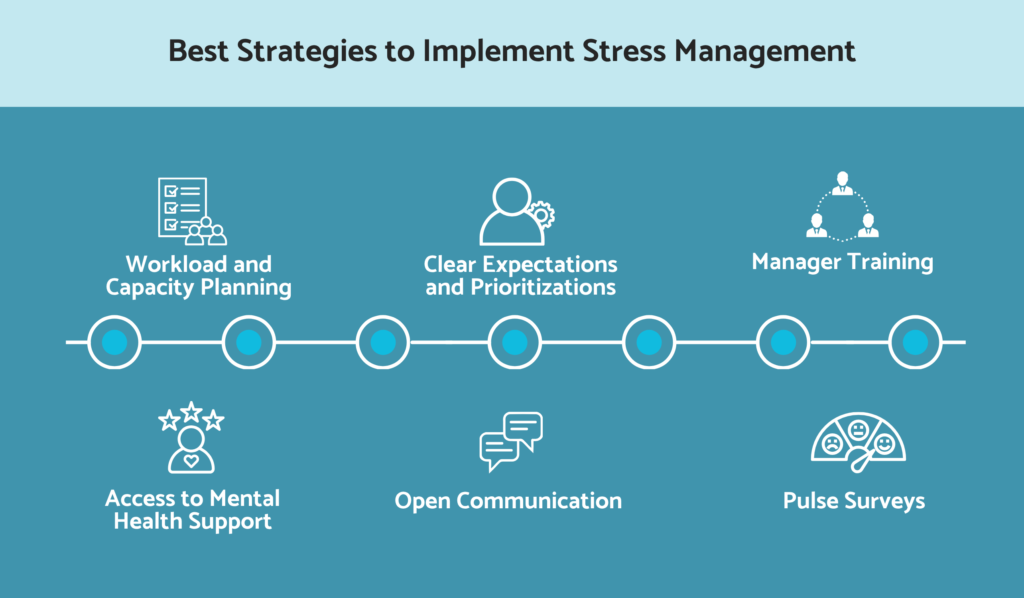
1. Workload and Capacity Planning
One of the most effective ways to implement coping strategies in your workplace is to ensure the workload is realistic. Regularly review your team’s capacity against actual demand, and be willing to redistribute tasks to other staff when your teams are consistently operating at capacity. Extend the deadlines where possible and consider bringing in temporary support when your team is consistently stretched.
2. Clear Expectations and Prioritizations
A large amount of workplace stress comes from not prioritizing workload over volume. Giving your staff clear priorities, realistic delivery dates, and a straightforward process for escalating conflicting demands is an effective strategy to reduce stress in your organization.
3. Manager Training
Train your managers to recognize early signs of stress in their teams and hold supportive conversations to assess it. Your managers should know when to adjust the workload and when to refer a staff member for additional support. This is because managers are usually the first line of defense and the first point of failure in addressing workplace stress.
4. Access to Mental Health Support
Ensure that your claim to providing access to mental health support for your employees is practical. Mental health support should include employee assistance programs and counseling services. Your employees should be aware of these support processes and confident that they can be accessed without professional risk.
5. Open Communication
Normalize having one–on–one conversations about workload and capacity with your employees. This will help them manage stress more effectively when they know they can raise concerns as they arise. Be sure to assure them that they are free to ask for help and flag an unrealistic deadline whenever they have an issue that needs to be resolved.
6. Pulse Surveys
You can conduct regular, shorter, and more frequent pulse checks on your employees’ well-being and workload. Rather than waiting for the annual engagement survey, this is recommended, as it will allow you to catch any issues that can be quickly managed before they become bigger problems.
Want to attract and retain top candidates with effective stress management? Are you unsure which pre-employment psychometric tests to use for successful hiring? Contact us for a detailed review of your assessment methods, and we’ll help you identify the perfect candidates.
Curious to know what employers have to say about overcoming stress in the workplace?
6. Client success stories of stress management in the workplace
Many recruiters have shared their experiences overcoming workplace stress and retaining their top employees while promoting their employer branding in the industry.
1. Uniqlo
Challenge:
Uniqlo, a fashion retail chain, saw a rise in absenteeism and staff turnover during its peak trading season. Its managers reported burnout from constant understaffed shifts. The exit interviews revealed that unpredictable scheduling was a leading cause of stress among frontline staff.
Solution:
The company introduced structured shift planning with minimum notice periods and cross-trained staff to help cover during the peak periods. There were also manager training programs to help them identify early signs of burnout.
Results:
- Employee turnover during peak season decreased in the first year of implementation
- Manager-reported confidence in handling workload conversations improved greatly
- Unplanned absences declined following the introduction of predictable scheduling
2. LemFi
Challenge:
LemFi, a financial services firm, reported that its client-facing teams experienced high stress due to ambiguous escalation processes, and staff were unsure about decisions in high-pressure situations. This challenge led to missed deadlines and visible tensions between the departments.
Solution:
The firm implemented a clear escalation method that defined ownership at each stage of the client issues, along with defined response-time expectations that reduced the sense of constant urgency. The employers also included a protected focus time to minimize context switching during high-demand periods.
Results:
- Reduction in cross-departmental friction as measured through internal feedback
- Missed client deadlines decreased with the launch of the new escalation framework
- Staff-reported role clarity improved in the following engagement survey
This is where Assess Candidates come in. We help ensure your candidates are competent by evaluating skills and providing data-driven analytics to inform your hiring decisions.
So, how does Assess Candidates help employers measure resilience against stress?
7. How does Assess Candidates help employers measure stress management?
Assess Candidates enables employers to evaluate behavioural responses to workplace pressure using scientifically validated assessments that reduce subjectivity and support more informed hiring decisions.
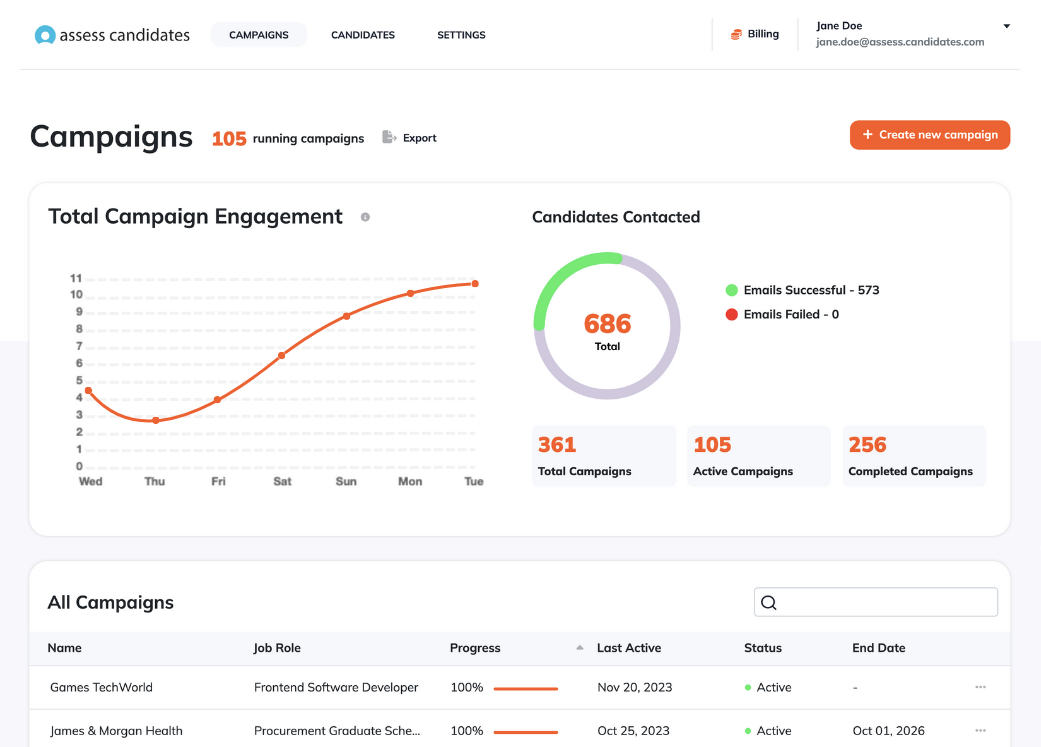
- Behavioral and situational assessments: Assess Candidates offers behavioral competency assessment tests that can help you predict on–the–job performance with an interactive test that engages candidates and assesses their competencies. Our tests simulate pressure–based and real–world scenarios rather than asking candidates to self-report how they would cope in them.
- Prioritization and Focus: Our game–based assessment tests evaluate your candidates’ ability to organize and prioritize various sources of information through interactive and engaging games. Our gamified assessments measure whether cognitive performance holds up under competing demands.
- Inclusive and Bias–Free Platform: Our platform reduces bias and gives every employee an equal chance, regardless of their background. The platform also offers accessibility features, including additional time, zoom functionality, and screen reader compatibility, to ensure a smooth experience for employees with disabilities.
- Wide Range of Assessment Tools: Our platform provides employers with access to a wide range of tools that are tailored to different aspects of the role. These assessment tests include numerical, verbal, and logical reasoning tests, video interviews, situational judgment tests, game-based assessments, and error–checking tests.
- Positive Candidate Experience: Our pre–hire assessment tests are designed to feel simple, smooth, stress-free, and engaging to your employees. A respectful candidate experience is necessary when measuring workplace stress among your employees.
Hire the perfect candidates with our assessment tool platform. LEARN MORE
Conclusion: Takeaway
Effective stress management protects more than employee wellbeing. It improves productivity, strengthens retention, reduces absenteeism, and creates a healthier workplace. Employers that assess stress management consistently are better equipped to build resilient, high-performing teams.
Curious about using psychometric tests to assess stress management in your workplace? Keep reading to see our frequently asked questions, and enter your email to get started today.
Frequently Asked Questions
What is the best way to measure stress management in the workplace?
There is no single best method for assessing resilience in the workplace, as relying on a single method often yields an incomplete picture. The strongest approach is to combine the behavioral interview question, as you ask for a specific real example; a structured rubric to reduce bias; and a situational judgment test.
Is stress management the same as resilience?
Though stress management and resilience often overlap, they are not the exact same. ‘Resilience’ refers to the wider skill in recovering from setbacks over time. Whereas stress management is about how to regulate emotions and sustain performance in your workplace.
Should stress management be assessed depending on the role?
Stress management should be evaluated differently, depending on the role, because client-focused or high-pressure roles will require a higher threshold and rigorous testing than low-pressure roles. Ensure that you align the assessment with the actual role demands to avoid screening out top candidates.
How much weight should stress management carry in a recruitment decision?
Stress management should matter depending on the role you are recruiting for, but it should not be a standalone deciding factor in your hiring process. The stress management assessment should work alongside cultural fit, soft and hard skills, and other core requirements of the role.
How can I reduce work stress and anxiety in the workplace?
To reduce work stress and anxiety, you start by addressing the root cause of the stress, reviewing whether the workload meets realistic expectations, redistributing tasks, and extending deadlines when necessary.


 English
  Arabic