
The Different Stages of the Recruitment Process | 2026 Guide for Recruiters



Recruitment isn’t just about filling a vacancy; it is about shaping the future of your business.
As a crucial pillar of organizational success, recruitment shapes how companies attract, assess, and retain the right talent, who have the potential to drive growth and positively contribute to the company culture.
Modern organizations have shifted beyond traditional hiring methods to structured, data-driven recruitment processes. This approach focuses not only on finding qualified candidates but those who have both the right cultural and skill fit. By following clear recruitment stages, businesses reduce the risk of costly hiring mistakes, save valuable time, and ensure better long-term performance.
Organizations that follow a structured recruitment process are 2.5 times more likely to hire high-performing employees, whilst also reducing turnover and recruitment costs.
Recruitment is more than a transaction, it is the beginning of a long-term partnership that, if built thoughtfully, benefits both employer and employee.
From job analysis and candidate sourcing to onboarding, modern recruitment now encompasses the full hiring cycle. It also embraces skills-based recruitment, which prioritizes a candidate’s skills and potential to succeed over formal qualifications or experience.
In this article, we will cover:
Contents
- What does recruitment entail?
- The importance of a structured recruitment process
- What are the 7 stages of recruitment?
- Stage 1: Identifying the hiring need
- Stage 2: Writing an effective job description
- Stage 3: Talent sourcing
- Stage 4: Screening and shortlisting candidates
- Stage 5: Interviewing candidates
- Stage 6: Selection and job offer
- Stage 7: Onboarding the new hire
- How has recruitment evolved over the years?
- How does Assess Candidate contribute to better hiring outcomes?
Without further ado, let’s start with defining what recruitment is.
1. What does recruitment entail?
Recruitment is the process of attracting, identifying, and hiring the right candidates to fill job vacancies within an organization. It is not just about filling an open position; it is about finding individuals with the right mix of skills, attitude, and cultural alignment to drive organizational success.
Effective recruitment ensures that every new hire not only meets the role’s immediate needs but also contributes to the company’s long-term vision and values.
A well-structured recruitment process involves several key stages, including writing job descriptions, candidate sourcing, assessment, selection, and onboarding. Each stage plays a vital role in ensuring high-quality talent while minimizing hiring risks.
Beyond efficiency, recruitment is a strategic investment. The right people shape team dynamics, boost productivity, and strengthen your organization’s ability to adapt and grow in a competitive business environment.
Discover how reliable pre-employment assessments and solutions can transform your hiring. HIRE FOR FREE
What are the different types of recruitment?
To hire effectively, organizations need a flexible approach that uses recruitment science and strategy. This allows you to streamline hiring, optimize processes, and identify top talent more effectively.
Let’s dive into these two main recruitment types:
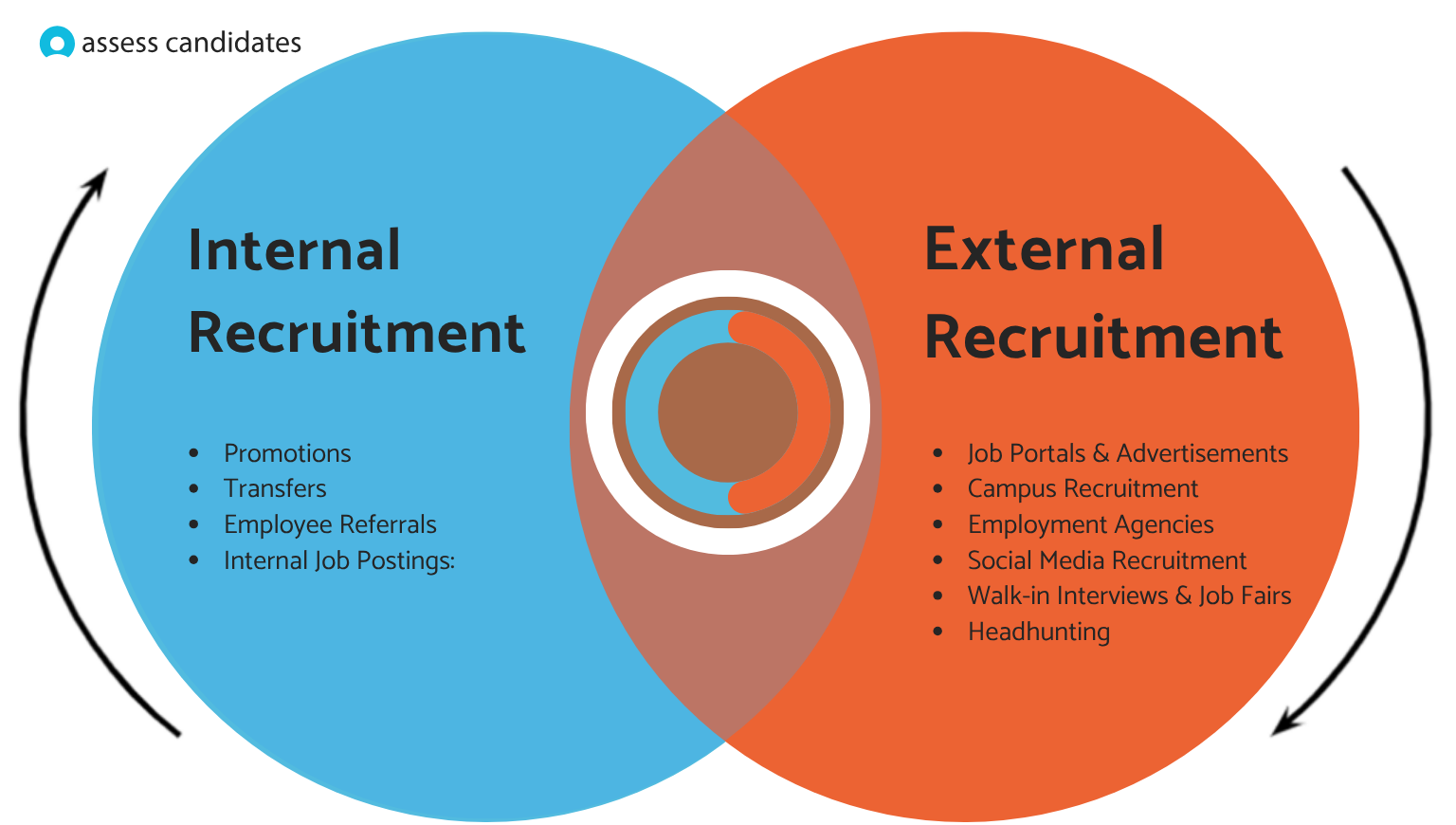
1. Internal Recruitment
Internal recruitment involves filling a position from within the existing workforce through promotions, transfers, employee referrals, and internal job postings. This approach not only boosts employee morale and retention but also helps organizations save time and resources by leveraging existing talent.
LinkedIn’s latest Global Talent Trends Report shows global hiring is down across 20 countries. Facing talent shortages, companies are now prioritizing internal mobility, focusing on developing and retaining their existing talent over external hires.
2. External Recruitment
External recruitment involves sourcing candidates from outside the organization to bring in fresh talent and new perspectives through job portals and advertisements, campus recruitment, and employment agencies. Additionally, social media recruitment via platforms like LinkedIn and Facebook has become a key strategy for reaching passive candidates, while walk-in interviews and job fairs allow direct engagement with multiple applicants simultaneously. For specialized or senior roles, headhunting is used to target highly skilled professionals with niche expertise.
Balancing Both Approaches
Balancing internal promotions and employee growth with bringing in fresh skills and perspectives is an effective recruitment strategy. While internal recruitment leverages the knowledge, experience, and loyalty of current employees, external recruitment introduces new ideas, expertise, and diversity into the workforce.
Combining both approaches allows companies to build a dynamic, diverse talent pipeline, ensure succession planning, address skill gaps effectively, and drive innovation. A balanced recruitment strategy ensures long-term stability while keeping the organization adaptable and forward-thinking.

2. The importance of a structured recruitment process
Implementing a structured recruitment process is essential for any organization aiming to enhance fairness, efficiency, and its employer brand. By standardizing each stage, from job descriptions and candidate assessments to interviews and final evaluations, companies can significantly reduce unconscious bias and make improved hiring decisions.
Fairness and consistency in hiring
A structured process ensures that all candidates are assessed using the same criteria. This consistency not only promotes equitable hiring decisions but also supports greater diversity and inclusion within the workforce.
Did you know? Companies that use structured interviews are twice as likely to make successful hires compared to those relying on unstructured methods. Forbes.
Improving the candidate experience
A study by Forbes showed that a well-organized recruitment process enhances the candidate experience. Job seekers appreciate transparency, consistency, and timely communication, which are hallmarks of a structured approach.
A positive experience not only attracts top talent but also fosters goodwill, even among those who may not be selected, thereby strengthening your reputation and employer brand.
Building a stronger employer brand
A structured and transparent hiring process relfects an organization’s commitment to fairness, professionalism, and efficiency. As candidates share their positive experiences, they become brand advocates, attracting a broader pool of qualified applicants.
Leveraging pre-employment assessments
Incorporating tools like the Assess Candidates platform make it easier to implement a structured approach. Their end-to-end assessment library includes cognitive ability tests, job simulations, and psychometric evaluations, which aid in objectively evaluating candidates’ skills, potential, and cultural fit.
By integrating pre-employment assessments into your recruitment strategy, you can make more informed, data-driven hiring decisions, reduce bias, and enhance the overall recruitment experience.
In summary, adopting a structured recruitment process not only leads to fairer and more efficient hiring but also strengthens your employer reputation, positioning your company as an attractive destination for top talent.
Enhance your recruitment strategy with our data-driven assessments. Learn More
3. What are the 7 different stages of recruitment ?
A structured recruitment process allows you to avoid hiring mistakes, streamline your efforts, and deliver a positive candidate experience.
Outlined below are the 7 essential stages of an effective recruitment process.
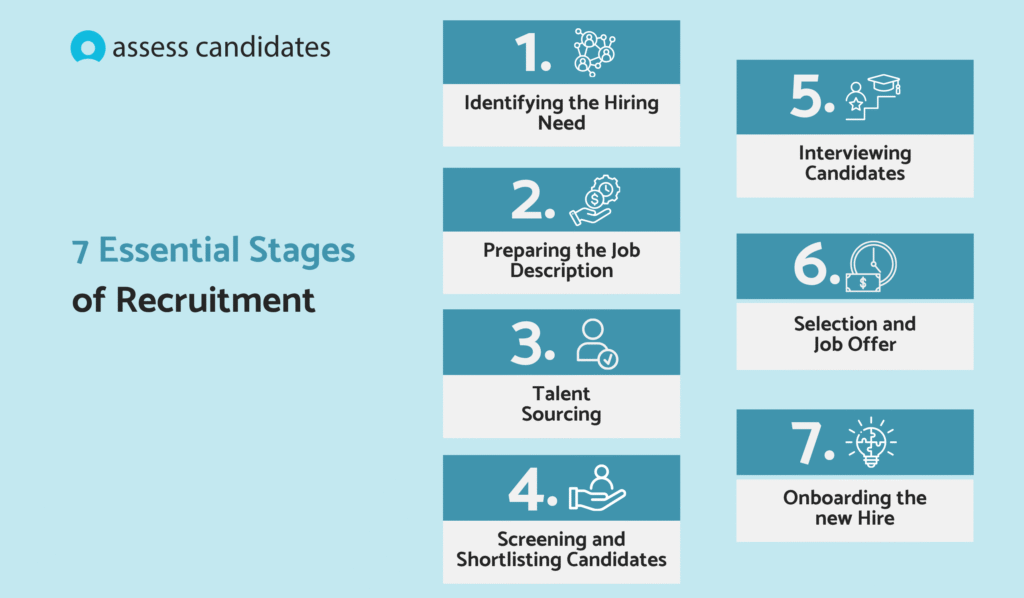
- Identifying the Hiring Need
- Writing an Effective Job Description
- Talent Sourcing
- Screening and Shortlisting Candidates
- Interviewing Candidates
- Selection and Job Offer
- Onboarding the New Hire
In the next few sections, we will explore these 7 key stages in depth.
4. Stage 1: Identifying the hiring need
The first and most crucial step in the recruitment process is understanding your hiring need. Clarity at this stage prevents misalignment later and ensures all stakeholders share the same objective.
What is a hiring need?
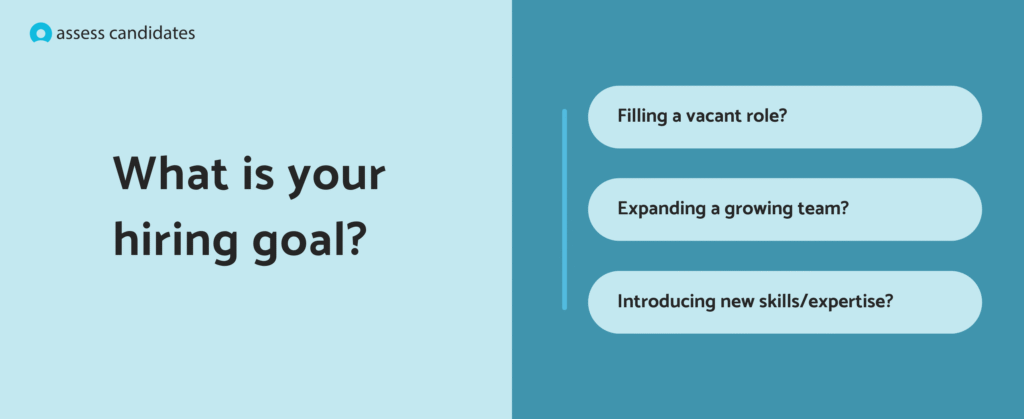
Every recruitment journey begins with a clear understanding of why a new hire is needed. Is your goal to:
- Fill a vacated role as someone has left the organization?
- Expand a growing team to support business growth?
- Introduce new skills or expertise the company currently lacks?
Pinpointing skill gaps
Companies often conduct a skills gap analysis to identify what is missing within the team, whether it is technical expertise, leadership ability or innovative thinking, and which candidates will truly add value.
Without this step, the entire process risks moving in the wrong direction – wasting time and resources on roles that don’t meet organizational needs.
As Harvard Business Review notes, “Hiring without understanding what problem you’re solving is like prescribing treatment without diagnosis.”
Cultural fit hiring
Beyond skills, your hiring team also needs to consider which candidates complement the team dynamics and work culture to enhance team productivity, collaboration, and diversity. Finding someone who fits the role and culture ensures long-term success and retention.
Our expert recruitment team and assessment platform will help you achieve your hiring goals. HIRE FOR FREE
5. Stage 2: Writing an Effective job description
Crafting an effective job description is pivotal to the recruitment process as it is the first impression candidates have of your business.
When crafted thoughtfully, a job description serves as both a filter and a magnet. It filters out uninterested or unqualified candidates whilst attracting those with the right skills and cultural fit. Well-structured job descriptions provide clarity for both recruiters and applicants, helping to set clear expectations early on and communicate company culture and values.
3 principles for writing effective job descriptions:
1. Clarity and Transparency
A well-defined job description sets the foundation for fair and efficient recruitment for both hiring managers and candidates. It should clearly specify:
- Job title and department
- Job type (full-time, part-time, hybrid)
- Role responsibilities
- Required skills, qualifications, and experience
- Lines of authority
- Salary structure and benefits.
This clarity helps candidates understand the scope and objectives of the role to self-assess their suitability, saving time and improving the quality of applications.
2. Don’t Solely Rely on Experience or Degrees
While experience and qualifications are useful indicators, they should not be the sole focus when making hiring decisions. The best job descriptions highlight the skills, mindset, and potential needed for success in the role.
Rather than listing rigid degree requirements, emphasis transferable skills like problem-solving, communication, or adaptability. This approach broadens your talent pool and promotes skills-based hiring, enabling candidates from diverse backgrounds to apply.
3. Write with Inclusion in Mind
An inclusive job description helps you build a more diverse talent pool. Use gender-neutral and bias-free language, avoid unnecessary jargon, and focus on what skills and potential candidates can bring to the role, not their background.
Inclusive descriptions improve both diversity and candidate engagement, fostering a positive and professional employer brand and a culture of belonging.
6. Stage 3: Talent sourcing
After crafting a strong job description, the next step is actually finding and attracting the right candidates to apply. Effective talent sourcing leverages both internal and external recruitment strategies.
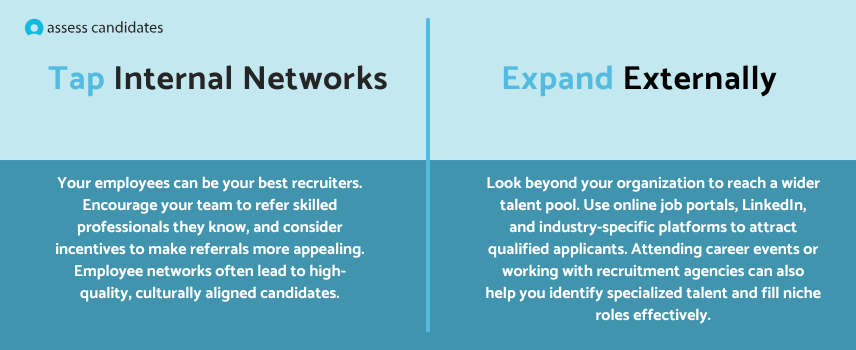
Tap Into Internal Networks
Your employees can be some of your best recruiters. Encourage your team to refer skilled professionals they know, and consider incentives to make referrals more appealing. Employee referrals often lead to high-quality candidates who are already culturally aligned, improving engagement and team cohesion.
Expand Externally
Look beyond your organization to reach a wider talent pool. Today, apart from traditional job boards sourcing happens across multiple channels:
- Job portals and ATS (Applicant Tracking Systems) for structured, high-volume sourcing.
- Professional platforms like LinkedIn or recruitment agencies to target passive candidates and specialized talent.
- Employee referrals for trusted, culture-fit recommendations.
- Social media and employer branding to showcase your culture and attract diverse candidates.
- Career events and recruitment fairs to meet potential candidates in-person.
In today’s competitive talent landscape, relying solely on a single channel like traditional job boards is no longer enough. Many top candidates are passive job seekers who are open to opportunities but not actively applying. Modern sourcing therefore uses a mix of channels to engage potential candidates and build diverse talent pipelines. It requires proactive outreach, personalization, and digital engagement.
Recruiters who combine adaptability, relationship-building, strategic thinking, and tech-savvy strategies can turn talent sourcing into a competitive advantage.
7. Stage 4: Screening and shortlisting candidates
Once applications start coming in, recruiters move to the critical recruitment stage of screening and shortlisting candidates. This stage filters out unqualified candidates and progresses only the top-performing applicants to the interview stage who have the right skills, competencies, and cultural fit for the role and organization.
How to effectively screen and shortlist candidates?
1. Start with clear benchmarks
Screening typically begins by reviewing resumes and applications against the job description, checking for relevant skills, qualifications, and experience. Using your job description as a benchmark ensures alignment between role requirements and candidate profiles from the start.
Some hiring platforms make this more efficient with AI-powered resume screening.
2. Use pre-employment assessments
To enhance efficiency and objectivity, many organizations go beyond solely checking CVs and leverage pre-employment assessments to provide holistic, measurable insights into candidates skills, potential, personality, and future job performance.
Let’s explore some examples of pre-employment psychometric tests below:
- Cognitive Ability Tests: Measure numerical skills, verbal comprehension, problem-solving, critical thinking, and learning agility, all key indicators of success.
- Personality Questionnaires: Reveal personality traits, preferred workstyle, and motivations to help assess team and organizational compatibility.
- Situational Judgement Tests (SJTs): Present realistic workplace scenarios to measure decision-making abilities, problem-solving skills, and other work behaviors/competencies.
- Checking Tests: Focus on attention to detail, precision, and accuracy.
- Game-Based Assessments: Measure a range of cognitive abilities, behaviors, and preferences in an engaging game-like format.
- Emotional Intelligence (EQ) Tests: Evaluate how well candidates understand and manage their emotions and those of others, key for showing leadership potential.
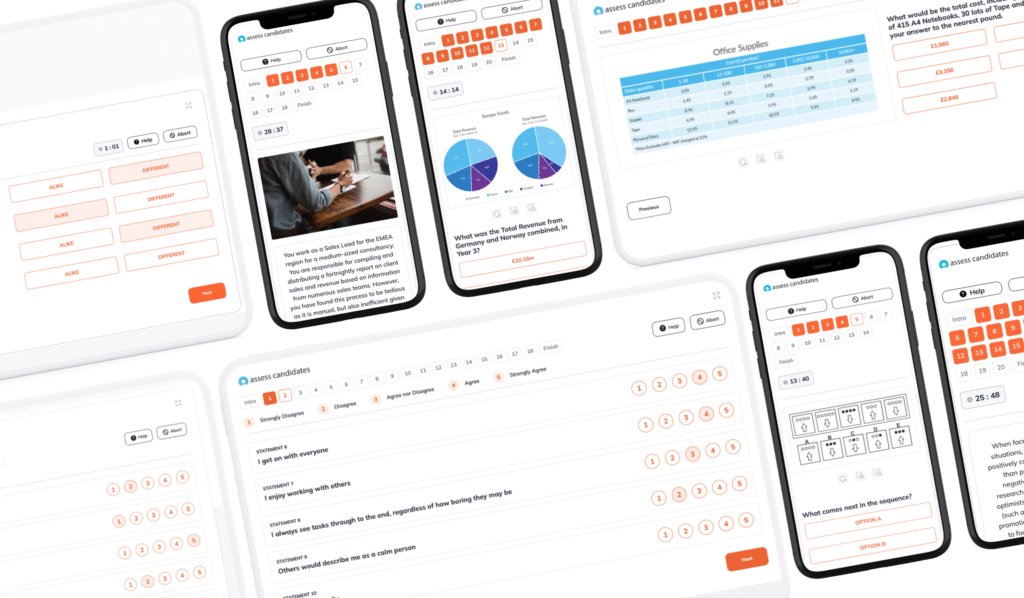
The overarching goal is to balance assessing technical and soft skills with cultural alignment for a comprehensive, objective candidate evaluation. This ensures that only the most suitable candidates move forward to the interview stage, saving valuable time for both the recruiters and the applicants.
3. Quality Over Quantity
Rather than reviewing all applications superficially, prioritize in-depth evaluation of the most promising profiles through a structured, criteria-based process.
Job simulations, coding challenges, and behavioral assessments can provide tangible insight into how candidates perform in real-world situations, ensuring that shortlisted candidates are not just qualified but also motivated, adaptable, and engaged.
Research shows that the best candidate assessment strategies combine human insight with data-driven tools. Integrating data-driven assessments from hiring platforms like Assess Candidates enables recruiters to make informed, fast hiring decisions and build a stronger, future-ready talent pipeline. This also ensures fairness and consistency, while reducing bias.
Once the screening process shortlists the highest potential candidates, the next step is understanding how to assess them effectively through interviews.
8. Stage 5: Interviewing Candidates
Conducting interviews is the most interactive and revealing part of the recruitment process. Interviews allow recruiters to go beyond skills and qualifications and assess mindset, motivations, and cultural fit.
What are the different types of interviews?
You can use a variety of interview types to evaluate candidates from different perspectives depending on your hiring needs and role:
- Phone Interviews: Ideal for initial screenings to evaluate a candidate’s basic qualifications, role interest, and communication skills.
- Video Interviews: Especially beneficial for remote or hybrid hiring, allowing recruiters to assess verbal and non-verbal communication skills.
- Panel Interviews: Involve multiple interviewers from different departments to provide diverse perspectives on a candidate’s suitability.
- Technical Interviews: Incorporate practical tasks or tests to evaluate a candidate’s problem-solving and decision-making abilities and role-specific skills.
Each format serves a distinct purpose, and combining them allows employers to make well-rounded, confident hiring decisions.
Assess Candidates offers a variety of AI-powered pre-recorded video interviews, enabling candidates to respond to predetermined questions at their convenience, streamlining scheduling while ensuring consistency.
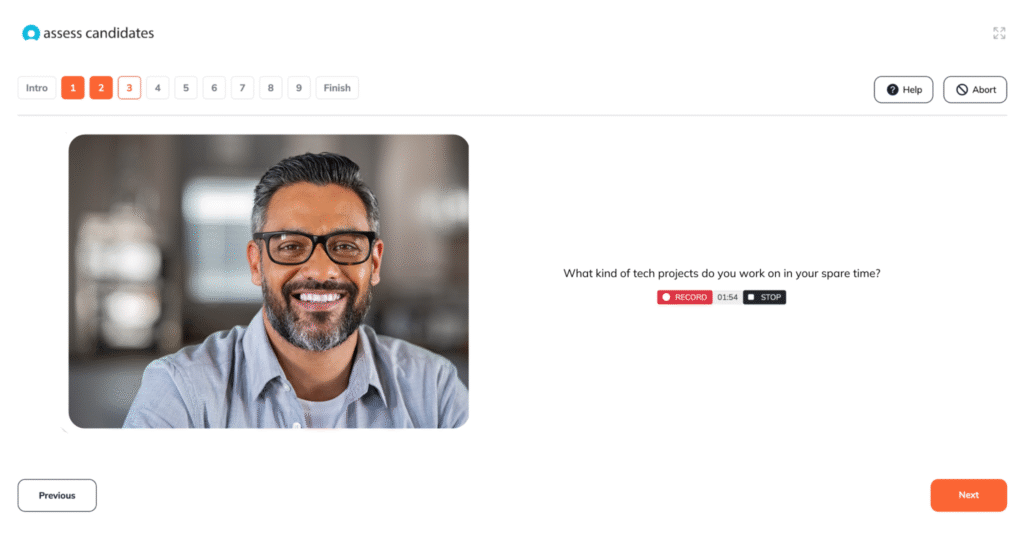
What are structured Interviews?
Structured interviews, where each candidate is asked the same set of questions, are now considered best practice for reducing unconscious bias. By standardizing the interview process with scoring rubics, interviewers can objectively compare candidates’ responses and make data-backed hiring decisions.
Tools like Assess Candidates’ AI-powered video interviews support structured interviewing by providing consistent evaluation criteria, automated scoring, and detailed candidate reports.
Combining various interview types with structured methodologies ensures a comprehensive evaluation of each candidate, improving both the accuracy and fairness of the recruitment process.
Boost the quality of your hires with Assess Candidates’ pre-employment and interview assessment tools. View Plans
Once the interview stage is complete and insights are gathered, the next step is crucial: deciding who is the best fit for the role and the organization.
9. Stage 6: Selection and Job Offer
Making a final decision
After interviews, recruiters and hiring managers enter the selection stage. Here, they evaluate data and insights from pre-employment tests and interviews, compare shortlisted candidates using standardized scoring, and weigh factors such as skills, experience, and cultural fit to make final hiring decisions.
Automated reference checks and background verifications further validate candidate credibility, helping prevent costly hiring mistakes.
Collaboration is key; decisions are often made collectively between hiring managers, HR, and team leads to ensure fairness and alignment with both role expectations and organizational goals.
Crafting a competitive offer
Once the ideal candidate is selected, you need to craft a compelling job offer that secures their commitment.
Acting quickly is essential, as top candidates often have multiple opportunities. Present a competitive package that clearly outlines salary, benefits, start date, and career development prospects. Transparency ensures the candidate understands their role and fosters a positive working relationship from the outset.
It is wise to have a backup plan. Incase your first choice declines, be ready to revisit your shortlist or continue the search efficiently.
By combining informed decision-making, data-driven assessments, and strategic offer management, organizations can minimize hiring risks and successfully convert top candidates into valued team members.
10. Stage 7: Onboarding the new hire
You might consider the recruitment process complete once the offer is accepted, but effective onboarding is where a successful hire becomes a successful employee.
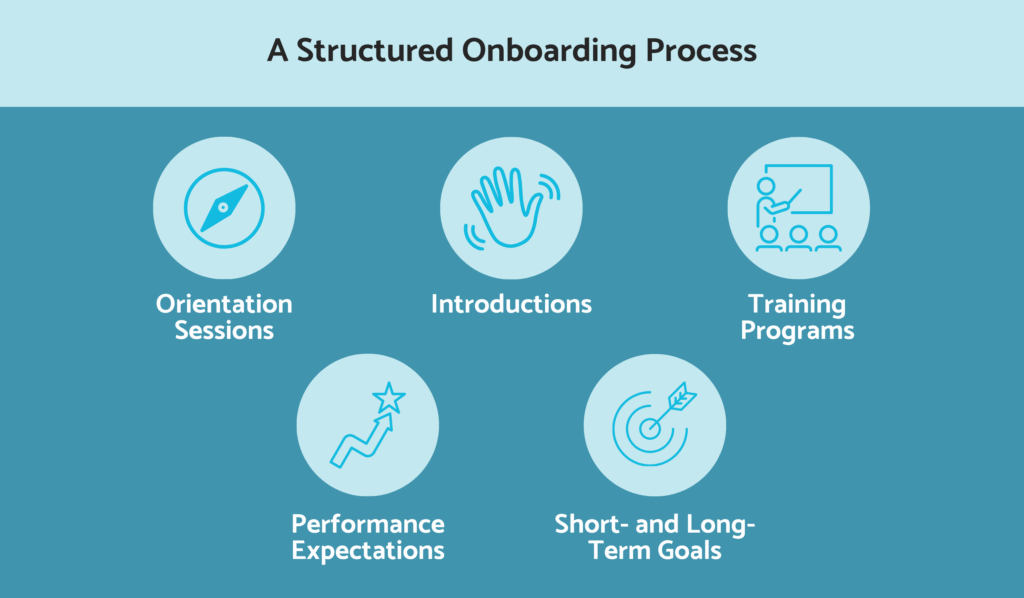
A structured onboarding process helps new hires feel welcomed, supported, and prepared to excel in their roles. This includes:
- Orientation sessions
- Introductions to teams, tools, and processes
- Role-specific training programs
- Performance expectations
- Setting short-term and long-term goals.
Hiring platforms like Assess Candidates support onboarding by providing insights from pre-employment assessments, helping managers tailor training and development to each employee’s strengths, cognitive abilities, and learning preferences.
Effective onboarding accelerates productivity, strengthens engagement, and reduces early attrition rates by reinforcing role expectations and cultural fit. Organizations that invest in a structured onboarding process strengthen their employer brand, retain top talent, and set employees up for sustained growth.
Now that we have explored the 7 stages of recruitment, let’s take a look at how hiring practices have evolved over the years.
11. How has Recruitment evolved over the years?
Recruitment has undergone a major transformation in recent decades. Traditionally, hiring decisions relied heavily on formal qualifications, years of experience, and personal networks, often overlooking a candidate’s true potential, skills, or alignment with company culture.
While this approach worked in simpler business environments, it often led to mismatches, higher costs, and missed opportunities for building diverse, high-performing teams.
In today’s competitive and dynamic landscape, recruitment is strategic, data-driven, inclusive, and focused on candidate’s true abilities. Organizations now prioritize potential, competencies, and cultural fit over experience alone.
A key development in modern HR practices is the rise of full-cycle recruitment, a holistic process covering every stage of hiring including identifying hiring needs, crafting job descriptions, talent sourcing, screening candidates, conducting interviews, making final selections, and onboarding new hires. This approach ensures consistency, efficiency, and alignment with long-term organizational goals at every stage of hiring.
The role of assessments in modern hiring
Platforms like Assess Candidates enhance every stage of the recruitment cycle.
By integrating psychometric assessments, cognitive ability tests, game-based assessments, video interviews, and AI-driven analytics, you gain a holistic view of each candidate’s skills, motivations, and fit. This helps recruiters make data-informed, unbiased, and fair hiring decisions beyond the CV.
Common pre-employment assessments include:
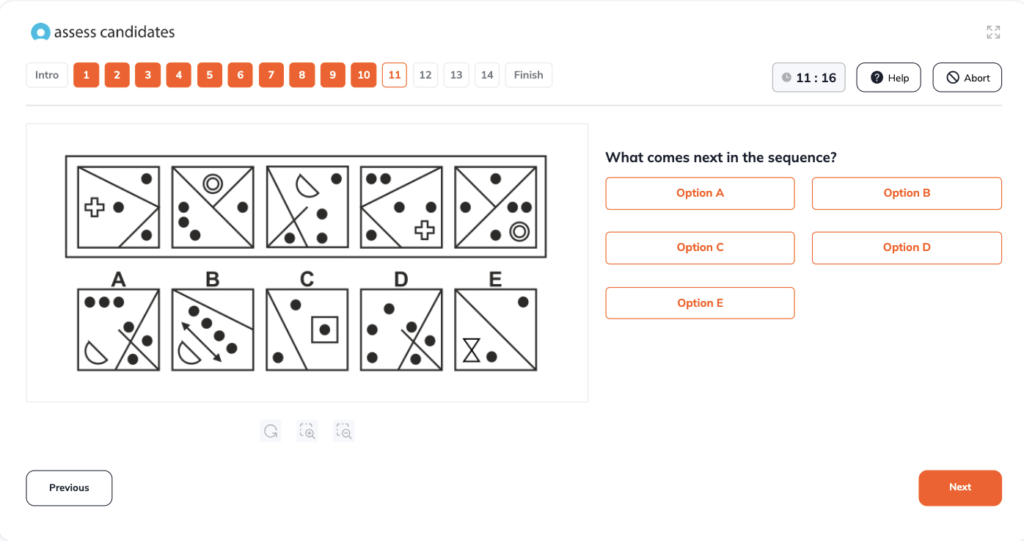
1. Logical Reasoning Tests
Logical reasoning tests measure a candidate’s ability to analyze information, identify patterns, and draw logical conclusions. They offer valuable insights into how candidates think, adapt, and make decisions, critical for problem-solving and strategic roles.
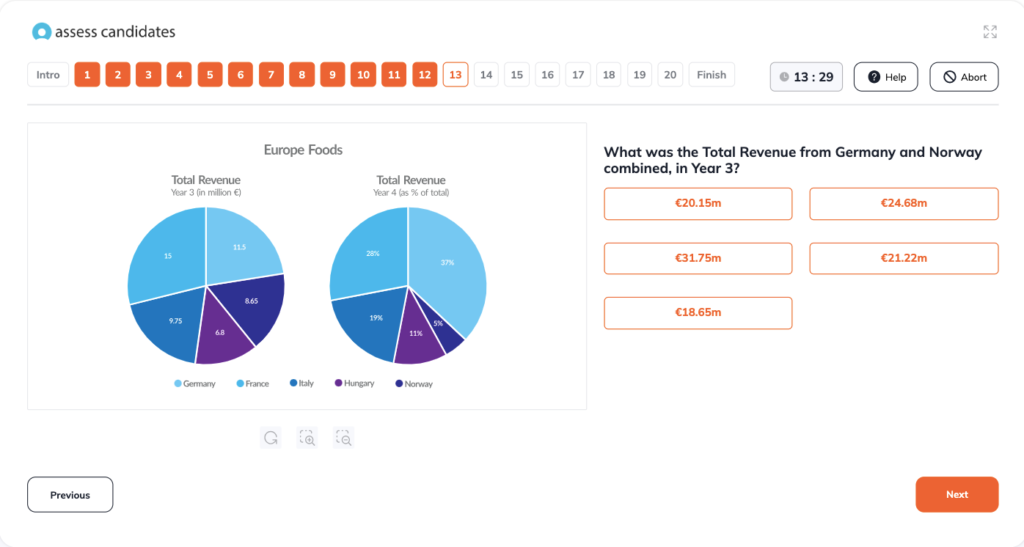
2. Numerical Reasoning Tests
Numerical reasoning tests assess how well candidates can handle numbers and interpret data in practical situations. They help employers identify candidates who can make logical, data-driven decisions.
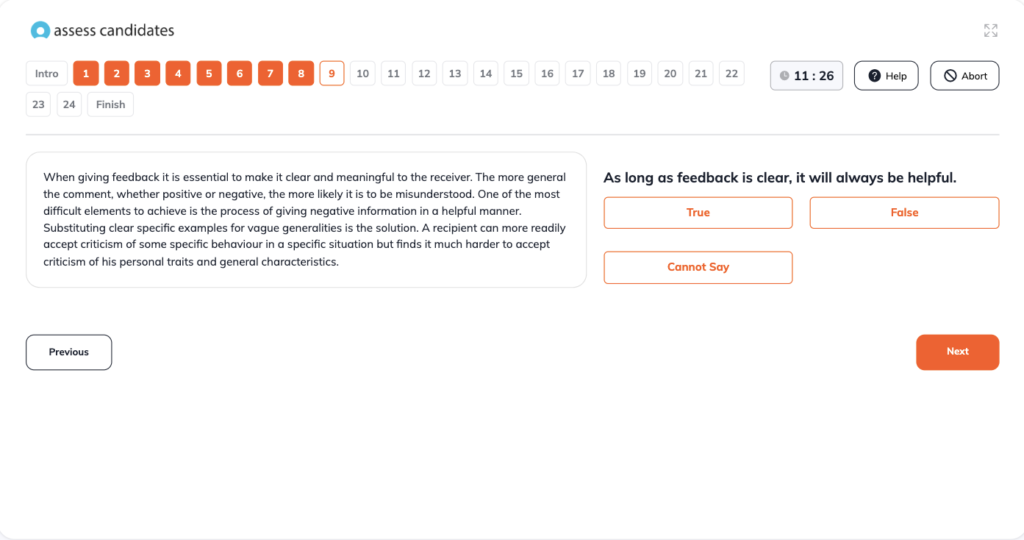
3. Verbal Reasoning Tests
Verbal reasoning tests measure a candidate’s comprehension and critical thinking through written information. These tests assess how well individuals can interpret complex ideas and draw logical conclusions based on text.
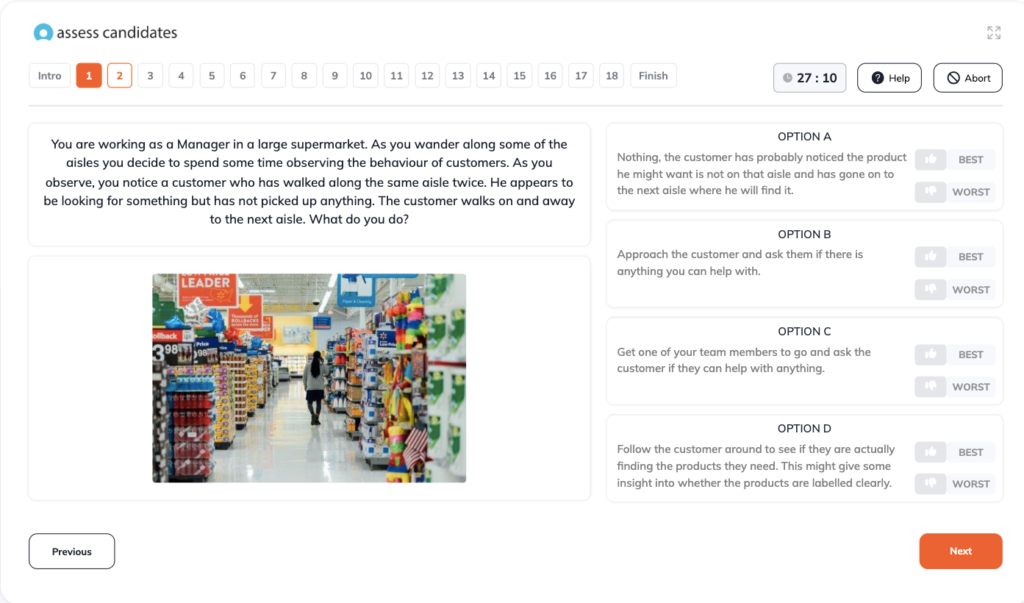
4. Situational Judgment Tests (SJTs)
Situational judgment tests present candidates with real-world job scenarios to assess competencies such as problem-solving, decision-making, teamwork, leadership potential, and emotional intelligence. By analyzing their judgment under pressure, employers can predict how candidates handle challenges and make sound decisions.
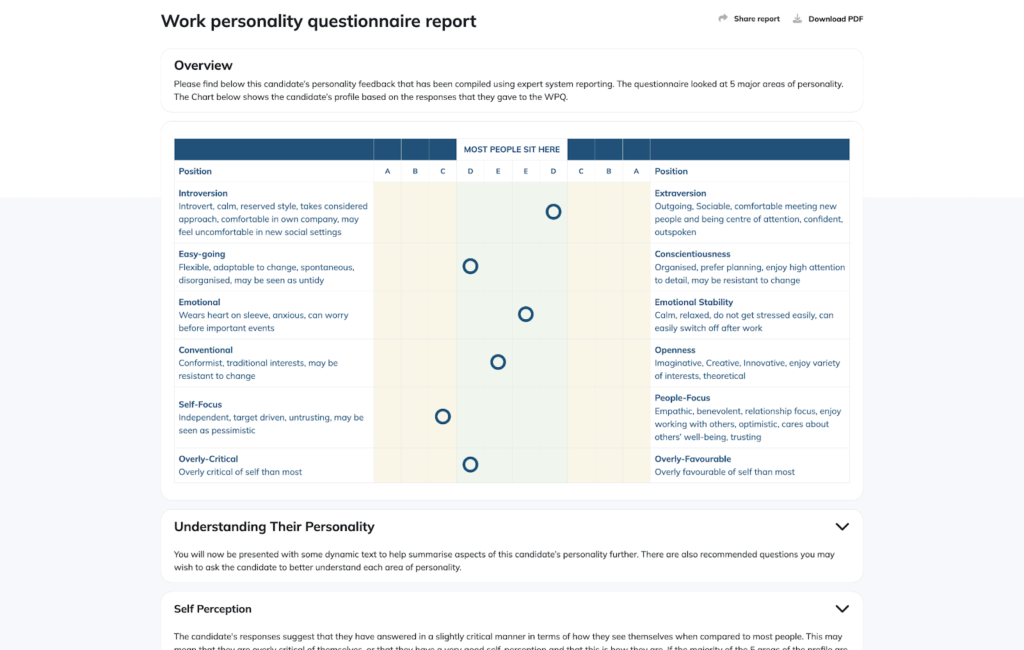
5. Personality Questionnaires
Personality tests provide insight into an individual’s traits, motivations, and preferred work style, helping employers predict their cultural fit, interpersonal effectiveness, and team dynamics.
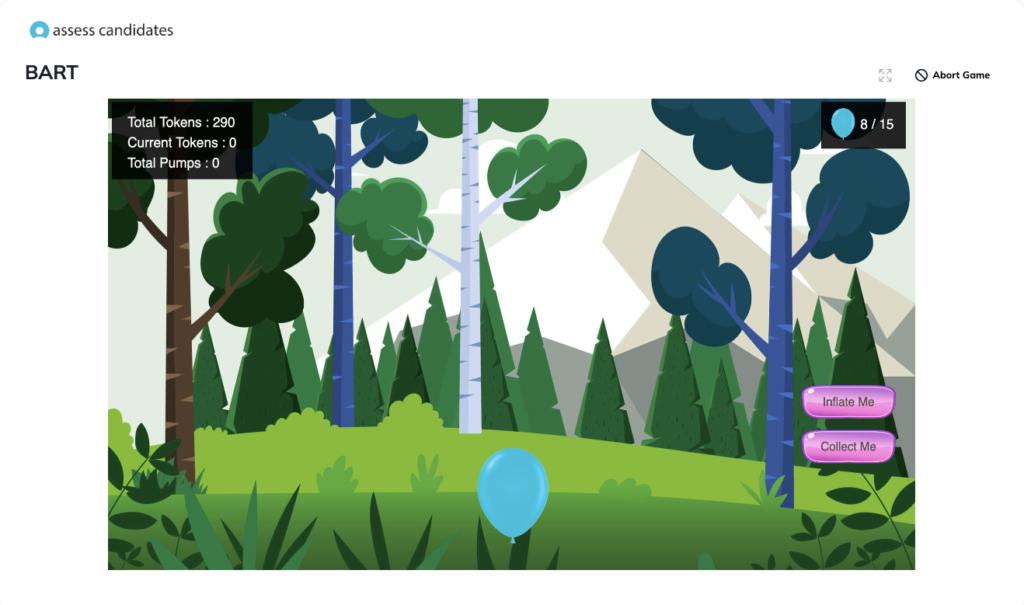
6. Game-based Assessments
Game-based assessments use interactive, gamified tasks to evaluate a candidate’s cognitive abilities, personality traits, and behavioral tendencies in an engaging way. They aim to reduce test anxiety whilst providing deeper insights into how candidates think and perform against real-time challenges.
Modern recruitment practices also aim to promote diversity, equity and inclusion. Thoughtfully structured assessments and standardized evaluation processes help reduce unconscious bias, ensuring candidates are selected based on merit and capability. By combining timeless HR skills such as adaptability, relationship management, and communication with advanced recruitment technology, you can create more robust, agile, and future-ready workforces.
In essence, recruitment has shifted from a reactive, experience-focused task to a strategic, insight-driven process – a key driver of business growth and innovation.
Take advantage of our reliable, science-backed candidate assessment platform. LEARN MORE
Now that we have explored how recruitment has evolved over the years, let’s see how Assess Candidates enables organizations to achieve better hiring outcomes.
12. How does Assess Candidate contribute to better hiring outcomes?
Assess Candidates is designed to make recruitment smarter, faster, and more efficient. The platform streamlines every stage of hiring, from screening and skill assessments to shortlisting and final selection.
By integrating data-driven insights with intuitive tools, recruiters identify the most qualified candidates with greater accuracy. Its customizable assessments, automated evaluations, and detailed analytics reduce hiring time while ensuring objective, merit-based decisions. As a result, HR teams can focus more on strategic hiring rather than manual screening.
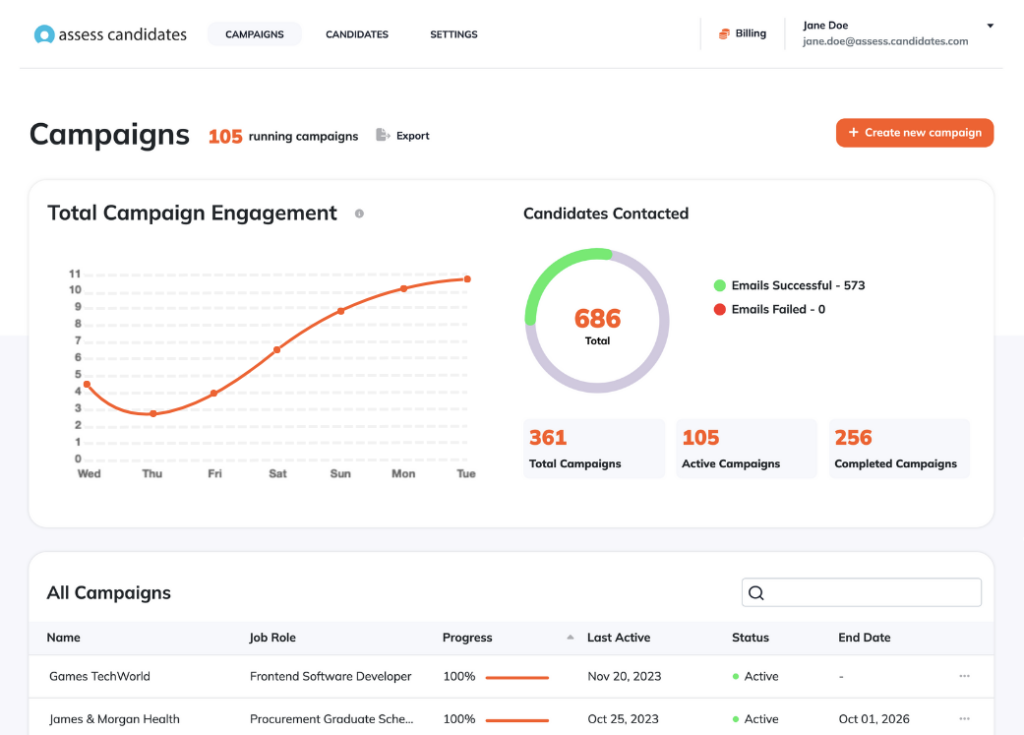
Assess Candidates offers a comprehensive suite of pre-employment assessments, each tailored to evaluate specific competencies and attributes essential for various roles. These interactive tools assess cognitive abilities, emotional intelligence, and personality traits through engaging, user-friendly interfaces.
Benefits of Using Assess Candidates
- Objective Evaluation: Reduces bias by providing standardized assessments that focus on skills and competencies.
- Enhanced Candidate Experience: Engaging and user-friendly assessments improve candidate satisfaction and brand perception.
- Time and Cost Efficiency: Automated evaluations and streamlined processes reduce hiring time and associated costs.
- Data-Driven decisions: Comprehensive analytics offer insights into candidate performance, aiding in informed decision-making.
- Scalability: The platform supports high-volume hiring, making it suitable for organizations of all sizes.
By leveraging these diverse assessment tools, Assess Candidates empowers recruiters to make more informed, fair, and efficient hiring decisions, ultimately leading to better organizational outcomes.
Searching for top talent more efficiently? Continue reading for frequently asked questions, and sign up with your email to get started.
Frequently Asked Questions
What are the 7 stages of recruitment?
A recruitment process typically includes 7 key stages: planning, writing job descriptions, sourcing, screening, interviews and selection, job offer and negotiation, and onboarding. Following these structured steps ensures a fair, efficient, and effective hiring process that attracts and retains the right talent.
Why is screening important in recruitment?
Screening is crucial in recruitment as it saves time by quickly and accurately filtering out unqualified candidates, ensures candidates meet skill and cultural requirements, and minimizes turnover risks. Using tools like Assess Candidates’ pre-employment tests enables objective shortlisting, promotes fairness, and helps organizations identify the most suitable talent efficiently.
How does onboarding affect employee retention?
Effective onboarding significantly improves employee retention by fostering engagement, clarity, and belonging from day one. Structured programs supported by assessment offer insights into candidate strengths, learning preferences, and role alignment. They also help recruiters boost candidate adaptability, enhance job satisfaction, and motivate new hires to remain and grow within the organization.
Can small businesses simplify the recruitment process?
Yes, small businesses can simplify recruitment by using third-party assessment platforms, involving team members in evaluations, focusing on essential skills and cultural fit, and standardizing procedures. These steps enhance efficiency, reduce mis-hires, save time and costs, and ensure better-quality hires aligned with business goals.
What role do technology and AI play in modern recruitment?
Technology and AI simplify and enhance recruitment by automating repetitive tasks like resume screening, scheduling, and candidate communication. AI-driven assessment tools and analytics also help identify top talent faster, improve decision-making, and minimize bias in hiring.


 English
  Arabic