
The 2026 Recruiter’s Guide to Hiring in the Foodservice Industry



Hiring top talent in the foodservice industry requires assessing more than culinary expertise and previous experience. Evaluating skills such as communication, customer service, attention to detail, teamwork, problem-solving, adaptability, and food safety knowledge can help employers identify qualified foodservice professionals.
Did you know? According to the U.S. Bureau of Labor Statistics, employment in food and beverage serving and related occupations is projected to grow 5% from 2024 to 2034, faster than the average for all occupations.
Keep reading to explore the major foodservice roles, key skills to assess, and the best practices for hiring top talent in the foodservice industry.
Contents
- What is the foodservice industry?
- What are some of the major roles in the foodservice industry?
- What skills should employers look for when hiring in the foodservice industry?
- What are the best tools to measure foodservice skills during the hiring process?
- Best practices for hiring in the foodservice industry
- Why top foodservice establishments use Assess Candidates to hire candidates
First, let’s explore what the foodservice industry involves.
1. What is the foodservice industry?
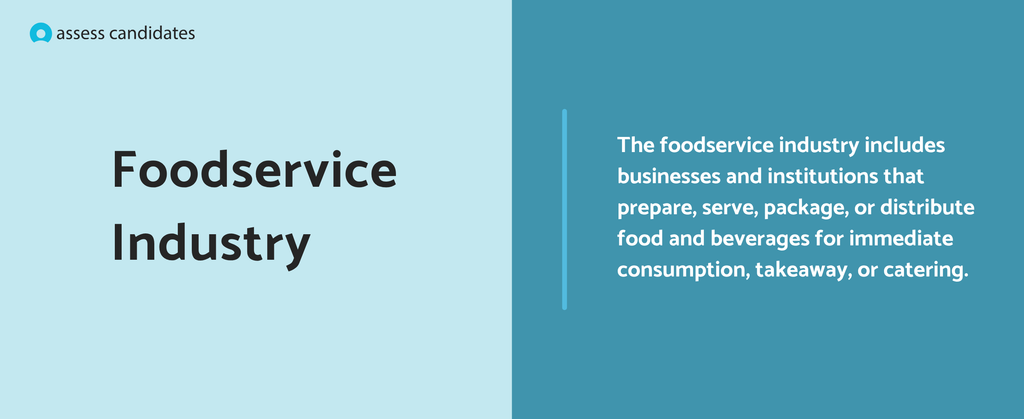
The foodservice industry includes businesses and institutions that prepare, serve, package, or distribute food and beverages for immediate consumption, takeaway, or catering. It includes commercial operations such as restaurants and non-commercial operations such as food services within schools, hospitals, and other institutions.
Commercial foodservice establishments operate to make a profit by selling food and beverages to customers. Non-commercial foodservice establishments provide food as part of another organization or institution.
Assess workplace competencies with our wide range of pre-employment assessment tests. HIRE FOR FREE
The following section covers the most common roles in the foodservice industry.

2. What are some of the major roles in the foodservice industry?
The foodservice industry offers a variety of career opportunities across kitchen operations, customer service, sales, management, and catering.
The following are some of the major roles in the foodservice industry across both commercial and non-commercial operations:
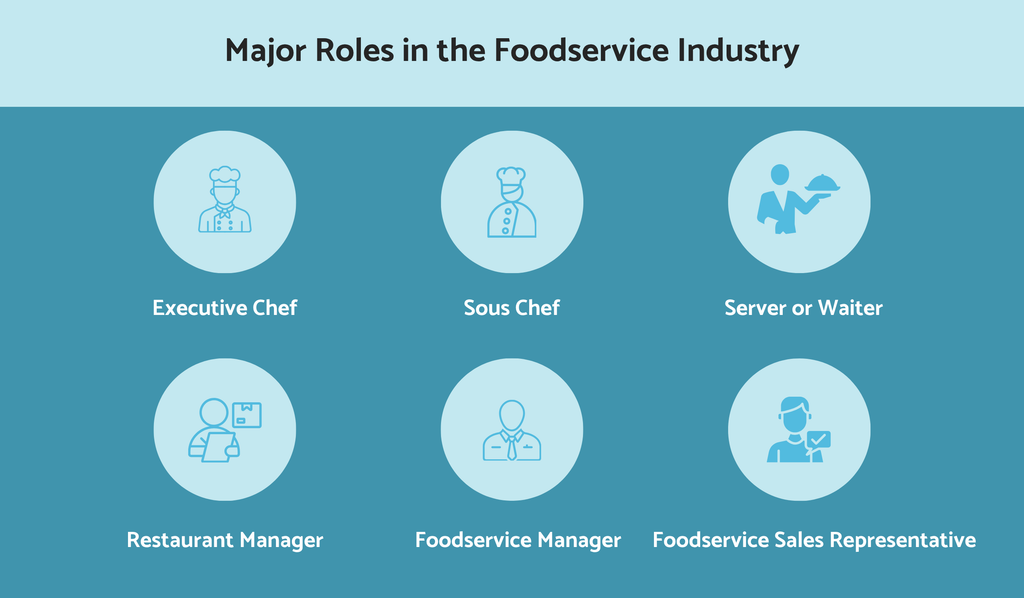
- Executive Chef
An executive chef oversees kitchen operations, including menu development, food quality, inventory management, supplier coordination, and kitchen staff. They are also responsible for maintaining operational standards and ensuring the kitchen runs efficiently.
- Sous Chef
A sous chef serves as an assistant to the executive chef. Their main responsibilities include supervising and training kitchen staff, ordering inventory, managing schedules, coordinating food preparation, and maintaining kitchen standards.
A sous chef primarily ensures that the daily kitchen operations run smoothly and that dishes are prepared efficiently.
- Server or Waiter
The main responsibility of a server or waiter is to take customers’ orders, answer menu-related questions, serve food and beverages, and ensure customer satisfaction. They also process bills, handle customer feedback, and communicate special requests to the kitchen.
A waiter or server acts as the main point of contact between the customer and the restaurant.
- Restaurant Manager
A restaurant manager is generally a front-of-house manager. They oversee daily operations, handle customer concerns, complete marketing tasks, order supplies, monitor business performance, and assist servers when overwhelmed.
The main responsibility of a restaurant manager is to ensure that the restaurant maintains high standards of cleanliness, service, and efficiency.
- Foodservice Manager
A foodservice manager works across restaurants, hotels, schools, hospitals, corporate cafeterias, and other foodservice establishments. They supervise operations, coordinate purchasing, manage staff, monitor budgets and food quality, and ensure appropriate hygiene and service standards are maintained.
- Foodservice Sales Representative
The main responsibility of foodservice sales representatives is to promote foodservice products, generate sales, build relationships with clients, and provide product information to businesses such as hotels, cafeterias, restaurants, and catering companies.
Foodservice sales representatives are also responsible for understanding client needs, managing accounts, negotiating deals, and meeting sales targets.
But what skills should you assess when hiring in the foodservice industry?
3. What skills should employers look for when hiring in the foodservice industry?
When hiring for roles in the foodservice industry, it is crucial to assess candidates for a combination of technical knowledge, customer service abilities, and soft skills.
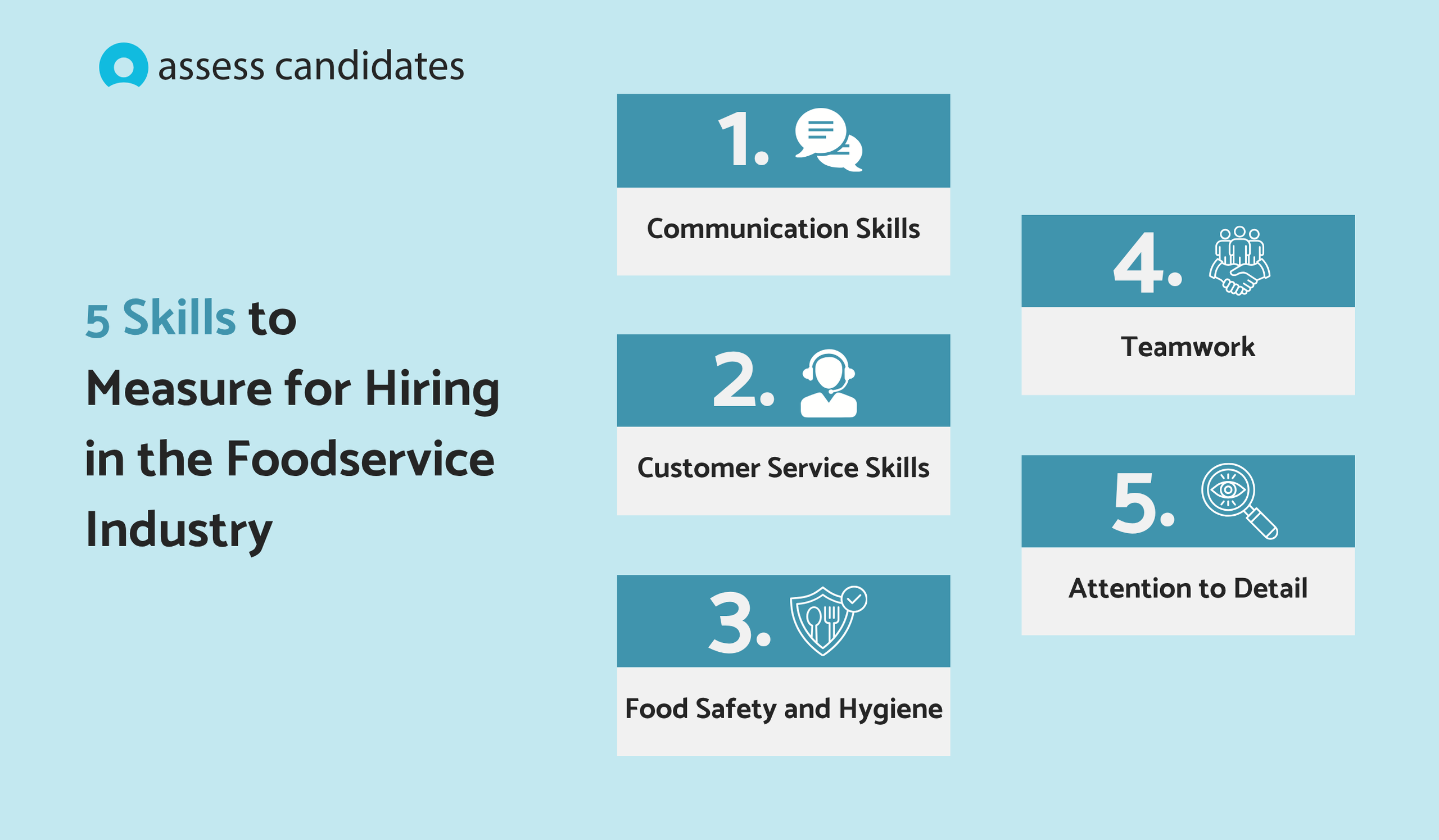
The following are the 5 major skills to assess when hiring in the foodservice industry:
1. Communication Skills
One of the major skills to look for when hiring in the foodservice industry is a candidate’s communication skills. Foodservice employees must be able to interact clearly with customers and colleagues, follow instructions, and communicate information accurately to ensure smooth daily operations.
Did you know? According to Indeed, communication skills were included in 18.93% of food service job postings.
2. Customer Service Skills
Another significant skill to look for when hiring in the foodservice industry is customer service skills. Employees must be able to communicate with the customers, understand their needs, handle complaints, and create positive dining experiences while maintaining professionalism.
Did you know? According to Indeed, customer service skills were included in 10.79% of food service job postings.
3. Food Safety and Hygiene
Knowledge of food safety and hygiene is an essential skill to look for when hiring foodservice professionals. Employees must understand proper food handling, storage procedures, sanitation practices, and personal hygiene standards. This helps maintain a safe and hygienic environment for employees and customers.
4. Teamwork
Teamwork is yet another essential skill to look out for when hiring in the foodservice industry. This is important as most employees are required to work closely with kitchen, service, and management teams. Furthermore, candidates must be able to support colleagues, maintain smooth operations, and share responsibilities during busy periods.
5. Attention to Detail
Attention to detail is significant for ensuring accuracy and consistency across foodservice operations. The employees must be able to follow recipes, maintain sanitation, prepare accurate orders, and identify potential errors before they directly affect the customers.
Explore our talent assessment platform to hire the top foodservice professionals. LEARN MORE
Let’s take a look at the best tools that you can effectively use to measure foodservice skills.
4. What are the best tools to measure foodservice skills during the hiring process?
Combining job-relevant assessments and structured interviews can provide a more comprehensive view of candidates’ foodservice skills. Together, these methods can help employers evaluate practical abilities, workplace behaviors, and how candidates are likely to respond to realistic job situations.
Did you know? According to the U.S. Office of Personnel Management, when combined with a general cognitive ability assessment, both work samples and structured interviews increase predictive validity to 0.63, a 24% increase compared with cognitive ability testing alone.
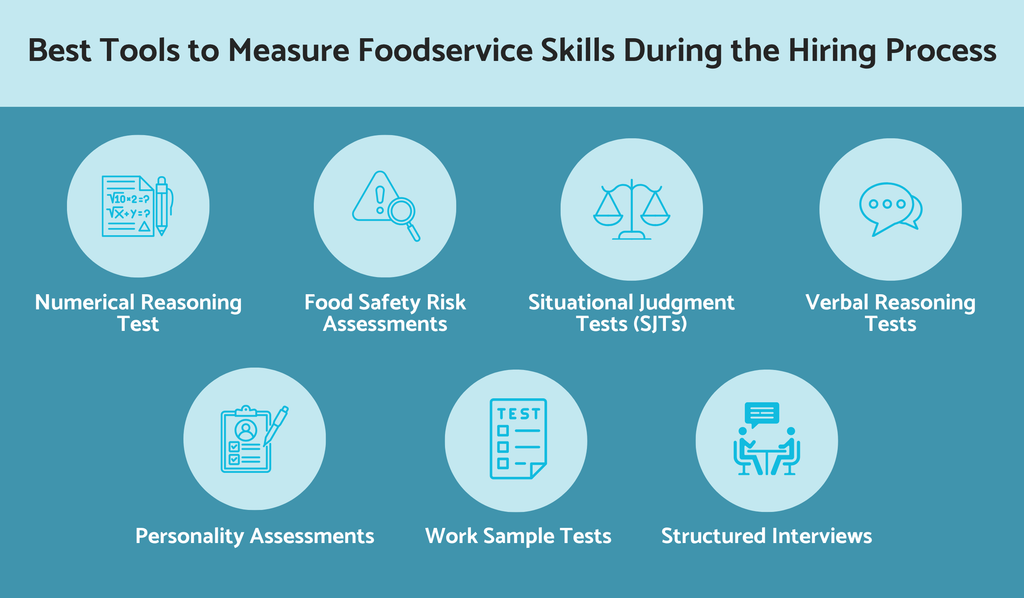
The following are some of the best methods for measuring foodservice skills accurately:
- Numerical-Reasoning-Tests
Numerical reasoning tests measure a candidate’s ability to work with numbers and interpret numerical information. These assessments can be useful for roles involving cash handling, inventory, billing, budgeting, or portion calculations.
These assessments can be particularly relevant when hiring restaurant managers, foodservice sales representatives, and foodservice managers.
- Food Safety Risk Assessments
Food safety risk assessments help assess a candidate’s knowledge of food handling, sanitation, storage, personal hygiene, nutrition, and food safety regulations.
These assessments are useful in hiring executive chefs, sous chefs, and hospital foodservice managers.
- Situational Judgment Tests (SJTs)
Situational judgment tests (SJTs) evaluate how candidates respond to realistic workplace scenarios. For customer-facing roles, SJTs can add useful evidence by showing how candidates approach realistic problems and competing priorities.
These assessments are vital in hiring restaurant managers, waiters, and foodservice managers.
- Verbal-Reasoning-Tests
Verbal reasoning tests help measure a candidate’s ability to understand written information, interpret instructions, and draw logical conclusions. In the foodservice industry, they are primarily useful in hiring for roles that require an understanding of menus, policies, safety guidelines, and workplace instructions.
These assessments are vital in hiring event venue managers, foodservice sales representatives, and catering managers.
- Personality Assessments
Personality assessments help measure a candidate’s behavioral traits that may be relevant to performance in foodservice roles. These include conscientiousness, emotional stability, dependability, teamwork, and customer orientation.
These assessments are important in recruiting bartenders, waiters, and restaurant managers.
- Work Sample Tests
Practical work samples are especially valuable for hands-on roles because candidates demonstrate the task rather than simply describe their experience. For instance, in the foodservice industry, this can include demonstrating knife skills, preparing a dish, and maintaining food presentation standards.
These assessments are vital in hiring line cooks, pastry chefs, and sushi chefs.
- Structured Interviews
Structured interviews help measure skills that are difficult to evaluate through assessments alone. These include teamwork, communication, adaptability, customer service, and problem-solving skills.
You can ask every candidate the same question and use predefined scoring criteria to make comparisons more consistent.
What are the most common interview questions for foodservice roles?
While interview questions for foodservice roles vary depending on the organization and the type of role, the following are some of the most common interview questions as identified by Indeed:
- Can you describe your experience in the foodservice industry?
- What strategies do you use to ensure food safety and quality?
- How do you handle a difficult customer?
- How do you stay updated with industry changes and trends?
Gain deeper insights into candidates’ behavioral skills with our science-backed assessment tools. HIRE FOR FREE
The next section highlights the best practices you need to follow for hiring the top foodservice professionals.
5. Best practices for hiring in the foodservice industry
Hiring in the foodservice industry requires evaluating candidates for both job-specific skills and interpersonal abilities. Since the majority of foodservice roles involve a fast-paced environment, strict safety standards, and direct customer interactions, implementing a structured hiring process can help recruit the top candidates.
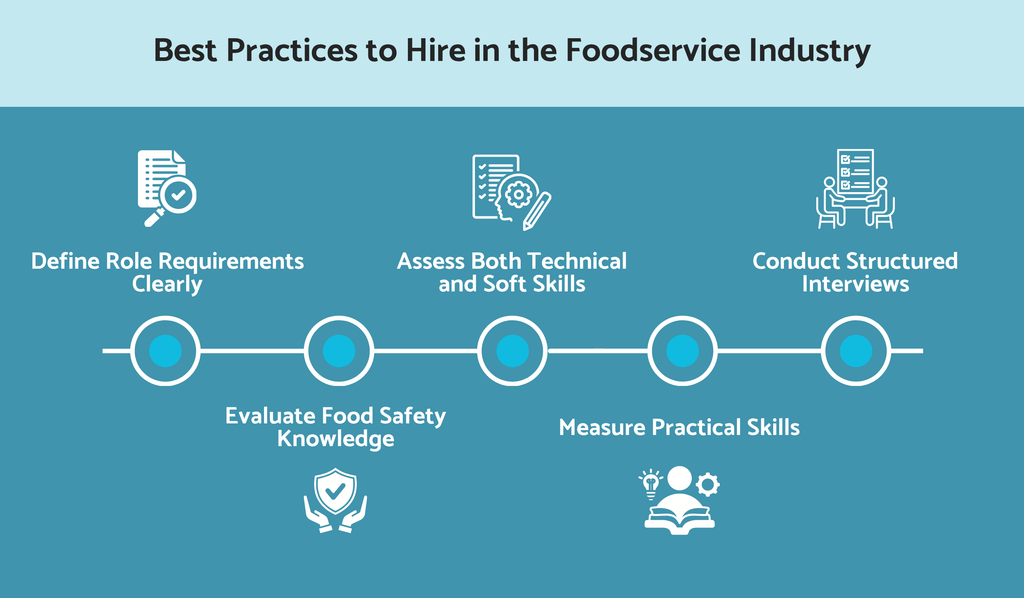
The following are the 5 major steps to recruit in the foodservice industry:
1. Define Role Requirements Clearly
Begin your hiring process by creating a clear job description that outlines the responsibilities, experience, qualifications, and skills required for the position. This clear description helps attract relevant candidates and provides a consistent basis for evaluating applicants.
2. Assess Both Technical and Soft Skills
While hiring in the foodservice industry, it is important to assess both technical skills and soft skills in candidates. Evaluate skills such as teamwork, time management, communication, problem-solving, and adaptability, alongside role-specific abilities like food safety, food preparation, and inventory management.
3. Conduct Structured Interviews
Conduct structured interviews with consistent questions and predefined evaluation criteria for all candidates. This makes it easier to assess candidates more objectively and measure more important qualities like communication, problem-solving, teamwork, and customer service.
4. Evaluate Food Safety Knowledge
Food safety knowledge is a critical consideration for many foodservice roles. Assess candidates based on their understanding of food handling, hygiene, sanitation, storage, and contamination prevention, suitable for their role.
5. Measure Practical Skills
Incorporate practical skills tests or job simulations for foodservice roles that require hands-on experience. For example, when hiring a barista, a practical beverage-preparation task can demonstrate technical ability, attention to detail, and consistency in a realistic setting.
Discover our wide range of standardized assessments to improve your skills-based hiring. LEARN MORE
6. Why top foodservice establishments use Assess Candidates to hire candidates
At Assess Candidates, we offer a wide range of pre-employment assessments and create recruitment campaigns customized to each organization’s unique hiring needs.
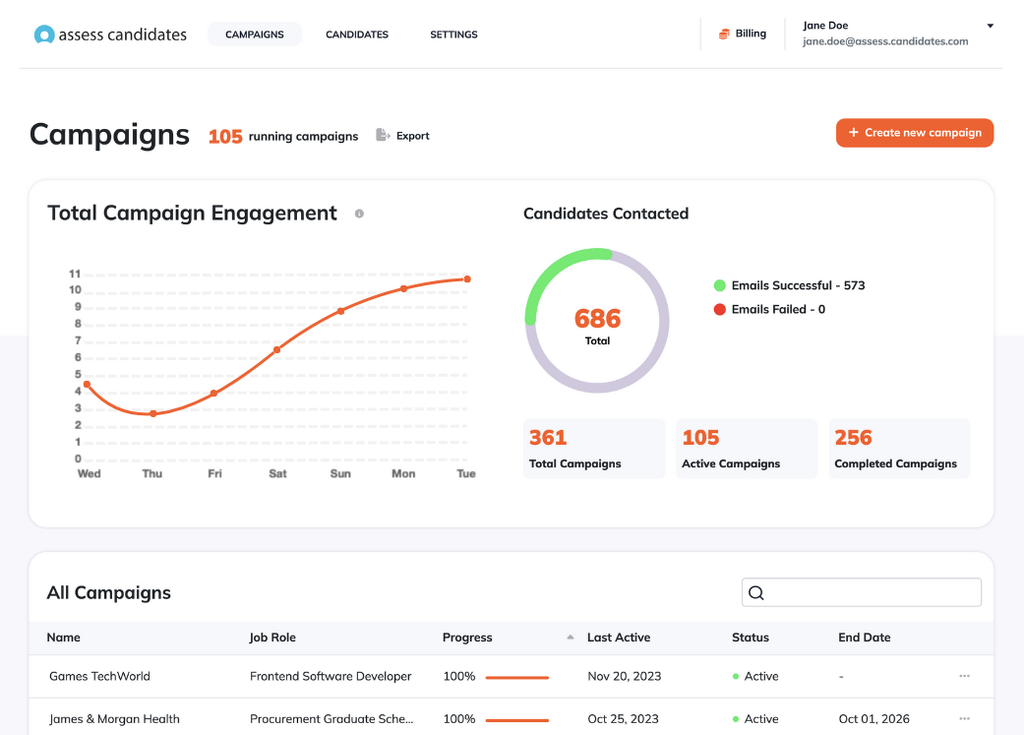
Here is an example of our campaign reporting dashboard available on Assess Candidates.
Here are 4 reasons foodservice employers use Assess Candidates:
- Scientifically Designed by Expert Psychologists: Assess Candidates’ assessments are developed by expert psychologists and psychometricians to measure the competencies that matter most in foodservice roles.
From customer service and communication to teamwork, problem-solving, and situational judgment, each assessment is scientifically validated to help identify candidates with the skills needed to succeed.
- Data-driven Hiring Insights: Our intuitive platform quickly compares candidates using objective reports that measure relevant cognitive abilities, workplace behaviors, and job-specific competencies. This can help foodservice employers compare candidates consistently before interview, particularly when recruiting across multiple locations or processing high application volumes.
- Realistic Candidate Experience: Candidates complete role-relevant assessments that reflect real foodservice situations, helping employers evaluate practical skills beyond resumes and interviews. Custom branding options also help foodservice businesses provide a professional and consistent candidate experience.
- Candidate Accessibility Support: Our assessments are accessible, ATS-compatible, and suitable for high-volume recruitment, helping foodservice employers assess candidates efficiently while maintaining a fair and inclusive hiring process.
All assessments align with WCAG accessibility standards, ensuring an equitable experience for all applicants regardless of their individual needs.
Assess Candidates provides reliable, science-based tools that help foodservice employers evaluate candidates accurately. Explore our full range of assessments to identify candidates with the skills and workplace competencies needed to succeed in the foodservice industry.
Not sure which foodservice assessments match your hiring needs? Contact us for a free analysis of your role requirements.
Partner with Assess Candidates to use a range of role-specific assessments in your hiring process. VIEW PLANS
Conclusion: Key Takeaway
Effective hiring in the foodservice industry requires evidence of both practical capability and workplace behavior. Employers should define the competencies required for each role, then use appropriate assessments, practical tasks, and structured interviews to evaluate candidates consistently rather than relying primarily on previous experience.
Frequently Asked Questions
How to reduce bias when hiring in the foodservice industry?
To reduce bias when hiring in the foodservice industry, incorporate standardized job requirements, structured interviews, and predefined scoring criteria for evaluating every candidate. This helps compare candidates objectively and hire them fairly.
How to hire for high-volume roles in the foodservice industry?
You can hire for high-volume roles in the foodservice industry by using an online application, automated screening, structured interviews, and pre-employment assessments. These tools help quickly identify candidates who meet the requirements without going through the hassle of reviewing every application manually.
How to improve candidate experience during foodservice hiring?
You can improve candidate experience during foodservice hiring by keeping the hiring process clear, efficient, and accessible. Provide candidates with clear job descriptions, use mobile-friendly assessments, and explain each hiring stage thoroughly.
Should you prioritize skills or experience when hiring foodservice professionals?
CVs and resumes confirm what your candidates have done, not what they can actually do. Interviews are usually low-pressure with well-rehearsed scenarios that reveal little about how a candidate handles real workplace demands. Skills like resilience, adaptability, and sound judgment under pressure rarely surface in a conversation, since there is no genuine pressure to respond to.
How to assess an applicant’s ability to handle pressure when hiring in the foodservice industry?
You can evaluate a candidate’s ability to handle pressure by incorporating situational judgment tests, role-playing exercises, and behavioral interview questions. Using these tools, identify candidates who demonstrate calm decision-making, prioritization, adaptability; vital skills for fast-paced roles across the foodservice industry.


 English
  Arabic