
Top Recruiting Strategies for Small Businesses in 2026



Recruiting for a small business is difficult because you are often competing with larger employers for the same talent, but with fewer resources and less brand recognition. The most effective small-business hiring strategies focus on speed, clarity, candidate experience, and practical ways to stand out without overspending.
According to the U.S. Small Business Administration, there are 33.3 million small businesses in the United States, accounting for 99.9% of all U.S. businesses.
In this article, I explain how small business recruitment works, which skills matter most, which affordable tools can help, and which strategies improve hiring and retention.
Contents
- What is Small Business Recruitment?
- What Skills do Small Businesses Look for?
- Affordable Recruiting Tools for Small Businesses
- Best Recruiting Strategies for Small Businesses
- Challenges When Recruiting as a Small Business
- Client Success Stories When Recruiting as a Small Business
- Future Recruitment Trends for Small Businesses
- Why do Small Business Employers Use Assess Candidates When Recruiting?
Let’s get right into it and see what small business recruitment actually involves.
1. What is small business recruitment?
Small business recruitment is the process of attracting, assessing, and hiring candidates for open roles in a smaller organization, usually with tighter budgets, leaner teams, and fewer dedicated hiring resources than larger employers.
Begin your small business hiring process with our psychometric assessments. HIRE FOR FREE
Continue reading to learn more about the skills to look for when recruiting candidates!

2. What skills do small businesses look for?
Small businesses often need candidates who can contribute across multiple areas, work independently, and adapt quickly as priorities change.
According to SHRM some small business employers have reported that a mis-hire can cost about 30% of the employee’s annual earnings, sometimes more.
Top 5 skills to look out for when recruiting for a small business
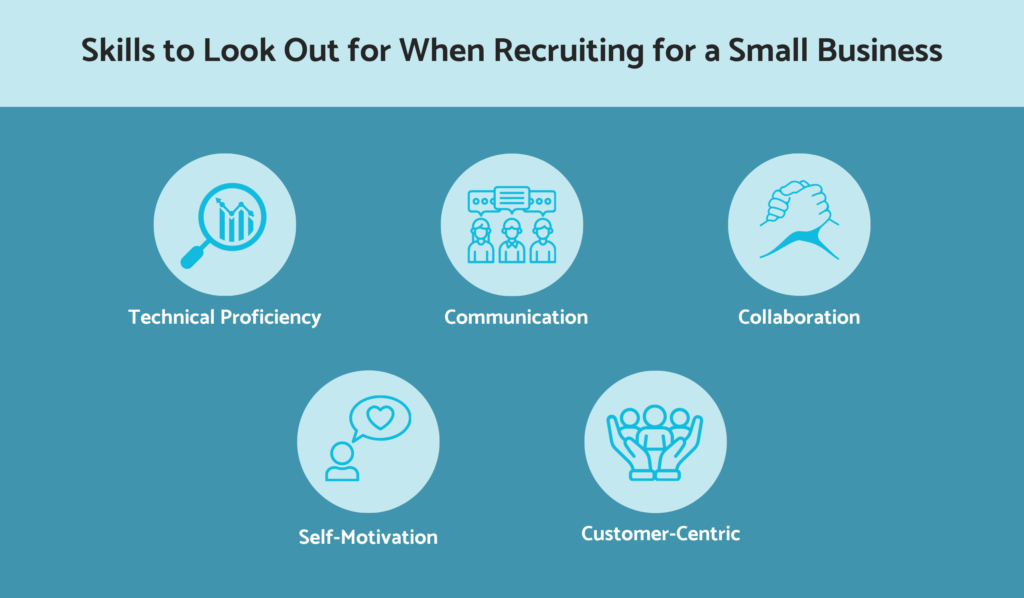
- Technical Proficiency: As a small business employer, we suggest that, depending on the role, you look out for candidates with technical proficiency. These candidates should be skilled in using tools and technology to keep your business running without much supervision.
- Communication: Strong communication keeps work moving in a small business. Candidates should be able to share information clearly, collaborate with colleagues, and communicate professionally with customers.
- Collaboration: Collaboration in a small business is highly recommended because your candidates need to work together to make their tasks efficient. Candidates who freely share information and seek constructive feedback, with a passion for improvement, help create a positive work environment.
- Self–Motivation: As a small business owner, you may find it difficult to micromanage your staff. Hence, you should look for self-motivated candidates who set their own goals and remain focused without external pressure, and seek ways to improve their performance.
- Customer–Centric: In small businesses, employees often have a visible impact on customer experience. Hiring people who genuinely care about service quality can strengthen retention, reputation, and repeat business.
Having seen these skills, you must be wondering if there are affordable recruiting tools for small businesses.
3. Affordable recruiting tools for small businesses
Small businesses do not need a large budget to build an effective hiring process. The goal is to combine a few practical tools that improve reach, organization, and screening efficiency.
6 Key tools used for hiring in small businesses
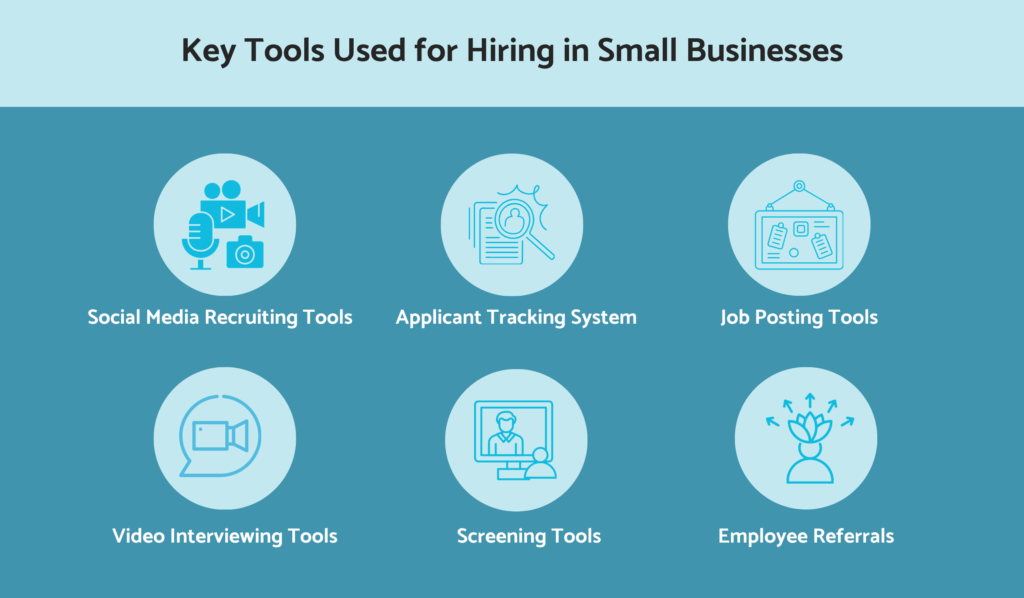
1 . Social Media Recruiting Tools
Social media is one of the cost-effective recruiting tools that helps small business employers maximize their presence and attract the top candidates of their choice. Platforms like Facebook, Instagram, and Canva are free social media platforms where you can post your open positions and create graphic designs.
2 . Applicant Tracking System (ATS)
Using affordable Applicant Tracking Systems like Breezy HR, Zoho Recruit, and Worktable will help you in organizing your applications, managing and tracking your candidates, as well as the recruiting pipelines. These tools also minimize the chaos of managing CVs/resumes through emails. Though these recruiting tools have paid versions that offer more features, you can utilize the
3 . Job Posting Tools
With the job posting platforms, you are allowed to post your vacancies and advertise the open roles in your small business without heavy advertising. Free features for job board tools like Indeed, LinkedIn, and ZipRecruiter let you post your jobs for free; however, these versions have limited functionality.
4 . Video Interviewing Tools
Video interviewing tools like Assess Candidates, Google Meet, and Zoom are affordable and will save your small business money and time. By allowing you to screen your candidates remotely before moving to in-person interviews, these platforms will also let you schedule and manage meetings and conduct rounds of interviews.
5 . Screening Tools
The start of every recruiting process is screening and background checks, and some tools offer affordable platforms for small business owners. Tools like Checkr and GoodHire let you check candidates’ backgrounds, and with no subscription fee, you simply pay per check as you verify the info yourself.
6 . Employee Referrals
We recommend leveraging your existing employees and networks to your advantage when recruiting. Teamable and RolePoint are two affordable employee referral tools that connect you to professional networks on LinkedIn and encourage employees to participate in recruiting by offering rewards.
Hire the right candidates for your small business with our assessment platform. LEARN MORE
Now that you are on your way to building a more effective hiring process, check out the strategies to use for a small business!
4. Best Recruiting Strategies for Small Businesses
Small businesses are most successful when they compete on what larger employers often struggle to offer: speed, access to leadership, flexibility, and a more personal candidate experience.
A Robert Half survey found that recruiting is one of the toughest challenges for small businesses, with many citing talent shortages and competition with large companies.
Best strategies to hire for small businesses
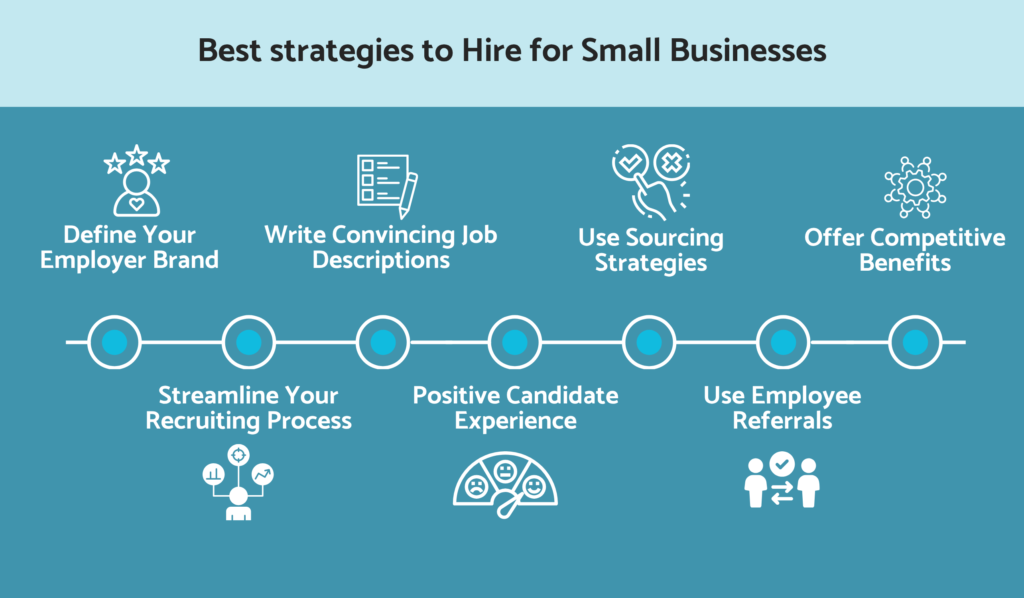
- Define Your Employer Brand
Building a strong employer brand for your small business is the first step to attracting and hiring top talent in your industry. These candidates conduct research before submitting their applications to a company, so it is important that you define your company culture, narrate your story, and maintain an active online presence.
- Write Convincing Job Descriptions
When recruiting, you need to draft a job description that captures candidates’ attention and motivates them to apply for the open role. However, a poorly written job description will likely do the opposite of what you intend. When writing your description, ensure you lead with what makes you different, provide complete details about the role, focus on results rather than requirements, and use inclusive language.
- Use Sourcing Strategies
Finding the perfect candidates for your small business requires more than just posting the jobs and waiting for applications to come in. To attract top talent, we recommend posting on niche job boards like LinkedIn and Indeed, which attract candidates with specialized skills. You should also partner with local colleges and universities and engage professional associations, such as industry associations and trade groups, to recruit your preferred candidates.
- Offer Competitive Benefits
Though you may not be able to offer highly competitive compensation and benefits like middle and large-sized companies, there are other convincing packages that can attract your candidates. We suggest that, as a small-business recruiter, you review the market rate on platforms like Glassdoor, LinkedIn Salary, and PayScale to understand what you can offer your candidates. You should also provide them with performance–based incentives, such as profit sharing, performance bonuses, and ownership opportunities. These will attract the top candidates for your business.
- Streamline Your Recruiting Process
Having a streamlined hiring process is one of the best strategies for attracting and hiring the best candidates in the market before large organizations. How do you streamline your application process? You analyze your hiring process and cut out some redundant stages because a slow process will make your candidates lose interest quickly. You should also focus on having a structured interview and communicating consistently so candidates remain in the loop.
- Positive Candidate Experience
The candidate experience that your applicants experience during your recruitment process matters to your company’s image and employer branding. It is important that you ensure that every candidate who applies is treated fairly, as a positive candidate experience will increase your job acceptance rates and encourage candidates to recommend your company to others.
According to SHL, 42% of candidates have reported rejecting a job offer due to a negative candidate experience.
- Use Employee Referrals
We recommend using employee referrals as an effective way to recruit candidates for your small business. Referred candidates are often high–quality and can be retained longer than other candidates. To use this strategy, you will create a referral program and offer meaningful rewards for successful referrals, or ask your customers and business partners to refer candidates for an open role in your business.
Right after this come the challenges many small business employers have shared regarding recruitment.
The next section looks at the main hiring challenges small businesses face and how to respond.
5. Challenges when recruiting as a small business
Hiring for a small business comes with clear constraints, including tighter budgets, lower employer-brand awareness, and stronger competition for talent.
According to LinkedIn, 73% of small and medium businesses face many challenges, including constant competition for top talent with large organizations in the same industry.
Top 5 challenges of hiring for a small business
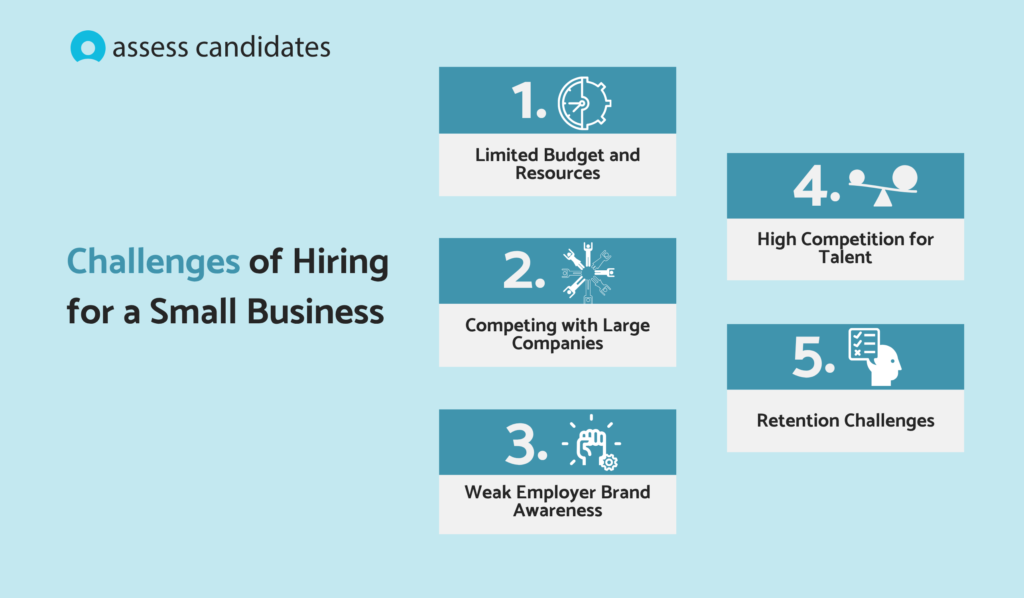
1 . Limited Budget and Resources
Many small businesses have experienced this when recruiting candidates, as the art itself can be expensive. You will be faced with paying for assessment tests, job board postings, applicant tracking systems, and more. These fees become your responsibility, unlike those of large corporations, which have ample resources.
Solution: You can significantly reduce the recruiting costs by using free and low-cost tools. Platforms like LinkedIn, Indeed, and Facebook Jobs will all allow you to post your job vacancies for free, reaching a large audience and interested candidates. You should also invest in affordable applicant tracking systems to make recruitment easier.
2 . Competing with Large Companies
Small businesses are in a never-ending competition with large businesses, as the latter can offer higher base salaries, comprehensive bonus packages, and are generally well-known brands. Small businesses often feel powerless in this competition.
Solution: Rather than trying to out-spend the large corporations, we suggest that you consider competing on the dimensions where you have an advantage. Such offers, such as hybrid or remote jobs, will catch your candidates’ attention faster. Offering personal connection and autonomy is a way to attract your applicants, as they will have direct access to leadership.
3 . Weak Employer Brand Awareness
A strong employer brand is one of the most powerful tools for helping a small business attract and recruit the best candidates. However, building one and maintaining it requires time and effort, and many small business employers have little to no online presence beyond their website.
Solution: Building an effective employer brand does not require a large budget; it requires consistency and authenticity. We recommend starting by creating a careers page on your website that reflects your culture and values, showcases your team, and explains why your business is a great place to work.
4 . High Competition for Talent
The competition for top talent has increased in recent years, making it difficult for recruiters at small businesses to attract and retain top candidates. This is because many industries are experiencing a talent shortage. As a small business employer, you are geographically constrained, which limits your access to a wider talent pool, whereas large organizations can recruit locally and globally and offer relocation bonuses.
Solution: You should consider expanding your talent pool by embracing flexible and remote work arrangements for your candidates. Doing this will open you up to skilled talents beyond your region. We also recommend posting on niche industry-specific job platforms to attract candidates with the skills you are looking for.
5 . Retention Challenges
While recruiting top candidates is only half the challenge, retaining them is the other half that small businesses face. Many employers have spoken up about the high turnover, which creates a demand for new hires and simultaneously stretches recruiting resources thin. Employees often leave small businesses because they cannot match the competitive salaries offered by large organizations.
Solution: To retain your employees, recruit candidates whose values and goals align with your company, as this will significantly reduce turnover. Beyond this, you should invest in employee development, offer clear growth pathways, and skills training. Annually reviewing the salaries and having regular check–ins will also help you retain your candidates.
Create the perfect hiring process for your candidates with our assessment gallery. HIRE FOR FREE
Are you looking to attract and hire top talent at your small business, but unsure which pre-employment psychometric assessment tests to look for in 2026? Reach out to us for a complete analysis of your recruitment assessment design.
Take a look at some of the client success stories from small business employers about recruiting and retaining candidates.
6. Client success stories when recruiting as a small business
Many small business employers have shared their experiences with recruitment and how they have successfully attracted and retained employees.
1 . Local Bakery
Challenge:
A family-owned bakery in Austin, Texas, has been looking for a qualified pastry chef for half a year. However, they have yet to find a qualified candidate, as they have received many applications from unqualified candidates through general job boards.
Solution:
The bakery changed its recruiting strategy by posting on niche culinary job boards while also introducing an employee referral program to incentivize referrals for successful hires. Within three weeks, they received and hired a highly qualified candidate referred by a current employee.
Results:
- Time-to-hire reduced from 4 months to 3 weeks, and saved the small business hours of manual screening time.
- Employee confidence improved greatly as the team felt supported in their daily roles.
- Productivity and its outcome improved by 35% within the first 60 days of the new recruit joining the small business
2 . Boutique Marketing Agency
Challenge:
A boutique digital marketing agency in Chicago noticed that it was losing its top candidates to large businesses offering higher compensation, salaries, and brand names. These resulted in the business record showing three failed hires within a year. The agency’s weak online presence and employer brand meant that candidates had little to no information about the company.
Solution:
The small company invested in building a convincing employer brand by creating a careers page that showcases its team culture and publishing video-based content from its employees on social media. The marketing agency also encouraged its team to share their experiences on professional platforms like Glassdoor.
Results:
- The Glassdoor rating improved from 3.2 to 4.6 stars within a period of 6 months, which led to a 60% increase in quality applications sent in.
- The agency successfully recruited two senior digital strategists who rejected higher-paying offers from large organizations for the small business’s culture and flexibility.
- Improved employee retention with zero voluntary resignation was recorded in the 12 months after the revamp of the employer branding.
7. Future Recruitment Trends for Small Businesses
The future of recruitment for small businesses will be shaped by multiple factors, including technological advancement, shifts in workforce demographics, and changes in candidate expectations.
What is the future of recruitment for small businesses?
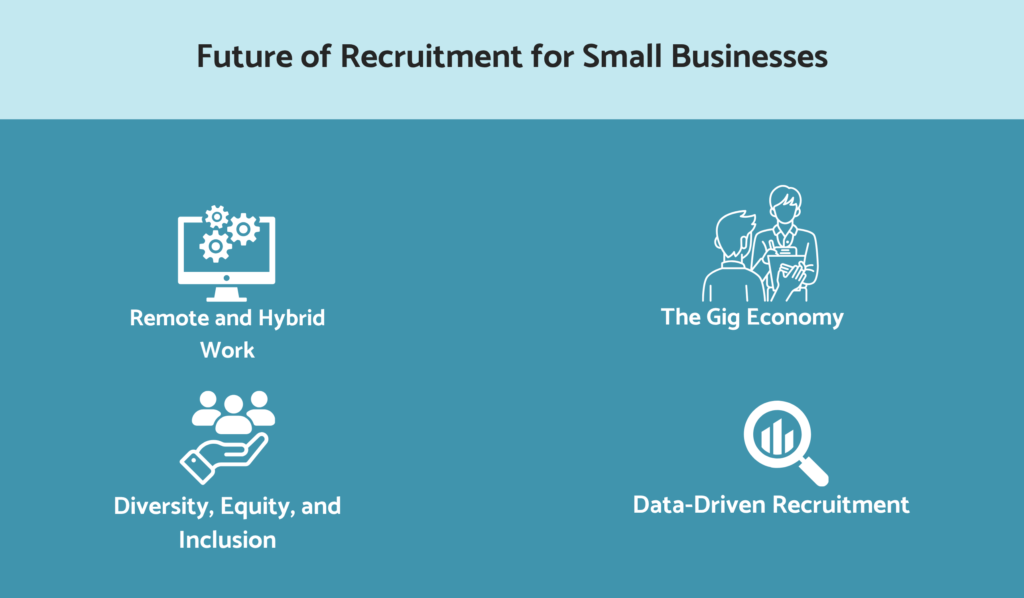
- Remote and Hybrid Work
The global adoption of remote work during the COVID-19 pandemic shifted candidates’ expectations of their employers, as reflected in their job-application priorities. Recruitment processes for small businesses will include remote work models, as candidates will no longer be limited to commuting to their physical jobs. Small business employers will also embrace virtual recruiting, as it will help them attract top candidates.
- The Gig Economy
The gig economy is revolutionizing how companies think about talent, and small businesses are increasingly becoming well-positioned to take advantage of a growing pool of freelance and contract-based workers. Instead of committing to full-time workers, small businesses will turn to recruiting freelancers and contractors, as it will allow them to scale their talent upward or downward, depending on the business’s needs.
- Diversity, Equity, and Inclusion
Our research has shown that diverse teams produce better business results and should be considered by small businesses looking to prioritize diversity in their recruitment practices. Having inclusive recruiting practices will help small businesses attract a wider talent pool.
- Data-Driven Recruitment
The future of recruitment for small businesses will improve with the use of data, moving away from intuition-based decision-making toward data-driven hiring. Small businesses will be able to track and analyze critical recruiting metrics and gather candidate experience surveys to help them monitor time-to-hire, cost-per-hire, and reasons behind these.
Explore our assessments created by Chartered Scientists to hire the top talent. VIEW PLANS
Small businesses usually do not need more hiring steps. They need better ones.
So, why choose Assess Candidates when recruiting for a small business?
8. Why do small business employers use Assess Candidates when recruiting?
Small businesses often look for assessment platforms that completely align with their hiring needs and help formulate a recruitment strategy that attracts top talent and positions them ahead of competitors in the selection process.
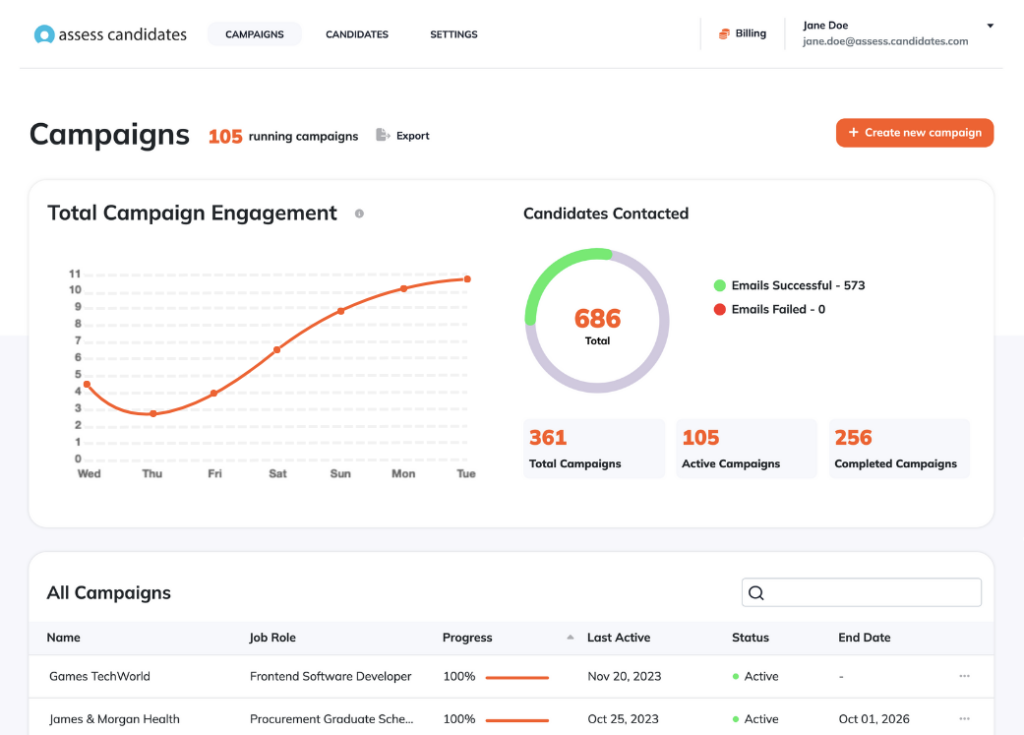
- Objective Hiring Decisions: Most small-business hiring decisions are made by a single person, who may choose a demographic over others due to unconscious bias. Assess Candidates is built on science and offers predictive, data-driven insights that reduce the risk of bias in recruitment.
- Wide Range of Assessments: Our platform offers an end-to-end range of pre-employment assessments that examine qualities that drive job performance, such as skills, personality, and competencies. As a small business recruiter, you can choose from the library of assessments available to you on our platform.
- Quickly Screen Candidates: Assess Candidates allows employers to quickly filter and rank candidates, selecting the top talent and making it easier to choose the strongest applicants without manually screening their CVs.
- Fair and Inclusive Hiring: Fairness and inclusion are embedded into every assessment on our platform. This way, we help you reduce bias and provide every candidate with a fair opportunity to succeed in the recruitment process, regardless of their background.
- Deliver Candidate Experience: The Assess Candidates pre–employment assessment platform offers a seamless, professional experience from start to finish. With a realistic workplace scenario and AI-driven technology, we help keep your candidates engaged and leave them with a positive candidate experience.
Recruit your top talent with our assessment tool platform. LEARN MORE
Conclusion: Key Takeaway
Successful small business recruitment depends on a clear employer brand, faster hiring decisions, practical tools, and a process that treats candidates well. Small businesses rarely win by outspending larger competitors. They win by being more focused, more responsive, and more deliberate about who they hire.
Curious to know more about using the assessment process to hire the top talent for a small business? Keep scrolling to explore our frequently asked questions, and enter your email to get started today.
Frequently Asked Questions
How much does it cost to recruit for a small business?
The cost of recruitment for a small business varies widely because of the channels employers use and the complexity of the role they are hiring for. Although there are free recruiting tools, there is no fixed price for recruitment costs for a small business.
What is the timeframe of a recruitment process for a small business?
The average time-to-hire for a small business usually ranges between two and six weeks. This depends on the role, its efficiency, and the number of applicants. When recruiting for specialized skills, the hiring process may take longer, and using applicant tracking systems can significantly reduce time-to-hire.
What pre-employment assessment tests can I use to evaluate candidates?
You can use various assessment tests to evaluate your candidates, depending on the role you are recruiting for. Some popular psychometric assessment tests include verbal, numerical, logical, and critical reasoning tests. There are also game-based assessments, situational judgment tests, personality questionnaires, video interviews, and skill-based assessments.
What should a small business include in a job description?
A small business should ensure it provides a compelling overview of the company, its values, and culture, while clearly specifying the candidate’s role and responsibilities. A good job description should also include a list of required and preferred qualifications, compensation and benefits, and information about possible growth and opportunities.
Should small businesses use staffing agencies when recruiting?
Small businesses should use staffing agencies when roles need to be filled quickly, and they want to reduce time-to-hire. Staffing agencies should also be used when small businesses need expert assistance to make the perfect hires, with no room for mis-hires.


 English
  Arabic