
Measuring Digital Fluency and AI Literacy in Candidates



Digital fluency and AI literacy are becoming increasingly relevant employability skills as organizations adopt new digital platforms, automation, and AI-supported tools. For employers, the challenge is to identify the level of digital and AI capability each role genuinely requires and assess candidates against those requirements.
According to a report by the US Department of Labor, workers across industries are advised to prioritize AI literacy and skill development throughout the workforce system. This is to ensure that all staff are prepared for an AI–driven economy.
In this guide, we explore how employers can assess digital fluency and AI literacy during recruitment.
Contents
- What are digital fluency and AI literacy?
- How to measure digital fluency and AI literacy?
- Best strategies to identify digital skills
- What will recruitment with digital fluency and AI literacy look like?
- Why use Assess Candidates to measure digital fluency and AI literacy?
First, let us explore why digital fluency and AI literacy are core skills in any organization.
1. What are digital fluency and AI literacy?
Digital fluency and AI literacy are becoming core employability skills across many industries. Recruiters look for candidates who are willing to learn new systems, work across digital platforms, and assess information online.
What is digital fluency?
Digital fluency is the ability to use digital tools confidently, effectively, and appropriately to complete workplace tasks. It goes beyond basic software knowledge and includes the ability to learn unfamiliar systems, find and evaluate digital information, adapt to new tools, and select appropriate technology for different tasks.
AI literacy, on the other hand, is a newer and narrower field. Keep reading to see what it is.
What is AI literacy?
AI literacy is the ability to understand the capabilities and limitations of AI systems and use appropriate AI tools responsibly. It includes knowing when AI can support a task, evaluating and verifying its outputs, recognizing potential errors or bias, protecting sensitive information, and understanding when human judgment is required.
Hire skilled candidates with our pre-hire assessments. HIRE FOR FREE
Digital fluency is not the same as knowing a particular piece of software, and AI literacy is not the same as knowing how to write a prompt. Employers should assess whether candidates can select appropriate tools, adapt to unfamiliar systems, evaluate outputs critically, protect information, and apply human judgment when technology falls short.
So, what does digital fluency and AI-based skills look like in the workplace?
Examples of digital fluency and AI literacy in work
Most companies include the necessary skills and levels of digital fluency they expect from candidates in the job description. Doing this helps narrow the pool of candidates who will progress to the next stage of the recruitment process.
1. Online Spreadsheets
Online spreadsheets are useful to navigate, edit, and analyze data in company documents. Look out for candidates who know their way around using formulas, filters, conditional formatting, and basic charts without step-by-step guidance. Having an AI-literate candidate will be helpful, as they can use AI to generate formulas, explain errors, or summarize data, even if they still have to check the results and correct mistakes themselves.
2. Text Documents
Your candidates should be comfortable using tools like Google Docs and Word to create, edit, and format text documents, including styles, headings, tables, and comments. With these text documents, candidates can collaborate in real time, resolve comments, and manage document history.
3. Project Management Software
Project management software such as Jira and Asana is used by skilled candidates to track tasks, update statuses, attach files, and communicate progress. These platforms support workflows, priorities, and basic reporting features.
4. Marketing Software
Learning the basics of any marketing software such as social media platform is key to being productive in almost any organization that prioritizes timely communication. Recruit digitally fluent candidates who can switch between apps, manage notifications, organize information, and communicate clearly across channels.
5. Communication and Collaboration
Your candidates will be required to communicate and collaborate using email, chat, video conferencing, and shared drives daily. Digital fluency includes choosing the right channel, writing clear messages, and scheduling meetings. An AI-literate candidate may use AI to summarize long email threads or draft responses. But they must always ensure the final message reflects their own judgment and responsibility.
6. Security and Privacy Awareness
Hiring candidates with security and privacy awareness as part of their digital fluency is important. They should recognize phishing attempts, use strong passwords, follow two–factor authentication requirements, and avoid sharing sensitive information on unsecured platforms.
Hire the right candidates with our assessment tool platform. LEARN MORE
AI skills on a resumé are easy to claim; measuring them in a hiring process is another story. Let’s see how!

2. How to measure digital fluency and AI literacy?
Digital fluency and AI literacy should be assessed using methods that reflect the actual requirements of the role. Rather than assuming that successful use of an online assessment platform demonstrates digital fluency, employers should use job-relevant tasks that require candidates to apply digital tools, evaluate information, or demonstrate responsible AI use.
According to the World Economic Forum’s 2025 report, the workforce is expected to evolve, with 39% of the current skill set either being transformed or rendered redundant. Furthermore, about 59% of the workforce will need to upskill or be retrained by 2030.
Methods to assess digital fluency
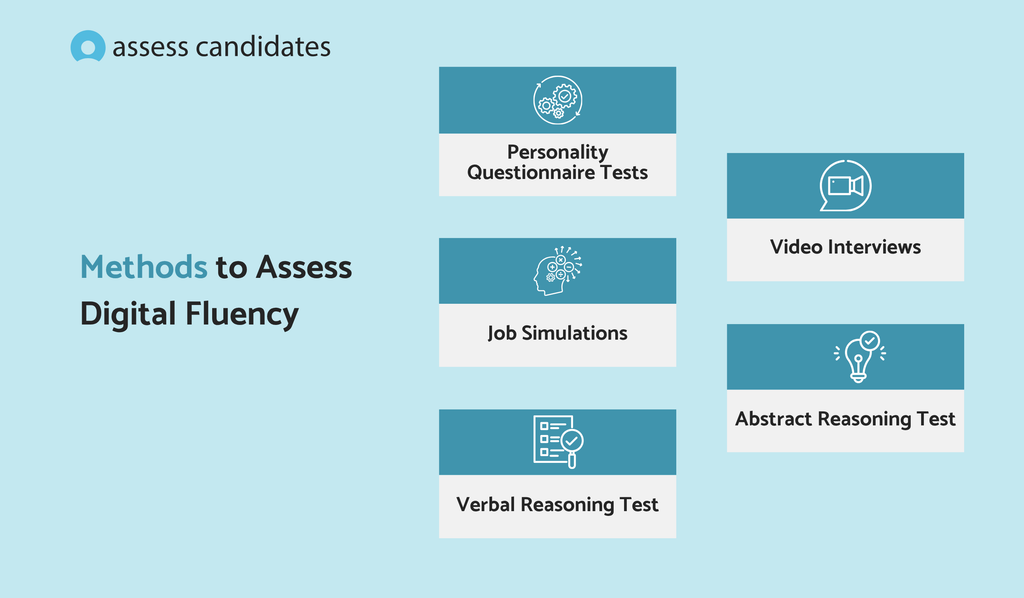
- Personality Questionnaire Tests
Personality questionnaires may provide supporting evidence about traits such as openness to learning or adaptability, but they should not be treated as direct measures of digital fluency or AI literacy. Applied digital capability is better evaluated through role-relevant tasks.
- Job Simulations
Including a job simulation task in your assessment process will allow your candidates to demonstrate their digital fluency in realistic scenarios. These job simulation tasks will help you measure how candidates apply digital skills under realistic conditions. The tasks also reveal your candidates’ problem–solving, decision–making, and adaptability skills.
- Verbal Reasoning Test
Verbal reasoning tests measure how a candidate can comprehend, analyze, and interpret written information digitally. These verbal reasoning tests may indirectly help to reveal your candidates’ potential ability to spot errors when communicating with clients or other staff.
- Video Interviews
A video interview can record answers to preset questions or allow candidates to participate in a live video conversation with an interviewer. These also provide a reliable way to measure candidates’ digital fluency as they must navigate the platform, manage audio and video settings, and follow on–screen instructions. However, video interviews on their own may not be as reliable and should be used alongside other accurate digital skills tests.
- Abstract Reasoning Test
Abstract reasoning tests measure your candidate’s ability to identify patterns, relationships, and rules in visual or symbolic information. These tests assess problem-solving, logical thinking, and the ability to learn new systems by recognizing patterns, which is relevant to digital fluency. Employees may need to learn unfamiliar software and adapt to new digital workflows.
Having understood how to measure digital fluency, let us see how AI literacy is assessed.
How can AI literacy be measured?
AI literacy should be assessed as a distinct competency. While it overlaps with broader digital fluency, employers also need evidence that candidates understand AI’s capabilities, limitations, risks, and appropriate workplace use.
According to Amberjack, AI literacy among candidates can be measured by how they understand, interact with, and apply AI tools in their daily activities.
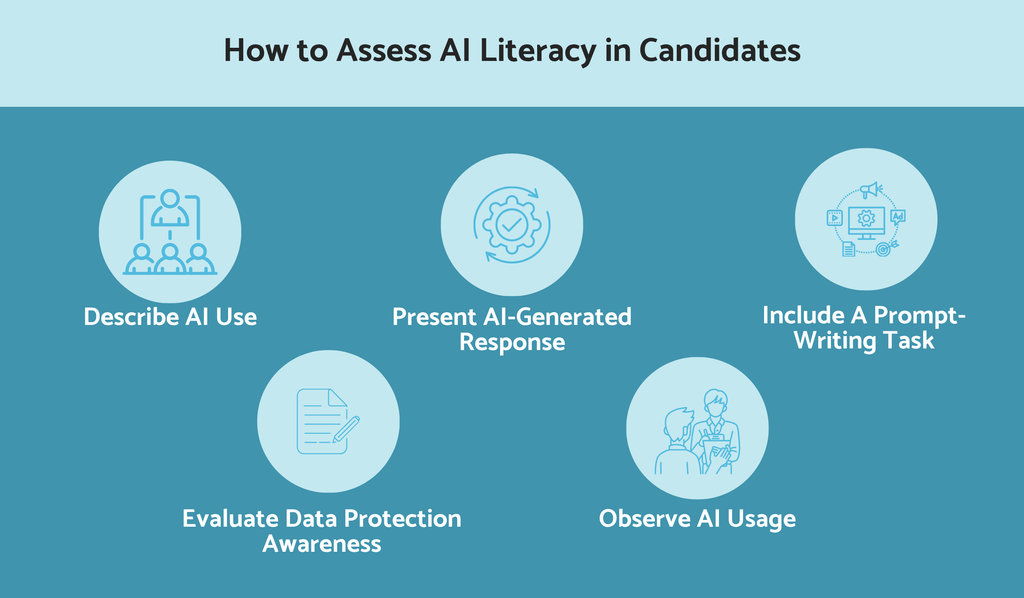
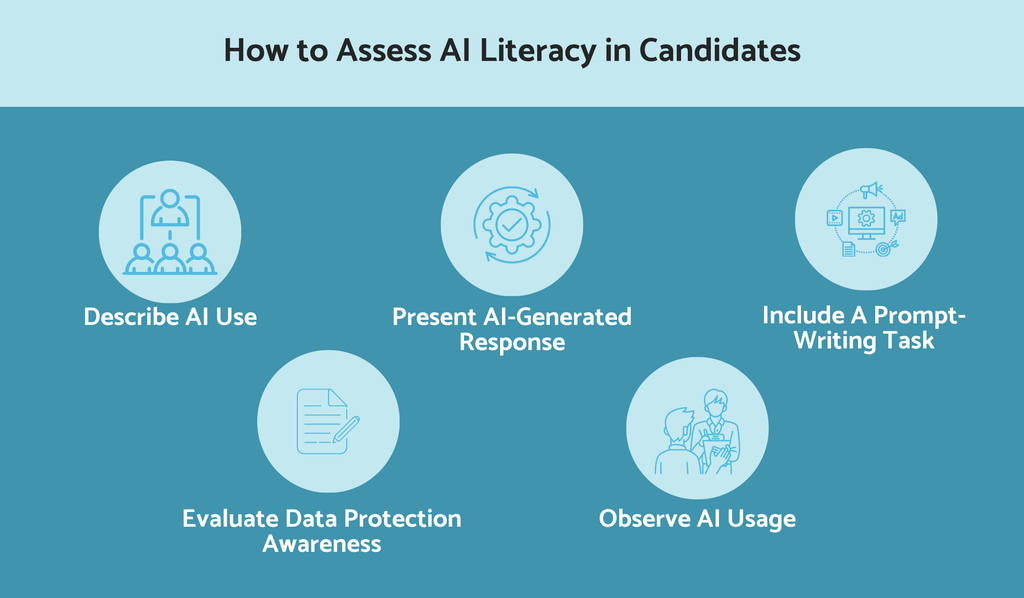
1. Describe AI Use
Ask your candidates to explain how they have used AI tools in their past work or study, and look for specific examples rather than vague claims. Strong candidates should be able to describe what they used AI for, how they checked the output, and what judgment they applied.
2. Present AI-Generated Response
We suggest that you give candidates a short AI–generated text, analysis, or recommendation that contains errors, unsupported claims, or bias. Ask them to identify problems and suggest improvements, as this measures their critical thinking and the ability to question AI output.
3. Include A Prompt-Writing Task
Request that your candidates write an instruction for an AI tool to complete a role–specific task. You can then assess whether the prompt they wrote is clear and aligned with the desired outcome. This will show whether they can effectively direct AI.
4. Evaluate Data Protection Awareness
You can present a scenario in which your candidates are considering uploading confidential information to an AI platform. Ask them what they would do and why, then look for awareness of privacy, security, confidentiality, and organizational policy.
5. Observe AI Usage
If it is appropriate for the role you are hiring for, allow your candidates to use AI to create a work sample and observe how they integrate it into their process. Watch out for whether they verify the result and how they explain their final result. This will help you evaluate their applied AI literacy skills rather than just the theoretical knowledge.
Discover assessments created by Chartered Scientists to hire top candidates. VIEW PLANS
Up next, identify the best strategies to assess your candidates’ digital and AI fluency below.
3. Best strategies to identify digital skills
According to AISA, the requirements for digital fluency and AI literacy in job postings have increased sevenfold over the past two years. This requirement is not limited to tech and specialist roles, as AI is also spreading across multiple functions of the workforce.
Top practices to identify digital skills
- Map Requirements
We recommend starting by identifying the digital tools and platforms required for each role. Consider daily software and digital communication needs, data handling, and whether AI features are used, and separate significant skills from those that can be learned after hiring to keep assessments focused and fair.
- Combine Methods
You can use multiple assessment methods rather than relying on a single test. For example, psychometric assessments, tailored digital skills tests, personality questionnaires, job simulations, and structured interviews each reveal different aspects of digital fluency.
- Provide Accessibility
When designing digital assessments, ensure they do not unnecessarily disadvantage candidates and provide clear instructions. Offer reasonable adjustments where needed, and avoid testing familiarity with a specific software brand when the real requirement is general digital ability. The goal of this is to assess relevant skills, not your candidate’s access to premium tools.
- Set Specific Standards
We recommend defining what acceptable digital performance looks like for each role you are hiring for. Create clear scoring criteria for digital tasks, simulations, and interview responses. This helps hiring managers evaluate candidates consistently and reduces the risk of biased decisions.
- Regularly Upskill and Reskill
The need for digital skills doesn’t stop upon hiring. Once you’ve selected your candidates,provide training on new tools, offer guidance on responsible AI use, and provide opportunities for knowledge sharing for new and current staff. Recognizing employees who improve digital processes or help others adapt to them will also improve retention and ensure the workforce remains capable as technology evolves.
Assess Candidates helps recruiters gather more reliable evidence of candidate ability through structured, job-relevant assessments and integrity controls. With our psychometric assessment tools, behavioral skills tests, and personality questionnaires, we can accurately test your candidates for the skills they have.
Wondering what the future of recruitment might be when employers prioritize digital fluency?
4. What will recruitment with digital fluency and AI literacy look like?
As AI becomes embedded in more workplace tools, employers are likely to place greater emphasis on how candidates use technology rather than simply whether they have used a particular platform before. Recruitment should therefore distinguish between tool-specific experience and transferable digital judgment.
Future of recruitment with digital fluency and AI literacy
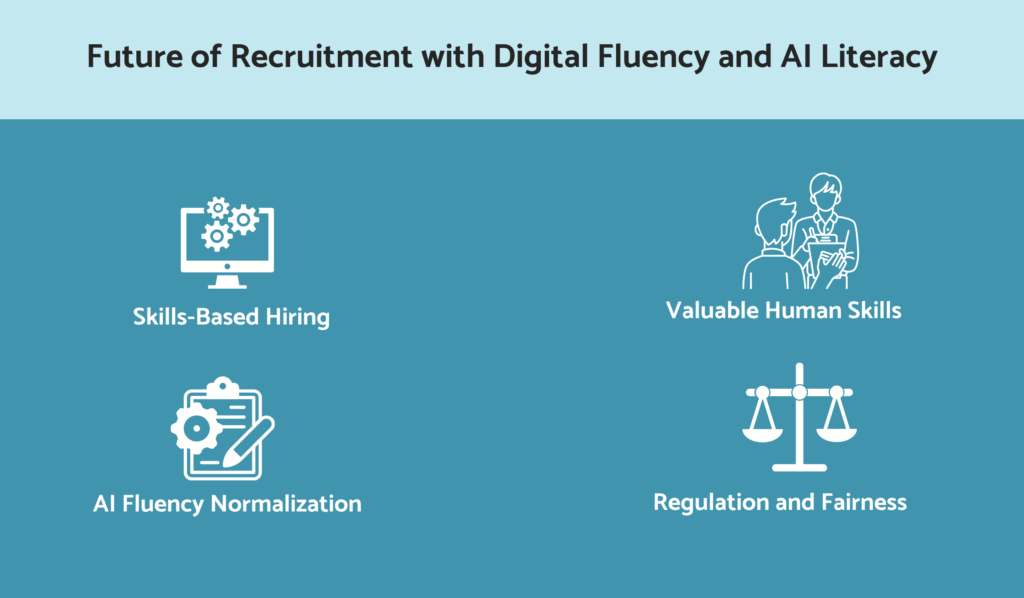
1. Skills-Based Hiring
Companies are slowly moving away from certificate-based recruitment and embracing skills-based hiring. A large number of employers use skills–based hiring practices, and many have formally removed degree requirements for roles where digital capability is valued more than traditional qualifications.
2. AI Fluency Normalization
AI fluency is becoming an expectation even in junior roles, as a large share of entry-level job descriptions now require it or prompt engineering skills. This proves that employers expect new hires to possess knowledge of automation if they plan to improve productivity. Therefore, recruitment will evaluate not only whether candidates can use AI but also how they use it.
3. Valuable Human Skills
Employers will increasingly value the combination of technical fluency and qualities that technology cannot easily replicate. These human skills include critical thinking, communication, creativity, emotional intelligence, and accountability.
4. Regulation and Fairness
As AI usage continues to grow globally, regulation and audit requirements will shape how digital and AI skills are measured. Recruiters will need to document how assessments work, ensure they are fair across candidate groups, and avoid over–relying on unclear AI–driven decisions.
So, why use Assess Candidates to measure your candidates’ digital fluency and AI literacy in 2026?
5. Why use Assess Candidates to measure digital fluency and AI literacy?
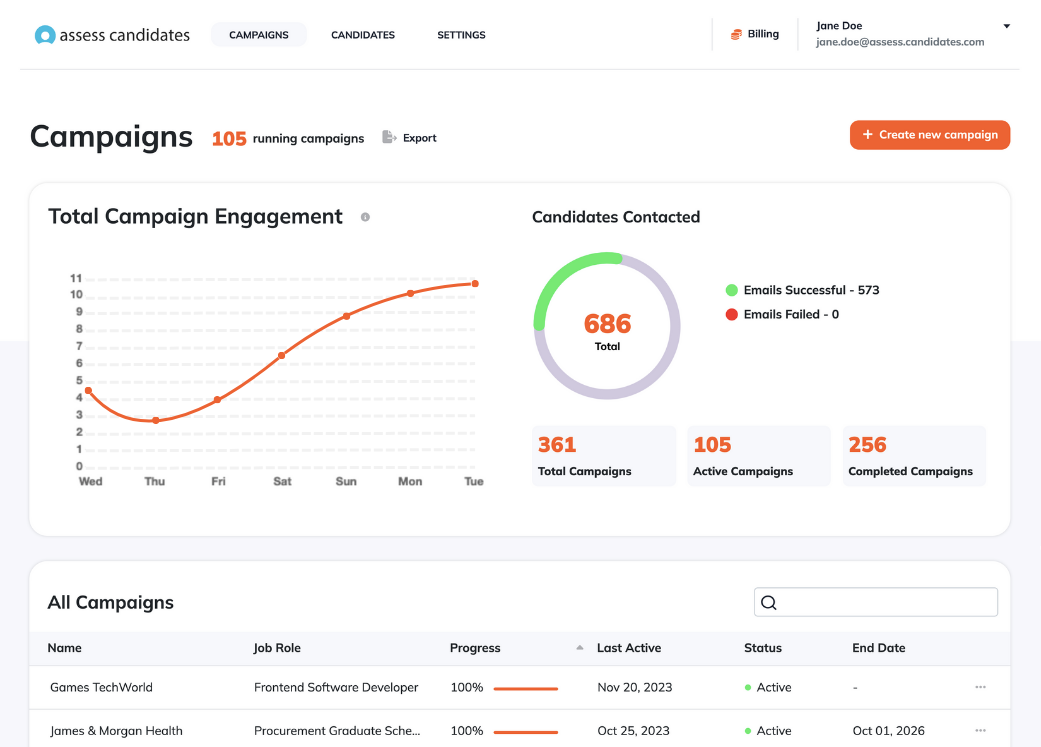
Assess Candidates can provide standardized evidence of related cognitive and behavioral competencies, while role-specific digital or AI tasks can directly assess applied digital fluency.
- Targeted Personality Questionnaires: Assess Candidates’ personality assessments to explore skills such as learning, adaptability, communication, and problem-solving in digital contexts. These insights help you understand how your candidates are likely to engage with new tools, respond to change, and collaborate online.
- Structured Assessments: Our psychometric assessments require your candidates to navigate digital interfaces, follow instructions, and complete tasks under realistic conditions. This provides you with an additional measure of digital comfort, attention to detail, and accuracy in a digital environment.
- Fair and Consistent Scoring: The platform applies the same scoring criteria to all candidates, reducing subjective bias in digital skills evaluation. Your hiring teams will be able to compare results objectively and make more confident decisions about who has the digital fluency required for the role.
- Client Validation: Assess Candidates’ platforms have been tested by employers in highly regulated, detail-oriented industries. The platform is known for its seamless functionality and an easy–to–understand interface, with clear reports relevant to the sector.
- Predicts Job Performance: Assess Candidates’ pre–employment assessments provide you with accurate insight into your candidates’ skills that are necessary for the role you are recruiting for. You can use the assessment tests to filter for top candidates and predict their performance in the role.
Hire your best-fit candidates with our assessment tool platform. LEARN MORE
Conclusion: Key Takeaway
Effective assessment of digital fluency and AI literacy starts with defining what each role actually requires. Employers can then use job-relevant tasks, structured questions, and consistent scoring criteria to evaluate candidates’ digital capability, judgment, adaptability, and responsible use of AI.
Interested in knowing more about using assessment tests to recruit the ideal candidates skilled in digital fluency and AI literacy? Keep reading to see our frequently asked questions, and enter your email to get started today.
Frequently Asked Questions
What is the difference between digital fluency and AI literacy?
The difference between digital fluency and AI literacy usually is that the former refers to a basic understanding of how to use digital tools, whereas AI literacy goes further. It involves choosing appropriate AI tools, applying them to solve problems, and adapting when systems change.
Should every employee be expected to use AI?
No, not every employee needs the same level of AI capability; however, it will be beneficial for many employees to understand what AI can do, where it can fail, and how to use it responsibly. AI expectations from your candidates should depend on the role and your organization’s technology environment.
Can digital fluency be developed after hiring?
Your candidates’ digital fluency can be improved through training, guided practice, clear policies, and continuous support. But some recruiters will still want to assess their candidates’ learning agility and digital comfort during recruitment.
How can employers measure digital skills fairly?
To measure digital skills, we recommend that you clearly define the skill, use role-relevant tasks, provide consistent instructions, and apply the same scoring criteria to all candidates. All your candidates should also avoid confusing familiarity with one software platform with general digital ability.
How often should I update my AI literacy benchmark?
Review the benchmark at least annually and whenever significant changes to workplace AI tools or policies affect the AI literacy candidates need for the role.


 English
  Arabic