
How To Measure Initiative in the Workplace in 2026



Employers increasingly value candidates who identify problems, take ownership, and act without waiting for direction. Initiative has become one of the strongest indicators of adaptability, problem-solving, and long-term performance.
According to Youth Employment UK, initiative is a self-management skill that many employers look for when hiring new employees.
In this text, we will cover everything you need to know about recruiting high initiative candidates.
Contents
- What is initiative in the workplace?
- Why does initiative matter in the workplace?
- How to measure initiative in the workplace?
- What red flags should you look out for when assessing candidates for initiative?
- Best practices to recruit candidates with initiative
- Client success stories of recruiting talent with initiative
- Why do employers use Assess Candidates to hire candidates with initiative?
Without further ado, let us explain how you can measure initiative in the workplace.
1. What is initiative in the workplace?
Initiative in the workplace is the ability to identify and take required action without being requested or instructed. This skill focuses on your candidates’ ability to recognize a gap, opportunity, or problem in the workplace and address it independently.
Start your hiring process with our top assessments. HIRE FOR FREE
Knowing why initiatives matter in the workplace will help you fine-tune your candidate search.

2. Why does initiative matter in the workplace?
Recruiting candidates who can take ownership in your organization boosts your company’s productivity, as some tasks require little to no supervision.
According to Indeed, most organizations tend to value candidates who are self–starters and can work independently with minimal intervention from their team leaders.
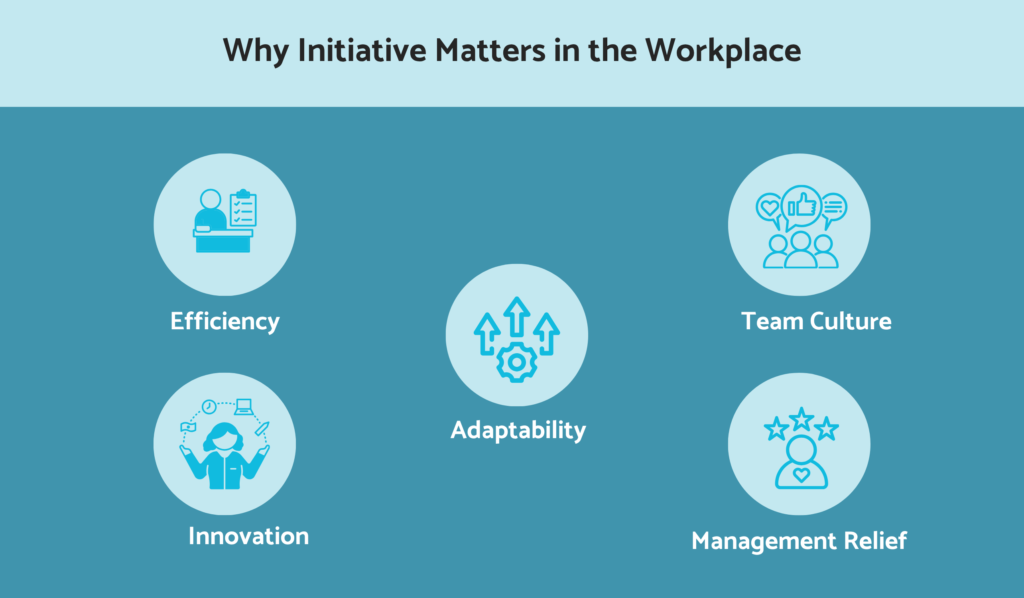
Why initiative matters in the workplace
- Efficiency
It is easier and faster to solve problems, as opportunities are seized more quickly when your candidates do not wait for approvals or instructions at every step. Efficiency is necessary because delays can add up quickly, and when this happens across multiple employees, your company may be seriously affected.
- Innovation
With candidates taking ownership in your workplace, you will be exposed to new ideas and better ways of doing things, as they will likely notice something that could be fixed better and act on it. Having innovation is important because markets and technology are constantly changing, and companies without employees who take initiative will fall behind their competitors.
- Adaptability
Having a team full of risk–takers who respond to shifts in the market, technology, or your customers’ needs faster than those waiting to be told what to do is helpful in keeping your business afloat. This matters because by the time your team leaders formally communicate the rules, your proactive staff will have been adjusting.
- Team Culture
Self-starting behavior often spreads across teams. When your staff sees one employee step up, it raises the bar and encourages others to do the same. Culture is significant because it is shaped by what your employees see themselves doing, and you can learn to rely on your colleagues without constant follow–up.
- Management Relief
Employees with initiative free up leadership so you can focus on the bigger picture and on other roles that need your attention in the company. Your time as an employer or manager is one of the scarcest resources in any organization, and spending it on tasks that a competent staff can perform is not advised.
Up next, we will show you how to measure your candidate’s proactive decision-making within your organization.
3. How to measure initiative in the workplace
The ability to take initiative in the workplace is largely a behavioral trait and soft skill that can be measured through several assessment methods.
Ways to measure candidate initiative during recruitment
1. Psychometric Assessment Tests
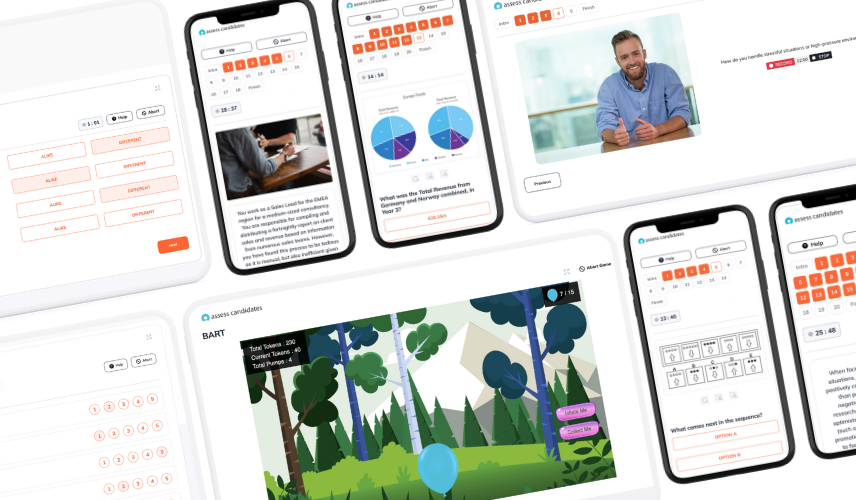
Recruiters use psychometric assessment platforms such as Assess Candidates, SHL, and Pymetrics to evaluate candidates’ self-starting behaviors in the workplace. The assessment tests measure traits closely related to initiatives such as proactivity, which are often stable and predictive of workplace behavior.
Some of the assessment tests that you should use to evaluate your candidates are:
2. Game-Based Assessment Tests
Game–based assessment platforms such as Assess Candidates, HireVue, and Arctic Shores place your candidates in simulated environments where the system monitors their behavior. Initiatives often show up in micro–decisions, and in these games, their behaviors are harder to fake than a rehearsed interview answer.
Examples of game-based assessments to assess proactivity in candidates are the following:
3. Situational Judgment Tests
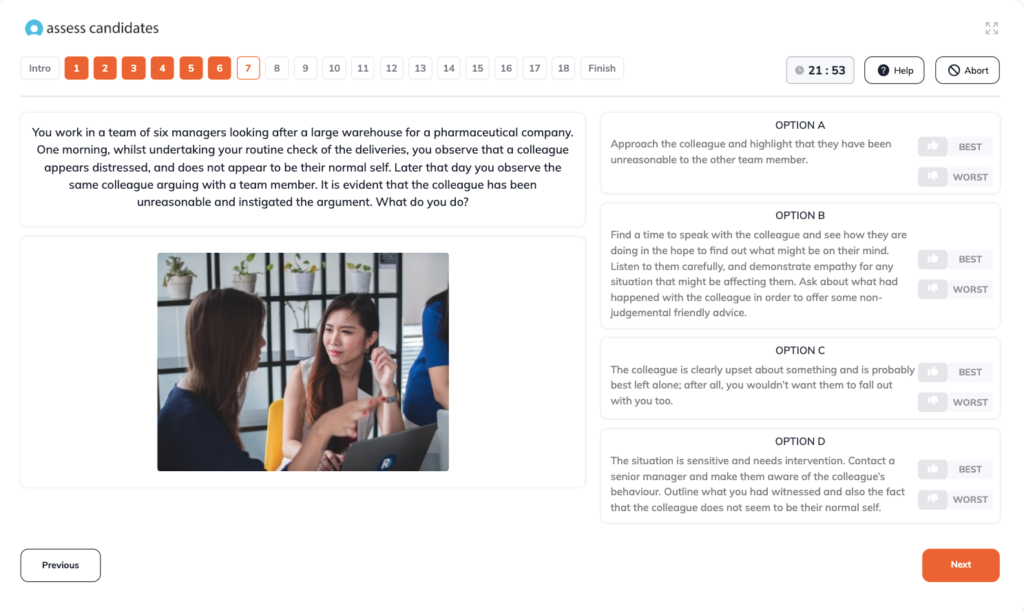
Assess Candidates, SHL, and Clevry present candidates with realistic workplace scenarios that ask how they will respond, then compare their responses against the passive and aggressive choices. Situational judgment tests are used in high–volume hiring and provide insight into your candidates’ personalities and how they are likely to demonstrate initiative across different scenarios.
Example of Situational Judgment Tests
When developing the situational judgment test questions to test your candidates’ proactivity at work, you may ask the following questions:
- Communication-based Questions
- Customer Service-based Questions
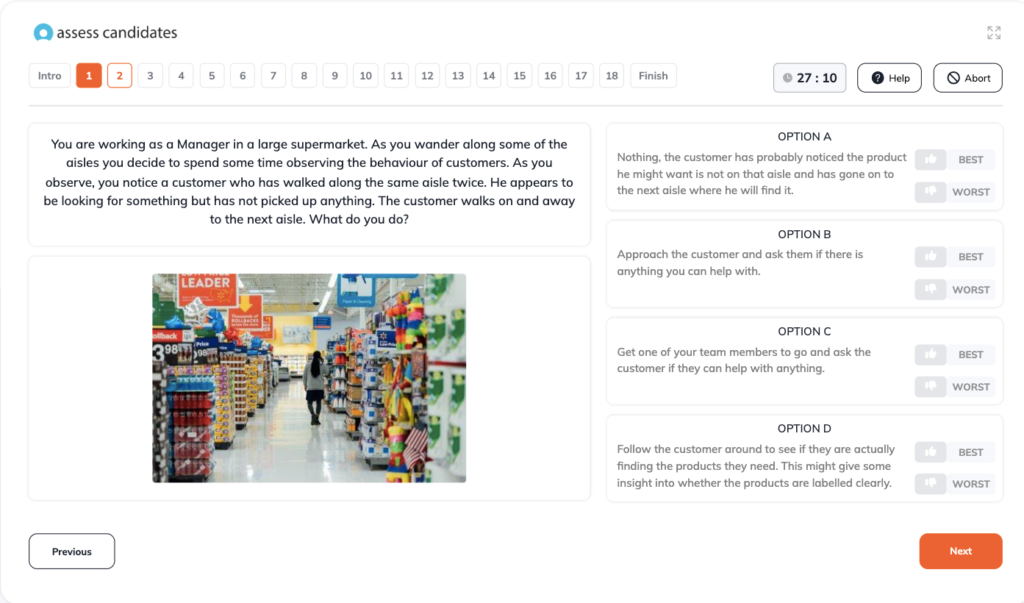
4. Job Simulation Tasks
Job simulations test your candidates by placing them in a realistic, day-in-the-life version of the role they are applying for and asking them to handle certain tasks related to their roles and skills. The job simulation tasks provide you with real–time insight into your candidates’ behaviors so you can see how they act and react under pressure.
5. Video Interview
Video interviewing platforms like Assess Candidates, HireVue, and Pymetrics ask your candidates to describe specific past scenarios in which they identified a problem and acted on it. With video interview questions, you can see how they respond using the STAR (situation, task, action, and result) method, rather than relying solely on their CV as proof of their proactivity in the workplace.
Types of Initiative Interview Questions to Ask a Candidate
- Describe a time when you noticed a problem before anyone else did, and what you did about it.
- How are you able to spot when a process is not working well?
- Describe a moment when a project’s requirements changed halfway and how you handled it
- Tell me about a time you helped with something that was not your responsibility
- Imagine your manager is not available, and you have an urgent issue; walk me through your next steps
6. Assessment Centers
Assessment centers bring your candidates together for structured exercises, conducted either virtually or in person, and monitored by assessors. These exercises are useful for measuring candidates’ initiative because they place them in unique group settings that reveal their character. Recruiters get to see who naturally leads, who proposes ideas and solutions, and who takes on tasks that no one has claimed.
Types of Assessment Center Exercises
Recruit the best-fit candidates with our pre-employment assessment platform. LEARN MORE
After measuring ownership in your candidates, you will want to know how to score them, and we have the answers below!
How to score initiative in candidates
According to Metaview, prioritizing the initiative in your candidates during your recruitment process is vital, as it helps ensure you hire candidates who are not only motivated to work but also capable.
5 Ways to score initiative in candidates during the hiring process
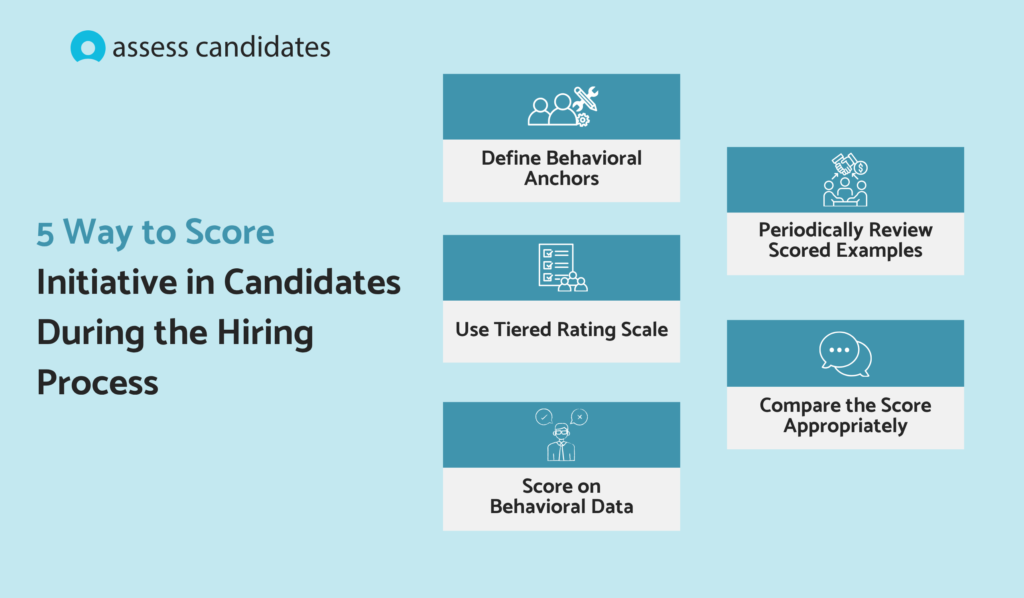
- Define Behavioral Anchors
Before you begin interviewing or assessing your candidates, you can decide what low, medium, and high initiative responses look like for the role you are recruiting for. This is because “initiative” can mean different things for a graduate trainee and a senior manager, so a generic scoring scale may produce unfair and inconsistent results.
- Use Tiered Rating Scale
Recruiters often score initiative on a simple scale, typically from 1 to 5, with clear indications at each point rather than just numbers. This matters because a numeric scale allows you to compare the initiative across your candidates. Also, combined with your other assessment process, it provides the results needed to make a final hiring decision.
- Score on Behavioral Data
When scoring job simulations and game-based assessments, consider initiative as a behavioral metric. This includes the number of unprompted actions taken, how quickly a candidate acted, and whether they explored beyond the required length. It is important because your candidates can complete their tasks by following instructions without demonstrating ownership in the workplace. The score needs to reflect how your candidates arrived at the outcome, not just that they reached it.
- Periodically Review Scored Examples
Employers should periodically review scored examples together to ensure they apply the rubric consistently, particularly when multiple staff members score during a large hiring round. This is necessary because, without review, scoring will drift over time, and your hiring team will either become more lenient or more intense.
- Compare the Score Appropriately
After the initiative has been scored, we suggest you compare it with other competencies based on how critical it is to the recruiting role. Initiative is highly valuable in roles with autonomy that do not carry critical implications if employees derail. It is important that you decide the weighting in advance as part of your overall candidate scorecard rather than letting weak ownership sway your final hiring decision.
Many employers ask about red flags for measuring initiative; see our detailed response below. Keep reading!
4. What red flags should you look out for when assessing candidates for initiative?
When interviewing candidates in your recruitment process, it is important to be on the lookout for red flags that could become issues in the work environment.
According to Inc., approximately 20% of candidates lie on their resumes, including about performative initiatives.
Red flags to measure when recruiting candidates for initiative
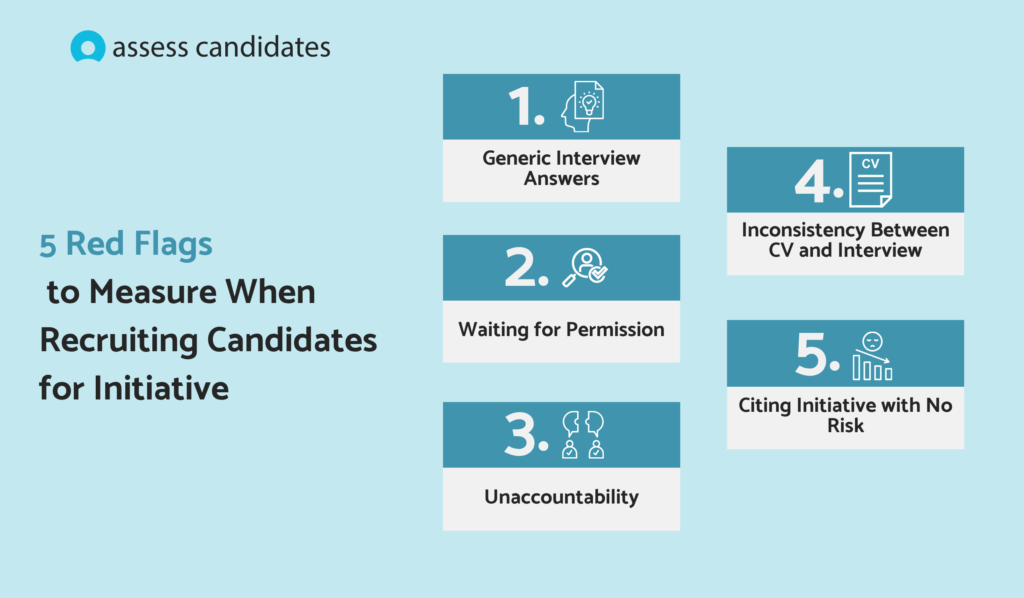
1. Generic Interview Answers
Candidates often respond to initiative interview questions with aspirational statements but are unable to provide specific, detailed examples of the scenarios listed during recruitment. This is because genuine independent problem-solving leaves strong memories. Therefore, the candidates’ inability to remember suggests it is more about self-image than about demonstrated behavior.
Solution: You should always follow a vague claim with a direct investigative question that prompts candidates to provide a step-by-step account of how they demonstrated initiative in the workplace.
2. Waiting for Permission
When your candidates consistently seek permission and approval before taking low–risk steps, it suggests they have a habit of deferring rather than acting independently. This is a red flag because roles requiring ownership are for candidates who are comfortable making reasonable decisions without constant sign-off.
Solution: Track this action across several answers rather than a single one, since a single moment of checking in with a manager can be a sensible judgment and not a lack of initiative. If you notice the pattern is consistent across different examples, probe further by asking whether there was ever a time when they made a decision without checking first, and how it went.
3. Unaccountability
Look out for candidates who attribute a lack of self-starting behaviour to external limitations, such as a restrictive work culture, without describing any attempt to act around that constraint. This is a red flag because genuine candidates will find a way to act even in constrained environments.
Situation: Engage with your candidates by asking a direct follow–up question about what they tried despite a constraint, no matter how small it was, or whether they failed. A candidate who possesses initiative will often have something to offer, no matter how little, while a candidate with none will only show you their pattern.
4. Inconsistency Between CV and Interview
A candidate’s CV or cover letter will likely emphasize their proactivity, but they may struggle to substantiate this with concrete interview examples. This gap often shows the language was aspirational rather than being genuine and reflecting their behaviors.
Situation: Treat the CV as a hypothetical scenario, not a fact to accept or use in the interview process. Plan to verify all proactive-related claims that may seem larger than possible on paper. Note the claimed size and the evidence provided when scoring the interview.
5. Citing Initiative with No Risk
Listen for every example your candidates offer that includes a safe, universally welcomed action with no real possibility of failure. This suggests they may be risk-averse and not genuine self-starters. Taking cognizance of this is necessary because real initiative often involves exposure at some point in one’s career.
Solution: We recommend that you specifically ask your candidates about a time when their initiative did not work out. How they answer this question, and whether they have an answer at all, will tell you more about their real risk tolerance.
Explore assessments created by Chartered Scientists to hire talented candidates. VIEW PLANS
Knowing the right way to recruit top candidates with initiative is important to every industry. Here’s how!
5. Best practices to recruit candidates with initiative
Recruiting the best candidates who possess strong ownership goes beyond spotting these traits during the hiring process. It also involves designing the recruitment process to attract them from the first touchpoint.
According to Metaview, many employers prefer to recruit candidates who can proactively distinguish opportunities, take ownership of tasks, and lead projects without constant supervision.
Best strategies to recruit candidates with initiative
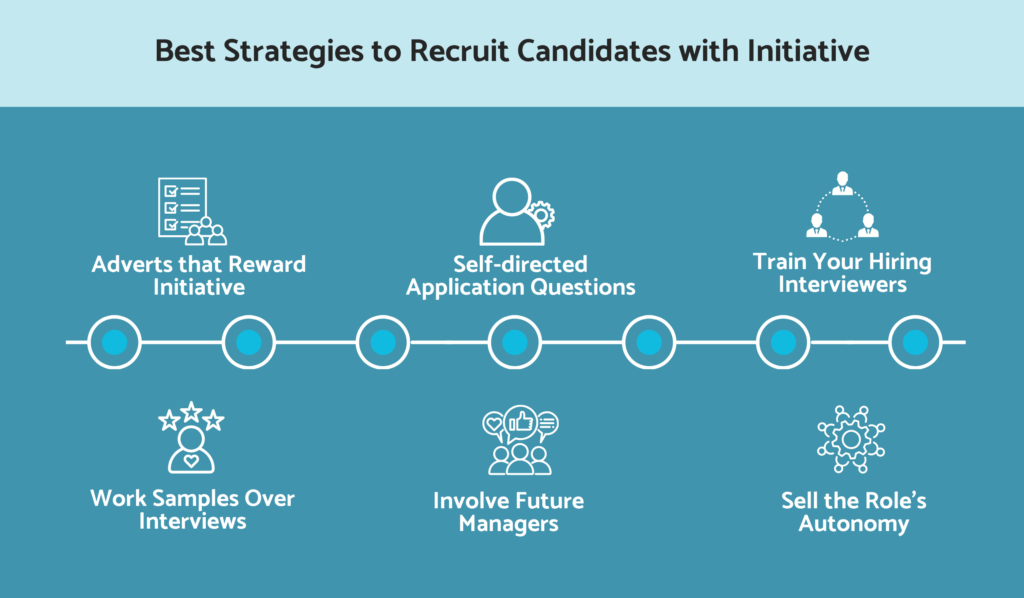
- Adverts that Reward Initiative
Instead of writing job adverts that only list responsibilities, frame parts of the role around ownership, problem–solving scenarios, and tasks. The language of a job advert acts as a filter before any candidate applies, as those with autonomy tend to self-select towards adverts that emphasize initiative.
- Self-directed Application Questions
Do not end the application process by collecting CVs and cover letters. Also include application questions that ask candidates to describe scenarios in which they demonstrated proactiveness in the workplace. Doing this will filter candidates at the earliest stage, and those who cannot provide genuine examples at this point are unlikely to produce stronger ones later in the recruitment process.
- Train Your Hiring Interviewers
Strong assessment designs will eventually fall apart if your interviewers accept vague or confident-sounding responses from the candidates. Train your interviewers to explicitly request more details when interviewing applicants. They should be able to tell the difference between a genuinely proactive applicant and a well–rehearsed one.
- Work Samples Over Interviews
Since interviews almost always reward confident storytelling and accept it as genuine candidate behavior, rank the recruitment process above job simulations, game–based assessments, and assessment center exercises. Focus more on the candidates’ skills than on the surface initiative conveyed through a conversation alone.
- Involve Future Managers
Initiative can be assessed from different perspectives and by different teams, depending on the team context. This is why it is advisable to involve the candidate’s future manager or team members in the process. It is necessary because someone with sufficient knowledge of the role’s day-to-day activities is better suited to recognize genuine ownership.
- Sell the Role’s Autonomy
Candidates with proactivity also assess the employers just as you are evaluating them, and will drop off when you falter in showing that you want a proactive candidate in a highly controlled workplace. We recommend that you remain transparent about how much decision–making autonomy the role has and its limits to attract the right candidates.
Want to attract and recruit top candidates with initiative? Are you unsure which pre-employment psychometric tests to use for successful hiring? Contact us for a detailed review of your assessment methods, and we’ll help you identify the perfect candidates.
Interested in knowing what recruiters have to say about hiring candidates with initiative?
6. Client success stories of recruiting talent with initiative
Employers and organizations have shared their knowledge and experiences about recruiting candidates with initiative, helping distinguish the ingenuine candidates from the perfect hires.
1. Forever 21
Challenge:
Forever 21 was struggling with high turnover among its store managers. Particularly because the new recruits were unable to handle unexpected situations without bringing every decision to the head office.
Solution:
The company’s recruitment team included job simulation tasks in the assessment process, presenting candidates with a mock in-store crisis to test their initiative. The team observed whether candidates independently made rational decisions or waited for guidance.
Results:
- Store manager turnover decreased within the first year of the new process
- Store teams reported an improved confidence in their manager’s ability to handle spontaneous situations
- New recruits require less escalation to the head office or daily activities
2. Fintech Startup
Challenge:
A fintech startup was scaling quickly and needed customer support agents who were capable of resolving unusual customer issues without waiting for supervisor approval. However, the company’s interview process relied heavily on standard behavioral questions that did not predict this.
Solution:
The fintech company included a short, game–based assessment that evaluated unexpected problem–solving behavior. They also included a revised interview guide trained to inspect past vague initiative claims.
Results:
- Escalation rates to senior support staff were reduced after the updated hiring method
- A large number of the new recruits attained full independent case-handling competency faster
- Hiring managers reported improved confidence in early performance predictions from the new recruiting process
Assess Candidates enables employers to evaluate initiative objectively through behavioural assessments, structured scoring frameworks, and scientifically validated psychometric tools, reducing reliance on subjective interview impressions.
So, why use Assess Candidates to recruit candidates with initiative in 2026?
7. Why do employers use Assess Candidates to hire candidates with initiative?
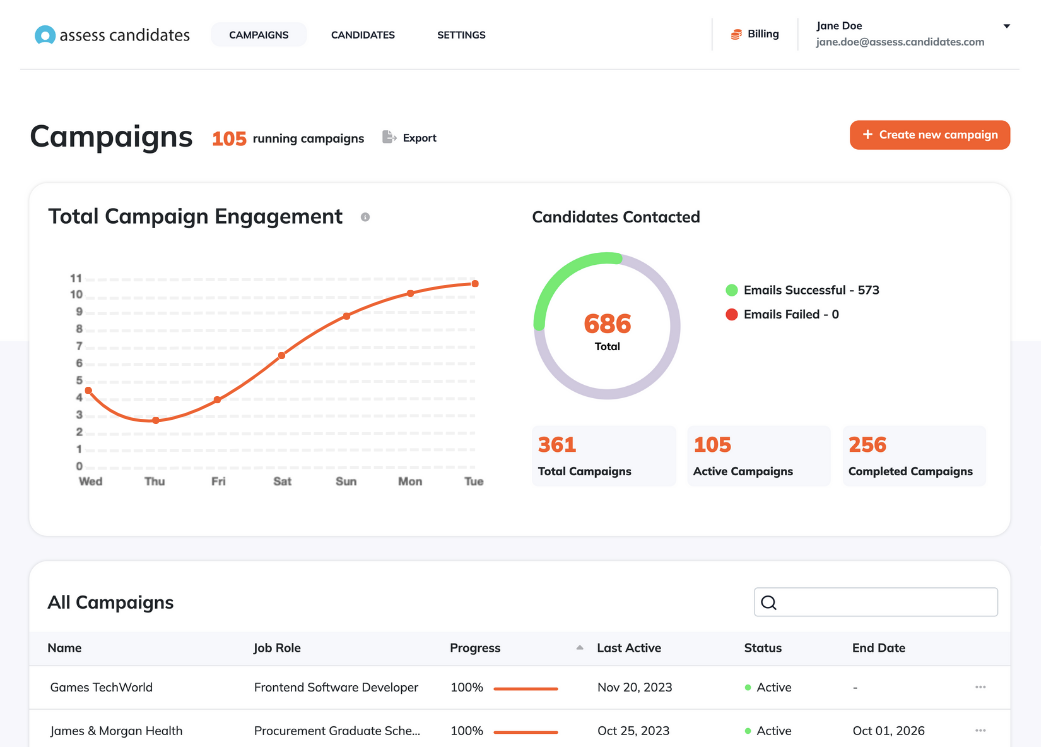
Assess Candidates allows recruiters to make data–driven hiring decisions by providing accurate insights into candidates’ assessment results, helping remove unqualified candidates who lack initiative.
- Validated Assessments: Assess Candidates’ psychometric tests are developed by a team of chartered scientists, recruitment experts, and psychologists. These pre–employment tests are rigorously validated to ensure reliability. Recruiters looking for candidates with initiative use the platform because behavioral traits like initiative are difficult to measure through interviews alone, but can be assessed with the combination of well–designed assessment tests.
- Game–based Assessments: Our platform includes an interactive, engaging game-based assessment that measures behavioral and cognitive abilities through gamification. These game–based assessments measure your candidates’ job–relevant skills, traits, and cognitive abilities through game-like tasks.
- Data–Driven Reporting: The platform provides recruiters with an intuitive dashboard that lets you rank, filter, and shortlist best-fit candidates for data–driven hiring decisions.
- Reduces Reliance on CVs and Resumes: Assess Candidates is widely known for using its data–driven, game–based assessments to evaluate your candidates’ potential without reliance on resumes. The platform’s support of skills-based hiring makes it difficult for candidates to pass the recruitment process with just their CVs and resumes, as their ownership will be tested.
- Positive Candidate Experience: Our pre–hire assessment tests are designed to feel simple, smooth, and engaging to your candidates from the invitation to the finish. A respectful candidate experience is necessary to not lose your top talent who possess initiative, as they may also be scouted by competitors.
Hire the right candidates with our assessment tool platform. LEARN MORE
Conclusion: Key Takeaway
Organisations that consistently hire proactive employees benefit from faster decision-making, stronger innovation, and reduced management overhead. Measuring initiative through structured assessments allows employers to identify candidates who deliver value beyond their job description.
Curious about using psychometric tests to assess the perfect candidates with initiative in the workplace? Keep reading to see our frequently asked questions, and enter your email to get started today.
Frequently Asked Questions
Can initiative be measured objectively or only subjectively?
Initiative can be measured objectively to some extent if the recruitment process is designed around behavioral anchors and structured scoring rather than a gut feeling. You can use assessment tools like situational judgment tests, game-based assessments, and job simulations to evaluate your candidates; these tools can be scored consistently.
Can introverted candidates still possess strong initiative?
Introverted, quieter candidates can possess strong self-starting behavior, because initiative is about identifying problems and acting on them, not about being vocal or visible in a group setting. An introverted candidate may independently solve an important problem without attention to it. Therefore, scoring rubrics should focus on candidates’ actions, not on how loudly they are communicated.
Is initiative the same as leadership potential?
Initiative in the workplace is not the same as leadership potential; however, they do overlap. Initiative is about acting independently and taking ownership without being instructed to. Whereas leadership potential involves influencing and guiding others towards a shared objective.
How do I avoid mistaking overconfidence for genuine initiative?
Confident and polished storytelling often misleads recruiters into thinking it is genuine initiative, which is why you have to always probe for specifics. Ask the candidates about what they personally did, when they did it, and what the outcome was, rather than scoring based on how convincing the story told was.
Can the ability to take initiative be taught, or is it developed?
Although some individuals naturally demonstrate greater initiative, organisations can strengthen proactive behaviour through autonomy, coaching, and performance feedback, as well as a workplace culture that rewards proactivity.


 English
  Arabic