
Best Practices to Recruit in the Hospitality Industry



Employers today are seeking effective strategies to recruit top talent in the hospitality industry, as the pandemic has changed how prospective candidates view the industry.
With retention challenges and rising demand for strong customer-service skills, recruiters are increasingly focused on how to attract, hire, and retain the right hospitality talent.
According to the World Travel & Tourism Council (WTTC), the hospitality industry’s global economic contribution would reach an all-time high of $11.1 trillion in 2024, representing 10% of global GDP.
In this guide, we will explain the top strategies that will assist you in attracting, recruiting, and retaining the top candidates in the hospitality industry.
Contents
- What is the hospitality industry?
- Skills to measure in the hospitality industry
- Best tools for recruiting in the hospitality industry
- Hiring challenges in the hospitality industry
- Best recruitment strategies for the hospitality industry
- Common roles employers hire for in the hospitality industry
- Client success stories of recruiting in the hospitality industry
- Future of recruitment in the hospitality industry
- Why do employers use Assess Candidates when hiring hospitality talent?
Want to know more about scaling your company? Keep reading!
1. What is the hospitality industry?
The hospitality industry includes businesses that provide lodging, food and beverage services, travel, tourism, and entertainment. Its primary focus is delivering positive guest experiences and customer satisfaction across hotels, restaurants, resorts, and related services.
Start your hospitality hiring process with our psychometric assessments. HIRE FOR FREE
Curious to learn about the skills needed in the hospitality industry? We have it all covered in the next section!

2. Skills to measure in the hospitality industry
Hospitality roles require a blend of customer-service, operational, and interpersonal skills to deliver positive guest experiences while maintaining service quality and business performance.
According to Study.com, there are over 212 million people working in the hospitality industry globally. This makes it one of the largest economic sectors in the world.
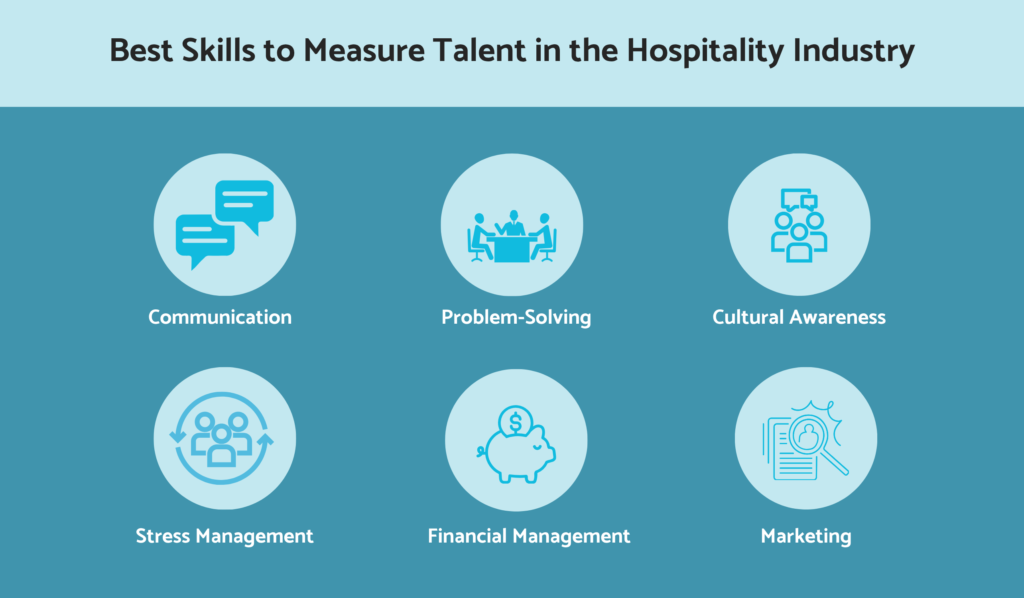
Best skills to measure talent in the hospitality industry
- Communication
It is important that your candidates communicate effectively, as they will have to convey information to customers and coworkers while also actively listening to their needs and concerns.
- Problem-Solving
Measuring this skill will provide you with insight into your candidates’ ability to resolve unexpected challenges without escalation. Candidates who possess problem–solving skills often remain calm under pressure and think of creative solutions to situations, regardless of how the situations present themselves.
- Cultural Awareness
Workers in the hospitality industry are expected to interact with people from diverse backgrounds. Therefore, you should look out for those who respect different customs, traditions, and communication styles.
- Stress Management
Hospitality professionals frequently operate in fast-paced environments where service quality must remain high, even during peak demand periods. Resilient candidates can recover quickly from difficult conversations and maintain a positive attitude despite setbacks.
- Financial Management
You should look for candidates with financial management and budgeting skills, as these help control budgets and costs. Your candidates must be able to reduce waste, accurately monitor expenses, and contribute to profitability without compromising the service quality.
- Marketing
This skill is required by recruiters for specific roles, and it requires the candidate’s understanding of social media management, search engine optimization for hospitality websites, and digital marketing campaigns. Candidates must know how to respond to online reviews, create engaging content, and build brand visibility with data analytics.
Thinking about tools to evaluate your hospitality candidates‘ skills? Keep scrolling to learn more.
3. Best tools for recruiting in the hospitality industry
Having a successful recruitment process in the hospitality industry requires a thorough assessment of your candidates, and this can all be achieved with the right tools to ensure that you hire ideal applicants.
According to Altametrics, your hospitality employees are valuable resources, thus making the recruitment of the right candidates a crucial and delicate process.
6 Key tools for hiring hospitality candidates
1. Psychometric Assessment Platforms
Pre–employment psychometric assessment platforms such as Assess Candidates, SHL, and Clevry offer employers insights into candidates’ cognitive abilities, data evaluation, and problem–solving skills. Hospitality industry roles require candidates who can make accurate decisions and think strategically on the spot.
Some of the top assessment tests that you can use to evaluate your candidates in the hospitality industry are:
- Verbal Reasoning Test
- Numerical Reasoning Test
- Logical Reasoning Test
- Critical Reasoning Test
- Game-Based Assessments
2. Applicant Tracking System (ATS)
Many employers use ATS tools such as SorsX, Zoho Recruit, and Greenhouse to centralize and automate the recruitment process within their organizations. The ATS tools automatically gather resumes, screen candidates against job requirements, schedule interviews, and advance applicants through the hiring funnel.
3. Skills Assessment Tests
Skills assessment platforms such as Assess Candidates, TestTrick, and Test Gorilla help you verify your candidates’ actual competencies beyond their CVs. They help support skills–based hiring over resume screening by measuring what candidates can actually do rather than relying on their resumes or claims of experience.
4. AI-Powered Candidate Matching
Recruiters use AI matching to rank and prioritize potential candidates based on the job criteria during high–volume hiring for similar roles without replacing human judgment in the recruitment process. AI assesses resumes, skills, and candidates’ experience against job requirements to select the qualified candidates.
5. Behavioral Assessments
Assess Candidates, HireVue, and Pymetrics provide you with behavioral skills tests that assess your candidates’ interpersonal skills, morals, and motivations, as well as how they perform in the workplace and with their colleagues.
Some of the behavioral assessments available are:
6. Video Interviewing Platforms
Video interviewing platforms such as Assess Candidates, HireVue, and TestTrick are used to filter out unqualified candidates and assess their communication skills, professionalism, and cultural fit. These skills, assessed by video screening platforms, are valuable in the hospitality industry, as they provide insights into candidate performance and reduce bias during interviews.
Types of Interview Questions to Ask a Hospitality Candidate
- How do you handle difficult customers?
- How do you work best, independently or in a team?
- Describe a time you had to go above and beyond to resolve a customer issue.
- How do you remain consistent in providing individualized customer service during peak hours?
- How do you prioritize your work?
Hire the right hospitality candidates with our assessment platform. LEARN MORE
The next section examines hospitality recruiting challenges and effective ways to reduce them.
4. Hiring challenges in the hospitality industry
Recruiting in the hospitality industry can be challenging, given the industry’s shortage of high-quality candidates.
According to the 2023 World Travel & Tourism Council, the hospitality industry is one of the largest economic sectors with a $4.7 trillion global market.
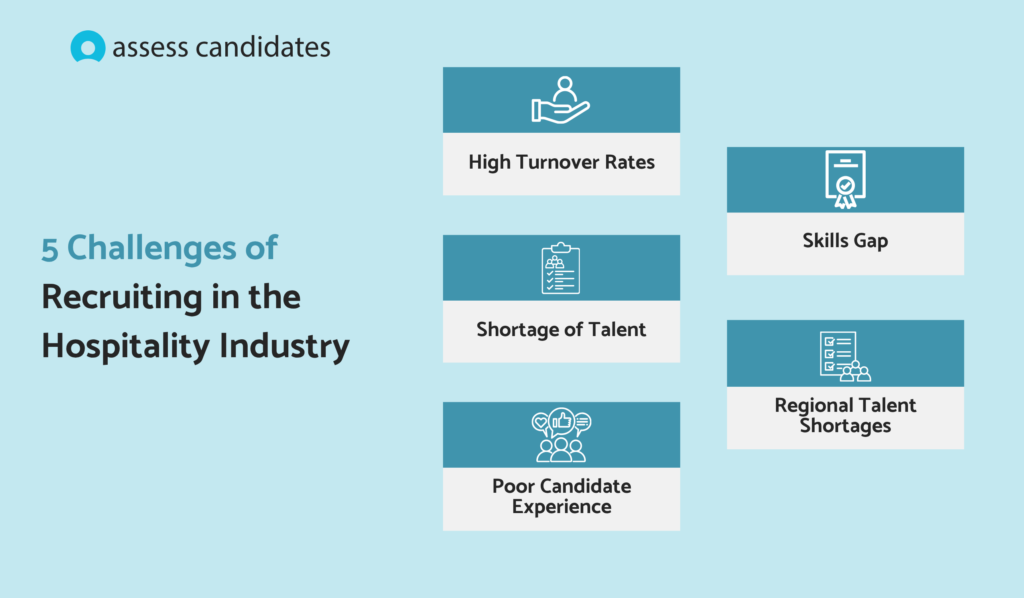
Top 5 challenges of recruiting in the hospitality industry
- High Turnover Rates
The hospitality industry has one of the highest turnover rates in the workforce, as employees often leave because they view the industry as a transitional career rather than a long–term one. This gap in the sector creates constant recruiting cycles that wear out productivity and morale.
Solution: We suggest implementing retention strategies, including internal promotion programs and recognition systems that demonstrate long–term growth potential for your candidates.
- Shortage of Talent
Staff vacancies continue to rise across the hospitality industry, with many exiting permanently. Changes in labor mobility and migration policies have reduced the availability of experienced hospitality professionals in some regions.
Solution: We recommend expanding your talent sourcing by collaborating with vocational centers and apprenticeship programs to establish pipelines. You can focus on upskilling entry–level workers rather than requesting experienced hires.
- Poor Candidate Experience
Many hospitality employers still rely on manual hiring processes, which can slow decision-making and cause strong candidates to lose interest before an offer is made. Candidates look forward to a fast recruitment process, but are met with a slow, uncommunicative one, which loses their attention.
Solution: You can modernize your recruitment tools by introducing an applicant tracking system, automated communication tools, and mobile-friendly application forms. We suggest that you also streamline the recruiting process to minimize the time–to–hire from weeks to days. This will promote the candidate experience and ultimately improve your employer branding.
- Skills Gap
Modern travelers are often interested in unique and memorable experiences delivered by highly skilled professionals in the hospitality industry. Employers struggle to find the right talent with the necessary skills, long–term commitment, and industry experience.
Solution: Focus on training and growth development by establishing extensive onboarding programs, certification programs, and continuous skills training. Invest in skills–based hiring rather than experience requirements and train your candidates in the specific skills you want them to acquire.
- Regional Talent Shortages
Many hospitality organizations have shared their experiences about recruiting from external regions and dealing with regional labor shortages. The industry is also facing an aging workforce and shifts in migration, which have negatively impacted the talent pool across locations.
Solution: Introduce geographic flexibility strategies to your candidates that include housing assistance, relocation packages, and remote work options. Collaborate with local training programs and build talent pipelines in several regions.
After seeing the potential recruitment challenges, check out the best strategies below!
5. Best recruitment strategies for the hospitality industry
The following strategies are widely used by successful hospitality employers to improve hiring outcomes and reduce turnover.
According to Hotelogix (2022), the age group that experienced the highest employee turnover was millennials, with most roles in managerial positions.
To make the most of your recruitment in the hospitality sector, follow our strategies below.
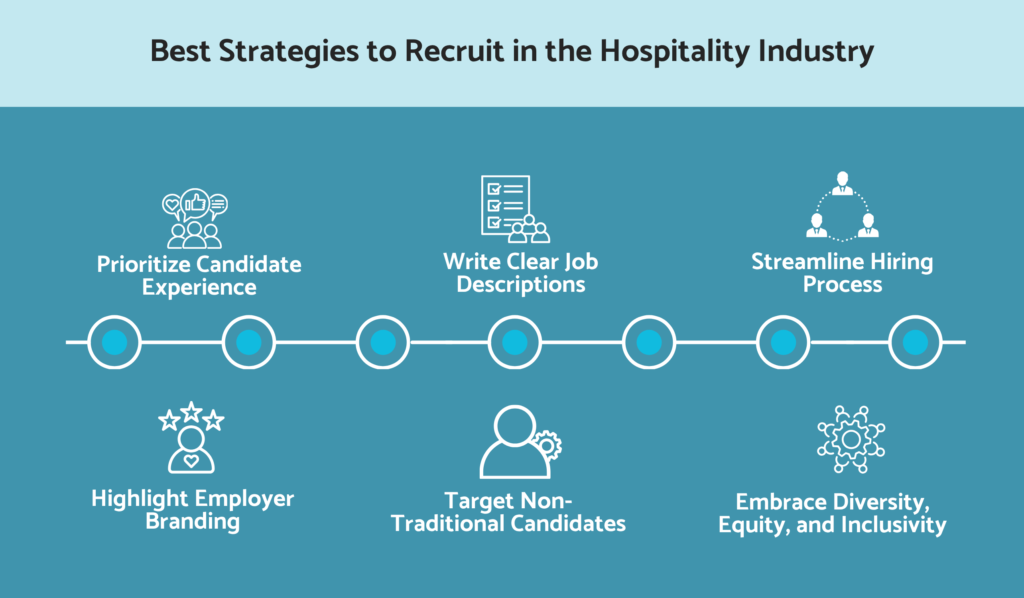
Best strategies to recruit in the hospitality industry
1. Prioritize Candidate Experience
Designing a fast and modern application journey for your candidates by optimizing for mobile devices with transparent communication about the processes and the next steps should be a priority. Providing timely feedback with transparent offers will reinforce belonging and reflect that hospitality is a service. In hospitality, candidates are often potential guests as well, making the hiring experience an extension of your brand experience.
2. Write Clear Job Descriptions
Write a well–crafted job description that explains the skills and experiences that you require from your candidates while also specifying the growth opportunities and company culture. Try to be upfront about the compensation packages and responsibilities from the onset to set realistic expectations.
3. Streamline Hiring Process
We recommend that you implement an applicant tracking system (ATS) and AI-driven candidate screening reviews to automate repetitive tasks such as job posting, scheduling interviews, and managing applications.
4. Highlight Employer Branding
You can prove your organization’s values, community, and work environment through your career sites and social media to attract potential candidates who align with your culture. Having a stronger employer brand will reduce turnover, lower your cost–per–hire, and attract more qualified candidates with your compelling stories.
5. Target Non-Traditional Candidates
Focus on candidates who choose non–traditional work hours and require flexible scheduling, as they are often more loyal and engaged when their requirements are met. Recruiting these prospective candidates will widen your talent pool beyond the traditional full-time employees.
6. Embrace Diversity, Equity, and Inclusivity
Ensure that you promote diversity, equity, and inclusion programs to improve your workplace culture and expand your candidate pool. You should train your hiring managers to make evidence–based decisions, check for bias, and use tools that make fair and inclusive recruiting decisions.
Explore assessments created by Chartered Scientists to hire the right hospitality talent. VIEW PLANS
To know more about the roles that you can hire candidates for in your hospitality organization, keep reading!
6. Common roles employers hire for in the hospitality industry
According to Research and Markets, the hospitality market is expected to expand from $5.52 trillion in the year 2025 to $5.8 trillion in 2026.
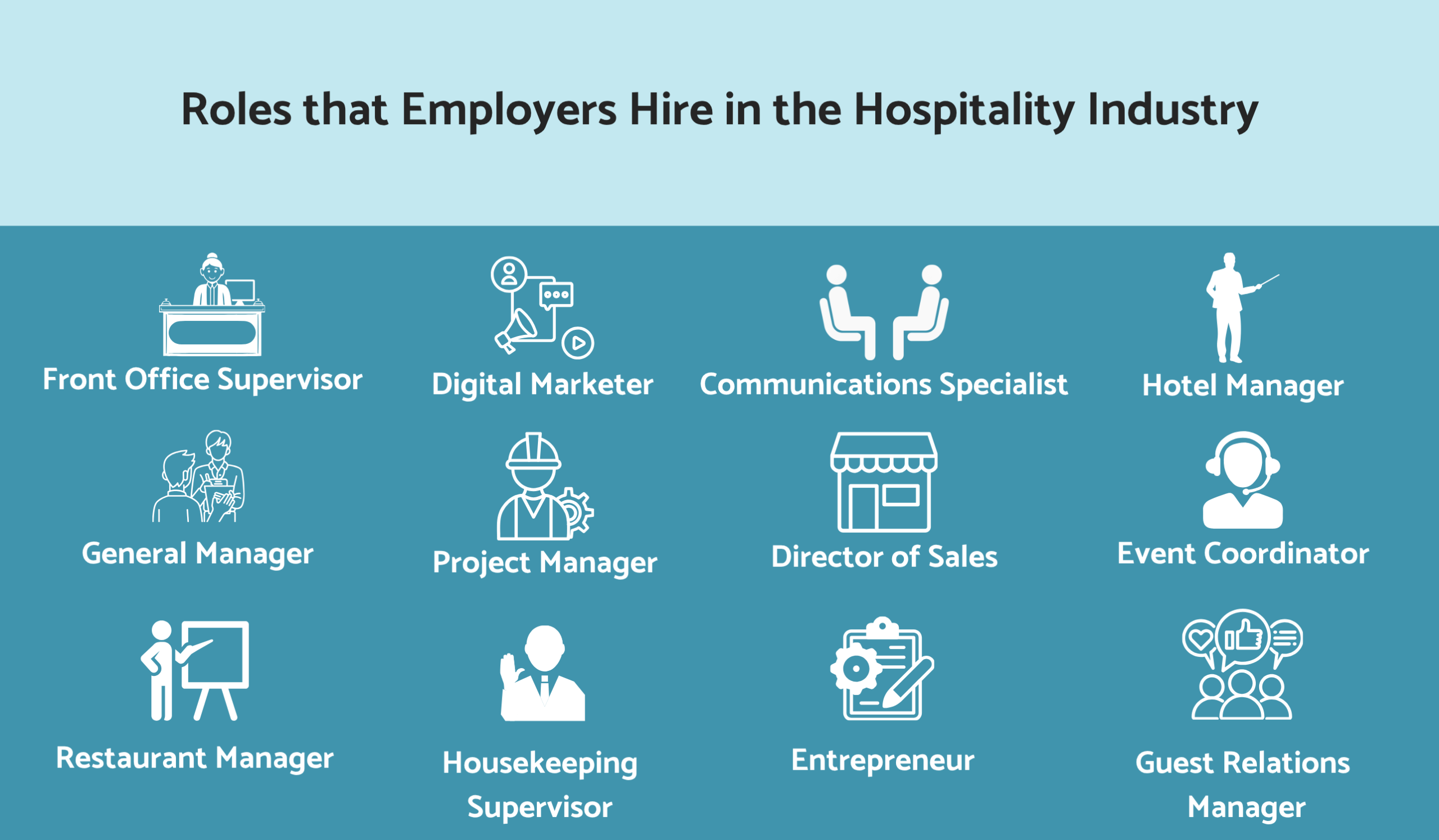
Roles that Employers Hire in the Hospitality Industry
- Front Office Supervisor
- General Manager
- Restaurant Manager
- Digital Marketer
- Project Manager
- Housekeeping Supervisor
- Communications Specialist
- Director of Sales
- Entrepreneur
- Hotel Manager
- Event Coordinator
- Guest Relations Manager
Are you looking to attract and recruit hospitality hires in your company? Not sure about what pre-employment psychometric assessment tests you should use to evaluate your candidates to ensure you hire the perfect talent? You can contact us for a thorough evaluation of your hiring assessment design, and we will help you recruit the ideal hospitality candidates.
Top Employers that hire hospitality talent
- Wyndham Hotels & Resorts
- Concorde Hotels
- Four Seasons
- Accor Group
- Aman Resorts
- Marriott International
- Hilton Hotels & Resorts
- InterContinental Hotels Group
- The Cosmopolitan
- Hyatt Hotels Corporation
Let’s keep reading to hear what employers say about recruiting into the hospitality industry.
7. Client success stories of recruiting in the hospitality industry
Several recruiters have shared their experiences with recruiting top candidates in the hospitality industry and how they resolved the challenges that hindered their growth.
1. Mantle
Challenge:
Mantle, a hotel chain with a high annual turnover rate of about 75%, spent over a month filling positions and lost qualified candidates to competitors during its lengthy recruiting process.
Solutions:
The company introduced an ATS with AI-powered candidate matching and automated communication features.. This helped the organization streamline candidate reviews, reduce manual work, and speed up the decision–making.
Results:
- Enhanced the candidate acceptance rate by 35% through quicker responses and better communication
- Minimized time-to-hire from over a month to two weeks
- Reduced hiring costs by 42% by removing the agency fees and reducing internal bureaucratic time.
2. Luxury Resort Group
Challenge:
A luxury resort group in the United States was having difficulty evaluating soft skills among candidates applying for front-line roles. This resulted in poor guest experiences and a high first-year turnover of about 60%.
Solutions:
The organization used a one–way video–interviewing platform with AI–powered behavioral analysis to assess communication skills, culture fit, and customer service orientation before scheduling in–person interviews.
Results:
- Minimized first-year turnover from 60% to 28% by predicting job performances
- Decreased interview time by 50% while preserving quality assessments through automated video screening
- Increased guest satisfaction scores by 22% via recruiting staff with better customer service abilities
This is where Assess Candidates comes in: we help ensure your candidates are well-qualified, as our pre-employment psychometric assessments measure skills and provide data-driven analytics to inform your recruiting decisions.
8. Future of recruitment in the hospitality industry
Hospitality recruitment is becoming increasingly efficient as employers adopt automation, predictive analytics, and skills-based hiring methods.
What is the future of recruitment in the hospitality industry?
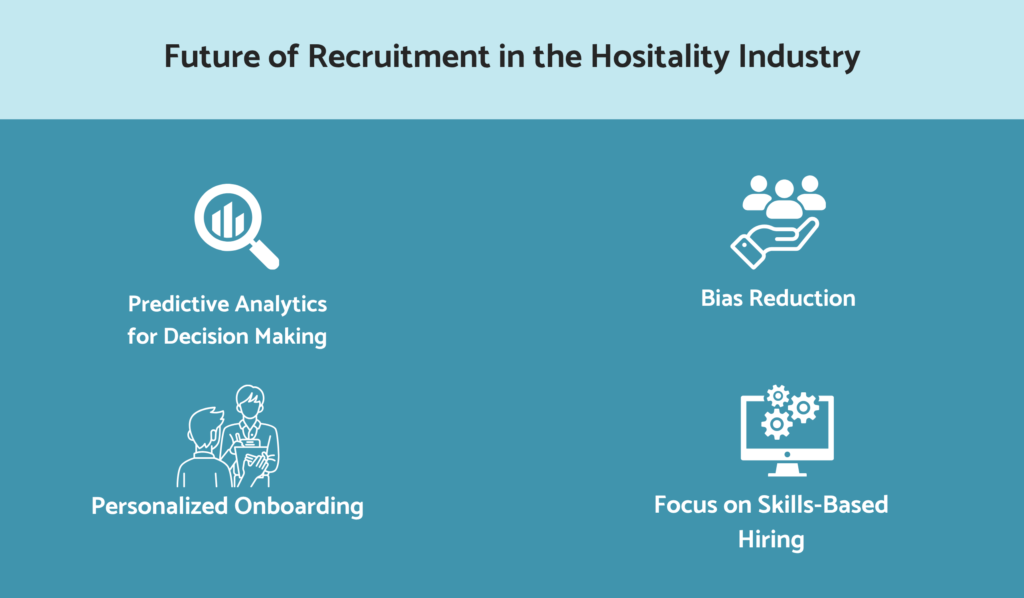
- Predictive Analytics for Decision Making
Employers will use historical data analysis to forecast which candidates will succeed in certain roles by revealing patterns in their skills, experience, and personality traits. Using this data-driven approach will minimize turnover and improve retention by helping you make informed recruitment decisions.
- Personalized Onboarding
The future of recruitment will see AI driving personalized onboarding programs that help new recruits adapt quickly based on their individual backgrounds and experiences. Improved retention analytics will help you predict which employees are likely to leave your organization and counter that trend with retention strategies.
- Bias Reduction
The introduction of AI into the hospitality industry recruitment process will reduce human bias during hiring. This will be done by assessing candidates solely on their skills and experience, rather than on personal judgments or stereotypes. This will promote diversity and inclusion, ensuring that all candidates have fair and equal opportunities while recruiting.
- Focus on Skills-Based Hiring
The industry will move from experience–based to skills–based recruitment, whereby employers will prioritize skills like problem–solving, learning agility, and adaptability over traditional credentials. This is set to open a pathway for future–ready workers with diverse backgrounds and expand the talent pool.
In hospitality recruitment, employers have shared their challenges in recruiting and retaining ideal candidates who are passionate about working and growing within the company.
So, why use Assess Candidates to hire your hospitality talent in 2026?
9. Why do employers use Assess Candidates when hiring hospitality talent?
Assess Candidates helps hospitality recruiters evaluate reasoning ability, behavioral tendencies, and job-relevant skills more consistently through structured pre-employment testing.
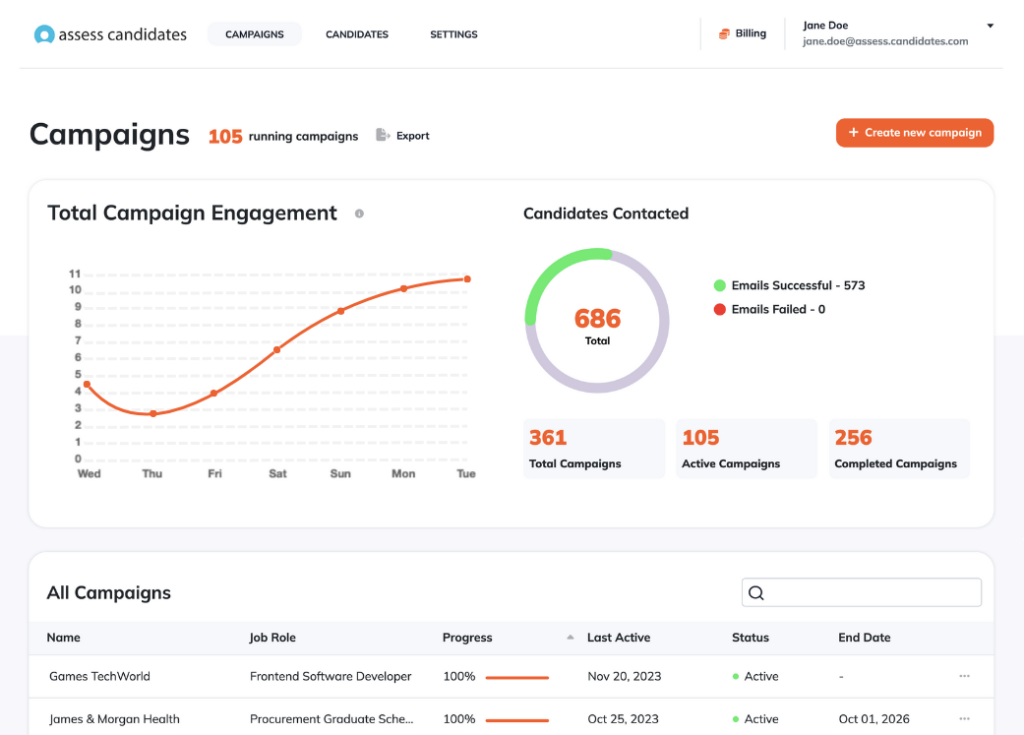
- Data-Driven Decision Making: Assess Candidates offers you reliable, predictive, and accurate assessments that reduce the guesswork in hospitality recruitment. Rather than relying on resumes, you will be provided with a dashboard that includes a simplified report that ranks and filters the successful candidates from the rest.
- Promotes Inclusion and Reduces Bias: Our platform has fairness and inclusion built into all our assessments, helping reduce bias and give every candidate equal opportunities. We also provide accessibility features, such as additional time and screen reader compatibility, to ensure a smooth candidate experience for those with disabilities.
- Fast and Automated Administration: Assess Candidates’ psychometric assessment tests are administered automatically to begin immediately, or you can customize them to start at specific times. Our platform also allows you to set up assessment campaigns in a few easy steps, without delays.
- Positive Candidate Experience: Our platform offers a seamless and professional candidate experience from the beginning to the end. With realistic workplace scenarios and AI–driven technology, your candidates will remain engaged throughout the assessment process. This will give them a positive candidate experience and strengthen your employer brand.
- Innovative Assessment Formats: Assess Candidates includes hospitality industry assessment formats that display behavioral insights. The platform’s hospitality assessments include, but are not limited to, game-based assessments, behavioral skills and personality assessments, and cognitive tests.
Hire the right hospitality candidates with our assessment tool platform. LEARN MORE
Conclusion: Key Takeaway
The most successful hospitality employers combine structured assessments, efficient hiring processes, strong employer branding, and exceptional candidate experiences to attract and retain high-performing hospitality professionals. Organizations that invest in modern hiring practices will be best positioned to compete for talent in 2026 and beyond.
Want to know more about structuring assessment tests to recruit the perfect candidates in the hospitality industry? Keep scrolling to explore our frequently asked questions, and enter your email to get started today.
Frequently Asked Questions
What are the biggest challenges in hiring in the hospitality industry?
The hospitality industry faces high annual turnover rates and talent shortages, as well as rising labor costs, outdated hiring processes, and geographic inequality. These reduce the pool of passionate candidates applying to the industry.
How long does it take to hire a potential hospitality candidate?
The average time-to-hire for candidates in the hospitality industry ranges from 30 to 45 days for entry-level roles and can extend to 60 to 90 days for management positions. Analyzing your time-to-hire and reducing it will significantly improve candidate engagement and acceptance rates.
What skills should be prioritized when hiring hospitality candidates?
The key skills you should focus on when recruiting candidates for your hospitality organization should be, but not limited to, customer service,communication, problem-solving, adaptability, collaboration skills, and some technical skills that are dependent on the role you are recruiting for.
How can hospitality employee turnover be reduced?
To reduce employee turnover in your company, we suggest that you implement career growth pathways, flexible scheduling, training programs,and competitive benefits. These will help build morale within your employees and prove that you care for them and the work environment is secure.
How do I assess soft skills during recruitment?
To examine the soft skills in potential candidates in your hospitality industry recruitment, our experts recommend: behavioral assessments, video interviews, gamified assessments, and psychometric tests.


 English
  Arabic