
How to Recruit and Retain Top Retail Talent in 2026



Retail employers face increasing pressure to attract and retain qualified staff in a highly competitive labor market.
According to McKinsey & Company (2022), nearly half of the United States of America’s retail employees, including managers, reported considering leaving their jobs within the next few months due to high attrition.
In this guide, we explore the strategies many recruiters overlook when attracting, hiring, and retaining high-performing retail talent.
Contents
- What is the retail industry?
- Skills to assess when recruiting in the retail industry
- Top tools used for retail recruitment
- Obstacles recruiters face in the retail industry
- Best hiring practices for the retail sector
- Common roles for retail workers in the retail industry
- Client success stories of recruiting in the retail industry
- Future of recruitment in the retail industry
- Why do employers use Assess Candidates when hiring retail talent?
Without further ado, let us explore the retail industry and how to recruit the best candidates!
1. What is the retail industry?
The retail industry includes businesses that sell products and services directly to consumers for personal use. It serves as the final stage of the supply chain and includes sectors such as supermarkets, department stores, e-commerce retailers, and specialty shops.
Begin your retail hiring process with our psychometric assessments. HIRE FOR FREE
Ready to see what key skills the retail sector requires when recruiting for top talent? Keep scrolling!

2. Skills to assess when recruiting in the retail industry
Recruiting candidates who possess a mix of soft and technical skills is critical to your organization’s growth and development. These candidates will likely be on the front lines between you and your customers.
According to Indeed, retail employees contribute significantly to the growth of a retail business’s customer experience and to increased sales. Therefore, recruiting candidates who possess soft skills and technical knowledge can help build loyalty and meet your company’s goals.
Top skills to look out for when recruiting retail talent
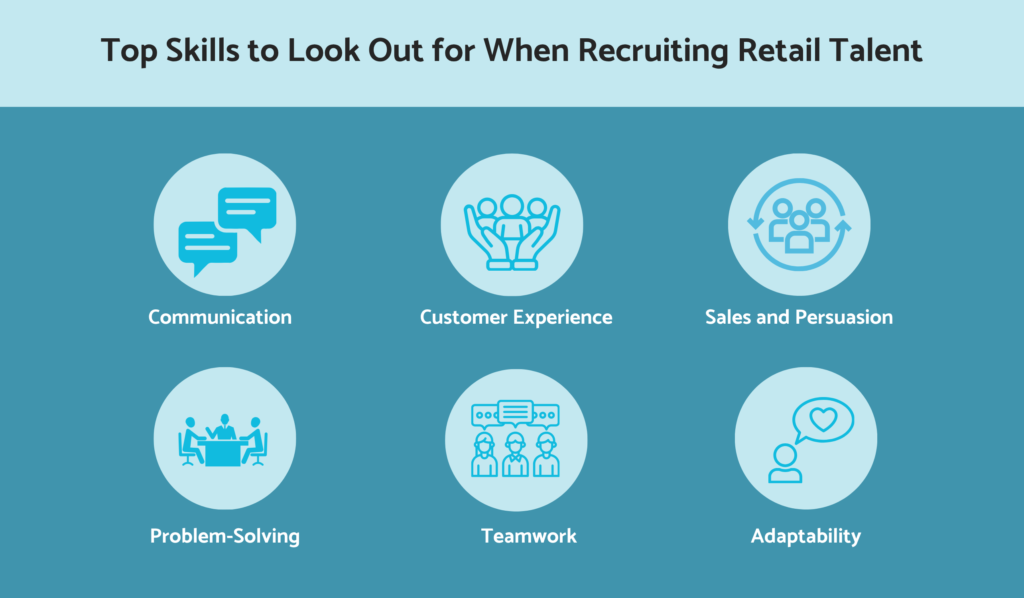
- Communication
Your retail candidates will be expected to interact daily with customers from diverse backgrounds and colleagues, and displaying friendly communication, both verbal and written, is important for customer satisfaction and a peaceful work environment.
- Customer Experience
To hire candidates for the retail industry, they must be able to engage customers warmly, handle complaints with patience, and create a positive shopping experience, as these are the foundations of the industry. Your candidate’s customer experience skills are necessary, as they directly affect brand loyalty and sales.
- Sales and Persuasion
Your retail candidate should be able to understand customer needs and guide them toward a purchase without being forceful. This is a valuable skill for candidates, as they must be able to upsell, cross-sell, and naturally close sales.
- Problem-Solving
Working in the retail industry can be unpredictable, as many things can go wrong on the spot, affecting sales and brand image, including dealing with difficult customers. Hiring candidates skilled at de–escalating these situations and ensuring customers’ needs are met is a sought-after skill in the industry.
- Teamwork
The retail industry is a fast-paced, largely team–driven sector; therefore, the ideal candidates should be those who can collaborate and contribute to the company. Your candidates must display collaborative skills and a positive work culture to keep the work environment running smoothly.
- Adaptability
Strong retail employees can adapt quickly to changing priorities, peak trading periods, new technologies, and evolving customer expectations.
Modern hiring technology helps retail employers improve hiring quality, reduce time-to-fill, and strengthen workforce retention. Let’s explore this in more detail below.
3. Top tools used for retail recruitment
Recruiting in the retail industry can be challenging without the right tools to help you find, hire, and retain top talent.
7 Top tools to use when hiring retail candidates
1. AI-Powered Screening Tools
AI–powered screening tools like Eightfold AI, HireVue, and Paradox offer platforms that integrate artificial intelligence into your recruitment process, shortlisting CVs, reducing unconscious bias, and predicting candidate success.
2. Skills Assessment Tools
Skills assessment platforms like Assess Candidates, TestGorilla, and Criteria Corp enable recruiters to evaluate candidates on both soft and hard skills, including customer service, numerical reasoning, and other role-relevant competencies. These platforms provide you with objective, data–driven insights into candidates’ performance in a retail environment, so you do not risk making bad hires.
3. Psychometric Assessment Tests
Pre-employment psychometric assessment platforms like SHL, Assess Candidates, and Talogy offer employers tools to evaluate candidates’ cognitive ability and behavioral tendencies. Assessment test platforms offer you a deeper understanding of how your candidates interact with others, their capabilities in their roles, and their thinking.
These are some assessment tests that you should use to evaluate your candidates in the retail industry:
- Verbal Reasoning Test
- Numerical Reasoning Test
- Logical Reasoning Test
- Critical Reasoning Test
- Game-Based Assessments
4. Job Boards and Listings
Employment sites like Indeed, LinkedIn, and Glassdoor allow retail employers to post vacancies and connect with a wide range of potential candidates seamlessly and within budget. These platforms offer filters for location, experience level, and availability, making it easier to find your preferred candidates.
5. Applicant Tracking System
Applicant tracking system (ATS) platforms such as Workday, Greenhouse, and BambooHR help recruiters manage job applications, streamline communication, and monitor candidates throughout the recruitment pipeline. ATS helps automate repetitive administrative tasks such as sending emails, scheduling interviews, and more.
6. Behavioral Skills Assessment
Behavioral assessment platforms like Assess Candidates, Caliper, and Chally help you examine how your candidates are likely to behave in workplace scenarios based on their natural tendencies. Behavioral assessment tests focus on observable actions, reactions, and personality traits, helping you predict how your candidates will handle real–world scenarios involving difficult customers.
7. Video Interviewing Platforms
Video interviewing platforms such as Assess Candidates, Zoom, and Pymetrics allow retail companies to conduct screening interviews remotely, saving time and resources and broadening the geographical reach of prospective candidates. Video interviewing platforms are used by retailers hiring across multiple locations and departments, large businesses, and during peak seasons.
Types of Interview Questions to Ask a Retail Candidate
There are different retail industry interview questions that you can ask a candidate during the interview process, and some of them are:
- Tell me about the time you went above and beyond for a customer.
- Tell me about when you exceeded expectations at work
- How did you deal with a difficult customer?
- How well do you perform under the pressure of peak seasons?
- What does great customer service mean to you?
Hire the ideal retail candidates with our assessment platform. LEARN MORE
In the next section, we will examine the many challenges retail recruiters have encountered.
4. Obstacles recruiters face in the retail industry
Recruiting and retaining candidates in the retail industry can be challenging, particularly if they lack skills that are critical to your company’s growth.
According to McKinsey & Company, about 63% of frontline retail managers have expressed a desire to quit in the near future, and many no longer want to work in retail.
Top 6 challenges of recruiting in the retail industry
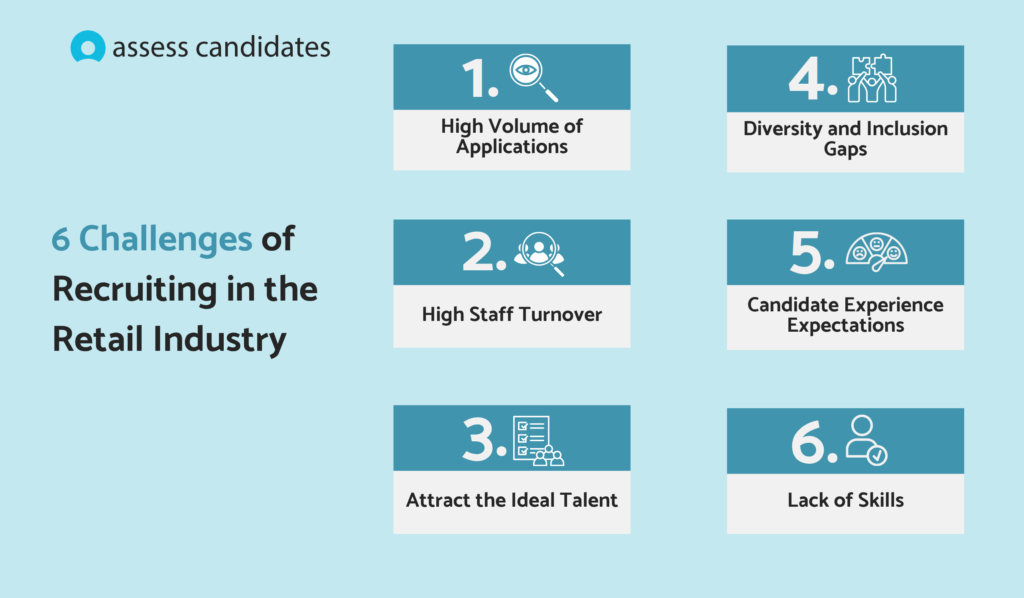
- High-Volume Applications
Large businesses recruiting popular retail roles may attract a high volume of interested applicants, making it difficult to select skilled candidates. Employers are often burdened with spending excessive time on manual screening.
Solution: We suggest integrating an applicant tracking system (ATS) and AI–powered screening tools to automatically filter applications based on your requirements. This will allow you to focus your attention on the candidates with the most potential in your recruitment process.
- High Staff Turnover
The retail industry has one of the highest employee turnover rates worldwide due to low wages, irregular hours, and limited career growth. Due to these factors, recruiters are forced into a constant hiring cycle that costs the company time and resources.
Solution: Invest in onboarding programs and use behavioral and motivational assessments in your hiring process to recruit candidates who align with the role long-term.
- Attract the Ideal Talent
The retail industry has largely been viewed by many candidates and staff as a low–skilled or temporary career path rather than a long-term career. This makes it difficult to attract motivated, high-quality candidates into the retail industry.
Solution: Focus on strengthening your employer branding by displaying career development opportunities on social media and job listings. Ensure you highlight the competitive benefits you can offer candidates and employees in the retail industry.
- Diversity and Inclusion Gaps
Many retail organizations lack diversity and inclusion, which can limit the range of perspectives and experiences across the company’s departments and teams.
Solution: We recommend using structured interviews and standardized assessment tests to minimize unconscious bias during recruitment. You can also widen your sourcing channels to connect with underrepresented communities as you set a measurable diversity target in your recruitment strategy.
- Candidate Experience Expectations
In today’s recruitment industry, candidates, particularly Gen Z, expect a fast and transparent hiring process, as lengthy recruitment processes, slow response times, and poor communication tend to cause them to drop out.
Solution: Streamline your application process by using video interviewing tools to quicken the early screening. You can also maintain consistent communication with your candidates at every stage of the recruitment process.
- Lack of Skills
Many retail candidates lack core competencies such as sales ability, communication skills, digital literacy, and strong customer service, especially as the retail sector becomes increasingly technology–driven.
Solution: We suggest using skills assessment tools early in your recruitment process to identify transferable skills in potential candidates. You should also include training programs in your hiring process that will produce candidates who meet the required standard.
Having seen the challenges of retail recruitment, check out the best strategies for hiring top talent below!
5. Best hiring practices for the retail sector
The most effective retail recruitment combines structured assessments, targeted sourcing, clear communication with candidates, and a streamlined process to retain top talent.
According to Breezy, Gartner estimates that the average turnover rate in the retail industry is about 60%, leading employers to continuously recruit and retrain candidates, thereby increasing hiring costs.
However, to make the most of your hiring in the retail sector, let’s discover our top strategies.
Best strategies to recruit in the retail industry
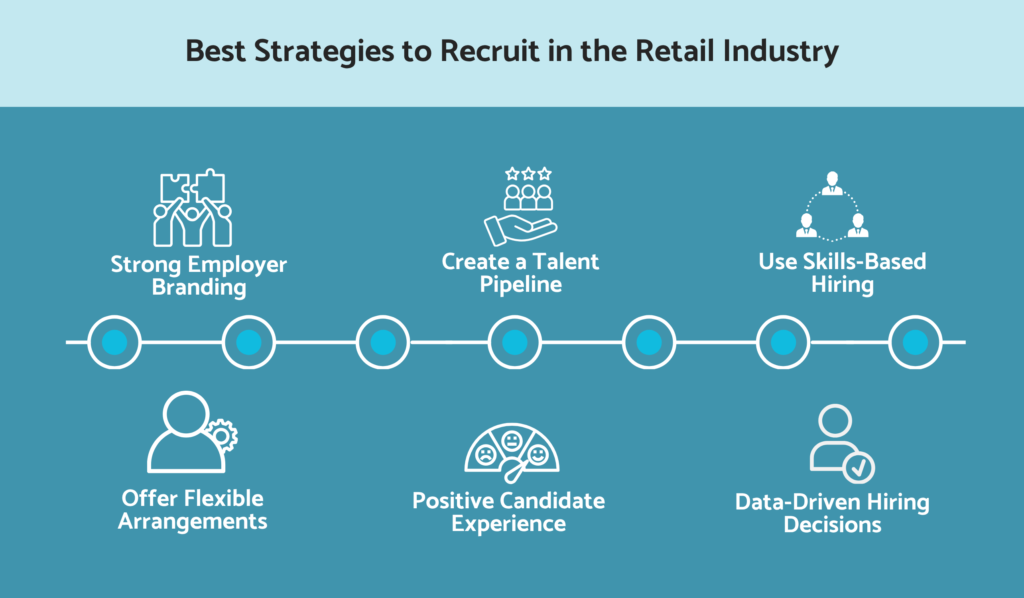
1. Strong Employer Branding
Most retail candidates research an employer before applying, making your employer brand one of the strongest recruitment tools available. You should actively display your career development opportunities, workplace culture, and employee success stories across your company website and social media.
2. Create a Talent Pipeline
Plan ahead of your next recruitment cycle by building and maintaining a talent pool of pre–screened, qualified candidates at all times. This will help you ensure that you know the right candidates to hire should there be a vacancy in your company. By using CRM tools, you can keep in touch with past candidates.
3. Use Skills-Based Hiring
Invest in skills–based recruitment and assess your candidates based on their experiences and skills rather than their CVs and work history. With skills–based hiring, you can recruit candidates who are qualified to work in your organization. These potential candidates must be skilled in both soft and hard (technical) skills and culturally fit to thrive alongside their colleagues in the workplace.
4. Offer Flexible Arrangements
Many candidates in the workforce desire flexibility in the workplace, including in the retail sector. Job seekers in the retail industry, particularly students and parents, would be attracted to roles in your company if you advertise flexible shift options or part–time arrangements. Doing this will also broaden your candidate pool as you select the most qualified to fill the role.
5. Positive Candidate Experience
Every interaction during the hiring process shapes how candidates perceive your brand, whether they receive an offer or not. Clear communication, timely feedback, and a straightforward recruitment process leave a positive impression, even on unsuccessful candidates, who can spread the word about their positive candidate experience, thereby promoting your employer branding.
6. Data-Driven Hiring Decisions
Monitoring your hiring metrics, such as time–to–hire, cost–per–hire, source of hire, and retention rates, will be useful for you when making recruitment decisions. This is because you will be better positioned to identify what is working and what needs improvement in your hiring process. Using data to make hiring decisions will eliminate the guesswork from the process.
Explore assessments created by Chartered Scientists to hire the right retail candidates. VIEW PLANS
Up next are the roles that most employers hire for in the retail industry. Keep scrolling to see some!
6. Common roles for retail workers in the retail industry
The retail industry thrives primarily with commercial frontline employees, as they are the ones who interact with customers and drive revenue in your company.
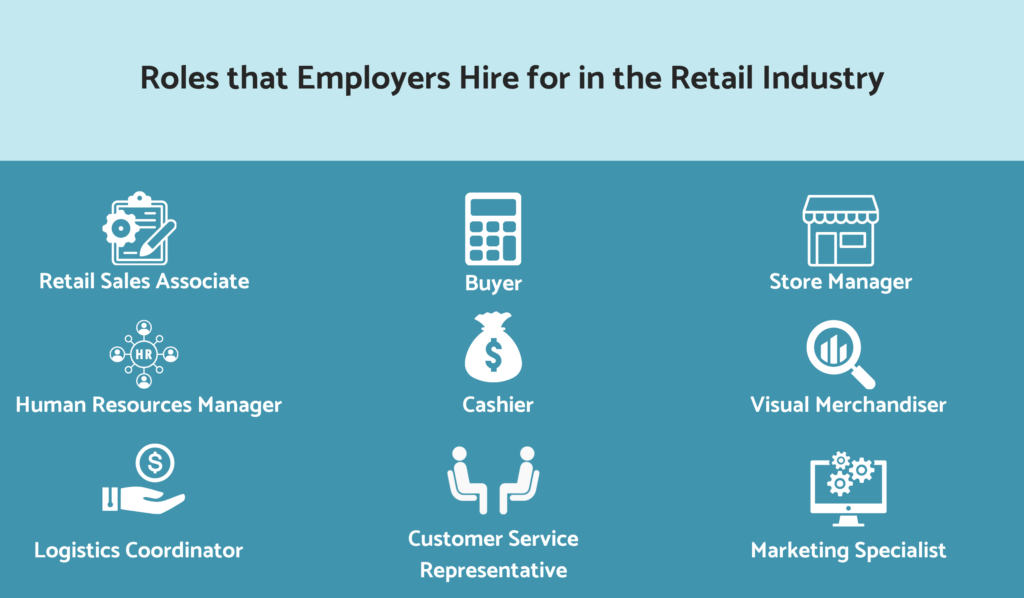
Roles that Employers Hire for in the Retail Industry
- Retail Sales Associate
- Buyer
- Store Manager
- Human Resources Manager
- Cashier
- Visual Merchandiser
- Logistics Coordinator
- Customer Service Representative
- Marketing Specialist
Are you looking to attract and hire retail candidates in your company? Unsure about what pre-employment psychometric assessment tests you can use to evaluate your candidates to ensure you recruit the top talent? You can reach out to us for a thorough evaluation of your recruitment assessment design, and we will ensure you hire the ideal retail candidates.
Top Employers that recruit retail candidates
- The Home Depot
- Macy’s
- Kohl’s
- Bath & Body Works
- Hibbett Sports
- Verizon
- Hot Topic
- Hallmark
Recruiters have shared some of their experiences while recruiting in the retail industry. Let’s explore them!
7. Client success stories of recruiting in the retail industry
Recruiters in the retail industry have shared their experiences in attracting, recruiting, and retaining ideal candidates for their organizations.
1. Marks & Spencer
Challenge:
Marks & Spencer was struggling to fill thousands of seasonal positions across its UK stores within a tight deadline during the Christmas season. This resulted in understaffed floors and decreased customer satisfaction. The brand received a high volume of applications, making manual screening difficult for recruiters.
Solution:
The company implemented an AI-powered applicant tracking system, combined with automated skills assessments, to screen and shortlist qualified candidates, reducing the burden on recruiters. Doing this allowed Marks & Spencer’s team to focus on the final-stage interviews with the pre-qualified applicants.
Results:
- Minimized time–to–hire by 40%, allowing stores to become fully staffed ahead of the peak seasons
- Achieved a 28% increase in seasonal-to-permanent conversion rates, which helped them retain more talent after the Christmas period
- Enhanced candidate quality scores by 35%, with the recruiters reporting stronger performance from the seasonal staff compared to the previous years
2. Sephora
Challenge:
Sephora received a large number of graduate applications for its annual retail management trainee program, making it harder for a small recruitment team to assess each candidate fairly and efficiently. The strong candidates were often lost due to slow response times and lengthy recruiting processes.
Solution:
The company used a video-interviewing platform integrated with psychometric assessment tests to handle early-stage screening. This enabled the candidates to complete assessments in their own time without waiting for a recruiter to be available, thereby reducing the screening phase from six weeks to two.
Results:
- Achieved a 50% improvement in first-year performance ratings among the management trainees hired via the new process
- Minimized the overall hiring cycle by 45%, enabling Sephora to secure the best graduate talent before the other competitors
- Improved candidate satisfaction scores by 38% as the candidates cited the flexibility and the speed of the recruitment process
This is where Assess Candidates comes in: we help ensure your candidates are well-qualified, as our pre-employment psychometric assessments evaluate skills and provide data-driven analytics to inform your recruiting decisions.
8. Future of recruitment in the retail industry
Retail recruitment is evolving rapidly as employers balance customer-service demands with technology-driven hiring practices.
What is the future of recruitment in the retail industry?
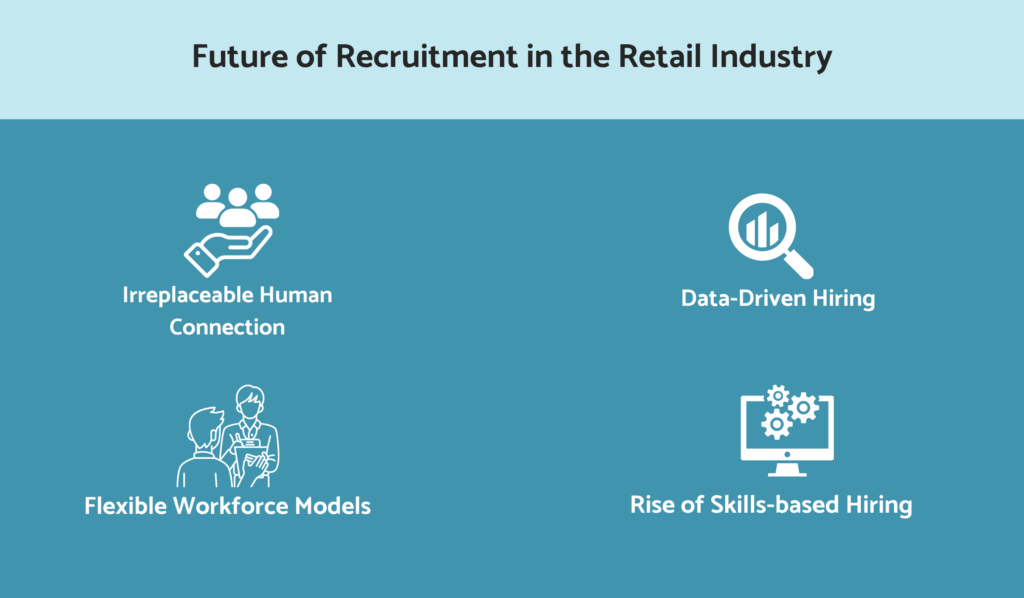
- Irreplaceable Human Connection
Despite technological advances, human insight in your recruitment process will always be critical for an industry that relies on interpersonal interactions with customers. The future of recruitment will see employers use technology to handle high–volume applications while preserving authentic, empathetic human interaction at select stages of the hiring process.
- Flexible Workforce Models
The traditional full-time work model will eventually give way to flexible arrangements such as gig work, on–demand staffing, and project–based contracts. Recruiters will be connected to qualified, flexible candidates via platforms, enabling retail companies to scale their workforce up or down based on demand.
- Data-Driven Hiring
The future of recruitment will depend on data, as metrics such as source effectiveness, time–to–productivity, and predictive retention scores will guide the stages of the hiring process. Employers with knowledge of data interpretation and implementation will become more valuable as retail companies integrate analytics into their recruitment strategies.
- Rise of Skills-based Hiring
Retail hiring is increasingly shifting toward demonstrated skills and potential, allowing employers to identify capable candidates beyond traditional credentials. The future of recruitment will open the retail industry to a diverse talent pool, enabling the recruitment of skilled candidates.
So, why use Assess Candidates to recruit your retail candidates in 2026?
9. Why do employers use Assess Candidates when hiring retail talent?
Assess Candidates helps retail recruiters evaluate reasoning ability, behavioral tendencies, and job-relevant skills more consistently through structured pre-employment testing.
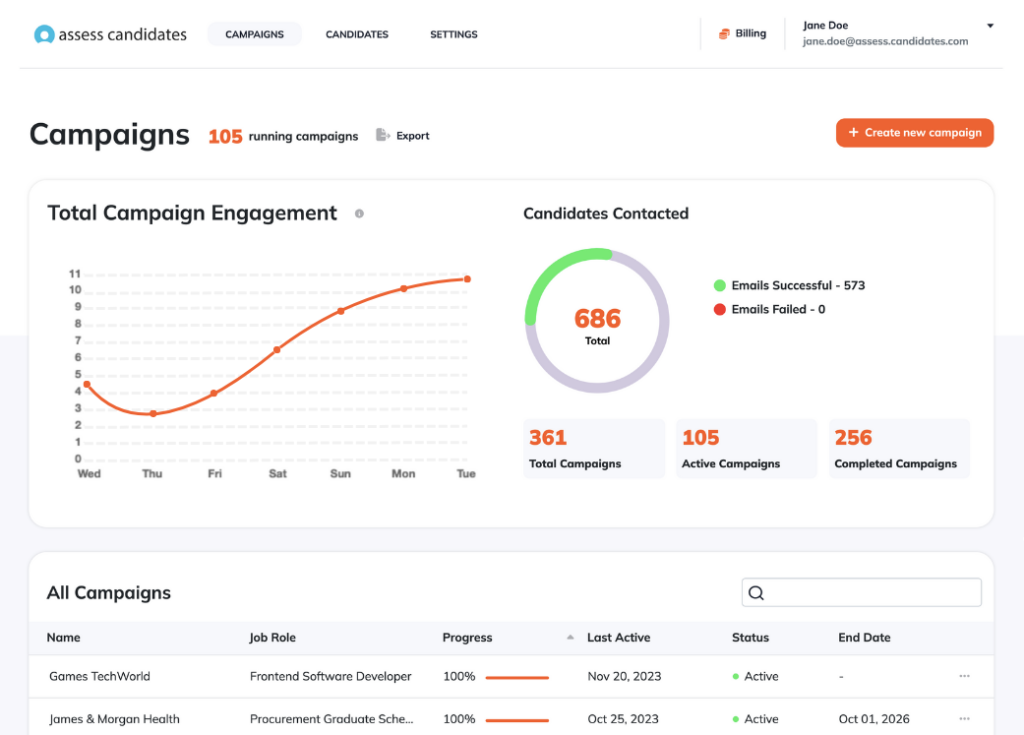
- Predicts On–the–Job Performance: Assess Candidates’ pre–employment assessments offer you an accurate insight into your candidates’ abilities that are necessary for the role you are hiring for. You can use the assessment tests to filter top candidates who contribute to predicting their performance in the role.
- Inclusive and Bias–Free Recruitment: Our platform reduces bias and gives every retail candidate an equal chance to succeed in the recruitment process, regardless of their background. The platform also offers accessibility features, including additional time, zoom functionality, and screen reader compatibility, to ensure a smooth experience for candidates with disabilities.
- Positive Candidate Experience: Our pre–hire assessment tests are designed to feel simple, smooth, and engaging for your candidates from the moment they receive the invitation through the end of the process. A positive candidate experience relies on your employer brand, which is critical in the retail industry.
- Integrates with Existing Recruitment Processes: Assess Candidates‘ platform seamlessly integrates with existing hiring processes to provide a user–friendly, insightful experience and streamline the overall hiring workflow.
- Wide Range of Assessment Tools: Our platform provides retail employers with access to a comprehensive suite of tools that are tailored to different aspects of the role. These assessment tests include numerical reasoning tests, verbal reasoning tests, logical reasoning tests, video interviews, situational judgment tests, game-based assessments, and error–checking tests.
Hire the ideal retail candidates with our assessment tool platform. LEARN MORE
Conclusion: Key Takeaway
Successful retail recruitment depends on structured assessments, efficient hiring processes, strong employer branding, and a candidate experience that reflects the quality of your customer experience. Employers that invest in these areas will be better positioned to attract and retain top retail talent.
Want to know more about using assessment tests to recruit the top candidates in the retail industry? Keep scrolling to explore our frequently asked questions, and enter your email to get started today.
Frequently Asked Questions
What qualities should I look for when recruiting retail candidates?
When recruiting retail candidates, we suggest you look beyond technical skills and also focus on their interpersonal skills, a genuine customer-first attitude, adaptability, and learning agility. This, along with a culturally fit workforce, helps you ensure long-term retention and their growth potential.
How do I reduce staff turnover in my retail company?
Reducing high staff turnover begins at the recruitment stage by hiring candidates who are aligned with the vacant role, your brand, and the working conditions. You should invest in providing your candidates with a strong onboarding experience, maintain competitive pay, and offer clear career progression pathways.
How can I make my retail job listings more attractive to potential candidates?
Your job listings should be clear, honest, and written in a tone that reflects your brand’s personality. We recommend highlighting benefits beyond salary, such as staff discounts, flexible shifts, and training opportunities. Ensure you avoid generic language and give your candidates a realistic preview of what working at your company looks and feels like.
How many interview rounds should I have in my retail recruitment process?
For most entry-to-mid-level roles you are hiring for, you can have two rounds of interviews, as having any unnecessary rounds will likely risk the loss of your strong candidates. However, if you are recruiting for senior or management roles, then you can include a third round to further assess their skills and compatibility.
Should I recruit for potential or experience in the retail industry?
It is preferable to recruit for potential, as it is a smarter, long-term investment, especially for entry-level roles in your company. Candidates with the right attitude and genuine eagerness to grow can be trained to meet the technical criteria of a retail role. But if you hire for experience without considering culture fit or motivation, you risk having higher turnover or a poor work environment.


 English
  Arabic